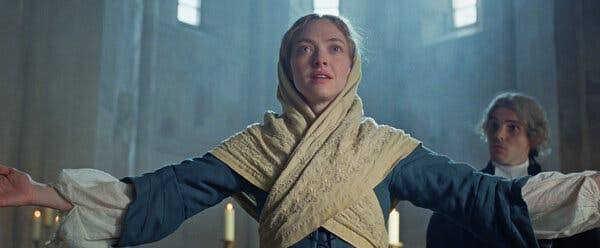
The Testaments of Ann Lee comes with excellent credentials having been written by Mona Fastvold and her partner Brady Corbet, with whom she co-wrote The Brutalist which was based on the life of émigré architect Marcel Breuer. That film was a metaphor for the struggles of an artist in post-war America. Testament follows the life of Shaker founder Ann Lee and is a metaphor for religious and social change in pre and post Revolutionary America
It is an earnest attempt to give Ann Lee her place in history as a major religious figure who endured religious persecution in 18th-century England for her position as a female preacher as well as in America where she and the Shaker movement were seen as unpatriotic pacifists.
The early American Shakers were known for their skill in what is now seen as stylish, minimalist furniture and their approach to simple architecture and there are sequences of constructing buildings and simple objects but not much about the tenets of the religion
Lee is played by Amanda Seyfried, with Lewis Pullman as her brother William and Christopher Abbott as her husband Abraham, who fathers her four children, all of whom die in infancy. Their deaths probably affected her, contributing to her aversion to marriage and sexual activity, influencing the subsequent Shaker celibacy doctrine.
Director Mona Fastvold is great at meaningful close-ups and handles the dance sequences as if they were only part of this religion/cult which has any merit or meaning. In these dramatic Broadway musical – like sequences there is lot of shaking, shivering, hand clapping and foot stomping ranging from some ecstatic dancing in her early Manchester days where the dancers look to be on acid trips to the more sedate Shaker dances the groups still perform
While the film has obvious good intentions, illuminating the history of Ann Lee and her contribution to American religious history it can also seen a cautionary tale about the dangers of being captured by religious leaders and ideology. The dangers of believing what self -declared prophets tell you, believing in visions and biblical interpretations. The film demonstrates how people can be sucked into religions or cults based on false information and interpretations.
Maybe audiences know about the revolt and reforms of religion in eighteenth century. Europe and the growth of alternative faiths and religious leaders such the Methodist Movement with John Wesley and early feminists like Selina Hastings, the Countess of Huntingdon, but the film provides little about what Ann Lee was reacting against.
While we see Ann Lee commanding groups of people we don’t get a sense of her charisma or oratory skills and her occasional visions of deities and paradise make her out to be more of a charlatan than prophet.
The big unanswered question looms over all the intense close-ups and hectic dance sequences is What is Ann Lee’s testament? What is her way to save souls. – celibacy, public acknowledgment of sins and misdeeds as well as dancing – I could go with the dancing.
John Daly-Peoples Arts Writer / Arts Consultant Arts Editor, NZ Arts Review
Well the hype was certainly great and I’m sure the vast majority went home blissfully sated with the sound of pipes.
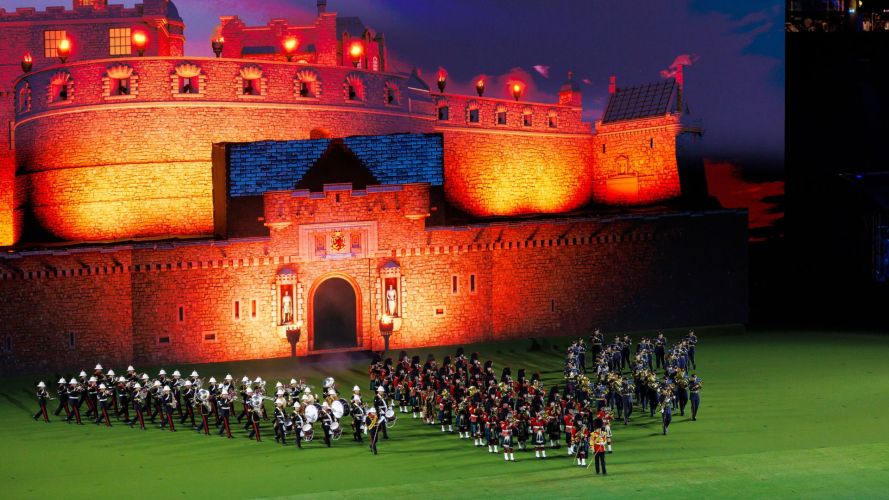
In its 75th anniversary year, the Royal Edinburgh Military Tattoo, regarded by many kiwis of clan ancestry (and there are a surprising number of us in New Zealand) as ‘ours’, arrived in Auckland this week, hot on the heels of success in Brisbane. Over those 75 years many New Zealanders have travelled to Edinburgh, many, many more have seen one of its various iterations on television (they change each year), and thousands were on the edge of their seats before the Tattoo hit Auckland. And they weren’t disappointed.
Originally a relatively simple parade ground musical gathering on The Esplanade outside Edinburgh Castle, this annual event has grown considerably gaining a momentum all its own and spawning several similar events particularly in Europe. The event has gained an international stature ever since and, through both the sourcing, invitation and participation of military musicians from many parts of the world, and through attracting and growing an international audience which has hardly harmed the tourist trade of Edinburgh. The late Queen Elizabeth granted the Tattoo royal assent in 2010.
In more recent years, some have criticised the Tattoo as departing a little too far from its musical and military origins and pays obeisance more to Disney rather than to Scotland’s own heritage. But these were not apparent in what Creative Director Alan Lane brought to Eden Park.
Themed as ‘The Heroes Who Made Us’ this 2026 edition and originally conceived for Edinburgh last year, paid tribute to military music, to parade ground excellence and to the contributions of many in every sector of society. Everyday people. Just like you and me. And, although far from preponderant, to military history too. Sort of an early Pride Week you might say. In tartan.And for those who feared the pipes might dominate, well they did. But, following an initial and culturally appropriate welcome from Ngati Whatua Orakei, there was also rather a lot of brass, a delightful string and woodwind section a range of vocalists of varying capabilities and some fairly unique percussion culminating in delightful all-in crescendos. Much of the audience around me was in singalong mode when the massed bands got to’500 Miles’ and the best of the Eurythmics. There was plenty to delight the visualists among us too. Flagwork, calisthenics, highland dancing and even a powerful kapahaka.But all built around there was a musical crispness and grandeur built around the Band of the Royal Regiment of Scotland with a Drum Major who commanded about a dozen others heading the several other bands from south of the border and multiple army, police, civilian and school bands from Australia, Norway, Japan, Switzerland and the US.
I happened to be seated behind a Tongan family who, not only unfurled their own Tongan flag when the King of Tonga’s Armed Forces Royal Corps of Musicians stepped onto the arena, but oozed delight and pride in their boys. They knew the words to all the songs too.
Singing guardsmen with musical instruments I hear you ask ?. In a word. Yes. There were many highlights but for me the Japan Air Self Defence Force Central Band was a standout. Their vocalist sent shivers of delight down my spine in what looked like a shimmering military gown.
Plenty of New Zealand accents evident too featuring our three top pipe bands, and bands from the NZ Police and two top-rate school bands. Rather sadly, I cannot say the same about the NZ Army Band which, despite its outstanding reputation gathered ever since pink-panthering their way into the hearts of every kiwi at the Christchurch Commonwealth Gemes Opening all those years ago, just felt a bit flat and even off-key in places.
The US Marines were a bit underwhelming too and, although the tattoo is far from a competitive thing, were easily outpointed by the Norwegian King’s Guard Band and Drill Team. Likewise the Swiss Top Secret Drum Corps provided a highly technical routine
Given that this is largely the same lineup that performed in Brisbane last week there was a heavy representation from across the ditch. They were was musically tight, had an energy and a couple of more than able vocalists who did NOT sing ‘Waltzing Matilda’.
As a proud kiwi with some scots blood myself, I must admit it a little piece of me was hoping there would be a lone piper atop the grandstand at Eden Park playing ‘Flower of Scotland’ echoing what happens at Murrayfield. – I could even know the words. No rugby this time but that’s what both venues are best known for, They have a synergy. Besides, the timing was perfect as ‘we’ beat ‘them’ only last weekend so why not celebrate it.
Well, there WAS a lone piper atop the grandstand playing “Flower of Scotland” echoing what happens at Murrayfield and inducing the crowd to join in…I even know the words. No rugby this time but that’s what both venues have in common. Besides, the timing was perfect as “we” beat “them” only last week end. So why not celebrate it.
During the rest of the show it occurred to me that it must have been awkwardly difficult to march on grass – not to mention dance. Anyone who was at school cadets will know that marching on a hard surface is a lot easier, and provides an audible marching rhythm. As for the dancers, well none tripped over so well done.
And on a final note, and while congratulating the Eden Park staff I encountered who were pleasant, helpful and courteous, I wondered whether this was the right venue for something like this Tattoo. Eden Park is BIG as rugby grounds go, but at a cost of intimacy that parts of this Tattoo required. At times it approached theatre-like blocking in some of its presentation. Several times I wished the performers were a little closer. Perhaps Mt Smart (Go Media) for whatever the future holds? Or maybe I am still wishing to see a Tattoo on The Esplanade in Edinburgh.
Bridgeway Cinemas, Auckland Thu 19 Feb – Wed 4 March
John Daly-Peoples
The Europa Film Festival opens with Testament of Ann Lee, an ambitious musical drama that premiered in competition at the Venice International Film Festival, earning one of the festival’s longest standing ovations.
Featuring a Golden Globe-nominated performance from Amanda Seyfried, the film presents a portrait of Ann Lee, founder of the religious Shakers movement, reimagining female leadership, faith and rebellion through unconventional cinematic and musical forms.
The program spotlights new works from some of Europe’s most critically acclaimed filmmakers, whose influence continues to shape contemporary cinema.
Lav Diaz’s Magellan
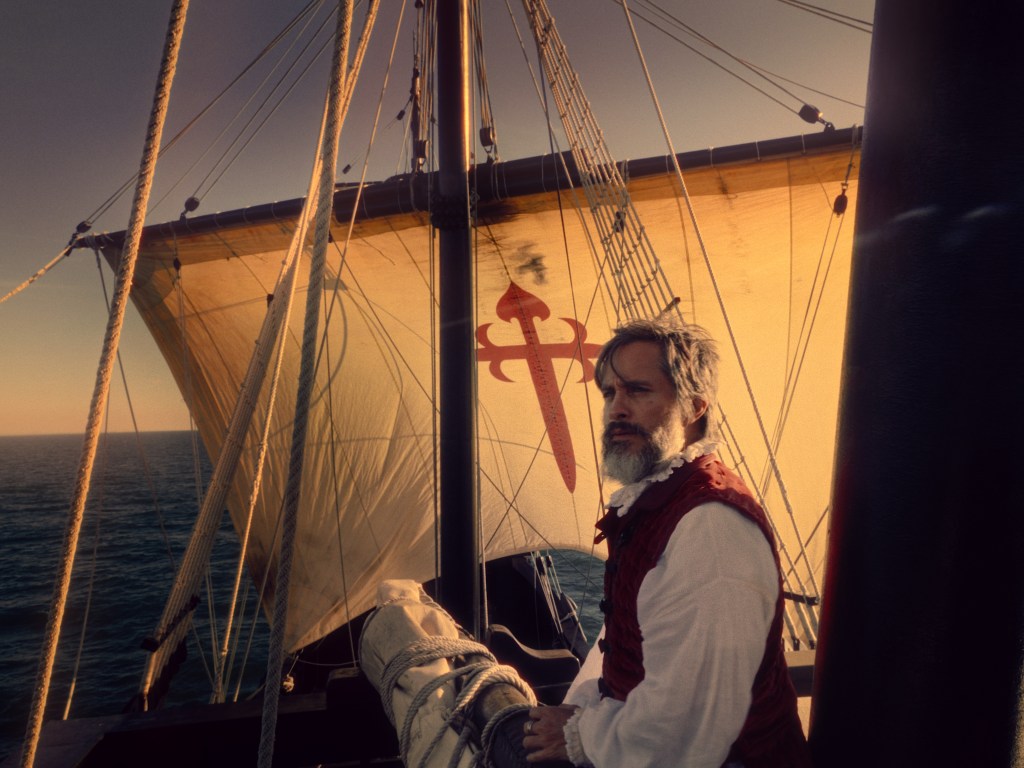
Locarno Leopard of Honour recipient Lav Diaz presents Magellan, a historical epic tracing the Portuguese explorer’s final voyage while interrogating the moral cost of colonial ambition, starring Gael García Bernal.
French provocateur QuentinDupieux returns with The Piano Accident, a satire on digital fame and spectacle, starring Adèle Exarchopoulos (Blue is the Warmest Colour) as an influencer famed for performing outrageous stunt videos because she cannot feel pain.
Academy Award–winner László Nemes presents Orphan, a historical drama set in post-1956 Hungary that explores intergenerational trauma and patriarchal power, following a teenage boy confronting a violent surrogate father.
Several of the films look at artists, shifting focus from public myth to private experience.
Oscar-nominated filmmaker Agnieszka Holland presents Franz, a kaleidoscopic portrait of surrealist writer Franz Kafka, moving between eras to examine his enduring cultural legacy. It is a biopic of the author described as, non-linear, and free-wheeling film with a strong visual style.
Chopin, a Sonata in Paris, directed by MichałKwieciński, follows composer Frédéric Chopin’s formative years after his move to Paris in the 1830s.
Directed by Fabienne Godet, The One I Loved recounts the tumultuous true love story of Simone Signoret and Yves Montand, a relationship shaped by artistic ambition, public scrutiny and Montand’s notorious affair with Marilyn Monroe.
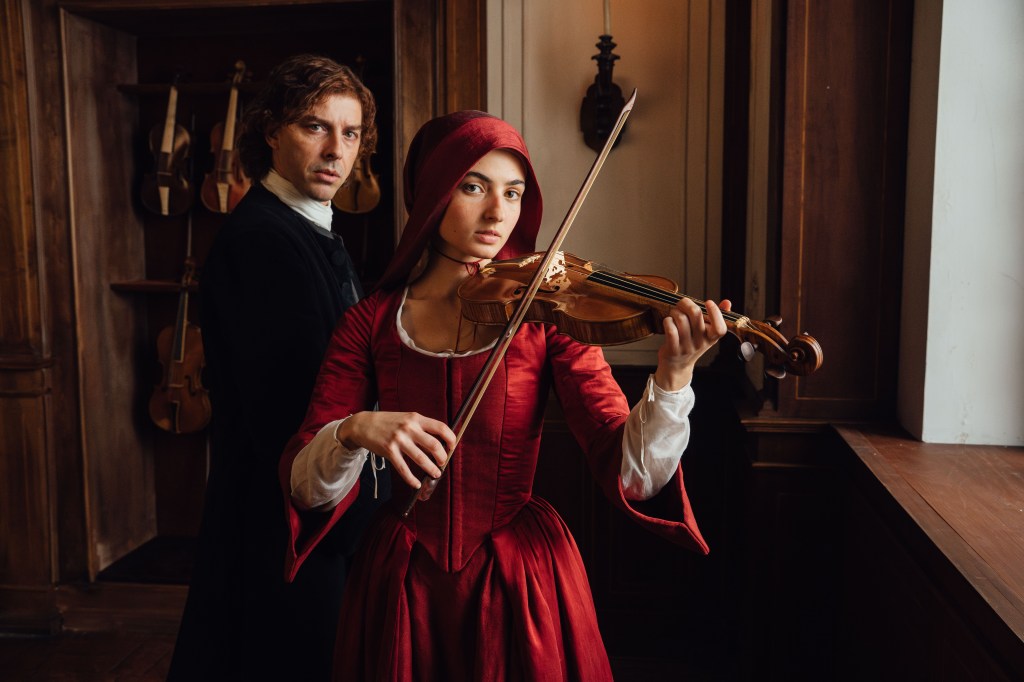
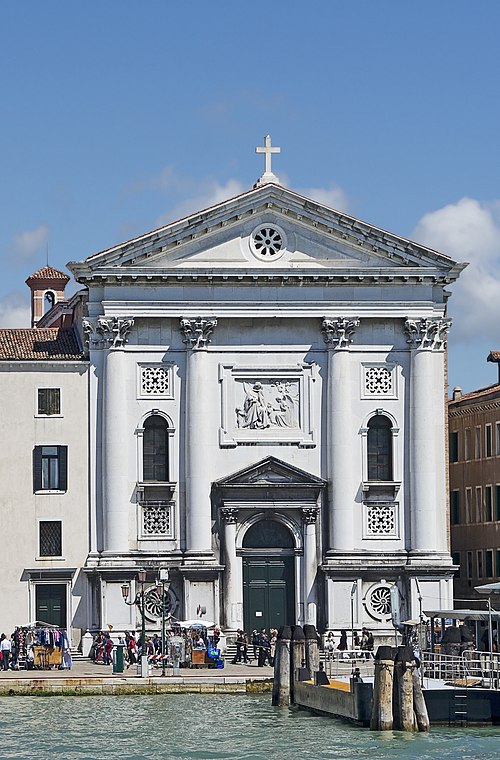
Damiano Michieletto presents Primavera, set within Venice’s Ospedale della Pietà, where music, discipline and desire intersect under the mentorship of Antonio Vivaldi. This is the same venue for the New Zealand National Pavilion at the 2026 Venice Biennale featuring works by New Zealand artist Fiona Pardington.
From acclaimed director Maryam Touzani (The Blue Caftan), comes CalleMálaga, a touching and life-affirming drama about age, independence and unexpected romance starring Almodóvar veteran Carmen Maura.
Produced by Natalie Portman, Arco is a spectacular Golden Globe nominated animated adventure set in the year 2075 follows a young girl named Iris who discovers a boy in a rainbow suit has crash-landed near her home from a far-distant future.
Karoline Herfurth’s Wunderschöner interrogates beauty standards, ageing and personal autonomy. Five women in Berlin: Frauke (Martina Gedeck) is approaching 60 and feels bored in her marriage. Julie (Emilia Schüle) is just under 25 and has spent the last few years working successfully as a model until her «look» suddenly falls out of favour. After Sonja’s (Karoline Herfurth) third pregnancy, it no longer looks the way she would like it to. Vicky (Nora Tschirner), a German teacher, does not want to commit to a relationship, and student Leyla (Dilara Aylin Ziem) is bullied because of her weight.
Set against the backdrop of a Transylvanian wedding in 1980, Hungarian Wedding combines romance and social satire, richly infused with traditional Hungarian folk music and dance.
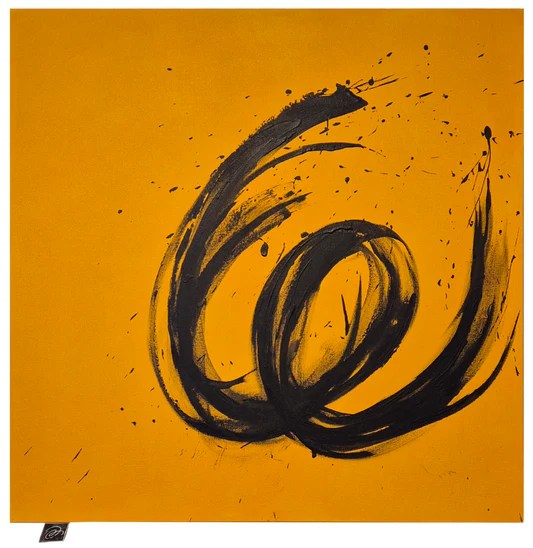
Brazilian born Roberta Queiroga’s training as an architect appears to inform her art practice, bringing a nuanced understanding of space, rhythm, and materiality. Her architectural sensibility links gesture, energy, and spatial awareness.
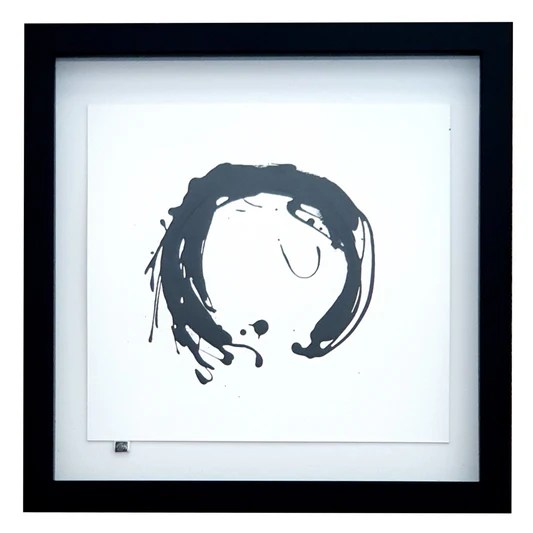
Her works are connected to Eastern artists such as Sengai Gibon the nineteenth Japanese Zen artist known for his simple, and profound ink paintings which employed minimal brushstrokes to convey deep spiritual truths. There are a couple of Queiroga’s small gestural work on paper such as “Today 1” ($480) which are reminiscent of the Japanese artist.
Roberta Queiroga. Today 1
The paintings also connect with the work of Max Gimblett, entwining Eastern spirituality and modernism. Like Gimblett’s work Queiroga’s has a sense of capturing the instant, when emotion is realised and intuition is revealed.
“Tidal Composition – Ripple” ($4800) is a simple gestural work with a single sweeping stroke with small ink splatters, capturing the instance of creation. Like the title of the work several of the paintings are derived from the tides, their motion, their drama, their moments of calm and their intricate patterns of movement.
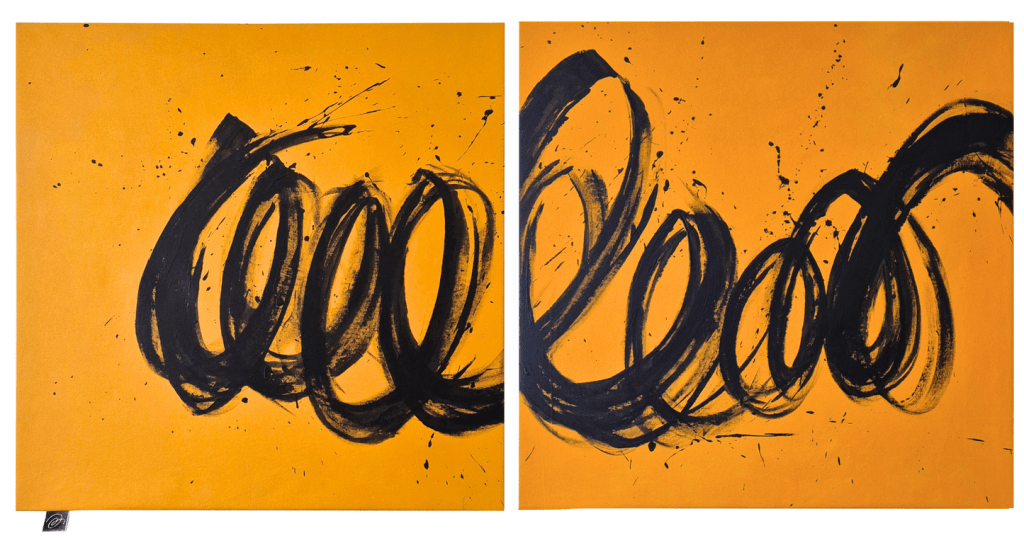
The two panel “Tidal Composition – Pulse” ($8000) extends the notion of surf and tides with a suggestion of curling breakers, the energy of the waves pulsing along a shoreline.
Roberta Queiroga. Tidal Composition: Pulse
Some of the works have titles related to another energy, that of fire with some titled ”Brasa” which is Portuguese for embers while others are titled “Charcoal and Fire” and “Glow of Embers”. In “Charcoal and Fire” a small slash of red enlivens the work like a bloody mark.
The predominant colour for these works is a bold orange which provides a sense of energy, heat and light. With “Charcoal and Fire” ($3800) there are also traces of red which adds a sense of danger. With the “Glow of Embers” ($3800) where black encroaches on the orange it is like the colours of a dying fire.
Roberta Queiroga, Glow of Embers 1
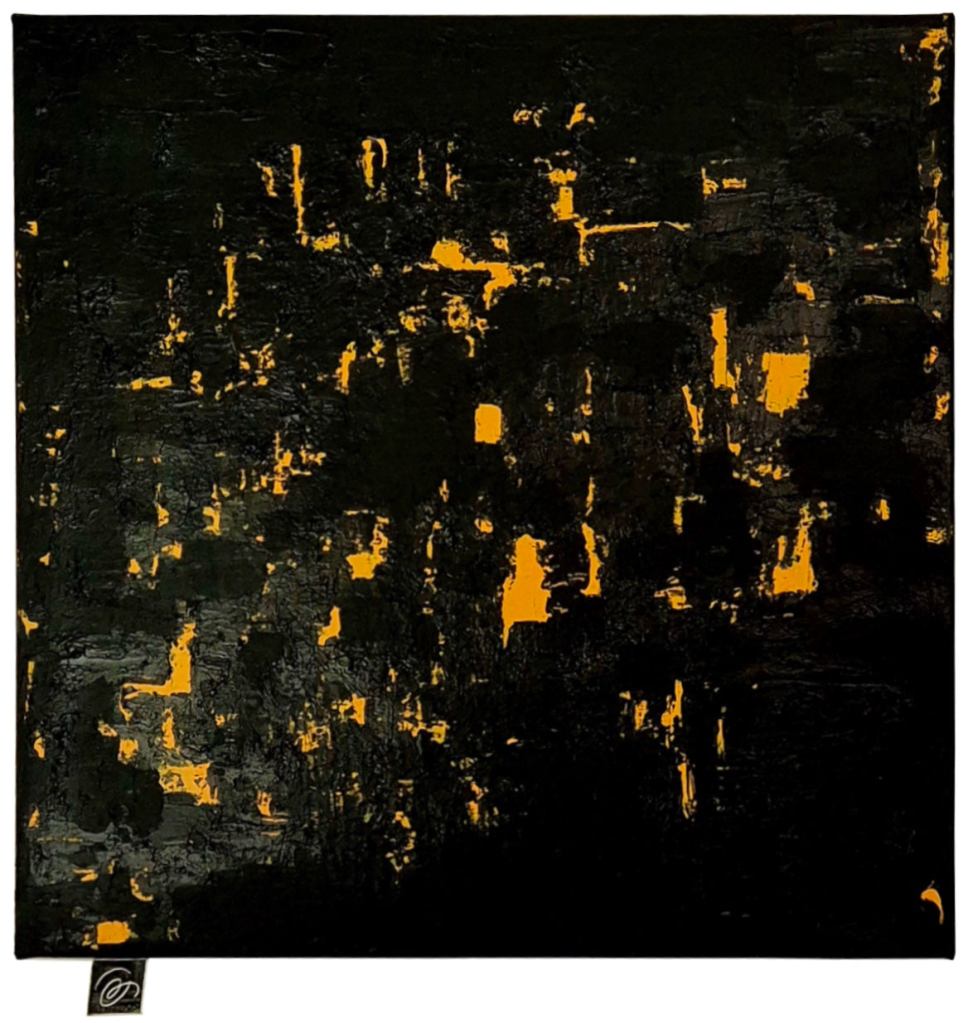
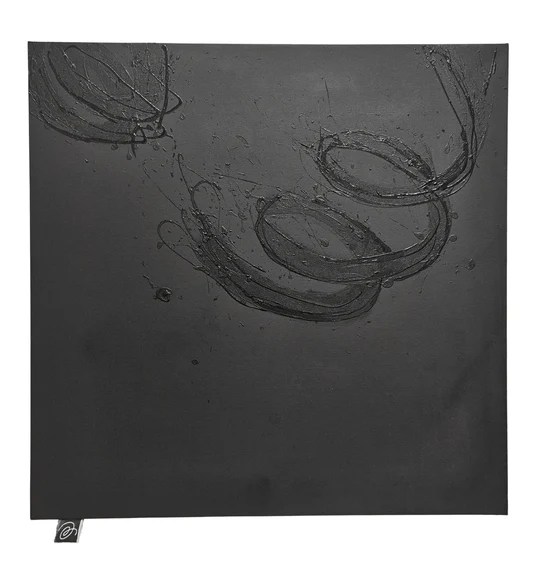
There are some more subtle, gestural works in the show among them “Midnight” ($4800) where the black gestural strokes are laid over a black background giving a sense of the shapes emerging from the velvety darkness of the night.
Roberta Queiroga, Midnight
There is also a display of her” Kaleidoscope Series”, twelve small panels ($150 each, 3 for $300) where black painterly gestures are made on a black background, the various marks seeming like a secret form of calligraphy.
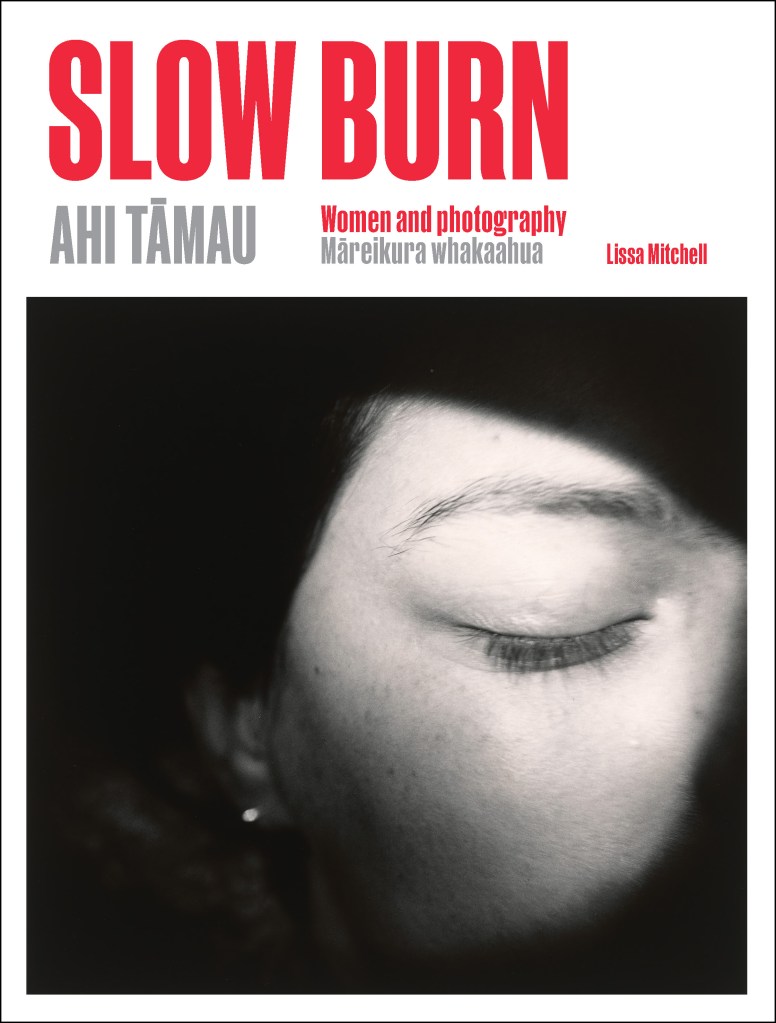
Slow Burn Ahi Tāmau presents a range of photography by women and non-binary artists from Aotearoa New Zealand focussed on the1960’s to the present along with a few from the early part of the twentieth century. The works are all from Te Papa’s collections and explores several themes through a feminist lens. The 150 works by 50 artists, are accompanied by a catalogue by curator, Lissa Mitchell.
The book includes major photographer such as Anne Noble, Fiona Pardington, Ans Westra and Lisa Reihana. The accompanying essay and biographies by Mitchell of the photographers provide a valuable research resource.
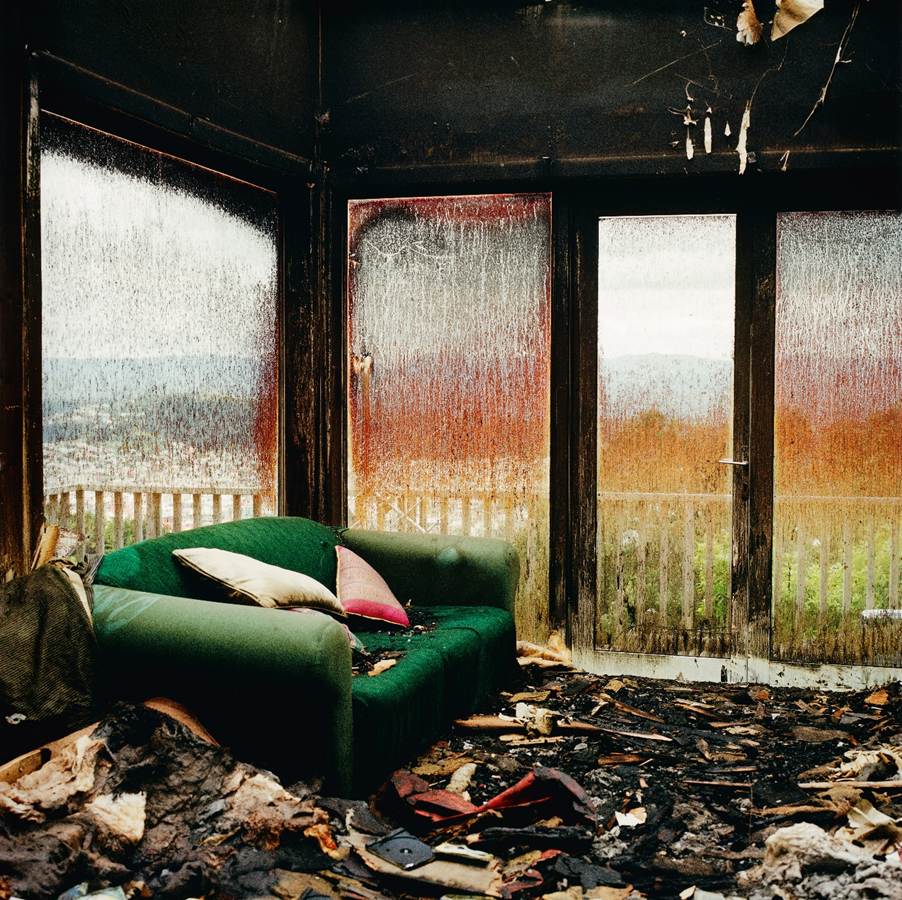
Many of the photographs by our well-established photographers provide the core of the book along with several newer photographers who demonstrate new ways of looking. However, there are examples of the well-known photographers who show a freshness and inventiveness as in the case of Ans Westra whose “Highbury Road” shows aspects of her distinctive vision.
32 Highbury Road, Ans Westra, 2001. Pigment print, 1112 x 1119 mm. Purchased 2013. Te Papa).
Mitchell writes “Contributions by women to photography in Aotearoa have been consistently concerned with identity, whānau/family, place, and connections across time – themes that are intertwined with the ways women have been able, and unable, to conduct their lives and make photography. Although women have contributed to all aspects of photographic culture, this selection of works is focused on the use of photography – as archival, documentary and creative expression – to record and express experiences and challenge systems of governance and the perspectives of audiences. Central too is the question of what legacies first- and second-wave feminisms have left within photography being made now, as well as the impact of a ‘historical turn’ in contemporary photographic practice to using obsolete analogue photographic processes. Gathered, all these approaches to making are realised as photography that operates across time and space and acknowledges the spirit of sharing and cooperation that enabled its creation – whether with other people, the land, or artists from the past. “
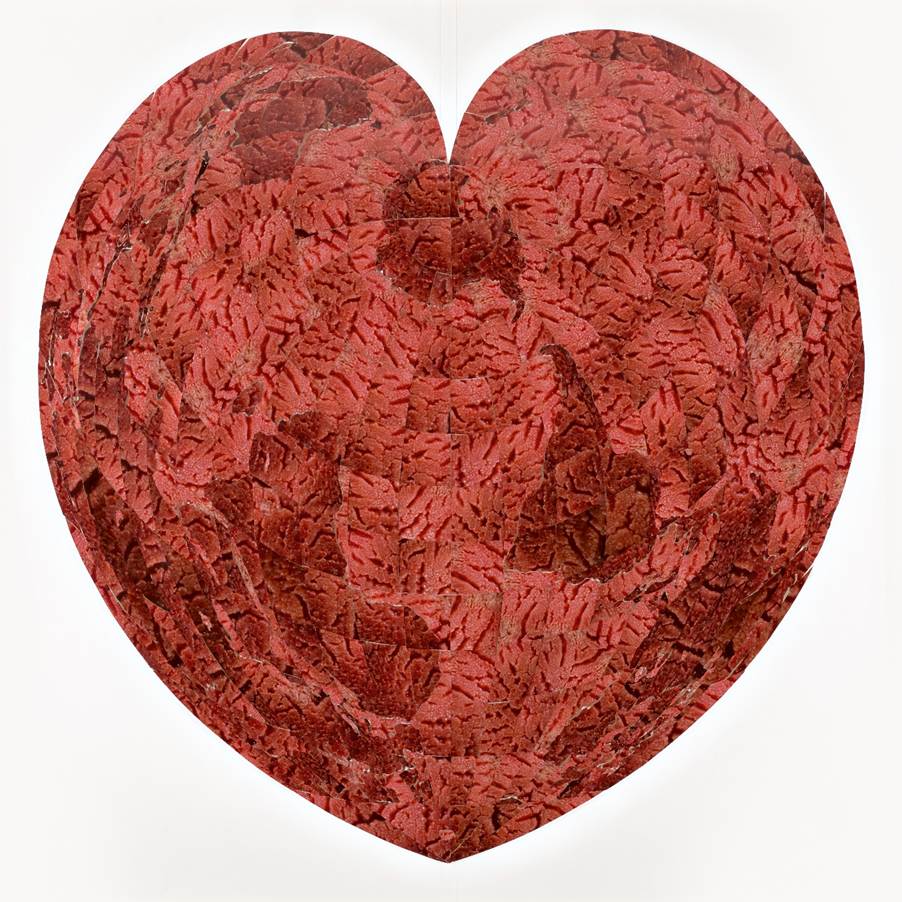
Among the photographers included are Ruth Watson who has worked across sculpture, photography, installation, video and painting, and has long engaged with cartography and the way maps represent our world, along with issues pertaining to global politics and the environment.
Lingua Geographica, Ruth Watson, 1996. Ilfachrome print, metal pins and metal plaque, which reads: ‘Lingua Geographica, or Geographic Tongue, is the medical name for the cracked and fissured surface of a tongue[.] It is a condition of no clinical significance’, 1977 x 1981 x 87 mm. Purchased 2009. Te Papa
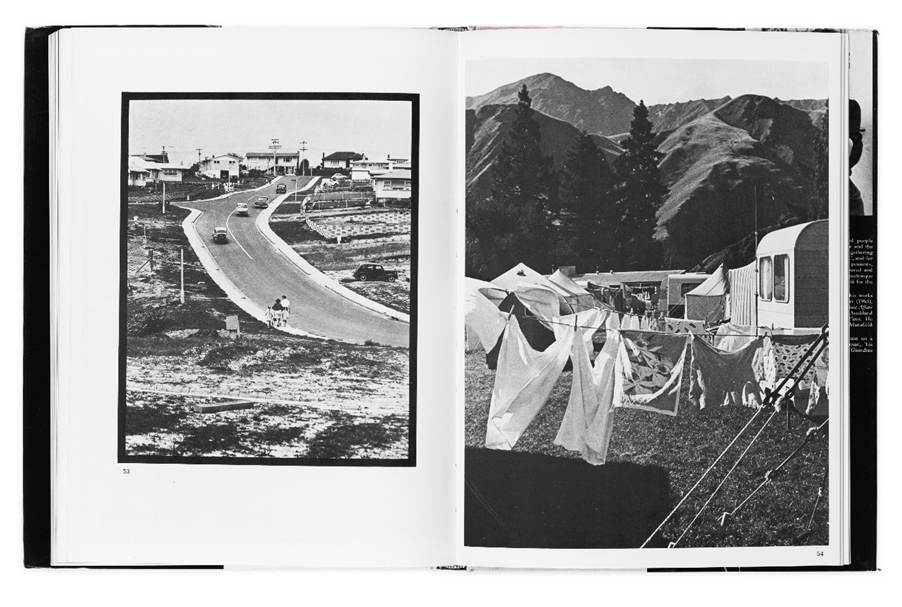
Mitchell has also included works by Martini Friedlander whose simply composed works, often more like snapshots managed to capture the essence of landscapes, individuals and events in a way which makes them both timeless and very much of their time.
Larks in a paradise – New Zealand portraits, Marti Friedlander with text by James McNeish, Collins Publishers, 1974. Photobook page spread, 292 x 223 x 24 mm. Te Papa
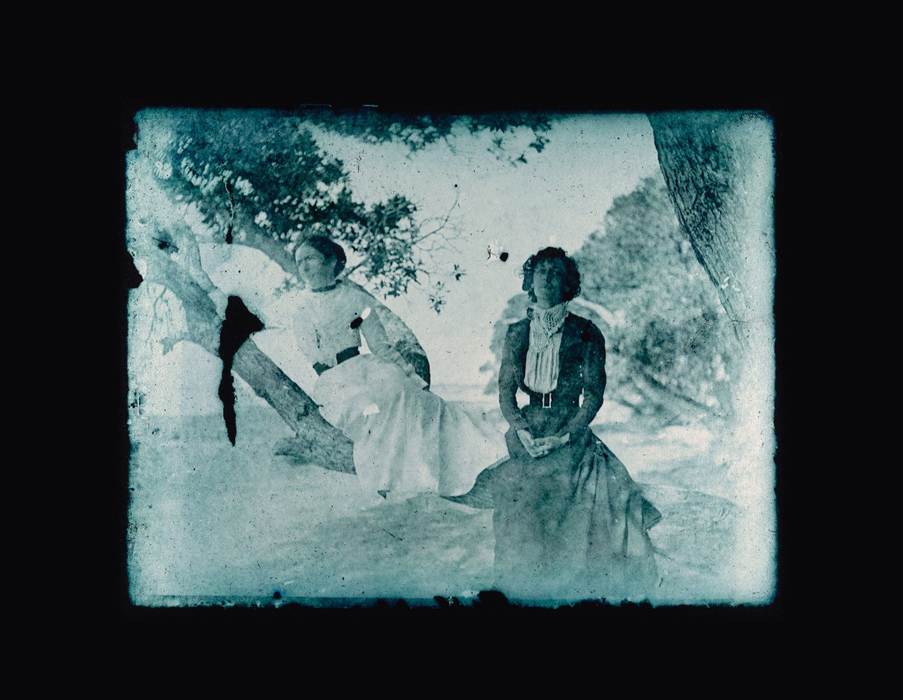
There are very few early photographs apart from those of Makereti Papakura and Daisy Tinney but the works of Stella Brennan have used 120-year-old glass-plate photographic negatives made by Brennan’s great-great aunt Louise Laurent, a student at Elam School of Art in the late 1890s.
Threads VI, from the series ‘Thread Between Darkness and Light’, Stella Brennan, 2023–24. Pigment prints, 656 x 849 mm, 849 x 658 mm. Purchased 2024. Te Papa
The mixture of well-known and rarely seen, the descriptive and the enigmatic, the personal and the public make this collection intriguing and valuable in exploring the various ways in which photographers explore their environments as well as themselves.
One criticism relates to the design of the book. Several photographs are given a two-page spread which means that these images are compromised by the use of the limp binding technique which distorts the images.
The exhibition “Slow Burn” opens at Te Papa from February 28
Learning from Venice: A Workshop for Early-Career Artists, Curators and Writers, 25-29 May 2026, Venice Italy
John Daly-Peoples
The Office for Contemporary Art Aotearoa (OCAA) has announced a new initiative “Learning from Venice”, a new professional development opportunity for seven early-career Aotearoa New Zealand artists, curators and writers to take part in an intensive five-day research workshop at the Venice Biennale, between 25 and 29 May 2026.
Timed to coincide with the 61st Biennale of Venice, “Learning from Venice” will take advantage of the of multiple exhibitions mounted across Venice, including the NZ exhibition, Taharaki Skyside by Fiona Pardington mounted at Istituto Santa Maria della Pietà (La Pietà) the site of Bill Culbert’s Front Door Out Back exhibition in 2013
This immersion in contemporary art will be led by curator, writer, editor and educator, Christina Barton, and Curator Contemporary Art at Te Papa, Hanahiva Rose.
The workshop will consist of readings, conversations, visits, and talks, and there will be opportunities to meet artists, curators and individuals involved in the Biennale’s realisation.
Participants will collaborate to produce a publication reflecting on their findings, which will be published and distributed after the workshop concludes.
This initiative will enable a cohort of committed individuals to gain a sharper understanding of how the art world works in the context of one of its highest[1]profile occasions. Participants will gain a stronger grasp of the key issues at stake in current practice, testing their reactions and impressions with peers, and learning together to catalyse future thinking about Aotearoa’s place in and contribution to the global art world.
Applications will be accepted from early-career artists, curators and writers based in or from Aotearoa New Zealand who can demonstrate their commitment to pursuing a career in the visual arts. Applications will be assessed by a panel including the co-leaders, a representative from Creative New Zealand, and artist Judy Millar.
Selected participants will be fully funded to attend (including flights, accommodation and a per diem).
Partners
The Learning from Venice workshop has been made possible through the generous support of multiple partners, including Creative New Zealand, Te Papa and the Te Papa Foundation, Elam Fine Arts at the University of Auckland, Naveya & Sloane, Barbara Blake and the Gow Family Foundation. The Chartwell Trust have generously supported the Aotearoa-based elements of the project.
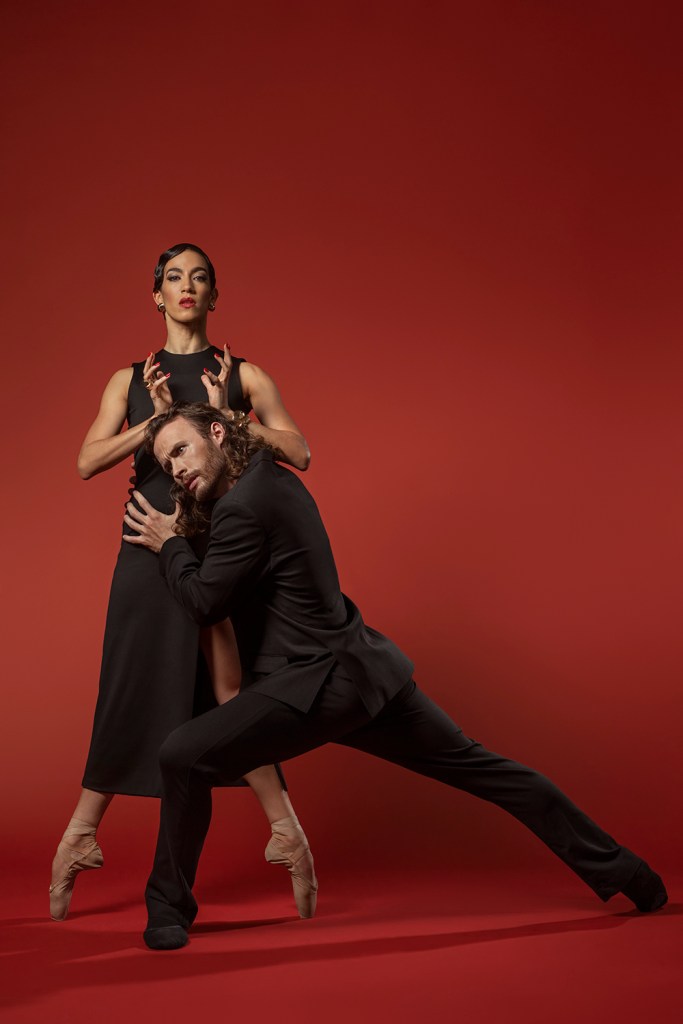
Branden Reiners (Macbeth), Ana Gallardo Lobaina (Lady Macbeth) Image: Ross Brown
The Royal New Zealand Ballet
Macbeth
Wellington, Auckland and Christchurch
March 2026
John Daly-Peoples
The Royal New Zealand Ballet open its 2026 season with a contemporary reimagining of Macbeth, Shakespeare’s most brutal tragedy. Created by internationally acclaimed choreographer Alice Topp (Aurum, Logos, High Tide), the ballet unfolds in a ruthless modern world shaped by political ambition, media manipulation and the fatal seduction of power.
The production will feature Ana Gallardo Lobaina as Lady Macbeth and Branden Reiners as Macbeth.
“Macbeth is one of Shakespeare’s great tragedies, exploring themes as current today as they were when first written,” says Alice Topp. “An epic story fuelled by political ambition, passion, desire for power and the burden of guilt, its potency endures. Our Macbeth is set in a hierarchy-hungry, high-society city, where political storms, media frenzy and personal ambition collide.”
While ballet companies across the world regularly perform “Romeo and Juliet” and “A Midsummers Night Dream” based on Shakespeare’s plays very few of his other works are performed. “A Winter’s Tale”, “Hamlet”, “Othello” and “The Tempest” are occasionally performed.
Just in the last couple of years there have been other productions of Macbeth with the National Ballet of Japan performing “The Tragedy of Macbeth” by British choreographer and director Will Tuckett in 2023 and last year the Dutch National Ballet presented a “Lady Macbeth” choreographed by Helen Pickett.
This new co-production with West Australian Ballet will see Macbeth premiere as part of the Aotearoa New Zealand Festival of the Arts in Wellington and the Auckland Arts Festival, before touring to Christchurch and Dunedin. Presented in association with Avis, this ambitious new work places Shakespeare’s iconic story of ambition, power and moral collapse into a volatile modern world shaped by political manoeuvring and relentless media scrutiny.
At the centre of the ballet is the rise and fall of Macbeth and his formidable wife – a dazzling power couple whose ascent to influence is as intoxicating as it is catastrophic. Propelled by ambition and fanned by public adulation, the Macbeths scale extraordinary heights, only to find themselves consumed by guilt, paranoia and violence. Through the visceral language of contemporary ballet, their psychological unravelling is laid bare in an explosive portrait of power gained and power lost.
For Topp, the translation of Shakespeare’s dense, language-driven tragedy into movement is not an act of reduction, but of revelation. “Shakespeare’s text might be dense, but it also has movement written into the language,” she says. “The story is a psychological drama, full of behaviours, emotions and atmosphere. All the movement is right there in his words, and my role is to find where those emotions land in the body and let them speak physically.”
Award-winning designer Jon Buswell, a long-time RNZB collaborator, will create both set and lighting, shaping a darkly glamorous world that reflects the ballet’s volatile political landscape. Costumes are by Sydney-based designer Aleisa Jelbart, renowned for her bold contemporary designs across ballet, opera and theatre, bringing a sharp modern aesthetic that underscores the work’s themes of power, status and image.
The production will also feature a newly commissioned contemporary score by composer Christopher Gordon, performed with a live string ensemble from the New Zealand Symphony Orchestra. Layering full orchestral textures with driving, heavy-metal influences, the music provides an unrelenting pulse that mirrors the characters’ accelerating descent.
Ana Gallardo Lobaina (Lady Macbeth) Image: Ross Brown
Ana Gallardo Lobaina has danced numerous roles for the RNZB including Cinderella and Stepmother in Loughlan Prior’s Cinderella. and she featured roles in Alice Topp’s Aurum and Logos.
Branden Reiners joined the Royal New Zealand Ballet in 2023 and his roles to date include Siegfried and Rothbart in Swan Lake, Tybalt and Lord Capulet in Romeo & Juliet, Serenade, the ‘Clay’ pas de deux in Alice Topp’s Logos.
Artistic Director Ty King-Wall says the new production showcases the RNZB at its most daring and expansive. “Macbeth is the Royal New Zealand Ballet as you’ve never seen us before,” says King-Wall. “Alice is bringing a world of bloodshed, betrayal and intrigue to our stages, in a cutting-edge production which draws upon the versatility of our dancers, the skill of our technical team, and demonstrates our incredible artistic range as a company.”
Macbeth stands as one of the most ambitious new works in the company’s recent history. A bold and bloody retelling of Shakespeare’s tragedy, it promises audiences a searing, high-octane theatrical experience – one that speaks urgently to the contemporary world while honouring the enduring power of the original story.
2026 TOUR DATES Wellington, St James Theatre, 25-28 February
Auckland, Kiri Te Kanawa Theatre, Aotea Centre, 4-7 March
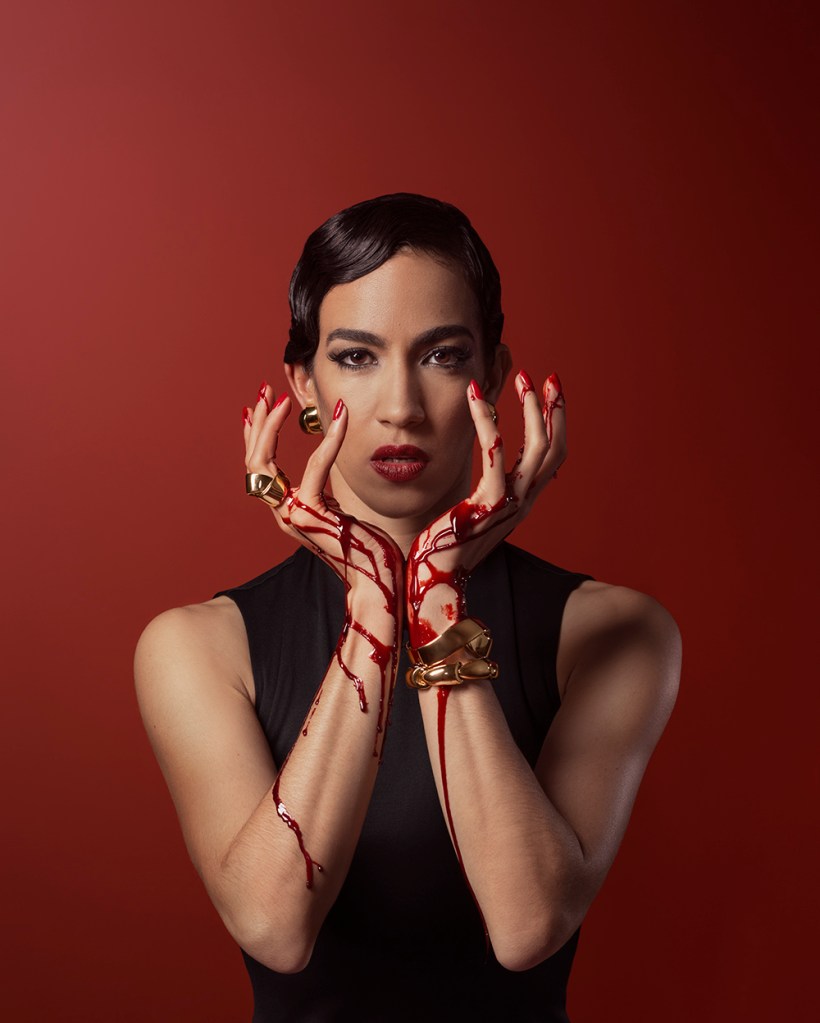
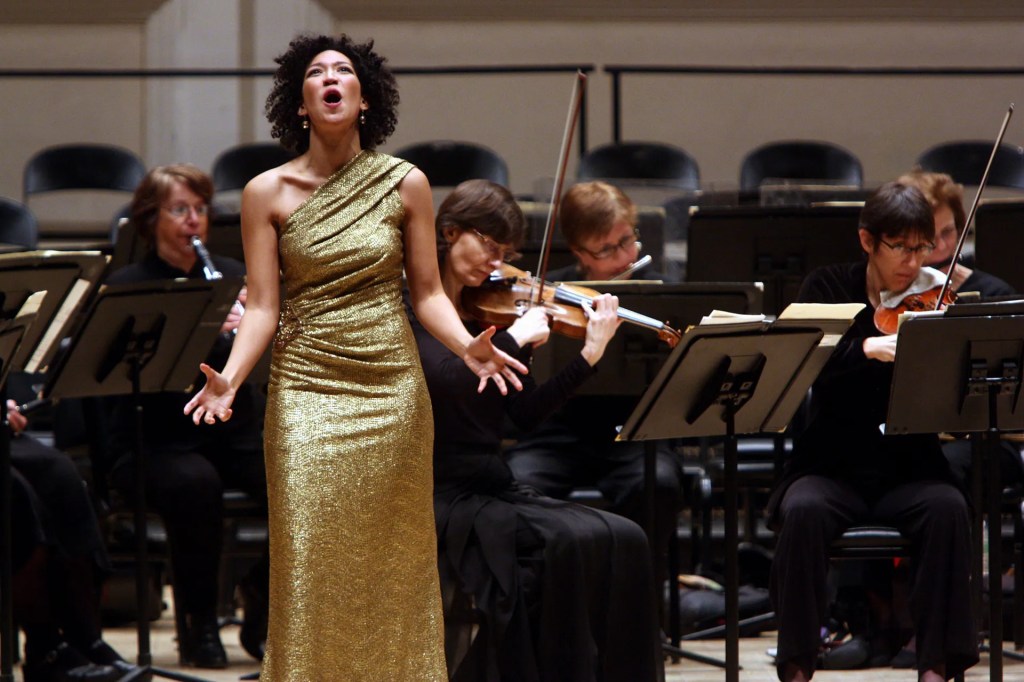
Julia Bullock, Bluebeards Castle, Sincere Apologies
The New York Classic review last year featured a review of Julia Bullock by Rick Perdian
“It would have once been almost impossible to imagine a vocal recital by a major artist with songs by Alban Berg, Bob Dylan, and Rodgers & Hammerstein on the program. These are different times, however, and what once would have been dubious box-office is now perfectly attuned to the times.
Bullock opened the recital with songs by Samuel Barber, whose embrace of Romanticism put him at odds with the more progressive elements of the musical establishment in mid-twentieth-century America. The three songs which she sang—“My Lizard (Wish for a Young Love),” “Nuvoletta,” and “The Daisies”—outlined the wistful nostalgia, zaniness, and embrace of the bizarre that would course through the recital.
As with the Barber songs, Bullock performed songs by Kurt Weill which spanned the composer’s career from his collaboration with Bertolt Brecht in Germany to his Broadway hit, Lady in the Dark.
The outlier was the first, “Complainte de la Seine,” which Weill composed in Paris after fleeing Nazi Germany. This setting, like earlier songs dating from Weill’s collaboration with Brecht, “Ballade vom ertrunkenden Mädchen” and “Song of the Hard Nut,” show the composer at his most hard-edged and bleak. With crystalline tone, perfect pitch, and a delivery void of sentiment, Bullock sang of cadavers resting at the bottom of the Seine, the Marxist revolutionary Rosa Luxemburg’s decaying corpse in a Berlin canal, and the calculated transactions that fuel capitalism. With “The “Princess of Pure Delight,” Bullock switched gears, projecting a cool sophistication that evoked the era.
Bullock’s most sublime singing came with Berg’s Altenberg Lieder. Viennese audience’s greeted the songs with such derision in 1913 that Berg never permitted them to be performed during his lifetime. The five songs are settings of enigmatic verses by the poet Peter Altenberg which he sent to friends on postcards.
A substantial portion of the second half of the recital was devoted to songs by Richard Rodger and Oscar Hammerstein. Bullock told the audience that their music had been a part of her life from her earliest years growing up in St. Louis. “Dites-Mois” from South Pacific was the first song that she ever sang in public at the age of ten before an audience of thousands.
The audience was enthralled as Bullock sang some of the greatest hits from The Sound of Music and South Pacific. For the most part, these were straightforward renditions of beloved songs, but Bullock and Brown could be provocative, such as in “You’ve Got to Be Carefully Taught” from South Pacific. Bullock delivered the song’s message with a matter-of-fact directness which was intensified by Brown’s punctuation from the piano.
There were also songs linked to Odetta Holmes,who was known as the voice of the American civil rights movement in the Sixties. Bullock sang Bob Dylan’s “Masters of War” with a penetrating, unflinching directness. Odetta’s arrangement of “Going Home” and Elizabeth’s Cotten’s “Freight Train” followed.
Bullock ended the recital with Converse’s poignant ballad “How Sad, How Lovely,” a meditation on the loveliness and sadness of life.”
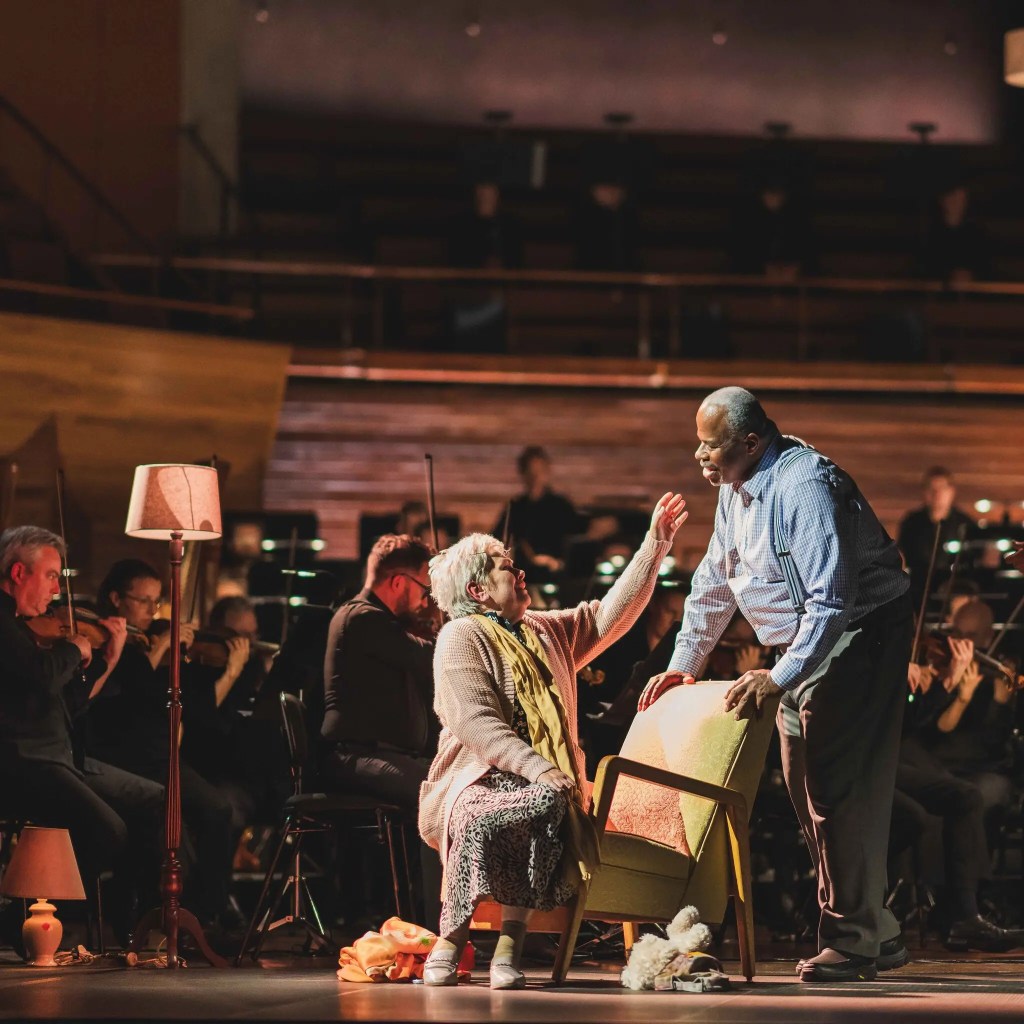
Bluebeards Castle
This version of Bluebeards Castel was previously performed in Wellington and Christchurch in 2023. Elizabeth Kerr reviewed the work in Five Lines.
“The dramatic trajectory of this contemporary production of Bluebeard’s Castle is vivid and deeply moving from its opening bars till the passionate conclusion. ..For me, its greatest wonder is the faithful use of the original text and music to tell a tragic story of today, a superb creative reimagining of Bartók ‘s only opera.
Bartók wrote Bluebeard’s Castle in 1911. He was 30 years old. The Gothic work, with a libretto by the composer’s friend, poet Béla Balázs, was based on the French folk tale published in the 17th century by Charles Perrault.
The opera has a singing cast of two with a full orchestra. The role of Bluebeard is sung in this New Zealand performance by US baritone Lester Lynch, and his wife Judith by UK soprano Susan Bullock. As the semi-staged production opens, the strings of the NZSO set a rather creepy mood. The couple arrive onstage, Judith appearing confused and troubled. “If you left me, I’d be lost and all alone here,” she sings.
In the original, Judith was Bluebeard’s very young wife, brought to his cold, dark castle and confronted by seven locked doors, which open in turn throughout the opera, revealing their disturbing contents. The locked doors are replaced by a suitcase, and from it are drawn contents representing memories of Judith’s life and their relationship.
Bluebeard’s Castle is often described as a Symbolist opera and symbolism remains strong in this production. ..This is the writing of a young Bartók, strongly influenced by Romantic composers and Debussy, and his score, including the challenging and chromatic vocal lines, is beautiful, colourful and lush. It is also highly dramatic and alongside the theatrical symbolism are meaningful musical motives, most noticeable the “blood” motive of a minor second, a semitone, appearing whenever Judith, remembering past losses and fears, refers to blood.
A final “door” brings the impassioned denouement. “When this door is opened, Judith, you will find my wife there waiting”, sings Bluebeard, handing her a mirror from the suitcase. The poetry in the libretto really blooms here, as Bluebeard sings of his former wives, the young lover, wife of the dawn, the young wife of his “noontime”, the mother, wife of his evening.
The younger wives return, also holding mirrors, and as Bluebeard sings of each, Judith offers a repetitive and sad little refrain from her chair. “Ah, compared to her, I am nothing.” But she is, he tells her, his wife of the night. Musically, Bartók brings the opera to its big romantic climax. “Eternal beauty!” sings Bluebeard. “Now, all turns to darkness.”
The mood in music and staging fades quietly. Tenderly, Bluebeard brings Judith a cup of tea. The lights also fade to blackness.”
Sincere Apologies
“Sincere Apologies” is an Australian production with relevance to New Zealand with a recent review of the production in “My Melbourne Arts” praising the low key, audience based play.
“Sincere Apologies” begins unassumingly: an envelope is handed to an audience member and it is passed from hand to hand. No words are exchanged, no introduction is made, no actors are present. It’s just a low-key game of “pass the parcel” that opens the door to a chorus of voices and a world of regret.
Fifty real apologies are sealed inside fifty envelopes that are distributed to the audience. These span from 1990 all the way into the future, each one factual and collected from documented expressions of remorse by public figures, private correspondence, and personal moments by the shows three creators, Dan Koop, Jamie Lewis and David Williams. One by one, in numerical order, audience members step up to a microphone and read them aloud.
Some are weighty and political – a Prime Minister’s apology to the Stolen Generation or BP’s statement following an oil spill. Others tap into pop culture’s hall of infamy – like Kanye West and Taylor Swift. Then, there are the apologies from the creators themselves, adding a deeper intimate layer to the mix. There are no actors in Sincere Apologies. No one introduces the show or welcomes the audience. Even at the end, when we clap, it’s not for performers on stage, but for each other, and the three tech staff quietly stationed in the corner. The audience is the cast, and in that shared vulnerability something almost communal forms. Strangers stumble over words, laugh nervously, or surprisingly choke up. You start to listen differently, not as a spectator, but as part of a temporary community bound by confession.
As the reading unfolds, you find yourself unexpectedly drawn in, paying attention not only to the words themselves, but to the way they are spoken. Stripped of power, fame, and PR polish, these words take on new meanings. When random people speak them, they can come across as absurd, hollow, or even heartbreaking and genuine. The performance asks: what happens when we remove status from an apology? Can tone, delivery, and intent make any acknowledgment register as authentic – or insincere?
A carefully crafted score heightens the work, as subtle sound effects and rhythmic pulses heighten particular instances, building a hypnotic rhythm that pulls the audience into this collective act of reckoning.
By the end, this experience is strangely moving. There’s humour and absurdity, yes, but there is a weight to hearing the people in the room attempt to make things right. It’s exhausting and cathartic, and a reminder that “sorry” is both universal and endlessly complicated.”
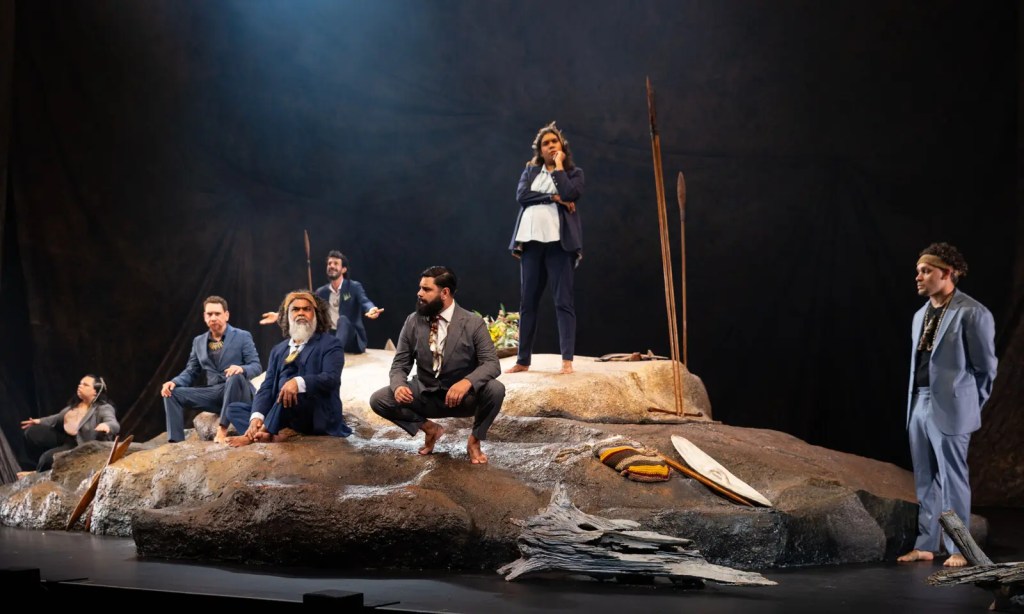
“It is 1788, and six senior lawmen (with one young man sent as a representative) witness the arrival of the First Fleet. The play features a talented cast: John Blair, Damion Hunter, Colin Kinchela, Nathan Leslie, Leroy Parsons, Glenn Shea, Kerri Simpson. As we approach the 250th anniversary of Cook’s arrival, this play is timely and fresh given the paucity of publicly available sources that document first encounters from an Indigenous perspective. Visitors had come and gone for many years and the play includes reference to Cook’s visit 18 Summers prior. But previous visitors always left.
Humour provides relief to this intensely imagined moment in history. The Visitors is written by Jane Harrison. Dir. Frederick Copperwaite. Carriageworks Theatre, 2020. Photo: Jamie James.
The script involves much discussion about whether to engage in war or allow the visitors to come ashore. After lengthy debates, the men notice that the visitors are landing. They make the fatal decision to welcome them. The Visitors’ dialogue is witty and satirical. The men at its center describe the visitors in derogatory ways that mirror the way colonizers described us – “wretched people” with nothing to offer.
The Design
The set is beautifully designed with large trees framing the meeting place. Fog drifts in, allowing the audience to imagine a time long ago by the ocean. The sound of the sea and birds amplifies the experience.
The men are dressed in suits symbolizing their status in contemporary terms. They are given clan names that relate to Countries such as Eel clan or Bay people. This avoids any contest around traditional boundaries and clan names.
Personalities, But Where Are The Women?
Aboriginal protocols are clear – the men pay respect to the Country as they each arrive. Formal proceedings begin with being welcomed onto the Country, just like what the audience experienced before the performance.
Formalities aside, there is also a lot of humour in this play. Fun is made of one of the men who has complained he can’t connect with his new wife. Grandfather Elder examines him and concludes that his new wife probably just doesn’t like him. Personalities are clear – something that is often missed in the colonial writing of Indigenous peoples. We are human, we laugh, we disagree and we engage in combat, revenge, grudges, and all manner of human frailty.
The experience could have only been improved by the inclusion of Aboriginal women in the cast. The women, we are told, are away on Women’s business and although they are often referred to, are missing from the decision making process. In one scene one of the men refers to women as “spoils” of battle and in another, after hearing the younger man simulate the mooing of a cow, a comment is made that it sounds like his wife. Perhaps this is just banter between men, however, historically a range of tropes have been used to typecast Aboriginal women into roles imagined by the colonizers.
The women’s absence suggests there was — or is — a lack of senior Aboriginal women knowledge holders. The truth is far from this assumption. There is ample evidence Aboriginal women were involved in early interactions, amicable and otherwise, with early settlers. For example, it is believed local fisherwoman Barrangaroo — noted for her presence and authority — was present at the first meeting between settlers and her Cammeraygal people at Manly in 1788, and also participated in warfare with settlers at North Harbour in November 1788. She is remembered in early colonial documents as having a commanding presence, inciting respect and fear in those around her. Likewise across the country, there are stories of Aboriginal women emerging including their heroic efforts to defend Country.
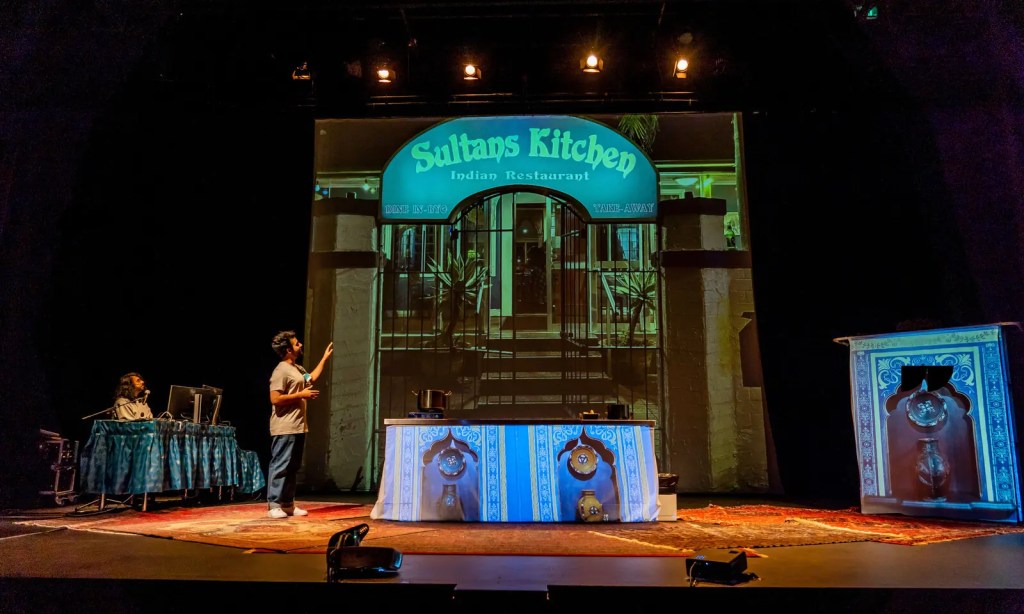
A Place in the Sultan’s Kitchen
A review of A Place in the Sultan’s Kitchen (or How to Make the Perfect One-Pot Chicken Curry) by Nance Haxton in Brisbane’s Indaily
“There aren’t many shows where you emerge and say the play was as good as the food, but A Place in the Sultan’s Kitchen (or How to Make the Perfect One-Pot Chicken Curry) certainly passed the taste test.
Telling the multi-layered story of his family’s past while cooking his grandmother Mehmeh’s chicken curry, Joshua Hinton recalls his heritage, sprinkled with a message so needed right now – that we are all not as far apart culturally as we think. And that food unites us all.
The Australian singer-songwriter unpicks his origins going back generations by skilfully weaving into his conversation audio interviews with his grandmother while the aromas of turmeric, garam masala, cinnamon, chilli, tomato and chicken float over the audience like a spell.
The spice bottles from his onstage kitchen become integral parts of the story, with photos of his family emerging from the spice rack to become characters in his grandmother’s recollections. Kitchen utensils magically becoming war planes in war stories.
Joshua’s brother Dominic is also on stage throughout, on guitar and supporting his brother by controlling multi-media shots from a range of angles around the kitchen to highlight crucial elements in the evolution of the curry. This all reveals aspects of Joshua’s identity, living between cultures.
For Brisbane lovers and appreciators of Sultans Kitchen, a staple of the Paddington foodie scene for more than 40 years, this is somewhat compulsory viewing to see the incredible challenges that the founders of this Brisbane institution overcame to build this restaurant.
Hinton is a skilled storyteller as well as musician, wrapping up his culinary journey around the world with an original song sung with his brother, satisfying all the senses before the audience steps outside to partake of the chicken curry that formed the backbone of the tale. It was a beguilingly simple device executed perfectly, and a night to remember.”
Duck Pond
A review of Duck Pond in The Guardian by Lindsey Winship “Australian company Circa are masters of modern circus, often eschewing obvious exhibitionism, and instead weaving acrobatic skills with a dance and theatre sensibility to make mood pieces. Previous works have considered the plight of refugees (The Return), tragic tales of Orpheus and Eurydice or Dido and Aeneas, and have taken on music from Stravinsky’s Rite of Spring to Beethoven’s Ninth – all serious business.
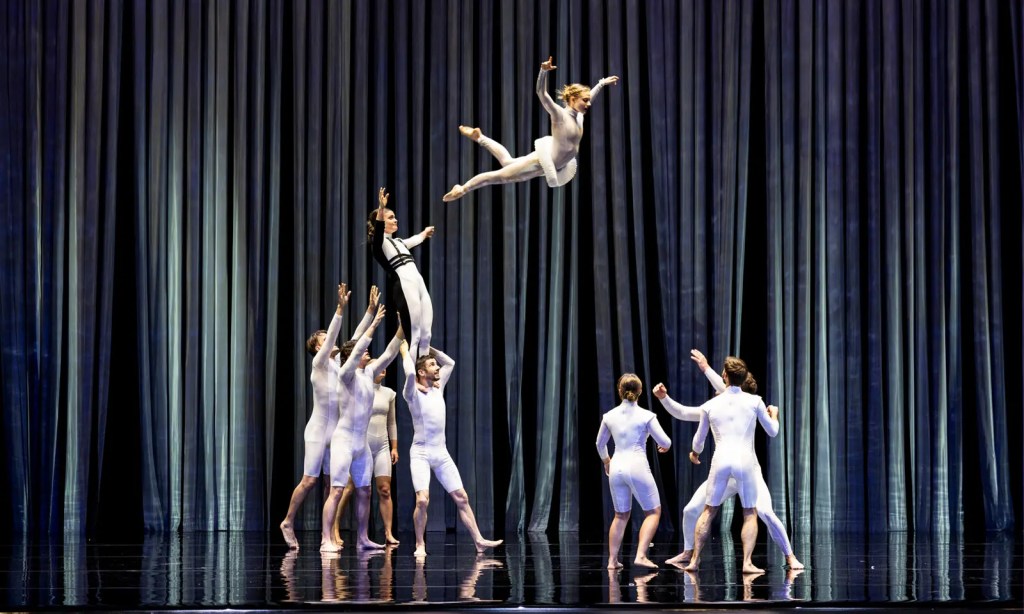
Duck Pond is, on the surface, a less serious proposition. The name is a parody of Swan Lake and it borrows from the famous ballet – shards of Tchaikovsky’s score feed into Jethro Woodward’s soundtrack – and also from another fairytale, the Ugly Duckling. So we get a love triangle of sorts between a prince, an ugly duck and a vivacious black swan. The conceit might seem to promise a more conventional narrative, but it delivers something a little different. The mood is understated, classy, colours of black and gold, a clan of performers in shimmering velvet catsuits. The music is a constant underscore rather than a game of set-ups and climaxes.
There is a lot of beautiful skill on show. Acrobats climb up human towers; flyers somersault between bases. Their formations of three are especially inventive: ornate arrangements of bodies in fine-tuned equilibrium, toes anchored on hips, lower backs, shoulders, anywhere they can get a foothold. There are some lovely moments of flow between couples who lift and fling, curl and unfurl, balance and counterbalance. Bodies tie themselves in knots on the trapeze; others soar on the silks. The ugly duck is revealed to be a swooping swan; the black swan has a dominatrix moment walking over a man’s bare back in red stilettos. But there are lulls too, such as a pillow fight that turns into an anticlimax.
Story-wise, director Yaron Lifschitz puts a couple of nice twists on the Swan Lake narrative but it lacks a big emotional payoff. Low-key lyricism, rather than transactional tricks for applause is Circa’s way and Duck Pond is a lovely show, with warmth, skill and some wow moments, but you can’t help feel it could do with a dash more pizzazz.”
Niue’s Hikulagi Sculpture Park: A Global Microcosm
Sited in the middle of the natural rainforest of the Pacific Island of Niue is a physically small but conceptually monumental installation / treatise on global environment concerns, the Hikulagi Sculpture Park.
The Hikulagi Park was established in 1996 by members of the then Tahiono Arts Collective, a small group of artists including Mark Cross. Many had returned to their Pacific home, countering the trend of urban drift that has devastated many rural and island populations in the Pacific.
Several acres of land south of the eastern village of Liku were at the artists’ disposal and, while being ideal for the purpose of the artists’ environmental concerns, it was also ironically surrounded by the pristine rainforest which once covered the now degraded land.
The park’s concept embraces the sentiment that an island is analogous to Planet Earth in microcosm, and so is intended to encourage discussion on issues such as, pollution, climate change and human co-existence. It is a place where the intrinsic and unique qualities of Niuean Culture and environment can be shared with the world while attracting attention to Niue through the medium of contemporary sculpture, a medium seen nowhere else in the Pacific Islands.
Its intention is to do this through audience participation and the predominant utilisation of the found object; that is to say, the artists and community make sculpture from the inorganic waste created by contemporary consumer society.
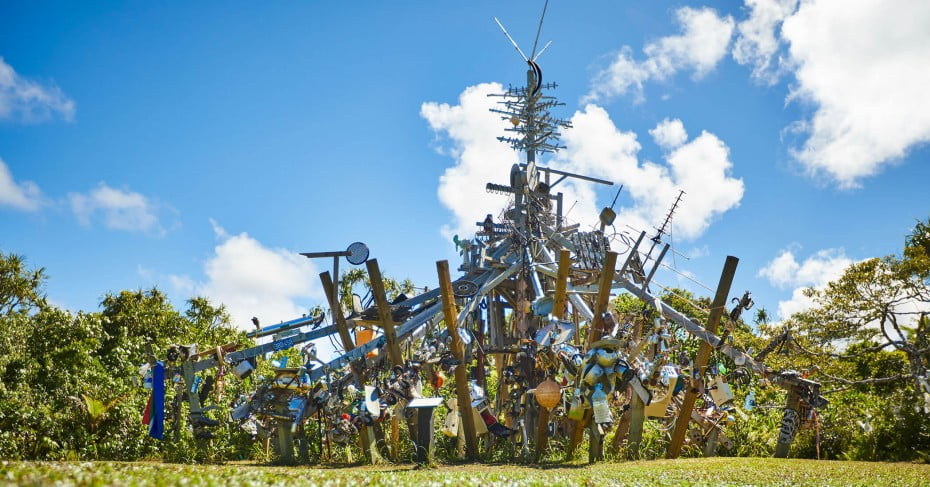
With this in mind, the centrepiece of the park is the monumental sculpture called ‘Protean Habitat’ which epitomises the ideals behind the Hikulagi Sculpture Space. On-going and interactive, it is an art project that does not have any perception of a finite conclusion. Based on a wooden substructure, it is an assemblage sculpture fundamentally constructivist in its utilisation of the found object that can easily be attached with the most basic of tools, enabling passers-by to add their own input.
In its state of ever-changing growth the sculpture reflects the state of the world and the refuse that humanity is accumulating in its juggernaut consumerist path to who-knows-where. This vagueness of direction and final outcome of humanity are then reflected in the unexpected directions the sculpture will take during its growth and the fact that it will grow ad infinitum.
The first sculpture to be erected at the park in 1996 was by Niuean returnee Mikoyan Vekula, who grew up in Wellington. His ‘Odesyk’ is a six-metre semicircle of six totem poles of native Kafika hardwood decorated intricately with cut and inverted beer cans. The circle is completed by limestone rocks known as Makatea throughout Polynesia. Resisting the Polynesian artist trend of introspection in his imagery, Vekula draws from a number of indigenous cultures including Australian, American and Celtic .The totems in this esoterically titled sculpture depict a family, with the guardians on each end of the semicircle and the four children in the middle. At the centre of the circle is a bench intended for the viewer’s contemplation and meditation.
Several more ephemeral artworks have been created by artists who just happen to be passing through Niue. A good example is ‘Web’, a sculpture created by environmental artist Meri Heitala from Helsinki which has been made by stringing telephone wire, spider-web-like, between two coconut trees while attaching drink can tear tabs, which suggests captured insects. In this way, such ephemeral sculptures are encouraged to enlist the input from visiting artists who may not have the time to create something more permanent.
A recent project that is more of an enclosure than a sculpture is ‘Sale’s Fale’, an ongoing project in memory of the Niue High School art teacher and sculpture park co-founder Charles Jessop who passed away in 2012. The sculpture is in the form of a monumental montage constructed by the Niue community through the biennial competition ‘The Charles Jessop Memorial Sculpture Prize’
The Hikulagi Sculpture space to date is being created through the voluntary labour of various individuals and businesses on Niue. Initial funding at its inception was provided by the Pacific Development and Conservation Trust as well as the then Aus-Aid Cultural Fund. The space has been supported by Reef Shipping, The New Zealand High Commission to Niue and Niue Tourism has helped with some construction and on-going maintenance.
Protean Habitat is an ongoing monumental assemblage in an ever-changing state of growth and decay, not unlike all life on the planet Earth. It has an interactive element whereby the public are invited to add their own sub-sculptures to the substructure leaving their small indelible mark on the growth of the main construction.
Mark Cross who has had over 40 years of association with the Island of Niue says “I have been alert to the layers upon layers of humanity that has come and gone leaving small elements of their lives making a small community into a living protean organism. In such an isolated community this awareness becomes more acute and then you realize what you are experiencing is a microcosm of the whole world. So, in its state of ever-changing growth, the sculpture reflects the state of the world and the refuse that humanity is accumulating in its juggernaut consumerist path to who knows where. This vagueness of direction and the final outcome of humanity is then reflected in the unpredictable directions the sculpture will take during its growth and the fact that it may or may not grow ad infinitum.”
The concept behind the Hikulagi Sculpture Park has links to the Watts Towers in Los Angles and Palais Ideal in Hauterives, France.
The Watts Towers are a collection of 17 interconnected sculptural, structures, built by Simon Rodia over a period of 33 years from 1921 to 1954. The Palais Ideal is a series of constructions built by postman. Ferdinand Cheval over 33 years 1879–1912 in Hauterives, France.
A new project will involve the internationally recognised sculptor Chris Booth who has produced more than twenty large scale sculptures around the world. The sculptor travelled to Niue in 2023 when he ascertained the potential sculptural medium of rocks and stones as well as meeting with potential collaborators such as the leading weavers in the village of Liku,
As weaving is the most dynamic artform existing in Niue today Chris has identified with it and master weavers Enele Kaiuha and Ahi Makaea-Cross have agreed to collaborate and transfuse ideas that may influence the design of the sculpture. This collaboration will in turn enable the project managers to interest the wider community in becoming involved both in a practical way (the collection of rocks and stones) and as an audience in the construction of the sculpture and the finished work. We also anticipate that the schools both primary and secondary to be involved from the outset to the completion, the project being a unique opportunity for the children to be exposed to contemporary art practice if not being more closely involved in its construction.
In 2024 he again travelled to Niue in September to try to decide on a more definite concept for the sculpture. Prior to his arrival the Broadcasting Corporation of Niue (BCN) offered the project a cyclone damaged, 8 metre diameter, aluminium satellite dish which could be inverted to form a dome structure. This would support around 1700 150mm rocks from the quarry while another 500 or so weathered beach rocks would provide a contrast to the more jagged quarry stone which would be employed to create the patterns used in the “tia” coil weaving technique (placemats, bowls etc). The use of the satellite dish also fits within the strong Hikulagi ethos of the re and upcycling of obsolete consumer and industrial materials as an environmental statement.

 New Zealand Arts Review