Richard McWhannell, From El Paso to Encinal: The John Wayne Tour
Orexart
Until March 3
Reviewed by John Daly-Peoples
Richard McWhannell’s recent exhibition “From El Paso to Encinal: the John Wayne Tour” is record of the trip he made through Southern Texas in 2019.
He has titled the exhibition “The John Wayne Tour” as the purpose of the trip was to transport a portrait of John Wayne from El Paso to Encina for friend. This seemingly trivial rationale is not unlike the basis for many of the tales of the wandering cowboy ontheir picaresque mission.
Accompanying the exhibition is a written account of his journey which brings together personal notes about the journey, references to the history and culture of the area along with musical and film references.
One wall of the gallery features more than a dozen small to medium sized works which are like a display of postcards documenting the journey. There is a small portrait of “John Wayne” ($2600), who inspired the trip along with images of the places the artist visited. many of these places have resonances with songs and films associated with the area.
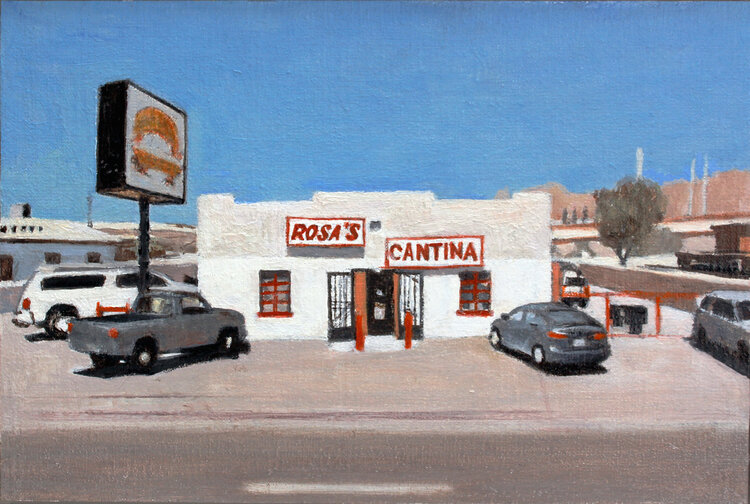
Richard McWhannell, Rosa’s Cantina
There is a painting of “Rosa’s Cantina” ($2400) made famous by the Marty Robbins ballad “El Paso” as well as famous buildings such as the Palacio Federal ($4600) in Nueva Laredo and less important places such as the Three Palms Motel, Presidio ($4600) and the “The Concordia Cemetery, Shafter” ($4200), the resting place of many names of Texas history including the infamous gunfighter John Wesley Hardin.
The artist also pays homage to the great contemporary western “Giant” with a couple of paintings of the large installation works by the American artist John Cerney which celebrate the actors and set of the film. One of these “Reata Homestead and Rock Hudson” features the façade of the house used in the film and Rock Hudson in his car. The other, “James Dean” ($4600) is of the actor with a gun slung over his shoulders. The portrait of Elizabeth Taylor which Cerney also installed is not included.
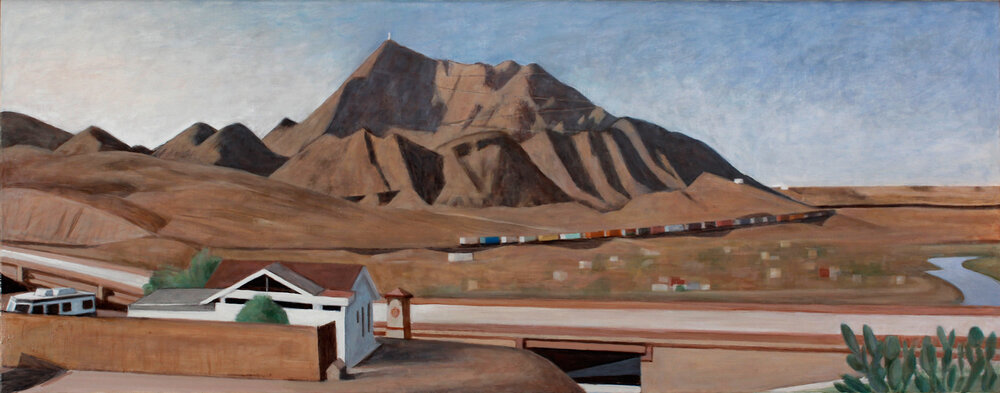
The two large landscape of the dramatic mountain Christo Rey ($12,500) which show it changing from morning till evening feel as though they could be the beginnings of the artists own series of works like Cezanne’s “Mont Sainte-Victoire”.
Images of sites such as “Christo Rey” and “Nueva Loredo” also see the artist delving into the contentious history of the area with Donald Trumps wall just over the horizon in the Christo Rey paintings and the contested area of Nueva Loredo. There is also his painting” “Rio Grande at Castelon” ($4200) where the narrow river which is the border between the USA and Mexico is no barrier to people wanting to cross.
With his limited palette the artist manages to give a sense of unreality to many of his vistas and views, managing to convey the vastness and ruggedness of the area. He also captures the desolation and bleakness as well as the seemingly impermanent nature of the buildings. Taken altogether the works present a surreal vision of the landscape providing a metaphor for the bareness of the political and social framework of the place.
Next week the Auckland Art Fair will be hosting over forty art galleries from New Zealand and around the Pacific showing the breadth and diversity of art from the region.
As well as exhibiting the latest and best in New Zealand contemporary art there are galleries showing major international works, historical works, aboriginal art as well as craft work by significant artists.
GOW LANGSFORD GALLERIES
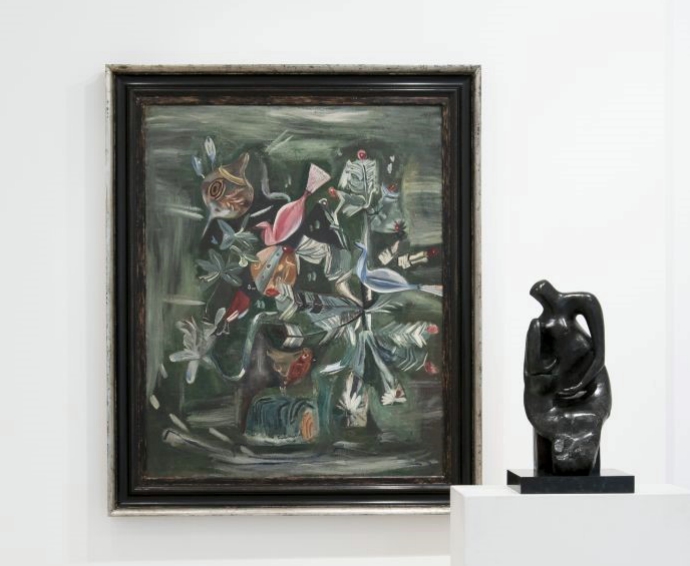
Gow Langsford Gallery will exhibit a work by British Modernist Henry Moore alongside a key painting by Frances Hodgkins.
Moore’s “Mother and Child: Block Seat” which will have an asking price in excess of $2 million is a rare opportunity to see works by this major British sculptor. The last time an artwork by Henry Moore was exhibited in New Zealand was in 2017, when the Auckland Art Gallery mounted Moore’s life-sized “Fallen Warrior”. Founding Gow Langsford Gallery director John Gow (MNZM) says of the Moore, “this is one of the most significant artworks to ever be exhibited at an Art Fair here in New Zealand, and it is the only work by Henry Moore of this scale in the country.”
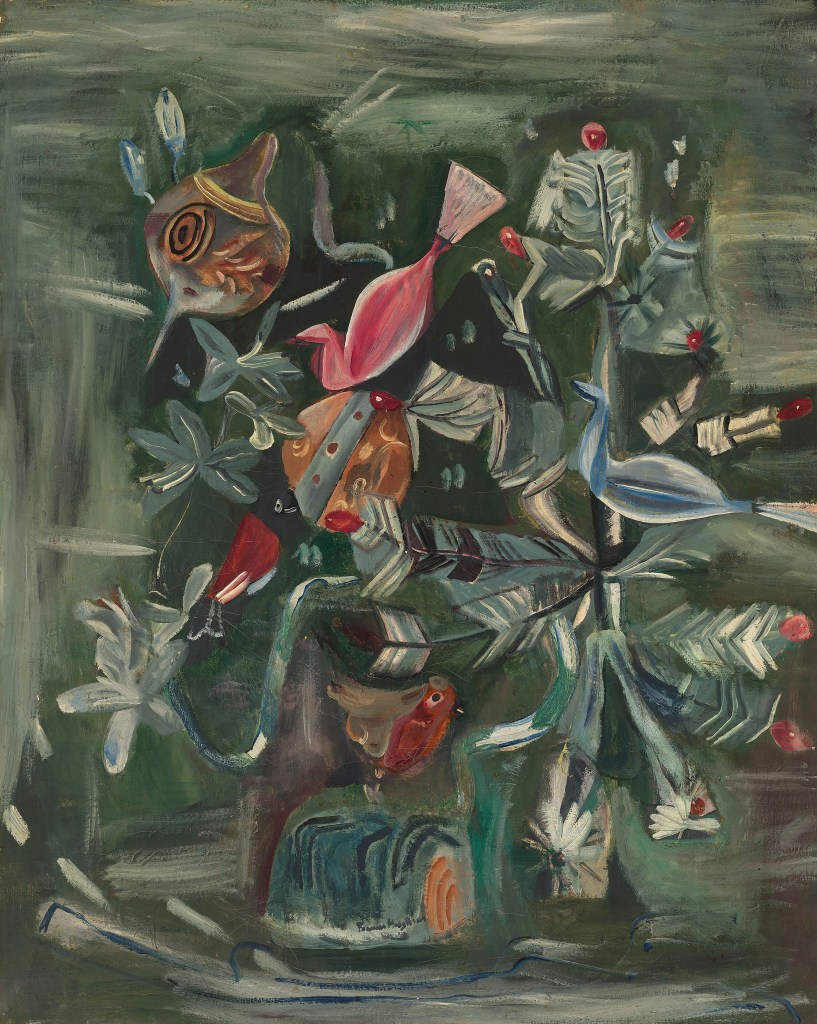
Of Hodgkins’ “Christmas Tree” he says it is “the most major late-1940s oil painting by Hodgkins. It’s a rare occasion that we can offer New Zealand a work of this quality onto the open market. This is one of the very few major works that is not in a public collection.” Alongside these masterworks the Gallery will exhibit works byColin McCahon and Tony Fomison as well as mid-career artists Graham Fletcher and Grace Wright.
Frances Hodgkins Christmas Tree and Henry Moore, Mother and Child: Block Seat
TIM MELVILLE GALLERY
The Tim Melville Gallery be presenting an exhibition of three new stone sculptures by Joe Sheehan alongside an Alberto Garcia-Alvarez triptych dating from 1977, and an installation of Aboriginal artworks.
Joe Sheehan’s new sculptures weigh between 400kg and 700kg and are a major development from his 2019 sell-out exhibition ‘Real Estate’.
JOE SHEEHAN, Invisible City ($45,000)
The Garcia-Alvarez triptych is painted on canvas gifted to him by Colin McCahon in the 1970s when he had just arrived in NZ from California. He had come to NZ to teach at Elam, just as McCahon was departing the University to paint full-time. He invited the artist and his young family to visit him (and his young family) at Muriwai. Knowing that he would not yet have any materials McCahon offered Alberto a roll of green canvas to tide him over … from which this triptych was created.
ALBERTO GARCIA-ALVAREZ, Aidoneus Bed (triptych), 1977 ($65000)
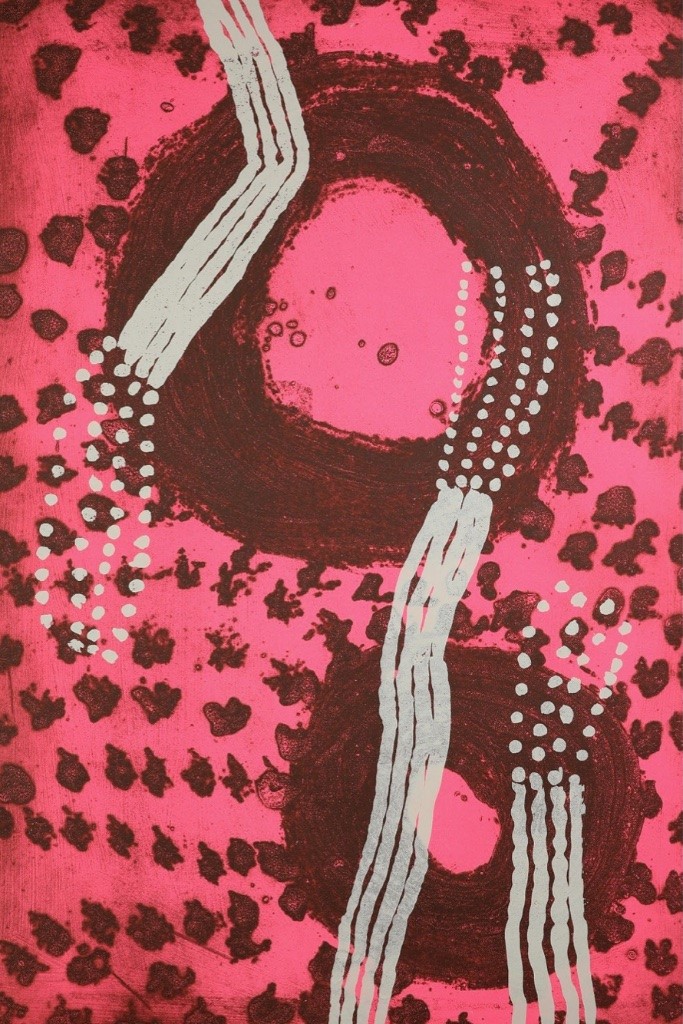
The Aboriginal works being presenting include a new screen-print by celebrated Arnhem Land bark artist Nonggirrnga Marawili, who recently had a major exhibition at Sydney’s MCA as part of the 2020 Sydney Biennale.
NONGGIRRNGA MARAWILI, Baratjala
SUITE GALLERY
Suite Gallery will be showing Tia Ansell, a Melbourne based New Zealand artist and New York based artist Douglas Stichbury.
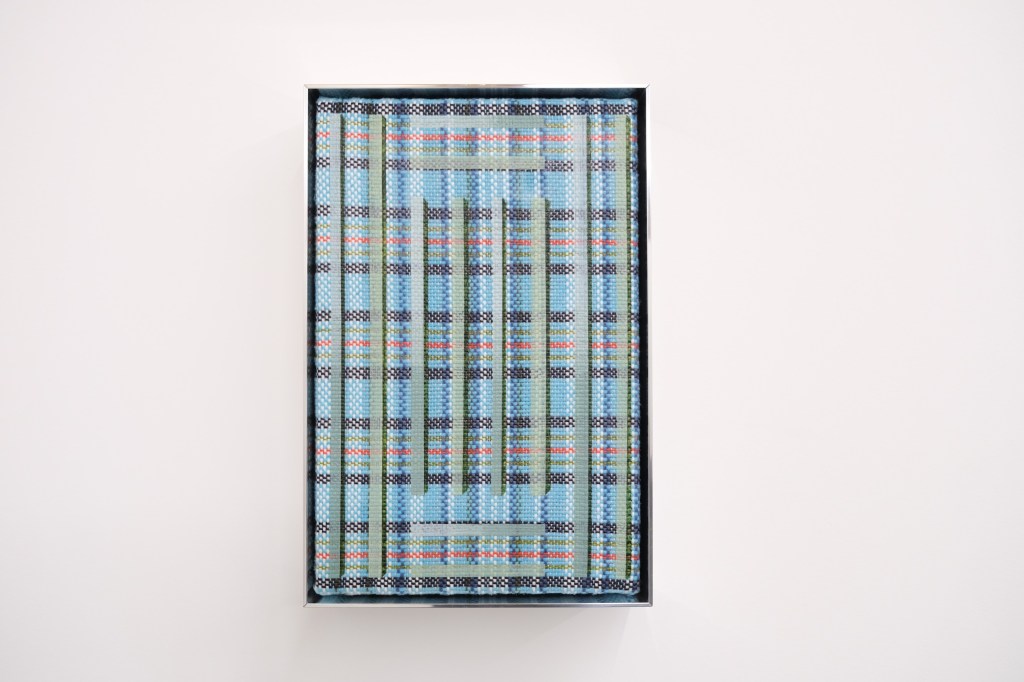
Tia Ansell is a Melbourne based New Zealand artist whose practice combines both painting and weaving. Woven on a 4 or 6 shaft loom, and using a combination of threads such as cotton, linen, bamboo and silk to give different qualities of colour, texture and feel, woven surfaces provide the substrate for the painted surfaces. The woven grids form the basis of Tia’s work, representing the urban landscapes of her neighbourhood in the northern suburbs of Melbourne. Her painting represents snippets of her immediate surroundings; a shaft of light, a window frame or a shadow. Ansell’s aluminium frames, based on a museum storage tray, allow the weaving and painting to be reflected, extending the illusion of a repeated pattern
Tia Ansell, Oxford, cotton, wool and silk weaving, – $2,000
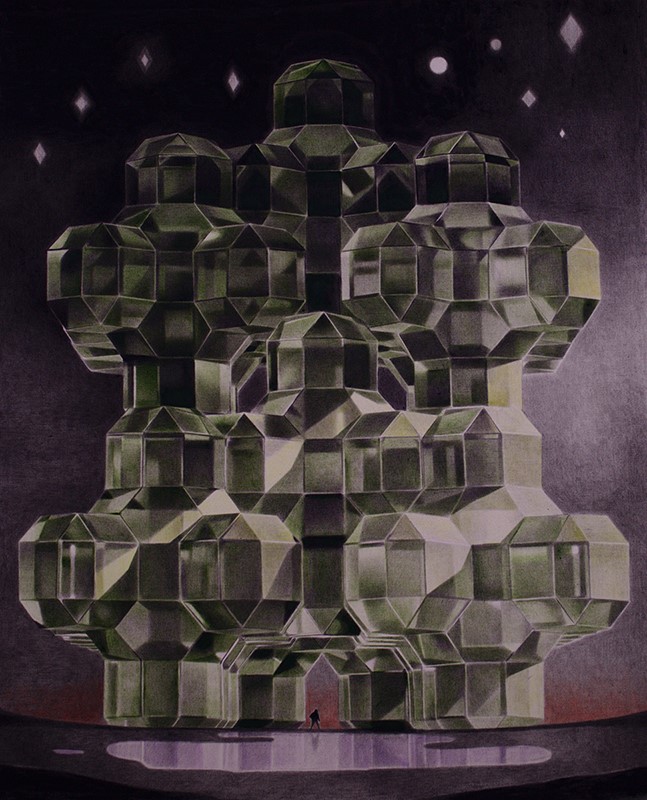
Douglas Stichbury who won the Parkin Drawing Prize in 2014 and is now based in New York will be showing works which continue to explore his interest in speculative 20th century science fiction. Using industrial software Stichbury’s images are initially planned digitally through simulations, before being painted in dry brush oil on linen, a process inspired by Joan Miro’s raw linen paintings and brutalist abstract painting of the 1960s.
The paintings are based on a concept for a film titled the Glass House by the pioneering Soviet film director Sergei Eisenstein which was pitched to Paramount Films in 1930 but never made. The premise for the film, set sometime in the future, was of a completely glass residential building without consistent privacy, a musing on the architecture of surveillance and control.
Douglas Stitchbury, Glass House, dry brush oil on linen, $12,500
MASTERWORKS GALLERY
Masterworks Gallery is showing work by Thomas Carroll (Ngāti Maru, Hauraki), Tania Patterson and Mike Crawford (Ngāti Raukawa, Pākehā)
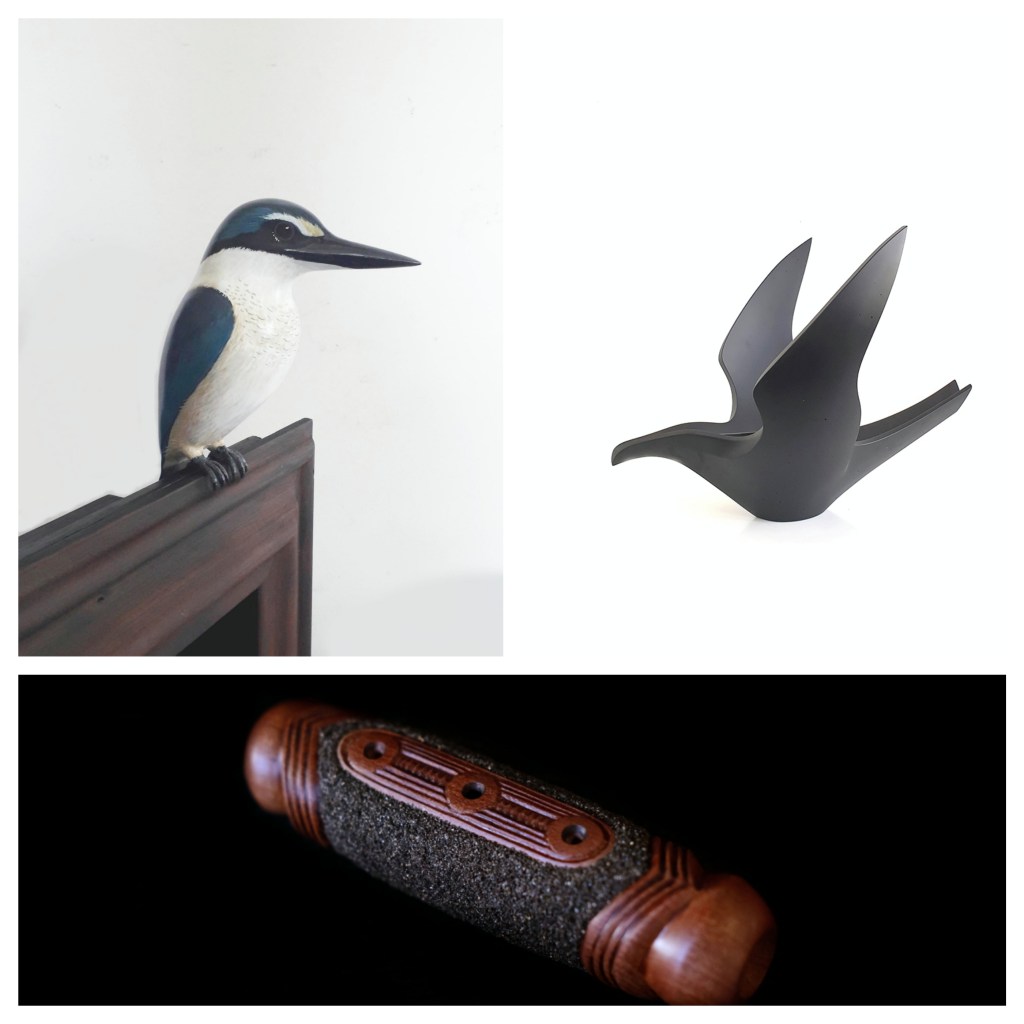
Following the guidelines from experienced practitioners, Thomas Carroll has pursued his interest in Māori music, reconnecting to his own whakapapa and culture and finding his place within Taonga Puoro community. In these works he has used found timbers from a nearby beach, native Beech, Rata and Totara along with a newer addition of sand.
Patterson has created her bird portraits to honour the many threatened indigenous bird species in Aotearoa. Portraiture has historically been used to memorialise an image, recording the subject’s appearance and personality for the future. Tania feels it is important she does this as a means highlight the precarious nature of their future here.
Crawford has built a practice exploring the Māori lineage of his heritage and his interest in sculptural vessels. Research into hue (gourds) and their traditional use as storage for preserving birds has seen the evolution of his practice to forms that combine both bird and vessel characteristics. In his new bird/vessel forms he has captured these forms in flight, their movement expressed through reflective properties of glass. The rich history and the plethora of bird life in Aotearoa provides him with a wealth of inspiration for further investigation with these forms.
Tania Patterson – Kōtare, Kingfisher. Mike Crawford – Tāiko, Chatham Island Petrel (cast black glass, $6,000. Thomas Carroll (Ngāti Maru, Hauraki) – Kōauau, Cross-blown Flute $1,500
ARTIS GALLERY
Artis Gallery will be exhibiting work by ray Ching and Andy Leleisi’uao
They will be showing a major new work by Ray Ching prior to his exhibition opening at ARTIS Gallery later this year. This exhibition will coincide with the launch of his latest limited edition book – ‘Fabled Lands’.
Now living in the UK, during 2010 Ching ventured into the genre of graphic novels, with the first publication titled ‘Aesop’s Kiwi Fables’ in which the tales were told by native birds, who took the place of the original actors.
Raymond Ching is renowned as New Zealand’s leading contemporary bird and figure painter. Merging realism with fictional compositions, Ching’s oil paintings are incredibly detailed, with an almost photographic quality.
RAY CHING, The Pentinent
Wallace Art Award Winner Leleisi’uao’s is one of the most significant contemporary Pacific artists. Known for his distinctive visual language that shows alternate universes populated by strange creatures. Immigrant communities and their experiences are central to Leleisi’uao’s works. An “artist of diaspora”, his work is reflective of his experience as a New Zealand born Samoan. He draws inspiration from ancient and modern history, news headlines and personal experiences.
His work is included in the permanent collections of Te Papa Tongarewa Wellington, Auckland Art Gallery Toi o Tamaki, Pataka Museum & Art Gallery Lower Hutt, the Chartwell Collection and the Wallace Arts Trust .
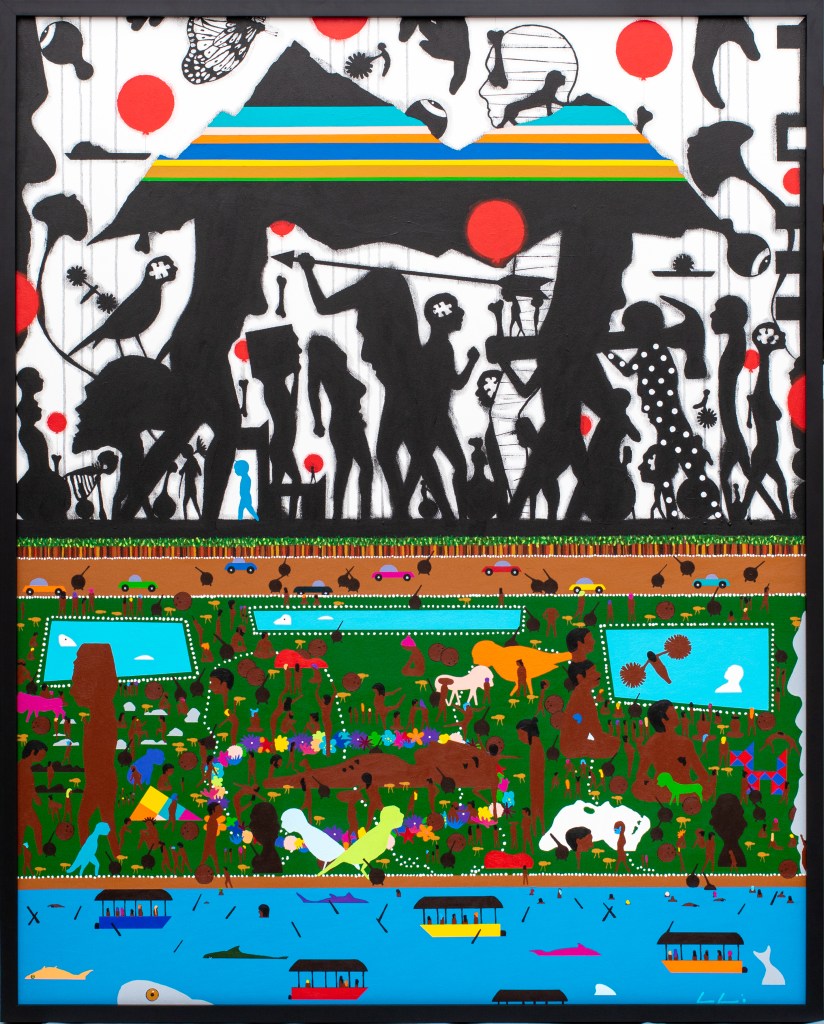
ANDY LELEISI’UAO, Usland Village in Kamoa
BARTLEY + COMPANY ART
Roger Mortimer’s magnificent large triptych Pakiri will feature prominently on Bartley & Company Art’s stand. Showing the ongoing development of Mortimer’s distinctive juxtapositioning of contemporary marine maps of Aotearoa New Zealand with medieval imagery, this ‘map’ covers the north Auckland east coast from Tawharenui in the south to Ruakaka in the north and includes Little Barrier and Great Barrier Islands. At a time of huge anxiety in the world, Mortimer’s work speaks to the notion of the moral imagination. How do we collectively construct a vision of right and wrong when so many in the western world no longer believe or trust in the given, in the untrammelled ‘progress’ of capitalism and concepts of heaven and hell that have defined and shaped western thinking and social frameworks?
Roger Mortimer, Pakiri, watercolour, gold dust and acrylic lacquer on canvas,
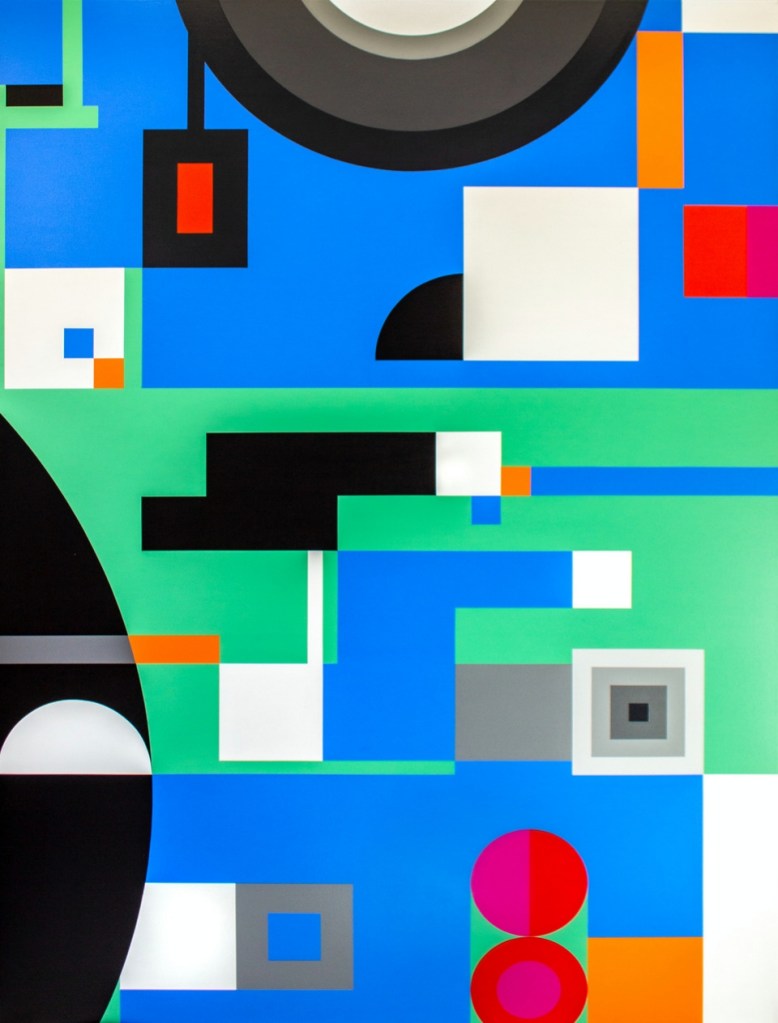
The gallery will also be showing several dramatic new paintings by Kelcy Taratoa. Exploring the complexity of cultural identity in the 21st century, Taratoa’s vibrantly-coloured super-flat paintings blend references to traditional Maori pattern with geometric modernism and space invader games. Ambiguity is at the heart of all of his work conceptually and materially.
Kelcy Taratoa, The Grey Matter, acrylic on canvas
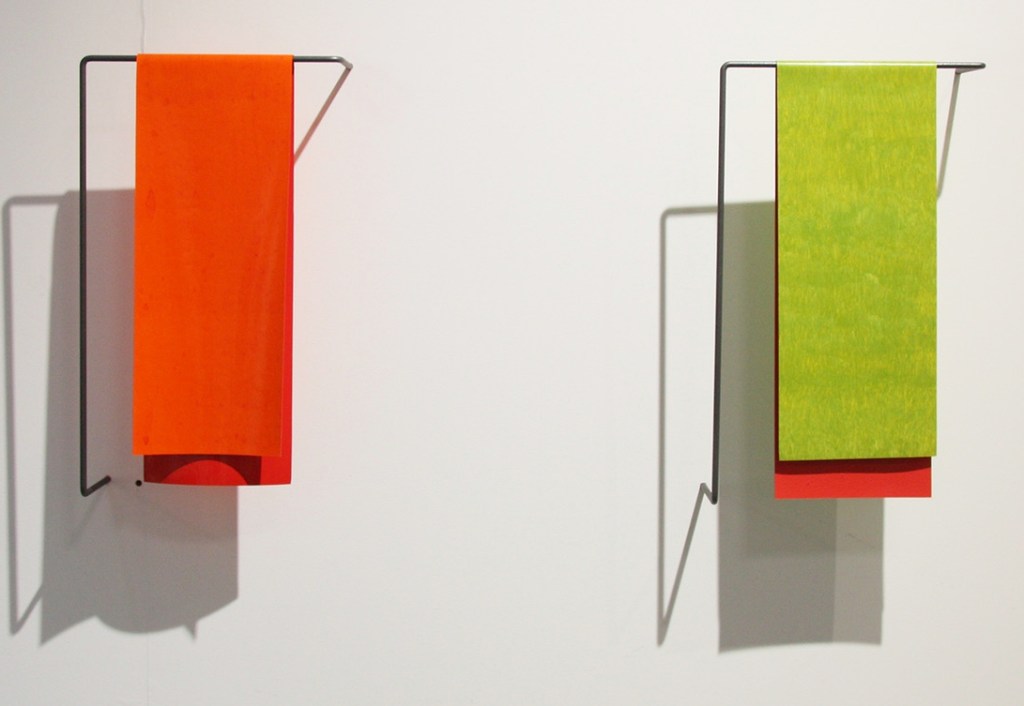
Helen Calder is concerned with colour, form and how painting operates in space when freed of its traditional support on canvas and stretcher. Her three-dimensional paintings, paint skins’ offer a direct engagement with the materiality of paint, its colour, textural possibilities and weight. Here painting engages with the history of abstraction and pushes at its limits to adopt the terrain of sculpture.
Helen Calder, Orange and Green Red, acrylic paint skin on steel rod
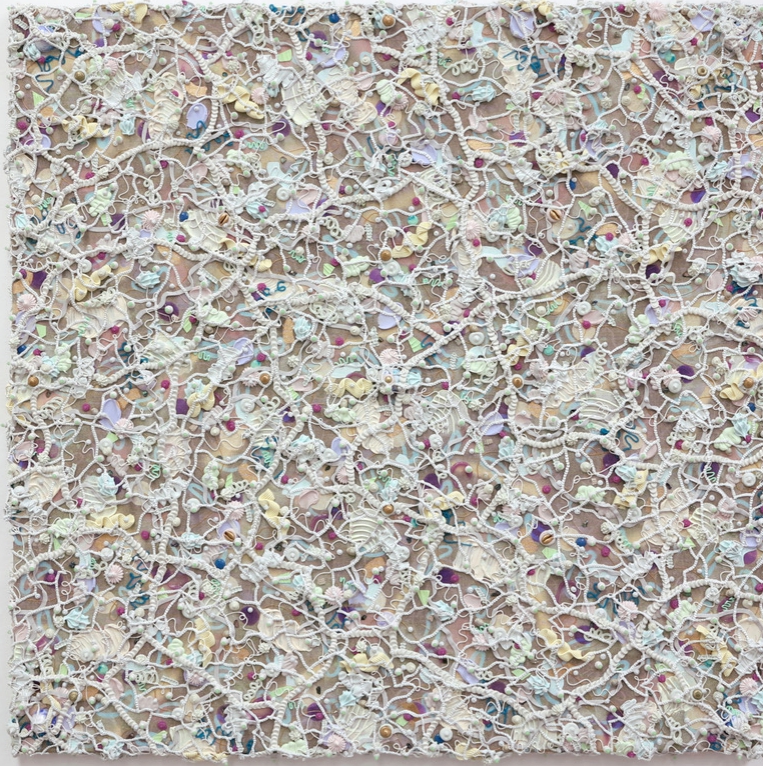
Work by Claudia Jowitt will also be included. Her ‘painting’ allows sculptural force, and the three-dimensional, to pull on the two-dimensional painted surfaces. Conceptually there is also an interaction between an investigation of the feminine in art and the insertion of place into abstraction.
Claudia Jowitt, Baka III, acrylic, spray paint, rayon yarn, Fijian vau, paua shell, kina shell, cowrie shells, moulded acrylic, clay forms, bronze powder on linen
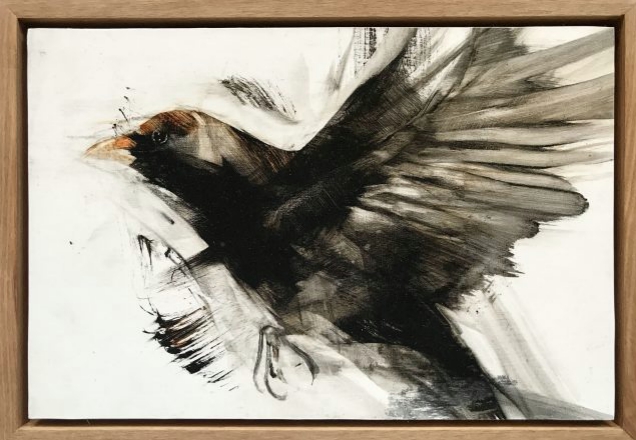
In her recent exhibition “Inflection” Belinda Griffiths continues her focus on the figure. In her previous work the figure has often been linked to the landscape, but this exhibition includes many images of birds. These are from a series of daily paintings she made of the blackbirds in her garden undertaken during lockdown.
The artist says of these works, “A daily return to the natural world became more than just a quaint idea, but an essential way for me to spend time and connect with something concrete that extended beyond the challenges of lockdown, a way to connect to something bigger than myself.”
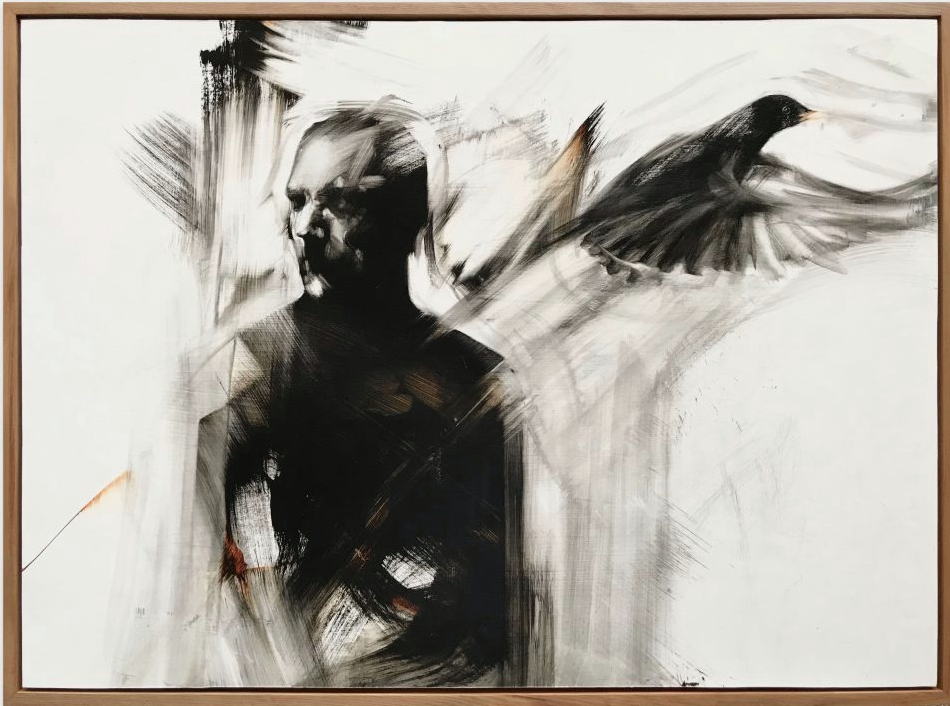
As well as “portraits” of birds there are several which are of figures incorporating birds. In these, she links ideas about birds with humans, drawing on history, mythology and symbolism.
Birds generally represent freedom because of their ability to roam the earth and are often seen as symbols of rebirth, intelligence, peace, and love. They can also be omens of death and films like “The Birds” have given the creatures some sinister qualities.
Griffiths’ works inhabit a realm between the abstract and the realist as she attempts to capture the essence of a figure (or a bird ) with calligraphic gestures, The birds can be seen as harbingers of change as well as expressions of the human condition.
In many cases using a minimum of means, as with “Traced in the Shadow 4” ($950) rather than the depiction of the bird we have the impression of movement and the bird’s feathers are indicated by tentative brush strokes.
A set of six images of birds entitled “When the birds come back” ($800 each) look as though they could be six separate studies of the same bird capturing different impressions or notions about birds – inquisitive, agitated and disdainful. The most intriguing of the set is “When the birds come back #3” where we see only the lower half of the bird as it has just taken flight and it looks like a mistimed photograph of the escaping bird.
Belinda Griffiths, When the black bird flew out of sight #2
The idea that birds represent aspects of the human heart is conveyed in “When the blackbird flew out of sight 2” ($3000) while in “Inescapable Rhythms” ($3000) bird and man appear to be as one.
There are two large figurative works which are more detailed than the calligraphic works. “Inflection 1” ($6000) looks as though it is a portrait of one of Antony Gormley’s rusted Corten steel sculptures, the glowing figure seeming to be emerging out of the black background.
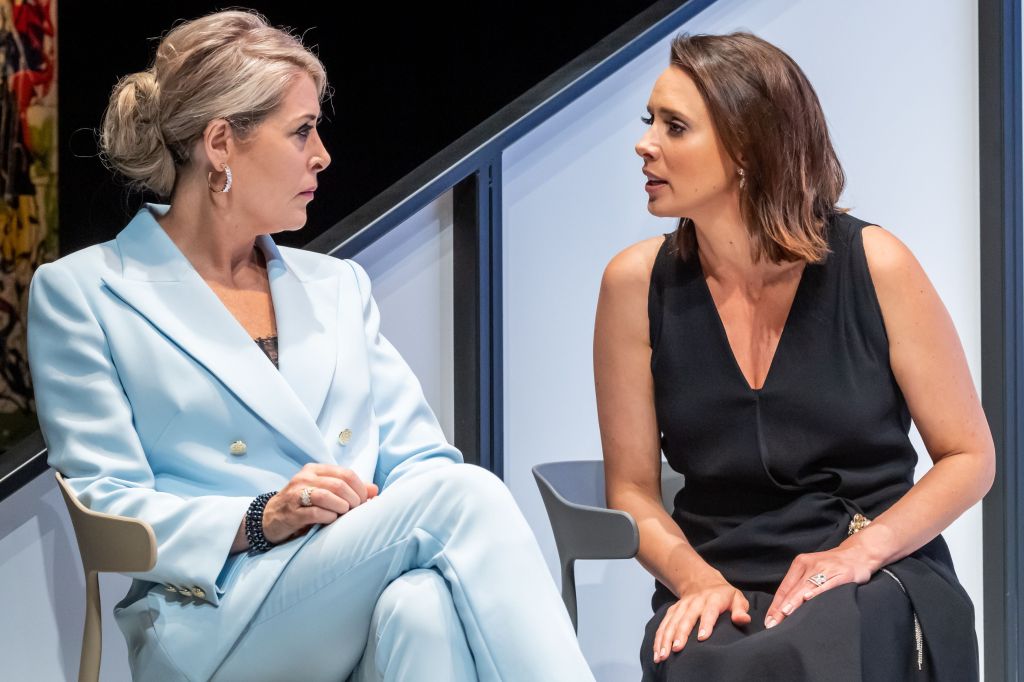
Jennifer Ward-Lealand (Helene) and Anna Julienne (Sophia)
Two Ladies by Nancy Harris
Auckland Theatre Company
Auckland Waterfront Theatre
Until February 27
With much speculation about the future of Melania Trump, Nancy Harris’ play “Two Ladies” is pertinent. Just what do the. first ladies think about their roles, are they the power behind the throne or merely appendages to the president to indicate power.
The play imagines a private encounter between the two first ladies of France and the United States. The setting is a summit meeting between the two presidents with The United States having suffered a terrorist attack which has killed thousands. America is about to launch a retaliatory attack and it is up to the French president to restrain him. The men never appear, but their presence looms large off stage and the implications of their decisions is debated by the wives.
The women also keep revealing aspects of their personal lives which brings them to a greater understanding of each other. Their discussion on personal integrity and honesty provides a contrast to what is happening in the high level discussions of the men.
The French president’s wife Helene is English but there are similarities to Bridget Macron. An older woman who left her husband to marry one of her students and who guides him through the political world to eventually become president. But her status as First Lady is now compromised by the fact that the president has had an affair with a Minister in his government. Jennifer Ward Lealand manages to display some of the determination that would come with the role as well as the moral indignation she feels over husbands’ indiscretions and decisions. Her cool sangfroid keeps being shattered by moments of panic.
Sophie (Anna Julienne) is the presidents trophy wife and like Melania she is a glamourous model from Eastern Europe. Initially appearing to have many of the same vacuous qualities as Melania she slowly reveals a disturbing history, unsettling opinions and a dangerous handbag.
The play is hugely entertaining with some sharp observations, witty sparring and painful revelations but there are also some dull patches, purposeless pregnant pauses and an unsatisfying surreal ending.
The three minor players add further touches of comedy. Rena Owen plays a ferocious Press Secretary to Sophia, Adam Gardiner the quintessential haughty French Press Secretary and Ban Abdul is an animated maid.
John Blackburn ‘Extended Stay’ is a body of work that the British artist completed while confined to New Zealand last year because of the Covid 19 Pandemic, The artist who regularly comes to New Zealand to paint and exhibit spent three months, mainly in lockdown producing these works which reflect on his time in isolation.
From the exhibition title, “Extended Stay” and the titles of many of the works the exhibition can be seen as the artists personal diary of the plague year. Several of the works have specific dates in their titles – “The Mount April 2020, Level 1 @ 11.50pm, and June 16/17”. Some of the paintings have additional descriptions on the rear of the paintings such as “Rotorua NZ & @ The Mount 4th 6: 20. Covid Lockdown 4::3:2”: and “The Balcony Pacific Apt 508, The Mount. N.Z. Covid Level 1”.
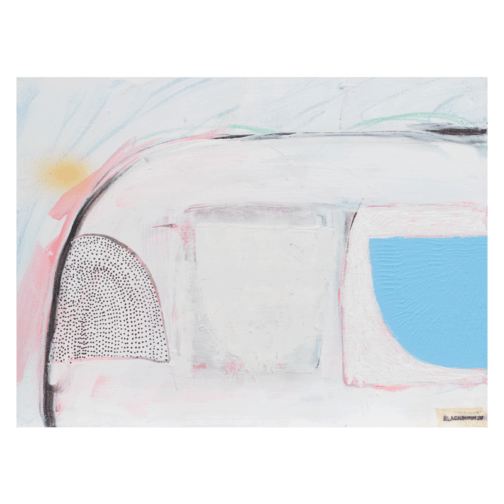
Most of these works used the limited structures, shapes and colours of his recent paintings . This lexicon of forms: vessels, geometric shapes, abstract shapes- are used to create a personal language which provides sense of dialogue with links between the individual components of the paintings. His vessel shapes are like celestial pots of paint containing the colours of the environment – the blues of sea and sky, the green and browns of the land, an array of pointillist dots hinting at energy. Or it could be as though he has extracted the colours from environment and condensed them down.
There is a delicacy and simplicity to the work, obvious in his attempts to refine his experience of the world into its essential components.
The works have an emphasis on structures colours and textures with observation on places and times. The forms and colours allude to the landscapes, the changing patterns of sky and water while the blocks of abstract colour represent various atmospheric conditions red and yellow suns, the blinding white of summer and the blacks of storm clouds.
So in “Horizon with Pink” ($4750) we see a curved line of The Mount, tinged with a pink of sunset along with a vessel of blue and block of intense whit as e. The simple “A Bright Day” ($3500) consist of red and yellow circles (Sun and Moon) above a curved hill shape. Other works are almost mundane with “Key Card” ($3650) dominated by the yellow shape of a room key card.
Some works appear to be experiments in colour notations, looking like representation of cellular forms as in “Ovoid Forms (Remembering Roy Parker) No 3” ($4000).
The works bring together the spontaneity of oriental abstract calligraphy, the keen observation of John Constable’s cloud studies and the drama of gestural and geometric abstraction. The paintings seem to be bringing order to the chaos and the disorder of the visible world.
This year’s Auckland Arts Festival will be a substantially different festival from previous years. With no international acts able to travel the emphasis will be on local artists and events.
One of the few international acts will be “The Artist” presented by international circus sensation Thomas Monckton who managed to slip back into New Zealand last year. In this performance an artist arrives at his paint-spattered studio ready to create a new work. He waits for inspiration. When it finally comes, things don’t proceed quite as he would wish. For this artist, every task is filled with challenges – chaos is unavoidable.
The Festival has commissioned world premieres of several new works, resuscitated some that were cancelled in 2020 due to the Covid-19 pandemic. There will be a number of free activities including events on International Women’s Day, New Zealand Children’s Day, the Festival opening ceremony Te Tīmatanga and the closing sing-a-long Kia ora Tamaki featuring Betty-Anne Monga and members of Ardijah.
Wāhine Toikupu will present the poetry of American Maya Angelou who was awarded the Presidential Medal of Freedom by Barack Obama. Her work which has been translated into te reo will be delivered by graduates of Te Panekiretanga o Te Reo Institute o Maori language Excellence. Taku Tau Kahurangi: An Aotearoa Love Story performed by the Ria Hall features a collection of classic New Zealand love songs,
The Civic Club is a brand new concept for the Festival that will see audiences seated onstage at The Civic with a line-up of top music acts, including Reb Fountain, Dixon Nacey, Delaney Davidson with Shayne Carter – and Hine!, a showcase of four breakthrough wāhine toa performers.
The Tom Sainsbury Love Hour will be a comedy talk show with celebrity guests including Hilary Barry and Chlöe Swarbrick discussing their best break-ups, make-ups and obsessions. The Club will also host Heavenly Bodies, a cabaret event with New Zealand’s finest circus superstars, urban acrobats and outrageous curiosities.
Other Festival highlights include the 20th anniversary celebration of Che-Fu’s seminal album Navigator, which the artist will perform with his band The Kratez, headlining the Festival’s Polynesian Panthers 50th Anniversary programming. The Panthers were an activist group known for their protests against the notorious dawn raids of the 1970s, and 2021 marks 50 years since their formation. AAF will feature exhibitions, talks, play readings and the creation of a mural honouring the Panthers’ legacy, as well as a performance in the Festival Garden by Che-Fu’s father, Panthers activist and reggae musician Tigilau Ness, with special guests.
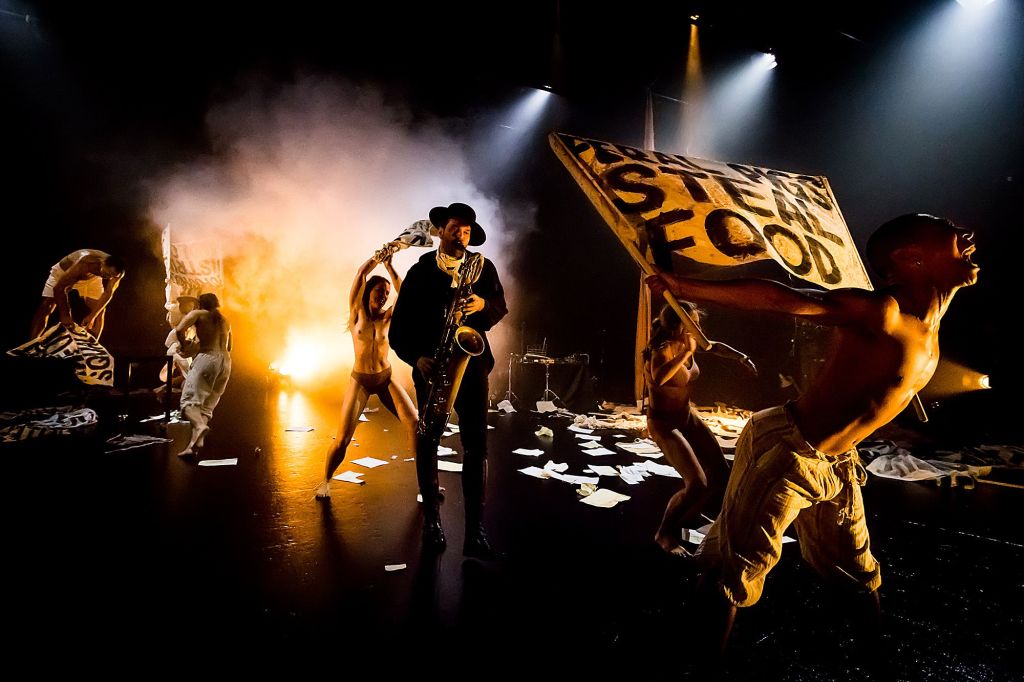
Among the major theatre, music and dance performances will be Strasbourg 1518 which premiered at last year’s Wellington Arts festival to great acclaim. is a powerful tribute to the dancing plague of 1518, directed and choreographed by Lucy Marinkovich, composed by Lucien Johnson and featuring Michael Parmenter.
Vela Manusaute’s The Factory, the first Pacific Island musical was one of the highlights of the 2014 festival. This year his Tropical Love Birds brings audiences the tortured love tussle between electrifying beast of a league star Sani and his island queen Sheena to life. Jack and the Beanstalk will a hilarious romp through this classic tale with a kiwi twist, written, directed and starring the actor Michael Hurst.
Six of the finest pianists from Aotearoa, including Michael Houston, will be performing John Psathas’ immersive world premiere of Voices at the End. The work was inspired by the film Planetary and expands on various themes around ecological and organic systems and the need to move form an industrial growth society to a life sustaining society.
The Auckland Philharmonia Orchestra celebrates International Women’s Day with a selection of women composers in Shoulder to Shoulder. Three New Zealand composers, Ruby Solly, Dorothy Ker and Rachael Morgan will feature alongside several other international composers including Germaine Tailleferre the only female member of Les Six, the early nineteenth century group of avant garde musicians.
The Auckland Philharmonia Orchestra will also be bringing audiences a big screen experience performing the Australasian premiere of E.T. The Extra-Terrestrial in Concert, complete with John Williams’ Academy Award®-winning score.
The dance programme for this year’s festival consists of classical, kapa haka and contemporary dance. While not part of the festival The Royal New Zealand Ballet’s Tutus on Tour will be on in Manukau for one night and BalletCollective Aotearoa will premiere a trio of new work titled Subtle Dances, with the NZTrio playing live. Pūmanawa will feature four leading kapa haka groups while K-pop Party will feature performance curated by Rina Chae who has worked with Beyonce and Justin Bieber. There will also be two outdoor dance performances one The Air Between Us by Rodney Bell and Chloe Loftus and another a Figure Exhales by Zahra Killeen-Chance.
This year is the fiftieth anniversary of the death of Igor Stravinsky and it will also be sixty years since the composer himself conducted the New Zealand Symphony Orchestra in Wellington and Auckland
It is fitting then that the NZSO opens its 2021 season with a nine centre touring concert featuring the composers “The Soldier’s Tale” in association with the Royal New Zealand Ballet.
The work, based on a Russian folk tale was written “to be read, played and danced”, tells the story of a man who makes a Faustian pact with the Devil: co-created with Swiss writer C.F. Ramuz, the work include a range of musical influences – tango, waltz, ragtime, klezmer, church chorales, and the paso doble.
Over the rest of the year the orchestra will play music from three other dance works by the composer – Petrushka (March), The Firebird (April) and The Rite of Spring (July).
In March the orchestra has a four centre South Island tour presenting “Town and Country”, a concert which will provide contrasts between the rural and the urban. The six pieces present this duality with music by English, American and New Zealand composers. The two English works both depict the countryside with Frederick Delius’ Walk to the Paradise Garden, from his opera A Village Romeo and Juliet and Malcolm Arnold’s “English Dances” which is a collection the best of English country folk dances.
The two American pieces draw inspiration from both the small town life and the city with Aaron Copland’s film score for Our Town is a nostalgic view of small town life in Grover’s Corner, New Hampshire. While Leonard Bernstein’s Three Dance Episodes come from the musical On The Town, depicting 1940s New York with its jazz melodies, bebop rhythms and irresistible swing.
The two New Zealand pieces also contrast the rural and the urban with. Douglas Lilburn’s Drysdale Overture evoking the pastoral landscape of his family’s farm in the Turakina Valley and Maria Grenfell jubilant Fanfare for a City.
This year the orchestra is only performing a couple of major symphonic works including the National Youth orchestra playing Shostakovich’s Symphony No 7 (The Leningrad).
In September, but only in Wellington they will be playing Beethoven’s Symphony No 9. For this concert the NZSO will invite young performers from across the country to join in singing the chorus, with a new translation in te reo Māori. Then, in November the orchestra will perform the composers magnificent “Missa Solemnis” with some of the country’s best singers – Madeleine Pierard, Kristin Darragh Simon O’Neill and Paul Whelan
In July, but only in Auckland for Matariki the orchestra will premiere a new commission by Gareth Farr. His large scale “Ngā Hihi O Matariki celebrates the appearance of the Matariki constellation (the Pleiades or Seven Sisters) which traditionally signalled to Māori that it was time to plant crops. Matariki heralds both the constellation and the beginning of a new year symbolising new beginnings and humanity’s hopes for the future.
During April, the orchestra will be presenting a regional tour to Palmerston North, Napier and Tauranga performing Vivaldi’s “Four Seasons” which will feature NZSO violinists Anna van der Zee, Malavika Gopal, Simeon Broom and Alan Molina playing a ‘season’ each of the work.
Also on the programme will be Astor Piazzolla’s Cuatro Estaciones Porteñas (also known as The Four Seasons of Buenos Aires) which transports the listener to the steamy streets of Argentina, cleverly combining Vivaldi’s most recognisable tunes with the sensual tango sounds which characterised Piazzolla’s style.
In 2021 the Auckland Philharmonia is offering a wide range of music from the great classics to recent musicals and the music of popular culture.
Having missed out on celebrating Beethoven’s 250th anniversary last year the APO will be presenting all the composers symphonies as well as performing his only opera, Fidelio. The seven symphonies will be spread out through the year with the first three symphonies performed in April and his Eighth and Ninth in November. Fidelio (May 8) will feature some of New Zealand’s great operatic talent with Simon O’Neill and Kirstin Sharpin who will be singing the role of Leonore which she sang last year for Melbourne Opera.
Among the other great symphonic works being presented will be Dvorak’s Symphony No 8 (From the New World), Brahms Symphony No 3, Schubert’s Symphony No 9 and Mahler’s Symphony No 5.
There is an excellent selection of violin concertos including the Bruch Violin concerto with soloist Benjamin Baker, the Brahms Violin Concerto (Benjamin Morrison) and Shostakovich Violin concerto No 2 (Natalia Lomeiko)
The orchestra will be playing a number of popular works such as Sibelius’ “Finlandia”, Ravel’s “Pavane for a Dead Princess”, Copland’s “Appalachian Spring Suite” and Bach’s “The Musical Offering”.
Orchestras around the world have been working on broadening their appeal to wider audiences and the APO has more than doubled its popular concerts for this year. Following the sell-out success of “Planet Earth II Live in Concert in 2019, they will present “Blue Planet II Live in Concert” based on the BAFTA Award-winning BBC television series. Another family concert will see the orchestra playing the music composed by Academy Award-nominated John Powell along with a screening of the film “How to Train Your Dragon in Concert”
“Aretha” will celebrate the music of Aretha Franklin with singers Boh Runga, Bella Kalolo and Vanessa Stacey while “Super Heroes will feature music of the superhero characters from Batman, Spiderman, The Avengers, Thor and Wonder Woman.
Another superheroes concert “Shoulder to Shoulder” celebrates International Women’s Day with a concert presenting the compositions of eight women including work by New Zealanders Ruby Solly, Rachael Morgan and Dorothy Ker. The other composers will be, Germaine Tailleferre, Reena Esmail,Hildegard of Bingen, Aida Shirazi andJulia Wolfe
The Deloitte Winter Gala will feature a full dining experience along with music from “The Wizard of Oz” and “Wicked”.
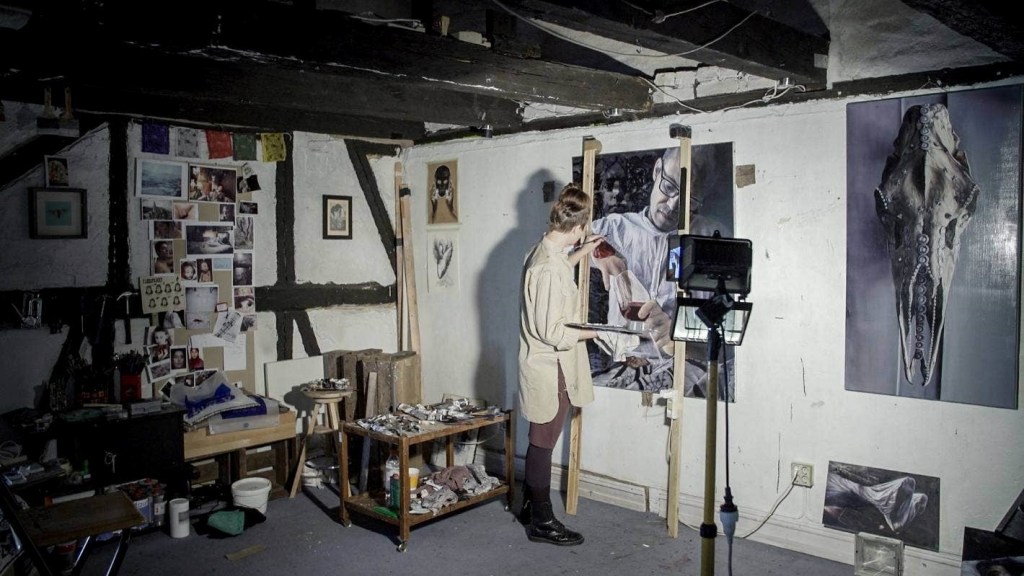
Barbora Kysilkova working on a painting of Karl-Bertil Nordland
The Painter and the Thief
Directed by Benjamin Ree
Release date, December 26
Reviewed by John Daly-Peoples
“The Painter and the Thief “is an intriguing documentary partly because the film has evolved organically over several years with a vague initial objective which was reshaped by unforeseen events and unintended outcomes.
In the film we follow painter Barbora Kysilkova, a Czech painter, living in Oslo and petty criminal Karl-Bertil Nordland in a disconcerting but uplifting relationship.
Nordland and an accomplice steal two of Kysilkova’s paintings from a gallery in Oslo. He is apprehended and put on trial but as he was drunk or high at the time of the theft he is unable to say where the paintings are . Kysilkova who has been confused and annoyed by the affair approaches Nordland and asks if he would sit for a portrait and he agrees. Over several weeks she draws and paints him and his girlfriend and they become close.
At one point Norland has a serious car accident and is hospitalised and subsequently charged with driving and drug offenses. While in hospital and jail Kysilkova continues to visit him.
She eventually discovers one of her paintings in a basement storage area and in the final minutes of the film we see Kysilkova and Norland installing a new exhibition which includes the stolen painting and several portraits she has made of Nordland over the past years.
The two exhibitions bookend the story with the opening of the film showing glimpses of her first exhibition taken on a cellphone at the opening.
The film focusses on the transformation and the redemption of Norland from small time criminal and addict to a man engaged in study to create a new purposeful life.
A major theme of the film is the creative process and power of art in bringing about personal transformation. Early on in the film after Kysilkova has done a series of drawings of Nordland she shows him a finished portrait. He is astounded and transfixed by the artwork, partly because he recognises not just his physical representation but also something about himself. He is also in awe of Kysilkova’s skill as an artist.
Over the period of her relationship with the thief Kysilkova also acts as a detective / psychologist, probing Nordland about his motivation behind the theft and the paintings whereabouts, but she also attempts to understand him and in doing so Nordland begins to realise much about himself.
Whether it is the encounters with the art process and his portraits or his discussions with Kysilkova which lead to his salvation is never fully acknowledged but clearly their complex relationship has made a difference.
Director Benjamin Ree has shown a dogged determination to create a film which he would initially have had no idea how it would unfold with so many of the events, images eventually coming together.
The Auckland Art Gallery’s latest blockbuster show “Toi Tu Toi Ora” is not just big with 300 works by 111 artists it is also important in providing an overview of Maori art of the last 70 years which has built on the traditional approaches of Maori as well as creating new forms to address contemporary issues. The exhibition also shows how the art produced by Maori coincides with, comments on and expands work by Pakeha artists.
The exhibition includes a number of iconic artworks by some of Aotearoa New Zealand’s most significant artists – Ralph Hotere, Robyn Kahukiwa, Buck Nin, Fiona Pardington, Michael Parekowhai, Lisa Reihana, Rachael Rakena, Peter Robinson, Cliff Whiting and Arnold Manaaki Wilson. The works include painting, sculpture, printmaking, clay-making, jewellery and body adornment, photography, digital media, film and installation art.
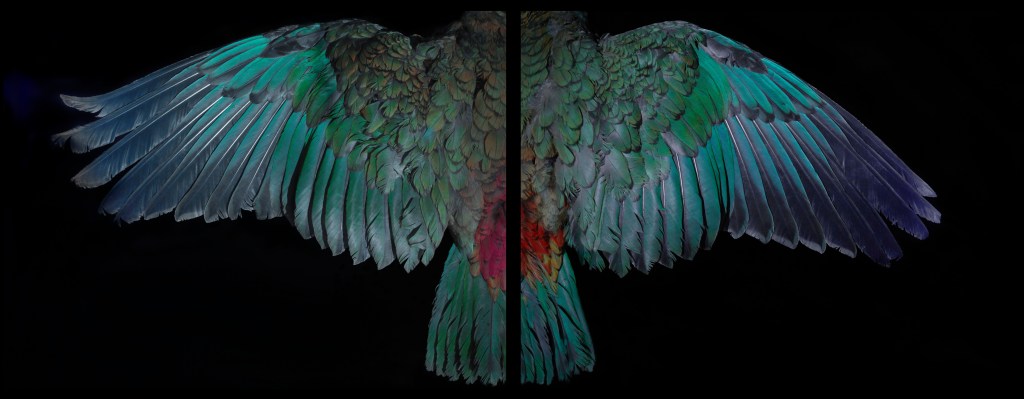
Fiona Pardington ,”Davis Kea Wings”
Western culture has been dominated by the Judeo Christian notions of The Creation. a God who creates everything with a couple of clicks of the fingers, it’s a concept which is ingrained despite its obvious absurdity.
This monotheistic approach is also at variance with what we know about the creation of life which involves a male and female. So the Maori creation myth which has Ranginui, the sky father, and Papatuanuku, the earth mother, emerging out of darkness and nothingness seems a bit more grounded in reality
Toi Tu Toi Ora: takes this creation myth as the basis and in many ways the continuing focus of artistic enquiry for Maori art and in the first rooms of the exhibition are a group of works which explore notions of the universe.
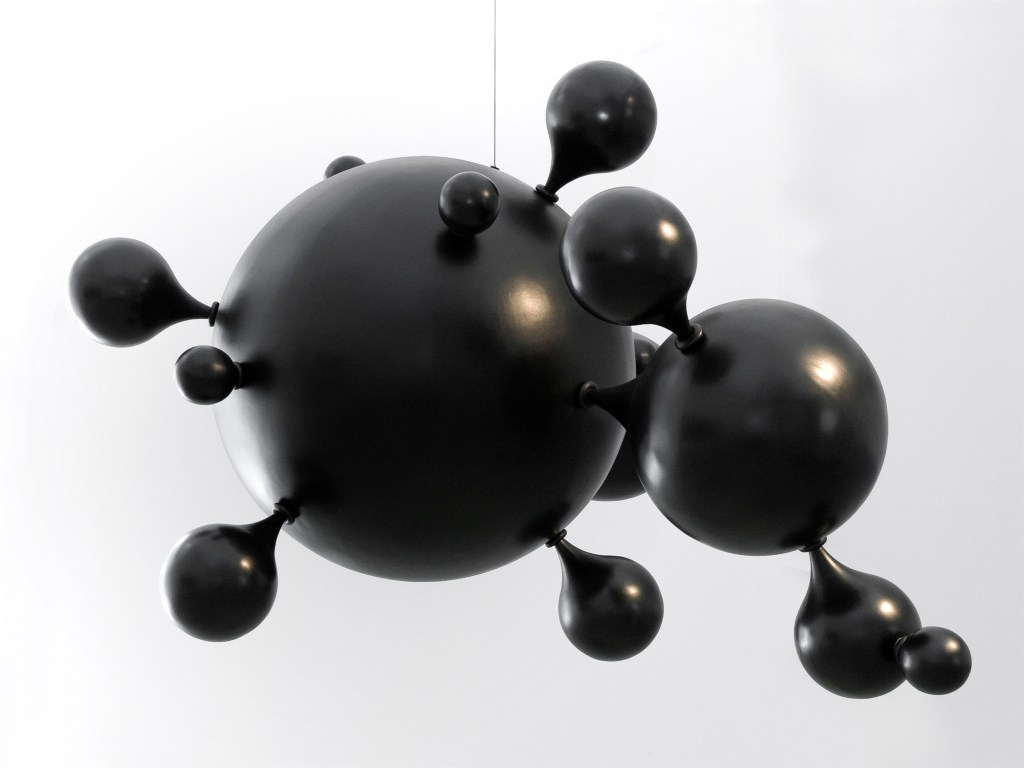
There is Peter Robinson’s “I am I am not” a work consisting of the binary zeros and ones which herald the beginning of life along with his “Universe”, a bulbous abstract depiction of the beginnings of nothingness and expanding solar system. Here also is Robert Janke’s neon work “Whanua Kora” where we are taken back into the void. The room also features Ralph Hotere’s black painting “Te Aupouri” where we witness the birth of colour.
Hemi Macgregor, “Agent Provacateur”
Curator of the exhibition. Nigel Borell (Pirirākau, Ngāi Te Rangi, Ngāti Ranginui, Te Whakatōhea) says: “Toi Tū Toi Ora is organised around the Māori creation narrative as a way to enter into a conversation about the importance of Māori art and artists, and to explore what unites these artists across space and time.” “As visitors explore the exhibition, they will literally step into the creation story, beginning with Te Kore (the great nothingness) before traveling through to Te Po (the darkness), then the separation of Ranginui and Papatūānuku before entering Te Ao Mārama (the world of light and life)”
Throughout the exhibition are major works by significant Maori artists including Lisa Reihana’s massive video work “Iti” which has previously been on display at the Aotea Centre, Shona Rapira Davis’s monumental sculpture “Nga Morehu” of 1982 featuring a group performing a karanga and Selwyn Muru’s “Resurrection of Te Whiti over Taranaki “of 1975.
Many of the works in the exhibition preserve and build on the traditional knowledge, technical skills and understanding of materials. This can be seen in Kura Te Waru Rewiri’s “Arohanui”, Cliff Whiting’s “Tangaroa “and the work of Manos Nathan. A number of the works are more obviously political as with the work of Emily Karaka, Hemi Macgregor and Shane Cotton. There are also examples of the emerging landscape and figurative painters with work by Elizabeth Ellis, Marilyn Web and Katerina Mataira.
One new installation which could easily be missed is sited on the upper exteriors terrace. The work by Ana Iti “Takoto (Laying Down)” the artist has made casts of the volcanic rock wall which enclosed the Albert Barracks and most of the adjoining Albert Park
In the Gallery’s North Atrium, is a large installation by Emily Karaka, and in the South Atrium there is a two-storey-high installation by Sandy Adsett based on kōwhaiwhai and a dramatic installation based on the female deity Hine-nui-te-po by the Mata Aho Collective in collaboration with artist Maureen Lander.
In the Mackelvie Gallery Shane Cotton has co-curated an exhibition room that will places work by contemporary Māori artists alongside the Gallery’s historical art collection so Arnold Wilson’s abstract sculpture representing a torso/head “He tangata, He tangata” is included with a group of old master portraits.
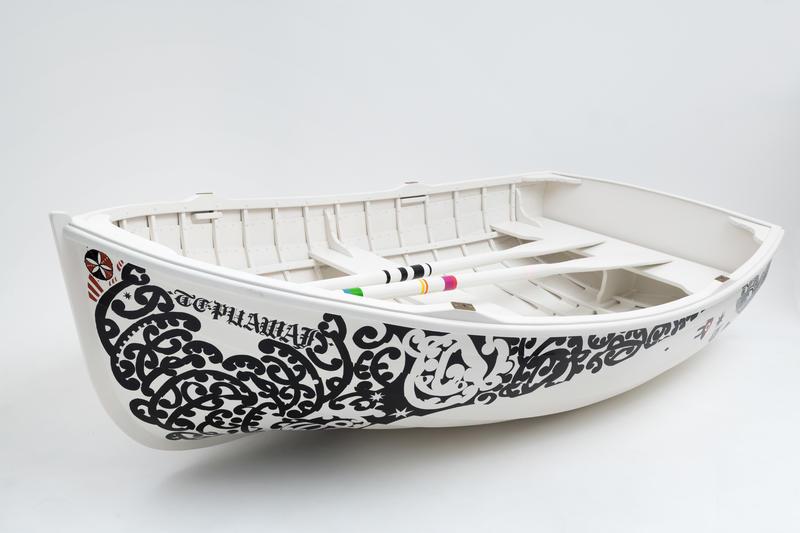
Several of the artists have a number of works in the show which plot their developments. Shane Cotton has works from his early sepia period with “Cross” through to his five storey high off-site work “Maunga” in the Britomart precinct. There is also a new commissioned work “Te Puawai” from the artist which features a .small dinghy touching on ideas about voyaging, the transmittance of cultural knowledge and the legacy of colonialism.
Shane Cotton, “Te Puawai”
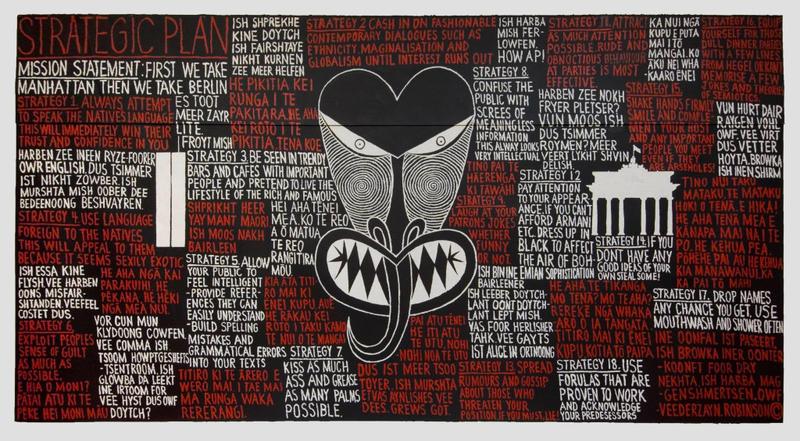
Peter Robinson is well represented with his “Painting “ of 1996 where he uses an airplane / waka image and numbers reflecting the blood quantum of determining ‘Maoriness’. He also has one of the final works in the show with “Strategic Plan” of 1998 with his clever take on the global art world and the place of Maori. One of his strategies is listed as “Cash in on fashionable contemporary dialogues such as ethnicity and marginalisation”.
There are a number of works by Michael Parekowhai although his carved piano work “Story of a New Zealand River” is not included. His works in the show all subvert the Eurocentric approach to art. There are three of his suited mannequins from the “Poorman, Beggarman Thief (Poorman)” series scattered through the galleries all with the “Hello My name is Hori” label on their suits. There are also a set of his Magritte derived figures as well as the ambiguous and enigmatic, elephant in the room “Te Ao Hurihuri”, the two bookends referencing New Zeeland links with western civilization, history and classification as well as colonisation .
As well as the major artist in the show are a few newcomers with a set of works by Hiria Anderson where she responds to her immediate environment and the marae with simple representations which carry a strong sense of place and narrative.
There are many interesting works such as Claudine Muru’s glassworks based on kumara forms, Brett Graham’s carved stealth bomber “Te Hokioi” and John Walsh’s ”Pare to my Place” where gods and anthropomorphic figures meet at the junction of the physical and spiritual worlds.
Claudine Muru, From the Cultivation Series
This exhibition shows the depth of Maori art and the ways in which addresses cultural, social, political and personal ideas. It also demonstrates that there is a distinct Maori voice which looks at the present day issues always with an eye on the past.