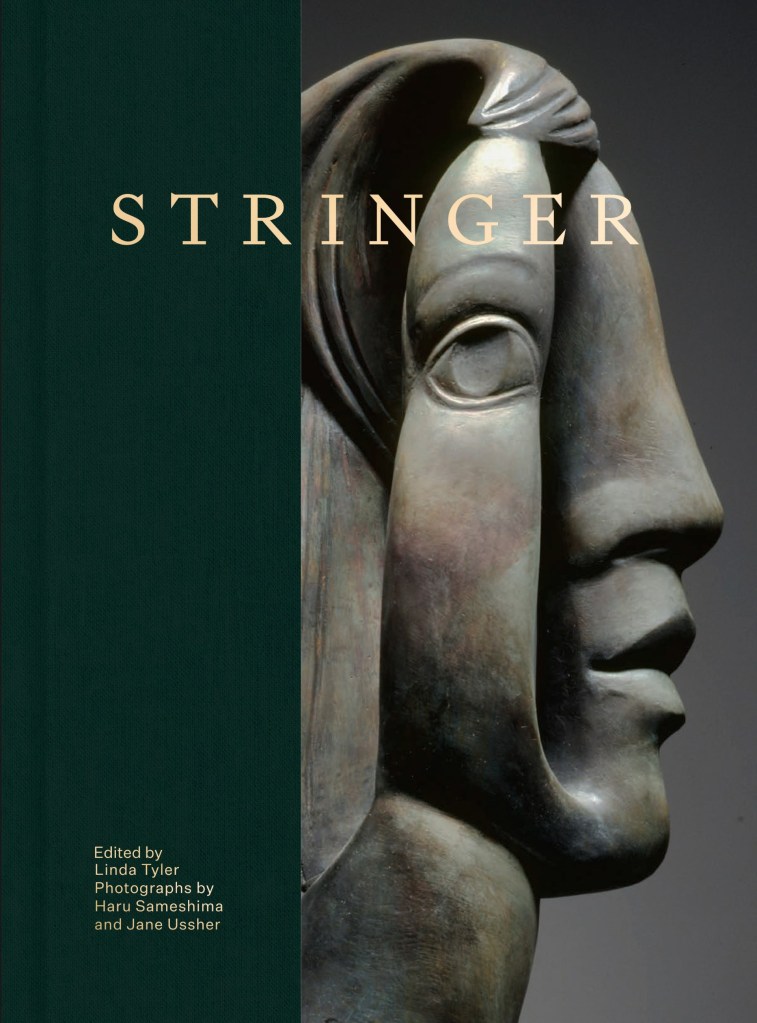
Terry Stringer has been a leading New Zealand sculptor and a key figure in the history of art in New Zealand. Working predominately in bronze, the majority of Stringer’s sculptures depict figures and still-life subjects. Many of his works reveal his interest in classical sculpture, Renaissance art, cubism and architecture along with mythology and literature.
It is these wide range of influences which are explored in a new book “The Art of Terry Stringer” which examines his life and work.
Along with a substantial introductory biographical essay by Linda Tyler, the book features essays by Peter Simpson, Mark Hutchins-Pond, Mark Stocker, Andrew Douglas and Robin Woodward, each focusing on different aspects of Stringer’s body of work. It is handsomely illustrated with photos of Stringer in his studio by Jane Ussher, and of the artist’s work by art photographer Haru Sameshima.
Terry Stringer. Arts Laureate Award, 2000. Bronze, 19.5cm. Haru Sameshima
It is a book that reveals the inspirations, the thinking, the processes, and the way he perceives his art within various environments ant the writers, photographers and designers have crafted a book which seems to have all the characteristics of the artist’s approach to creation.
Some of his major works can be seen at public sites throughout Aotearoa/New Zealand. These include The Risen Christ in Christchurch’s Cathedral Square (now in storage), Mountain Fountain, in the forecourt of Auckland’s Cathedral of the Holy Trinity and The World Grasped in Newmarket.
Terry Stringer. Being in Time 2021 AP. Courtesy of Milford Galleries. Photo Glenn Frei: Being in Time, 2021. Bronze, 220cm. Courtesy Milford Galleries, Dunedin and Queenstown, photograph by Glenn Frei
Stringer says of his approach to sculpture making, “For me, it has been a lifetime of pursuing one idea. I have to say that I am making the same sculpture over and over, and that it changes just a little each time, each piece of it being a new puzzle to solve. In the making of a work two contradictory ideas are clashed together — perhaps one subject transforms into another as the work is turned, or it might be that a figure that has been distorted for formal reasons needs to be brought to life.”
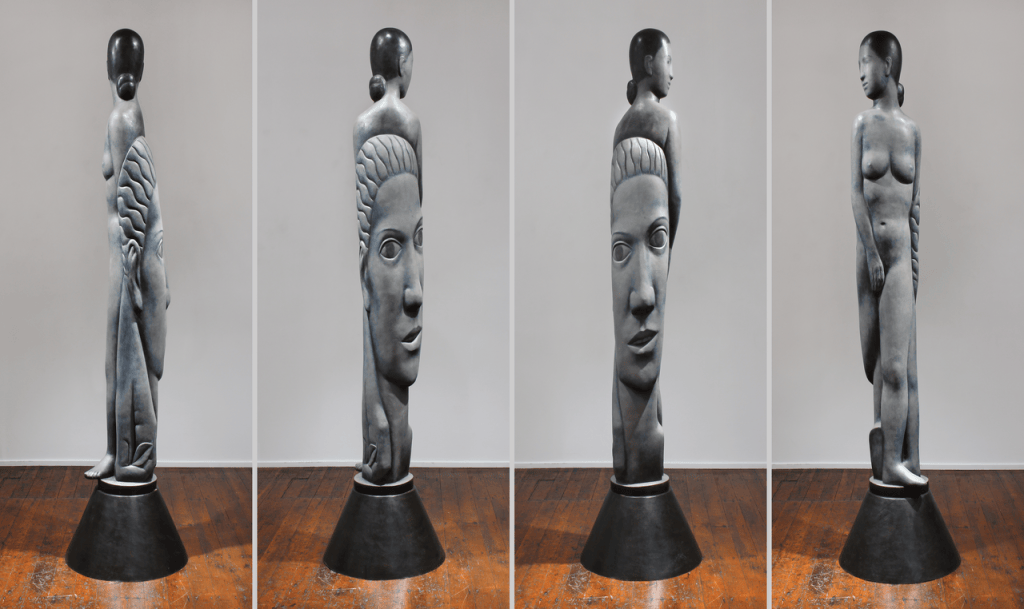
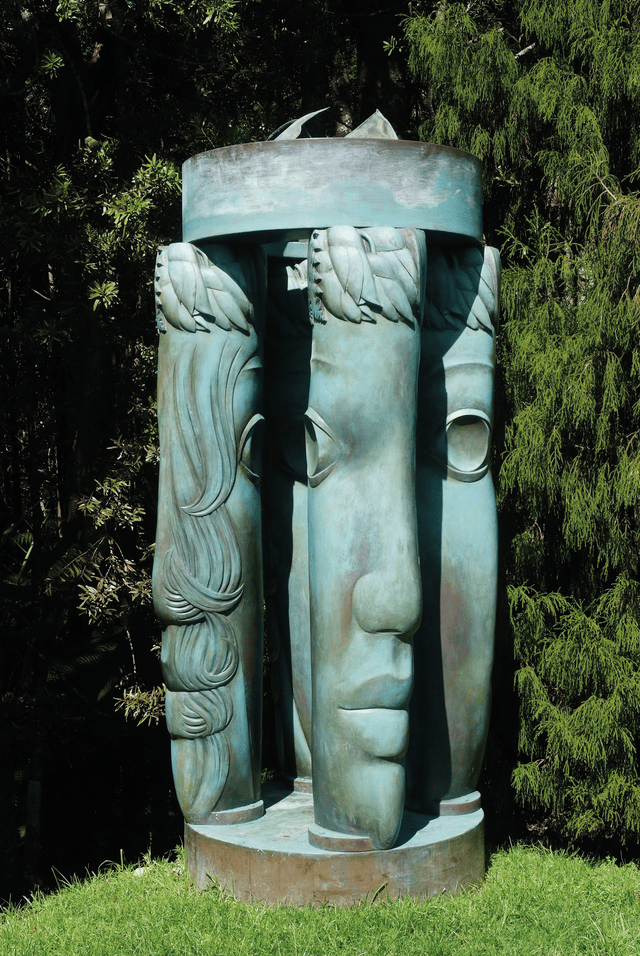
With many of the artists’ works he provides the viewer with multiple viewpoints, as Peter Simpson notes in his essay “The Intercut Image”. One of these sculptures “Gather ye Rosebuds” takes its title from the Robert Herrick poem and the work’s multiple images reference images from the poem – a young girls face, a blooming rose and a reaching hand.
The intercut images are not just a way of rewarding the viewer with changing perspectives we also see the artist exploring the nature of three-dimensional art.
Terry Stringer. Temple of Flora, 2004. Bronze, 254cm. Gil Hanly
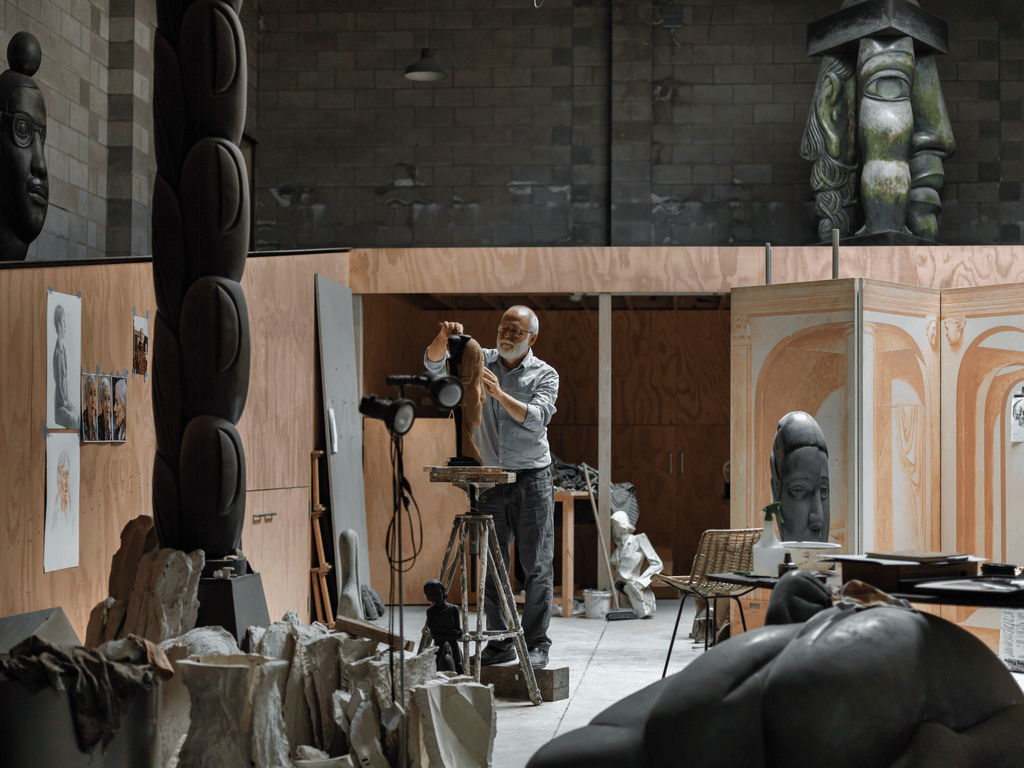
The book has over one hundreds photographs by Jane Ussher and Haru Sameshima which feature many of the artists’ works as well as his studio and residences. The images of his studio are particularly revealing, Ussher has captured the artist at work in his current cavernous studio in Couldry St in Mt Eden as well as at the foundry where his works are made.
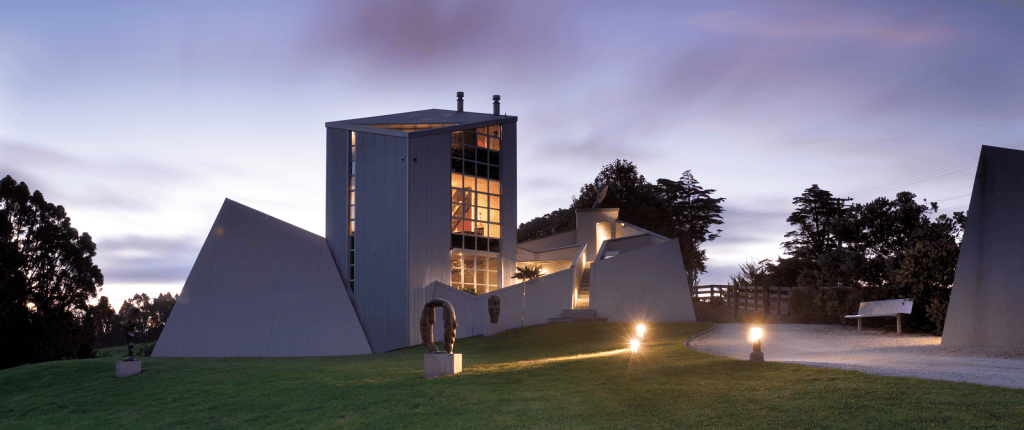
Zealandia, Mahurangi, by JASMAX Architects, 1998–2000. Simon Devitt
The photographs provide a visual record of the artist which sees the artist in the various stages of producing his work, revealing the almost magical steps in the creation of the artworks.
There is also a photographic essay on the evolution of a sculpture he was making of the painter Jacqueline Fahey. From initial sketches of the artist through the various stages of making the original clay figure, going to the foundry and the finishing processes.
He says of the process ‘Bronze sculpture-making has many stages. This sequence of images showing the evolution of a head of the painter Jacqueline Fahey starts with a drawing and then the clay work. From there it is plaster-moulded in my studio and wax is poured into it before it goes to the foundry. There it is prepared, re-moulded and baked out to create a ceramic shell for the bronze to be poured into. In this manufacturing process the artist starts the sequence and then decides the final presentation. Bronze-making is a story of life, death and rebirth over several episodes, until the work is finally realised.’
Of the photography by Jane Ussher several of which show Stringer in his studio he says “They have the atmosphere of old master paintings. And I had huge fun collaborating with Jane in staging still life groups that referenced various sources of inspiration.”
Terry Stringer Image Jane Ussher
Linda Tyler says of his work “His ideas for sculpture are typically quirky and engaging as well as beautifully executed, and while his works belong to different series, there are certain constants. For example, he communicates his sense of fun by encouraging viewers to move around each sculpture and make (sometimes startling) discoveries for themselves. I think that this derives from his love for Victorian ‘optical amusements’ such as folded pictures and puzzles where you see one image when you look in a certain direction, and something different when you look back the other way.”
Throughout his practice he has produced a number of figurative works which celebrate New Zealand artists with works depicting Charles Rose, Frank Sargeson, Frances Hodgkins, Kiri te Kanawa and Jacqueline Fahey.
Along with Tyler’s writings there are five essays by gallery directors, arts writers and university teachers – Andrew Douglas, Peter Simpson, Mark Stocker, Mark Hutchins-Pond and Robin Woodward. These writers investigate particular areas of nth artists work — his purpose-built residences / studios, the intercut images, the medals and maquettes and assemblages.
Stringer was awarded a Queen Elizabeth II Arts Council Scholarship four times – 1977, 1981, 1982 and 1986. His contribution to New Zealand art was acknowledged in 2003, when he was the recipient of the country’s national honour, the ONZM (Officer of the New Zealand Order of Merit).
Throughout his career Terry Stringer has exhibited extensively, with solo shows in Auckland, Sydney, Los Angeles and London. He is represented in major public collections, including the Auckland and Christchurch Art Galleries, Museum of New Zealand Te Papa Tongarewa and the Alexander Turnbull Library.
John Pule. The first incision I saw I dreamt no more
John Pule
The first incision I saw I dreamt no more
Gow Langsford, Onehunga
Until September 5
Reviewed by John Daly-Peoples
The catalogue to John Pule’s latest exhibition “The first incision I saw I dreamt no more” has an introductory poem / note by the artist about the exhibition
“my poetry comes from soil
The exertion of ants, the mucus of worms
The last evenings of caterpillars
The froth of centipedes”
It is an acknowledgment that the art works are based on natural forms and his incisions or enquires into the natural world with works such as the eponymous work on paper is like a page from a scientific notebook with drawings of natural forms, the flora and fauna of the artists environment – fish, plants, insects and centipedes. Theses drawings can also be seen as microscopic views and diagrams of biologicals structures.
These references to the natural world and the plant forms that provide shelter also hint at a parallel world of mythological creatures and lands.
Johnh Pule. Tau Po Haaku Tau Aho Haaku
His dramatic approach can be seen in works like “Tau Po Haaku Tau Aho Haaku” ($95,000) where the plant forms which dominate are based on local vegetation but on a larger scale become like a mythological wonderland – somewhere between fantasy and microscopicscans of cellular forms. There are also reference to the natural world with a lake in “Are we able to live here” ($95,000) or a group of Lilliputian scale group of people in “We will always begin here” ($95,000).
The artists work draws on the physical, topographic and historic, merging them, with social, political and personal insights and visions. The work contains much of the artists previous iconography but have a greater immediacy given the artists recent responses to in his ancestral land.
The works are in a sense both a discovery and rediscovery of the land and its mythologies as well as the artists own journeys.
Of his time spent in Niue producing these works he says “I rode my bike each day through the canopy forest from Liku to Alofi, through rain or shine, winds, storm, or calm. The road is bordered with plantations, forests, tracks into the interior. Big blue skies and clouds, shadows of trees stretch across the makatea (limestone) road. Returning to Liku every evening, the sun is warm on my back. These paintings and drawings are about that particular time.”
His works have previously dealt with his growing up in New Zealand, his discovery of traditional Niuean art, and developing his own iconography. This had led to him dealing with wider issues of colonialism, the impact of Christianity as well as the mythology and spirituality of Niue.
With several of the works in the exhibition the artist has created pathways which reach into the foliage much like the trails that that the artist has ridden on his bike but also the pathways which reach back in time. These pathways and journeys can also be seen as metaphors for the artist’s own physical, spiritual and aesthetic journeys.
They are analogous to the songlines of aboriginal art as well as the lines of musical compositions, imagining the way the sounds evolve, carrying a narrative expressing joy. sorrow and wonderment.
The foliage depicted is at once colourful and local as well as surreal and mythological – a portrayal of Pule’s Niue as well as an imagined paradise.
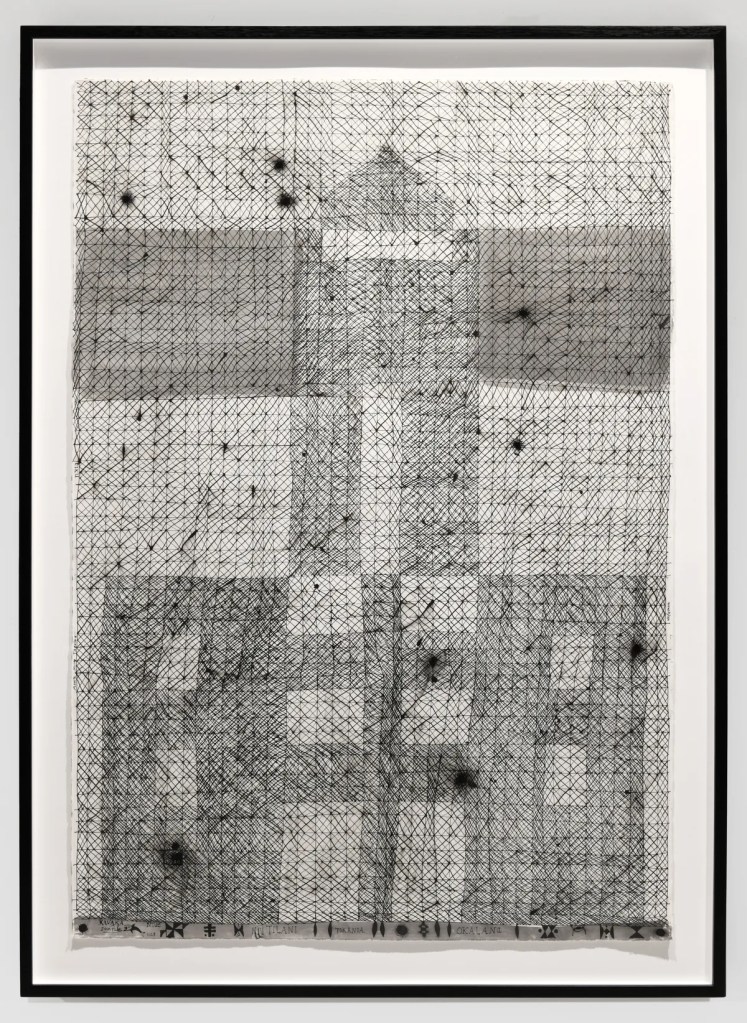
John Pule. Niu Tilani, Takanoa Okalana
Other works such as “We are waiting for them” ($28,000) “Niu Tilani, Takanoa Okalana” ($28,000) feature plans, grids and designs – locating islands, stars, measuring winds and sea currents, all ways of comprehending the environment
David Eggleton provides an essay to the show which provides an overview of the artist’s work with insights into the artist’s work and perceptive observations such as –
“The paintings are transformative in their poetic intensity, maintained by the deft juxtaposition of various intense hues, which, like lava flows, have pooled and puckered into glossy skeins and skins – the oil-based enamels slathered on in virtuoso fashion, or worked around with brush and pen and rag. Here, in these dense, mirage-like gardens, the shining plants have taken on the powers of sorcery or enchantment. They are part of a fantastic botanical order, not necessarily benign, that over-arches the anonymous, small-scale human figures depicted. And we too as spectators bearing witness are enfolded, or perhaps embraced, by the forking tree limbs, the fleshy leaves, the many-seeded climbing vines.”
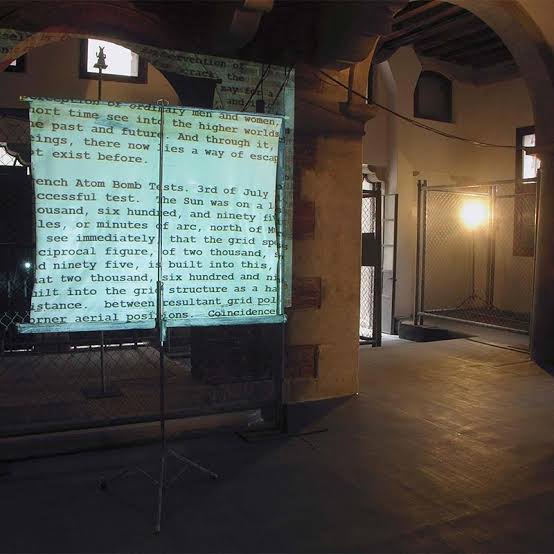
et al Installation view: 51st Venice Biennale, 2005. Image credit: et al., the fundamental practice, 2005. Auckland Art Gallery Toi o Tāmaki, purchased with support of the Patrons of the Auckland Art Gallery, 2008. Photograph by Jennifer French.
John Daly-Peoples
et al. the fundamental practice
Auckland Art Gallery Toi o Tāmaki
Opening 8 August 2026.
Next month the Auckland Art Gallery Toi o Tāmaki will present et al.’s major installation “the fundamental practice” from 8 August 2026, marking the first time the work has been displayed in its entirety in Aotearoa New Zealand.
First exhibited as New Zealand’s official presentation at the 2005 Venice Biennale, the multisensory installation combines five moving ‘autonomous systems’ with computer-generated voices and sounds in a dystopian orchestra. The work forms a layered exploration of belief systems, extremism and its influence on individual freedom and collective life.
Tātaki Auckland Unlimited Director of Auckland Art Gallery Toi o Tāmaki, Dr Zara Stanhope says the exhibition provides visitors the opportunity to experience a major work in New Zealand contemporary art history. “the fundamental practice is one of the Gallery’s most significant large-scale collection works. While it became the focus of significant public debate when it was first presented at Venice, many New Zealanders have never had the opportunity to see the work in person, and experience the way it raises curiosity about the ways we understand the world that we live in.”
The artists et al. say the work raises questions about how we navigate the ongoing and intensifying stream of information and media that shapes our lives today: “Can we as humanity endeavor to establish a point of equanimity within the diverse and often oppositional streams of thought we encounter on a daily basis?” and in this landscape, “What truths provide fulfilling meanings to us as a global collective?”
Auckland Art Gallery Senior Curator, Global Contemporary Art Natasha Conland, who curated the work’s original presentation at the Venice Biennale, says the fundamental practice feels more relevant today than it did when it was first shown twenty years ago. New Zealand’s 2005 Venice Biennale presentation to be shown in Aotearoa for the first time
“The work resonates today in a world shaped by widening social divisions, rapidly changing technologies and increasingly fixed belief systems. In this context, the fundamental practice shares diverse perspectives and potential futures, set amongst outmoded machinery. Far from pessimistic, the experience of the work is in many ways speculative and poetic.”
Et al. is among Aotearoa New Zealand’s most celebrated installation artists. Winner of New Zealand’s leading contemporary art award, the 2004 Walters Prize, et al. was the focus of a major retrospective in Melbourne in 2024 and is one of only two New Zealand artists to have exhibited at Art Basel’s prestigious Art Unlimited. The pseudonym “et al.”, meaning “and others”, was adopted in 2000 to acknowledge a range of collaborators and to challenge conventional ideas of authorship and artistic identity.
A 2005 National Business Review of the et installation will be published shortly at http://www.nzartsreview.org
At the end of the April, for four days the Aotearoa Art Fair will once again take over the Viaduct Events Centre on Auckland’s waterfront.
For four days, the Viaduct Events Centre will be New Zealand’s most exciting cultural destination with 60 leading galleries presenting work by more than two hundred artists. The works on display will feature painting, sculpture, photography, ceramics, installation art and more. The galleries presenting work are from leading galleries throughout New Zealand as well as major galleries from Australia.
This is the ideal venue for first time collectors as well as those expanding their collections. It is also a chance to hear experts and seasoned collectors talking about art including a session on starting an art collection or art collective featuring Phillida Perry (Kunst Art Group), Christine Fernyhough (Prospect Art Group – New Zealand’s first Art Group), and collector Anna Dickie (Artichoke Art Group).
There are a number of Artists Talks including Yuki Kihara, the New Zealand representative for the 2022 Venice Biennale, talking about the impetus behind her sculpture series ‘Dresstories’, featured at the Aotearoa Art Fair. ‘Dresstories’ references photographs of unknown Sāmoan women taken by the late 19th century NZ colonial photographer Thomas Andrew.
There is also New Zealand-born, Melbourne-based artist Richard Lewer for a first-hand insight into his latest body of work, a compendium of fifty paintings. Offering a snapshot – and social commentary – of our world in 2026, this deeply personal yet collectively resonant body of work, captures the good, the bad and the ugly.
Lissy & Rudi Robinson-Cole will be talking with Nigel Borell talking about their artworks which explore mātauranga Māori and the importance of ancestral knowledge through crocheted woollen sculpture. To date the artists’ largest and most ambitious project has been Wharenui Harikoa (House of Joy), a full-size crocheted meeting house created. They will talk about the boundaries between craft, object art and conventional fine arts at present.
Galleries presenting work by New Zealand and Australian galleries
Sanderson
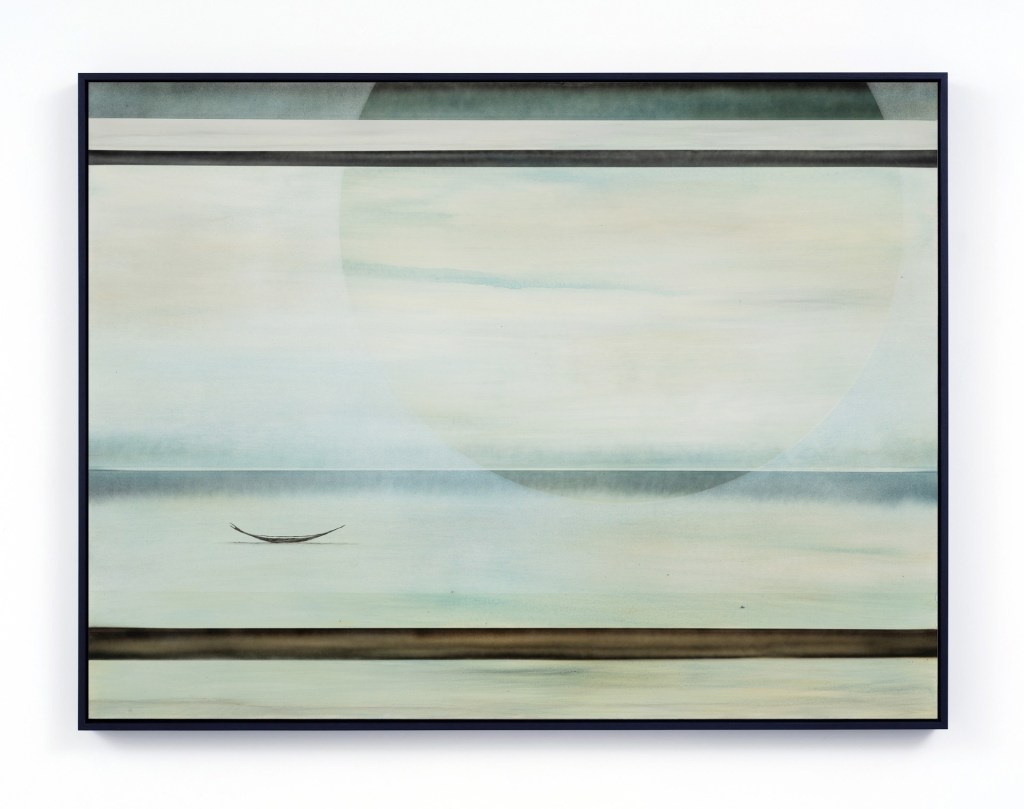
Simon Kaan, Marama Series IV
Simon Kaan, Marama Series IV, 2026
Ink and oil on board
1250 x 950 (h) mm
$14,000
For Aotearoa Art Fair 2026 Simon Kaan has created a new series of Marama paintings. Made in his studio in an intense period following a close friend passing away the series explores the interplay of light, darkness, and spiritual symbolism, drawing on the Māori concept of the Marama (the moon) as a guiding force that is comforting and ever-present. Through layered textures and subtle tonal shifts, the works evoke a contemplative atmosphere that reflects both the natural rhythms of life and our inner emotional worlds.
Freeman White, Sonata,
Freeman White, Sonata, 2026
Oil on linen
370 x 270 mm
$3750
For the Aotearoa Art Fair 2026 Freeman White has created a new series of dynamic seascape paintings capturing the shifting moods of the ocean. Using layered brushstrokes and subtle colour transitions the works explore the power and tranquillity of the sea. The artworks emphasize the interplay of light and water, creating scenes that feel both animated and harmonious. Several of the paintings began as en plein air studies, described by White as ‘physical embodiments’ of his memories of place, executed in situ to provide a ‘deeper understanding’ of the subject. Some of these studies are included in this body of work.
Parker Contemporary
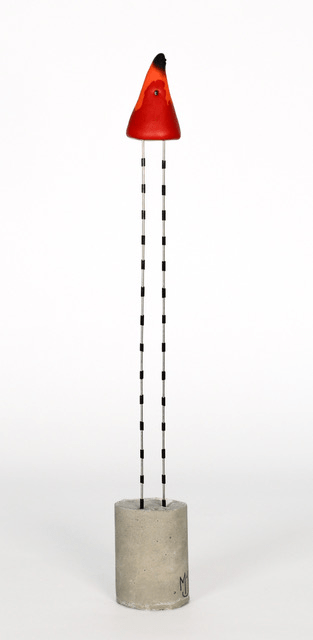
Melissa J Harvey Pride (from The Guardians series)
Melissa J Harvey Pride (from The Guardians series), 2025 Scuptie stainless steel and concrete Dimensions variable $480 NZD
Developed during a residency at the renowned Morgan Conservatory in the United States, Pride forms part of Melissa J Harvey’s Guardians series, a body of work drawn from recurring dream imagery. In this work, the guardian appears as a watchful presence, reflecting themes of protection, instinct and transformation.
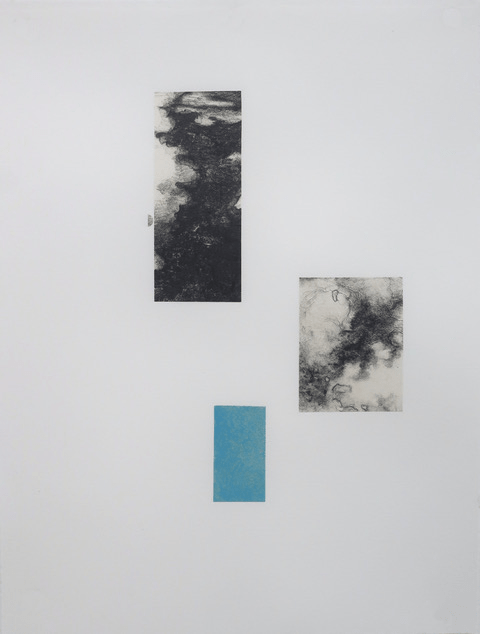
Claudia Husband, Penumbra Drift III, 2025
Claudia Husband Penumbra Drift III, 2025 Lithograph on Awagami Kitikata and Magnani Pescia 38 x 28cm
$750 NZD
Clouds drift across our skies with a quiet presence, evoking peace, joy, awe and sometimes unease. Though untouchable, they hold immense power: absorbing, reflecting and refracting light, they can obscure the sun and moon or amplify their intensity. In this work, cloud like formations become a meditation on the human psyche, drifting in isolation yet inevitably drawn back toward one another.
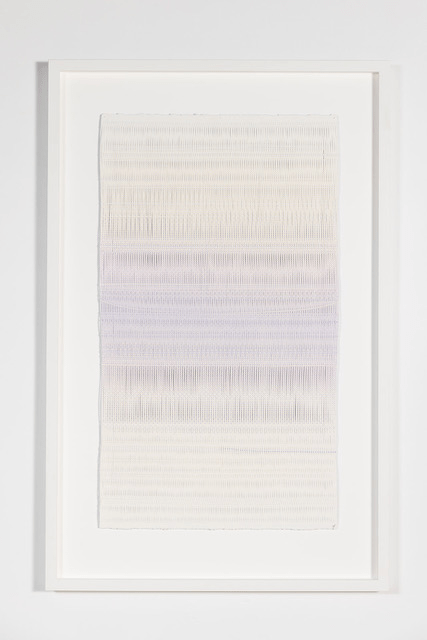
Alethea Richter Filtered Light #2
Alethea Richter
Filtered Light II, 2024 Woven multilayer silkscreen on cotton rag, custom framed 76cm x 43.6cm $6,000 NZD
Filtered Light #2 forms part of a new body of work by Alethea Richter that investigates how the materiality of hand silk screen printing and hand-woven structures can respond to visual uncertainty in the post digital era. Through layered analogue processes, the work reflects on how images are filtered, interrupted and reassembled through material and touch. Filtered Light II was recognised as the winner of the 2025 Burnie Print Emerging Artist Prize.
Sally Dan-Cuthbert Gallery
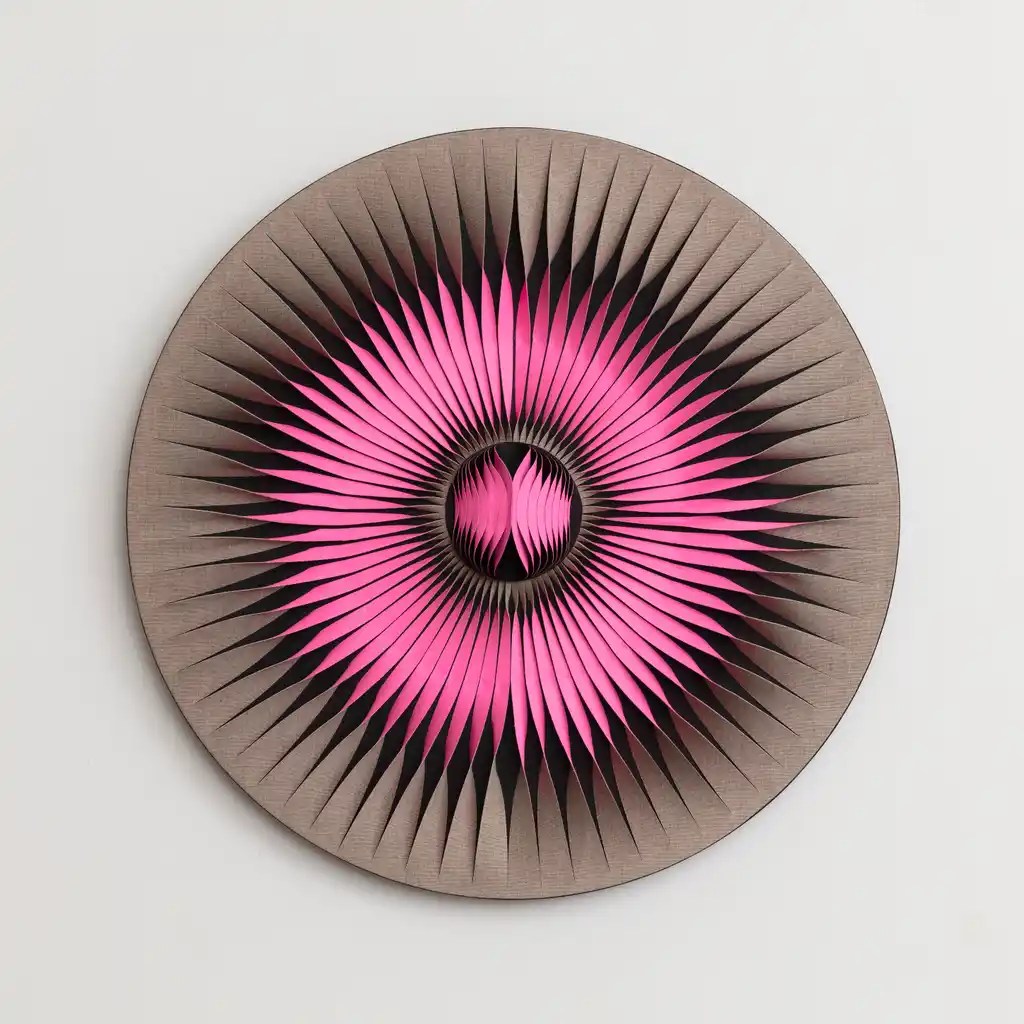
Marion Borgelt, Liquid Light: Butterfly
Widely regarded as one of Australia’s most significant and enduring contemporary artists, Marion Borgelt makes her highly anticipated New Zealand debut with new work from three of her most celebrated series: Lunar, Liquid Light, and Strobe. Borgelt’s multidisciplinary practice is distinguished by its sustained investigation into cosmology, optics, time, and the natural world; works that move fluidly across scale, form, and medium, engaging with the fundamental forces that shape our understanding of the universe. Her debut presentation at Aotearoa Art Fair marks an exceptional opportunity to encounter the full breadth and ambition of her evolving vision.
Life cycles and nature are conceptualised in Borgelt’s intriguing, Liquid Light: Butterfly Series. The life cycle and flutter of butterfly wings is referenced through Borgelt’s expert, delicate use of Belgian linen where exquisite colours create an intriguing and mesmerising textile work.
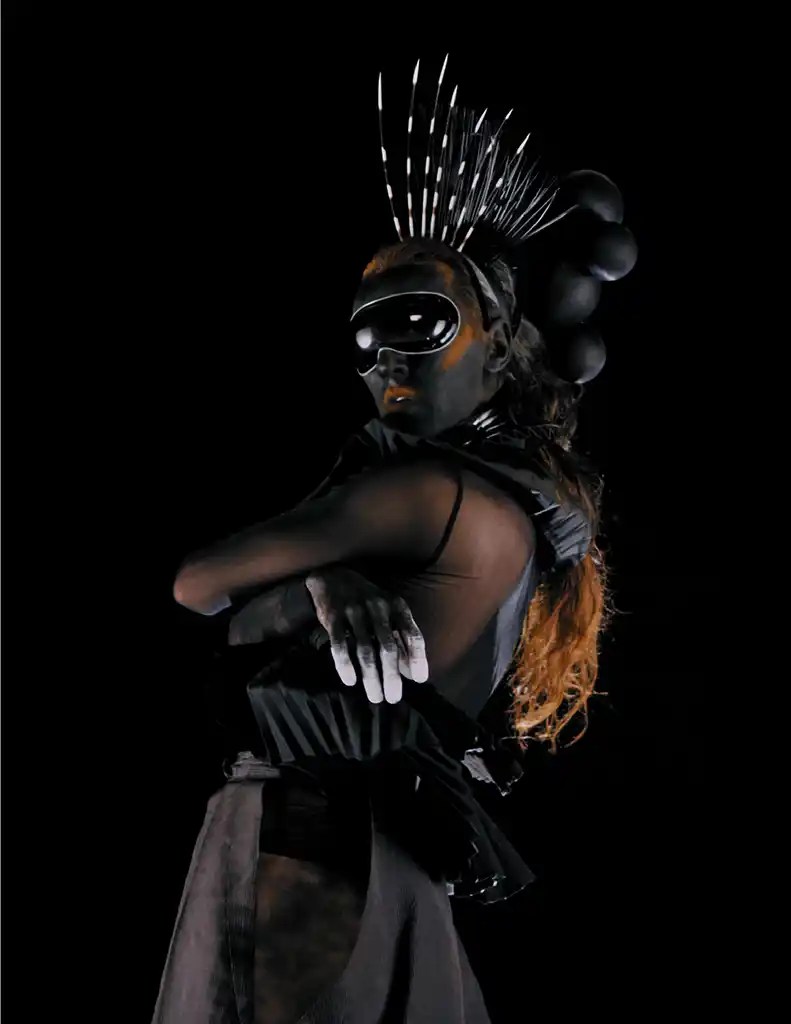
Lisa Reihana Quills
Lisa Reihana is celebrated internationally as an artist, producer, and cultural interlocutor, she presents new images from Maramatanga and Nomads of the Sea, works that continue her groundbreaking inquiry into contemporary photographic and cinematic languages, and the complex intersections of identity, history, place, and community. A major figure in Pacific and indigenous art discourse, Reihana’s practice has earned her an outstanding international reputation. Her iconic film in Pursuit of Venus [infected] will screen at the fair, accompanied by images from the series. With all editions now sold, Artist Proof 1 is the sole remaining primary market opportunity from this landmark work.
Quills is a photograph from Lisa Reihana’s series Nomads of the Sea – a richly layered narrative that follows directly from her acclaimed Venice Biennale work in Pursuit of Venus [infected]. Nomads of the Sea weaves historical fact with fiction to explore the tensions between cultural leadership, spiritual custom and egotistical desire in the face of foreign political challenge in the 1800’s New Zealand, told through the eyes of two formidable female protagonists.
Milford Galleries
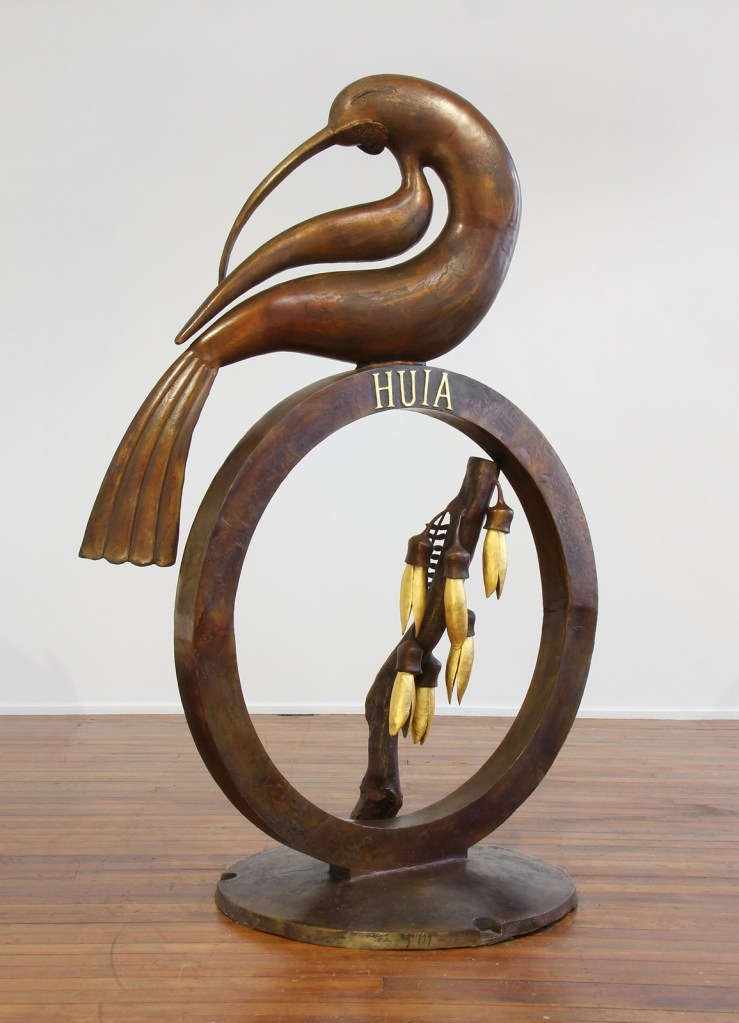
Paul Dibble: The Lost Garden (2023)
Paul Dibble: The Lost Garden (2023)
Combining the pathos of loss with the plural optimism of our unofficial national flower, the kōwhai, Paul Dibble’s The Lost Garden is a powerful narrative of loss as well as a celebration of being. Lyrical and fluid, and quite simply beautiful, the extinct huia sits atop the metaphorical circle of life, looking back in judgement of who we think we are and our past behaviours.
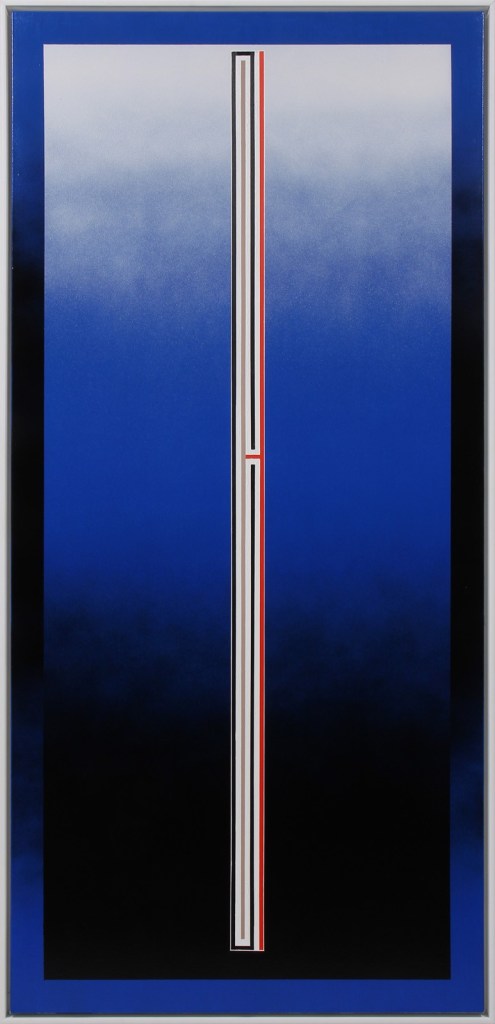
Darryn George: Whakamārie #1
Darryn George: Whakamārie #1(2025)
Darryn George seeks to honour and uphold the mana of people whose names are known and those whose quiet influence has shaped the artist’s life. Whakamārie draws inspiration from Barnett Newman – whose monumental fields of colour are punctuated by vertical lines intended to guide the viewer toward the metaphysical or spiritual. Encompassing meanings of calm, comfort, and the restoration of peace across emotional, relational, and spiritual dimensions, Whakamārie #1 responds to Newman’s ambition by imbuing minimalist abstraction with a renewed sense of meaning and presence.
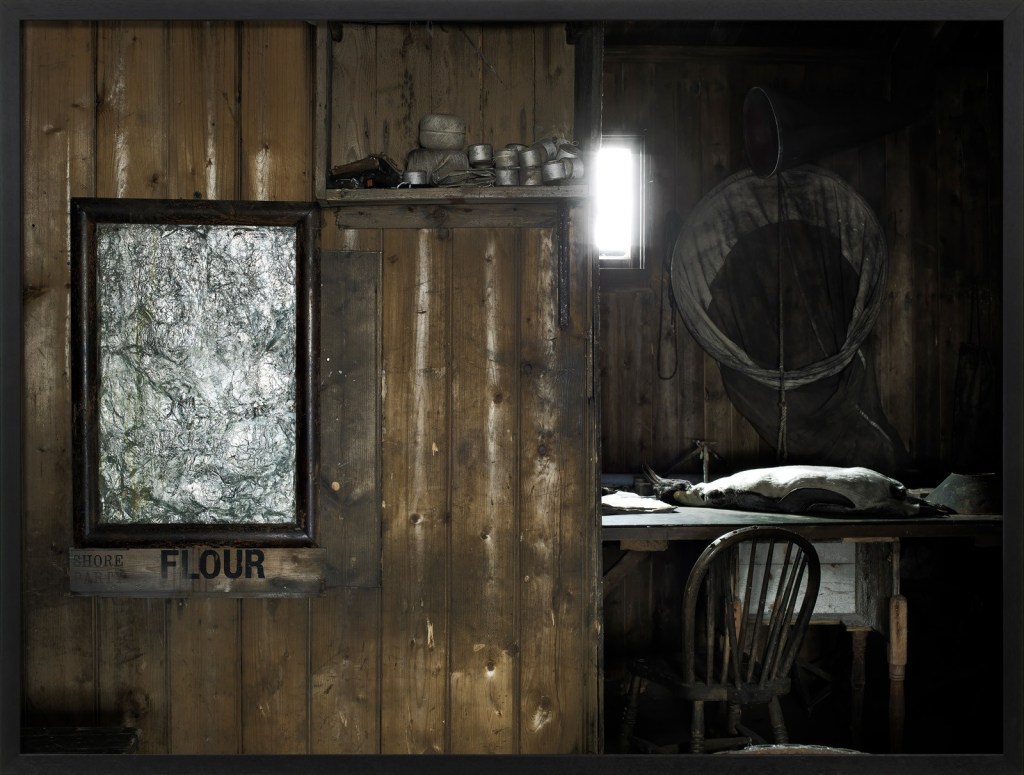
Jane Ussher: Scott’s Hut Cape Evans 4
Jane Ussher: Scott’s Hut Cape Evans 4 (2008)
Long acknowledged as one of New Zealand’s foremost portrait and documentary photographers, Jane Ussher’s internationally acclaimed photographs of Robert Falcon Scott’s historic hut at Cape Evans honour the early Antarctic explorers. Creatively manipulating light, Ussher reveals the minutiae of daily life, the rigours of scientific endeavour, and the profound isolation of Antarctica’s extreme environment, highlighting the human stories embedded within these pioneering journeys.
McLeavey Gallery
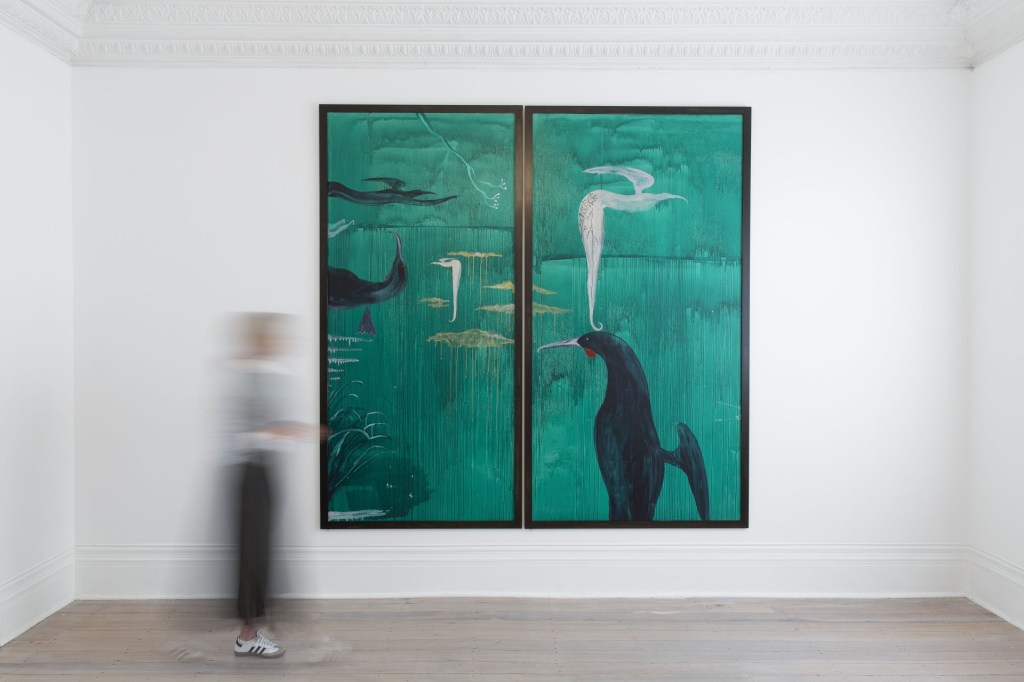
Bill Hammond Untitled (Wainui work 1)
Bill Hammond
Untitled (Wainui work 1) and Untitled (Wainui work 2)
Soon after these two works were created, the late William McAloon reviewed a Hammond show at Peter McLeavey Gallery. He described this period as Hammond at “the height of his painterly powers”. Pinned to the wall beside these two panels was a postcard McLeavey wrote to Bill from Golden Bay, writing while surrounded by tūīs, bellbirds and Godwits. Entertained by their splendid dawn chorus.
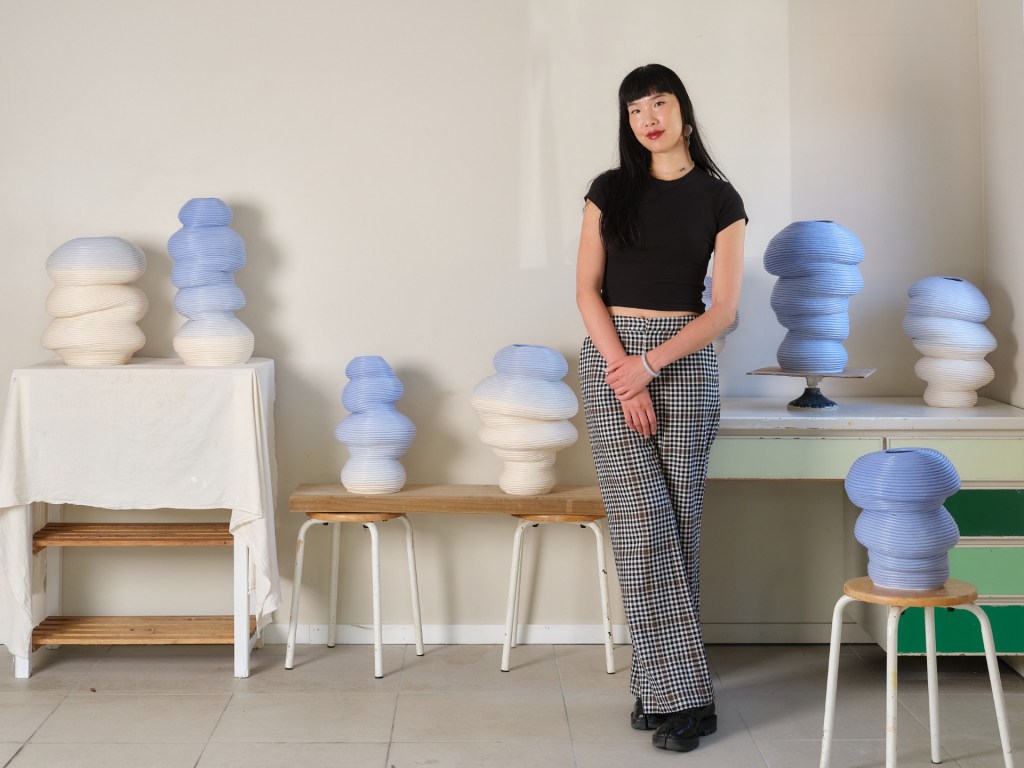
Zhu Ohmu
Zhu Ohmu
Over the past year in Paris, Taiwanese /New Zealand artist Zhu Ohmu completed a three-month residency using the time to experiment with conceptual idea including her phone tile works, reflecting distance from home.
In gradually, then suddenly, the works explore intimacy, distance, and the traces we leave in our attempts to stay close. The hand-coiled ceramic vessels are based on the finger-smudged impressions left on phone screens.
The hues of blues that colour her were inspired by Rebecca Solnit’s A Field Guide to Getting Lost, where blue becomes the colour of longing- “the colour of where you are not.”
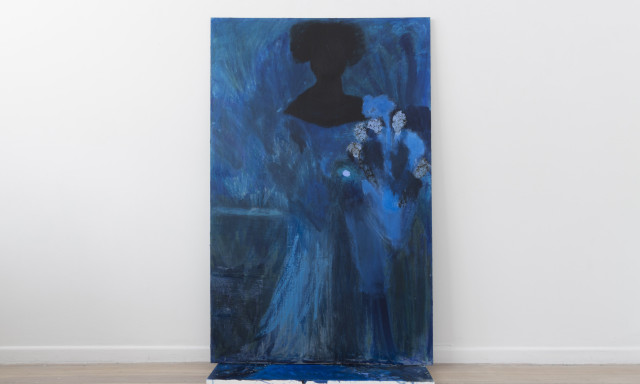
Ruth Ige
Nigerian artist Ruth Ige who is currently based in Auckland was recognized as the 2025 recipient of the prestigious Rydal Art Award for her work “And you stood in your power” which showcased her unique style using second-hand plywood, oil sticks, dried leaves and acrylic paint.
Her figures are powerfully set within landscapes or colour fields of blue—impressionistic and speculative spaces that remain purposefully undefined. Her palette draws on the deep lineages of Nigerian indigo fabric traditions and the cultural significance of blue more generally for African communities, for whom it symbolises spirituality, protection, and love.
Artis Gallery
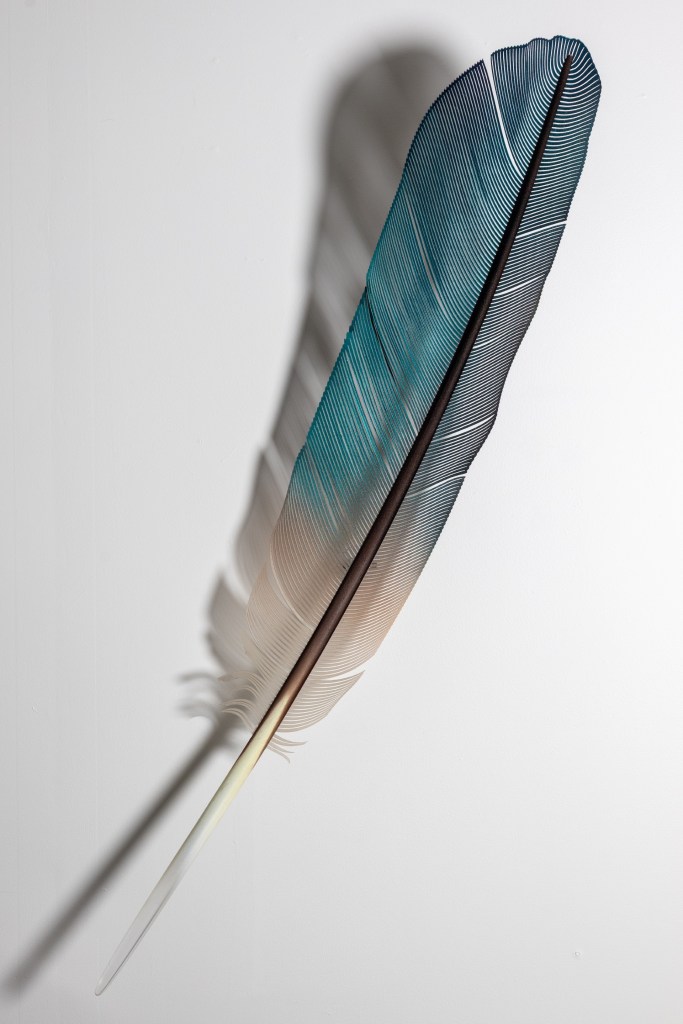
Neil Dawson
Neil Dawson, KererūNeil Dawson , Kōtare
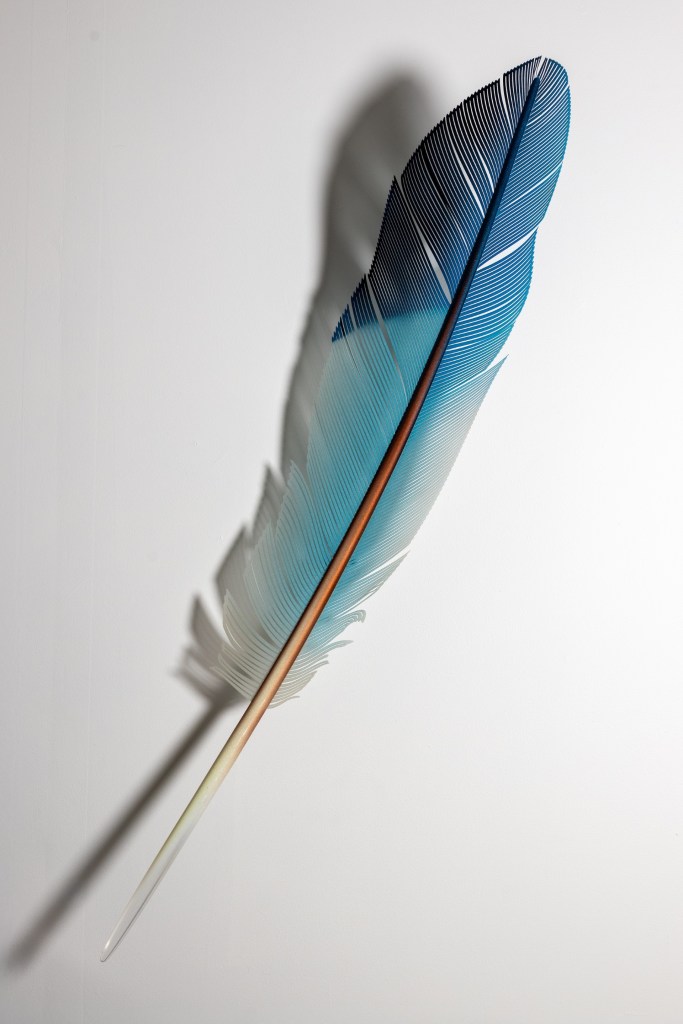
We will be presenting three feathers by Neil Dawson at the 2026 fair, a Kōtare and Kererū (both unique pieces) and a Huia feather which is an edition of 5, which is yet to arrive.
Feathers have long been a recurring motif in Neil Dawson’s practice, appearing in works installed globally—from Touchdown near Transmission Gully in Wellington to sites including the Art Gallery of NSW, Sam Neill’s Central Otago winery, and Shanghai’s skyline.
These new works continue that exploration, using the feather as both subject and point of departure. While visually immediate—light, colour, and a sense of effortless movement—they are underpinned by a strong focus on structure. Feathers are highly refined natural forms, engineered for flight and balance, and Dawson draws attention to this underlying complexity.
Precision-cut from aluminium and polycarbonate, the works heighten surface qualities—iridescence, scale, and finely detailed barbs that respond to light and space. Suspended, they appear to hover, reinforcing Dawson’s long-standing interest in weightlessness and spatial illusion. What initially reads as delicate and decorative reveals itself, on closer inspection, as carefully engineered and exacting.
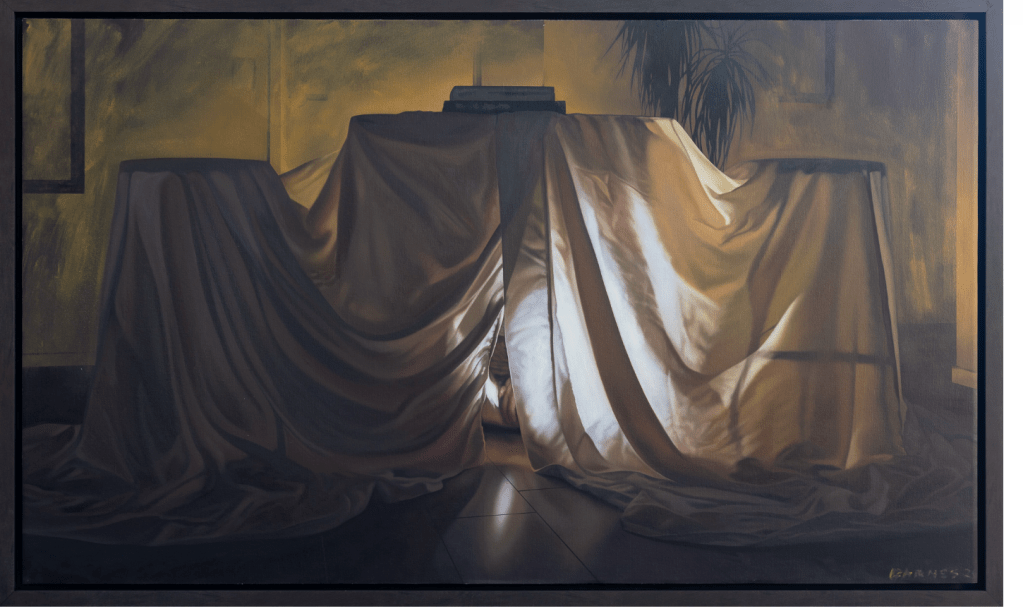
Jordan Barnes
Jordan Barnes
In this series, Jordan Barnes revisits the language of childhood—makeshift forts, draped fabrics, and improvised spaces—as sites of comfort, imagination, and retreat. These fleeting structures become quiet monuments to a time when the boundaries between reality and imagination were fluid.
Barnes approaches nostalgia as something reconstructed rather than fixed. Veiled forms suggest both presence and absence, while shifts between loose and tightly rendered passages draw the viewer inward.
Born in New Plymouth, Barnes is known for his psychologically charged figurative works. A multiple finalist in the Parkin Drawing Prize, he has exhibited widely and was awarded the inaugural NZAAT Artist Grant in 2010.
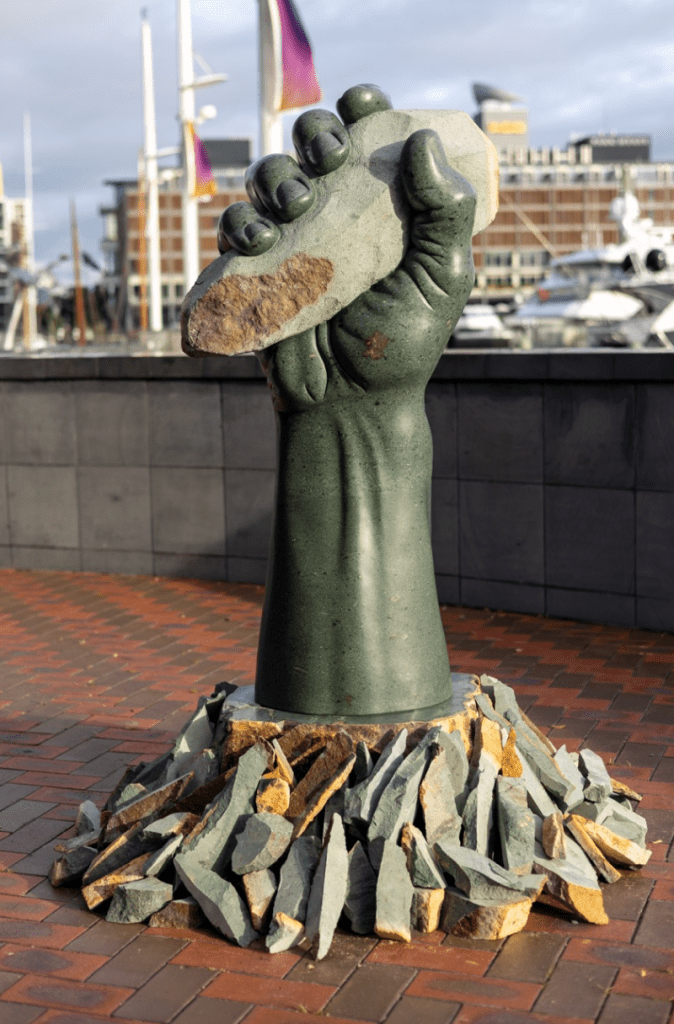
Josh Olley
Josh Olley
The work depicts a man’s hand endeavouring to squeeze blood from stone — a metaphor for perseverance and tenacity.
“As an artist, the challenge of raising my family through stone sculpture has, at times, felt impossible — yet I feel I have achieved this. This work is an encouragement to others to tackle the seemingly impossible.” – Josh Olley. 2025
The hand is sculpted true to form, embodying strength, tenacity, and determination. The sculpture is carved from a single stone block, ensuring unity of material and form.
Foenander Gallery
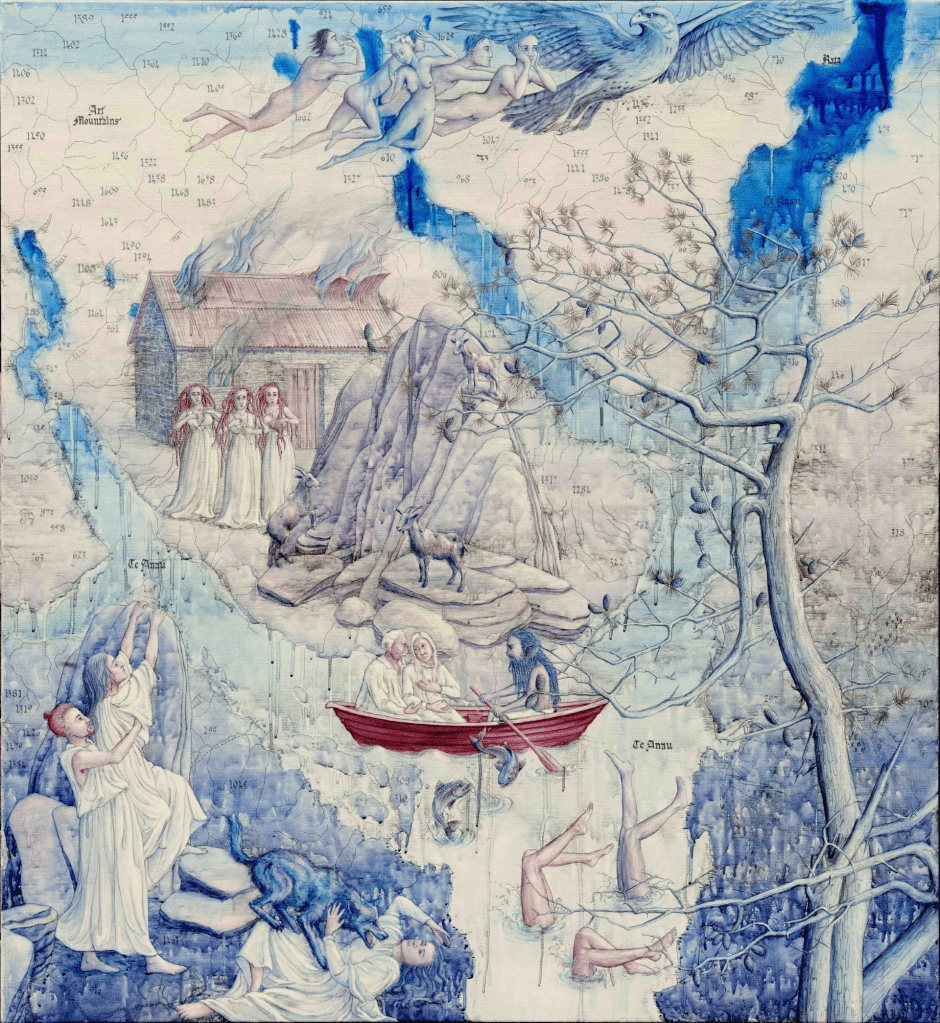
Roger Mortimer Te Anau 2026, watercolour, gold dust and acrylic lacquer on canvas on canvas. 1220 x 1120mm $16,000
Roger Mortimer is one of New Zealand’s most significant living artists working in the ‘landscape’ genre. Mortimer has been aptly described as ‘a contemporary visual mythologist’ and is widely recognised for his distinctive use of medieval imagery, juxtaposed with early marine maps of Aotearoa. His work gives a post-modern and post-colonial take on the charting of the local coast lines. Mortimer graduated from the Elam School of Fine Arts in 1999. In 2014 he was the Paramount Award Winner in the Wallace Art awards – one of New Zealand’s top art awards. In 2017, a survey exhibition of his work, ‘Dilemma Hill’, was shown in public galleries in Wellington and Auckland.
In 2021 Mortimer had three works included in the landmark exhibition “Oceania Now: Contemporary Art from the Pacific” at Christie’s in Paris – a showcase which represented a unique opportunity for the French and international market to engage with some of the most important and established artists working in New Zealand today. The same year also saw the publishing of: Apocrypha: The Maps of Roger Mortimer – a 160 page monograph with essays examining the last 12 years of Mortimer’s map paintings and weavings. Mortimer’s works feature in a range of significant public, corporate and private collections.
Vipoo Srivilasa
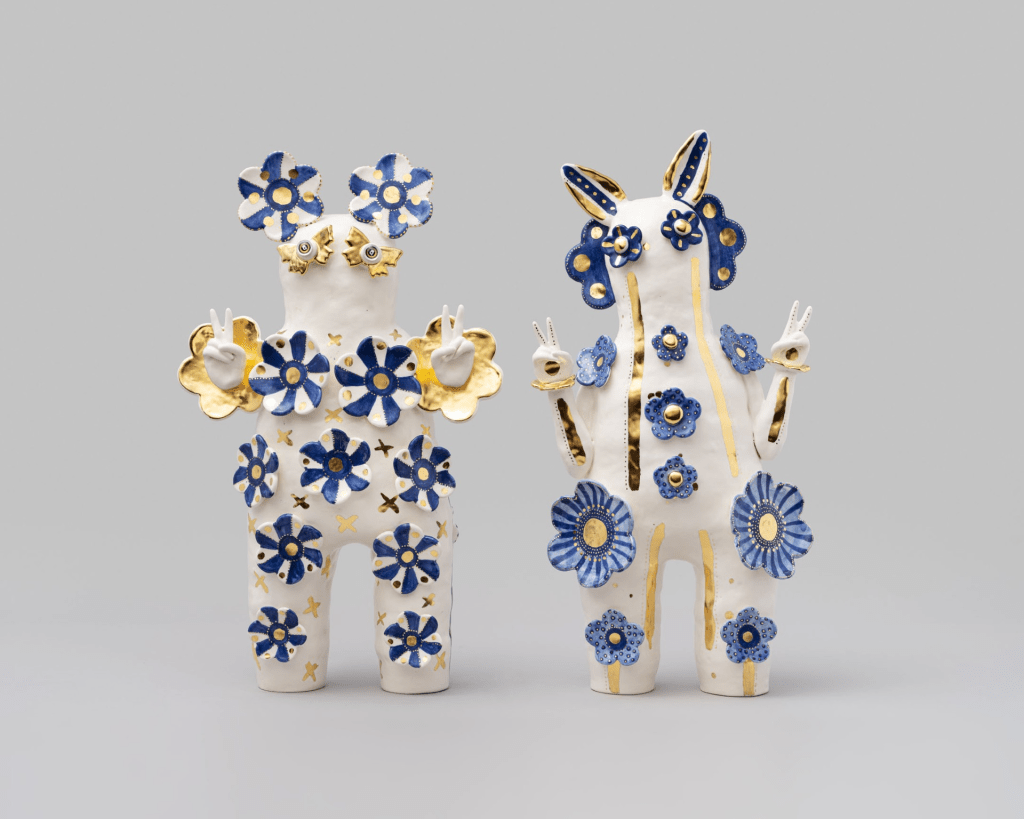
Vipoo Srivilasa, is a celebrated Thai-born ceramicist based in Melbourne
Vipoo Srivilasa Calm Blossom (left) Lucky Blossom (Right), 2026 Ceramic, glaze, cobalt pigment and gold luster Approx: 410 x 230 x 110mm (each) $9,500
Vipoo Srivilasa, is a celebrated Thai-born ceramicist based in Melbourne and this is first time exhibiting in Aotearoa!
His playful and ornate ceramic works explore themes of migration, spirituality and human connection. Vipoo’s new works for the fair are from his ongoing blossom series which incorporates flowers as a metaphor for friendship: “Just as flowers brighten our surroundings and bring beauty to our lives, friendships blossom and grow, adding colour and vibrancy to our experiences. They remind us that, like a well-tended garden, friendships require care and attention, but the rewards are boundless.” The character’s fingers form ‘V’ signs as ‘a universal gesture of peace, friendship and happiness,’ Srivilasa explains “Despite the challenges we face, we can find solace and strength in our connections with others. By including this symbol, I want to convey that everything is okay, and that together, we can create a peaceful and joyful world.”
With career spanning more than 20 years, Vipoo Srivilasa has created intricate and elaborate artworks that reflect his bicultural experience living between Australia and Thailand. Working mostly in ceramic, he celebrates the intersections and overlaps between our cultural, social, philosophical, and environmental ideologies with a mix of humour and reverence, iconography and ornamentalism. His works often explore the dark parts of experience including isolation, loneliness, nostalgia, as well as joy, beauty, and hope in the midst of these struggles. Vipoo has exhibited extensively around the world, including Museum of Fine Arts, Boston; Saatchi Gallery, London; Ayala Museum, Philippines; Yingge Ceramics Museum, Taiwan; Nanjing Arts Institute, China and the National Gallery of Thailand. His work is held in national and international public collections across the globe including Henan Museum, China; Roopanakar Museum of Fine Arts, India; Craft Council, UK, and the National Gallery of Australia. In 2021, Vipoo was awarded the Ceramic Artist of the Year by the American Ceramic Society for his contribution to the global clay community – and is a nominee for the Legacy Award, at the 2026 Asian Pacific Art Awards -awarded to an individual or arts organisation, that has demonstrated leadership and a long-term commitment to intercultural and international practice.
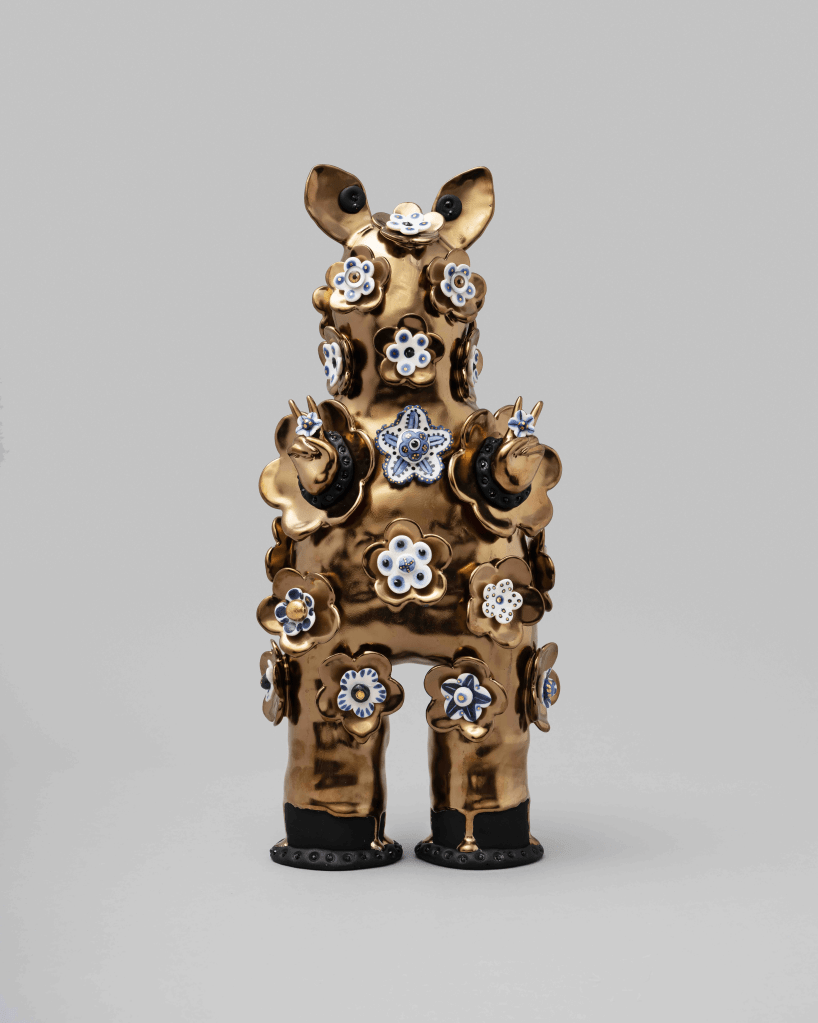
Vipoo Srivilasa, 2026 Sacred Blossom Ceramic, gold glaze, handmade porcelain flowers and mixed media 390 x 180 x 120mm $9,500
Neal Palmer
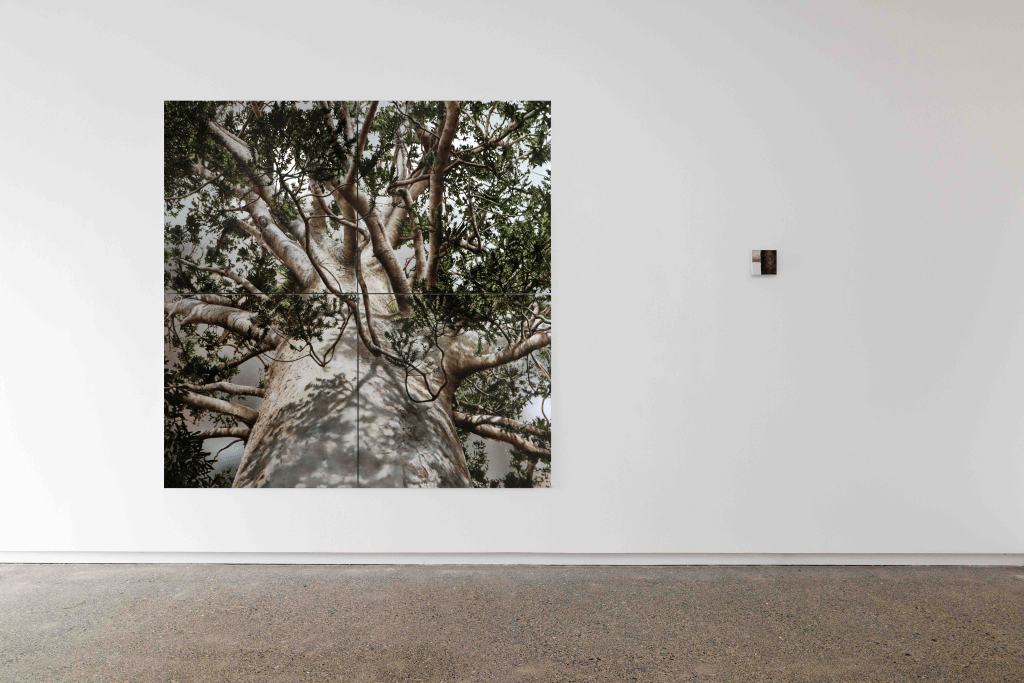
Neal Palmer Light the Way Acrylic and Silver Leaf on Aluminium Panels 1850 x 1850mm
Formally Neal Palmer’s large Kauri painting towers over the viewer and the gilded silver background gives the sensory impression of the dappled light shining through the branches. The painting depicts Tāne Mahuta, and while this first impression of scale and perhaps the protection of its canopy are appropriate – the work also seeks to draw attention to Aotearoa’s complex ecology under stress. With very few of these giant trees left after most of the forests were felled, the remaining Kauri are now threatened by Kauri Dieback Disease which has spread widely and kills quickly.
Dieback spreads through the soil infecting trees via their roots. There’s a lot going on under the surface that we need to understand before it’s too late.
A full-time artist since 1999, Neal Palmer has had 30 solo shows alongside participating in group shows and events at Artspace, Rotorua Museum, Hastings City Art Gallery, Artists in Eden and the Beijing and Los Angeles Biennial Art Invitationals. Palmer has been a finalist in the Molly Morpeth, Margaret Stoddart, Estuary Art & Ecology and the Wallace Art Awards and was an inaugural artist for the Karekare House residency and the most recent Artist in Residence at the Auckland Botanic Gardens (2022 – 2023_.
Palmer’s painting practice revolves around exploring his natural environment and its visual language. “I have discovered subjects that can evoke strong emotional responses. I have been consistently interested in blending visual languages, and in exploring how the languages of colour, texture, pattern, and abstract forms can inform and cross-reference each other. One focus has been to develop work that uses the illusion of a photographic ‘depth of field’ to allow images to slip in and out of pictorialism and abstraction through shifting the viewer’s conscious reactions to colour, composition, and form.”
Born in London, Palmer gained a Bachelor of Fine Art (hons) from Nottingham Trent University, where the work of his contemporaries Tim Noble and Sue Webster remain influential to this day. He moved to Aotearoa in the late 90’s, coming to terms with the natural environment of his new home, the artist engaged in painting again, to great success, finding a strong affinity and emotional nostalgic response from the native fauna. Allowing his work to slip in and out of pictorialism and abstract flatness; creating a tension between the paintings surface and the illusion of space. Aspiring for his work to be relational “on as many levels as possible” and passion for quality “mark-making that lifts the painting beyond the material world” is what drives this artist.
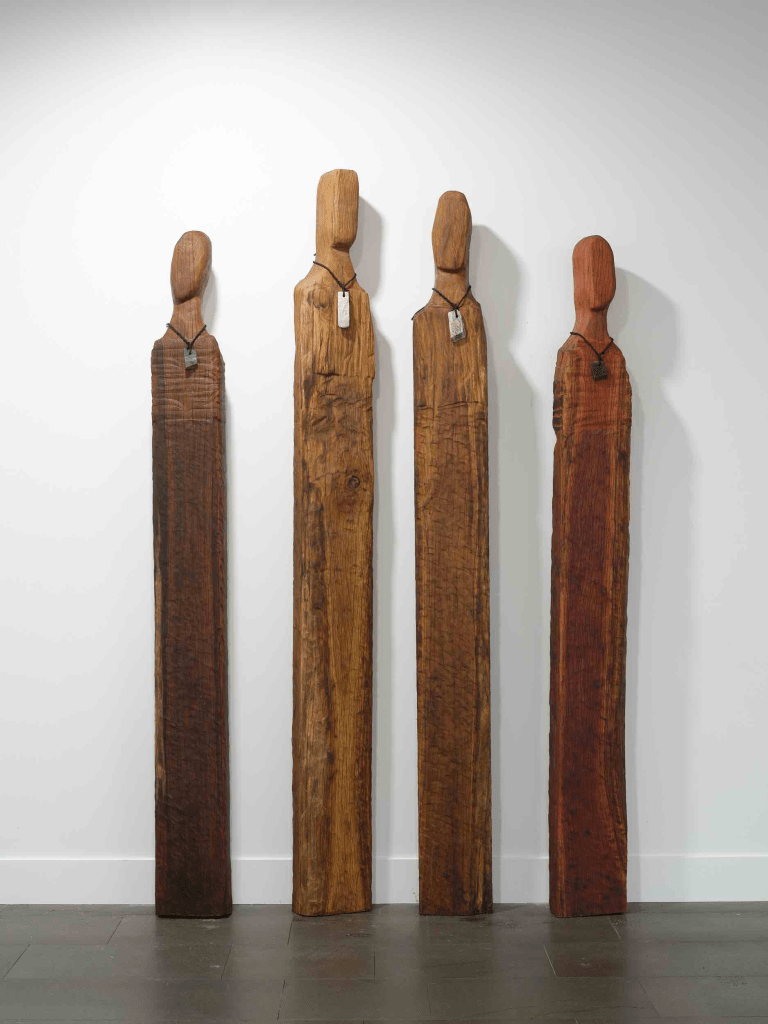
Nau Mai, Hardwood (Eucalypt, Jarrah) , Oil, Ngāi Tahu Pounamu & Woven KakahuDimensions Vary (approx: H2500 W240 x D 130mm each)$6,000 (each)
Anton Forde
Anton Forde (Taranaki, Gaeltacht, Gaelic, English) began his carving journey at the age of 18, studying under renowned sculptors Paul Dibble, Gary Whiting, and Paul Hansen, before continuing his education with Professor Robert Jahnke at Massey University’s Māori Visual Arts Programme, Toioho ki Āpiti. Under Professor Jahnke’s guidance, Anton earned a Post Graduate Diploma in Māori Visual Arts with Distinction, followed by a Masters in Māori Visual Arts with First Class Honours.
Anton Forde’s carved timber pou stand watch like warriors awaiting in haka, this formation represents protection in standing together, and suggests a way forward in which one is guided by the ancestors of the past/
The artist, drawing upon his knowledge and connections, offers this position as one we might assume while navigating the increasingly uncertain times of climate change, from which we might conceive of ourselves as kaitiaki or guardians of the land rather than as its possessor.
His stately figures are at once a dominating and sheltering presence – in front of the,, we might take measure of our smallness in relation to the majesty of nature, of time, and of the many generations of people to have come before and who will come after.
Forde’s artistic journey has taken him from Taranaki to Èire/Ireland, where he immersed himself in ancient art forms and themes. He now resides on Waiheke Island, a place that inspires much of his work. Over the past twelve years, Forde has exhibited both solo and in group exhibitions across Aotearoa/New Zealand, Èire/Ireland, and San Francisco, with a focus on sculpture and installation. His works are held in both public and private collections, locally and internationally. Central to Anton Forde’s practice is the exploration of our connection to the land, the majesty of nature, indigenous cultures, and the urgent effects of climate change. His works aim to inspire a deeper understanding and respect for our environment, with a focus on protecting the whenua (land) and moana (oceans) for future generations.
As Forde puts it: “With these works, my hope is to bring attention to the need for us to unify to protect Te Ao / our world. I hope these works connect us to our whenua and moana in a way that drives us to act, to protect them.”
Each of Forde’s pieces strives to make both an aesthetic and social statement, inviting viewers to reflect on their role in the ongoing dialogue around conservation and cultural preservation.
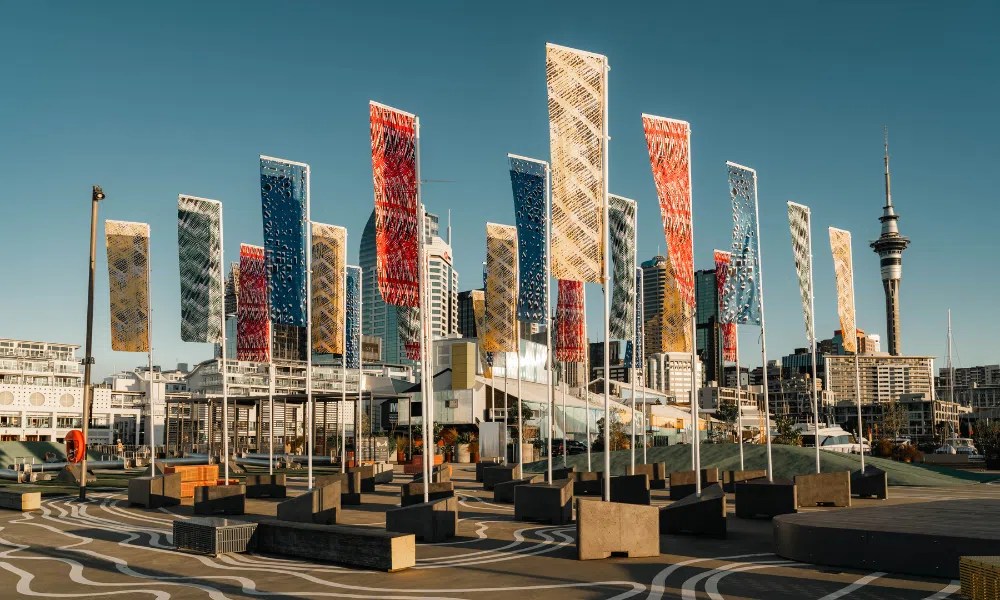
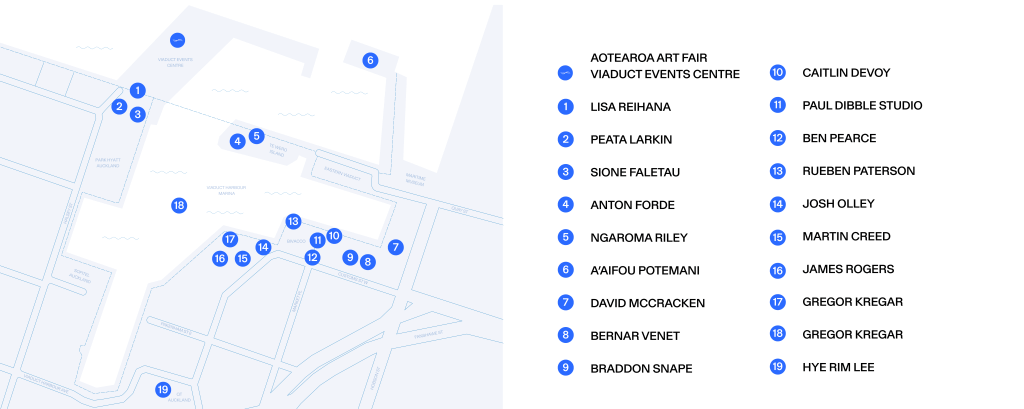
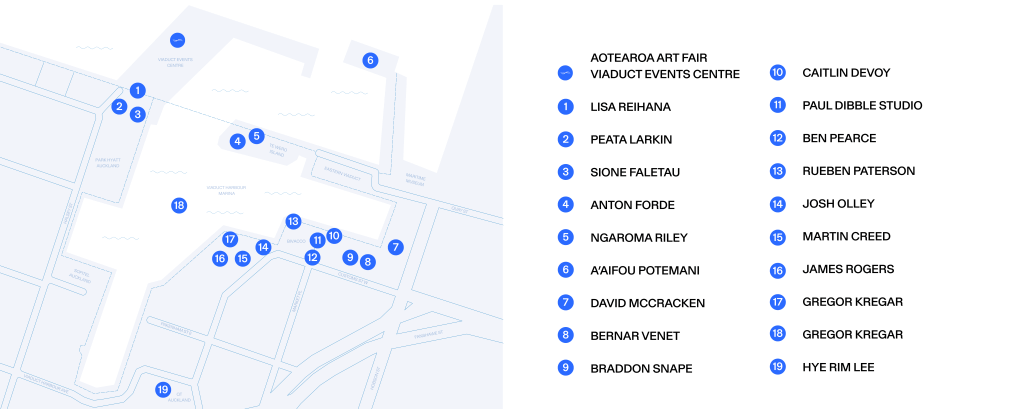
The sculpture on show at the Auckland Art Fair is always one of the highlights of the show as it is often difficult to access and view large scale sculpture. This year the works on show have been expanding significantly with 24 large-scale works by 18 artists installed across the Art Fair precinct, which extends from the area outside the Events Centre to locations around the Viaduct Basin.
The trail will feature leading Aotearoa artists and major international names, along with strong Māori and Pacific representatives.
The artists include Bernar Venet, Braddon Snape, James Rodgers, Hye Rim Lee, Reuben Paterson, Paul Dibble, Caitlen Devoy, Peata Larkin, Martin Creed, a floating work by Gregor Kregar, and a shimmering installation by Lisa Reihana.
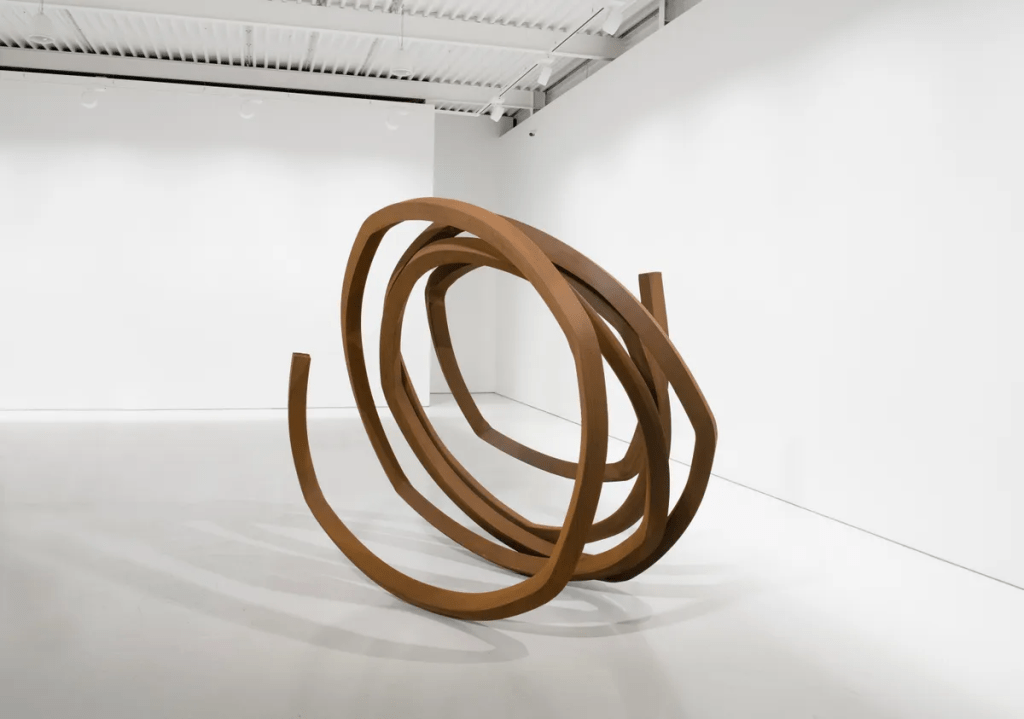
Bernar Venet’s Indeterminate Line is a steel form where bending and twisting are balanced with chance. Loops coil and unravel, reflecting the artists decades-long exploration of lines, geometry, and the interplay of order, chaos, and material presence.
David McCracken
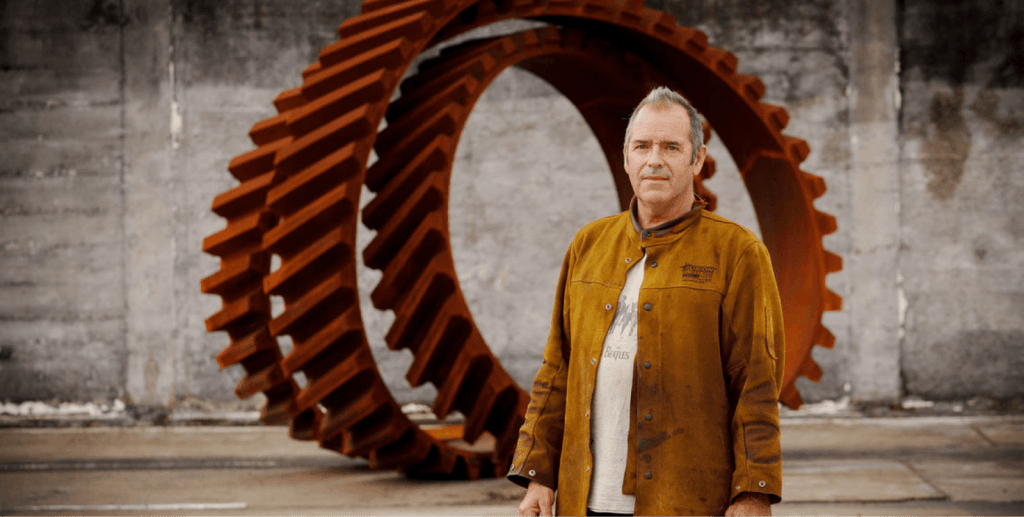
In his 2026 work, the weathered corten steel operates as both object and aperture reflecting David McCracken’s enduring interest in balance, repetition, and the tension between solidity and illusion.
He creates forms that appear to extend beyond their physical limits, drawing the viewer into a quiet contemplation of the processes involved.
Ben Pearce
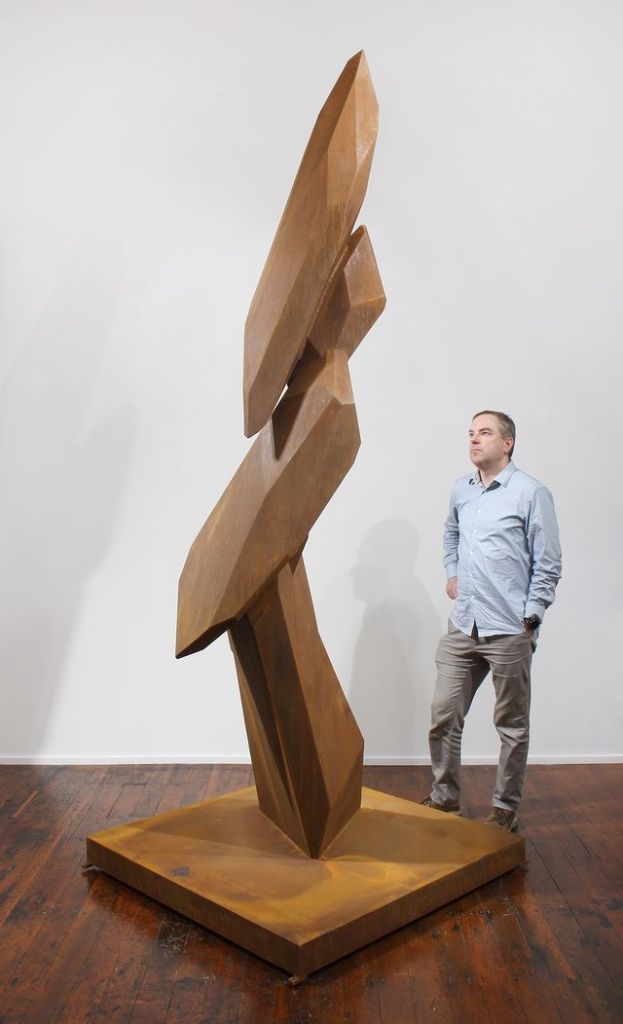
ARLOS, silk & RYOS, Ben Pearce’s large-scale sculpture celebrates nature, its strength, and its delicate balance. The boulder-like sections of his towering forms seem tethered to the firmament yet soar into the air like the supports of some natural colonnade. figurative aspects and character emerge giving them a sense of animated presence. Shapes and concepts emerge and disappear as the forms interact with the space around them.
Paul Dibble
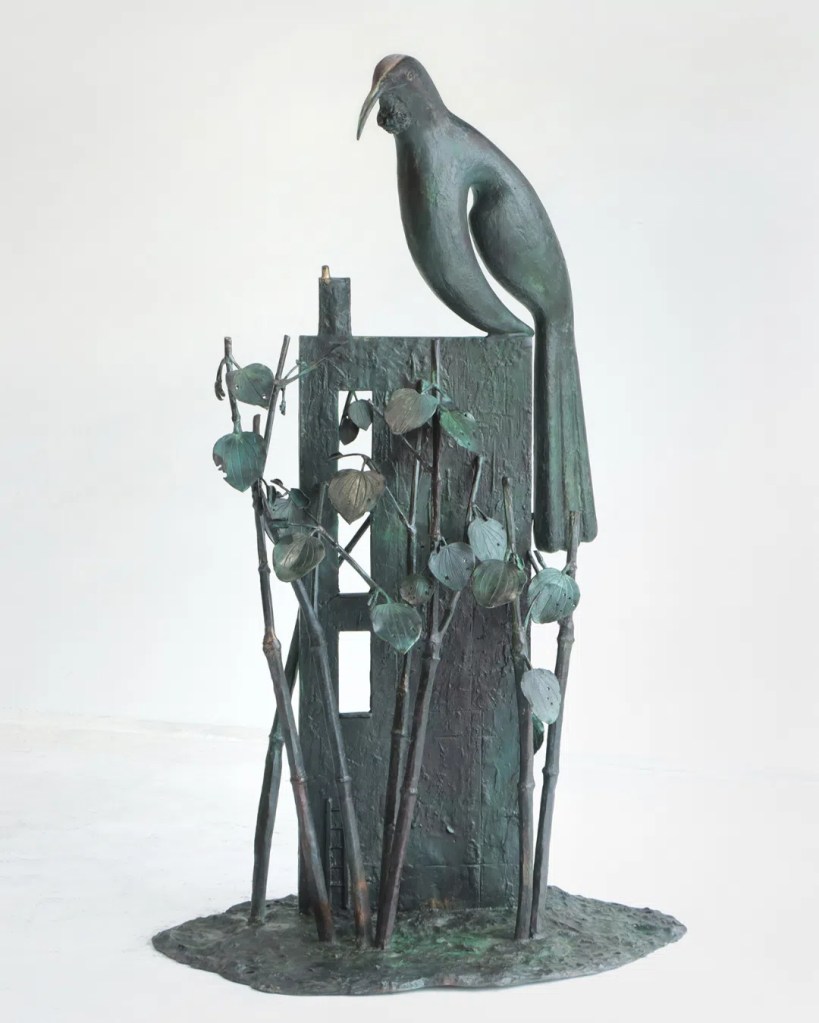
Paul Dibble’s Healing a Busy World acknowledges the return of native birds into the built environments of our cities. His flattened volume, references to building outlines and modern architecture interspersed by rectangular windows filled with light and hope. We also see for the first time a new rich green patina and the emblematic, symbolic sticks of healing kawakawa reclaiming the city.
Reuben Paterson
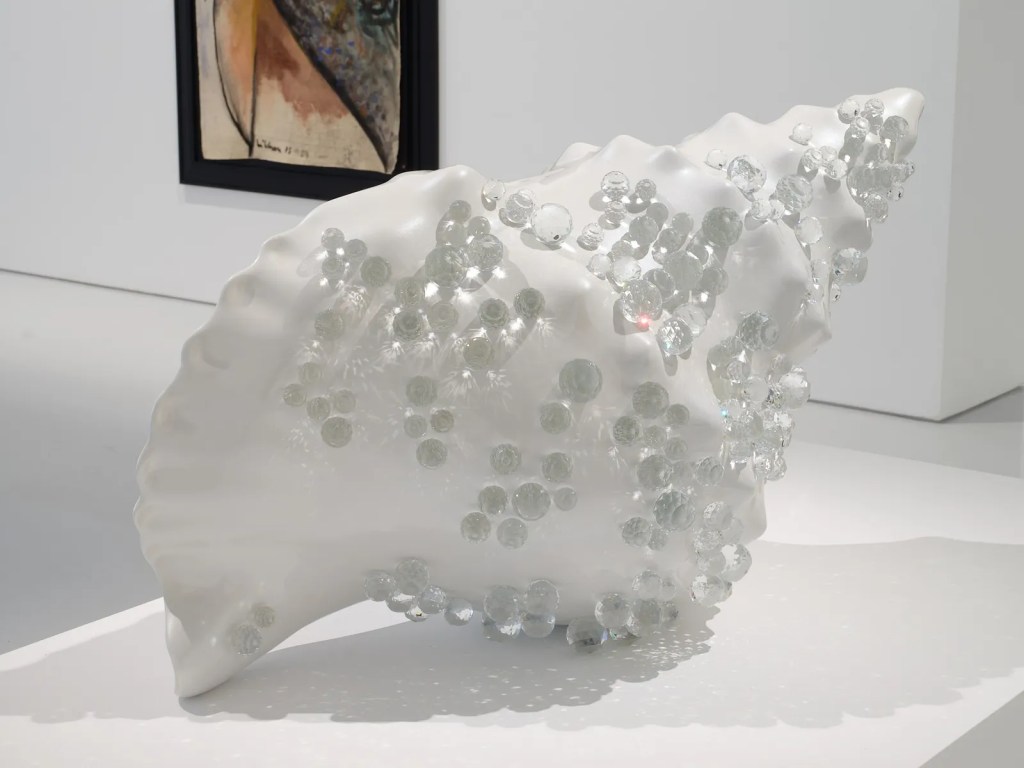
Reuben Paterson’s Koro is a sculptural work from 2023. Crafted from cast aluminium, painted with automotive lacquer, and encrusted with glass crystals, it showcases Paterson’s ability to create works across a diverse range of media.
Through a diverse range of media he creates works which are visually hypnotic and conceptually nuanced.
Hye Rim Lee
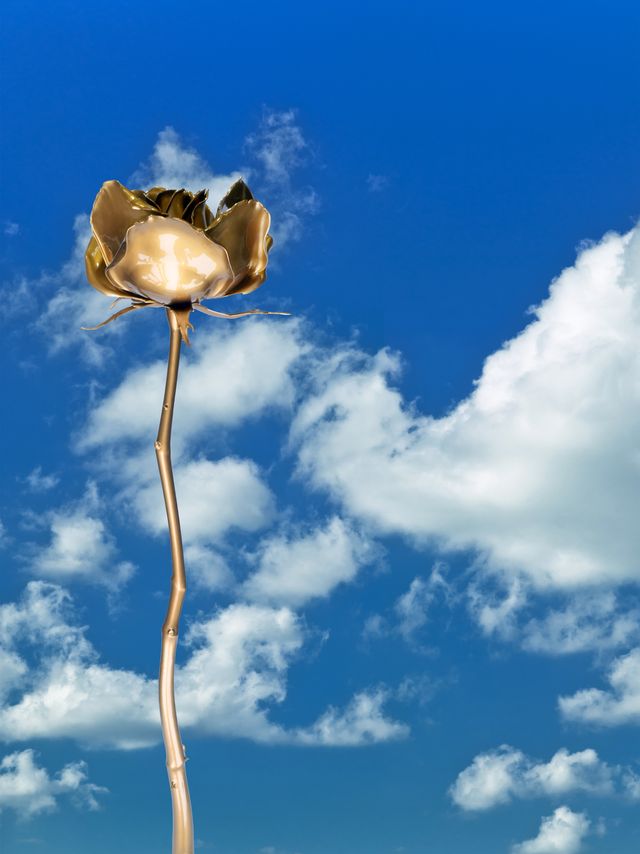
Hye Rim Lee’s artistic practice navigates the fluid threshold between the real and the virtual, translating digital imagination into tangible form. Gold Rose emerges from her iconic 3D animation series White Rose, where virtual fantasies are reborn through material transformation. In this sculptural work, Lee transforms glass — a medium rooted in her digital world — to explore its dual nature: hard yet fragile, liquid yet solid, transparent yet opaque, in her cast Gold Rose.
Ngaroma Riley
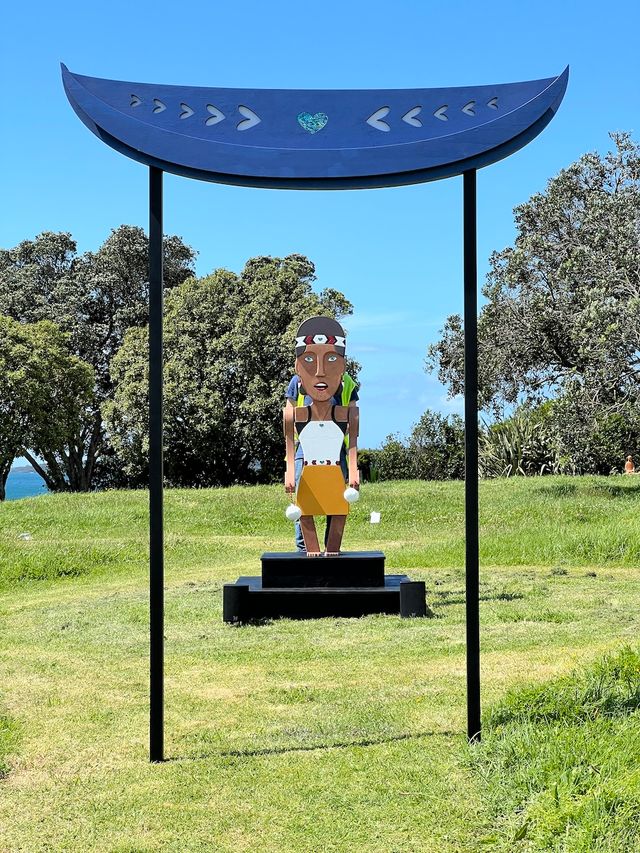
Ngaroma Riley is an artist of Te Rarawa, Te Aupōuri, and Pākehā descent. She began her carving journey making Buddhist statues while working in Japan. Her work centres on Māori narratives, with a focus on retelling whānau, hapū and iwi stories through a wahine Māori lens.
Her work Kapahaka Queens is a shout out to all the aspiring performers — the ones who live and breathe haka, who learn their words on the bus, sing their waiata in the shower, practise their pukana in the mirror and who give their heart and soul to every performance.
Sione Faletau
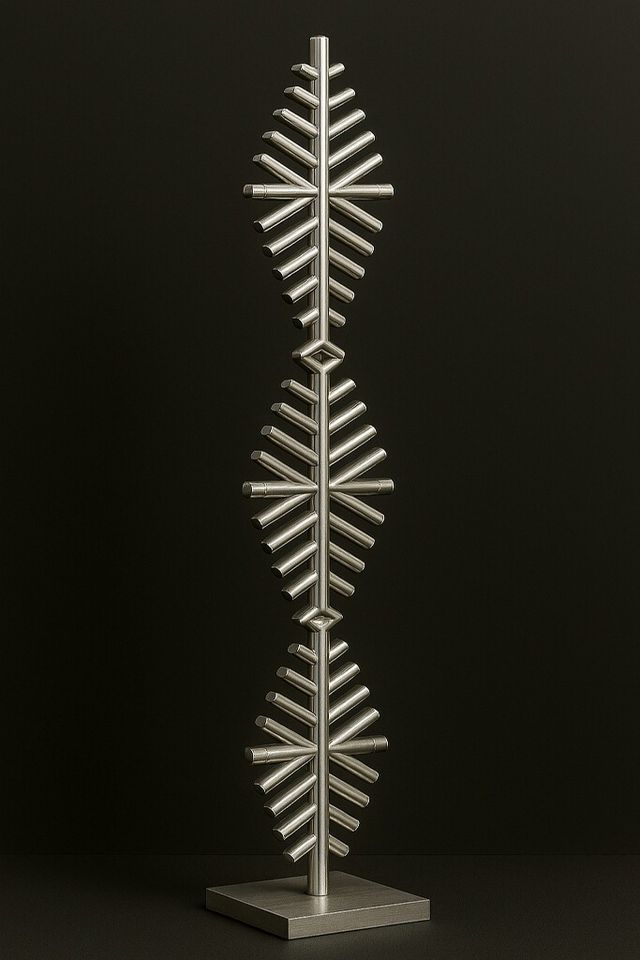
Inspired by the Waitematā Harbour, Sione Faletau recorded its sounds and translated their frequencies into kupesi patterns. Lalava ke he Uho – Connected to the Essence is formed through intersecting lines, the sculpture speaks to the DNA strand, symbolising the harbour’s life-giving essence. Lalava – meaning to bind – connects sound, place and identity into a site-specific expression of the harbour’s mauri. This is the first time Faletau has worked on a large-scale sculpture with his earlier works focused on digital and video works.
Image credit: Edith Amituanai, Vaimoe (video still), 2024. Digital video, sound. Cinematographer: Ralph Brown. Photo credit: Ralph Brown
Held every three years, the Walters Prize is widely regarded as Aotearoa New Zealand’s most prestigious award for contemporary art. Over its 24-year history, the prize has helped elevate contemporary New Zealand art, both nationally and internationally. Conceived as a platform to showcase excellence in the visual arts, it has bolstered careers, stimulated critical debate and enriched the cultural life of Tāmaki Makaurau and wider New Zealand.
Four artists have been selected by an independent jury for works exhibited between February 2023 and February 2026.
In making their selection, the jury made the following comments: “These artists have made an outstanding contribution to contemporary art in Aotearoa over the last three years, a period marked by political unrest, escalating conflicts, and environmental devastation. Rather than amplifying this turbulence through spectacle, they each respond to the disorientation of our times by turning an acute attention toward local and personal narratives, while expanding the material and conceptual possibilities of their practices.”
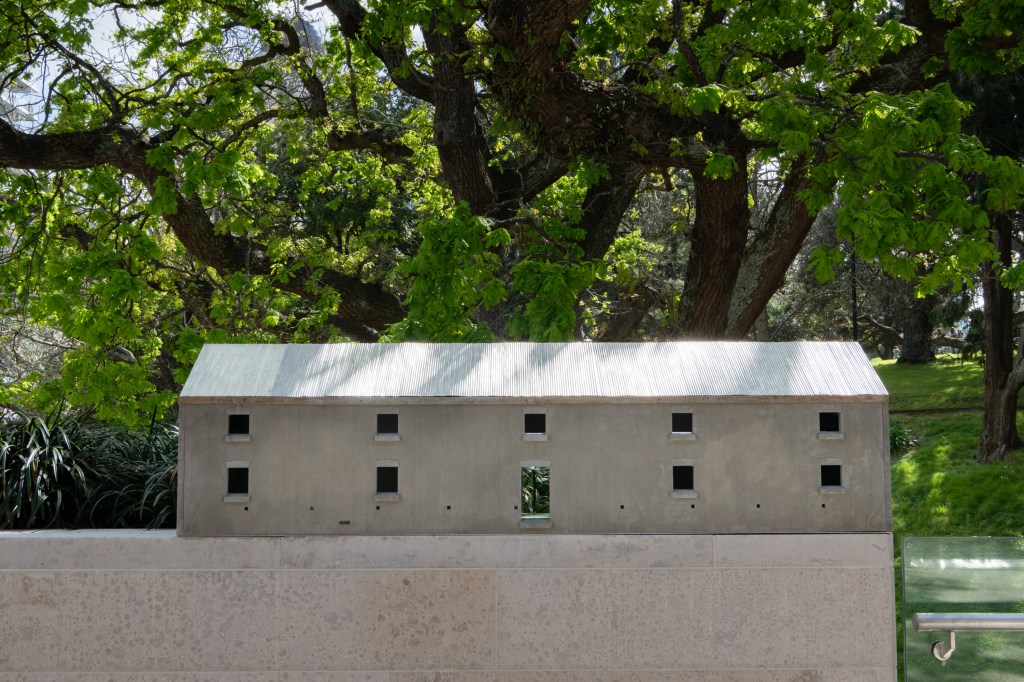
Edith Amituanai (born 1980, Tāmaki Makaurau Auckland) is a New Zealand-born Samoan lens-based artist based in Tāmaki Makaurau Auckland. Amituanai was nominated for Vaimoe, 2024, first exhibited in Edith Amituanai and Sione Tuívailala Monū: Toloa Tales, Christchurch Art Gallery Te Puna Waiwhetū, 2024, which demonstrates the artist’s recent shift into moving image while maintaining the gracious, lucid enquiry that has defined her practice over the last two decades. Vaimoe gently pushes against conventional ideals of home and belonging, exploring the ways relationships are upheld and maintained through proximity and distance, while acknowledging the challenges of change, disconnection, and communication.
Image credit: Richard Frater, Nicky’s conversion (video still), 2025. HD video, colour, sound. Lett Thomas, Auckland. Image supplied by the artist
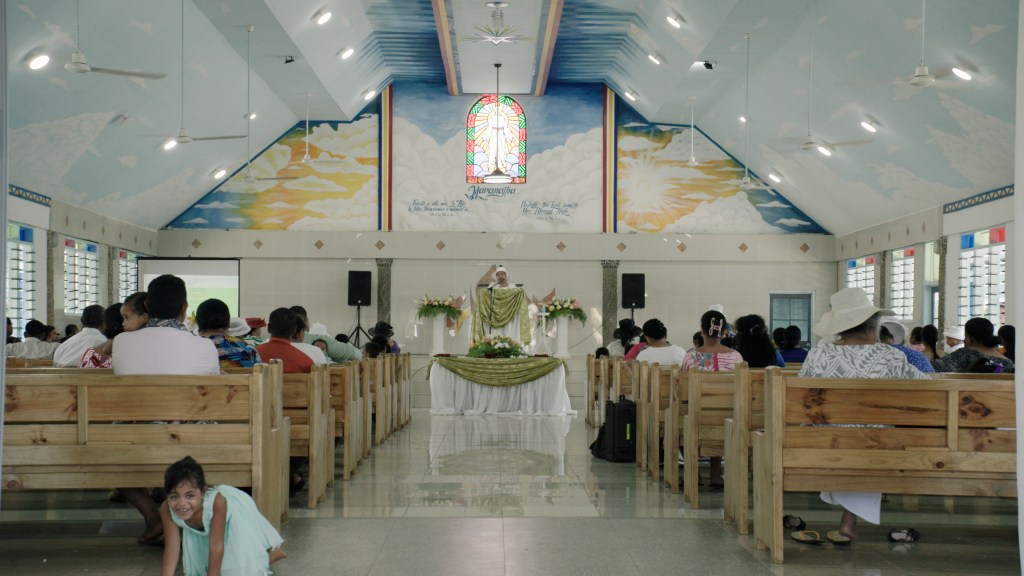
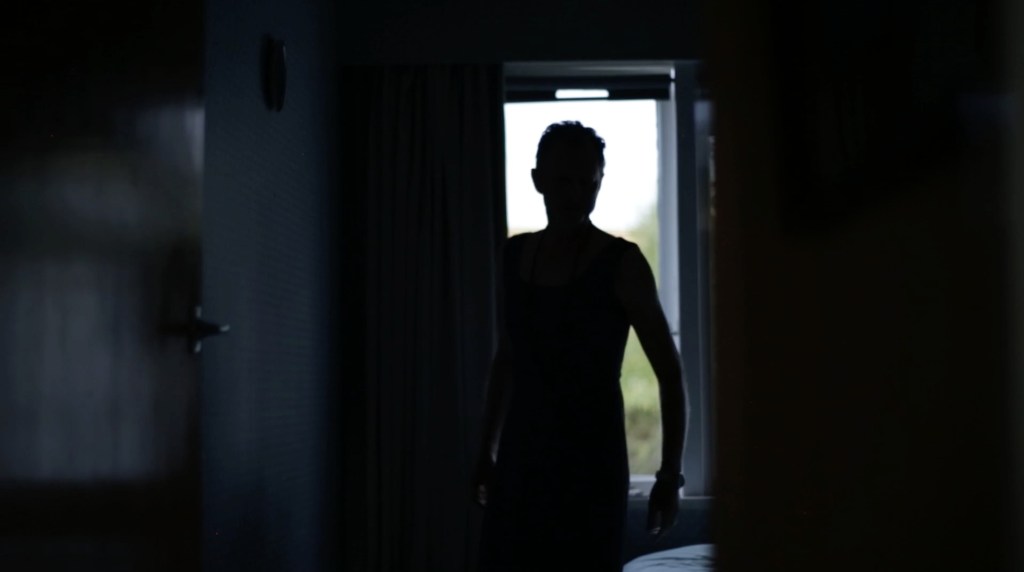
Richard Frater (born 1984, Te Whanganui-a-Tara Wellington) lives and works in Berlin. Frater was nominated for Nicky’s conversion, 2024, first exhibited at Klosterruine Berlin, 2024 and Lett Thomas, Auckland, 2025, a work that tenderly records the rehearsal of a sermon by an Anglican priest, articulating the challenges of reconciling the interior self with the structures through which we have come to understand the exterior world. With dignity and grace, the work describes a changing gender identity and offers a path through the Anglican tradition towards acceptance and love of ourselves and others.
Image credit: Ammon Ngakuru, Three Scenes (installation detail), 2025. Mixed media sculptural installation. Commissioned by Auckland Art Gallery Toi o Tāmaki, with support from the Chartwell Trust and the Contemporary Benefactors of the Auckland Art Gallery, 2025.
Ammon Ngakuru (born 1993, Tāmaki Makaurau Auckland) lives and works in Tāmaki Makaurau Auckland. Ngakuru was nominated for Three Scenes, commissioned for Auckland Art Gallery Toi o Tāmaki in 2025, a work that responds to the Gallery’s outdoor terrace and its site on Albert Park with an elegant restraint characteristic of his practice. Implicating the audience in its field of sculptural references, the work establishes a stage on which uncertain interpretation is acted out.
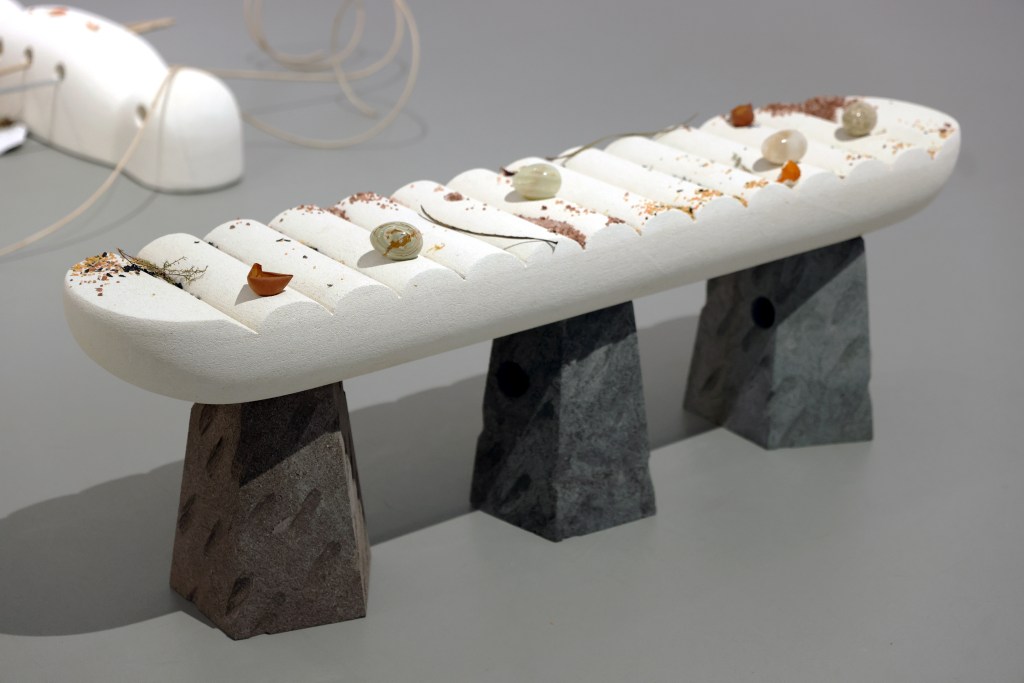
Image credit: Sorawit Songsataya, Ranad detail from the exhibition Fibrous Soul, 2024. Taranaki andesite, Ōamaru limestone, onyx, dried plant. Taranaki andesite carving by Donald Buglass. Photo courtesy of the artist and Govett- Brewster Art Gallery
Sorawit Songsataya (born 1986, Chiang Mai, Thailand) is a Thai-New Zealand artist currently based in Bangkok. Songsataya was nominated for the exhibition Fibrous Soul, presented at Govett-Brewster Art Gallery, 2024, for its exploration of processes of accumulation, regeneration and transformation. Across moving image and sculpture, and including work made by the late weaver and kaitiaki of Te Niho o Te Ātiawa Maata Wharehoka, Fibrous Soul draws together organic and artificial materials, and customary and contemporary practices, to elucidate slippages between human and more-than-human worlds and the possibility of communication across them.
Tātaki Auckland Unlimited Director of Auckland Art Gallery Toi o Tāmaki Dr Zara Stanhope says, “It has been a privilege to begin my term as Director of the Gallery welcoming in the jurors and artists for the 2027 Walters Prize. Their selection is a poignant reminder of the breadth and range of art across Aotearoa New Zealand and of the activity currently shaping the visual arts as a healthy and vital part of the cultural sector.”
The finalists are invited to present new work or their nominated work at the Gallery in a public exhibition, scheduled to open in March 2027.
Auckland Art Gallery’s Senior Curator, Global Contemporary Art, Natasha Conland, who works closely with the artists to realise the prize exhibition and says, “These finalists express materially rich works with unique, often humorous and intellectually rewarding content. It’s not surprising that they each carry a large following of supporters who are looking to ask new questions of art, and to explore its potential,” says Conland.
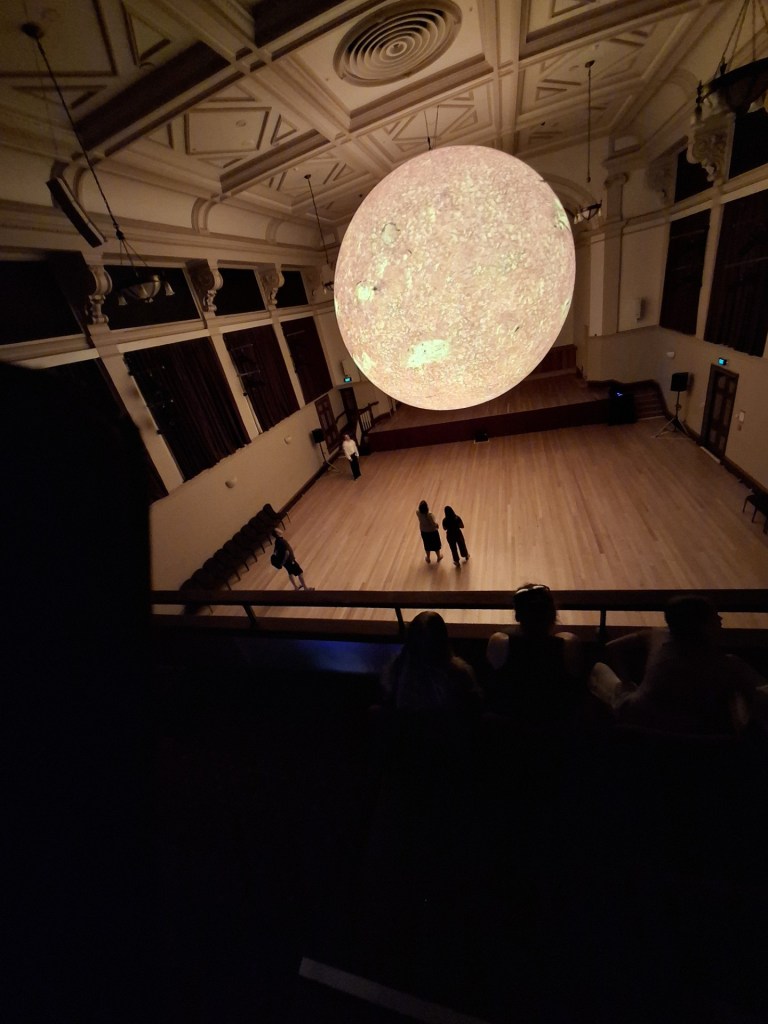
This week you can experience Helios, a breathtaking, larger-than-life artwork created by renowned UK artist Luke Jerram. Arriving in New Zealand for the first time, Helios is both a scientific wonder and a multi-sensory artwork, offering a rare opportunity to visualise the beauty and complexity of our closest star.
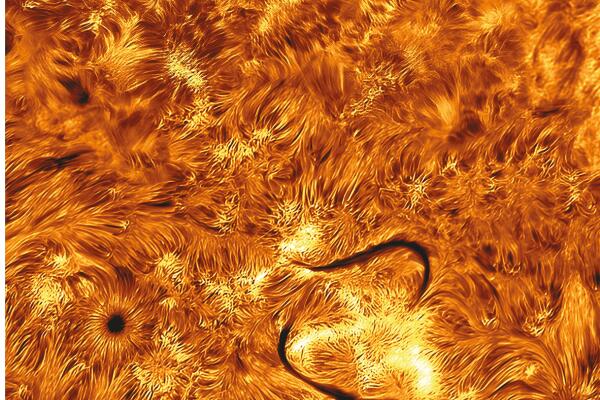
The globe measures six metres in diameter and was created at a scale of 1:230 million, it is constructed from approximately 400,000 images of the Sun’s surface. These images combine photography by astrophotographer Dr Stuart Green with data from NASA solar observations. Internally lit, this spherical installation allows for a safe yet awe-inspiring examination of the Sun’s extraordinarily detailed surface, revealing features such as sunspots, spicules, and filaments.
Named after the ancient Greek and Roman sun god – symbolic of time and life. Helios blends real solar imagery with animated lighting accompanied with an immersive surround-sound composition by Duncan Speakman and Sarah Anderson, creating a powerful and unforgettable experience.
Luke Jerram’s multidisciplinary arts practice involves the creation of sculptures, installations and live artworks. Living in the UK, but working internationally, Jerram creates art projects which excite and inspire people around the world.
One of his recent projects Echo Wood is a collaboration between the artist and charity Avon Needs Trees It is an extensive new artwork made from 365 living trees.
The native trees will slowly grow into a vast 110-metre-wide design. Blossoming at different times of year, pathways and avenues will be created to guide visitors on a journey through the forest towards a central circular gathering space, formed from 12 English oak trees. Echo Wood will take a century to fully emerge – but will endure for generations.
Co-commissioned by National Trust, Cork Midsummer Festival, Liverpool Cathedral, Old Royal Naval College and University College London.
Learning from Venice: A Workshop for Early-Career Artists, Curators and Writers, 25-29 May 2026, Venice Italy
John Daly-Peoples
The Office for Contemporary Art Aotearoa (OCAA) has announced a new initiative “Learning from Venice”, a new professional development opportunity for seven early-career Aotearoa New Zealand artists, curators and writers to take part in an intensive five-day research workshop at the Venice Biennale, between 25 and 29 May 2026.
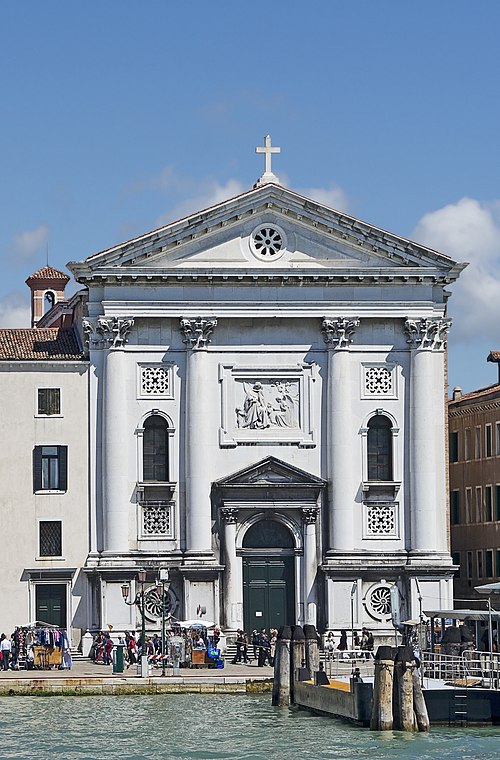
Timed to coincide with the 61st Biennale of Venice, “Learning from Venice” will take advantage of the of multiple exhibitions mounted across Venice, including the NZ exhibition, Taharaki Skyside by Fiona Pardington mounted at Istituto Santa Maria della Pietà (La Pietà) the site of Bill Culbert’s Front Door Out Back exhibition in 2013
This immersion in contemporary art will be led by curator, writer, editor and educator, Christina Barton, and Curator Contemporary Art at Te Papa, Hanahiva Rose.
The workshop will consist of readings, conversations, visits, and talks, and there will be opportunities to meet artists, curators and individuals involved in the Biennale’s realisation.
Participants will collaborate to produce a publication reflecting on their findings, which will be published and distributed after the workshop concludes.
This initiative will enable a cohort of committed individuals to gain a sharper understanding of how the art world works in the context of one of its highest[1]profile occasions. Participants will gain a stronger grasp of the key issues at stake in current practice, testing their reactions and impressions with peers, and learning together to catalyse future thinking about Aotearoa’s place in and contribution to the global art world.
Applications will be accepted from early-career artists, curators and writers based in or from Aotearoa New Zealand who can demonstrate their commitment to pursuing a career in the visual arts. Applications will be assessed by a panel including the co-leaders, a representative from Creative New Zealand, and artist Judy Millar.
Selected participants will be fully funded to attend (including flights, accommodation and a per diem).
Partners
The Learning from Venice workshop has been made possible through the generous support of multiple partners, including Creative New Zealand, Te Papa and the Te Papa Foundation, Elam Fine Arts at the University of Auckland, Naveya & Sloane, Barbara Blake and the Gow Family Foundation. The Chartwell Trust have generously supported the Aotearoa-based elements of the project.
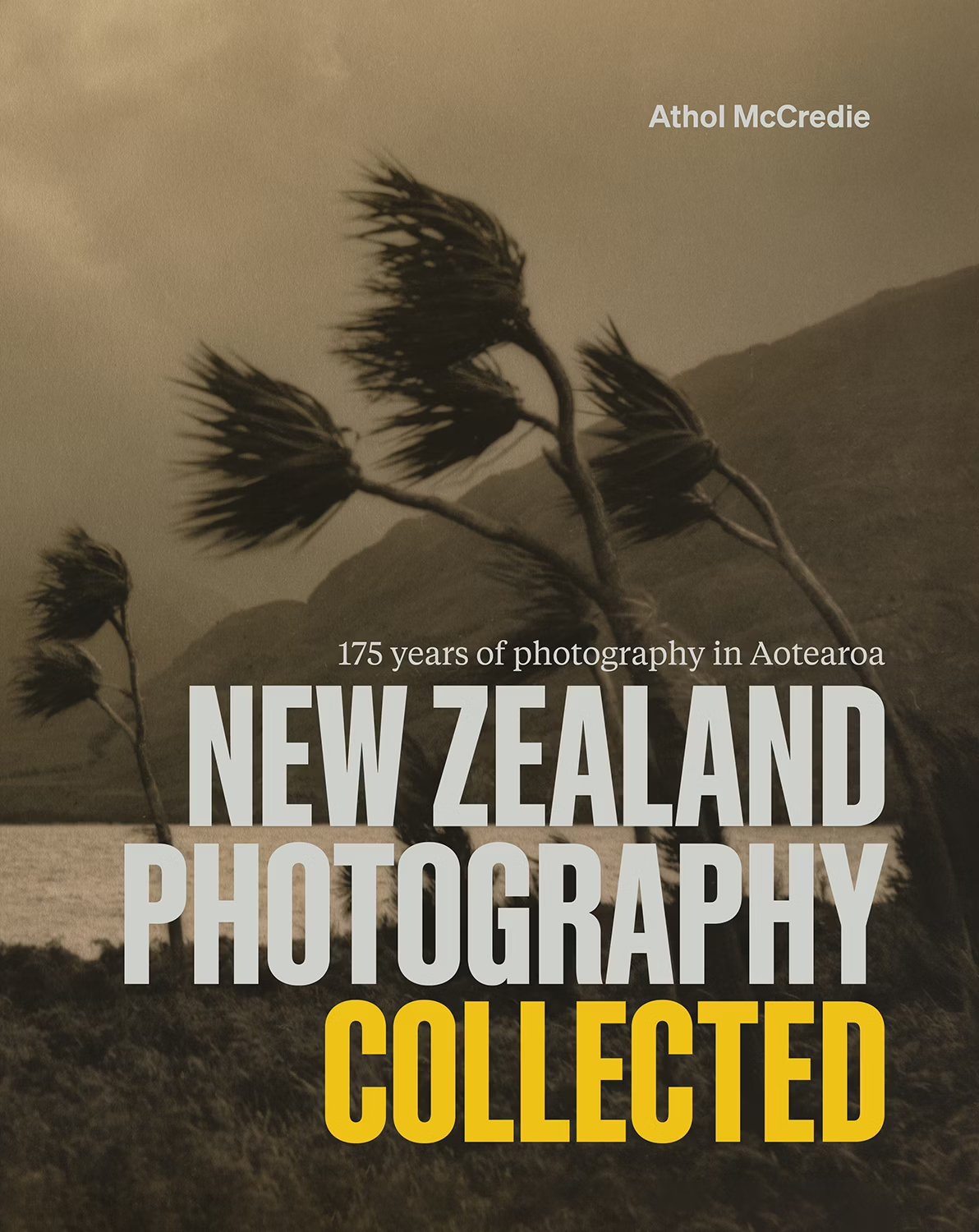
Cover image, George Chance – The Storm, Wanaka (c1940)
New Zealand Photography Collected
175 Years of Photography in Aotearoa
Te Papa Press
Written by Athol McCredie
RRP $90.00
Reviewed by John Daly-Peoples
New Zealand Photography Collected illuminates New Zealand’s photographic history, from the earliest nineteenth-century portraits of Māori and local ‘scenic views’ to the latest contemporary art photography. The previous edition of the book published in 2015 went into two editions and this expanded version featuring 400 images from Te Papa’s collection of 400,000 works.
From the iconic to the previously unpublished, the selection includes outstanding photographs by the Burton Brothers, Leslie Adkin, Spencer Digby, John Pascoe, Brian Brake, Frank Hofmann, Ans Westra, Eric Lee-Johnson, Marti Friedlander, Laurence Aberhart, Ann Shelton, Glenn Jowitt, Anne Noble, Yvonne Todd – and many more.
The book not only provides a wide selection of images, it also introduces the reader to the photographic artists who have used photography to explore our history and environment. The photographs of the nineteenth century makes us realise that these images are often our only reference point for how the country, its people and events looked in the past.
Author and curator Athol McCredie provides a wide-ranging selection of images across portraiture, landscape, science, documentary photography and art with informative notes.
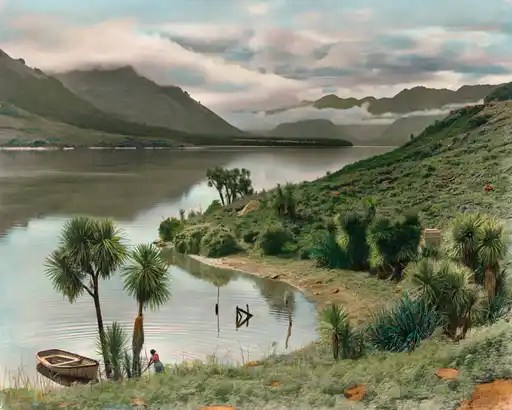
Ellis Dudgeon Lake Hawea, c.1947 Hand-coloured gelatin silver print, coloured by Elaine Watson, 1962, 404 × 500 mm Purchased 2023, O.051365 It is almost unknown for a hand-colourist to be identified on a photograph, but this one has a handwritten label on the back reading ‘Hand painted photograph by Elaine Watson, July 1962.’ This records that Watson hand-coloured it, not that she took it, for we know from a 1947 book in which it was reproduced in black and white that it was taken by Ellis Dudgeon, a photographer who ran a studio in Nelson from 1930 to 1970. Dudgeon’s scenic hand-coloured photographs were widely seen. Indeed, this image appears in colour on the cover of the upmarket magazine Mirror: New Zealand’s national home journal in 1955. In that version, the colouring is quite different: there is much more yellow in the tī kouka (cabbage trees), there are red flowers on the bushes by the lakeside, and it is much brighter and sunnier throughout. It is a more upbeat, holiday image than Watson’s subdued and uniformly toned version, showing just how much interpretive room there was for colourists, who were rarely present when the photograph was taken.
Together these photographs tell stories about life in this country from almost the earliest days of European colonisation and about how the practice of photography has evolved here, reflecting the dynamic and increasingly diverse nature of the collection, allowing for previously unseen treasures, and enabling familiar works to be recontextualised with fresh insights.
In making the selection, McCredie, says “I looked for photographs that were evocative, resonant, ambiguous, entertaining, and most especially, that might say something about the nature of photography itself.”
Whie no collection of photographs can be comprehensive the book offers many threads which weave together a sense of the nation’s history and culture. It is more than a history of photography tracing out our responses to the landscape, the built environment, events and people.
Through the book we see the taming and changing of the landscape, the changing domestic and commercial architecture, the way we dress and there are images of the citizens we valued for their contribution to our civic and cultural life.
There are portraits of Māori such as Tomika Te Mutu, as well as other history makers such as Peter Fraser, Ed Hillary and Mike Moore along with artists such as Kiri Te Kanawa, Tony Fomison and Yuki Kihara.
We also can see the way in which the photograph has changed from the need to simply record the landscape and people through to experimentation as well as viewing photography as a means of social and political change.
While there no comparative before and after images the book does have images of the changing face of the land as well as images of the major cities and the built environment from the nineteenth century and the twentieth which show the development of the urban areas. We are also able to see the changing nature of clothes, particularly those worn by females.
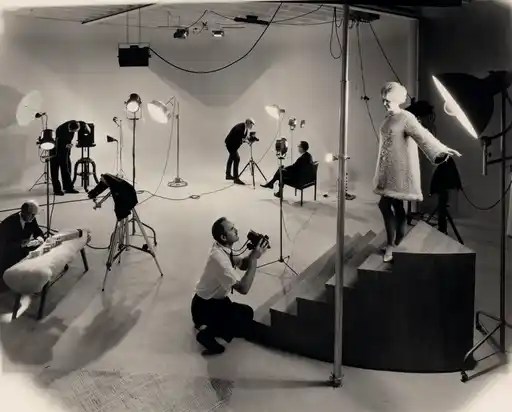
The inclusion of Frank Hofmann, one of the major modernist photographers is an example of the multi-talented artist who worked across the media providing many of the important modernist photographs as well as portraits. A photograph of the Christopher Bede Studio, which he founded also shows his ability to work across the commercial as well as experimental genres.
Frank Hofmann Christopher Bede Studios, 1967 Gelatin silver print, 418 × 578 mm Purchased 2016, O.044647 Christopher Bede Studios was formed by Frank Hofmann and Bill Doherty around 1950. It focused on home portraiture but also operated a studio, and this photograph was probably taken to promote its new premises being opened in Auckland in 1967. The image clearly sets out to demonstrate the varieties of photography the studio could undertake, from fashion and product photography to portraiture. It is pure advertising though, for it would be fanciful to imagine four photographers actually working simultaneously in the same studio space. The studio had branches in other centres, and in 1970 it claimed to be New Zealand’s largest photographic organisation. In 1975 it became Bede Photography.
There are number of images of individual Māori and Māori society which changes over the course of time from initially being of an ethnographic nature with images by John Nicol Crombuie and Alfred Burton through to seeing Māori as an integral part of society with photos by Ans Westra as well as seeing the inclusion of Māori photographers such as Tia Ranginui and Fiona Pardinton.
There are several small suites of work such as Eric Lee-Johnson images of Opo taken at Opononi in 1956, Gordon Burt’s commercial works mainly of automobiles and the Burton Brothers for their extensive images of the country.
Then there are individual images such as Frede Brockett’s dramatic image of the wreck of La Bella, Theo Schoon’s Geothermal studies or Eric Lee Johnson’s image of a bike wheel and shadow which predate similar work by Bill Culbert who, surprisingly, has no images in the book.
The landscape work in the book range from the nineteenth century images of the Burton Brothers through the NZ Tourism images, the myth-like work “Peter Pan on Mt Eden” by J. W. Chapman-Taylor through to the revisionist work of Mark Adams.
Les Wallace Napier after Hawke’s Bay earthquake, 1931 Gelatin silver print, 158 × 386 mm Gift of Holden New Zealand Limited, 1998, O.005635 The Hawke’s Bay earthquake of 3 February 1931 remains New Zealand’s deadliest natural disaster: 256 lost their lives, and the region was devastated. With limited water to fight the fires that ignited after the quake, eleven blocks of central Napier were completely gutted. According to an eyewitness, by evening the town ‘looked as if it had been subjected to a severe bombardment’: The centre of it for over a mile was a mass of flames. Every concrete and brick building had collapsed. It was like an upheaval and there was a terrible number of deaths . . . A number of people were lying in the streets and buried under the debris. Some were terribly injured and some were dead. The town was all in darkness and that added to the horror of the situation.
While there are not a lot of photographs of dramatic historical events like Les Wallace’s “Napier after the earthquake” there are a few, like Paul Simei Barton’s images of the demonstrations about the Springbok 1982 tour as well as the Covid 19 demonstration in Wellington by Adrian Lambert.
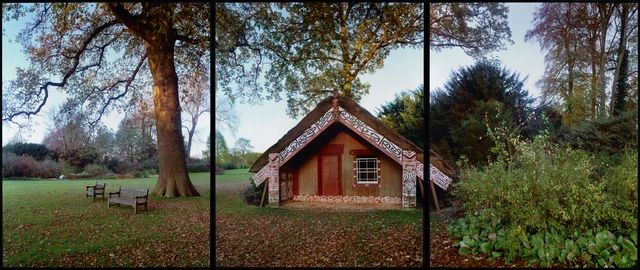
Mark Adams 13.11.2000 Hinemihi, ClandonPark, Surrey, England. Nga Tohunga:Wero Taroi, Tene Waitere, 2000 Chromogenic prints, 1200 × 3200 mm Purchased 2020, O.049055/A-C to C-C Mark Adams has often highlighted cultural incongruities in his photographs, and nowhere more so than in this triptych of the meeting house Hinemihi o te Ao Tawhito standing in a corner of an English country estate. The 1881 house was originally situated at Te Wairoa, the gateway village to the Pink and White Terraces. When Mount Tarawera erupted in 1886, the house was partially buried and subsequently abandoned. In 1891, the Earl of Onslow and Governor of New Zealand purchased Hinemihi and had it dismantled and reinstalled on his English estate as a sort of folly — something he probably didn’t see as incongruous himself, as he bought it as a reminder of his affection for New Zealand. Adams took another equally dissonant triptych that pairs with this photograph. It shows the site where Hinemihi originally stood — now just a forlorn patch of empty land covered in long grass and thistles. Hinemihi will be returned to New Zealand (though probably not to this site), placing Adams’s photograph in dialogue with the future as well as the past.
The “Follow button” at the bottom right will appear and clicking on that button will allow you to follow that blog and all future posts will arrive on your email.
Dick Frizzell’s latest show “Weight of the World,” at Gow Langsford could well be a reference to Ringo Starr’s 1998 comeback single of the same name which uses the phrase to describe the struggle of letting go of the past and embracing the future.
The exhibition is ambivalent in terms of the artist’s own life and work, linking the past with his history of breaking new ground. At times his work has seemed to be conservative, borrowing art of the past and outdated advertising images. But this reworking or appropriating images of the past can also be a way of charting new directions for his art.
The exhibition also alludes to his recently published autobiography “Hastings” with its references to growing up in small town New Zealand and the rural landscapes of Central North Island in which the young Frizzell’s encounters with the world of Hastings provide an almost heroic account of his life.
As the artist says “My landscapes occupy a special place in my affections because they define, more than any other of my endeavours, the most solid manifestation of my philosophy. Both the subjects and their manner of representation are chosen to emphasise my eternally optimistic faith in the physical universe that I believe we are ultimately destined to define. I hope… through my piles of hills, stumps, trees and land… to literally convey ‘the gravity of the situation’.”
While his paintings can be seen as simple descriptive works there is a complexity to their construction as well as their context and history. creating dense works about observation, contemplation and significance.
Dick Frizzell, Dirt Road
Several of the landscape images from the exhibition could have been illustrations to his autobiography such as “Dirt Road” ($27,500) and “Backtrack” ($45,000), images that are quintessential New Zealand scenes which link past and present with images which are both descriptive and metaphoric.
There is one work with the same title of the exhibition, “The Weight of the World” ($163,000). It depicts a large tree stump, a reference both to his own tree stump works of the 1980’s as well as those by artists such as Mervyn Taylor and Eric Lee-Johnson. These dead trees were both a symbol of modernism and change as well as an emblematic of the past and loss of identity.
Much of the artist’s work is imbued with this sense of nostalgia and Frizzell has regularly depicted aspects of New Zealand – a series of local businesses, the huts at Scott base and the controversial series of hei tiki works which all helped define the nature of New Zealand culture.
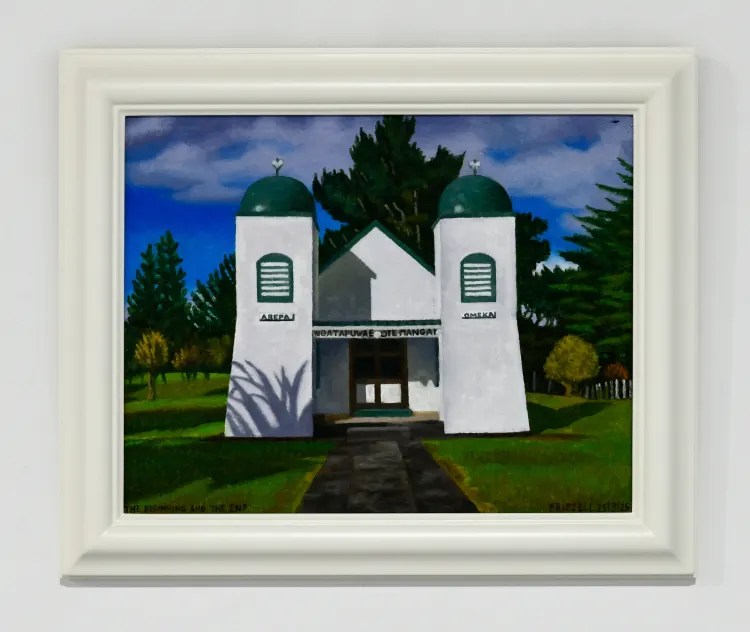
There are a few signs of habitation or figures in his works mainly small insignificant buildings, “Whitebaiter’s Huts” ($27,500) and “Leaning Toilet” ($27,500) but there is also a painting of a Ratana Chapel “The Beginning and the End” $27,500) displaying the words ārepa (alpha) ōmeka (omega), and the large panoramic “Autumn Morning Alexandra” $185,000).
Dick Frizzell, The Beginning and the End
The only paintings of a settlement in the exhibition are “Autumn Morning Alexandra, 2023 “($185,000) and “Alexandra Morning 2019” ($65,000) where the emphasis is on the natural aspects of the view, the distant hills, the colours of the sky and Autumn leaves as well as the surrounding vegetation. The largest work in the exhibition is “Milling Whakaangiangi” ($225,000), a celebration and recognition of the ever-changing face of the land.
As well as taking inspiration from the New Zealand artists of the early twentieth century there are acknowledgment of other artists – such as his Monet-like “Winter, Earnscleugh Road” ($55,000) and a nod to Winslow Homer’s lighthouse with his “Castlepoint”.
Dick Frizzell, Winter, Earnscleugh Road
As with much of the artist’s work there is a wry humour in many of the paintings both in terms of the subject and the titles. A small painting of a pie is titled 27/3/2025” where English and mathematics merge, similar to his Greek / English word play in “The Beginning and the End”.
The exhibition reveals an artist addressing conflicted personal and national histories around land, seeing the land as both a record of our history and a metaphor for our changing identity, seeing the future looming out of the past.


 x 950 (h) mm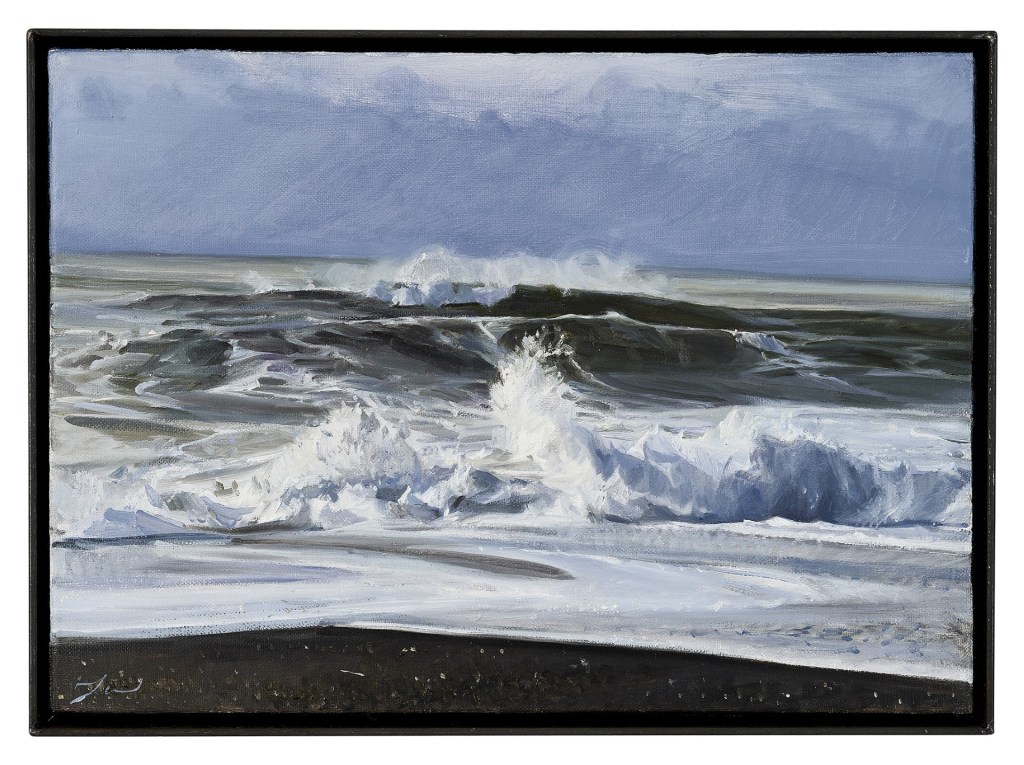




 27/3/2025” where English and mathematics merge, similar to his Greek / English word play in “The Beginning and the End”.