Categories
Reviews, News and Commentary

Helen Clark in Six Outfits : The politician her career and her clothes

Reviewed by John Daly-Peoples
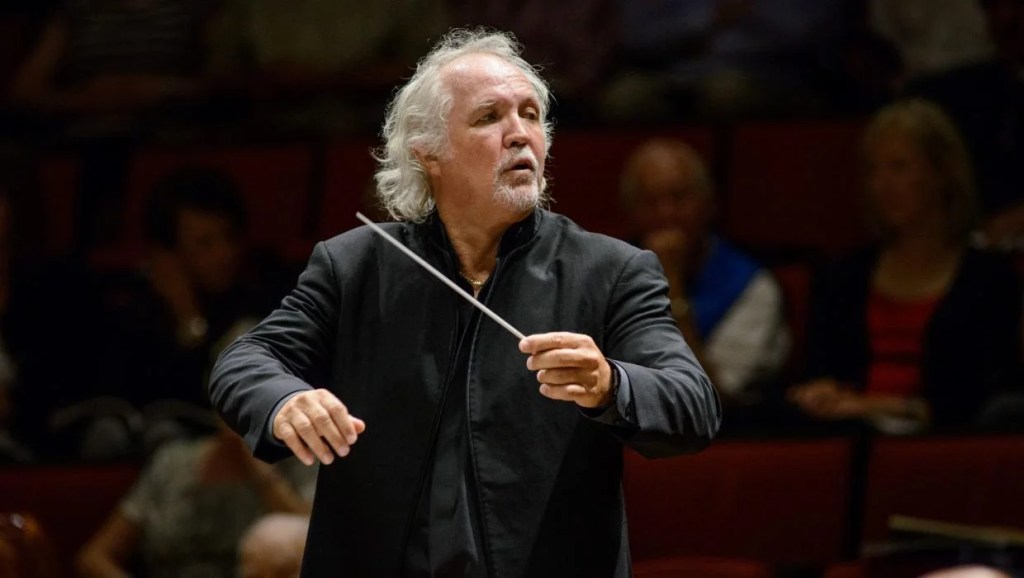
Image Andi Crown

Helen Clark in Six Outfits

By Fiona Samuel

ATC

Until April 26

Reviewed by John Daly-Peoples

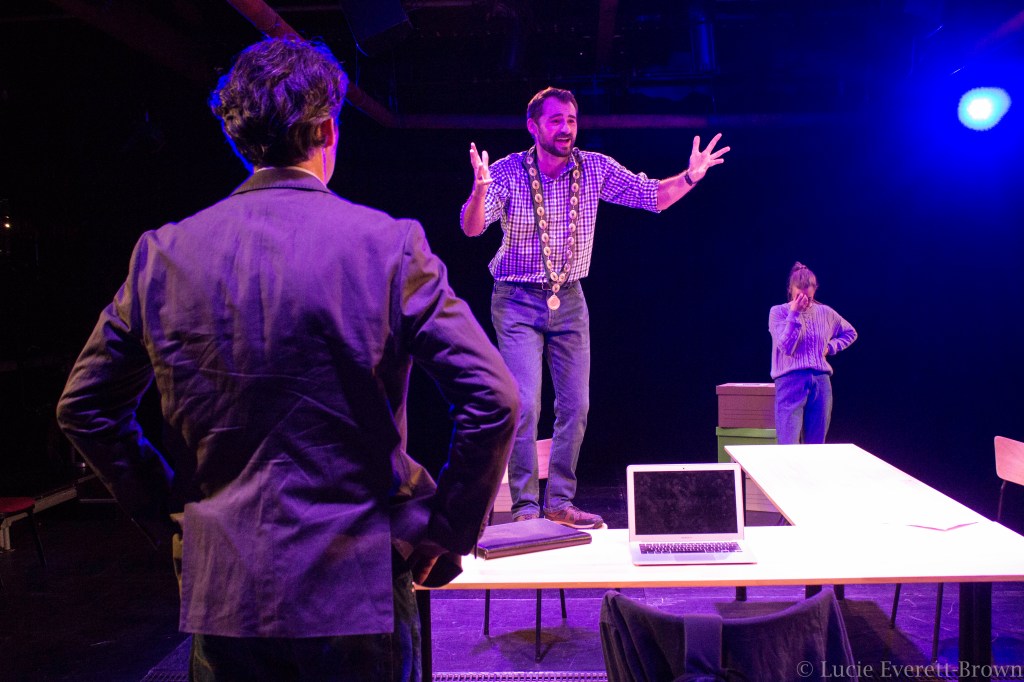
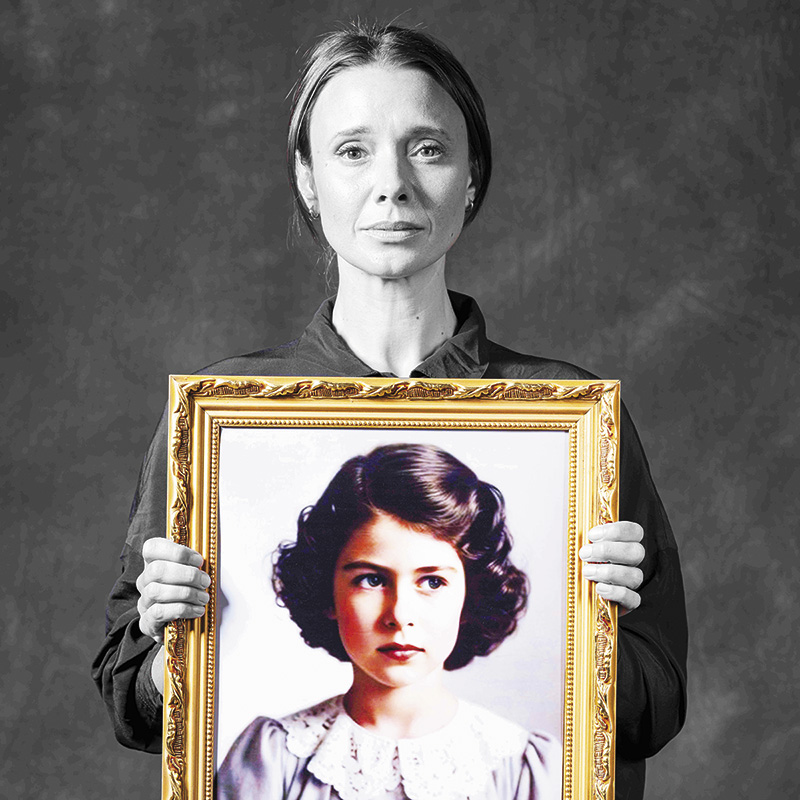
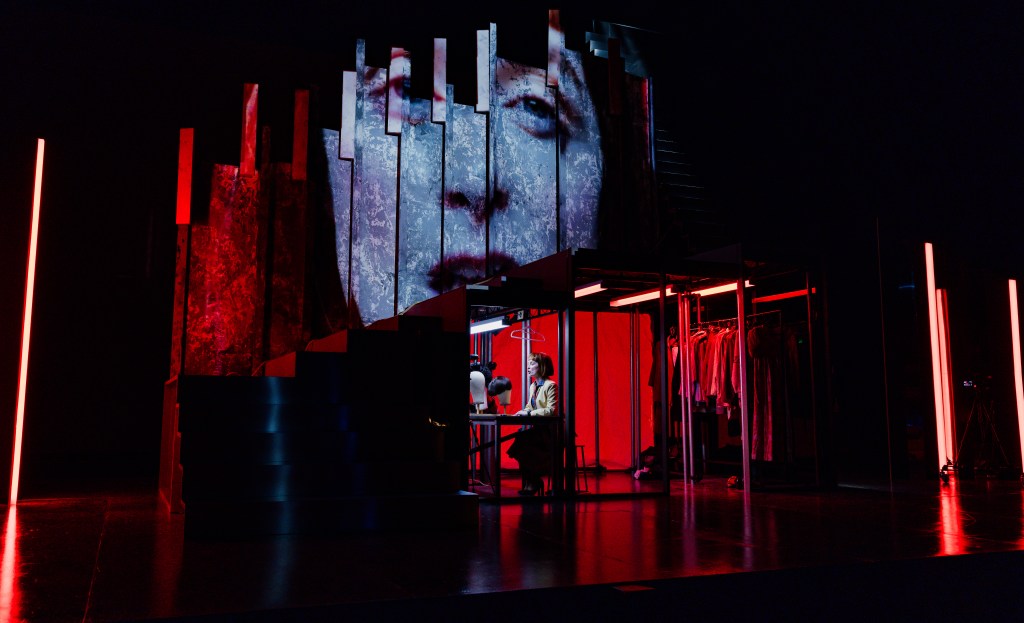
Helen Clark in Six Outfits uses the notion of tracking Helen Clark’s career through reference to the clothing she wore at various stages of her life. It is a concept which even the stage version of Clark rejects going on a rant about how she has always been judged by appearance – her hair, her teeth, her voice and her marriage. All those notions which are rarely used to demean male parliamentarians.

The play traces the life of Helen Clark from school kid through to the present as she climbs both the academic and the parliamentary ladders to her unsuccessful bid at becoming the Secretary General of the UN.

Along the way we/she remember the fluctuating fortunes of National and Labour governments as well as encountering the major political figures of the time – Phil Goff, Jim Anderton, David Lange, Jonathan Hunt, Jenny Shipley, Judith Tizard and even Winston Peters -is he still alive.

We also hear the voice of Brian Edwards who acts as a voice-over Narrator and was one of her early media advisors / image consultants. We also get to encounter her more recent media consultant, Maggie Eyre.

Studded though her career we get the major achievements of her and her governments – paid parental leave, free early childcare, the New Zealand Superannuation Fund.  legalized prostitution and civil unions for same-sex couples. 

Loooming over the stage is a clever set designed by Dan Williams which features a mountain-side which Clark ascends from time to time. It acts a a metaphor for her ascent to power as well as her physical/ mental / political struggles to reach the summit of her career.

As the older Clark Jennifer Te Atamira Ward-Lealand gives an impressive account of the politician, at time managing to capture the sound and intonation of her voice as well as her stare. Lauren Gibson as the younger Clark while not quite getting the voice manges to give an astute sense of the earlier Clark with her aspirations and self belief.

Ward Lealand also does a reasonable job of some walk-on parts such as Clark’s father a farmer who was at the other end of the political spectrum but still supported his daughter.

While this play is about serous stuff of politics Fiona Samuel takes a comic approach to the material which had the audience appreciating the political and personal witticisms such as the reference to Clark’s early page boy haircut – her “Joan of Arc” look

The play concluded with Ward-Lealand delivering a Clark speech. I couldn’t remember it all, but it went somewhere along the lines of –

“Let me note now the great importance of empowering women, including through education, to be part of leadership at every level. Equality between women and men at decision-making tables ensures that the perspectives of both get full consideration. As women, we are fully justified in asserting that there should be no decisions made about us without us.

When women are at those decision-making tables, they have the power to change priorities to what matters for the health and well-being of families and communities.

Empowered women become the architects of better health and well-being, making informed decisions for themselves and their communities.”

Categories
Reviews, News and Commentary

Sculpture at the Aotearoa Art Fair

John Daly-Peoples

Bernar Venet

Art Fair Sculpture Trail at the Aotearoa Art Fair

The sculpture on show at the Auckland Art Fair is always one of the highlights of the show as it is often difficult to access and view large scale sculpture. This year the works on show have been expanding significantly with 24 large-scale works by 18 artists installed across the Art Fair precinct, which extends from the area outside the Events Centre to locations around the Viaduct Basin.

The trail will feature leading Aotearoa artists and major international names, along with strong Māori and Pacific representatives.

The artists include Bernar Venet, Braddon Snape, James Rodgers, Hye Rim Lee, Reuben Paterson, Paul Dibble, Caitlen Devoy, Peata Larkin, Martin Creed, a floating work by Gregor Kregar, and a shimmering installation by Lisa Reihana.

Bernar Venet’s Indeterminate Line is a steel form where bending and twisting are balanced with chance. Loops coil and unravel, reflecting the artists decades-long exploration of lines, geometry, and the interplay of order, chaos, and material presence.

David McCracken


In his 2026 work, the weathered corten steel operates as both object and aperture reflecting David McCracken’s enduring interest in balance, repetition, and the tension between solidity and illusion.

He creates forms that appear to extend beyond their physical limits, drawing the viewer into a quiet contemplation of the processes involved.

Ben Pearce

ARLOS, silk & RYOS, Ben Pearce’s large-scale sculpture celebrates nature, its strength, and its delicate balance. The boulder-like sections of his towering forms seem tethered to the firmament yet soar into the air like the supports of some natural colonnade. figurative aspects and character emerge giving them a sense of animated presence. Shapes and concepts emerge and disappear as the forms interact with the space around them.

Paul Dibble

Paul Dibble’s Healing a Busy World acknowledges the return of native birds into the built environments of our cities. His flattened volume, references to building outlines and modern architecture interspersed by rectangular windows filled with light and hope. We also see for the first time a new rich green patina and the emblematic, symbolic sticks of healing kawakawa reclaiming the city.

Reuben Paterson

Reuben Paterson’s Koro is a sculptural work from 2023. Crafted from cast aluminium, painted with automotive lacquer, and encrusted with glass crystals, it showcases Paterson’s ability to create works across a diverse range of media.

Through a diverse range of media he creates works which are visually hypnotic and conceptually nuanced.

Hye Rim Lee

Hye Rim Lee’s artistic practice navigates the fluid threshold between the real and the virtual, translating digital imagination into tangible form. Gold Rose emerges from her iconic 3D animation series White Rose, where virtual fantasies are reborn through material transformation. In this sculptural work, Lee transforms glass — a medium rooted in her digital world — to explore its dual nature: hard yet fragile, liquid yet solid, transparent yet opaque, in her cast Gold Rose.

Ngaroma Riley

Ngaroma Riley is an artist of Te Rarawa, Te Aupōuri, and Pākehā descent. She began her carving journey making Buddhist statues while working in Japan. Her work centres on Māori narratives, with a focus on retelling whānau, hapū and iwi stories through a wahine Māori lens.

Her work Kapahaka Queens is a shout out to all the aspiring performers — the ones who live and breathe haka, who learn their words on the bus, sing their waiata in the shower, practise their pukana in the mirror and who give their heart and soul to every performance.

Sione Faletau

Inspired by the Waitematā Harbour, Sione Faletau recorded its sounds and translated their frequencies into kupesi patterns. Lalava ke he Uho – Connected to the Essence is formed through intersecting lines, the sculpture speaks to the DNA strand, symbolising the harbour’s life-giving essence. Lalava – meaning to bind – connects sound, place and identity into a site-specific expression of the harbour’s mauri. This is the first time Faletau has worked on a large-scale sculpture with his earlier works focused on digital and video works.

Categories
Reviews, News and Commentary

Sincere Apologies: did you really say that

John Daly-Peoples

Sincere Apologies

Don Koop, Jamie Lewis and David Wiliams

Auckland Arts Festival

Loft, Q Theatre

Until March 22

Reviewed by John Daly-Peoples

It’s opening night of Sincere Apologies but there are only twenty-five people in the Loft at Q with seating for more than one hundred. Maybe people have read about the show already and have found out that they may have to speak. That’s a big no-no for some New Zealanders. Public speaking – that’s when you make a complete idiot of yourself with the wedding speech, or the farewell speech at the office. No wonder only twenty-five turned up.

[I attended the opening night and some adjustments have been made based on feedback from this preview]

It all starts simply enough. An envelope is handed round the group with instructions to keep it moving until the music runs out. Just a version of pass the parcel, and then the lucky person gets to read out the instructions and hand out fifty envelopes.

These are fifty real apologies that are distributed to the audience. They are mainly from the last fifty years, all of them factual, collected by the three creators, Dan Koop, Jamie Lewis and David Williams. There are apologies from government ministers, public figures as well as private individuals, all expressing remorse for things they have said or done or their governments have done. One by one, the audience members step up to the microphone and read them out aloud.

There are some important apologies. New Zealand government ministers apologizing for the government actions during the Land Wars, an on-air apology by Paul Henry to the Governor General Anand Satyanand for dumb things he said on radio and there is also Kanya West apologising to Taylor Swift and Beyonce for dumb things he has said about them.

I got to read out two apologies. One by the chairman of the Fukushima Power Board apologizing for the trouble and harm caused by the explosion and release of radioactive materials into the sea and air.

The other was by Geroge Bush apologising for the treatment of Japanese /American citizens during the Second World War.

There were lots of other apologies for the harm done by war with some private individuals apologising for what their German and Japanese parents may have done during the Second World War.

There was a range of apologies from all walks of life and for all sorts of reasons. There was Tiger Woods apologizing for his infidelity and an apology for the harm caused by the Dawn raids.

There were also a couple of apologies to theatre goers who had made complaints to Q Theatre for unstated reasons.

One apology was very succinct – “Fuck”.

There are no actors in this mix of ordinary people but some of them were as assured as if they were. Others displayed a bit of hesitancy, but all seem to relate to the apology they were reading. Some of the apologies from government ministers were a bit formulaic and those apologies were buried under the same set of words. When these statements are stripped of power, position, and spin they seem hollow, lacking real meaning. Other apologies like Jacinda Ardern’s apology for the Christchurch Mosque murders were filled with meaning and history seemed particularly relevant.

Hearing these apologies, one is made aware of the power of language and sometimes because of the way in which people read them the readings were given an added emotional tone.

There are couple of made-up apologies with dates set in the future – an apology in 2065 to Kiribati and other island nations for the inundations of 2050 and one from the Australian government acknowledging the death of the last koala in existence. The one disappointment was that there was no discussion at the end of the session, only applause by the audience for their own collective performance.

Categories
Reviews, News and Commentary

Shane Foley, Time and Tide: Looking at Auckland’s past

Reviewed by John Daly-Peoples

Shane Foley Campbells Point at Judges Bay

Shane Foley, Time and Tide

Artis Gallery

Until March 30

Reviewed by John Daly-Peoples

Shane Foley’s “Tide and Tide” exhibition is based of archival images of Auckland‘s waterfront from the nineteenth and early twentieth century. They are of images of foreshores, beaches and building, most of the which have disappeared,

Several of the works make reference to Auckland’s history so “Campbells Point at Judges Bay” ($7500) includes `Kilbryd’, the large Italianate home of Sir John Logan Campbell. In this painting the artist has shaped much of the view making the foreshore beach a series of flat planes while the cliffs below the house have been sculpted with gentle curves of lawn.

Shane Foley Heaphy’s View, St Georges Bay, early 1860’s

In her “Heaphy’s View, St Georges Bay, early 1860’s” she has carefully constructed two houses in the foreground while two background houses owe much to Braque’s “Houses at L’estaque”.

Shane Foley Settlement, St Georges Bay 1867

With “Settlement, St Georges Bay 1867” ($3800) the houses seem like surreal addition, the boxlike shapes placed in the carefully formed landscape consisting of folded landforms, where the fence lines are made from abstract curves.

With “Trees at Shelly Beach, Pt Erin 1914” ($1900) she has depicted one of the now forgotten buildings which could be found on Auckland’s waterfront. This was the salt water, tidal baths at Pt Erin which were demolished for the Auckland Harbour Bridge.

Other buildings from the period include “West End Rowing Club at St Mary’s Bay 1914” ($4800) and ‘The Jetty, St Mary’s Bay. 1950’s’ ($4800) where the eerie white buildings stand out from the background.

There is a slight tension in viewing these works, as the past and present merge and the abstraction the artist uses distances our view, giving them a dream-like aspect.

Categories
Reviews, News and Commentary

Duck Pond: Classy and skillful

John Daly-Peoples

Duck Pond

Circa

Auckland Arts Festival

Aotea Centre

March 12 – 15

John Daly-Peoples

In the hands of the Australian company Circe the world’s most romantic ballet is re-imagined as a circus spectacular, full of Circa’s signature physicality and shot through with cheeky humour and a thoroughly contemporary energy.

The audience is swept away by this tale of swans and hapless princes sparkling with quirky touches like the sequinned flipper-wearing duck army and a burlesque black swan. There are sumptuous aerials performances, jaw-dropping acrobatics and many feathers.

The show has been seen around the world and a review of Duck Pond in The Guardian by Lindsey Winship was enthusiastic.


“Australian company Circa are masters of modern circus, often eschewing obvious exhibitionism, and instead weaving acrobatic skills with a dance and theatre sensibility to make mood pieces.

The name is a parody of Swan Lake and it borrows from the famous ballet – shards of Tchaikovsky’s score feed into Jethro Woodward’s soundtrack – and also from another fairytale, the Ugly Duckling. So we get a love triangle of sorts between a prince, an ugly duck and a vivacious black swan. The conceit might seem to promise a more conventional narrative, but it delivers something a little different. The mood is understated, classy, colours of black and gold, a clan of performers in shimmering velvet catsuits. The music is a constant underscore rather than a game of set-ups and climaxes.

There is a lot of beautiful skill on show. Acrobats climb up human towers; flyers somersault between bases. Their formations of three are especially inventive: ornate arrangements of bodies in fine-tuned equilibrium, toes anchored on hips, lower backs, shoulders, anywhere they can get a foothold. There are some lovely moments of flow between couples who lift and fling, curl and unfurl, balance and counterbalance. Bodies tie themselves in knots on the trapeze; others soar on the silks. The ugly duck is revealed to be a swooping swan; the black swan has a dominatrix moment walking over a man’s bare back in red stilettos. But there are lulls too, such as a pillow fight that turns into an anticlimax.

Story-wise, director Yaron Lifschitz puts a couple of nice twists on the Swan Lake narrative but it lacks a big emotional payoff. Low-key lyricism, rather than transactional tricks for applause is Circa’s way and Duck Pond is a lovely show, with warmth, skill and some wow moments.”

Categories
Reviews, News and Commentary

Julia Bullock: a strong, insistent voice

Reviewed by John Daly-Peoples

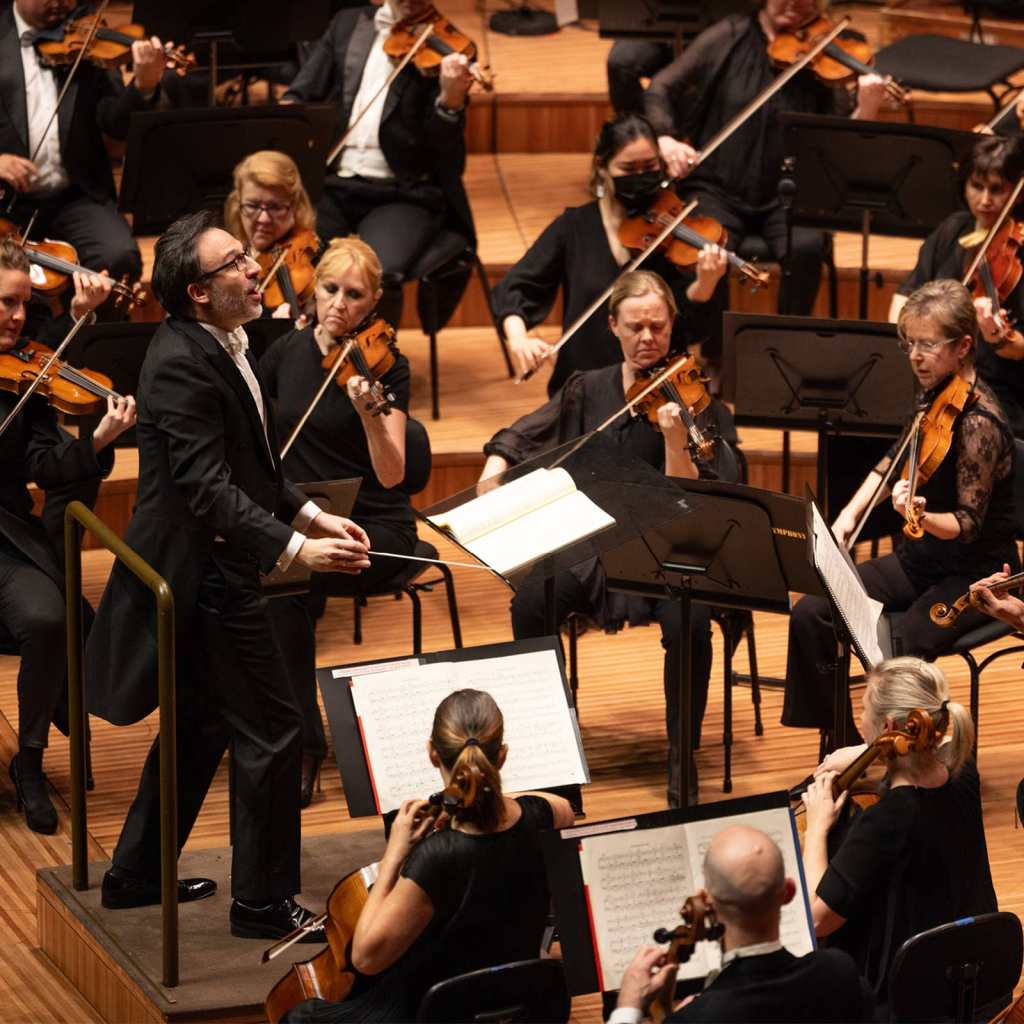
Julia Bullock with the Auckland Philharmonia

Conductor, Christian Reif

Auckland Arts Festival

Auckland Town Hall

March 7

Reviewed by John Daly-Peoples

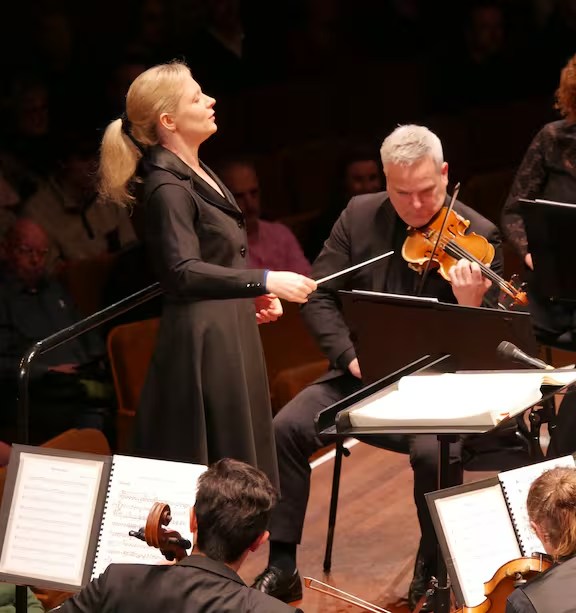
In her recent concert at the Auckland Town Hall Julia Bullock sang a group of songs which she considered as having an “American” sound. These included George Gershwin, Leonard Bernstein and Margaret Bonds. Bonds is a pianist / composer who Bullock has championed for several years a major black composer who was overlooked for many years primarily due to systemic racism and sexism in the classical music industry, exacerbated by the loss of her manuscripts and a lack of publication.

Bullock included three settings of poems by Langston Hughes – “The Negro speaks of Rivers”, “Winter Moon” and “Poeme D’Automne” which gave voice to black aspirations in the 1920’s. With Bullocks singing of “The Negro speaks of Rivers” she provided a fine sense of the Negro spiritual, the softness of her delivery veiling a strong, insistent voice and a slowly developing dramatic force. Her voice delivered an emotional and haunting tone capturing the essence of heritage and endurance.

“Poeme D’Automne” was an astonishing song in which images of falling leaves and the colours of autumn were linked to the human body. She sang this with a surging operatic voice providing and intense and emotional sound.

“Winter Moon” was a short piece, but it showed that Bond was not just writing music to accompany the words of the poem, she had the ability to write dramatic meaningful music.

She sang Stephen Sonfheim’s “Somewhere” as though it was an anthem for the displaced and disadvantaged – a piece very relevant today’s America. There was also the poem “To Julia de Burgos” by Bernstein, a vibrant piece of music which spoke of an angry revolutionary adventure in which she projected the words as though a personal statement.

She also sang a couple of George Gerswin songs, “Somebody from Somewhere” and “Summertime “from “Porgy and Bess”.

She also sang “La Conga Blicoti” a vibrant, Afro-Cuban jazz-influenced song performed by Josephine Baker with the Lecuona Cuban Boys, which features a distinctive conga rhythm.

She also sang Billy Taylor’s “I wish I knew how it feels to be free” like a requiem or funeral lament, very appropriate as a song for freedom.

There was also “I have Two Cities” by the French composer Henri Varna and lyricist Geo Koegar with lines such as

Manhattan is beautiful,

But why deny it.

What enchants me is Paris,

All of Paris

Which she sang as a hymn to Josephine Baker.

The concert opened with the Auckland Philharmonia playing Erich Korngolds “Theme and Variations” and closed with them playing Kurt Weill’s “Symphony No 2”.

Bullock has an affinity for the outsider artist which has led to her interest in Josephine Baker who made the journey from the US to Europe where she made her name while the two composers became outsiders under the Nazis  and were forced to move from Europe to the US.

Korngold who was a major composer in Austria influenced the style of composition and singing in the 1920’s and 30’s with operas such as “Die Tote Stadt” while Weill was influential in bringing Bertolt Brecht’s work to the public with works including “The Threepenny Opera”.

Categories
Reviews, News and Commentary

Red Phone: Conversation, audition or art event

John Daly-Peoples

Red Phone, Developed by Boca del Lupo 

Aotea Centre, Circle Foyer

March 4 – 7   11.00 – 5.00   Free Entry

Reviewed by John Daly-Peoples

In 1926 the iconic red telephone box which was designed by British architect Sir Giles Gilbert Scott first appeared in the UK making communication between individuals easier.

Now 100 years later as part of the Auckland Arts Festival telephone users can enter a modern telephone booth as participants in an art event which breaks down the boundary between artist and audience.

For the next three days on Level 3 of the Aotea Centre, you can be part of an art event where you become the actor in scenarios which you create.

Pick up your phone and you are connected to another random audience member or friend. You are confronted with a teleprompter which provides you a collection of scripts, including one by New Zealand playwright Victor Rodger.

You become part of an evolving dialogue which is part theatre and part social intervention. You become both performer and spectator, creating unique dialogues which will surprise, embarrass and entertain you. 

Jay Dodge, one of the creators of Red Phone“When this project started, we had five or six local writers, and now we have representation from dozens of countries.

“We asked writers to connect and think about what they love about performance but in a creative way where they can be free and not obliged to reflect what is happening right now,” said Sherry Yoon another creator. “There is so much now going on right now, that we will see artists being both reflective and relevant to now, but also to engage in work that can continue on past our global pandemic. What really resonated with us and the presenters and artists we have engaged is to give audiences a work that isn’t here to replace theatre but is in essence of what we love about live performance — the emotional ride, the intimacy, etc.”

This free installation by Canadian interdisciplinary theatre company Boca del Lupo has toured Canada, Norway, and Latin America to critical acclaim. Now it is presented in Auckland for a strictly limited season. 

Categories
Reviews, News and Commentary

Rocky Horror Show: An Anecdotal Soundtrack of my Life

Rocky Horror Show

By Richard O’Brian

GMG and Trafalgar Entertainment

Director Christopher Luscombe

Set Hugh Durrant

Costumes Sue Blane

Choreographer Nathan M Wright

Lighting Nick Richings

Sound Gareth Owen

With (alphabetical) Laura Bird, Haley Flaherty, James Bisp, Kristian Lavercombe, Ryan Carter-Wilson, Daisy Steer, Stephen Webb, Morgan Jackson, Edward Bullingham, Jesse Chidera, Nathan Zach Johnson, Tyla Dee Nurden, Bethany Amber Perrins

Civic Theatre, Auckland 26 Feb – 9 Mar 2026

Then Isaac Theatre Royal, Christchurch

St James Theatre, Wellington

Reviewer Malcolm Calder

27 Feb 2026

Many words have been spilled detailing the Rocky Horror story, some with a little licence, so I won’t reiterate them here.  Rather, what follows are a couple of more personal anecdotal recollections.  Well, maybe a couple of reflections towards the end.

When in my early teens I joined a bikie gang hooning around the streets of Hamilton and haunting bars on weekends.   A pushbike gang.  In milk bars.  And most Saturdays we would go to the ‘pitchers’ at the Embassy ‘pitcher’ Theatre – especially for the b&w serials which updated and changed weekly.  The Phantom, The Lone Ranger, The Roy Rogers Show with Trigger, etc.  Our parents were not exactly supportive of our adventures but tolerated them mainly after trotting out the usual parental missives of the day … you know, smarten yourself up son, wash your face, get a haircut, and taking the mudguards off does NOT necessarily make your bike go faster!  But we did.  And maybe even managed the very occasional haircut from the apprentice barber next to the Embassy (remember, these were pre- Beatles days.

Fast forward a dozen or more years, by which time I was living in the UK and had developed something of an interest in ‘legit’ theatre.  A friend convinced me to accompany him to the ‘veddy, veddy proper’ Royal Court Theatre in Chelsea’s Sloan Square.  Apparently a budding youngish Australian theatrical tyro named Jim Sharman, already with productions of Hair and Jesus Christ Superstar to his name, was putting together an experimental and very avant garde piece called They Came from Denton High.  It had been originally devised by an actor no one had heard of called Richard O’Brien, and was planned as only a very brief season at the tiny, semi-round, and recently-renovated roof space of the Royal Court known affectionately as simply ’The Upstairs’. 

There were heaps of improvisation, script changes, musical variations, some additions, some deletions and, just prior to opening, Sharman felt that Rocky Horror Show better aligned with its intermeshed themes of transvestism, a satirical take on horror movies and science fiction all built around a full-on rock score.  My friend and I were both becoming enamoured of the new, the daring and the provocatively different and to say we were blown away would be an understatement.  This show ventured where theatre had rarely been before.  It was rough, raw and totally outrageous.  I remember being particularly enthralled by the pure power and presence of Tim Curry and a by the omnipresence of a rather scrawny little bloke playing Riff Raff.  Richard O’Brien we discovered later.

Many others were similarly excited of course.  Rocky Horror Show had somehow struck exactly the right chord at exactly the right time in 1970s Britain.   Fairly rapidly, various eminent British producers saw its commercial potential, it was upscaled to a more proscenium-arch staging and the rest, as they say, is history.

Subsequently I moved onto various humble roles in the industry and have been fortunate to have either seen, or hosted, many productions of the Rocky Horror Show across the US, Australia and New Zealand as well as Europe.  In several different languages. 

Fast forward a few more years and I even recall convincing a couple of rather cynical American friends to accompany me to the recently-released Rocky Horror Picture Show at a drive-in near Philadelphia in 1976.  Unfortunately, that particular screening cooincided with a rather heavy snowstorm and both wipers and the plug-in heater-on-a-pole had to work overtime.  Needless to say, the car bounced up and down more than a bit and my American friends enrolled on the spot as members of the international Rocky Horror Show cheer squad.

Or, a few years on again, an Australian colleague’s costume hire business in Adelaide avoided bankruptcy only as a direct result of seemingly endless late-night, dress-up singalongs at the Goodwood (‘pitcher’) Theatre.

I even recall seeing a stage production in Barcelona where the audience knew all the words.  In English!

Anyway, I digress.  Fast forward quite a few more years and I returned to Hamilton where, celebrating Rocky Horror’s 50th anniversary, the Hamilton Operatic Society staged a remarkably workmanlike pro-am production under the capable guidance of David Sidwell.  Initially I felt the bronze statue of Riff Raff in Victoria Street sort of acknowledged this and I thought how kind of the city fathers to allow some well-made street art.  However, a little research revealed, only then, that Richard O’Brien hailed from Hamilton.  I had previously known of him only as an actor chasing his dream in London and had always presumed him to be English.  I had no idea.

However … there’s more.  The Embassy Theatre is now long gone and so is part of the block adjacent – which used to be a barbershop.  That is where statue stood … on the very spot where the apprentice barber had cut my hair, and that of the entire bikie gang, all those years ago!

Today my understanding is that Richard is now a Patron of HOS and the statue has been relocated to the recently- opened new BNZ Waikato Regional Theatre.  How appropriate.

This Rocky Horror Show has a crispness and a professionalism that will linger.  It extended from before the house lights went down, right through to when they went up again.

This was a cast of strong experienced actors rather than one padded out with soap stars, rock singers and ‘personalities’ as has sometimes been the case elsewhere.

Laura Bird’s opening Science Fiction – Double Feature. backed by a strong, tight and semi-visible band under Adam Smith, sets the scene and made one immediately sit up and think ‘wow this is serious stuff’.  She was followed by the Brad and Janet’s Damnit Janet with a Janet (Haley Lafferty) who bore an uncanny (if unintentional) resemblance to a certain Deputy Mayor!

From there it … well it just flowed.  James Bisp gave us a surprisingly strong Brad, Stephen Webb an even stronger Frank N Furter, and Kristian Lavercombe (Welsh-born but we’ll claim him as ‘ours’) a Narrator that was deliciously nuanced, through to the dynamically scene-stealing Eddie (Edward Bullingham) and a truly professional ensemble.  That showed everywhere.  In spades.

This current production of Rocky Horror Show goes on to Christchurch and Wellington after its Auckland season and that is to be applauded.  In fact the Civic, and perhaps other venues too, has been looking and feeling a little forlorn of late and to see a full-on high-calibre British music-theatre production on its stage is something to be savoured.  So congratulations to the producers on this venture.  Let’s hope there’s more to come.

A delightful ending to the evening too when elder statesman Richard O’Brien was introduced to the stage post-curtain to rapturous applause, and who then brought on Little Nell Campbell, the original Columbine back in 1973.

I can return my outfit to the costume hire now.

Categories
Reviews, News and Commentary

Roberta Queiroga’s “In Between – It’s Still Me”

Reviewed by John Daly-Peoples

Roberta Queiroga. Tidal Composition – Ripple

Roberta Queiroga

In Between – It’s Still Me

Xhuba Gallery, 5 High St Auckland

Until – 22 February

Reviewed by John Daly-Peoples


Brazilian born Roberta Queiroga’s training as an architect appears to inform her art practice, bringing a nuanced understanding of space, rhythm, and materiality. Her architectural sensibility links gesture, energy, and spatial awareness.

Her works are connected to Eastern artists such as Sengai Gibon the nineteenth Japanese Zen artist known for his simple, and profound ink paintings which employed minimal brushstrokes to convey deep spiritual truths. There are a couple of Queiroga’s small gestural work on paper such as “Today 1” ($480) which are reminiscent of the Japanese artist.

Roberta Queiroga. Today 1

The paintings also connect with the work of Max Gimblett, entwining Eastern spirituality and modernism. Like Gimblett’s work Queiroga’s has a sense of capturing the instant, when emotion is realised and intuition is revealed.

“Tidal Composition – Ripple” ($4800) is a simple gestural work with a single sweeping stroke with small ink splatters, capturing the instance of creation. Like the title of the work several of the paintings are derived from the tides, their motion, their drama, their moments of calm and their intricate patterns of movement.

The two panel “Tidal Composition – Pulse” ($8000) extends the notion of surf and tides with a suggestion of curling breakers, the energy of the waves pulsing along a shoreline.

Roberta Queiroga. Tidal Composition: Pulse

Some of the works have titles related to another energy, that of fire with some titled ”Brasa” which is Portuguese for embers while others are titled “Charcoal and Fire” and “Glow of Embers”. In “Charcoal and Fire” a small slash of red enlivens the work like a bloody mark.

The predominant colour for these works is a bold orange which provides a sense of energy, heat and light. With “Charcoal and Fire” ($3800) there are also traces of red which adds a sense of danger. With the “Glow of Embers” ($3800) where black encroaches on the orange it is like the colours of a dying fire.

Roberta Queiroga, Glow of Embers 1

There are some more subtle, gestural works in the show among them “Midnight” ($4800) where the black gestural strokes are laid over a black background giving a sense of the shapes emerging from the velvety darkness of the night.

Roberta Queiroga, Midnight

There is also a display of her” Kaleidoscope Series”, twelve small panels ($150 each, 3 for $300) where black painterly gestures are made on a black background, the various marks seeming like a secret form of calligraphy.

Categories
Reviews, News and Commentary

Wellington Architecture: a Walking Guide

Wellington Architecture: A Walking Guide

John Walsh and Patrick Reynolds

Massey University Press

RRP $37.00

Reviewed by John Daly-Peoples

John Walsh and photographer Patrick Reynolds have just launched “Wellington Architecture, A Walking Guide”  a revised edition of the book first published in 2022. This is their third book in the series of architectural walking tours following on from their books on Auckland and Christchurch. It is a great addition to books which explore and explain our built environment.

 John Walsh in the introduction notes that he was born in Wellington which was as “compact and confined as a medieval city-state, intensely impressed itself on me, in the most impressionable part of my life. I remember the Freyberg Pool, where I learned to swim; the summer lights strung on the Norfolk pines along Oriental Parade; and the council yard where my father worked, next to the Herd Street Post and Telegraph Building. My high school was near the old National Art Gallery and Dominion Museum; we’d be sent to mass at St Mary of the Angels and, in blazers and ties, despatched from Wellington Railway Station on rugby expeditions into the hinterlands of the Hutt Valley.”

A building with a dome on the top

AI-generated content may be incorrect.Public Trust Building

This reviewer also grew up in Wellington, living in the National Hotel across from the corner of Stout St and Lambton Quay. From our front room we had an impressive architectural vista including The Public Trust Building, The Government Departmental Building and The State Insurance Building. Further down the street was the Wellington Railway Station.

On my way to school I passed Ernst Plischke’s Massey House, The Old Supreme Court, The Old Government Building, The Beehive, Parliament building, the General Assembly Library, Turnbull House and the rather unfortunate Cathedral of St Paul. These were the background to my life at the time and it was only when I moved to suburban Karori that I noticed the difference in my daily environment.

A building with a dome top

AI-generated content may be incorrect.Shed 7, Wellington Harbour Board

The place of architecture in our environment and in our personal and social history is important often more noticeable when we are in foreign cities. A city’s buildings are important in defining the nature of a place. When visiting a place for the first time the visitor will map a city through its buildings. The materials, the orientation, the colours, the decoration and the forms all help create the language of the way the city is perceived.

The buildings of Auckland Wellington and Christchurch have many similarities but the accumulation of the various periods of construction and styles in each of those places has created very individual environments.

“Wellington Architecture, A Walking Guide” features more than 126 significant buildings describing their purpose and history as well as providing a background on the architects who designed them. The buildings are grouped into five self-guided walking routes, each with a map together with itineraries which collectively create a portrait of the city.

A church with a tall steeple

AI-generated content may be incorrect.St John’s

The building are a mix of colonial, nineteenth century Gothic, mid-century modernism and buildings of the last fifty years illustrating the changing nature of the architecture along with the changing nature of New Zealand and the city. The buildings are banks, businesses, government departments, churches, apartment buildings libraries, hotels, apartments, and a few private houses.

One of the tours features several of the government institutions surrounding Parliament including the Old Government Building (now the Victoria University Law School) and one on the largest wooden buildings in the world, all those other buildings I passed on the way to school along with the more recent  brutalist National Library and the modernist Freyberg Building.

Several architects feature with a number of buildings such as Gummer & Ford, Thomas Turnbull and Ian Athfield who is represented by the Wellington Library (soon to be reopened) and his Oriental Parade flats as well as a few, often controversial,  additions he made to existing buildings.

Asked which building he regarded as the most interesting nee building in Wellington he has stated that it is Heke Rua the new building for New Zealand’s Archive beside the National library, both for its architecture as well its signaling a commitment to preserving the nations documentary heritage.