Categories
Reviews, News and Commentary

South Island Māori Rock Art

Reviewed by John Daly-Peoples
South Island Māori Rock Art: European interest from the 19th century to the present

Philippa F Graham

Canterbury Museum

RRP $89.99

Publication Date. September 1

Reviewed by John Daly-Peoples

Rock drawings are one of the oldest forms of art with numerous examples throughout the world. There are also many examples in both the North Island and South Island which have been well documented.

A new publication, South Island Māori Rock Art by Philippa Graham looks at the rock art from some of the South Island sites with numerous maps and photographs and graphic depictions of the artworks which were generally painted onto limestone.

The pale, fine textured limestone provided an ideal surface to draw on with artists using the closest material to hand. The black colour was usually charcoal (burnt stick from fires) while the red colour would have been made from Kokowai (red oxide of iron) mixed with bird or fish oil.  Where there is no limestone, the drawings would have been incised on the smooth surface of grey-wacke rock.
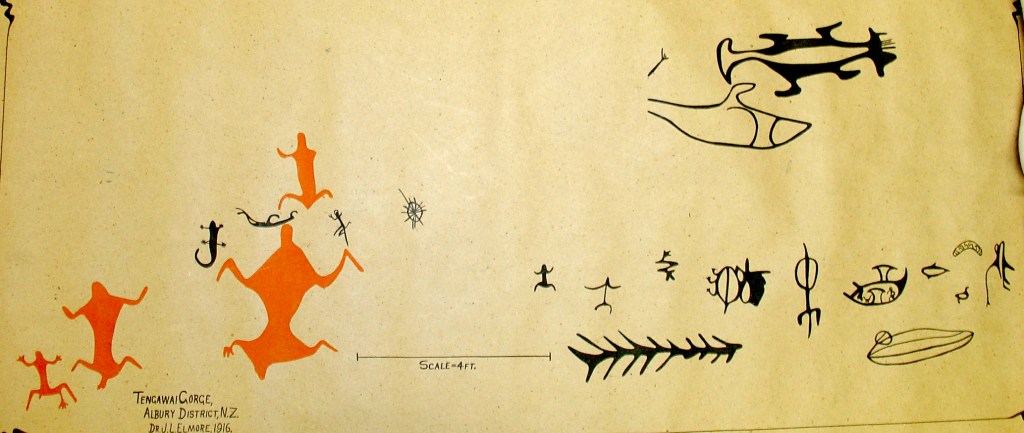
J L Elmore Drawings at Albury Park (Tengawai Gorge)

That the drawings were made with fugitive materials on perishable surfaces it is a wonder that they have lasted so long, exposed to all types of weather. 

The South Island Māori rock drawings, dating back to early Māori occupation, were initially seen as scientific curiosities by many early European explorers and later, museum curators, including Julius von Haast, Alexander Hamilton, Robert
Speight, and H.D. Skinner.

Early on there was the debate in European circles about the artistic merits of the rock drawings, and their value to both local and international collectors. Experts such as Dr. J.L. Elmore a visiting American anthropologist and antiquarian collector documented, controversially damaged and removed portions of Māori rock art from sites in the South Island around 1916 encouraged by a few museum curators.

The scale of the paintings was minimal at some sites while at others they are quite extensive. The ornithologist and botanist W R B Oliver noted that at Weka Pass a portion of the paintings were 66 feet (20m) long with about 80 figures between two and three feet in height.

In the mid twentieth century, the different approaches to the works can be seen in the contrasting attitudes of archaeologist Roger Duff and artist Theo Schoon. Duff was initially dismissive of the rock art seeing the works as “doodles”. Theo Schooh however saw the drawing as having greater aesthetic and spiritual significance.


The book is the culmination of many years of exploring and checking the sites by local farmer Philippa Graham, encouraged by landowners, field staff from the
Department of Lands and Survey and the New Zealand Historic Places Trust.

There has been little written about the history of these rock art sites since Michael Trotter and Beverley McCulloch’s 1971 publication, Prehistoric Rock Art of New Zealand and now with South Island Māori Rock Art, Graham calls on her in-depth research at all of the major New Zealand institutions, in addition to the Thomas Burke Museum, Seattle. She has uncovered fresh material about the sites, the landowners, the governments of the times, archaeologists’ contributions, museums’ involvement, library records and attitudes towards local Māori in early days.
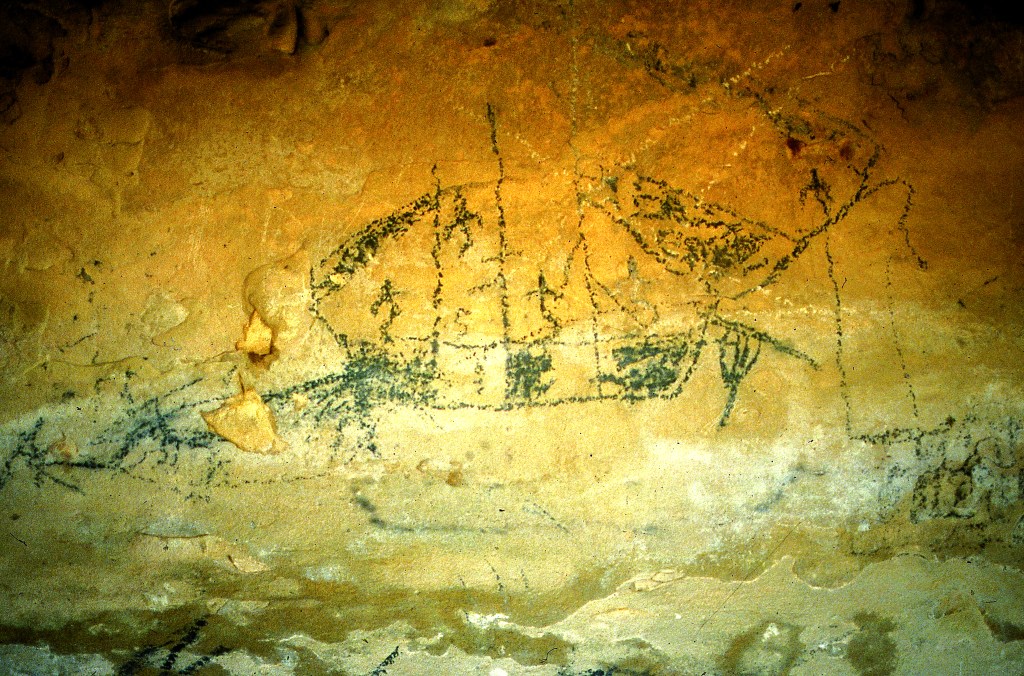
European Sailing Ship, Takiroa Shelter, North Otago

The nameless artists who first daubed charcoal and red ochre on these walls depicted subjects which were generally close to home. The images range from abstract forms, to bird, animal life and people. The presence of bones from moa and the extinct quail suggest that the people who made these images started early in terms of human habitation in the area. There may have been a long break in continuity, as there are also depictions of European sailing ships and animals suggesting that the practice may have been revived in the late eighteenth or early ninetieth century.

The book details the efforts to preserve and record the drawings at various sites. Among these efforts were the overpainting of works at Weka Pass by the and Thomas Herberley and the more recent drawings by Theo Schoon and Tony Fomision.

The book has more than 350 illustrations and maps, an index and a Māori glossary, as well as a chapter focusing on New Zealand artists who have been inspired by the rock drawings. In producing these images, the artists have often produced more refined images and in the case of the New Zealand postage stamps have brought these images to the wider public.
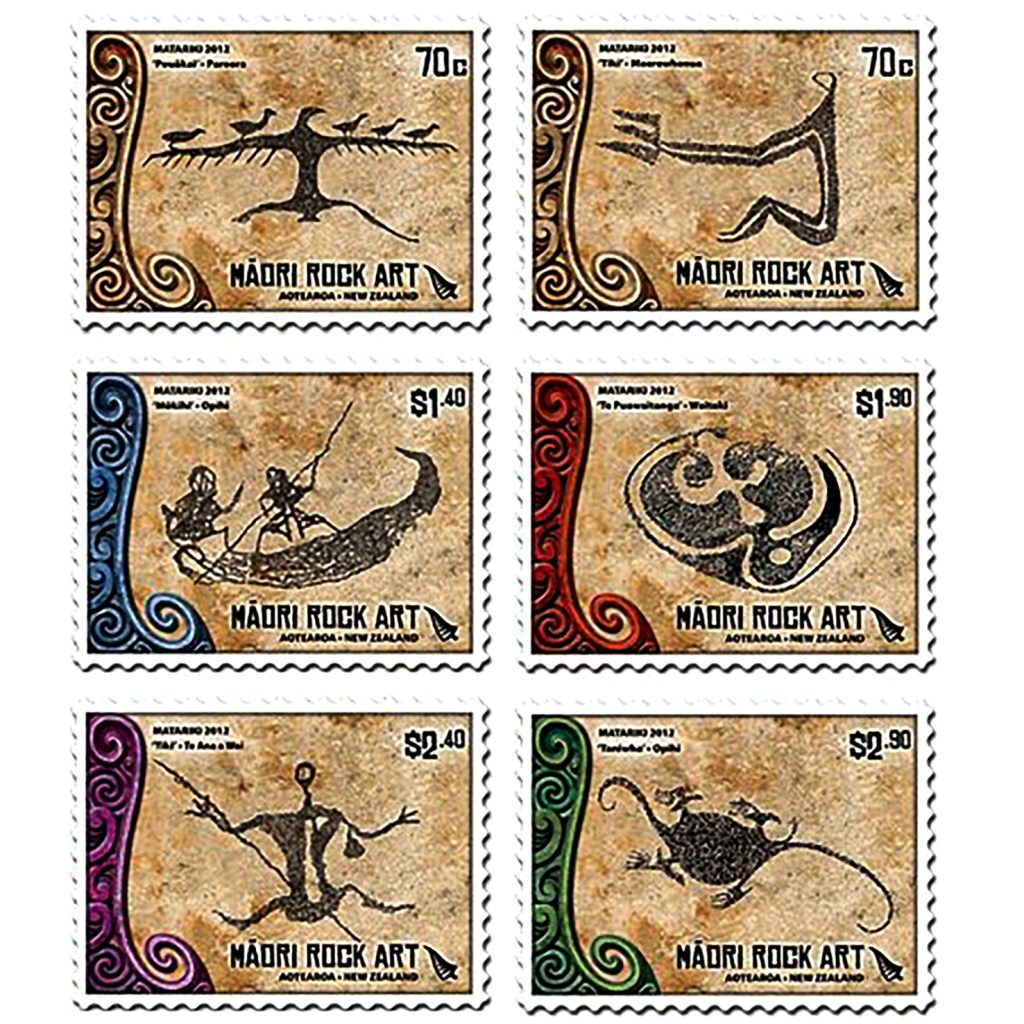
Matariki Stamps 2012 Designer Dane Burke & advisor Brian Allingham and Nga Tahu Māori Rock Art Trust

The artists who have used the imagery include James Turkington, Cliff Whiting, Selwyn Muru, John Bevan Ford, Tony Fomison, Rua Pick, Theo Schoon, Denis Knight Turner and Gordon Walters.
Categories
Reviews, News and Commentary

Ōtepoti Dunedin Architecture: A Walking Guide

Reviewed by John Daly-Peoples

Ōtepoti Dunedin Architecture

A walking guide

John Walsh and photographer Patrick Reynolds, 

Massey University Press

$39.99

Reviewed by John Daly-Peoples

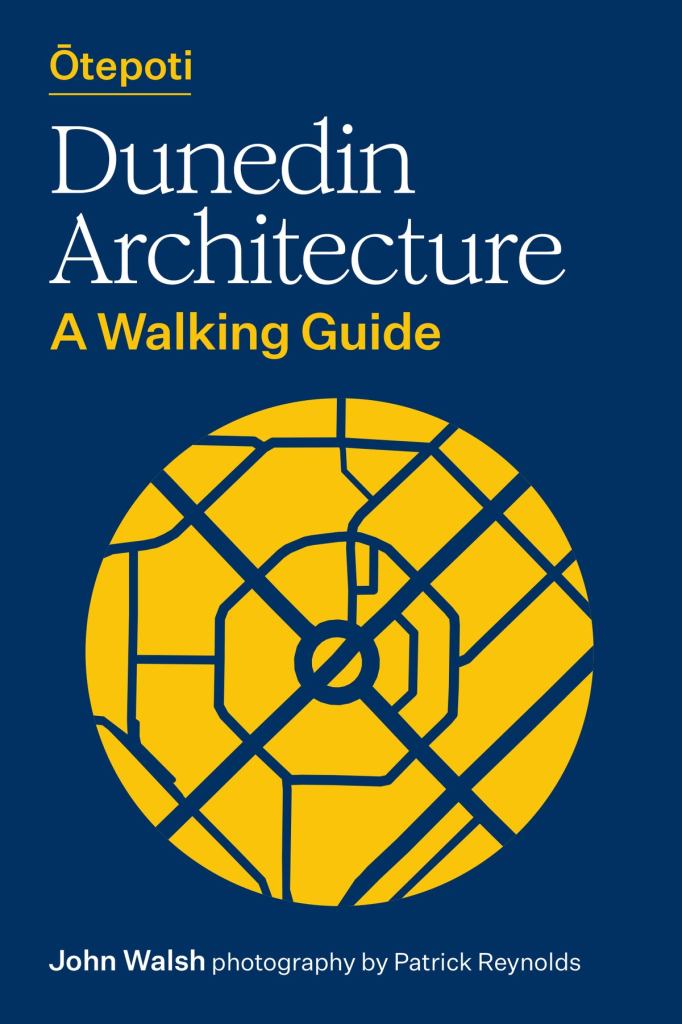
Ōtepoti Dunedin Architecture, a walking guide is the fourth book in the series of handy pocket guides to New Zealand city architecture and is the most extensive yet. It features more than 130 Dunedin buildings in seven, self-guiding walks that range from the university district right across the city to the southern cemetery area and out to Port Chalmers.

With easy-to-follow maps, a well informed and engaging text by well-known architecture writer John Walsh and images by architectural photographer Patrick Reynolds, 

The three previous books (Wellington. Auckland and Christchurch architecture) have proven to be invaluable and have all gone into second editions which is a major achievement for such niche publications.

The Dunedin book follows the outline of the previous books with a brief history of the city, its growth and the development of its architecture. As with previous books Walsh writes clearly about the buildings, placing them clearly with in the history of architecture in New Zealand.

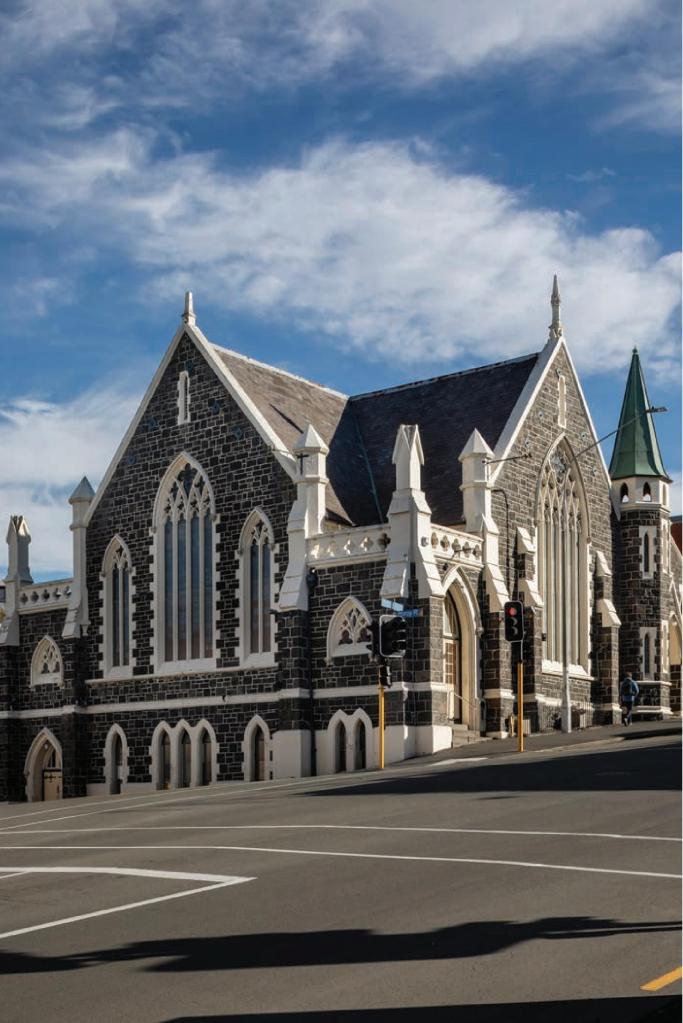
R A Lawton is given considerable space in the book as the architect of the First Church of Otago and Trinity Methodist Church as well as numerous other buildings including Larnach Castle making him an architect of great significant in the Dunedin area. He designed an estimated 46 church buildings, 21 banks, 134 houses, 16 school buildings, 13 hotels, 15 civic and institutional buildings, and 120 commercial and industrial buildings. Virtually all the building were built in the Dunedin area.

Trinity Methodist Church

There are other notable inclusions such as F W Petre who has numerous buildings to his name in the city and he designed three of New Zealand’s cathedrals, each distinguished by a different architectural style: St Joseph’s Cathedral in Dunedin, the Cathedral of the Sacred Heart in Wellington and the Cathedral of the Blessed Sacrament in Christchurch.

Ted McCoy is one contemporary architect whose work features in the book with several works in the University precinct – the Richardson Building, the Archway Lecture Theatres and University College along with the impressive semicircular apse of St Pauls Cathedral

For the most part these are tours of New Zealand commercial and public buildings but there are a few domestic dwellings as well such Olveston.

In each of the tours we encounter some of the most important architectural gems of the city. So, in the City Centre Tour we encounter the Dunedin Railway Station and the First Church of Otago (“the most impressive of all nineteenth New Zealand churches”).

Toitu. The Josephine Foyer

In the City South tour there is the Warren and Mahoney (with Aukaha) Ōtepoti, Toito Early Settlers Museum (a combination of three architectural styles) and the South City Substation (“one of the best buildings in a city stuffed with Gothic style churches as well as classically ordered banks and Renaissance inspired warehouses.

City West tour features Speight Brewery (Massive without being gaunt, and solid without being drab) and St Dominics Priory (the largest unreinforced mass-concrete building in the Southern Hemisphere) and Olveston (a memento of Dunedin’s Golden Age)

The City Northeast tour includes The University Precinct with its many nineteenth, twentieth and twenty-first century buildings and the Winter Gardens (first botanic garden building in New Zealand).

The other tours to the east of the city have fewer inclusions but some of the highlights are Larnachs Castle, the Bank of New Zealand in Port Chalmers which was the studio space of Ralph Hotere for many years and the English Gothic style Iona Church overlooking the settlement.

The book emphasises the work of some of the individual architects such as Edmund Anscombe, R A Lawon, Ted McCoy and F W Petre along with the architecture practices of Mandeno & Fraser, Mason, Wales and Miller and White who designed a number of the important building in the city.

There are a couple of instances where major artists are featured with their artworks included as decoration b. These include Jim Allen’s six panel frieze on the Arts Building, Simon Kahn’s dramatic facade on the EBB Hotel and Oliver Gross’s Cenotaph and the frieze on the Hercus building.

Categories
Reviews, News and Commentary

Wellington Architecture: a Walking Guide

Wellington Architecture: A Walking Guide

John Walsh and Patrick Reynolds

Massey University Press

RRP $37.00

Reviewed by John Daly-Peoples

John Walsh and photographer Patrick Reynolds have just launched “Wellington Architecture, A Walking Guide”  a revised edition of the book first published in 2022. This is their third book in the series of architectural walking tours following on from their books on Auckland and Christchurch. It is a great addition to books which explore and explain our built environment.

 John Walsh in the introduction notes that he was born in Wellington which was as “compact and confined as a medieval city-state, intensely impressed itself on me, in the most impressionable part of my life. I remember the Freyberg Pool, where I learned to swim; the summer lights strung on the Norfolk pines along Oriental Parade; and the council yard where my father worked, next to the Herd Street Post and Telegraph Building. My high school was near the old National Art Gallery and Dominion Museum; we’d be sent to mass at St Mary of the Angels and, in blazers and ties, despatched from Wellington Railway Station on rugby expeditions into the hinterlands of the Hutt Valley.”

A building with a dome on the top

AI-generated content may be incorrect.Public Trust Building

This reviewer also grew up in Wellington, living in the National Hotel across from the corner of Stout St and Lambton Quay. From our front room we had an impressive architectural vista including The Public Trust Building, The Government Departmental Building and The State Insurance Building. Further down the street was the Wellington Railway Station.

On my way to school I passed Ernst Plischke’s Massey House, The Old Supreme Court, The Old Government Building, The Beehive, Parliament building, the General Assembly Library, Turnbull House and the rather unfortunate Cathedral of St Paul. These were the background to my life at the time and it was only when I moved to suburban Karori that I noticed the difference in my daily environment.

A building with a dome top

AI-generated content may be incorrect.Shed 7, Wellington Harbour Board

The place of architecture in our environment and in our personal and social history is important often more noticeable when we are in foreign cities. A city’s buildings are important in defining the nature of a place. When visiting a place for the first time the visitor will map a city through its buildings. The materials, the orientation, the colours, the decoration and the forms all help create the language of the way the city is perceived.

The buildings of Auckland Wellington and Christchurch have many similarities but the accumulation of the various periods of construction and styles in each of those places has created very individual environments.

“Wellington Architecture, A Walking Guide” features more than 126 significant buildings describing their purpose and history as well as providing a background on the architects who designed them. The buildings are grouped into five self-guided walking routes, each with a map together with itineraries which collectively create a portrait of the city.

A church with a tall steeple

AI-generated content may be incorrect.St John’s

The building are a mix of colonial, nineteenth century Gothic, mid-century modernism and buildings of the last fifty years illustrating the changing nature of the architecture along with the changing nature of New Zealand and the city. The buildings are banks, businesses, government departments, churches, apartment buildings libraries, hotels, apartments, and a few private houses.

One of the tours features several of the government institutions surrounding Parliament including the Old Government Building (now the Victoria University Law School) and one on the largest wooden buildings in the world, all those other buildings I passed on the way to school along with the more recent  brutalist National Library and the modernist Freyberg Building.

Several architects feature with a number of buildings such as Gummer & Ford, Thomas Turnbull and Ian Athfield who is represented by the Wellington Library (soon to be reopened) and his Oriental Parade flats as well as a few, often controversial,  additions he made to existing buildings.

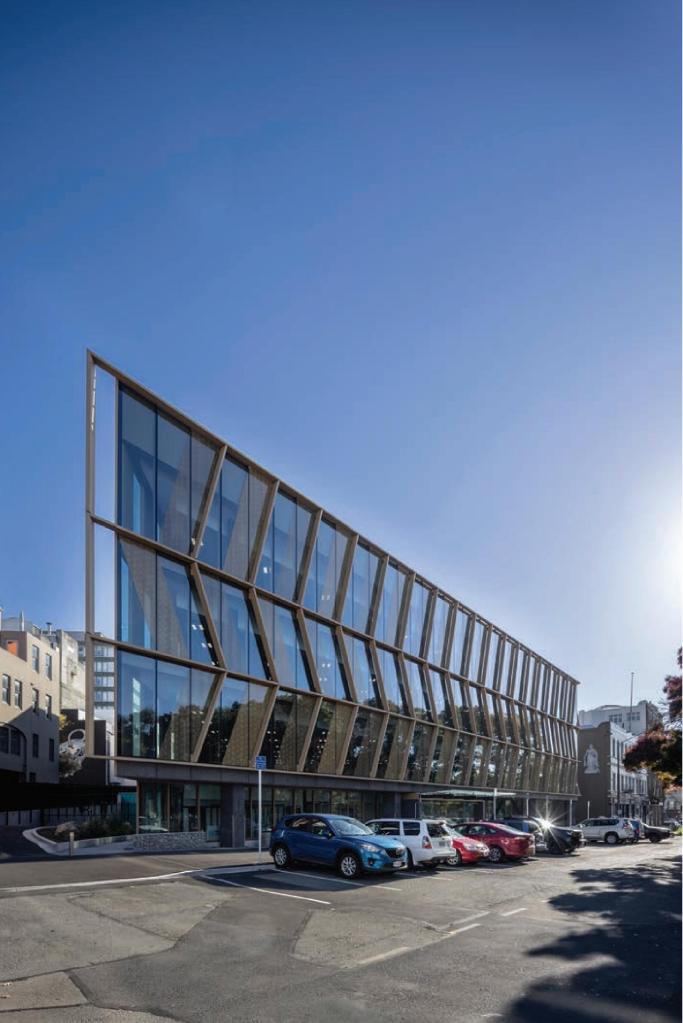
Asked which building he regarded as the most interesting nee building in Wellington he has stated that it is Heke Rua the new building for New Zealand’s Archive beside the National library, both for its architecture as well its signaling a commitment to preserving the nations documentary heritage.

Categories
Reviews, News and Commentary

Wellington Architecture: A Walking Guide

Reviewed by John Daly-Peoples

Wellington Architecture: A Walking Guide

John Walsh and Patrick Reynolds

Massey University Press

RRP $37.00

Reviewed by John Daly-Peoples

John Walsh and photographer Patrick Reynolds have just launched “Wellington Architecture, A Walking Guide”  a revised edition of the book first published in 2022. This is their third book in the series of architectural walking tours following on from their books on Auckland and Christchurch. It is a great addition to books which explore and explain our built environment.

 John Walsh in the introduction notes that he was born in Wellington which was as “compact and confined as a medieval city-state, intensely impressed itself on me, in the most impressionable part of my life. I remember the Freyberg Pool, where I learned to swim; the summer lights strung on the Norfolk pines along Oriental Parade; and the council yard where my father worked, next to the Herd Street Post and Telegraph Building. My high school was near the old National Art Gallery and Dominion Museum; we’d be sent to mass at St Mary of the Angels and, in blazers and ties, despatched from Wellington Railway Station on rugby expeditions into the hinterlands of the Hutt Valley.”

A building with a dome on the top

AI-generated content may be incorrect.Public Trust Building

This reviewer also grew up in Wellington, living in the National Hotel across from the corner of Stout St and Lambton Quay. From our front room we had an impressive architectural vista including The Public Trust Building, The Government Departmental Building and The State Insurance Building. Further down the street was the Wellington Railway Station.

On my way to school I passed Ernst Plischke’s Massey House, The Old Supreme Court, The Old Government Building, The Beehive, Parliament building, the General Assembly Library, Turnbull House and the rather unfortunate Cathedral of St Paul. These were the background to my life at the time and it was only when I moved to suburban Karori that I noticed the difference in my daily environment.

A building with a dome top

AI-generated content may be incorrect.Shed 7, Wellington Harbour Board

The place of architecture in our environment and in our personal and social history is important often more noticeable when we are in foreign cities. A city’s buildings are important in defining the nature of a place. When visiting a place for the first time the visitor will map a city through its buildings. The materials, the orientation, the colours, the decoration and the forms all help create the language of the way the city is perceived.

The buildings of Auckland Wellington and Christchurch have many similarities but the accumulation of the various periods of construction and styles in each of those places has created very individual environments.

“Wellington Architecture, A Walking Guide” features more than 126 significant buildings describing their purpose and history as well as providing a background on the architects who designed them. The buildings are grouped into five self-guided walking routes, each with a map together with itineraries which collectively create a portrait of the city.

A church with a tall steeple

AI-generated content may be incorrect.St John’s

The building are a mix of colonial, nineteenth century Gothic, mid-century modernism and buildings of the last fifty years illustrating the changing nature of the architecture along with the changing nature of New Zealand and the city. The buildings are banks, businesses, government departments, churches, apartment buildings libraries, hotels, apartments, and a few private houses.

One of the tours features several of the government institutions surrounding Parliament including the Old Government Building (now the Victoria University Law School) and one on the largest wooden buildings in the world, all those other buildings I passed on the way to school along with the more recent  brutalist National Library and the modernist Freyberg Building.

Several architects feature with a number of buildings such as Gummer & Ford, Thomas Turnbull and Ian Athfield who is represented by the Wellington Library (soon to be reopened) and his Oriental Parade flats as well as a few, often controversial,  additions he made to existing buildings.

Asked which building he regarded as the most interesting nee building in Wellington he has stated that it is Heke Rua the new building for New Zealand’s Archive beside the National library, both for its architecture as well its signaling a commitment to preserving the nations documentary heritage..

Categories
Reviews, News and Commentary

A Different Light: First Photographs of Aotearoa

Reviewed by John Daly-Peoples

A Different Light: First Photographs of Aotearoa

Auckland Museum

April 11 – September

A Different Light: First Photographs of Aotearoa

Auckland University Press

RRP $65.00

Reviewed by John Daly-Peoples

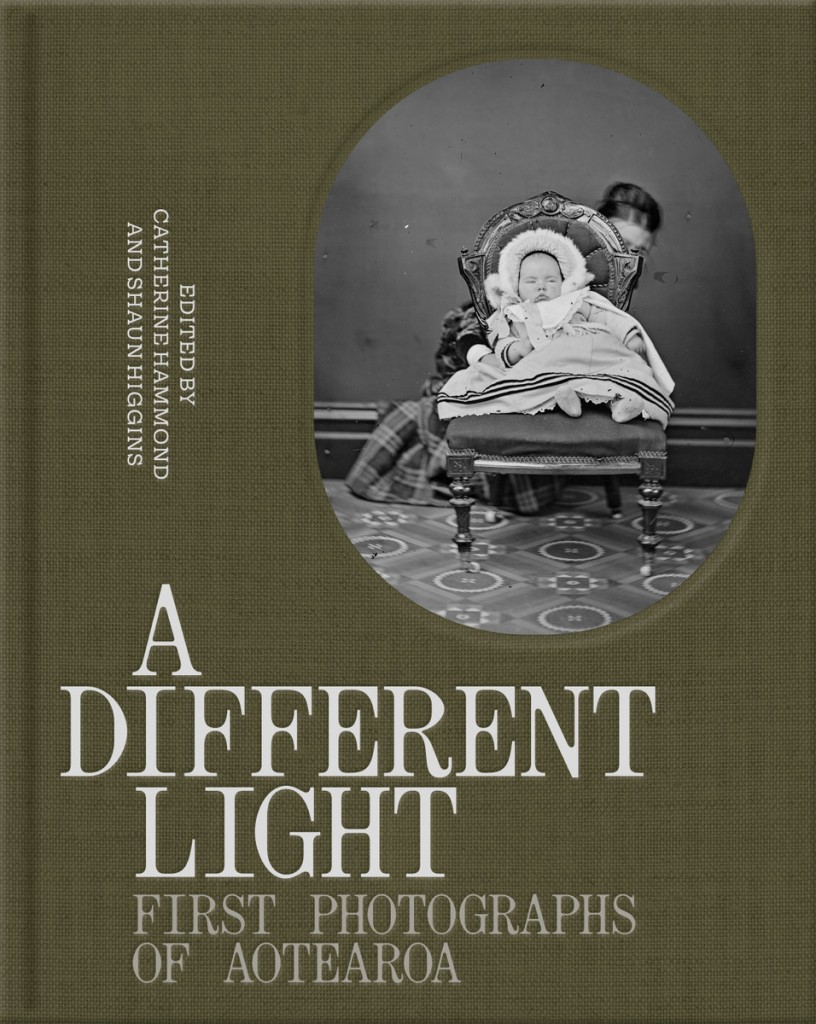
Opening at the Auckland Museum this month is the exhibition “A Different Light: First Photographs of Aotearoa” which will also see the launch of the book “A Different Light: First Photographs of Aotearoa” published by Auckland University Press.

The exhibition is groundbreaking in bringing together work from some of the most extensive photographic collections in the country – Auckland Museum, The Alexander Turnbull Library, The Hocken Collection and The National Library.

While early artists had recorded aspects of life in New Zealand through paintings, drawings and engravings it was the photograph which enabled them to record the full range of people, events, landscapes and the built environment.

The full range of such photographs can be seen in the exhibition and the accompanying new book  

The first recorded use of photography in Aotearoa was in 1848, less than a decade after it became commercially available in Europe. Over the second half of the 19th century, professionals and amateurs alike experimented with the new technology and set in motion an image revolution that changed the way our lives were recorded.

These first photographs reveal important individuals as well as ordinary people, imposing landscapes and the  New Zealand bush. There are example of Māori architecture and the fledgling townships. In those towns, there are examples of the most imposing of buildings which speak of government and wealth as well as the rudimentary dwellings of settlers.

Cold Water Baths White Terrace; circa 1880s; Charles Spencer; Auckland Museum Collection

The famous Pink and White terraces were photographed by numerous photographers including John Kinder, George Valentine  and Josiah Martin. In the book/exhibition there is one by Charles Spencer  “Cold Water Baths, White Terraces”. It has been printed as a cyanotype which gives the image a Prussian Blue colour. Another of Spencer’s cyanotypes is of Auckland Harbour which has an eerie appearance.

There are images which help give us an understanding of our past such as Francis Coxhead/ William Meluish’s photograph which shows Gabriels Gully in 1862 with its collection of tents dotted over the barren valley.

Maori King, Tukaroto Matutaera Potatau Te Wherowhero Tawhiao Auckland Museum Collection

There are a couple of images of Auckland by Hartley Webster including what is probably the earliest depiction of the town along with several other views of the town. There are also images of other towns in their infancy including Dunedin, Wellington, Hokitika and Lyttleton.

Two wāhine; circa 1887-1890 Harriet Cobb.  Alexander Turnbull Library

From the very first there were images of Māori such “Two Wahine” by Harriet Cobb and many images were printed commercially. One of the most widely distributed was of Wiremu Tamihana te Waharoa who was known as the “king maker”. At one point there was even court action over the plagiarised of images of him.

Other important figures represented in the exhibition include Sir George Grey,  Tamati Waka Nene and Gustav von Tempsky.

” The Native Earthworks at Rangiriri partially destroyed. ” Photo: M. Higginson, Auckland Museum

References are also found to the Land Wars  with Monatague Higginson’s “The Native earthworks at Rangariri” which was taken after the decisive battle for the Waikato fought in November 1863. There are aspects of cultural exchange to be seen in the dual portrait of Tom Adamson and Wiremu Mutu Mutu where styles of dress and fabrics are  merged.

The exhibition provides information on the development of the photographic processes from the  expensive, silver-coated daguerreotype portraits to the gelatine silver process, which when paired with a fast-shutter, could capture Victorian-era subjects in action for the first time.

Tom Adamson and Wiremu Mutumutu, Wanganui; circa 1867–1874; Batt & Richards; Hocken

With this growth in understanding of the technical aspects of the photograph came experimentation as can be seen in the double exposure image of John Buchanan, the noted botanist in “Spirit photograph of John Buchanan” by McGregor and Company.

David Reeves, Auckland Museum Tumu Whakarae Chief Executive, says,  “The advent of photography in the mid-19th century was a remarkable technological event which had significant impacts on society at the time. This exhibition gives us a chance to reflect on that and more recent changes in the way images are captured and shared and what that means for identity, privacy, and connection with each other.”

The exhibition travels to the Adam Art Gallery (Wellington) in  February 2025  and the Hocken Collections (Dunedin)  September 2025.

To subscribe or follow New Zealand Arts Review site – www.nzartsreview.org.

The “Follow button” at the bottom right will appear and clicking on that button  will allow you to follow that blog and all future posts will arrive on your email.

Or go to https://nzartsreview.org/blog/, Scroll down and click “Subscribe”