Categories
Reviews, News and Commentary

Ray Ching: the huia & our tears

reviewed by John Daly-Peoples

Ray Ching

the huia & our tears

ARTIS Gallery

RRP $80.00

Reviewed by John Daly-Peoples

With his latest book “the huia & our tears” Ray Ching has shown once again that he is not just a great painter, he is also a clever storyteller and an expert ornithologist.

The large format book like all his previous publications is impressive with full colour reproduction, Illustrations spread over two pages, great typography and well researched text. It adds greatly to our understanding and appreciation of the huia which disappeared in the early years of the twentieth century.
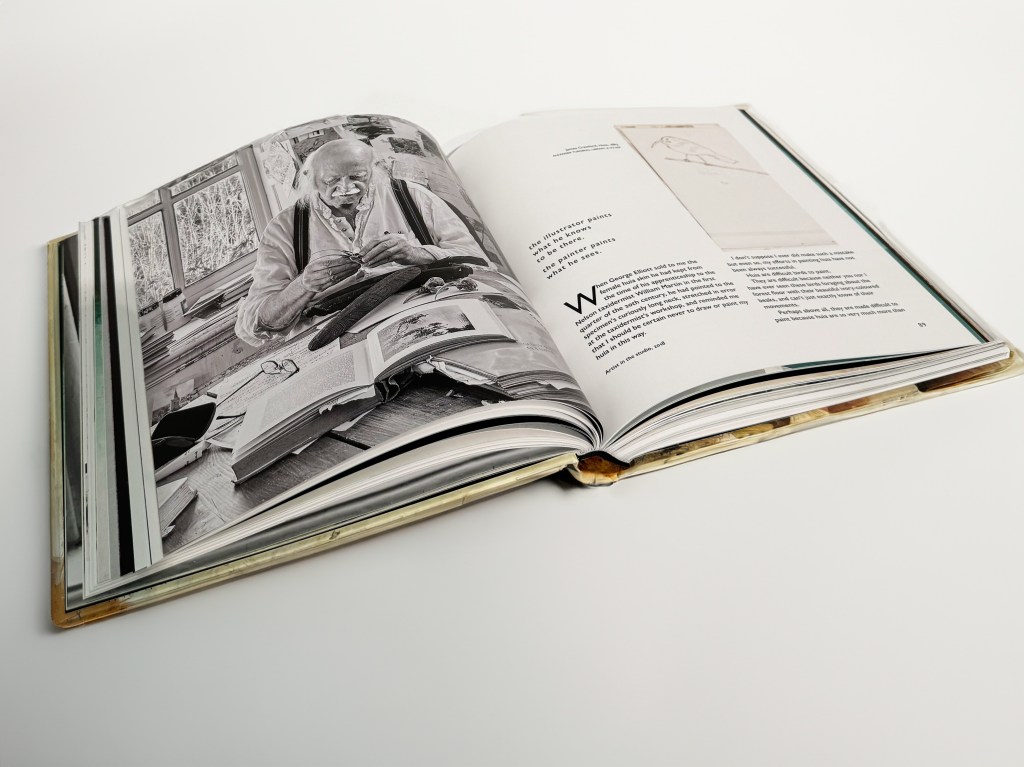
The book is a remarkable collection of memories, observations, research and reflections on the huia and its place in New Zealand ornithological and national history.

Ching has had an interest bordering on obsession with the huia from an early age noting that he had always had the bird with him, connected by its image on the old New Zealand sixpence.

Included in the book are the artist’s encounters with taxidermists, ornithologists, writers artists and major figures in New Zealand’s history who provide fascinating insights into the history of the huia.

The Kite and the huia (detail)

In many of his previous books notably his Aesop’s Kiwi Fables  he has included moral tales featuring figures from the animal kingdom. In this  book he has included several examples of these including  “The huia and our tears as well as “The kite and the huia”

He includes early reports of the huia by Charles Heaphy, Edward Jerningham Wakefield and Ernest Dieffenbach as well as Walter Buller’s description of the huia where he wrote:

“The Huia never leaves the shade of the forest. It moves along the ground, or from tree to tree, with surprising celerity by a series of bounds or jumps. In its flight it never rises, like other birds, above the tree tops”.

There are a number of other mentions about the bird such as the poem “The Huia” included in Eileen Duggan’ s 1929 publication “New Zealand Bird Songs”  The final verse of this poem reads:

Where is it now that once was high?

Where is it now, where is its wing?

Where is the Prince of the leaves and sky?

Where is the King?

Ching notes that many of the illustrations of the huia are from examples held in museums but only few from recently killed birds which accounts for the lack of dramatic colouring as the plumage has faded.

Ray Ching, Huia (detail)

In this respect he notes that the work of Keulemans who produced the illustrations for Walter Bullers books on New Zealand birds may be the most accurate as he normally received his birds sent by Buller to Europe within a few weeks of their death.

There is a series of portraits of  Māori by Lindauer and Goldie in which the sitters have worn huia feathers in their hair with Ching referencing the use of the bird’s feathers by high-ranking Māori. Included in these portraits are images Pane Watene (Ngati Maru) and Tawhiao Matutaera Te Wherewhere (Ngāti Mahuta).

Gottfried Lindauer, Pane Watene (Ngati Maru)

As well as Chings account of his sixty-year interest in the huia he includes another important text.

The now out of print publication “The Book of the Huia” written by W.J. Phillipps and published in 1963 is reproduced in full providing additional information . In it the author included conversations and correspondence of early settlers and the place of the huia in the lives of Māori.

He also provides details of the bird’s life from birth through its use as a food and its feathers for decoration both for Māori and later Europeans and its wholesale slaughter in the late nineteenth century and inclusion in museums across the globe.

Ching also includes  details of all the huia held in the many New Zealand locations as well as the UK, America Germany

Categories
Reviews, News and Commentary

Aotearoa Contemporary to open at the Auckland Art Gallery in July

John Daly-Peoples

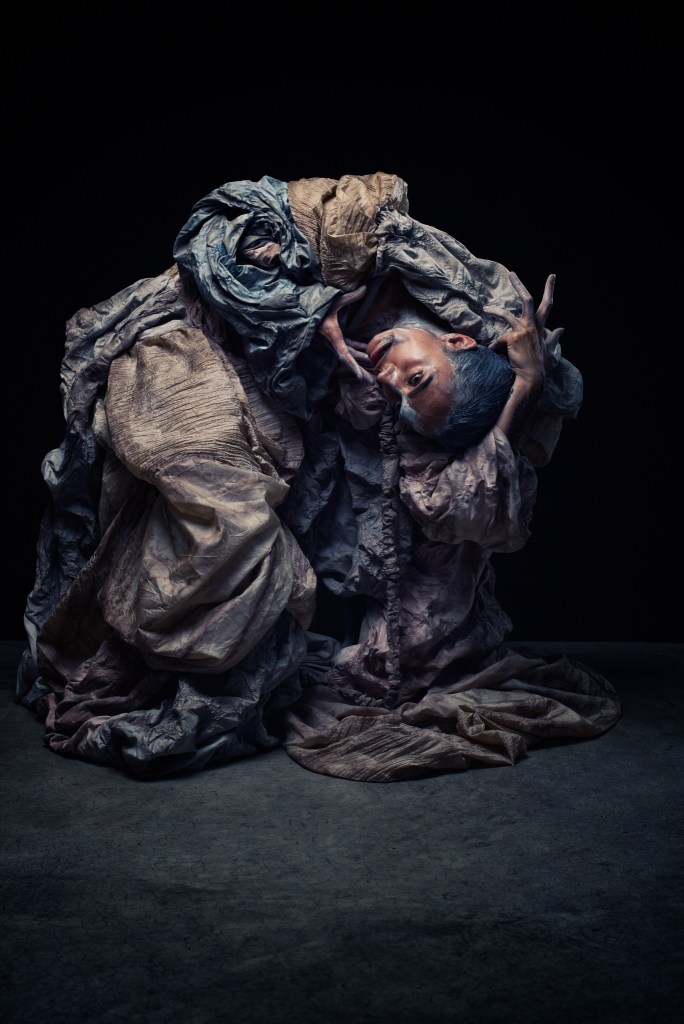
Maungarongo Te Kawa, Celestial Stargate for Invisible People, 2024 (detail). Photo by Jemma Mitchell

Aotearoa Contemporary

Auckland Art Gallery

July 6 – October 20

 The Auckland Art Gallery Toi o Tāmaki and Ngāti Whātua Orākei have announced a new contemporary art triennial at Auckland Art Gallery which will celebration of the breadth of contemporary art in New Zealand.

“The Gallery is thrilled to partner with Ngāti Whātua Ōrākei to present a new generation of talented artists and showcase Aotearoa New Zealand’s diverse artistic environment.”

“Set to occur every three years, the exhibition provides ongoing representation and pathways for new artistic voices, bolstering the future resilience of New Zealand art. Aotearoa needs a contemporary art triennial and it now has one.” adds Lacy.

Ngāti Whātua Ōrākei Trust Deputy Chair Ngarimu Blair says, “Our tupuna Apihai Te Kawau gifted 3000 acres of land on the Waitematā on 18th September in 1840 to become a city which welcomed people, cultures and ideas from afar. Our relationship with Auckland Art Gallery is founded in the shared goal to foster the arts reflective of our multi-cultural community in Aotearoa.”

With an emphasis on artists not previously exhibited at the Gallery, the exhibition presents 27 artists and 22 compelling new projects in a range of media including painting, textiles, sculpture, ceramics, photography, and performance.

Senior Curator, Contemporary Art, Natasha Conland says, “Aotearoa Contemporary reveals a new cluster of artists who work afresh with ritual and storytelling, mythology, rhythm, indigenous space and materials. There is also a special emphasis on art’s relationship with choreography through the commission of four dance works.”

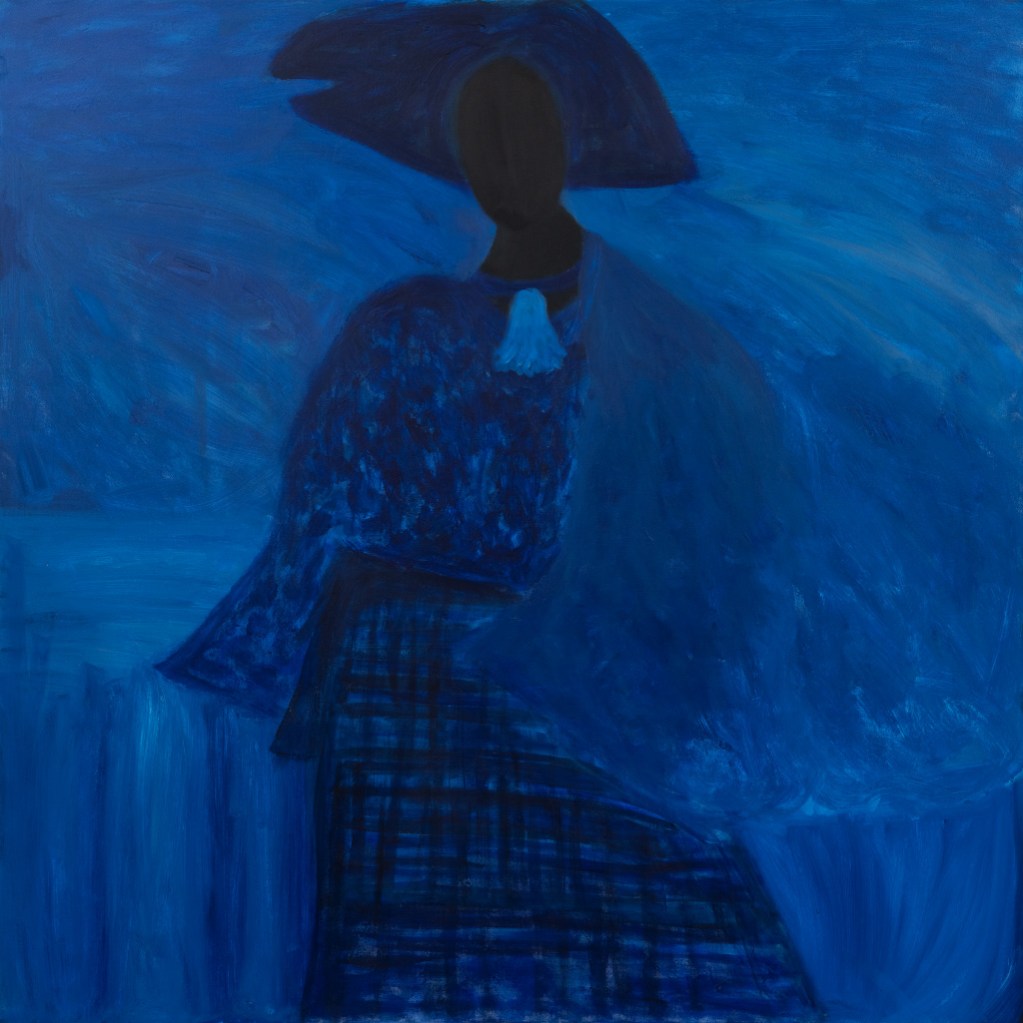
Curator, Pacific Art, Cameron Ah Loo-Matamua adds, “From Ruth Ige’s enigmatic blue paintings of anonymous figures, to the art collective The Killing’s installation of supersized soft-toys in a state of play, there is something for everyone in this exhibition. Amongst the ambitious new commissions is a three-channel video by Qianye and Qianhe Lin featuring mythology set in Hailing Island off the coast of China and Aotearoa.”

Aotearoa Contemporary is proudly supported by Ngāti Whātua Ōrākei, Auckland Art Gallery Foundation and the Chartwell Trust.

Aotearoa Contemporary has been scheduled to coincide with New Zealand’s leading contemporary art award, The Walters Prize 2024, to provide a broad overview of contemporary art in New Zealand in the Gallery’s winter programme.

The exhibition has been curated by Cameron Ah Loo-Matamua, Natasha Conland and Ane Tonga with support from Ruth Ha.

Artists featured in Aotearoa Contemporary

Emerita Baik, Leo Baldwin-Ramult, Heidi Brickell, Pelenakeke Brown, Jack Hadley, Ruth Ige, Hannah Ireland, Xin Ji, Reece King, Qianye Lin and Qianhe Lin, Te Ara Minhinnick, Ammon Ngakuru, Amit Noy, Sung Hwan Bobby Park, Meg Porteous, Maungarongo (Ron) Te Kawa, Tyrone Te Waa, The Killing (collective), Anh Trân, Manuha’apai Vaeatangitau, Jahra Wasasala and George Watson.

Jahra ‘Rager’ Wasasala by Jocelyn Janon

Jahra ‘Rager’ Wasasala is an award-winning cross-disciplinary artist of Fijian/NZ European descent. As an artist, Jahra investigates her ancestral connections through the art mediums of performance activation, contemporary dance and poetry, and has extensively toured her performance works both nationally and internationally.

As a child of the Pasifika diaspora, Jahra is invested in translating her shared internal conflict into an accessible, yet confrontational, physicalised language. Her most recent performance work titled “a world, with your wound in it” focuses on the complex relationship between the earth and a woman’s body, a theme Jahra continues to investigate in her developing work.

Maungarongo Te Kawa is a takatāpui fabric artist, educator, and storyteller. His practice makes old pūrākau newly relevant using brilliant colour, fluid design, and infectious good humour. Following a career in costume design and fashion, Te Kawa dedicated himself to full-time art-making and teaching. In addition to producing his own elaborate whakapapa quilts, he runs sewing workshops, guiding participants to express their creativity and genealogy through fabric.

Ruth Ige is a Nigerian New Zealand-based painter whose intimate, evocative compositions oscillate between bodily forms and painterly abstractions. While some resemble traditional portraiture, others consist of colour fields that capture a more mysterious, ethereal effect. Hands, shoulders, and faces emerge from a watery facture. “I am interested in creating images that are not easily understood,” says Ige. She considers her unique figuration, which renders her subjects featureless and inscrutable, to be a form of “veiling.”

Performances

The commissioned performances in Aotearoa Contemporary include Pelenakeke Brown, Is this a performance 1+2, Xin Ji, Doco Dance, Amit Noy, Errant and Jahra Wasasala, DRA.

To subscribe or follow New Zealand Arts Review site – www.nzartsreview.org.

The “Follow button” at the bottom right will appear and clicking on that button  will allow you to follow that blog and all future posts will arrive on your email.

Or go to https://nzartsreview.org/blog/, Scroll down and click “Subscribe”

Categories
Reviews, News and Commentary

Ans Westra: A life in photography

Reviewed by John Daly-Peoples

Ans Westra: A life in photography

By Paul Moon

Massey University Press

Published May 2024

RRP $49,99

Reviewed by John Daly-Peoples

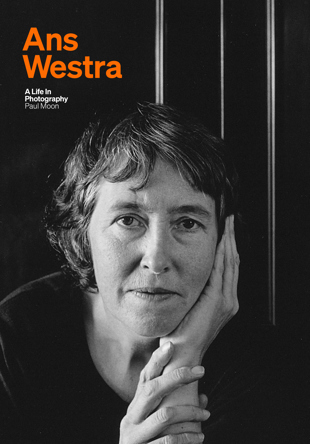
Ans Westra, who died in 2023 was probably the  most prolific contemporary photographer  who focussed on  recording the life and times of New Zealanders.

With a career spanning over sixty years, she took hundreds of thousands of photographs of people, places and events.

Now a new book “Ans Westra: A life in photography” by cultural historian  Paul Moon documents her life and her contribution to the cultural life of the country.

The book charts her photographic career  from her early involvement with the Wellington Camera Club in the 1960’s and her first sale  of a work to the quarterly journal Te Ao Hou, a publication she would continue to provide images for,

She also gained early recognition in 1961 winning a prize in a photographic competition run by Arts Committee of the Festival of  Wellington.

Much of her work was commissioned for publications originated with the Department of Education and several of her books were for educational publishers as well. One of her earliest publications was ”Viliami of the Friendly Isles” based on her travels to Tonga, Fiji and Samoa in 1962. As well as taking the pictures she wrote the text which describes the dramas, tragedies and excitement of the various locations and events she encountered.

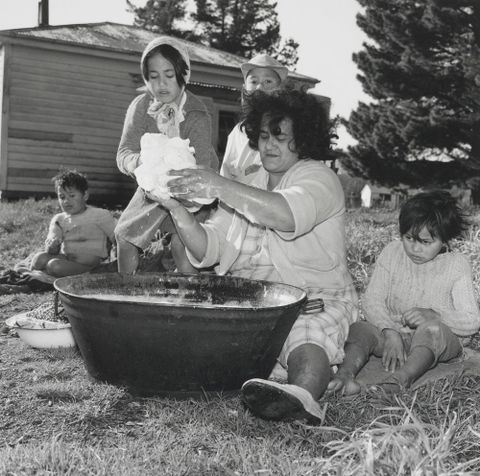
Then there was the controversial booklet “Washday at the Pa”  which was a school bulletin published in 1964 by the Education Department’s School Publications section. Ans Westra wrote the text and took the photographs during a visit to Ruatōria.

Ans Westra, Ruatoria, 1963 (from ‘Washday at the Pa’), courtesy of {Suite} Gallery

The bulletin followed a day in the life of a rural Māori family with nine children. Her images of the family’s living conditions caused enormous controversy, notably from The Māori Women’s Welfare League and the work was subsequently removed from schools and destroyed. Only latterly was the work republished by her Wellington gallery Suite.

Her more substantial publication “Māori” was published by Alistair Taylor in 1967 which was co-produced with James Ritchie and designed by Gordon Walters.

Her motive for participating  in the project was the misguided notion, held by many pakeha writers that Māori were likely to become extinct at some time in the future and their culture needed to be recorded.

She was also involved with another controversial publication “Down Under the Plumtree” published by Alistair Taylor. Published in 1972, the book openly discussed sex, sexuality and drugs at a time when there was very little reliable information on these issues for young people. 

Moon writes about all her major bodies of work such as “Notes on the Country I live in”  and “We Live by a lake” which was written by Noel Hilliard.

He also outlines the rational and impetus for the various projects, the political and social climate at the time and the reactions to them.

The 84 images used to illustrate the book show the various aspect of her photographic  approach which changes over the years. One is conscious of her ability to frame an image, capture the sense of a person or place and find the drama of the moment.

Ans Westra, Wellington, 1974 courtesy of {Suite} Gallery

This ability to capture the sense of place can be seen in her “Wellington” of 1974 with the wet streets of the capital by the cenotaph.

She also shows an understanding  of architectural space with an image of the dam structure in “We Live by a Lake” and she is aware of the possibilities of contrast through light and shade as well as means of creating drama and movement as shown in her image of a policeman and dog confronting a protestor during the anti-Springboks tour campaign.

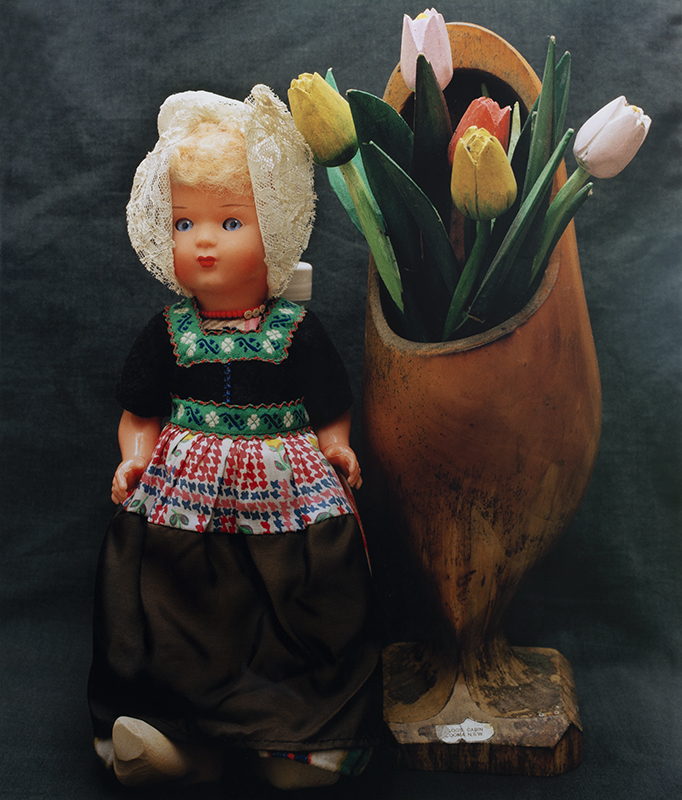
While she did not photograph all that much in colour, when she did, she was able to use colour to great effect as in her image of a Dutch doll from her Toyland series.

Ans Westra, Dutch Doll, 2004, courtesy of {Suite} Gallery

The book not only documents Westra’s immense contribution to our history in documenting social change but also reveals an enthusiastic and  dedicated  artist.

The book deals with several of the important events in her own life from her move from Holland in her youth, the brief  return to Holland in the late 1960’s and her short-lived affair with the writer Barry Crump  and the resulting son, Erik.

Dr Paul Moon ONZM is professor of history at Auckland University of Technology’s Te Ara Poutama, the Faculty of Māori Development, where he has taught since 1993. He is the prolific author of many books, including biographies of William Hobson, Robert FitzRoy, and the Ngāpuhi rangatira Hone Heke and Hone Heke Ngapua. He is a Fellow of both the Royal Historical Society at University College London and of the Royal Society of Arts.

All Images extracted from Ans Westra: A Life In Photography by Paul Moon, published by Massey University Press,

Categories
Reviews, News and Commentary

A Different Light: First Photographs of Aotearoa

Reviewed by John Daly-Peoples

A Different Light: First Photographs of Aotearoa

Auckland Museum

April 11 – September

A Different Light: First Photographs of Aotearoa

Auckland University Press

RRP $65.00

Reviewed by John Daly-Peoples

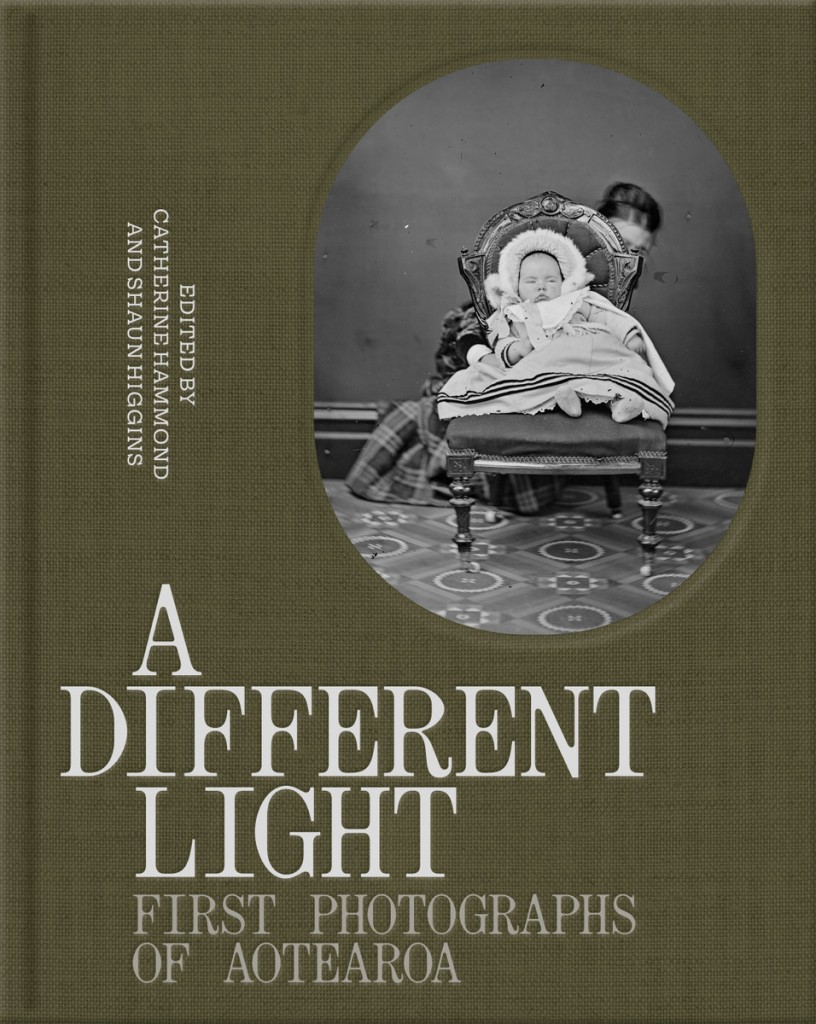
Opening at the Auckland Museum this month is the exhibition “A Different Light: First Photographs of Aotearoa” which will also see the launch of the book “A Different Light: First Photographs of Aotearoa” published by Auckland University Press.

The exhibition is groundbreaking in bringing together work from some of the most extensive photographic collections in the country – Auckland Museum, The Alexander Turnbull Library, The Hocken Collection and The National Library.

While early artists had recorded aspects of life in New Zealand through paintings, drawings and engravings it was the photograph which enabled them to record the full range of people, events, landscapes and the built environment.

The full range of such photographs can be seen in the exhibition and the accompanying new book  

The first recorded use of photography in Aotearoa was in 1848, less than a decade after it became commercially available in Europe. Over the second half of the 19th century, professionals and amateurs alike experimented with the new technology and set in motion an image revolution that changed the way our lives were recorded.

These first photographs reveal important individuals as well as ordinary people, imposing landscapes and the  New Zealand bush. There are example of Māori architecture and the fledgling townships. In those towns, there are examples of the most imposing of buildings which speak of government and wealth as well as the rudimentary dwellings of settlers.

Cold Water Baths White Terrace; circa 1880s; Charles Spencer; Auckland Museum Collection

The famous Pink and White terraces were photographed by numerous photographers including John Kinder, George Valentine  and Josiah Martin. In the book/exhibition there is one by Charles Spencer  “Cold Water Baths, White Terraces”. It has been printed as a cyanotype which gives the image a Prussian Blue colour. Another of Spencer’s cyanotypes is of Auckland Harbour which has an eerie appearance.

There are images which help give us an understanding of our past such as Francis Coxhead/ William Meluish’s photograph which shows Gabriels Gully in 1862 with its collection of tents dotted over the barren valley.

Maori King, Tukaroto Matutaera Potatau Te Wherowhero Tawhiao Auckland Museum Collection

There are a couple of images of Auckland by Hartley Webster including what is probably the earliest depiction of the town along with several other views of the town. There are also images of other towns in their infancy including Dunedin, Wellington, Hokitika and Lyttleton.

Two wāhine; circa 1887-1890 Harriet Cobb.  Alexander Turnbull Library

From the very first there were images of Māori such “Two Wahine” by Harriet Cobb and many images were printed commercially. One of the most widely distributed was of Wiremu Tamihana te Waharoa who was known as the “king maker”. At one point there was even court action over the plagiarised of images of him.

Other important figures represented in the exhibition include Sir George Grey,  Tamati Waka Nene and Gustav von Tempsky.

” The Native Earthworks at Rangiriri partially destroyed. ” Photo: M. Higginson, Auckland Museum

References are also found to the Land Wars  with Monatague Higginson’s “The Native earthworks at Rangariri” which was taken after the decisive battle for the Waikato fought in November 1863. There are aspects of cultural exchange to be seen in the dual portrait of Tom Adamson and Wiremu Mutu Mutu where styles of dress and fabrics are  merged.

The exhibition provides information on the development of the photographic processes from the  expensive, silver-coated daguerreotype portraits to the gelatine silver process, which when paired with a fast-shutter, could capture Victorian-era subjects in action for the first time.

Tom Adamson and Wiremu Mutumutu, Wanganui; circa 1867–1874; Batt & Richards; Hocken

With this growth in understanding of the technical aspects of the photograph came experimentation as can be seen in the double exposure image of John Buchanan, the noted botanist in “Spirit photograph of John Buchanan” by McGregor and Company.

David Reeves, Auckland Museum Tumu Whakarae Chief Executive, says,  “The advent of photography in the mid-19th century was a remarkable technological event which had significant impacts on society at the time. This exhibition gives us a chance to reflect on that and more recent changes in the way images are captured and shared and what that means for identity, privacy, and connection with each other.”

The exhibition travels to the Adam Art Gallery (Wellington) in  February 2025  and the Hocken Collections (Dunedin)  September 2025.

To subscribe or follow New Zealand Arts Review site – www.nzartsreview.org.

The “Follow button” at the bottom right will appear and clicking on that button  will allow you to follow that blog and all future posts will arrive on your email.

Or go to https://nzartsreview.org/blog/, Scroll down and click “Subscribe”

Categories
Reviews, News and Commentary

Samoan play about the clash between traditional value systems and the modern world

Reviewed by Malcolm Calder

Semu Filipo as Pili Sā Tauilevā Photo: Anna Benhak

Auckland Arts Festival

O Le Pepelo la Gaoi, ma le Pala’ai

The Liar, the Thief and the Coward

By Ui Natano Keni and Sarita Keo Kossamak So

ASB Waterfront Theatre

Until 23 March

Reviewed by Malcolm Calder, 7 March 2024

A co-production by Auckland Theatre Company, I Ken So Productions and Auckland Festival

Director Ui Natano Keni

Producer Sarita Keo Kossamak So

Assistant Rehearsal Director Maiava Nathaniel Lees

Choreographer Tupua Tigafua

Composer Poulima Salima

Set & Properties Mark McEntyre & Tony De Goldi, GOM Arts Collective

Costume Design Cara Louise Waretini

Lighting Design Jennifer Lal

Sound Design Karnan Saba

Visual Design Delainy Kennedy, Artificial Imagination

I am a palangi and my knowledge and detailed understanding of fa’asāmoa is rudimentary at best.  So it would be presumptuous to pretend that I do – and no doubt very few Samoans would speak to me again.

My own antecedents settled here from Scotland, harking back mainly to small village communities in the north.   I have enjoyed visiting many times and am constantly learning things about their society from long ago.  So it would be presumptuous to pretend that I do – and no doubt very few Samoans would speak to me again!

My own antecedents settled here from Scotland, harking back mainly to small village communities in the north where they worked as crofters.   I have enjoyed visiting many times and am constantly learning things about their society and the customs young and productive people left behind in the fairly feudal society four or five generations ago when they sought betterment through emigration elsewhere.

However some customs and traditions travelled with them and scraps of those links remain today.  The result remains as some kind of low key but deeply-rooted spiritual melange – sort of what was ‘then’ overlaid with what is ‘now’.   Let’s face it, in my own case I have a spine that unfailingly frizzles each time I see and hear that lone piper playing Flower of Scotland high on the roof at Murrayfield before a rugby test.

All of which is a long way from Samoa. But the parallels are not dissimilar even though I approached O Le Pepelo with a certain sense of trepidation and even wondered if I had made a dreadful mistake during the first couple of context-setting scenes which are conducted almost entirely in Samoan.  Good heavens, I thought – Samoan speakers in the audience seem to be getting all the jokes while I didn’t have a clue!

But that soon changed as Samoan merged with English, my trepidatious concerns evaporated and I became totally absorbed as an excellent piece of theatre revealed itself.  You know … something about a simple story told well.  

O Le Pepelo started out that way.  The publicity machine had outlined the basic plot well – an ageing and ill village elder, concerned about who should inherit his position and status on his passing and the decisions this would require.  But that is just a context and this is a play that is so much more.  It is about a clash between the traditional value systems and customs confronting Pili and a more modern world where lifestyle becomes a determinant.  They are in no way simple.

This leads quite easily to discussion and debate, to adaptation and expectation, and eventually to a form of resolution.  Different characters flesh out these themes, and the more they do so, the more complexity and depth is revealed.  In fact, this simple story told well quickly moves to a grander more universal scale without losing its more intimate familial setting.

The bones of O Le Pepola are fleshed out with sparkling characterisations, liberal sprinklings of comedy and a remarkably competent cast, while my more personal echoes of the Scottish diaspora points to its universality.  Keni and So point to this using a fairly classic idiom that echoes the dilemma of a certain Shakespearean king.

In the village of Moa there are three key protagonists. The ill, aged and dying Pili Sā Tauilevā (Semu Filipo), a longstanding chief or Ali’i and his two children.  His eldest son Matagi (Haanz Fa’avae-Jackson) is a traditionalist with high expectations, while his daughter Vailoloto (Ana Corbett) returns from New Zealand embracing the new and the future, appalled because she cannot get a strong wifi signal.  Pili is strongly supported by his wife Fa’asoa (Aruna Po-Ching) .  But it is Masina (Andy Tilo-Faiaoga) who quietly and assuredly reinforces the dignity, wisdom and humility that underpins the both th inherited position and the play itself and becomes a significant part in its resolution.

Billed as a darkly comic exploration of mores and debate, O Le Pepola expands on something we all know a little about, gives it a contemporary currency and its key characters will remain with me for a while yet.

Auckland Theatre Company and Auckland Festival are to be congratulated on bringing this work to life.  It is on point.

Oh, and I loved the chickens.

To subscribe or follow New Zealand Arts Review site – www.nzartsreview.org.

The “Follow button” at the bottom right will appear and clicking on that button  will allow you to follow that blog and all future posts will arrive on your email.

Or go to https://nzartsreview.org/blog/, Scroll down and click “Subscribe”

Categories
Reviews, News and Commentary

New book on Reuben Paterson links the poetic, the political and the personal

Reviewed by John Daly-Peoples

Reuben Paterson

City Gallery Wellington and Extended Whānau

RRP $110.00

Reviewed by John Daly-Peoples

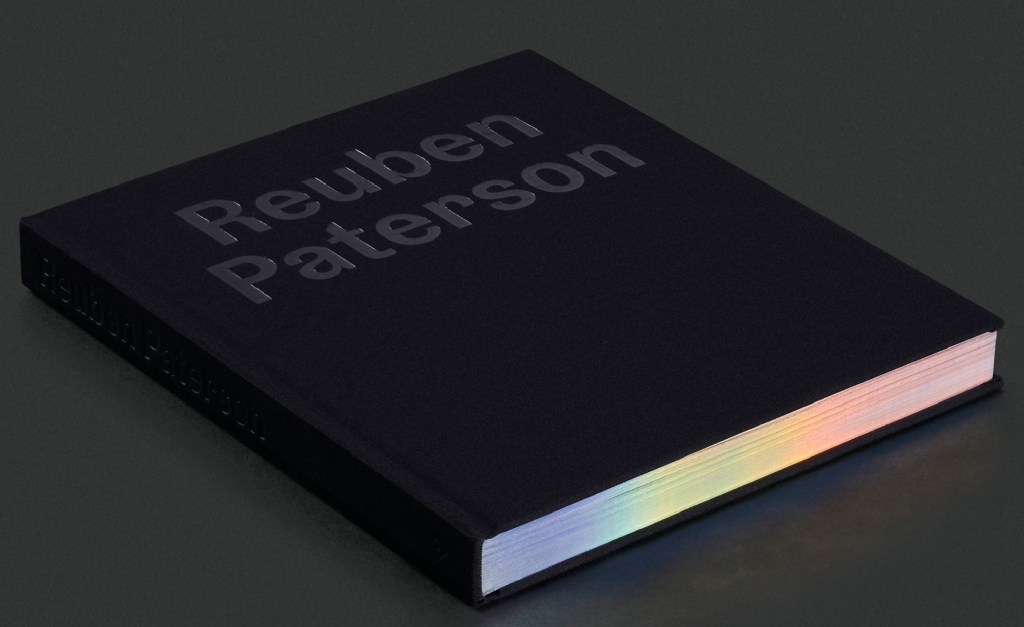
City Gallery Wellington has recently published a stunning monograph on Reuben Paterson  which follows on from his exhibition Reuben Paterson: The Only Dream Left  which was exhibited at the gallery last year. ​

The book is lavishly illustrated with works covering his thirty years of art practice and features writings by Witi Ihimaera, curator and writer Geraldine Barlow, and the exhibition’s curators Aaron Lister and Karl Chitham.

Reuben Paterson,  Pounamu  and The Jade Cat

There are over 100 full colour illustrations as well as some ”booklet” inserts which captures the unique range and depth of Paterson’s art from his early glitter paintings to his recent major sculptural commissions.

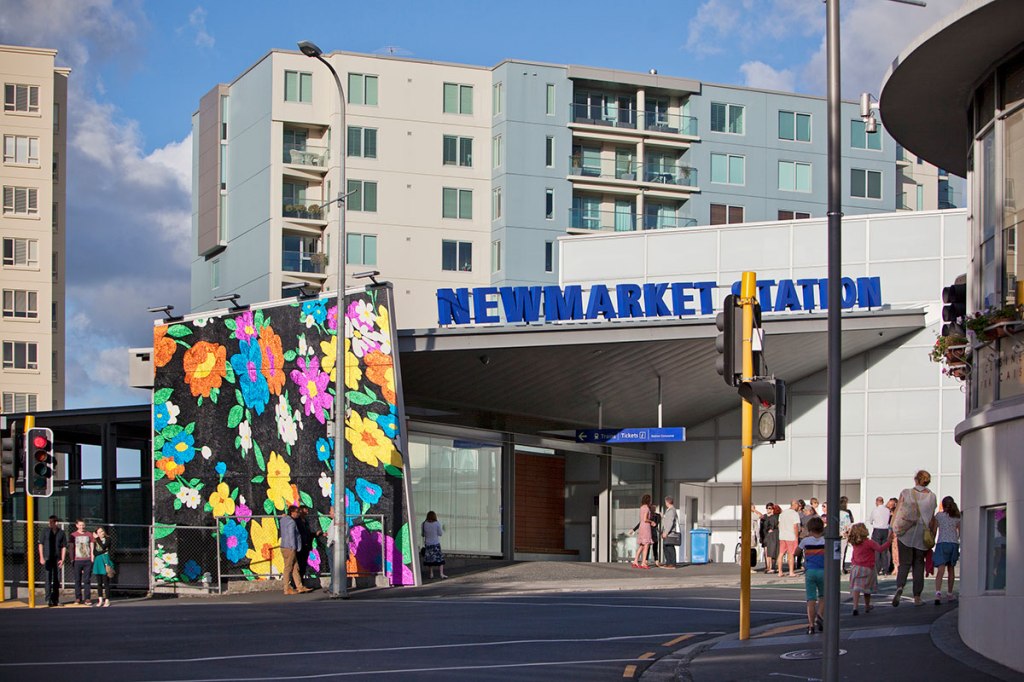
There are images of several of his monumental works such as the “Get Down Upon Your Knees”, the 8-metre square work shown at the Asia Pacific Triennial in Brisbane as well as the mural work “Andale, Andale” at Auckland’s Newmarket Railway Station. There are also the “The Golden Promise” at the Massey University Albany campus as well as the controversial ”Freedom Flowers”, the ANZ cash point terminal on Ponsonby Road commissioned for the 2015 Pride Festival.

Reuben Paterson,  “Andale, Andale” Auckland’s Newmarket Railway Station.

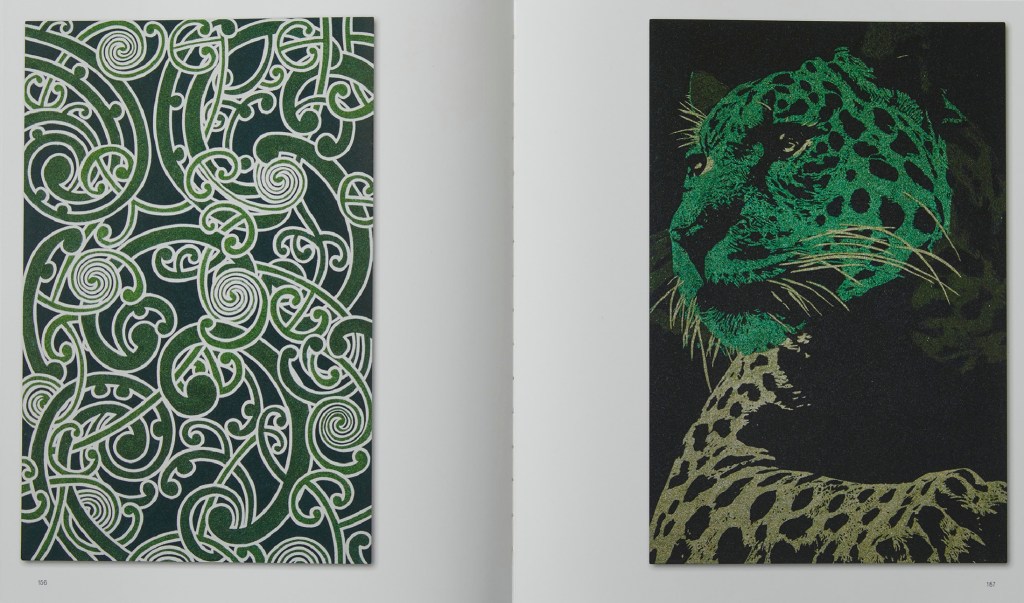
His use of glitter and diamond dust on canvas or paper of stereotypical  images are manipulated and transformed by his individual treatment of colour, design, pattern and texture. His images often referenced botanical, op art, or Māori iconography along with images which are commercial or kitsch. The sparkling surfaces create an ambivalent visual description with works such as the “Take my hand and off we stride” featuring the idyllic Pacific Island palm tree landscape.

Underneath the seductive images there are more complex ideas  and viewpoints which take the viewer into the artist’s view of nature, the tangible and the symbolic as well as his own whakapapa referencing his Ngati Rangitihi, Ngai Tuhoe, Tuhourangi and Scottish descent.

Paterson’s political or social messages are also referenced in some of the works where he has used animal images  such as the tiger in “Blessing”, conveying the sense of power, sexuality and fear. These works were motivated by his efforts to highlight the inequality of the ‘gay panic’ provocation defence for murder that was in place before a repeal of the Crimes Act in 2009. 

A culmination of many of his ideas and technical expertise has been “Guide Kaiārahi”  the major commission for the Auckland Art Gallery. The idea for the ten-metre-high waka which is made from hundreds of shimmering crystals, originated in the legend of a phantom waka that appeared at Lake Tarawera ten days before the eruption of Mt Tarawera in 1886. Combining references to natural and supernatural realms, the sculpture draws upon Māori cosmology and creation narratives.

Reuben Paterson, “Guide Kaiārahi”   (detail)

The book shows the extent of his influences and interests apart from his use of cheesy imagery –  Dutch still life painting, elements of Greek and Roman art, Op art and Rorschach patterns. The essays also reveal some of his interests in scientific, political and social ideas along with the spiritual aspects of his work.

Nature and botanical subjects are central to the artists life and many of the artist works  His father was a landscape gardener and he has a garden himself which can be seen as an influence on his work with its emphasis on colour, seasons, birth and transformation.

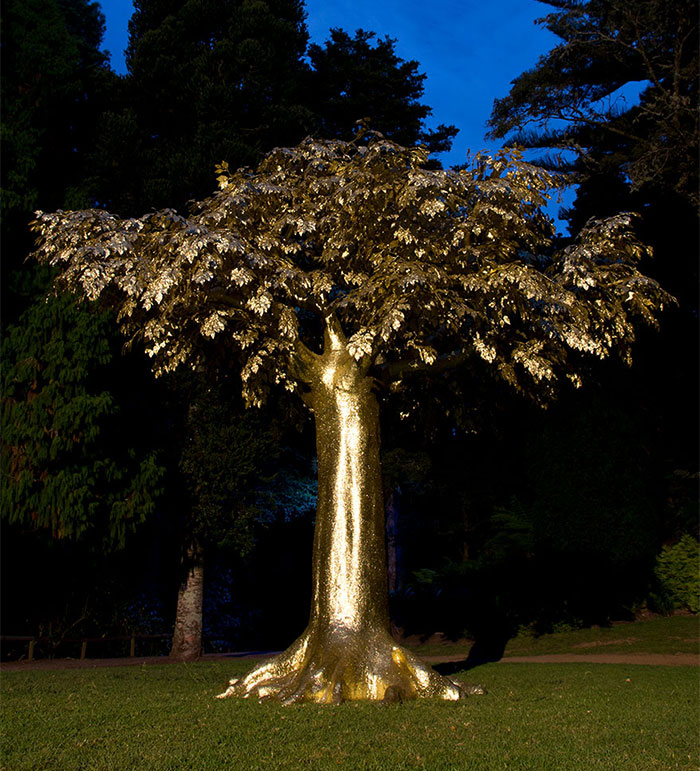
One major work which focusses on Nature is “The Golden Bearing”, a life size golden tree which links to the various emblematic trees over history, from George Fraziers “The Golden Bough”, Eastern and Mayan ideas of creation as well as that of Maori.

Reuben Paterson, The Golden Bearing

As Witi Ihimaera says of the work “In Paterson’s garden the tree is a promise of the legacy of nature for a humankind that appears hellbent on destroying the planet. It is an achingly awe-inspiring way point from which we can orient ourselves to a future if we wish it to become a paradise regained rather than lost”.

The book itself is an elegant and lavish production with designers Extended Whānau ensuring that Paterson’s work is presented in a way which allows for an appreciation and understanding  of his paintings and sculptural work.

The images and texts manage to not only show the development of the artist’s work but link the poetic, the political and the personal to show an artist who is deeply committed to exploring the many threads which make up contemporary New Zealand culture.

To subscribe or follow New Zealand Arts Review site – www.nzartsreview.org.

The “Follow button” at the bottom right will appear and clicking on that button  will allow you to follow that blog and all future posts will arrive on your email.

Or go to https://nzartsreview.org/blog/, Scroll down and click “Subscribe”

Categories
Reviews, News and Commentary

“Beyond Words” : music to promote unity and peace

John Daly-Peoples

John Psathas

Auckland Arts Festival

Beyond Words

New Zealand Symphony Orchestra

Auckland Town Hall

March 10

John Daly-Peoples

The New Zealand Symphony Orchestra joins with Aotearoa New Zealand’s Muslim communities and acclaimed international artists to present a unique concert experience at the  Auckland Arts Festival in March.

“Beyond Words” is a special collaboration to promote unity and peace through music and to honour the lives lost and changed forever in Ōtautahi Christchurch on 15 March 2019.

Conducted by Fawzi Haimor featuring powerful Moroccan vocalist OUM and Cypriot/Greek oud virtuoso Kyriakos Tapakis, the NZSO performs the New Zealand premieres of works from American Valerie Coleman, Iranian Reza Vali,  Estonian Arvo Pärt and the world premiere of a new work from renowned Aotearoa New Zealand composer John Psathas.

Psathas’ Ahlan wa Sahlan, composed in collaboration with OUM and Tapakis, uses the Arabic welcome to let people know they are in a place where they belong. Finding inspiration in a quote promoting peace, love and forgiveness from terror attack survivor Farid Ahmed’s memoir Husna’s Story, Psathas, OUM and Tapakis have fused together musical styles from Eastern and Western cultures in Ahlan wa Sahlan.

Psathas has established an international profile and receives regular commissions from organisations in New Zealand and overseas including  fanfares and other music at the  opening and closing ceremonies of the Athens Olympics.

This work has been created with guidance from The Central Iqra Trust and communities across Aotearoa New Zealand.

Vali combines Western orchestration with Persian style for the New Zealand premiere of Funèbre. Coleman’s Umoja, Swahili for ‘unity’, was the first work by a living African American woman premiered by the Philadelphia Orchestra. Pärt’s Silouan’s Song is a powerfully spiritual and meditative work.

Vocalist Abdelilah Rharrabti, vocalist and daf musician Esmail Fathi, and saz player Liam Oliver from Ōtautahi Christchurch’s Simurgh Music School, also join the Orchestra to perform traditional music of the Middle East.

“It is not often one has the opportunity to offer a message of solidarity, love, and compassion through one’s artistic work,” says Psathas.

“This is a rare gift from the New Zealand Symphony Orchestra, and I am even more fortunate to be able to share this creative journey with two fellow artists: OUM and one of Greece’s most celebrated oud performers, Kyriakos Tapakis. Together we are creating a musical message of welcoming – Ahlan wa Sahlan – a greeting used to tell someone that they’re where they belong, that they’re a part of this place and they are welcome here. It’s a way of saying ‘You’re with your people’.”

Alongside the concerts are a series of free community engagement events in Christchurch, Wellington and Auckland in collaboration with Muslim communities and Unity Week, the official commemoration to be held from 15 March.

In each city there will be a community panel discussion with Beyond Words artists about the project. In Christchurch the events include a workshop by the Simurgh Music School, where the public can experience traditional instruments from the Middle East and Islamic world, a spoken word workshop and Share Kai Share Culture, run by InCommon and Mahia te Aroha, both founded in Christchurch in response to 15 March 2019.

In Auckland Town Hall a special calligraphy exhibition will feature works created by distinguished calligraphy artist Janna Ezat. In the Islamic world, Arabic calligraphy is both an art form and an expression of devotion, identity, and cultural heritage. The exhibition includes a powerful piece dedicated to Janna’s son Hussein Al-Umari, commemorating his bravery, and honouring his legacy in the aftermath of the tragic attack.

Beyond Word also performed in Wellington in association with the Aotearoa New Zealand Festival of the Arts (March 9) and at Christchurch (March 7).

To subscribe or follow New Zealand Arts Review site – www.nzartsreview.org.

The “Follow button” at the bottom right will appear and clicking on that button  will allow you to follow that blog and all future posts will arrive on your email.

Or go to https://nzartsreview.org/blog/, Scroll down and click “Subscribe”