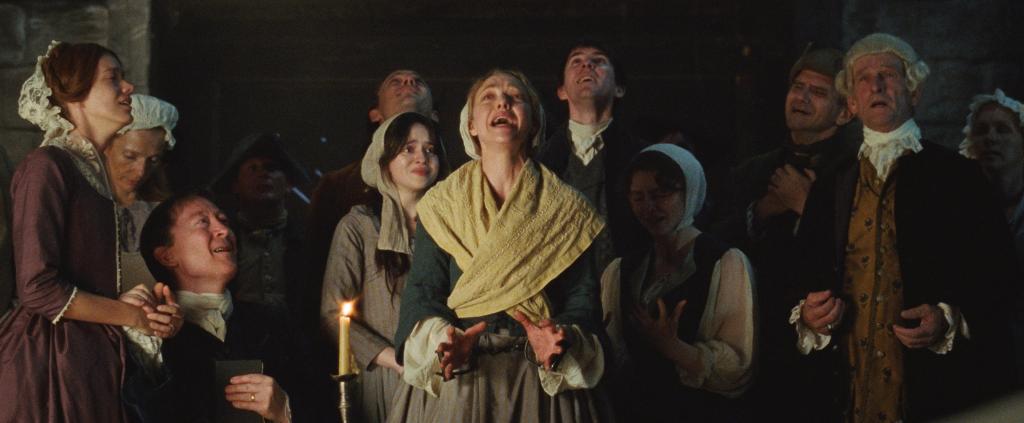
The Testaments of Ann Lee comes with excellent credentials having been written by Mona Fastvold and her partner Brady Corbet, with whom she co-wrote The Brutalist which was based on the life of émigré architect Marcel Breuer. That film was a metaphor for the struggles of an artist in post-war America. Testament follows the life of Shaker founder Ann Lee and is a metaphor for religious and social change in pre and post Revolutionary America
It is an earnest attempt to give Ann Lee her place in history as a major religious figure who endured religious persecution in 18th-century England for her position as a female preacher as well as in America where she and the Shaker movement were seen as unpatriotic pacifists.
The early American Shakers were known for their skill in what is now seen as stylish, minimalist furniture and their approach to simple architecture and there are sequences of constructing buildings and simple objects but not much about the tenets of the religion
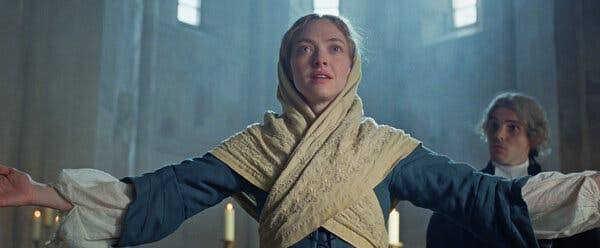
Lee is played by Amanda Seyfried, with Lewis Pullman as her brother William and Christopher Abbott as her husband Abraham, who fathers her four children, all of whom die in infancy. Their deaths probably affected her, contributing to her aversion to marriage and sexual activity, influencing the subsequent Shaker celibacy doctrine.
Director Mona Fastvold is great at meaningful close-ups and handles the dance sequences as if they were only part of this religion/cult which has any merit or meaning. In these dramatic Broadway musical – like sequences there is lot of shaking, shivering, hand clapping and foot stomping ranging from some ecstatic dancing in her early Manchester days where the dancers look to be on acid trips to the more sedate Shaker dances the groups still perform
While the film has obvious good intentions, illuminating the history of Ann Lee and her contribution to American religious history it can also seen a cautionary tale about the dangers of being captured by religious leaders and ideology. The dangers of believing what self -declared prophets tell you, believing in visions and biblical interpretations. The film demonstrates how people can be sucked into religions or cults based on false information and interpretations.
Maybe audiences know about the revolt and reforms of religion in eighteenth century. Europe and the growth of alternative faiths and religious leaders such the Methodist Movement with John Wesley and early feminists like Selina Hastings, the Countess of Huntingdon, but the film provides little about what Ann Lee was reacting against.
While we see Ann Lee commanding groups of people we don’t get a sense of her charisma or oratory skills and her occasional visions of deities and paradise make her out to be more of a charlatan than prophet.
The big unanswered question looms over all the intense close-ups and hectic dance sequences is What is Ann Lee’s testament? What is her way to save souls. – celibacy, public acknowledgment of sins and misdeeds as well as dancing – I could go with the dancing.
The Testaments of Ann Lee comes with excellent credentials having been written by Mona Fastvold and her partner Brady Corbet, with whom she co-wrote The Brutalist which was based on the life of émigré architect Marcel Breuer. That film was a metaphor for the struggles of an artist in post-war America. Testament follows the life of Shaker founder Ann Lee and is a metaphor for religious and social change in pre and post Revolutionary America
It is an earnest attempt to give Ann Lee her place in history as a major religious figure who endured religious persecution in 18th-century England for her position as a female preacher as well as in America where she and the Shaker movement were seen as unpatriotic pacifists.
The early American Shakers were known for their skill in what is now seen as stylish, minimalist furniture and their approach to simple architecture and there are sequences of constructing buildings and simple objects but not much about the tenets of the religion
Lee is played by Amanda Seyfried, with Lewis Pullman as her brother William and Christopher Abbott as her husband Abraham, who fathers her four children, all of whom die in infancy. Their deaths probably affected her, contributing to her aversion to marriage and sexual activity, influencing the subsequent Shaker celibacy doctrine.
Director Mona Fastvold is great at meaningful close-ups and handles the dance sequences as if they were only part of this religion/cult which has any merit or meaning. In these dramatic Broadway musical – like sequences there is lot of shaking, shivering, hand clapping and foot stomping ranging from some ecstatic dancing in her early Manchester days where the dancers look to be on acid trips to the more sedate Shaker dances the groups still perform
While the film has obvious good intentions, illuminating the history of Ann Lee and her contribution to American religious history it can also seen a cautionary tale about the dangers of being captured by religious leaders and ideology. The dangers of believing what self -declared prophets tell you, believing in visions and biblical interpretations. The film demonstrates how people can be sucked into religions or cults based on false information and interpretations.
Maybe audiences know about the revolt and reforms of religion in eighteenth century. Europe and the growth of alternative faiths and religious leaders such the Methodist Movement with John Wesley and early feminists like Selina Hastings, the Countess of Huntingdon, but the film provides little about what Ann Lee was reacting against.
While we see Ann Lee commanding groups of people we don’t get a sense of her charisma or oratory skills and her occasional visions of deities and paradise make her out to be more of a charlatan than prophet.
The big unanswered question looms over all the intense close-ups and hectic dance sequences is What is Ann Lee’s testament? What is her way to save souls. – celibacy, public acknowledgment of sins and misdeeds as well as dancing – I could go with the dancing.
John Daly-Peoples Arts Writer / Arts Consultant Arts Editor, NZ Arts Review
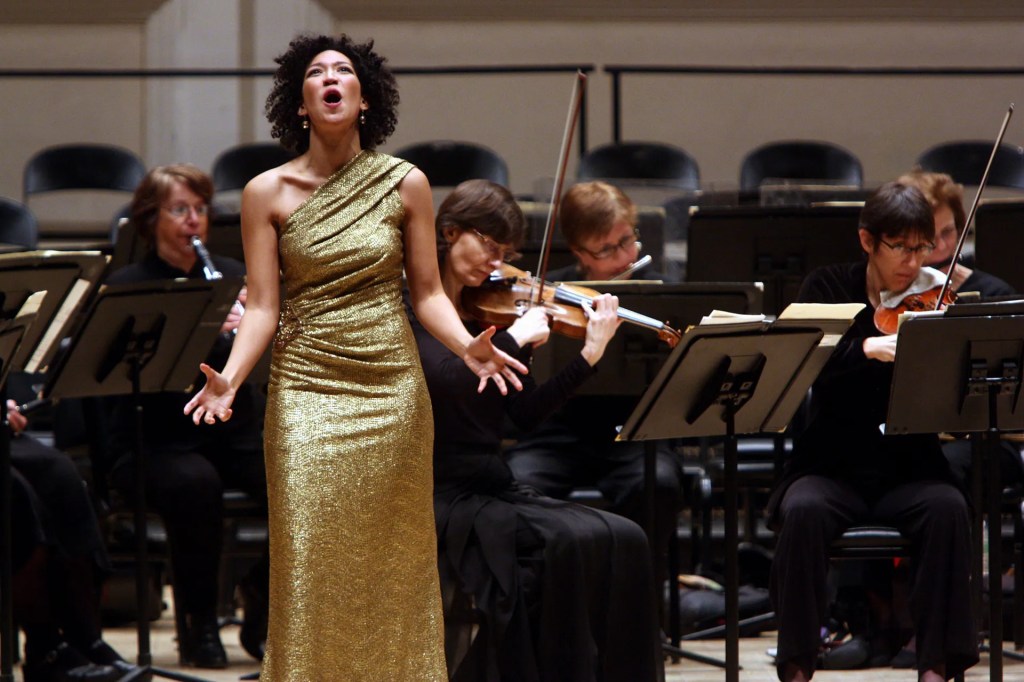
Julia Bullock, Bluebeards Castle, Sincere Apologies
The New York Classic review last year featured a review of Julia Bullock by Rick Perdian
“It would have once been almost impossible to imagine a vocal recital by a major artist with songs by Alban Berg, Bob Dylan, and Rodgers & Hammerstein on the program. These are different times, however, and what once would have been dubious box-office is now perfectly attuned to the times.
Bullock opened the recital with songs by Samuel Barber, whose embrace of Romanticism put him at odds with the more progressive elements of the musical establishment in mid-twentieth-century America. The three songs which she sang—“My Lizard (Wish for a Young Love),” “Nuvoletta,” and “The Daisies”—outlined the wistful nostalgia, zaniness, and embrace of the bizarre that would course through the recital.
As with the Barber songs, Bullock performed songs by Kurt Weill which spanned the composer’s career from his collaboration with Bertolt Brecht in Germany to his Broadway hit, Lady in the Dark.
The outlier was the first, “Complainte de la Seine,” which Weill composed in Paris after fleeing Nazi Germany. This setting, like earlier songs dating from Weill’s collaboration with Brecht, “Ballade vom ertrunkenden Mädchen” and “Song of the Hard Nut,” show the composer at his most hard-edged and bleak. With crystalline tone, perfect pitch, and a delivery void of sentiment, Bullock sang of cadavers resting at the bottom of the Seine, the Marxist revolutionary Rosa Luxemburg’s decaying corpse in a Berlin canal, and the calculated transactions that fuel capitalism. With “The “Princess of Pure Delight,” Bullock switched gears, projecting a cool sophistication that evoked the era.
Bullock’s most sublime singing came with Berg’s Altenberg Lieder. Viennese audience’s greeted the songs with such derision in 1913 that Berg never permitted them to be performed during his lifetime. The five songs are settings of enigmatic verses by the poet Peter Altenberg which he sent to friends on postcards.
A substantial portion of the second half of the recital was devoted to songs by Richard Rodger and Oscar Hammerstein. Bullock told the audience that their music had been a part of her life from her earliest years growing up in St. Louis. “Dites-Mois” from South Pacific was the first song that she ever sang in public at the age of ten before an audience of thousands.
The audience was enthralled as Bullock sang some of the greatest hits from The Sound of Music and South Pacific. For the most part, these were straightforward renditions of beloved songs, but Bullock and Brown could be provocative, such as in “You’ve Got to Be Carefully Taught” from South Pacific. Bullock delivered the song’s message with a matter-of-fact directness which was intensified by Brown’s punctuation from the piano.
There were also songs linked to Odetta Holmes,who was known as the voice of the American civil rights movement in the Sixties. Bullock sang Bob Dylan’s “Masters of War” with a penetrating, unflinching directness. Odetta’s arrangement of “Going Home” and Elizabeth’s Cotten’s “Freight Train” followed.
Bullock ended the recital with Converse’s poignant ballad “How Sad, How Lovely,” a meditation on the loveliness and sadness of life.”
Bluebeards Castle
This version of Bluebeards Castel was previously performed in Wellington and Christchurch in 2023. Elizabeth Kerr reviewed the work in Five Lines.
“The dramatic trajectory of this contemporary production of Bluebeard’s Castle is vivid and deeply moving from its opening bars till the passionate conclusion. ..For me, its greatest wonder is the faithful use of the original text and music to tell a tragic story of today, a superb creative reimagining of Bartók ‘s only opera.
Bartók wrote Bluebeard’s Castle in 1911. He was 30 years old. The Gothic work, with a libretto by the composer’s friend, poet Béla Balázs, was based on the French folk tale published in the 17th century by Charles Perrault.
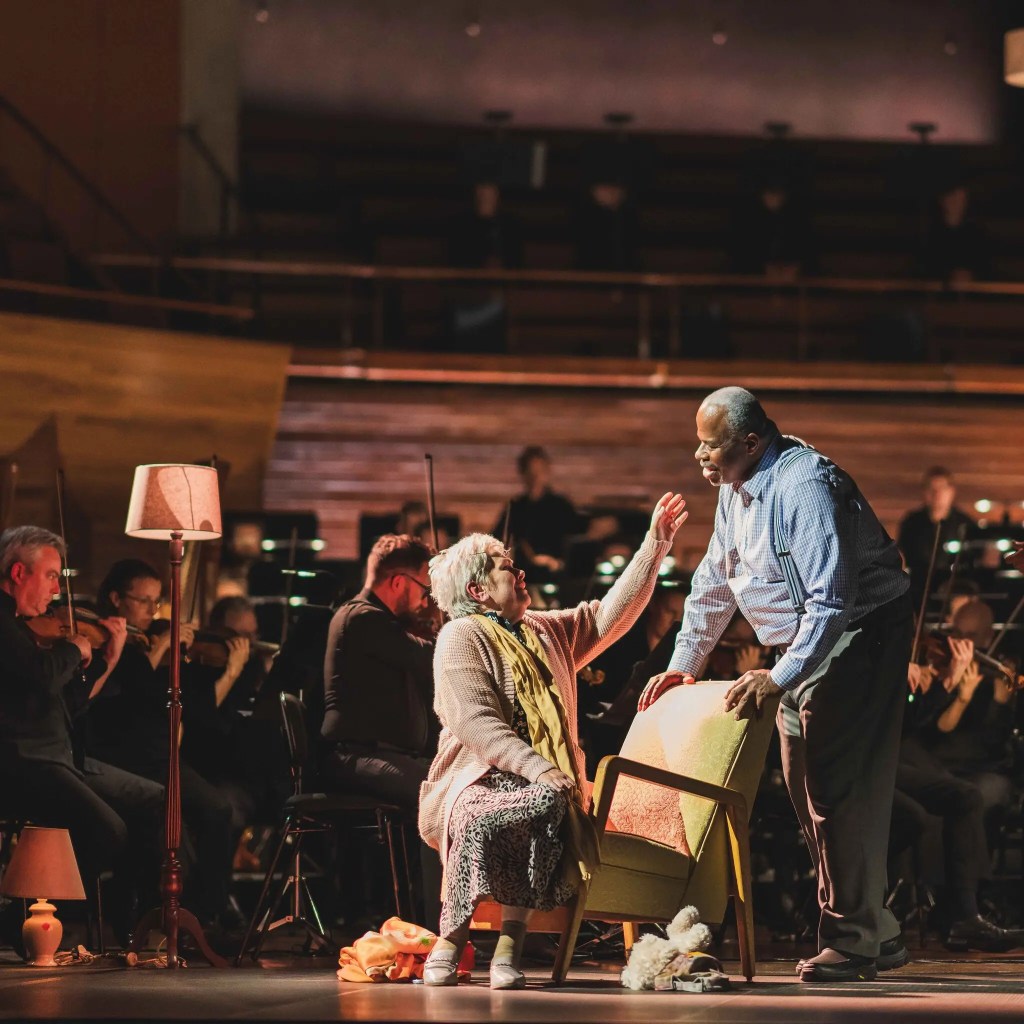
The opera has a singing cast of two with a full orchestra. The role of Bluebeard is sung in this New Zealand performance by US baritone Lester Lynch, and his wife Judith by UK soprano Susan Bullock. As the semi-staged production opens, the strings of the NZSO set a rather creepy mood. The couple arrive onstage, Judith appearing confused and troubled. “If you left me, I’d be lost and all alone here,” she sings.
In the original, Judith was Bluebeard’s very young wife, brought to his cold, dark castle and confronted by seven locked doors, which open in turn throughout the opera, revealing their disturbing contents. The locked doors are replaced by a suitcase, and from it are drawn contents representing memories of Judith’s life and their relationship.
Bluebeard’s Castle is often described as a Symbolist opera and symbolism remains strong in this production. ..This is the writing of a young Bartók, strongly influenced by Romantic composers and Debussy, and his score, including the challenging and chromatic vocal lines, is beautiful, colourful and lush. It is also highly dramatic and alongside the theatrical symbolism are meaningful musical motives, most noticeable the “blood” motive of a minor second, a semitone, appearing whenever Judith, remembering past losses and fears, refers to blood.
A final “door” brings the impassioned denouement. “When this door is opened, Judith, you will find my wife there waiting”, sings Bluebeard, handing her a mirror from the suitcase. The poetry in the libretto really blooms here, as Bluebeard sings of his former wives, the young lover, wife of the dawn, the young wife of his “noontime”, the mother, wife of his evening.
The younger wives return, also holding mirrors, and as Bluebeard sings of each, Judith offers a repetitive and sad little refrain from her chair. “Ah, compared to her, I am nothing.” But she is, he tells her, his wife of the night. Musically, Bartók brings the opera to its big romantic climax. “Eternal beauty!” sings Bluebeard. “Now, all turns to darkness.”
The mood in music and staging fades quietly. Tenderly, Bluebeard brings Judith a cup of tea. The lights also fade to blackness.”
Sincere Apologies
“Sincere Apologies” is an Australian production with relevance to New Zealand with a recent review of the production in “My Melbourne Arts” praising the low key, audience based play.
“Sincere Apologies” begins unassumingly: an envelope is handed to an audience member and it is passed from hand to hand. No words are exchanged, no introduction is made, no actors are present. It’s just a low-key game of “pass the parcel” that opens the door to a chorus of voices and a world of regret.
Fifty real apologies are sealed inside fifty envelopes that are distributed to the audience. These span from 1990 all the way into the future, each one factual and collected from documented expressions of remorse by public figures, private correspondence, and personal moments by the shows three creators, Dan Koop, Jamie Lewis and David Williams. One by one, in numerical order, audience members step up to a microphone and read them aloud.
Some are weighty and political – a Prime Minister’s apology to the Stolen Generation or BP’s statement following an oil spill. Others tap into pop culture’s hall of infamy – like Kanye West and Taylor Swift. Then, there are the apologies from the creators themselves, adding a deeper intimate layer to the mix. There are no actors in Sincere Apologies. No one introduces the show or welcomes the audience. Even at the end, when we clap, it’s not for performers on stage, but for each other, and the three tech staff quietly stationed in the corner. The audience is the cast, and in that shared vulnerability something almost communal forms. Strangers stumble over words, laugh nervously, or surprisingly choke up. You start to listen differently, not as a spectator, but as part of a temporary community bound by confession.
As the reading unfolds, you find yourself unexpectedly drawn in, paying attention not only to the words themselves, but to the way they are spoken. Stripped of power, fame, and PR polish, these words take on new meanings. When random people speak them, they can come across as absurd, hollow, or even heartbreaking and genuine. The performance asks: what happens when we remove status from an apology? Can tone, delivery, and intent make any acknowledgment register as authentic – or insincere?
A carefully crafted score heightens the work, as subtle sound effects and rhythmic pulses heighten particular instances, building a hypnotic rhythm that pulls the audience into this collective act of reckoning.
By the end, this experience is strangely moving. There’s humour and absurdity, yes, but there is a weight to hearing the people in the room attempt to make things right. It’s exhausting and cathartic, and a reminder that “sorry” is both universal and endlessly complicated.”
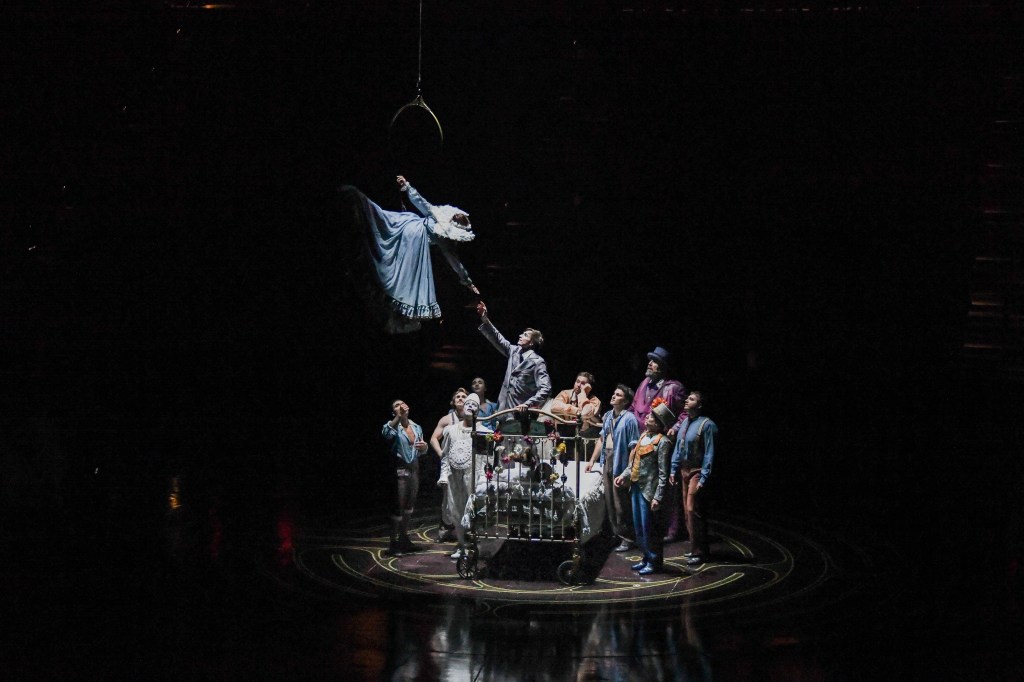
Cirque du Soleil shows are always elaborate gymnastic displays, but they are always imbedded with a story or narrative which looslye holds all the characters and the events together. There is also a circus elemnst running through the shows, an element which recalls the mystery and delight of childhood and the surrealism of adult dreams.
The story line for “Corteo” is that we are welcomed to the last minutes of the life of the famous clown Mauro and are then present as he reminiscences about his great days of his life on stage. He lies in his bed and his former colleagues visit him, bringing back memories and some of his acts which are repeated as the angles hover over his death bed.
After establishing the reason for being there the evening takes on a rather casual approach to the narrative which we are reminded of occasionally with angels making their appearance and in one scene providing Mauro with a set of wings and then, with a nod to the film ET Mauro also rode a bicycle up high, above the stage
The cast of circus characters that parade before Mauro are reminiscent of the closing scene in Fellin’s 8½ – a mixture of standard circus folk – ringmaster, clowns and acrobat along with the characters from Commedia dell’Arte.
This show, is one of the earliest of the Cirque shows, originally made in 2005 and since then has been performed to more than 12 million people and still has all the elements which make the shows impressive – world-class acrobatics, whimsical romanticism, some clever buffoonery and comedy all overseen by the angels floating on high.
Corteo, Cirque Du Soleil, Credit: Johan Persson
Unlike most other Cirque show which are set in a big tent the audience was seated on either side of the stage which featured amazing displays of ability and agility where technical expertise and extravagant design were woven together with fabulous costumes, amazing lighting, humour, and enchanting live music. The musicians tucked away at the sides of the stage displayed not only great musicianship but were remarkable performers themselves as they negotiate their various instruments – violin, drums, keyboard, bass, percussion and guitar.
Some of the performances were more spectacular than others with some not given the attention they deserved such as the Crystal Balls sequence where the subtly of the performance was probably lost on most. But there were more dramatic routines such as the young woman suspended from five balloons who floated around Spark Arena being helped by dozens of audience hands as drifted and bounced giving all her helpers a “thank, I love you”.
All the routines had something to offer whether the languid female performers swaying from the chandeliers, the beds transforming into trampolines where the performers didn’t try for height but rather split-second timing and there was the traditional balancing act which showed real agility as well as looking as though the body was being turned in on itself.
There was even a slightly confusing small theatrical work telling the Romeo and Juliet story which seemed to be closer to a Punch and Judy show full of the knock about comedy.
Then there was the clever duet between the Ringmaster and musicians with the Ringmaster whistling a Mozart melody before going into a ferocious duel with the violinist, backed by the orchestra.
This is a show packed with drama, comedy, colour and surprise to delight the whole family.
Based on the book by Trent Dalton Additional Writing and Story: Trent Dalton and Fiona Franzmann Adaptor: Tim McGarry Choreographer & Movement Director Nerida Matthaei Associate Director Ngoc Phan Set & Costume Design Renee Mulder Lighting Design Ben Hughes Video Design and Cinematographer Craig Wilkinson Composition & Sound Design Stephen Francis
Civic Theatre
October 17
Reviewed by John Daly-Peoples
Before heading off to see Trent Daltons “Love Stories” a quick survey of what love is was in order. First stop would be Shakespeare, and he almost nails it with
“Love looks not with the eyes, but with the mind” from a Midsummers Night Dream
The audience filled the Civic Theatre and on stage all we see is a panorama of the audience looking back at ourselves. All of those people who know about their own encounters with love. They are the mass of humanity who are hoping to find out the truth / answer to the eternal question. – What is love?. And each one of them knows what it is. Each one can tell their own story
And then scrolling across the screen are the answers we could give, all provided by previous audience members
LOVE IS
Lasting the distance. Even when you think you can’t do it.
The perfect coffee with crema on Sunday morning
Saying sorry and meaning it
Being confident in the silent moment
Magical; poetic, sometimes messy
And dozens more some profound, some very personal, some cliched
Trent Dalton spent two months in 2021 gathering stories on his 1960’s blue Olivetti typewriter, on a prominent street corner in Brisbane’s CBD. He had sign which read “Sentimental writer collecting love stories. Do you have one to share” Speaking with Australians from all walks of life, he received hundreds of them.
The show opened with Jean- Benoit and his drumming as he introduced the show and it closes with his taking us backstage through to a simple doorway which led us back out of the theatrical world of make believe into the real world.
The dozen actors who swarmed the stage enacting the stories, some lasting a few minutes, other only a few brief moments created a topography of love with its range of, stories, anecdotes and remembrances.
Some of the stories are profound, some of them flippant, some of them might have been written by the writers at Hallmark Cards. Other could have been written by your partner, boyfriend, girlfriend.
Director Sam Shepheard wove the various stories together, the actors changing guises as they connected and parted. Sometimes cameras made their faces balloon up large on the screen as they addressed the audience. Many of the stories are moving, rich in compassion, witty, and full of allegories.
The entire cast created impressive range of characters and encounters and there were some clever sequences – a bit of a Juliet speech, a quote from Emily Dickinson, a scientist explaining about technical aspects of dopamine
Holding much of the performance together was Jason Klarwein (the Writer / Husband) and Anna McGahan (The Wife) where the actual world of the couple seems at odds with his accounts of the people from the street with their passionate, flawed and intermingled lives.
And there are several life stories all woven together such as a film segment delivered by Joshua Creamer, a barrister and human rights activist who not only tells his personal story but also the story of land rights, family, and his identity as an Aboriginal man.
There is also the Asian woman Sakuri Tomi whose story is trapped inside a nightmare is told in several vignettes.
The video montages combined with live video feed help create a dynamic flow and the choreography of Nerida Matthaei adds to this dynamism which works brilliantly in sequences like the State of Origin game.
While it’s not in the play they could have used Marilyn Munroe phlegmatic quote about love – “If you can make a woman laugh, you can make her do anything.
Great to see you last night. I think we last met when you’d just moved up to Wellington and I was still milking in the ‘naki after our African adventure. Then you moved again. Up north.
After Glenda pretty neatly convinced you both to take that Takapuna joint with a sea view, you never stopped grumbling and grouching about the place. For years. Y’know – its humidity, traffic, its prices, its pretentious people and so on. Not to mention its upsy-downsy football team of course. As for natural disasters, lockdowns, etc … I won’t go on.
But, bluddy hell mate, since then it’s almost like you’ve had what that Ayckbourne mate of yours would call a car-thar-sis. Family disruptions aside, it seems that you’ve stopped moaning and fallen in love with the place. Auckland! Never thought I’d see the day.
Blow me down, you seem to have become an advocate for just about everything and everyone. From Auckland’s buses to its ferries, from its oddball characters to its libraries. To lots of its bits too – from Riverhead to Moolfud even if the grandkids are your excuse to explore lots of Maccas and KFCs.
Quite honestly, mate, it seems like you’ve discovered some sort of extra-special non-energetic energy in your post-Covid life. Part of me thinks you have somehow grown an extra leg. Or at least grown up. And good on ‘yer.
Never even dreamed I’d see such a contented, reflective and accepting Dickie. I can see you now sitting on that playwright feller’s beach gazing contentedly at Rangitoto.
Nice looking apartment too and that ever-helpful sheila deserved the flowers as well.
Probably a few lessons in there for me. Perhaps, after 50 years – yes FIFTY years – it’s time for me to stop getting irate about suss hotel food, Mendela, Pienaar and 747s.
Yes it was pretty definitely good to see you again. Might even visit sometime.
The “Follow button” at the bottom right will appear and clicking on that button will allow you to follow that blog and all future posts will arrive on your email.
What are we going to do without Roger Hall? Is this really the end of a theatrical era? Will regional theatre companies collapse?
These are some of the questions which theatre lovers, theatre companies and Creative New Zealand will be addressing over the next few years.
With the retirement of Roger Hall from playwriting New Zealand theatre scene will be dealt something of a body blow.
But those questions and their answers are for next week, next year. In the meantime, we have another Roger Hall play, probably his last production with “End of Summer Time.”
With his latest play Hall gives a nod to one of the important milestones in New Zealand theatre history, Bruce Mason “End of the Golden Weather”. Even the publicity material features images of Rangitoto and Takapuna Beach which was the site of Masons play.
The play charts the problems of older people thrust into a new social environment as well as discovering the joys and drawbacks of living in a new town.
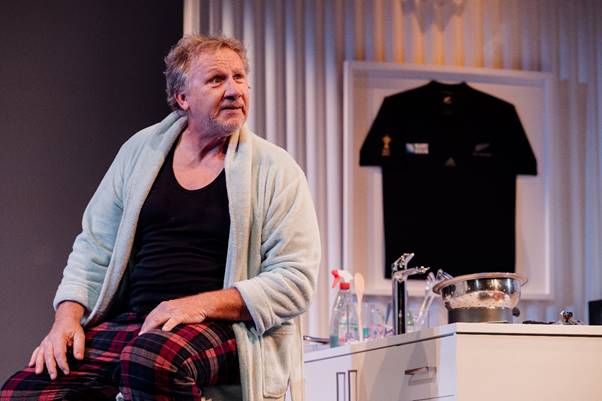
We have met Dickie Hart before in two of Halls plays “C’mon Black” and “You Gotta be Joking”. Hart has moved to the big smoke from Wellington, moving into an apartment on the North Shore.
Dickie (Andrew Grainger) is confronted by a lot of problems in his transition to Auckland and apartment living and Hall has exploited all these situations. Dickie has to manage his wife Glenda’s new interests in the library and yoga and he has to deal with issues around the body corporate and the South African block manager.
He also has to manage more personal issues such as getting a health check from the doctor for his driving license, particularly the cognitive test as well as trying to fill in the census form and its questions on gender. identity
There is a scary account of the Dickie’s-first time visit to inner Auckland, navigating the motorway system, the bridge and the netherworld of the Aotea Centre carpark.
Dickie has moved to Auckland partly to spend time with his grandkids – a task that is which is not all that simple but he manages educational outings to Auckland volcanic cones brilliantly by combining these trips with visits to Auckland’s great dining establishments – MacDonalds, KFC and Subway.
The play is essentially in two halves– pre and post Covid , the second half being a bit more reflective.
Hall has developed a clever approach to his characters and their comments on life politics and relationship, a style somewhere between the misogynistic and woke, it’s a tenuous area but Hall negotiates it skilfully and Andrew Grainger pulls it off with a breezy, nonchalant style.
Hall is able to assemble his string of one-liners into a coherent, monologue which acts as political and social commentary of issues of the present day as well as providing a compelling portrait of a typical New Zealand character.
The play is a brilliant and sustained piece of comedy throughout, But at one point play turns into tragedy with a few lines and some convincing acting which demonstrates Halls consummate writing, Quigan’s directorial skill and Grainger’s intelligent acting.
Much of Dickie’s identity is linked to rugby and throughout the play there are mentions of the Rugby world Cup as well as images of Rugby games on the TV which dominated the apartment. The local library also gets a favourable mention as Dickie manages to find a copy of Brian Turners book on Colin Meads
Grainger takes on Roger Halls monologue with an energetic enthusiasm, the conservative cow cocky only just managing to adjust to a new life as he prowls the pared back apartment-cum-prison set designed by John Parker.
As with all Hall’s work this is an engaging play with sparkling dialogue and consummate acting.
The “Follow button” at the bottom right will appear and clicking on that button will allow you to follow that blog and all future posts will arrive on your email.
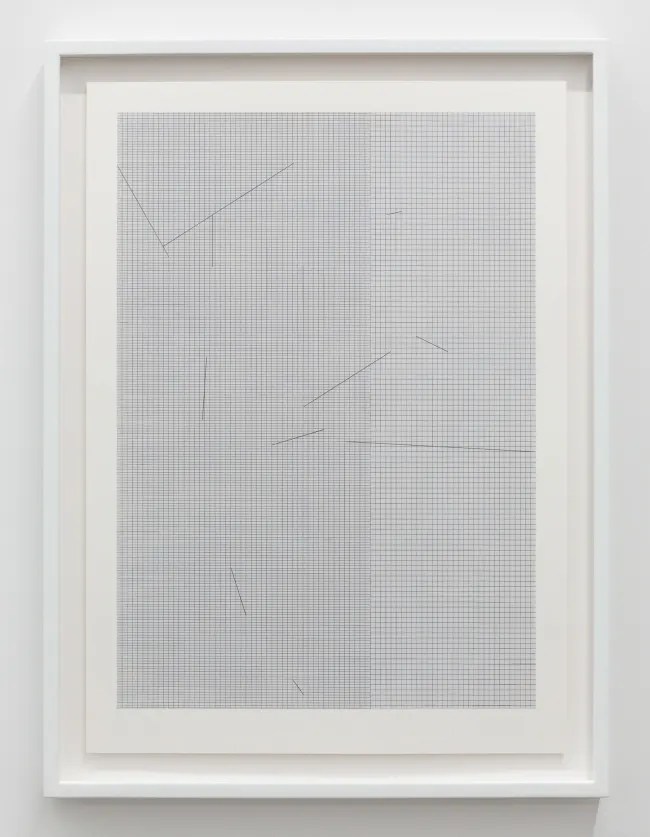
In her latest exhibition ”Concrete” Ruth Cleland continues her interest in the accurate depiction of her environment along with the use of the grid.
Gridding is a technique that has been used by many artists throughout history using horizontal and vertical lines over drawings or photographs for enlargement and transfer purposes.
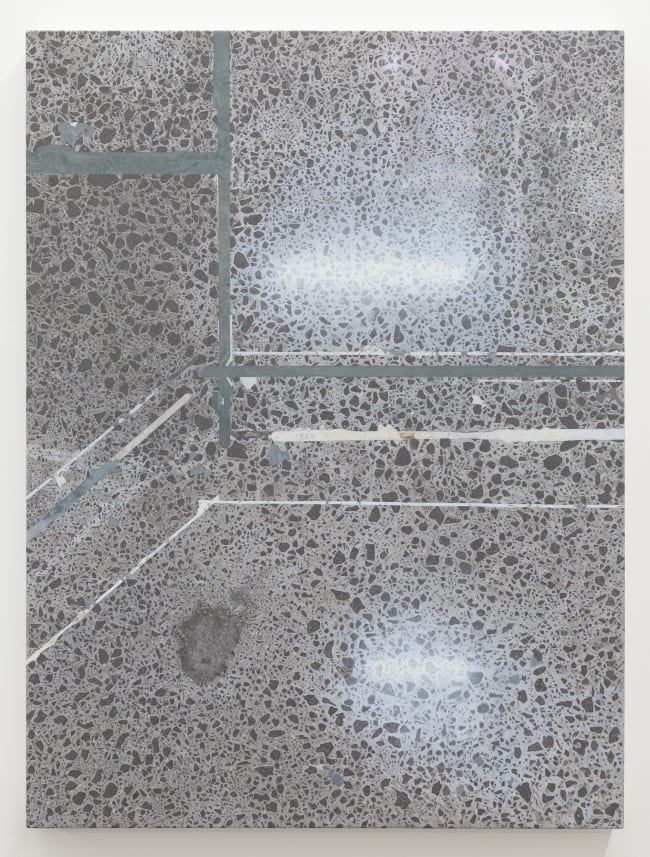
Cleland uses a grid to transfer images of concrete floors onto board using either graphite pencil or acrylic. These images such as “Concrete Floor 3” ($12,8000) show the polished concrete surface with imbedded scoria along with signs of previous uses and marks.
The works are akin to the work of the Boyle Family who randomly chose sites or parts of the body which they then recreated, the completed work offering new interpretations of the environment or body.
These images of concrete floors could be of the floor of the gallery with its various sections of ground and polished concrete laid over the years. They are in fact of a supermarket floor that the artist has previously used as subject matter. One image, “Concrete Path” ($12,800) has a more personal connection being the concrete path outside the artist’s home.
These images of concrete are meticulous in their accuracy but the artist shows her skill in the depiction of both ambient light sources as well as overhead lights.
In some cases there is a companion piece to the photorealistic image as with “Concrete Floor 1” and “Grid / Concrete Floor 1” ($12,800 pair). The lines drawn on the grid have been used here to indicate the striations seen in the drawing as well as light intensity. This recording adds to the enigmatic nature of the work suggesting there is an underlying plan or logic inherent in the image itself which the artist has revealed.
The “Follow button” at the bottom right will appear and clicking on that button will allow you to follow that blog and all future posts will arrive on your email.
La Boheme, The student garret / studio (Act I & IV) Image. Andi Crown
La Boheme
Composer Giacomo Puccini
Librettists Luigi Illica, Guiseppe Giacosa
N Z Opera
Kiri te Kanawa Theatre
Until June 6
Then
Wellington 18 – 22 June
Christchurch 2 – 6 July
Reviewed by John Daly-Peoples
There are no gods or fairies in La Boheme. There are no heroic figures in La Boheme. There are no evil or deeply flawed characters in La Boheme and there are no complicated plots or byzantine machinations in La Boheme.
All the characters we encounter are young and ordinary, all making their first steps into adulthood, living in a bohemian environment, full of possibilities.
This ordinariness is in contrast to many other great operas where characters face great moral dilemmas, battle tyrants or life’s injustices. This is one of the few great operas where we see characters on stage who we can recognize as very much like ourselves – or twenty year old versions of ourselves.
Four of the very ordinary characters live in a very ordinary student flat and the opera opens with Rodolfo, a writer and his artist friend Marcello struggling to create masterpieces while they battle the freezing temperature by burning one of Rodolfo’s plays to keep warm. Colline, a philosopher, and Schaunard enter with food and drink but instead of paying the rent they decide to celebrate Christmas at the Café Momus, where they encounter Marcello’s girlfriend, Musetta who is with her sugar daddy Alcindora.
At the same time Rodolfo meets the frail seamstress Mimi, and they fall in love. But their tender romance is doomed, for Mimi is ill with consumption, and Rodolfo is too poor to help her. Through the opera they also have to confront the other aspects of life and love -jealousy, guilt and despair which comes with that love. As a contrast is Musetta whose love has a wider focus given to Marcello, Alcindora as well as others.
Ji-Min Park (Rodolfo) and Elena Perroni (Mimi) Image. Andi Crown
The slowly dying Mimi (Elena Perroni) who all but whispers in many of her arias gives memorable performances. While she presents a gentle voice often almost whispering while at other times she was able to sustain an expressive intensity as with her “Donde Lieta Usci”aria
Rodolfo and Mimi have a purity of soul which seems to bond them despite their Act 3 questioning of their relationship and this is reflected in their voices. Ji-Min Park (Rodolfo) is able to express an urgency with his rich voice while both Elena Perroni’s voice and demeanor coveys a sensitivity and frailty.
Rodolfo’s three friends also contribute some lively singing with their first act witty dialogue and humorous interchange with the landlord Benoit. Marcello provides some brilliant duos with Mimi and Musetta, notably the third and fourth acts while the philosopher Colline ( Hadleigh Adams) provides an additional concept of love with his aria dwelling on his much-loved coat.
The musician Schaunard (Benson Wilson) contributes slightly to the singing in the opera but his main purpose seems is to always have some money and always has food or wine available as the hedonist of the group and a contrast to Rodolfo.
Emma Pearson (Musetta) Image. Andi Crown
The setting has been changed for Mid nineteenth century to Paris in in 1947 and the bohemian nature of the artist’s lives in seen ibn some huge paintings like those of Pierre Soulages in the studio / garret. The post war date also means the costume designer (Gabrielle Dalton) have been able to give the Musetta and Mimi some contemporary fashion with Musetta being attired in some stylish Dior inspired outfits.
The simplicity and honesty of La Boheme has meant it is always accessible with a story which is clear, immediate and romantic and universal. Director Bruno Ravella and Conductor Brad Cohen have ensured that the story and the characters are brought to life with sensitivity, authenticity and joie de vivre.
Grieg, Norwegian Dances James MacMillan, Concerto for Orchestra ‘Ghosts’ (NZ premiere) Elgar, Enigma Variations
On the programme for the Auckland Philharmonia’ s “Enigma” concert was a newly commissioned work by the Scottish composer James MacMillan. His “Concerto for Orchestra” was subtitled “Ghosts” and had an enigmatic quality to it.
As the composer says of the work, “The music seems to be haunted by other, earlier musical spirits and memories,” These musical memories which creep into the composition can be seen in the reference to Beethoven’s “Ghost” trio along with other musical references – Debussy, Scottish traditional music and an eastern musical hymn.
These musical references emerge from the composition like ghostly figures, sometimes gradually appearing, sometimes unexpectedly while some of the themes overlap. The music is full of juxtapositions and surprises as various instruments and combinations of instruments introduce new themes and spiritedly amplify them.
The lively spirits of the opening were created by dramatic percussion and piercing brass which led to a great chattering of sounds with some eerie conversations between the strings and brass.
Throughout the work there is a sense of the instruments floating around, trying to discover and capture themes which have been lost. This floating, colliding and capturing of elusive themes creates a tension within the piece. The dramatic flourishes of percussion, the sinuous sounds of the strings as well as some jazzy sequences all add to the works restlessness and urgency.
The sounds all helped create a dreamscape of remembered, and reimagined sounds and like some ghostly figures were continually slipping and finally the wispy sounds disappear.
The piece recalls the Shakespeare line from the Tempest
The isle is full of noises, Sounds, and sweet airs, that give delight and hurt not. Sometimes a thousand twangling instruments Will hum about mine ears, and sometime voices
Many of the same musical ideas appear in Elgars “Enigma Variations” where various musical instruments are used to convey impression of people that were close to the composer. The one theme that is probably never heard is the one that represents the composer himself. The variations feature the composer’s own ideas about his friends and close contacts conveying their physical, psychological and spiritual personalities.
The variations with their delightful impressions include variation I said to be of his wife, has a wistful quality and an anthem overflowing with joy but also with s hint of sadness, Variation IX Nimrod with its heavenly sounds and the violas solo in Variation VI – Ysobel
Conductor Karl-Heinz Steffens was able to ensure that each of the portraits was interpreted with the appropriate mood, pace and colour and he seemed to relish both the music and the narratives of the work and his sharp, sensitive gestures had him performing like some grand puppet master manipulating the dozen characters of Elgar’s world.
The opening work on the programme was Grieg’s “Norwegian Dances” and Steffens was able to lead the orchestra through the spirited dances with its changing portraits of the people, the history and landscape effortlessly, taking the orchestra from lethargic to happy and ebullient.







 New Zealand Arts Review