Categories
Reviews, News and Commentary

A Mixtape for Maladies:   Music and  Memories of a War

Ravikanth Gurunathan (Vishwanathan), Tiahli Martyn (Subbalaxmi), Ahilan Karunaharan (Rajan), Gemma-Jayde Naidoo (Sangeetha – past) Image – Andi Crown

A Mixtape for Maladies 

By Ahilan Karunaharan 

Director, Jane Yonge  

Auckland Theatre Company  

Until March 23

Reviewed by John Daly-Peoples

The Sri Lankan Civil War of the latter part of the 20th century provides the backdrop for Ahklan Karunaharan’s “A Mixtape for Maladies” which explores the lives of a Tamil family, who are caught up in the conflict, some of whom are killed or immigrate to New Zealand.

The play explores the reality of living in a different time and culture in a period of tension and transition and we identify and sympathize with the family’s trials of living through a war.

I was jolted back to another reality at the end of the show however. My Uber driver looked South Asian, so I mentioned about the show and how it combined politics and family. He was from Sri Lanka and acknowledged the tragedy of the war and its impact on the country. But his experience was very different from the family I had just witnessed on stage as he had been an air force pilot during the war contributing to the death and destruction, providing an alternative history of the period  

One of the few things that Sangeetha (Ambicka G.K.R.) one of the daughters has brought to New Zealand was a tape recording of songs she loved growing up. Her New Zealand born son, Deepan (Shaan Kesha) finds the tape and plays the songs during his online podcast which trigger personal and political memories for her. 

Through the course of the play Deepan plays these songs and Sangeetha remembers elements of the family’s life – hearing about the war, her and her sister hanging around the store where Anton (Bala Murali) works because he plays all the latest local and international songs as well as songs from the movies. 

Shaan Kesha (Deepan), Ambika (Sangeetha – present) Image Andi Crown

While some of the songs are played on the tape recorder others are sung by various members of the cast, accompanied by a duo (Ben Fernandez and Seyorn Arunagirinathan) playing a variety of instruments – keyboard, Carnatic violin and flute. Ahilan Karunaharan (Rajan), and Bala Murali give particularly fine vocal performances while Tiahli Martyn’s (Subbalaxmi) display of Tamil dance was skillful. These vocal and dance  performances had many of the Tamil audience singing and swaying along to the music.

Among the tunes were Doris Day singing” Que Sera Sera”. “La Bamba” and some Tamil songs. These songs act as a cultural glue which holds the family together but also reminds us that these songs had universal appeal listened to by Sri Lankans as well as New Zealanders at the time.

The play is a mixture of social history, family exploration, cabaret and personal journey with music playing a central role in the play as well as the instruments the family would have listened to the songs on – an old turntable, a hi-fi player and the tape recorder.

The simple set features Dareen and Sangeetha in his podcast studio on one side and musicians on the other, flanking the family home and Anton’s general store.

The exploration by Dareen is initially an innocent enquiry into his mother’s music choices but becomes a journey into Sri Lanka’s history as well as triggering memories of his mothers and her family’s past and the impact of the war on their lives.

To subscribe or follow New Zealand Arts Review site – www.nzartsreview.org.

The “Follow button” at the bottom right will appear and clicking on that button  will allow you to follow that blog and all future posts will arrive on your email.

Or go to https://nzartsreview.org/blog/, Scroll down and click “Subscribe”

Categories
Reviews, News and Commentary

BLACK GRACE TURNS 30

John Daly-Peoples

John Daly-Peoples

‘THIS IS NOT A RETROSPECTIVE’

Auckland Town Hall

Saturday March 22,  7.30

Neil Ieremia is one of Aotearoa’s most astonishing and prolific home-based creatives. His ever-growing body of work has easily and unselfconsciously graced stages in many parts of the world and he is rapidly becoming a one-man export machine. In part this is because of his perfectionism that never forgets the past, stands firmly rooted in the present and yet finds time to seriously address the future – sometimes simultaneously.

His works combine different personal histories, different body shapes and abilities, and different musical and dance backgrounds.

May of his works have a strong musical underpinning that ranges from pop to hip hop, traditional to church, coupled with soundscapes that underscore the everyday concerns of young people today. It leaps from recollections of things past to things that might have been and things that are very much of the present, uses the simplest of props and creates some beautiful moments.

His latest work celebrates the company’s 30th year milestone with ‘THIS IS NOT A RETROSPECTIVE’, the ultimate interactive dance party at the Auckland Town Hall, Saturday March 22

Joining Blackl Grace will be CHE FU and THA FEELSTYLE along with the many amazing friends of Black Grace already down to party including; DJ Manuel Bundy, drag queen diva Buckwheat and the NZ Trio, working alongside a stellar production team, with Artistic Direction by Neil Ieremia, ONZM, sound designer Faiumu Matthew Salapu aka Anonymouz, internationally respected NYC-based lighting designer JAX Messenger, along with the incredible Black Grace Dancers.

But the fun doesn’t stop there, Black Grace has a number of special events planned throughout their birthday year. To be in the know join them at blackgrace.co.nz

Main event 1hr 10min, followed by a party which  will continue after main event until late

Categories
Reviews, News and Commentary

Ray Ching: the huia & our tears

reviewed by John Daly-Peoples

Ray Ching

the huia & our tears

ARTIS Gallery

RRP $80.00

Reviewed by John Daly-Peoples

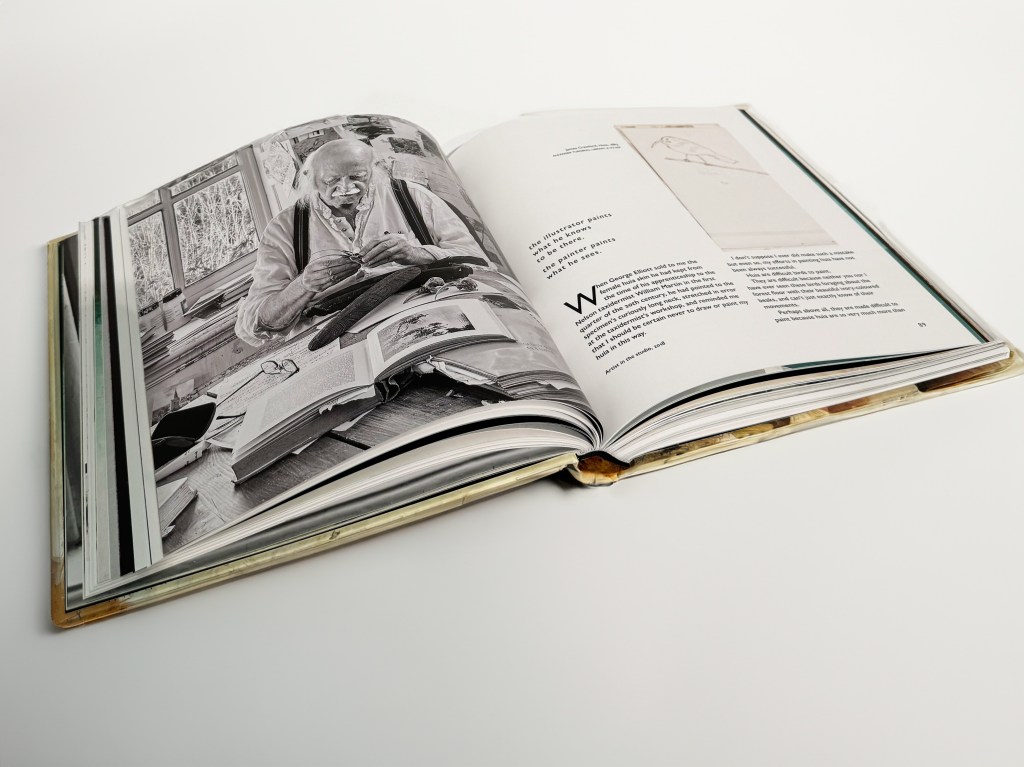
With his latest book “the huia & our tears” Ray Ching has shown once again that he is not just a great painter, he is also a clever storyteller and an expert ornithologist.

The large format book like all his previous publications is impressive with full colour reproduction, Illustrations spread over two pages, great typography and well researched text. It adds greatly to our understanding and appreciation of the huia which disappeared in the early years of the twentieth century.

The book is a remarkable collection of memories, observations, research and reflections on the huia and its place in New Zealand ornithological and national history.

Ching has had an interest bordering on obsession with the huia from an early age noting that he had always had the bird with him, connected by its image on the old New Zealand sixpence.

Included in the book are the artist’s encounters with taxidermists, ornithologists, writers artists and major figures in New Zealand’s history who provide fascinating insights into the history of the huia.

The Kite and the huia (detail)

In many of his previous books notably his Aesop’s Kiwi Fables  he has included moral tales featuring figures from the animal kingdom. In this  book he has included several examples of these including  “The huia and our tears as well as “The kite and the huia”

He includes early reports of the huia by Charles Heaphy, Edward Jerningham Wakefield and Ernest Dieffenbach as well as Walter Buller’s description of the huia where he wrote:

“The Huia never leaves the shade of the forest. It moves along the ground, or from tree to tree, with surprising celerity by a series of bounds or jumps. In its flight it never rises, like other birds, above the tree tops”.

There are a number of other mentions about the bird such as the poem “The Huia” included in Eileen Duggan’ s 1929 publication “New Zealand Bird Songs”  The final verse of this poem reads:

Where is it now that once was high?

Where is it now, where is its wing?

Where is the Prince of the leaves and sky?

Where is the King?

Ching notes that many of the illustrations of the huia are from examples held in museums but only few from recently killed birds which accounts for the lack of dramatic colouring as the plumage has faded.

Ray Ching, Huia (detail)

In this respect he notes that the work of Keulemans who produced the illustrations for Walter Bullers books on New Zealand birds may be the most accurate as he normally received his birds sent by Buller to Europe within a few weeks of their death.

There is a series of portraits of  Māori by Lindauer and Goldie in which the sitters have worn huia feathers in their hair with Ching referencing the use of the bird’s feathers by high-ranking Māori. Included in these portraits are images Pane Watene (Ngati Maru) and Tawhiao Matutaera Te Wherewhere (Ngāti Mahuta).

Gottfried Lindauer, Pane Watene (Ngati Maru)

As well as Chings account of his sixty-year interest in the huia he includes another important text.

The now out of print publication “The Book of the Huia” written by W.J. Phillipps and published in 1963 is reproduced in full providing additional information . In it the author included conversations and correspondence of early settlers and the place of the huia in the lives of Māori.

He also provides details of the bird’s life from birth through its use as a food and its feathers for decoration both for Māori and later Europeans and its wholesale slaughter in the late nineteenth century and inclusion in museums across the globe.

Ching also includes  details of all the huia held in the many New Zealand locations as well as the UK, America Germany

Categories
Reviews, News and Commentary

Matilda the Musical: Fun to Go

Review by Malcolm Calder

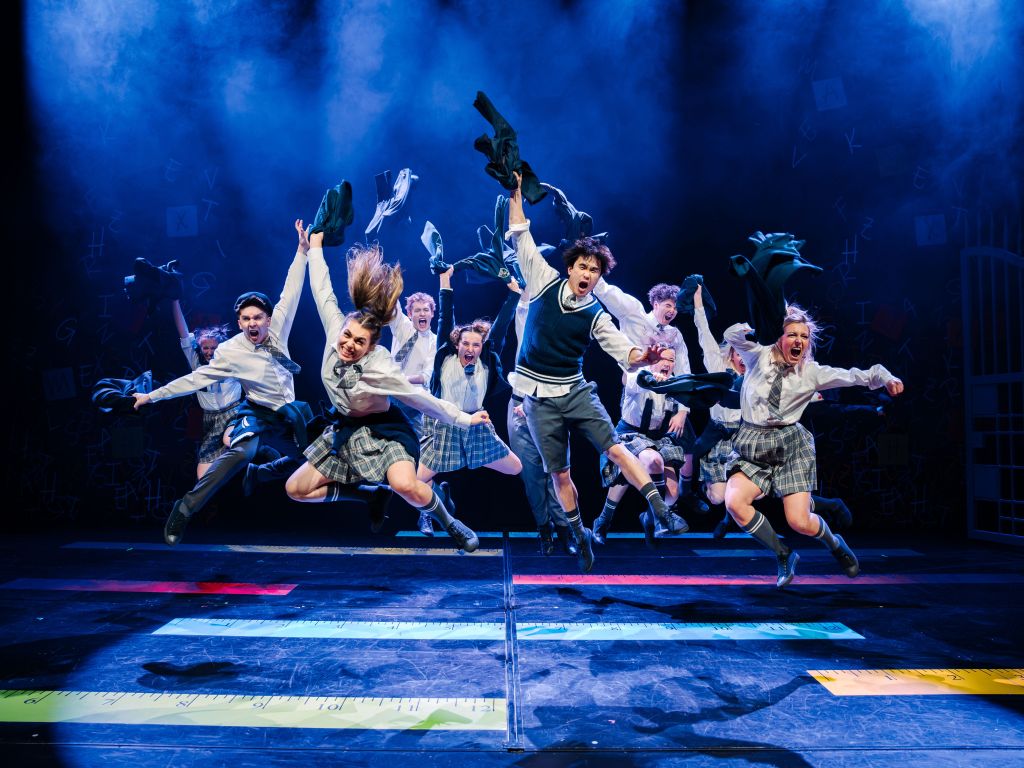
Revolting children in Matilda the Musical

Roald Dahl’s Matilda the Musical

Book Dennis Kelly

Music and Lyrics Tim Minchin

North Shore Music Theatre and Amici Trust

Co-directors Grant Meese and Hamish Mouat

Musical Director Jack Barnard

Bruce Mason Theatre

Until 13 October 2024

Review by Malcolm Calder

 ‘My mummy says I’m a miracle,’ lisps a pampered early-maturer near the top of this deliciously-dark family show.  It is echoed by her diverse classmates and quickly becomes their mantra because, as they well know, even if you’re little you certainly can do a lot.

And they do.  In fact, there are sometimes so many little people doing things in this Matilda, one can readily understand why two directors are occasionally required.  Which might suggest that the principals, the subprincipals, the alternating Maggots, Worms and childrens’ choruses could easily get tangled up a bit.  Not on your life.  They flow as one.  And that is a credit Grant Meese, Hamish Mouat and those who have supported them.  The energy levels never flag and I came out feeling just a tad breathless.

Based on the splendidly grotesque Roald Dahl novel from 1988, and turned over to Tim Minchin and Dennis Kelly prior to its original West End opening in 2010, the music and the songs quickly become owned by the children, the story develops a life of its own and the whole thing becomes a fun-filled romp driven largely by Minchin’s nonsensically-wondrous lyrics as by Roald Dahl’s original.

It tells a tale of the collective power of children and how they address the perceived wrongs of the world they inhabit.  Their ringleader is one Matilda Wormwood – a young girl with the gift of telekinesis. She loves reading, has an unsupportive and cringe-worthy family and ends up at a school run by the terrible Miss Trunchbull.  But, with the help of teacher Miss Honey and town librarian Mrs Phelps, she and the other children overcome all the odds and triumph.  Of course they do.

In the process the character of Matilda’s awful parents are stripped bare; Mrs Trunchball,the butch, granite-faced principal who used to be an Olympic hammer thrower and unleashed by George Keenan-Davies is effectively neutered; the sweet natured Miss Honey – that teacher we all love to love – provides a neat balance that demonstrates not all grownups are nasty. 

As for the children themselves, they are irresistible, stomping and skipping through some marvellous choreography through both this show and through life, demonstrating that growing up is a lifelong endeavour. For kids, yes, but also for the children that we all remain at heart, this is wise, wicked, glorious fun.  Both chocolate cake and the hammer throw will never be the same again.

Of special note is the choreography of Hamish Mouat who manages to sustain multiple overlapping conversations yet never loses sight of a group statement.

Falling neatly into the school holidays, the timing of his show is impeccable.  It is pure, top-end family fare.

Categories
Reviews, News and Commentary

ATC’s Girls and Boys: comic, dramatic, unexpected and gut wrenching.

Reviewed by John Daly-Peoples

Beatriz Romilly

Girls & Boys by Dennis Kelly

Directed by Eleanor Bishop

Auckland Theatre Company

ASB Waterfront  Theatre

Until September 22

Reviewed by John Daly-Peoples

Boys & Girls starts of as a very simple play with a clear narrative, some well-honed quips and some nicely sketched characters. All this is deftly presented by Beatriz Romilly as the sole unnamed central character who we meet standing in a queue at Naples airport where she tells of her misspent youth and her  as drunk / druggy / slaggy phase imbibing  drinks, drugs and a bit of cocaine. She gives us her youthful world-weary evaluation of a few European hot spots – Paris is a dump – Leeds with wider streets. Italians are fucked up but great.

Its also in this queue she meets her husband who endears himself to her by putting two wanna-be models in their place.  He is something of an entrepreneur, buying up old French and Italian furniture to sell in the UK.

Then its fast forward to her and the  children, who do have names – Leanne and Danny. And she gets a new job. She gets to be a PA in a TV company. She is good at her job, rises through the ranks to the point she is getting Baftas.

The first half of the play is pretty bright, the sex is terrific, the children predictable, she manages to thwart a potential rival, it’s a good life.

The latter part of the play is a bit darker. His business starts to falter, she suspects another woman, they are drifting apart. Its at this point she addresses the audience, as she has done a few times before _ “I am if course, just giving you one side”. While she doesn’t tell us what the other side is she comes to the realisation that he is jealous of her rising star while his is waning. The conclusion is devastating and echoes some of the remarks she makes earlier in the play about male violence and she muses in her final lines about the way the world has been made for men should be to stop men.

As well as giving life lessons to the children the woman also imparts them to the audience in her complex role of mother, shrink and life coach.

In charting the trajectory of her marriage she has to confront the puzzle of the man she loves and Romilly is able to convey her changing emotional states from the early,  witty observation to the visceral responeses she has to the final  tragedy. Romilly also manages to transform the physical nature of the woman herself from a statuesque figure at the beginning to a crumpled form at the conclusion.

Romilly gives a brilliantly textured performance as she builds a portrait of the woman, transitioning from her early  phase of her life to maturity with some clever vignettes as she takes on the voices of  other characters.

The simple set designed by Tracy Grant Lord was a masterpiece of design – at times just a small flat wall, then a doorway, then a dark box -and  was able  to change the dynamins of the action while the lighting of Filament 11 added to the atmosphere.

The soundscape created by Te Aihe Butler with its sounds of the outside world as well the music of Victoria Kelly all helped create intense  moods which were  generally, extremely effective but occasionally it becomes unnecessarily obvious and masked the dialogue.

The monologue at close to two hours is a remarkable display of acting – subtle, comic, dramatic, unexpected and gut wrenching.

The play is acutely relevant in telling of the tragedy of lives and families ripped apart by male violence and its debilitating aftereffects on individuals and society.

To subscribe or follow New Zealand Arts Review site – www.nzartsreview.org.

The “Follow button” at the bottom right will appear and clicking on that button  will allow you to follow that blog and all future posts will arrive on your email.

Or go to https://nzartsreview.org/blog/, Scroll down and click “Subscribe”

Categories
Reviews, News and Commentary

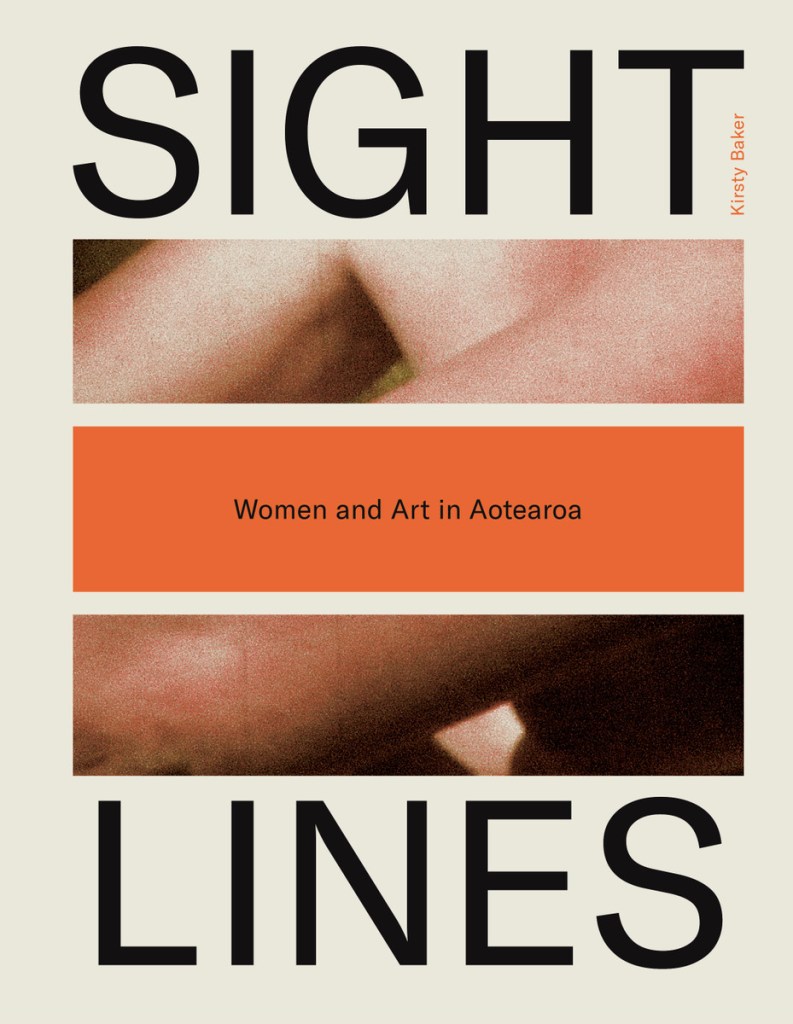
Sight Lines: Women and Art in Aotearoa

Reviewed by John Daly-Peoples

Sight Lines: Women and Art in Aotearoa

By Kirsty Baker

Auckalnd University Press

RRP $69.99

Reviewed by John Daly-Peoples

Sight Lines: Women and Art in Aotearoa is a bold and timely book exploring various threads of women’s  art  of the past as well as those creating art for our times. Editor and writer Kirst Baker acknowledges the complexity of bringing together writings for  such a book in her introduction  where she notes “It should come as no surprise that this book does not attempt to offer a complete history of women’s artmaking in this country. Such a project is doomed to fail… Instead, the book winds its way along a path that is both fragmented and politicised”.

Within that winding journey it is the through the fragments that we see ideas and revelations and make connections. It is through the practice of many of these artists and their working within a social and political context that we see the importance and ramifications of art.

Lisa Reihana, in Pursuit of Venus [infected], Auckland Art Gallery. single channel UHD video

The dozen chapters in the book have been written by Kirsty Baker along with  Chloe Cull, Ngarino Ellis, Ioana Gordon-Smith, Rangimarie Sophie Jolley, Lana Lopesi, Hanahiva Rose, Huhana Smith and Megan Tamati-Quennell.

The essays are all thought-provoking with a mix of biography, narrative, interviews, observations and reflections. These offer new ways at looking at the art created by women but also the nature of art and art institutions.

Baker notes that there are a number of themes running through the book which are indicative of the often different world in which many female artists exist and work.

There is the way that women artists have interrogated their relationship with the land and place and the way they have pushed against gendered limitations.

There is also the way that artists have used their practice to comment on art history and arts institutions and the way that art making plays a role in the care and transmission of knowledge.

In not being a contiguous history of women’s art, the gaps and exclusions are often apparent. These gaps mean at times the book is less satisfying without the linkages of history and context.

While not a history the book covers over two hundred years of art making in New Zealand and includes painters, photographers, performers, sculptors,  textile artists and writers. The work of these artists spans whatu kākahu through to the recent work of the Mataaho Collective. Along the away there are chapters on a diverse range of artists –  Frances Hodgkins, Rita Angus, Rangimārie Hetet, Pauline Rhodes, Teuane Tibbo, Yuki Kihara and Ruth Buchanan.

With over 150 illustrations the books also provide a visual history of women’s art which is well integrated with the texts.

Julia Morison, Quiddities 1-10. Auckland Art Gallery, Cibachrome transparencies

The essay on Frances Hodgkins provides a succinct overview of her life and work while highlighting the issues which impacted on women artists of the early part of the twentieth century.

The essay on Kura Te Waru-Rewiri reveals the way in which Māori artists have addressed issues of mythology. history  and land using abstraction as a means of conveying ideas.

Many of the chapters focus on the issues around the land, whānau and wāhine which is seen in the work of artists such as Robyn  Kahukiwa so it is surprising that  Robin White, Sylvia Siddell and Jaqueline Fahey who have documented the family and domesticity for several decades are not mentioned.

The other area of exclusion is around abstraction for while the work  of Vivian Lynn, Kura Te Waru-Rewiri and Imogen Taylor is included artists such as Phillipa Blair and Gretchen Albrecht are omitted.

Maureen Lander, Ko nga puna waiora o Maunga Taranaki (detail), Govett-Brewster Gallery, mixed media

The final chapter in the book concerns the  work by the Mataaho Collective, a group which has recently won the prestigious Golden Lion Award at the Venice Biennale. The chapter predates the win but much of what is written is relevant to the work which has generated more column  inches than any previous New Zealand exhibition at the Venice event.

Here there seems to be a disconnection because of the six previous New Zealand female artists to exhibit at the Biennale. only Lisa Reihana and Yuki Kihara are mentioned. That the four other women selected over a twenty yar period to represent New Zealand at the world’s most high-profile event seems puzzling.

Despite this oversight and others, the book is still one which offers much in understanding the developing history of women’s art in New Zealand as well as way that they have been impacted  by  social acceptance and cultural institutions.

To subscribe or follow New Zealand Arts Review site – www.nzartsreview.org.

The “Follow button” at the bottom right will appear and clicking on that button  will allow you to follow that blog and all future posts will arrive on your email.

Or go to https://nzartsreview.org/blog/, Scroll down and click “Subscribe”

Categories
Reviews, News and Commentary

My Brilliant Divorce

Reviewed by Malcolm Calder

Jackie Clarke in My Brilliant Divorce                     Photo: Darren Meredith

My Brilliant Divorce

By Geraldine Aron

Dir Janice Finn

With Jackie Clarke

Tadpole Productions

Pumphouse Theatre, Takapuna

to 25 May

Review by Malcolm Calder

16 May 2024

As a mere male, I feel something of a fraud attempting to review something that tackles its subject entirely from a woman’s perspective.  But, rest assured, I have sought the opinions of female friends, so plough on (in truth ARE thoughts for menfolk in the work too).

Geraldine Aron’s play tracks one woman’s three-year path through a pending divorce after 20 or so years of marriage.  It is ripe for many emotional, social and potentially dangerous situations and that’s no bad thing.  In fact Aron’s script largely treats them as a self-deprecatingly comedic and the twinkling sparkle and dry self-observations of Jackie Clarke helps ensure this is the case – although not without some truly heart-rending moments along the way.

There is occasional recognition of Aron’s truths, but the laughter flows, there are giggles galore and  it is these spoonfuls of sugar that help ease the shock, the pain, the anxiety and the self-doubt – embarrassingly so at times. 

While Aron’s stereotypically deserted wife reflects with shredded self-esteem, loneliness and self-induced neuroses, she finds little support around her.  Older family members prefer to look to their own future with generational glee, children don’t look back too hard because they are focussed on other things, while men wish to pursue their new path clearly preferring glitz and glam (and youth of course, now THERE’S a stereotype).  And when the loyalty of her hitherto best friend the delightful Dexter wavers, she hits rock bottom.

In sum, My Brilliant Divorce portrays a women who has thought of herself as ‘provided for’ until she isn’t.  And then discovers her own future right in front of her.

Initially Jackie Clarke’s Angela Kennedy Lipsky came across as a little tense and a tad overly-quick with her delivery on Opening Night, but she soon grew into the character, quickly found her comic timing and really started to make the most of some of Aron’s delicious lines.  In fact, the way her girl-koala demolished her boy-koala (both longtime gifts from her ex), there was real venom behind it and even Dexter looked startled.  Even the audience lapped it up when she crawled off-stage looking for the bits.

Self-doubt is at the core of this play.  In one or two places it seemed a little dated and some of the localisations didn’t quite work, but that didn’t matter.  The audience intuitively knew it would all work out for the best in the long run.  Far be it for me provide a spoiler alert though.

Finally, congratulations once again to Tadpole, a company that knows and understands its audience rather well, and keeps coming up with productions to which they can relate.  That’s not to suggest the opening night audience for My Brilliant Career was stacked with divorcees.  Far from it.  In fact I have a feeling that many were there largely because of Jackie Clarke’s presence on stage.

Categories
Reviews, News and Commentary

Mansfield Park: The Future Looks Bright

Review by Malcolm Calder

Ashlyn Tymms (Fanny Price in Mansfield Park) Photo Lewis Ferris

Mansfield Park
Music by Jonathan Dove
Libretto by Alasdair Middleton
Based on the novel Mansfield Park by Jane Austen
Director, Rebecca Meltzer
Maestro Concertatore, Brad Cohen
A New Zealand Opera production
Settlers Country Manor, Waimauku
Sunday, 21 April
With
Ashlyn Tymms (Fanny Price)
Kristin Darragh (Lady Bertram)
Robert Tucker (Sir Thomas Bertram)
Sarah Mileham (Maria Bertram)
Michaela Cadwgan (Julia Bertram)
Joel Amosa (Edmund Bertram)
Andrea Creighton (Aunt Norris)
Joanna Foote (Mary Crawford)
Taylor Wallbank (Henry Crawford)
Andrew Grenon (Mr Rushworth)
And
Soomin Kim and David Kelly (piano for four hands)

The incoming General Director of New Zealand Opera Brad Cohen has described Mansfield Park as a touchstone for the future. And judging by this offering of Mansfield Park, opera-lovers have a rather
fascinating future to look forward to.

Jonathan Dove’s score is contemporary, which may prove difficult for some but it points to an operatic future that is to be lauded and, unlike last year’s perhaps controversial Unruly Tourists, retains some links to literary tradition.


Mansfield Park is a two-act, 18 chapters adaptation of Jane Austen’s early 19th century novel. It takes a few liberties with the original but retains the essential context of the Crawford family and their grand old country pile in which familial mores, social positioning and aspirations are played out. Alasdair Middleton’s libretto deftly and succinctly summarises these in the very first chapter as being about ‘profit, pride, position, posterity and prestige’.


Remote niece, Fanny Price, is recently fostered into this social setting ‘for her betterment’ before patriarch Sir Henry soon departs for the family’s sugar plantation in Antigua. It soon becomes apparent that a simmering undercurrent of familial disputes, bad-mouthing, marital intrigues and
backstabbing are revealed before eventual resolution is reached. Through all this the quiet, reserved and subservient Fanny, grows with increasing maturity to become a shining example of all that is good, honest and true.


Mounted in semi-rural splendour of the main reception room at Settlers Country Manor at Waimauku near Kumeu, this initial offering is a chamber opera in the true sense of the word. There is no purpose-built stage as such and it is performed on and around a tiny elevated space measuring
perhaps 5m x 4m. Importantly for the future, this production is readily portable, relatively inexpensive to produce and could be easily mounted in a wide range of suitable spaces all over the
country.


Director Rebecca Meltzer copes with the questionable acoustics and difficult shape of the room by tossing out any hint of grand opera and uses the tiny performance space to elicit performances of nuance and subtlety from a 10-strong ensemble supported only by a single piano played by four hands. The entire reception hall (set up with rows of chairs for about 300) is used for entrances, exits and even voices from the rear of the room. Meltzer even allows more than just hints of that
actor’s stock in-trade – improvisation.


The effect is to offer a new and vibrantly different connection for audiences who are almost invited to become a part of the Crawford family either as flies on the wall, or perhaps imagining themselves as auxiliary staff or even just as close observers. Proximity to the performers induces intimacy and connection, something hammered home at one point when an audience member becomes part of the action on the stage.


This is a genuine and uniformly strong ensemble cast that feeds off, balances and enhances each other so it is no surprise that, as a unit, it was genuinely strong. Some of the lyrics were occasionally lost in the acoustics but these were readily overcome through the availability of a QR code enabling the audience to read them if required.


But it was Sydney-based mezzo Ashlyn Tymms who captured the room especially when Fanny’s low-key presence in the first act grows to increasing prominence in the second. Tymm’s delivered two strong arias at the top of the second act and then seemed to go from strength to strength leaving us in no doubt whatsoever that Fanny Price was unquestionably good, honest and true.

As such, it certainly affords NZ Opera opportunity to connect with new audiences in new ways and perhaps in new locations.