Categories
Reviews, News and Commentary

Ka Mua Ka Muri: Backwards to the Future

Reviewed by Malcolm Calder

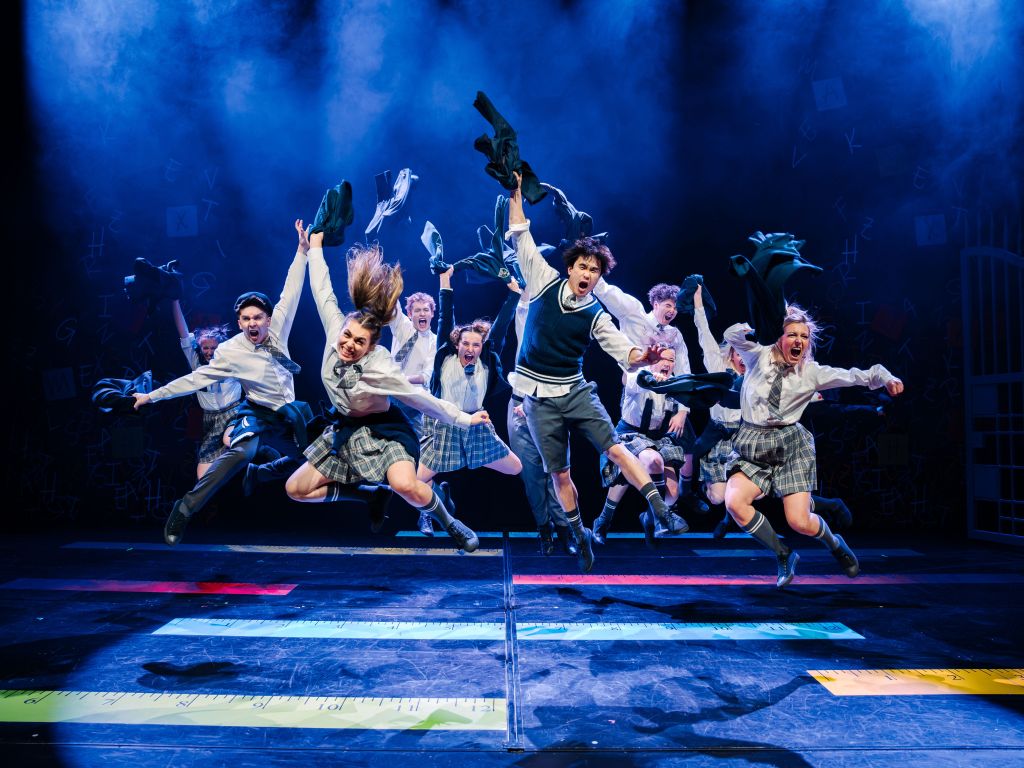
Ka Mua Ka Muri Image, Andi Crown

Ka Mua Ka Muri

Choreographers: Bianca Hyslop and Eddie Elliott

Sound composition: Eden Mulholland

Set and costume design: Rona Ngahuia Osborne

Lighting design: Owen McCarthy

Projection Design: Owen McCarthy (Remain), Dan Mace (Whakamaheahea)

With Abbie Rogers, Caleb Heke, Madi Tumataroa, Matiu Hamuera, Oli Mathiesen, Tai Taranui Hemana, Toalei Roycroft,

An Atamira Dance Company production

Q Theatre, Rangitira

Until 27 July

Then Clarence Street Theatre, Hamilton 29 July.

Review by Malcolm Calder

25 July 2024

This significant work comprises two collaborative creations without an interval – Eddie Elliott’s Remain followed by Bianca Hyslop’s Whakamaheahea.  Although each could easily stand alone, they are not really a double bill.  There is no interval, simply a pause, or perhaps a lengthy segue between the two, and each reflects the other.  Hence the title which loosely translates into Before and After.

Elliott’s Remain does far more than simply relate the past and provide a context for today however.  It helps to explain that past and how the intertwining of traditions with their origins, social practice and evolution delivers a whakapapa that is as rich with meaning and significance in contemporary Aotearoa as it has been since Ranginui and Papatūānuku.

Elliott has mined the humour and playfulness of everyday life, pride in achievement and evolutionary contributions to making Aotearoa what it is today.  And, no, it is far from a sugar-coating.  There are brief flashes of anger, resentment and disagreement and, after all, that’s life.

Conversely, Hyslop’s Whakamaheahea takes all this as a given or starting point and looks to the world we live in today while providing a basis for navigating the path ahead.  A future that shimmers one moment and then cowers the next.  As Hyslop has noted, cultural identity is a continuum and the place of māoritanga is clearly identified and deeplyembedded in the social context of our country.

The dancers provide a strong ensemble quality with individual characters allowed to emerge and some of the solo work is of a high quality indeed.

Of special mention is the creative team who handled the production aspects of this work admirably.  It is slick, extremely contemporary and entirely captivating.

Importantly, this work acknowledges and further develops the legacy that is Altamira Dance Company.  Yes, there may be some ‘fooling about’ along the way but there is also a strong sense of empowerment, transformation, and resilience that underpins Ka Mua Ka Muri.  It has the potential to inspire a bright collective future.

Categories
Reviews, News and Commentary

The dark world of “Hamlet” from Opera Australia

Reviewed by John Daly-Peoples

Act I Hamlet Image Keith Saunders

Opera Australia

Hamlet,

Brett Dean , Music

Matthew Jocelyn, Libretto 

Until August 9

Reviewed by John Daly-Peoples

“or not to be “, are the first lines we hear from Hamlet in Opera Australia’s latest offering by composer Brett Dean and librettist Matthew Jocelyn. They are of course a clip from one of the plays most well know soliloquies – “To be or not to be, that is the question”.

That question is

“Whether ’tis nobler in the mind to suffer

The slings and arrows of outrageous fortune,

Or to take arms against a sea of troubles”

In other words act now or prevaricate.

Hamlet never answers his own question and delays taking action to revenge the death of his father. In a typical revenge tragedy of the time that revenge would be quickly and simply exacted but his  equivocation is a sign of his own mental illness or his inconsistent political decision-making which ultimately leads to the death of multiple individuals.

Hamlet doesn’t even speak the words of the soliloquy that is left to a player from the theatre troupe, later in the play.

The opera explores questions of Hamlet’s mental state, how it impacts on his relationship with other members of court, his friends and his betrothed, Ophelia.

Librettist Mathew Jocelyn has done this by cleverly concentrating on some key lines and phrases while Brett Dean has produced a musical landscape which creates moods, emotional portraits and dramatic moments. The score is largely percussion with raw and unusual sounds along with traditional instruments pushed to their limits, providing an edginess and inventiveness to the work.

Director Neil Armfield has realised the visions of Dean and Jocelyn with an impressive production employing a stellar class including Allan Clayton who has performed the leading role at Glyndebourne and the Met. This is an opera which seems as relevant today as it was 400 years ago.

The opening scene, which is replicated in the final duel scene is the main hall in Elsinore where the new King Claudius and Gertrude enter for a banquet. Hamlet, looking remarkably like Peter Jackson  prowls the room in his ‘inky cloak’, gets his own bottle of wine and makes sharp comments about his mother and new father. Along with his brusque complaints there is also a playfulness when he greets his friends Horatio and Marcellus

One becomes aware of the conflict within the work. Is Hamlet actually mad or is it a ploy  which he uses. There are a number of scenes where the theme of pretence, subterfuge  and acting are cleverly developed by Jocelyn. This  notion of reality and artifice is seen at its most powerful in the Players scene where Hamlet adds some lines to the fictional “Murder of Gonzaga” play.

.One of the clever approaches that Jocelyn uses is to repeat particular words and phrases, giving emphasis to them so they become striking mantras

Allan Clayton’s Hamlet is very different from most theatrical versions, there is little that is princely or all that perceptive about him – he is a man burdened with a task, angry with most of those about him and lacking in empathy. He is in a dark world of his own making and that is conveyed through Brett Deans oppressive and stressful music.

It conveys something of the internal melancholy of Hamlet and Clayton’s rough tenor makes one aware of his struggles as he flails physically and vocally with his feelings and (in) actions. His approach to revenge is insipid compared to the pesky Laertes (Nicholas Jones) who leaps at the opportunity of dispatching Hamlet.

Much of Hamlet, as with many of Shakespeare’s plays is focussed on the nature and the future of the royal family and by implication, the future of the state, with reference to the  legitimacy of Claudius and Gertrude and the rottenness of the state of Denmark.

Hamlet (Allan Clayton) and Ghost of his Father (Jud Arthur) Image Keith Saunders

Many of the scenes are brilliantly staged. When the ghost of his father (Jud Arthur) appears to Hamlet it is in a surreal setting worthy of Salvador Dali. The Frankenstein-like figure moves slowly across the stage, a beam of light cuts across the stage from a door giving onto a misty swirling nether world. The ghost tells Hamlet of the need for revenge as the quivering woodwinds and tentative percussion aid his growling voice. The relationship between the two becomes particularly  physical as the two embrace.

Lorina Gore’s  Ophelia gives a splendid performance as she expressed love, confusion and ultimately madness. Her performance was particularly touching in her mad scene where, having strewn herbs around the stage, she proceeded to beat her breast and used her strangled voice along with the sharp strings of the orchestra to convey her fragile mental state. Her cries were accompanied by a small female chorus situated high in the boxes who initially shouted their concerns but then became a choir of angels.

Ophelia (Lorina Gore), Guildenstern (Christopher Lowery) & Rosencrantz (Russell Harcourt) Image Keith Saunders

Rod Gilfry as the guilty Claudius stepping into his new role as king was able to convey his own ambivalent position with a voice which ranged from the rough to the benign while Catherine Carby’s Gertrude duets with her son and Ophelia were taut with genuine feeling.

Kanen Breen’s supercilious bureaucrat, Polonius was excellent with his finger clicking insistence, and Samuel Dundas as Horatio, the only likable character in the opera, gave an intelligent and perceptive performance.

Most of the characters were white faced, as though already embalmed but it was Jud Arthurs monstrous, white figure and his penetrating bass which made the most impression. Arthur was also magnificent as the cocky, philosophical Gravedigger.

The two foppish counter tenors, Rosencrantz (Russell Harcourt) and Guildenstern (Christopher Lowrey) looking like the artwork, Gilbert and George added an element of comedy as well another dimension to the notion of artifice.

The set designed by Ralph Myers with its changing structures was something of a metaphor for the changing veneers, masks and stratagems of the characters while the lighting by Peter Harrison provided many moments of visual drama.

Categories
Reviews, News and Commentary

Opera Australia’s “Tosca”

Reviewed by John Daly-Peoples

Tosca. The Te Deum sequence Image. Keith Saunders

Opera Australia

Tosca by Giacomo Puccini

Libretto by Luigi Illica and Giuseppe Giacosa

Sydney Opera House

July 13

Performances until August 16

Reviewed by John Daly-Peoples

Last Saturday’s performance of Tosca at the Sydney Opera House  didn’t go quite as planned. The role of Tosca which had been played by a now ill Giselle Allen  was to be replaced with Natalia Aroyan

Allen’s Tosca had previously been reviewed in Limelight where her performance  was described as “a wonderfully capricious creation; a haughty, self-absorbed prima donna one minute and tragic heroine the next”.

This was to be Aroyan’s first outing in the role but she has had several roles in other Australian Opera productions and has previously even performed with Dame Kiri te Kanawa.

From the first moment we hear Tosca calling her lover’s name from offstage to her bursting onto the stage any concerns about her abilities vanished. She revealed the power and lyricism the role requires immediately. We also heard the notes of the recurring love theme, sometimes calm, at other times agitated, mirroring Tosca’s changing moods. In this opening scene she also revealed other aspects of her complex nature, playfulness egotism, jealousy and romanticism, giving the audience one of the crucial aspects of the opera – a believable character who, she says “lives for art”.

Her voice in Act II traversed a huge range of emotion, – pure love, pain  and yearning while her soaring rendition of the aria“ Vissi d’arte ” captured an almost ethereal dimension.

In a sense she is the alter ego of Puccini who saw the opera a political work which had a strong political thread with a plot that revolved around the historical and political narrative of Italian nationalism. While the opera was originally set in Rome in the early part of the nineteenth century, Director Edward Dick has set the work firmly in the twenty-first century with laptops, CCTV and earpieces. All this provides a very clear reference to the growth of contemporary fascism.

The story , set in Rome still revolves around the tragic love triangle between Floria Tosca , the famous opera singer ; Mario Cavaradossi , a painter ; and Baron Scarpia , the sadistic chief of police .

The opera opens with the escaped revolutionary Angelotti (David Parkin) making a dramatic descent by a rope from the opening in a painted dome in the ceiling of a church. This oculus can be seen as a reference to the ceiling opening of the Patheon in Rome. Cavaradossi comes to his aid and in so doing implicates himself and Tosca in his escape and that knowledge is exploited by  Scarpia in order  to capture the escaped Angelotti, punish Cavaradossi and seduce Tosca.

From the first mention of Scarpia’s name we hear the ominous sequence of three, strident chords that represent the evil character. Sung by Gevorg Hakobyan he emanates ruthlessness and amorality with a sinister voice and the actions of a disturbed man. This is highlighted in the powerful Te Deum sequence at the end of Act I where the power of the state is linked to that of the church and the choir sings along with Scarpia as he fantasises about his seduction of Tosca.

Giselle Allen (Tosca) and Gevorg Hakobyan (Scarpia) Image. Keith Saunders

While Hakobyan conveys a narcissism and cruelty with a searing, caustic voice it is Young Woo Kim singing the role of Cavaradossi who was the standout performer of the opera with a powerful voice with which he conveyed a range of rich emotions along with a very honest portrayal of character.

The set in each of the acts is dominated by a large dome shape with an image of the virgin which works effectively and the oculus in the final act becomes the space from which Tosca plunges to her death.

In Act II the central feature of the set is Scarpia’s four poster bed which becomes the site of seduction as well as acting as a cage within which much of the strugglers between Scarpia and Tosca take place

The work really relies on its wonderful, evocative music, emotionally charged  with some poignant orchestral passages which requires a conductor who is aware of that emotional and dramatic range. In Johannes Fritzsch and the Opera Australia Orchestra all the great qualities of the music were delivered. 

With ten performances to go Tosca is one great reason for a short holiday across to Sydney.

Future operas at the Sydney Opera House

Brett Dean/ Matthew  Jocelyn, Hamlet, July 20 – August 9

Mozart, Cosi van Tutte, August 1 – 17

Categories
Reviews, News and Commentary

Sylvia Jiang’s lively and energetic performance of Prokofiev’s Piano Concerto

Reviewed by John Daly-Peoples

Sylvia Jiang

Auckland Philharmonia Orchestra

Scheherezade

Auckland Town Hall

July 4

Reviewed by John Daly-Peoples

The first half of the APO’s Scheherezade concert featured two works composed a century apart with Melody Eötvös’ “The Saqqara Bird” of 2016 and Prokofiev’s “Piano Concerto No 2 of 1913/1923.”

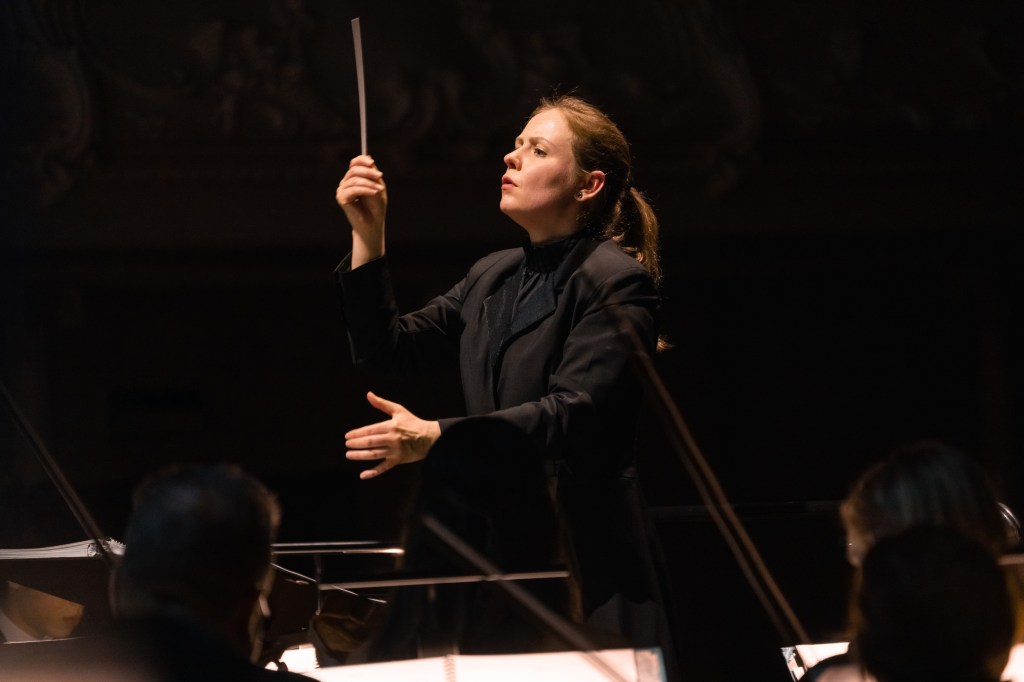
The highlight of the concert was the Prokofiev Piano Concerto played by Sylvia Jiang. She is a Chinese born New Zealander and Juilliard graduate  who was ranked as a Rising Star in the Asialaw Profiles of 2023.

Last year she performed Liszt’s Second Piano Concerto with the Auckland Philharmonia and later in the year she will also be making her debut national tour as a soloist with Chamber Music New Zealand playing seven concerts.

Prokofiev’s second Piano Concerto is considered to be one of the most difficult piano concertos to play. Thankfully Jiang appears to have not been told that and she never faltered in her exploration of the work even when she was faced  with the massive solo cadenza of the first movement.

This section saw Jiang playing vigorously for over 4 minutes before the orchestra joins in again.

She opened the work delicately creating  gentle, magical sounds along with the woodwinds and strings which hinted at a shimmering watery setting with the orchestra developing the theme and Jiang providing streaks of colour and drama.

This quiet lyricism didn’t last long and was soon interrupted by menacing sounds from the orchestra and a darkness emerged which overpowered the piano which then responded with some ferocious sounds.

This early interaction of orchestra and pianist highlighted the emphasis of the concerto. This was the sense of competition between player and orchestra. With most  concerti there is a collaboration between soloist and orchestra but with this work there was more of an antagonism and intervention.

This is in part due to Prokofiev s music where we hear a clash between romanticism and modernism which is an indication of the composer struggling with his own idea.

In playing the first movement solo cadenza Jiang seemed to be physically attacking the keys and her playing eventually revealed an emerging theme and she was rejoined with the orchestra which enveloped her with the gentler music which had preceded the cadenza.

The short second movement saw Jiang playing  with a  lively energy, butting up against the  savage and insistent tones of the orchestra.

The third movement which opens with huge swells of brass and percussion and a rustic theme where Jiang dashed off flashes bright notes inserting herself into the orchestral themes. Here again the pianist and orchestra were in competition, with the orchestra seeming to overpower Jiang who fought back with a relentless energy finishing the movement with a few quiet  notes of victory.

She opened the fourth movement with a rapid-fire assault on the piano followed by a lethargic sequence where her fingers seemed to wander across the keyboard in search of a theme. Then as she managed to discover the theme the orchestra joined in, expanding and enhancing it.

Her playing at times seemed to be urged on by the energetic orchestra while at other times she seemed to strive against the orchestra.

In the final minutes of the work her playing returned to a simple romanticism before morphing into some frantic playing matched by an equally frenetic orchestra which overpowered the piano before the  final race to the climatic conclusion.

The “Saqqara Bird” refers to a bird/plane shaped relic found at Saqqara in Egypt in the late nineteenth century whose function was unknown. Melody Eötvös’ work explores the imagined reasons behind its creations and purposes and envisages it in search of its identity.

The work opens with the sounds of bird-like twittering from the woodwinds and strings which seem to be emerging from a dark forest of sounds conveyed by the blasts of brass and thumping drums.

Several of the instruments appeared to have been adapted or employed to create eerie sounds as though a backdrop to a fairy tale filled with shadowy beings.

In the middle section the woodwinds replicate  the sounds and movement of birds along with the ghostly forms leading to enigmatic encounters and discoveries.

The intriguing music ranged from sequences of unruly and strident sounds to the use of the simple single note which ends the work.

Categories
Reviews, News and Commentary

Sight Lines: Women and Art in Aotearoa

Reviewed by John Daly-Peoples

Sight Lines: Women and Art in Aotearoa

By Kirsty Baker

Auckalnd University Press

RRP $69.99

Reviewed by John Daly-Peoples

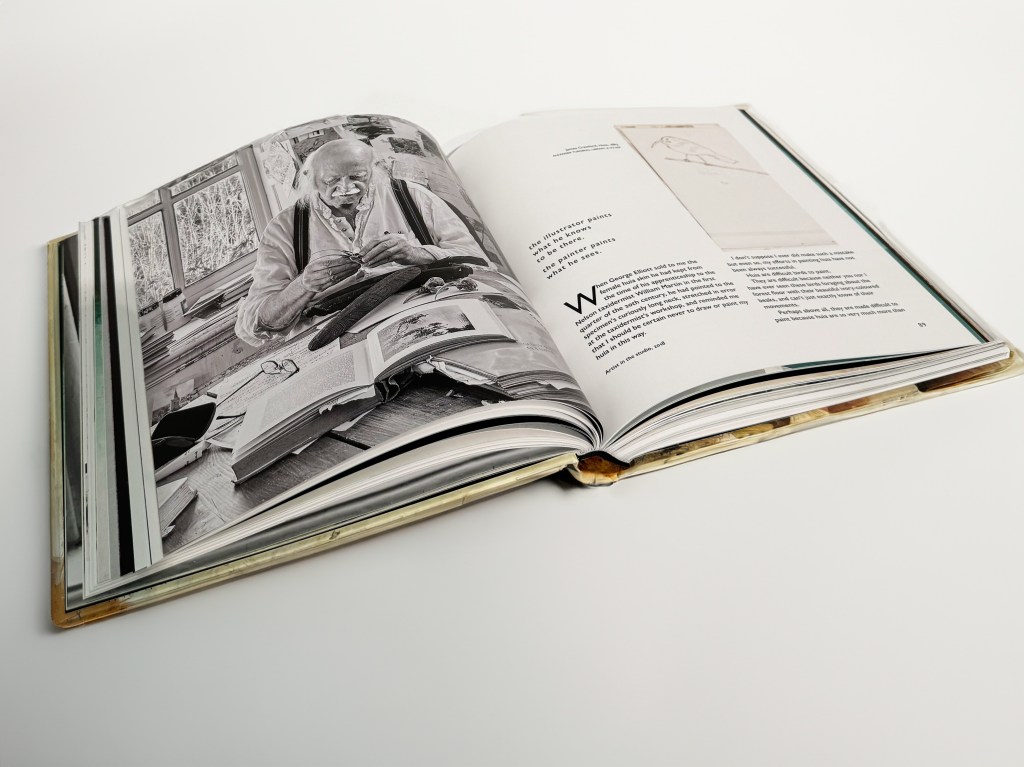
Sight Lines: Women and Art in Aotearoa is a bold and timely book exploring various threads of women’s  art  of the past as well as those creating art for our times. Editor and writer Kirst Baker acknowledges the complexity of bringing together writings for  such a book in her introduction  where she notes “It should come as no surprise that this book does not attempt to offer a complete history of women’s artmaking in this country. Such a project is doomed to fail… Instead, the book winds its way along a path that is both fragmented and politicised”.

Within that winding journey it is the through the fragments that we see ideas and revelations and make connections. It is through the practice of many of these artists and their working within a social and political context that we see the importance and ramifications of art.

Lisa Reihana, in Pursuit of Venus [infected], Auckland Art Gallery. single channel UHD video

The dozen chapters in the book have been written by Kirsty Baker along with  Chloe Cull, Ngarino Ellis, Ioana Gordon-Smith, Rangimarie Sophie Jolley, Lana Lopesi, Hanahiva Rose, Huhana Smith and Megan Tamati-Quennell.

The essays are all thought-provoking with a mix of biography, narrative, interviews, observations and reflections. These offer new ways at looking at the art created by women but also the nature of art and art institutions.

Baker notes that there are a number of themes running through the book which are indicative of the often different world in which many female artists exist and work.

There is the way that women artists have interrogated their relationship with the land and place and the way they have pushed against gendered limitations.

There is also the way that artists have used their practice to comment on art history and arts institutions and the way that art making plays a role in the care and transmission of knowledge.

In not being a contiguous history of women’s art, the gaps and exclusions are often apparent. These gaps mean at times the book is less satisfying without the linkages of history and context.

While not a history the book covers over two hundred years of art making in New Zealand and includes painters, photographers, performers, sculptors,  textile artists and writers. The work of these artists spans whatu kākahu through to the recent work of the Mataaho Collective. Along the away there are chapters on a diverse range of artists –  Frances Hodgkins, Rita Angus, Rangimārie Hetet, Pauline Rhodes, Teuane Tibbo, Yuki Kihara and Ruth Buchanan.

With over 150 illustrations the books also provide a visual history of women’s art which is well integrated with the texts.

Julia Morison, Quiddities 1-10. Auckland Art Gallery, Cibachrome transparencies

The essay on Frances Hodgkins provides a succinct overview of her life and work while highlighting the issues which impacted on women artists of the early part of the twentieth century.

The essay on Kura Te Waru-Rewiri reveals the way in which Māori artists have addressed issues of mythology. history  and land using abstraction as a means of conveying ideas.

Many of the chapters focus on the issues around the land, whānau and wāhine which is seen in the work of artists such as Robyn  Kahukiwa so it is surprising that  Robin White, Sylvia Siddell and Jaqueline Fahey who have documented the family and domesticity for several decades are not mentioned.

The other area of exclusion is around abstraction for while the work  of Vivian Lynn, Kura Te Waru-Rewiri and Imogen Taylor is included artists such as Phillipa Blair and Gretchen Albrecht are omitted.

Maureen Lander, Ko nga puna waiora o Maunga Taranaki (detail), Govett-Brewster Gallery, mixed media

The final chapter in the book concerns the  work by the Mataaho Collective, a group which has recently won the prestigious Golden Lion Award at the Venice Biennale. The chapter predates the win but much of what is written is relevant to the work which has generated more column  inches than any previous New Zealand exhibition at the Venice event.

Here there seems to be a disconnection because of the six previous New Zealand female artists to exhibit at the Biennale. only Lisa Reihana and Yuki Kihara are mentioned. That the four other women selected over a twenty yar period to represent New Zealand at the world’s most high-profile event seems puzzling.

Despite this oversight and others, the book is still one which offers much in understanding the developing history of women’s art in New Zealand as well as way that they have been impacted  by  social acceptance and cultural institutions.

To subscribe or follow New Zealand Arts Review site – www.nzartsreview.org.

The “Follow button” at the bottom right will appear and clicking on that button  will allow you to follow that blog and all future posts will arrive on your email.

Or go to https://nzartsreview.org/blog/, Scroll down and click “Subscribe”

Categories
Reviews, News and Commentary

Wall to Wall Māfana

Red White and Brass: The Play

Stage adaptation by Leki Jackson-Bourne

Directors, Anapela Polata’ivao, Vela Manusaute

Musical Director, Joanna Mika Toloa

Production Design, Sean Coyle

Costume Design, Chrissy Vaega

Sound Design, Matt Eller

Choreography, Mario Faumui

With Haannz Fa’avae-Jackson, Mikey Falesiu, John-Paul ‘JP’ Foliaki, Onetoto Ikavuka, Saala Ilaua, Diamond Langi, Lauren Jackson, ‘Aisea Latu, Jason Manumu’a, Rocky Manusaute, Michaela Te Awa Bird, Kasi Valu

Original screenplay by Halaifonua Finau and Damon Fepulea’i

Co-produced by Piki Films and Miss Conception Films

A World Premiere

ASB Waterfront Theatre

Until 7 July

Reviewed by Malcolm Calder

Last weekend I had a cold and spent most of it confined to quarters.  You know – a bit of this, a bit of that and an overly-heavy dosage of highly-predictable news, current affairs and media gossip monochromatically detailing financial woes, political faux pas, a couple of murders, the inevitable obsession with car crashes and countless opinion from a whole heap of ‘experts’ confidently predicting an imminent emigration across the ditch. I was miserable.

Then I went to the Auckland Theatre Company’s world premiere of a new stage production of Red, White and Brass: The Play!  And I wondered what I was being miserable about.

The basic plot is well publicised and closely follows the original screenplay of the same name by Halaifonua Finau and Damon Fepulea’I about sporting underdogs who over-achieve just as Eddie the Eagle and those Jamaican bobsledders did at the Olympics.  Hollywood loves a good sports story especially where the underdog comes out on top and this story has a unique local flavour.

But this stage production is more subtly nuanced, goes well beyond sport and is weighted more towards capturing hearts and minds in ways that both embrace and express the social psyche that is Tongan Māfana.

It is a thing that generates joy and, without being in the slightest bit didactic about all things Tongan,

it assumes a knowledge of many things in a long, long list.  These range from the place of religion to the place of rugby; from gently acknowledging the contrapuntal role of the matriarch in a purportedly patriarchal society; from an acknowledgement that achievement rests ultimately on aspiration; from generational clash to resolution and to an understanding that even addresses the subsets within the contemporary urban Tongan diaspora in Aotearoa.

As Leki Jackson-Bourne has noted… this production is loud, proud and unapologetically Tongan. It is a statement about community, heritage and sense of self.  But it is more than that.  It also says something very important about our increasingly multicultural society and as such provides a further plank in the evolution of New Zealand theatre history.  It does so with unashamed pride and joy, and celebrates both.

JP Foliaki reprises the movie role of Maka, arguably with more light and shade than the movie allowed, and his relationship with his ‘bit less Tongan’ cousin Veni (Saale Ilaua) is well handled.  Overall the cast is strong and well-balanced and their choral work mesmerizingly memorable.

Sean Coyle’s busy set morphs well in multiple directions, the costumes are a hoot and the dialogue a completely understandable mix of Lea Faka-Tonga and English. The finale is a triumph- but no spoiler alert from me other than to say the band grows on one.

Congratulations to Auckland Theatre Company and mālō Leki – the last vestiges of my cold vanished on the spot!

To subscribe or follow New Zealand Arts Review site – www.nzartsreview.org.

The “Follow button” at the bottom right will appear and clicking on that button  will allow you to follow that blog and all future posts will arrive on your email.

Or go to https://nzartsreview.org/blog/, Scroll down and click “Subscribe”

Categories
Reviews, News and Commentary

Aotearoa Contemporary to open at the Auckland Art Gallery in July

John Daly-Peoples

Maungarongo Te Kawa, Celestial Stargate for Invisible People, 2024 (detail). Photo by Jemma Mitchell

Aotearoa Contemporary

Auckland Art Gallery

July 6 – October 20

 The Auckland Art Gallery Toi o Tāmaki and Ngāti Whātua Orākei have announced a new contemporary art triennial at Auckland Art Gallery which will celebration of the breadth of contemporary art in New Zealand.

“The Gallery is thrilled to partner with Ngāti Whātua Ōrākei to present a new generation of talented artists and showcase Aotearoa New Zealand’s diverse artistic environment.”

“Set to occur every three years, the exhibition provides ongoing representation and pathways for new artistic voices, bolstering the future resilience of New Zealand art. Aotearoa needs a contemporary art triennial and it now has one.” adds Lacy.

Ngāti Whātua Ōrākei Trust Deputy Chair Ngarimu Blair says, “Our tupuna Apihai Te Kawau gifted 3000 acres of land on the Waitematā on 18th September in 1840 to become a city which welcomed people, cultures and ideas from afar. Our relationship with Auckland Art Gallery is founded in the shared goal to foster the arts reflective of our multi-cultural community in Aotearoa.”

With an emphasis on artists not previously exhibited at the Gallery, the exhibition presents 27 artists and 22 compelling new projects in a range of media including painting, textiles, sculpture, ceramics, photography, and performance.

Senior Curator, Contemporary Art, Natasha Conland says, “Aotearoa Contemporary reveals a new cluster of artists who work afresh with ritual and storytelling, mythology, rhythm, indigenous space and materials. There is also a special emphasis on art’s relationship with choreography through the commission of four dance works.”

Curator, Pacific Art, Cameron Ah Loo-Matamua adds, “From Ruth Ige’s enigmatic blue paintings of anonymous figures, to the art collective The Killing’s installation of supersized soft-toys in a state of play, there is something for everyone in this exhibition. Amongst the ambitious new commissions is a three-channel video by Qianye and Qianhe Lin featuring mythology set in Hailing Island off the coast of China and Aotearoa.”

Aotearoa Contemporary is proudly supported by Ngāti Whātua Ōrākei, Auckland Art Gallery Foundation and the Chartwell Trust.

Aotearoa Contemporary has been scheduled to coincide with New Zealand’s leading contemporary art award, The Walters Prize 2024, to provide a broad overview of contemporary art in New Zealand in the Gallery’s winter programme.

The exhibition has been curated by Cameron Ah Loo-Matamua, Natasha Conland and Ane Tonga with support from Ruth Ha.

Artists featured in Aotearoa Contemporary

Emerita Baik, Leo Baldwin-Ramult, Heidi Brickell, Pelenakeke Brown, Jack Hadley, Ruth Ige, Hannah Ireland, Xin Ji, Reece King, Qianye Lin and Qianhe Lin, Te Ara Minhinnick, Ammon Ngakuru, Amit Noy, Sung Hwan Bobby Park, Meg Porteous, Maungarongo (Ron) Te Kawa, Tyrone Te Waa, The Killing (collective), Anh Trân, Manuha’apai Vaeatangitau, Jahra Wasasala and George Watson.

Jahra ‘Rager’ Wasasala by Jocelyn Janon

Jahra ‘Rager’ Wasasala is an award-winning cross-disciplinary artist of Fijian/NZ European descent. As an artist, Jahra investigates her ancestral connections through the art mediums of performance activation, contemporary dance and poetry, and has extensively toured her performance works both nationally and internationally.

As a child of the Pasifika diaspora, Jahra is invested in translating her shared internal conflict into an accessible, yet confrontational, physicalised language. Her most recent performance work titled “a world, with your wound in it” focuses on the complex relationship between the earth and a woman’s body, a theme Jahra continues to investigate in her developing work.

Maungarongo Te Kawa is a takatāpui fabric artist, educator, and storyteller. His practice makes old pūrākau newly relevant using brilliant colour, fluid design, and infectious good humour. Following a career in costume design and fashion, Te Kawa dedicated himself to full-time art-making and teaching. In addition to producing his own elaborate whakapapa quilts, he runs sewing workshops, guiding participants to express their creativity and genealogy through fabric.

Ruth Ige is a Nigerian New Zealand-based painter whose intimate, evocative compositions oscillate between bodily forms and painterly abstractions. While some resemble traditional portraiture, others consist of colour fields that capture a more mysterious, ethereal effect. Hands, shoulders, and faces emerge from a watery facture. “I am interested in creating images that are not easily understood,” says Ige. She considers her unique figuration, which renders her subjects featureless and inscrutable, to be a form of “veiling.”

Performances

The commissioned performances in Aotearoa Contemporary include Pelenakeke Brown, Is this a performance 1+2, Xin Ji, Doco Dance, Amit Noy, Errant and Jahra Wasasala, DRA.

To subscribe or follow New Zealand Arts Review site – www.nzartsreview.org.

The “Follow button” at the bottom right will appear and clicking on that button  will allow you to follow that blog and all future posts will arrive on your email.

Or go to https://nzartsreview.org/blog/, Scroll down and click “Subscribe”

Categories
Reviews, News and Commentary

The APO’s captivating musical tour of Rome

Reviewed by John Daly-Peoples

The Trevi Fountain

The Eternal City

Auckland Philharmonia Orchestra

Auckland Town Hall

June 13

Reviewed by John Daly-Peoples

Respighi’s Roman Trilogy takes the listener on a musical tour of Rome with three tone poems which celebrate the city’s fountains, pines and festivals. Along  the way we encounter the architecture, landscape and history  of the city with vibrant music which capture its moods, sounds and spectacles.

The three works were composed over a twelve-year period 1916 – 1928 and the APO presented the three works under the title of The Eternal City.

The programme opened with  Fountains of Rome, the purpose of which the composer said was “to give expression to the sentiments and visions suggested . . . by four of Rome’s fountains, contemplated at the hour in which their character is most in harmony with the surrounding landscape, or in which their beauty appears most impressive to the observer.”

In this work we encounter some of the smaller fountains like the one by the Villa Medici as well as the extravagant Trevi Fountain.

The first part of the work, inspired by the Fountain of Valle Giulia, depicted a pastoral landscape and  captured the early Romas  dawn with the strings and woodwinds.

This was followed by a sudden loud blast of the brass and percussion above the shrill tones of the orchestra, introducing the Triton who raises a conch to his lips and we also hear the sounds of activity around the fountain.


Next, he depicts The Trevi Fountain at midday, the theme, passing from the woodwind to the brass instruments, with the trumpets depicting the dramatic figure of  Neptune,  seahorses and another Triton blowing a conch shell, the sounds of which were depicted by the orchestra’s horns.


The fourth section depicting the Villa Medici Fountain at sunset captures the fading grandeur of the city with is a nostalgic theme and we hear the tolling of bells above the whispering strings of birds twittering.

The work which features much brass and percussion shows us a panoramic Rome filled with a sensory overload of excitement and activity.

The music captures the flow of water from a trickle to torrents with instruments providing flecks of light intermingled in the sprays of water.

The Pines of Rome

The second work, The Pines of Rome had an animated opening with a depiction of the trees around the Villa Borghese mixed  with the sounds of the city. The depiction then moves to the outer areas of the  city with a  melancholic mood in the area of  the catacombs highlighted with hints of the Latin mass .

The pines on the Janiculum Hill were introduced with timpani and gongs, giving a spacious vision, the trees picked out by the piano and clarinet. As though taking its cue from the clarinet comes a recording of a nightingale seeping into the hall only to disappear with the coming of night and the brooding sounds of the ghosts of centurions returning on the Appian Way. These sounds initially seem distant but then as the orchestra’s voice increases a sextet of brass instrument up by the organ let loose some triumphal sounds conveying the drama of Roman pomp and power.

A Roman Carnival

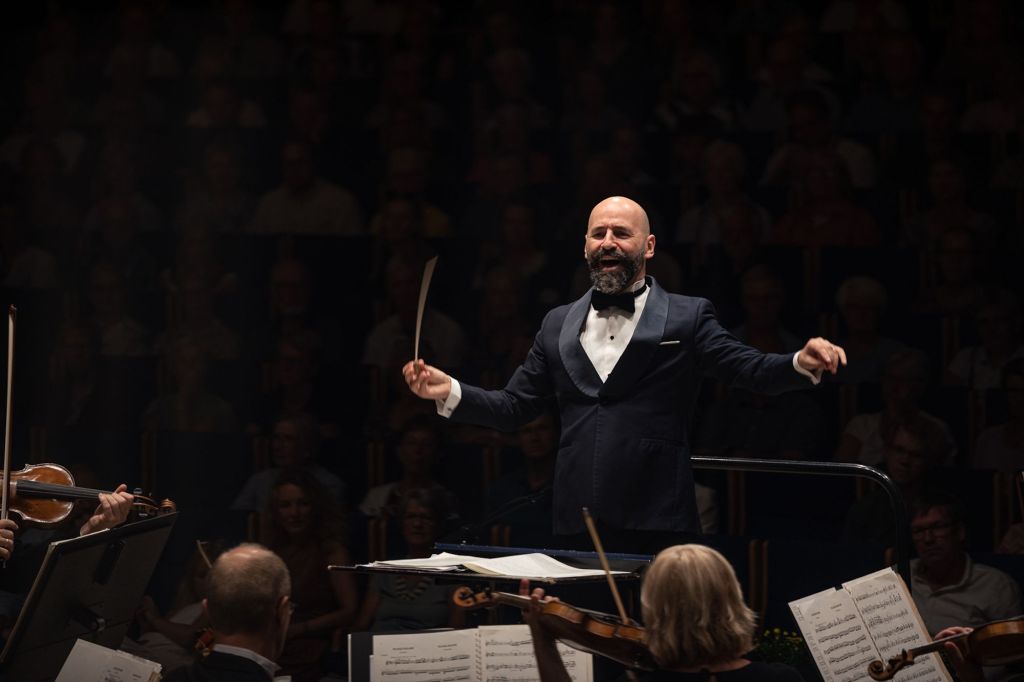
The third of the works “Roman Festivals” opens with  the same dramatic sounds which featured in the depiction of the Appian way. Here the triumphal sounds become the sounds of gladiatorial combat. After this overexcited opening there were some lovely, lethargic orchestral sounds with echoing strings. In the middle sections the music conveys all the excitement, colours and movement of the community festivals. Here conductor Bellincampi was agile in stressing both  the  clamorous sounds as well as the gentler ones.

The final movement featured a strong, slightly discordant section which morphed into  a folksy romanticism which included a mandolin-like sequence, before moving onto  some circus sounds which recall the cinematic compositions of  Nino Rota and his music for Fellini’s 8½ .The final movement ended with some thunderous sounds from the massed orchestra and  percussion, bringing to an end to a  entertaining journey.

The concert featured a number of musicians from the Australian National Academy of Music , as part of an ongoing collaboration with the APO. 

To subscribe or follow New Zealand Arts Review site – www.nzartsreview.org.

The “Follow button” at the bottom right will appear and clicking on that button  will allow you to follow that blog and all future posts will arrive on your email.

Or go to https://nzartsreview.org/blog/, Scroll down and click “Subscribe”

Categories
Reviews, News and Commentary

The amazing Jacob Rajan returns in Guru of Chai

Reviewed by John Daly-Peoples

Guru of Chai

Indian Ink Productions

Q Theatre

Until June 22

Reviewed by John Daly-Peoples

Jacob Rajan is an amazing actor and Guru of Chai is an amazing play

For many years Rajan has been presenting us with engaging stories with a hint of India. Over that time, he has moved his characters from the Krishna’s corner dairy to the streets of Bangalore and Delhi, to America and back to New Zealand and now returns to Bangalore.

Even though the geography has changed, the stories still have a universality about them with themes of love, tragedy, death and renewal.

Guru of Chai is told mainly through the eyes of the tea seller Kutisar who encounters seven abandoned sisters in the Bangalore Central Railway Station. In order to survive they sing on the station platform but the local mafia in the form of Thumby and the mysterious Fakir demand protection money.

The local policeman, officer, Punchkin, intervenes and becomes their protector with a particular concern for Balna.


Six of the seven sisters marry but Balna, having rejected Punchkin marries the poet Imran who later disappears, presumed killed. Balna, now pregnant, has to flee Bangalore and with the help of Punchkin, who has been rising through the ranks, starts a new life.

The story come to a head several years later when the young son, Imran who, after being brought up by his six aunts meets with Kutisar in his search for his mother in order to find out about the tragic events around the time of his  birth , It a quest which leads to further tragic events.

Jacob Rajan plays all the half dozen roles, but not has he has previously done by using masks. Now he conveys the demeanor and emotions of the characters by subtle nuances of the body generally but particularly his expressive face and hands. He also manages to capture the essence of the characters through the use of different voices. It is his remarkable combination of acting and mime skills which helps him carry off the undertaking.

He sketches in a portrait of India’s underclass and some of the social issues such as the place of women, the ever-present gods who inform and dominate all stages of life as well the weaknesses, joys and sorrows of everyday life such Kutisar’s fascination with the banned practice of cockfighting.

He is supported by Adam Ogle playing Dave, a mute musician, who contributes with a brilliant sound landscape as well as providing the back up on a couple of songs of the street..

He cleverly sets the evening up as a play within a play which he has been instructed to perform by the theatre management to entertain and enlighten the audinece whose lives are empty and lonely.

He also uses the audience as one of his many props, engaging with individuals – don’t sit in the front row as well as the wider audience in an extended version of a Monty Python parrot joke.

The Guru of Chai also owes much to co-writer and director Justin Lewis as well as dramaturge Murray Edmond and the charming, sets and costumes designed by John Verryt

Guru of Chai also at:

Coastlands Theatre, Te Raukura ki Kapiti, Kapiti
4 – 6 July
 
Hannah’s Playhouse, Wellington
1 – 11 August

To subscribe or follow New Zealand Arts Review site – www.nzartsreview.org.

The “Follow button” at the bottom right will appear and clicking on that button  will allow you to follow that blog and all future posts will arrive on your email.

Or go to https://nzartsreview.org/blog/, Scroll down and click “Subscribe”

Categories
Reviews, News and Commentary

Three exhibitions: Max Gimblett, Phillipa Blair and Emily Wolfe

Reviewed by John Daly-Peoples

Max Gimblett, Holy Gesture and The Golden Mountain after Botticelli

Max Gimblett, Hands of Gold

Gow Langsford Gallery, Auckland

Until June 29

Max Gimblett’s Hands of Gold features a new set of painting many of which  make use of the  quatrefoil shape  which consists of four intersecting circles connecting at a central point is a feature in much Gothic and Renaissance architecture and art.

Gimblett also employs an elegantly or extravagant gestural brush stroke on several of  these works which have links to the calligraphic traditions of eastern art and links to the artists interest in Zen which he says has given him ‘The impulse is to feel. I paint without thinking, in an unconscious, free way.’  

This approach can also be seen to have links to the contemporary gestural art of the abstract expressionism of Jackson Pollock but with the gravitas of the Japanese artist Sengai Gibbon. These approaches have meant that his work has a sense of the instant -when emotion is realised and intuition revealed. 

Several of the works have a simplicity to them demonstrating the artists craftsman like approach which goes back centuries to medieval art. There is “The Golden Mountain after Botticelli” ($78,000) in which the artist has used gold foil over panel, creating an almost seamless reflective surface which becomes almost a sculptural piece. The reflective surface means that the viewer becomes an integral part of the work.

There are also smaller works such as “The Golden Diadem” ($20,000) where the gilded surface appears to be almost liquid, the paint sliding over the surface.

There are smaller versions of this large work such as “Eve” ($40,000) and “Moon Suite” ($60,000). where the artist includes a gestural sweep across the surface. These calligraphic strokes the artist employs look as though they trace out the trajectory of a magician wand  as in “Holy Gesture” ($28,000).

 In some cases these marks are only just visible and these is a sense of the calligraphy emerging magically out of the gilded surface of the work.

Max Gimblett, The River and the Jungle

With the rectangular “The River and the Jungle’ ($85,000) the abstract patterns and the golden swirl takes on almost landscape features of  river threading through a lush green environment.

Phillipa Blair, Venice CA Revisited

Orexart

Until July 6

Phillipa Blair, Angelus Place 4

Orexart is presenting works by Philippa Blair which span  the period 1997 to 2006 and includes five  works she made in the late nineteen nineties with her husband John Porter in her Venice California studio. At the time, she was exhibiting regularly alongside contemporary American abstractionists in museum and gallery exhibitions  in Los Angeles and New York. 

At the heart of her work is the uncertainty and contradictions between chaos and order. This contrast can be seen in both the ideas which pervade the work as well as the physical making and arrangement within the paintings themselves, a duality which exists between the physical and the  spiritual, between the random and the deliberate.

The works in the exhibition can be read in a variety of ways – as  images relating to events in her personal life, those of the wider world or of abstract conceits.

There are several works under the general title  “Angelus Place” ($4800 each), after the street where she lived for many years. With their tightly massed colours one can detect elements of the physical location with hints of palm trees, the triangular shape of the studio roof and shafts of light.

There is a vibrancy to the artist’s work as with “O” ($35,000) with the striations across the surface creating rhythms which suggest dance or music. Her paintings dance with colour, shape and movement  and at the microscopic level it is the dance of the atoms.

Phillipa Blair, Breakdance

In the spacious Breakdance ($28,000) of 2006   the sense of dance is also present with jostling blocks of colour and dramatic swirls of paint.

The works all have an inherent  volatility and tactility, not so much of the artists applying paint but rather the colours and forms erupting out of the canvas to envelop the viewer.

While there is a tension between the notions of order and chaos implicit in the works there is also  the physical tension between the both the myriad colours  she uses and the various techniques she employs which sees areas of colours resisting, merging and colliding.

Emily Wolfe, Long Distance

Melanie Rogers Gallery

Until June 27

Emily Wolfe, Strata

Many of Emily Wolfe’s previous works had the look of paintings from a previous period and this latest exhibition “Long Distance “ there isa sense of searching for The Sublime, dwelling on  the beauty and drama of nature. The title  might also be referring back to that time, and the search for The Sublime. She is also  referencing her distance from New Zealand as all the works were painted  in London.

These paintings are about the nature of art itself, the colours, the quality of the light an interest in the depiction of surfaces and textures and an awareness of the painter’s skills and techniques in the pursuit of the illusions.

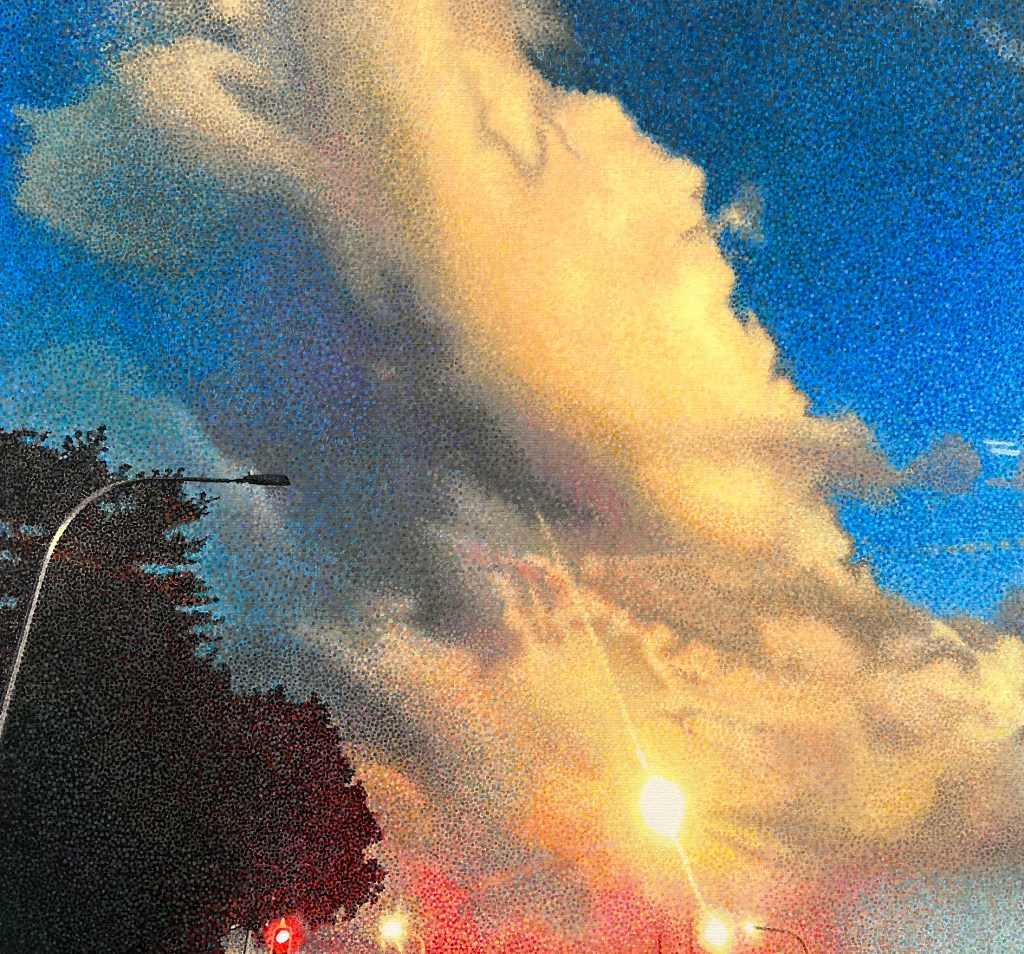
The works feature  sections of typical romantic landscapes – pastoral landscapes with distant hills, and  framing trees. The paintings also  feature clouds recalling the numerous cloud studies of John Constable.

Some of the works have a surreal quality, reminiscent of  Rene Magritte’s paintings with paintings such as “Drift” ($7000) where a painted section is overlaid onto a similar landscape view  of the exterior world.  That section could have come  from “Off Centre” ($7000) where a section of canvas has been removed from a painting created an empty space.

Emily Wolfe, Light Years

With “Light Years” ($7000) the artist has assembled five different pieces of paper  / canvas to create  collage of images for some  future work. They are like swatches of varying colour intensity and light which the artist is playing with.

 “Strata” ($14,000) is an impressive work featuring a  dramatic alpine vista in the taped to the wall and floor . Resting on the work is a sheet of paper and an old-fashioned T square. The inclusion of the T Square as well as  a tracing table in “Long Distance” ($14,000)  are references to the aids often used by artists in the construction of their work.

With all these works she displays a shrewd visual language where representation and reality are playfully deconstructed, where light becomes a palpable component of the work and where time   seems to  stand still.

To subscribe or follow New Zealand Arts Review site – www.nzartsreview.org.

The “Follow button” at the bottom right will appear and clicking on that button  will allow you to follow that blog and all future posts will arrive on your email.

Or go to https://nzartsreview.org/blog/, Scroll down and click “Subscribe”