A Place in Sultan’s Kitchen (or How to Make the Perfect One Pot Chicken Curry)
By Joshua Hinton (and Dominic Hinton)
Auckland Arts Festival
Rangatira, Q Theatre
Until March 15
Reviewed by John Daly-Peoples
Making a one-pot chicken curry is so easy. The recipe is really straight forward. Slice up some onions, some potato, some chicken and a bunch of spices. It’s not that hard. It’s the chicken curry recipe Joshua Hinton’s nan, “MehMeh” made him for years and he is going to make it for us.
He is good at making it. He stands at his little cooking bench. Chopping and sprinkling and pouring. And just like in those TV cooking shows you also get to see shots of him doing all his chopping and mixing from above.
It feels as though Josh has invited you into his kitchen to have a personal chat as he reminisces, letting you into his cooking secrets and tales of his family.
He starts telling stories about his relatives and their journeys last century. From Iran to India to Australia, the family caught up in the British invasion of Iran in 1941 and then the Bombay Fire of 1944, when a British freighter loaded with explosives destroyed part of the Bombay Docks and the city.
These are some of the mixed-up tales his nan has told him, about her early life. They are a bit like the lives and the cultural mix of hundreds of immigrants. They are a mix of Persian (Iranian), Indian, Sri Lankin, Zoroastrian, English, South African, Bahia and Jewish.
The cooking becomes something of a metaphor for his life and his people before him, a mixture of memories, events and family tales. The cooking and the recipes are his cultural history, binding memories.
While Joshau makes his chicken curry, his brother Dominic controls the lights, sounds and special effects as well as doing “MehMeh” s voice. Dominic also makes an appearance at the end of the show playing his guitar as the two of them sing a song about their family.
The show is a gentle exploration of a refugee family’s life, the various threads finally knotted together with the two brothers lives living in Australia. There are big, events, various wars, family movements, obvious and insidious racism but more joy than sadness, as Josh reflects on his family’s life.
Josh’s life as person of mixed heritage living in Wollongong has its surprises, being the only brown person in the school photograph and its gives rise to variations on the old trope about “where are you actually from”.
And then at the end there’s a meal of chicken curry in the Q Theatre foyer.
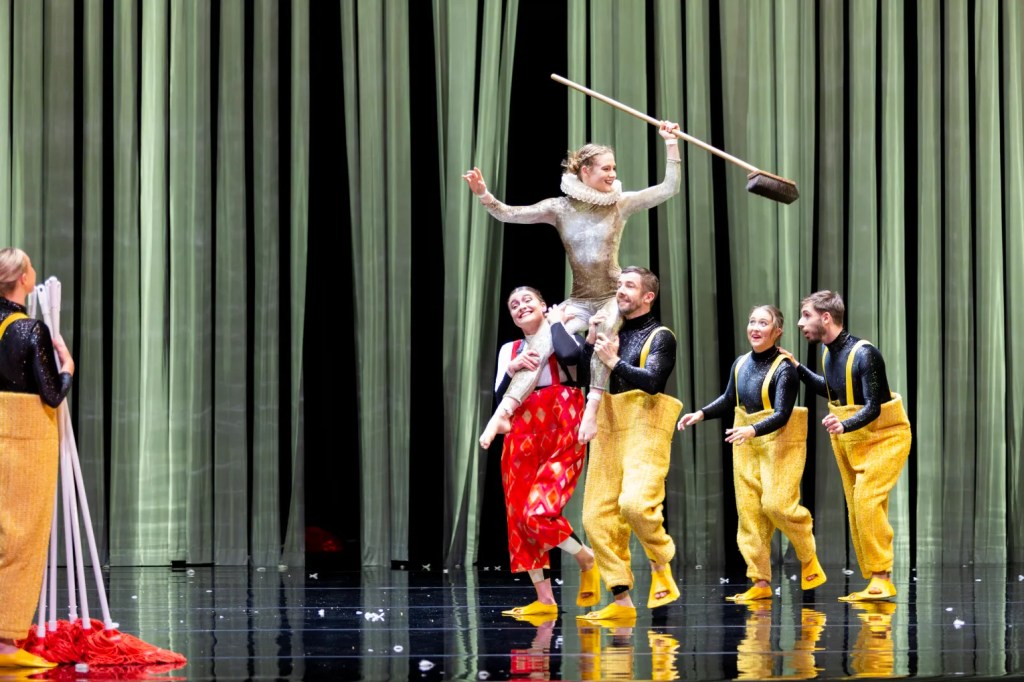
In the hands of the Australian company Circe the world’s most romantic ballet is re-imagined as a circus spectacular, full of Circa’s signature physicality and shot through with cheeky humour and a thoroughly contemporary energy.
The audience is swept away by this tale of swans and hapless princes sparkling with quirky touches like the sequinned flipper-wearing duck army and a burlesque black swan. There are sumptuous aerials performances, jaw-dropping acrobatics and many feathers.
The show has been seen around the world and a review of Duck Pond in The Guardian by Lindsey Winship was enthusiastic.
“Australian company Circa are masters of modern circus, often eschewing obvious exhibitionism, and instead weaving acrobatic skills with a dance and theatre sensibility to make mood pieces.
The name is a parody of Swan Lake and it borrows from the famous ballet – shards of Tchaikovsky’s score feed into Jethro Woodward’s soundtrack – and also from another fairytale, the Ugly Duckling. So we get a love triangle of sorts between a prince, an ugly duck and a vivacious black swan. The conceit might seem to promise a more conventional narrative, but it delivers something a little different. The mood is understated, classy, colours of black and gold, a clan of performers in shimmering velvet catsuits. The music is a constant underscore rather than a game of set-ups and climaxes.
There is a lot of beautiful skill on show. Acrobats climb up human towers; flyers somersault between bases. Their formations of three are especially inventive: ornate arrangements of bodies in fine-tuned equilibrium, toes anchored on hips, lower backs, shoulders, anywhere they can get a foothold. There are some lovely moments of flow between couples who lift and fling, curl and unfurl, balance and counterbalance. Bodies tie themselves in knots on the trapeze; others soar on the silks. The ugly duck is revealed to be a swooping swan; the black swan has a dominatrix moment walking over a man’s bare back in red stilettos. But there are lulls too, such as a pillow fight that turns into an anticlimax.
Story-wise, director Yaron Lifschitz puts a couple of nice twists on the Swan Lake narrative but it lacks a big emotional payoff. Low-key lyricism, rather than transactional tricks for applause is Circa’s way and Duck Pond is a lovely show, with warmth, skill and some wow moments.”
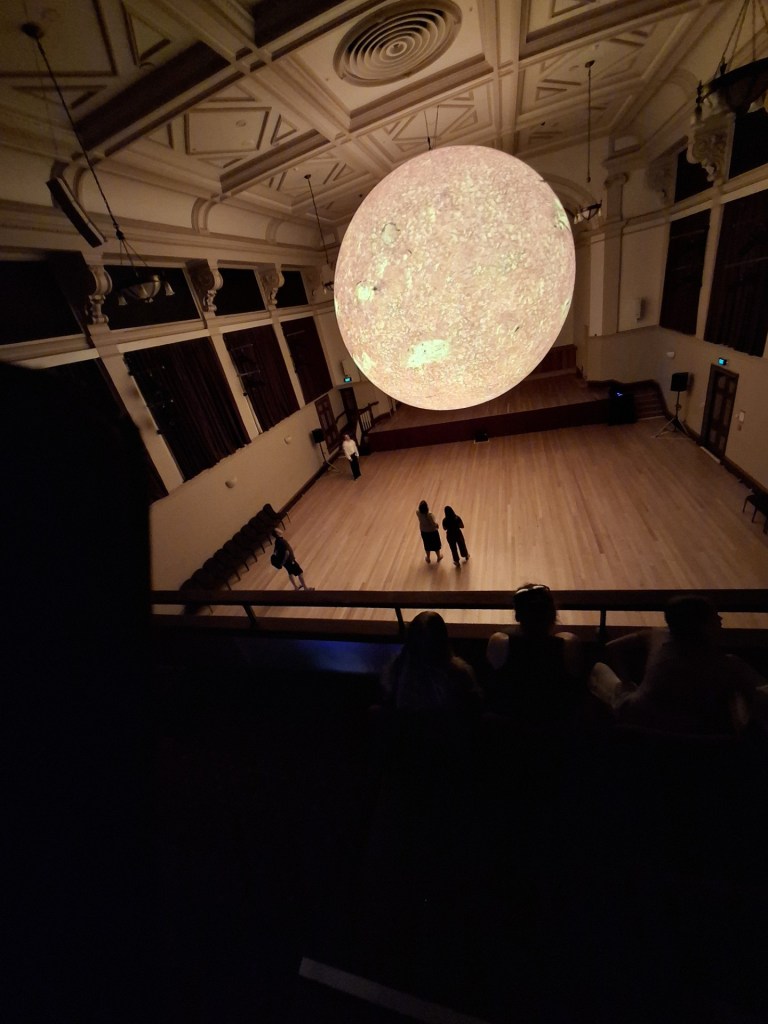
This week you can experience Helios, a breathtaking, larger-than-life artwork created by renowned UK artist Luke Jerram. Arriving in New Zealand for the first time, Helios is both a scientific wonder and a multi-sensory artwork, offering a rare opportunity to visualise the beauty and complexity of our closest star.
The globe measures six metres in diameter and was created at a scale of 1:230 million, it is constructed from approximately 400,000 images of the Sun’s surface. These images combine photography by astrophotographer Dr Stuart Green with data from NASA solar observations. Internally lit, this spherical installation allows for a safe yet awe-inspiring examination of the Sun’s extraordinarily detailed surface, revealing features such as sunspots, spicules, and filaments.
Named after the ancient Greek and Roman sun god – symbolic of time and life. Helios blends real solar imagery with animated lighting accompanied with an immersive surround-sound composition by Duncan Speakman and Sarah Anderson, creating a powerful and unforgettable experience.
Luke Jerram’s multidisciplinary arts practice involves the creation of sculptures, installations and live artworks. Living in the UK, but working internationally, Jerram creates art projects which excite and inspire people around the world.
One of his recent projects Echo Wood is a collaboration between the artist and charity Avon Needs Trees It is an extensive new artwork made from 365 living trees.
The native trees will slowly grow into a vast 110-metre-wide design. Blossoming at different times of year, pathways and avenues will be created to guide visitors on a journey through the forest towards a central circular gathering space, formed from 12 English oak trees. Echo Wood will take a century to fully emerge – but will endure for generations.
Co-commissioned by National Trust, Cork Midsummer Festival, Liverpool Cathedral, Old Royal Naval College and University College London.
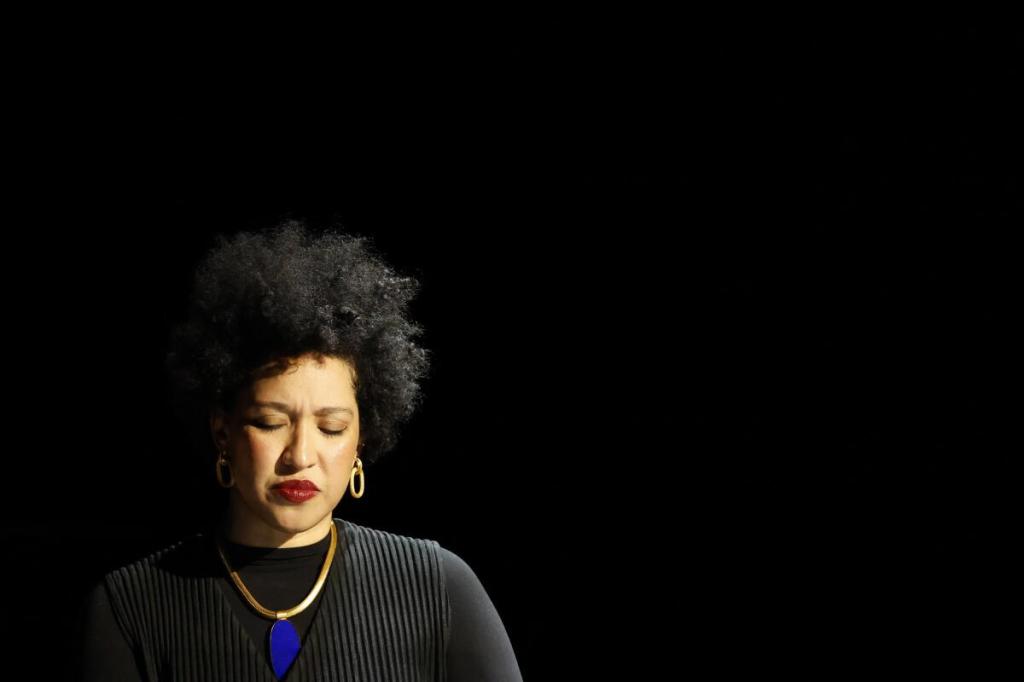
In her recent concert at the Auckland Town Hall Julia Bullock sang a group of songs which she considered as having an “American” sound. These included George Gershwin, Leonard Bernstein and Margaret Bonds. Bonds is a pianist / composer who Bullock has championed for several years a major black composer who was overlooked for many years primarily due to systemic racism and sexism in the classical music industry, exacerbated by the loss of her manuscripts and a lack of publication.
Bullock included three settings of poems by Langston Hughes – “The Negro speaks of Rivers”, “Winter Moon” and “Poeme D’Automne” which gave voice to black aspirations in the 1920’s. With Bullocks singing of “The Negro speaks of Rivers” she provided a fine sense of the Negro spiritual, the softness of her delivery veiling a strong, insistent voice and a slowly developing dramatic force. Her voice delivered an emotional and haunting tone capturing the essence of heritage and endurance.
“Poeme D’Automne” was an astonishing song in which images of falling leaves and the colours of autumn were linked to the human body. She sang this with a surging operatic voice providing and intense and emotional sound.
“Winter Moon” was a short piece, but it showed that Bond was not just writing music to accompany the words of the poem, she had the ability to write dramatic meaningful music.
She sang Stephen Sonfheim’s “Somewhere” as though it was an anthem for the displaced and disadvantaged – a piece very relevant today’s America. There was also the poem “To Julia de Burgos” by Bernstein, a vibrant piece of music which spoke of an angry revolutionary adventure in which she projected the words as though a personal statement.
She also sang a couple of George Gerswin songs, “Somebody from Somewhere” and “Summertime “from “Porgy and Bess”.
She also sang “La Conga Blicoti” a vibrant, Afro-Cuban jazz-influenced song performed by Josephine Baker with the Lecuona Cuban Boys, which features a distinctive conga rhythm.
She also sang Billy Taylor’s “I wish I knew how it feels to be free” like a requiem or funeral lament, very appropriate as a song for freedom.
There was also “I have Two Cities” by the French composer Henri Varna and lyricist Geo Koegar with lines such as
Manhattan is beautiful,
But why deny it.
What enchants me is Paris,
All of Paris
Which she sang as a hymn to Josephine Baker.
The concert opened with the Auckland Philharmonia playing Erich Korngolds “Theme and Variations” and closed with them playing Kurt Weill’s “Symphony No 2”.
Bullock has an affinity for the outsider artist which has led to her interest in Josephine Baker who made the journey from the US to Europe where she made her name while the two composers became outsiders under the Nazis and were forced to move from Europe to the US.
Korngold who was a major composer in Austria influenced the style of composition and singing in the 1920’s and 30’s with operas such as “Die Tote Stadt” while Weill was influential in bringing Bertolt Brecht’s work to the public with works including “The Threepenny Opera”.
This week you can experience Helios, a breathtaking, larger-than-life artwork created by renowned UK artist Luke Jerram. Arriving in New Zealand for the first time, Helios is both a scientific wonder and a multi-sensory artwork, offering a rare opportunity to visualise the beauty and complexity of our closest star.
The globe measures six metres in diameter and was created at a scale of 1:230 million, it is constructed from approximately 400,000 images of the Sun’s surface. These images combine photography by astrophotographer Dr Stuart Green with data from NASA solar observations. Internally lit, this spherical installation allows for a safe yet awe-inspiring examination of the Sun’s extraordinarily detailed surface, revealing features such as sunspots, spicules, and filaments.
Named after the ancient Greek and Roman sun god – symbolic of time and life. Helios blends real solar imagery with animated lighting accompanied with an immersive surround-sound composition by Duncan Speakman and Sarah Anderson, creating a powerful and unforgettable experience.
Luke Jerram’s multidisciplinary arts practice involves the creation of sculptures, installations and live artworks. Living in the UK, but working internationally, Jerram creates art projects which excite and inspire people around the world.
One of his recent projects Echo Wood is a collaboration between the artist and charity Avon Needs Trees It is an extensive new artwork made from 365 living trees.
The native trees will slowly grow into a vast 110-metre-wide design. Blossoming at different times of year, pathways and avenues will be created to guide visitors on a journey through the forest towards a central circular gathering space, formed from 12 English oak trees. Echo Wood will take a century to fully emerge – but will endure for generations.
Co-commissioned by National Trust, Cork Midsummer Festival, Liverpool Cathedral, Old Royal Naval College and University College London.
Auckland Theatre Company and Auckland Arts Festival
Until March 22
Reviewed by John Daly-Peoples
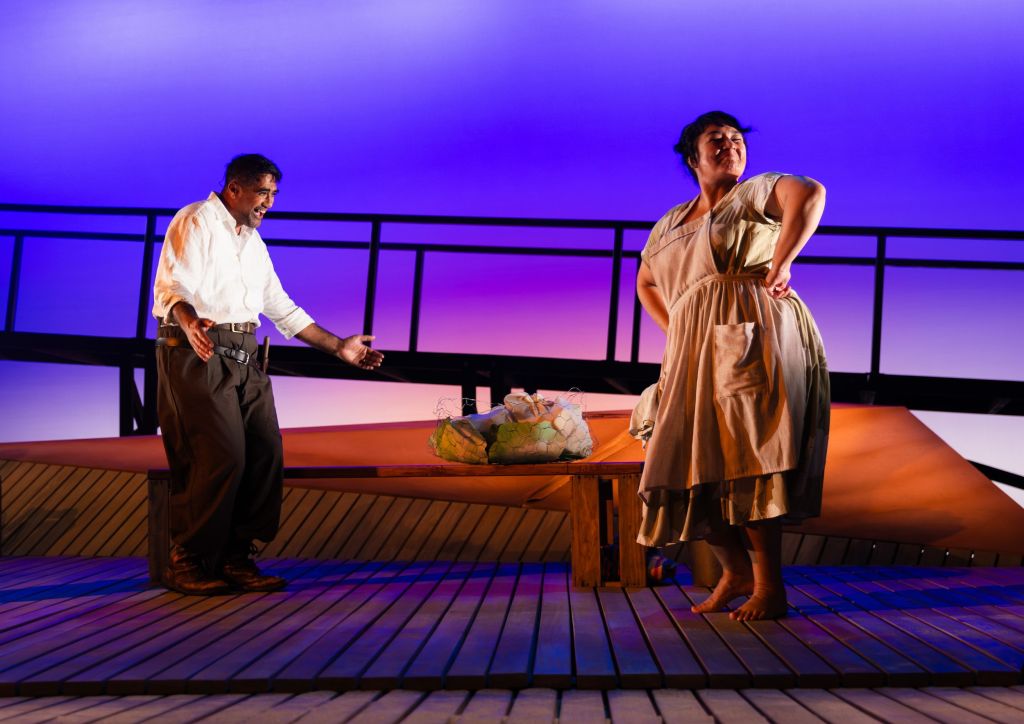
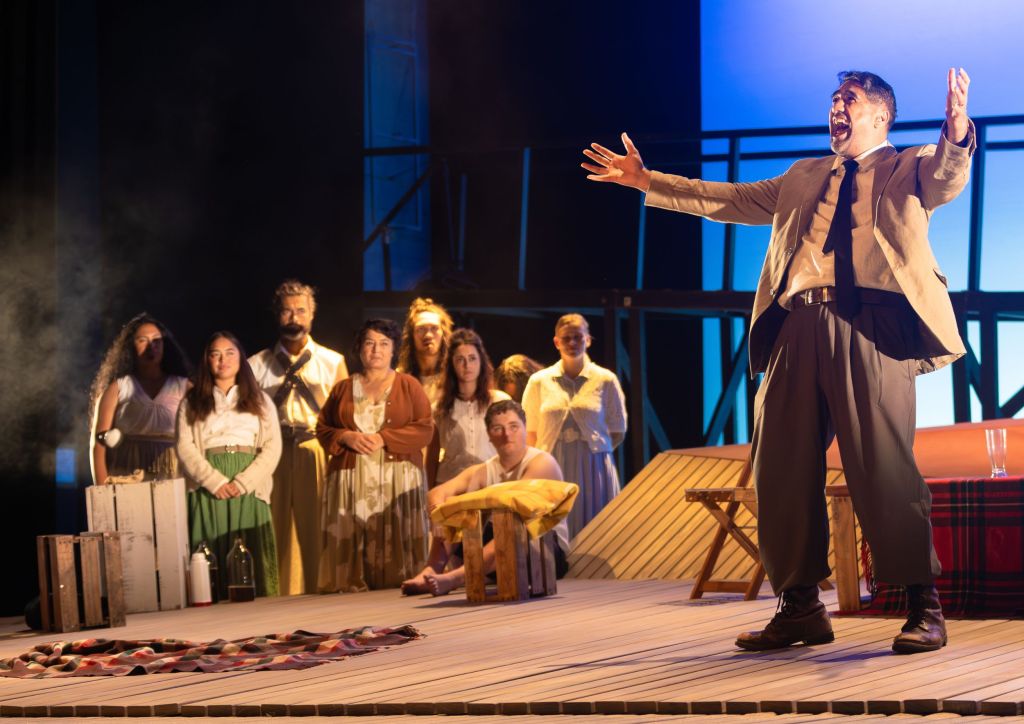
Set in the 1960s, Waiora explores the dynamics of a Māori family – John (Regan Taylor), Sue (Erina Daniels), Amiria (Rongopai Tickell), Rongo (Tioreore Ngatai-Melbourne) and Boyboy (Te Mihi Potae) – who have moved away from their East5 Cape marae looking to create a new life and new opportunities for the adults and children in a South Island mill town. They are in search of the Kiwi dream but have uprooted themselves from Waiora, their homeland.
The tensions between the older generation and the youthful members of the family are seen early on with patriarch John singing O Sole Mio while Amiria and her teacher friend Louise are singing a Beatles song. It’s a scene which leads to the development of disagreement on a range of issues.
Alongside the generational divide we discover separations within the family itself which has an estranged son working in the big city and another son, Boyboy who has been suspended from school.
A major theme revolves around the success of highly regarded John at the mill and his expectation of becoming foreman. This notion of Māori success in industry and business is juxtaposed with the lives of the two privileged Pakeha in the play. Louise, a teacher from a wealthy family and Steve, the mill owner.
Much of the play deals with issues related to colonialism, dislocation from the land, language and the spiritual dimension. These are issues which are still important for Māori and pakeha. Merely confronting these issues is not a solution, how much compromise, concession and negotiation must occur.
Cutting across the stage is a bridge by which all the characters must move. It acts as a potent symbol of the bridge needed to solve the problems of racism and opportunity in New Zealand.
Central to the play is the acting of Regan Taylor as John. He articulates all the aspirations and objectives of the family as well as the problems of not recognising some of the contemporary social issues. Some of his monologues were brilliant, drawing various themes together, conveying the personal, historic and spiritual.
While the play appears ot be rooted in the day-to-day life of the family we become aware of another dimension – wairuatanga or the spiritual life. Several white clad figures move in and around the family seemingly part of everyday but also existing as European equivalents of guardian angels or the Greek mythological figures who bridge the gap between the immortal and mortal.
The play has a rich musical landscape created by Hone Hurihanganui and Maarire Brunning-Kouka consisted of waiata, haka and contemporary sounds.
The entire cast work well together creating a witty, emotional and honest approach to the issues as they each show how they are caught up in an historic, social, and spiritual bind which offers few solutions – that is for the audience to come to terms with.
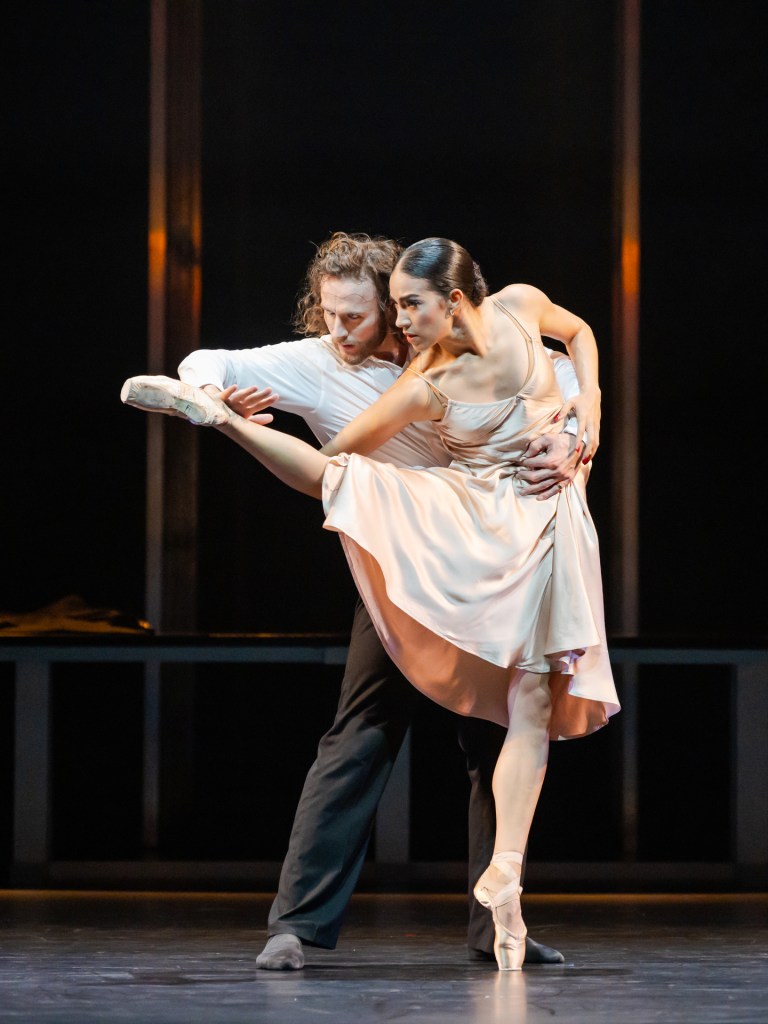
Brandon Reiners and Ana Gallardo Bobainaw Photo credit: Stephen A’Court.
Macbeth
Auckland Arts Festival
Royal New Zealand Ballet
Co-production with West Australian Ballet
Kiri Te Kanawa Theatre, Aotea Centre
4-7 March
CREATIVE TEAM:
Choreography – Alice Topp Set & Lighting Design – Jon Buswell
Costume Design – Aleisa Jelbart
Dramaturgy – Ruth Little
Music – Christopher Gordon
Conductor – Hamish McKeich
String Ensemble – Musicians of the New Zealand Symphony Orchestra
Then
Dunedin, The Regent, 13-14 March
Christchurch, Isaac Theatre Royal, 18-21 March
Reviewed by John Daly-Peoples
The Royal New Zealand Ballet ‘s new Macbeth, is a contemporary interpretation of one of Shakespeare’s most ruthless tragedies which is as relevant now as it was four hundred years ago. As in many of his plays Shakespeare explores the intense, often tragic tension between the individual and the state, showcasing how personal identity, ambition, and morality clash with political power and societal duty. In his plays state authority and sovereignty, demand conformity, yet individuals seek autonomy or challenge the status quo, navigating complex power structures.
He explores the Machiavellian rise to power and the devastation that two individuals can inflict on the state.
This is all achieved in this production through the choreography, the sets and the music.
The sets designed by Jon Buswell are essentially minimalist while the lighting, also by Buswell is more complex. At some points the lighting is focused on the main characters, at other times shadows and darkness dominate.
Created by internationally director / choreographer Alice Topp the ballet unfolds in a ruthless modern world shaped by political ambition, media manipulation and the fatal seduction of power.
She says, “Macbeth is one of Shakespeare’s great tragedies, exploring themes as current today as they were when first written,” says Alice Topp. “An epic story fuelled by political ambition, passion, desire for power and the burden of guilt, its potency endures. Our Macbeth is set in a hierarchy-hungry, high-society city, where political storms, media frenzy and personal ambition collide.”
The music for the work has been composed by Christopher Gordon and features both recorded and live music. One hundred and twenty-nine musicians contributed to the recorded music while an octet of strings from the New Zealand Symphony Orchestra provide live music. The musical landscape provides full orchestral sound with driving, unrelenting tempo that echoes the character’s anxieties.
Gordon created a series of musical themes designed to reflect the characters as well as the mood of the various sequences of the ballet. His complex music consisted of big band music, electric dance music, funk, film music and references to composers such as Phillip Glass.
At the centre of the ballet are the two malevolent Macbeths (Brandon Reiners and Ana Gallardo Bobainaw) who dance their solos, pas de deux with moves which indicate corruption and self-centeredness.
The visceral language of the choreography is used to explore the characters psychological pursuit of power and duplicity.
The classical poses and movements which are normally used to display romantic connections were subverted so that these movements create a disquiet which reflects their own inner turmoil. When the two of them dance their elaborate almost ritualistic dances they seem to be abusing each other in erotic displays.
While the sets are minimal, they are often dominated by tables surrounded by protagonists who engage in discussion and planning. These balletic movements around the table recall Canadian choreographer Crystal Pite’s “The Scenario”, her witty take on a boardroom meeting,
As the three witches / influencers Kirby Selchow, Ruby Ryburn, and Shaun James Kelly are an excellent melding of the comic, the supernatural and the intruding media with the endless writhing, gesturing and guttural sounds.
Laurynas Vėjalis as Duncan, Dane Head as Malcolm, and Kihiro Kusukami as Banquo gave strong displays which contrasted with the spikey dancing of Reiners and Bobainaw.
There were a few occasions when the audience was given some indication of the story with texts projected onto screens, including a few lines form the play itself but there were other times when the audience could have been given more useful indications of location and event.
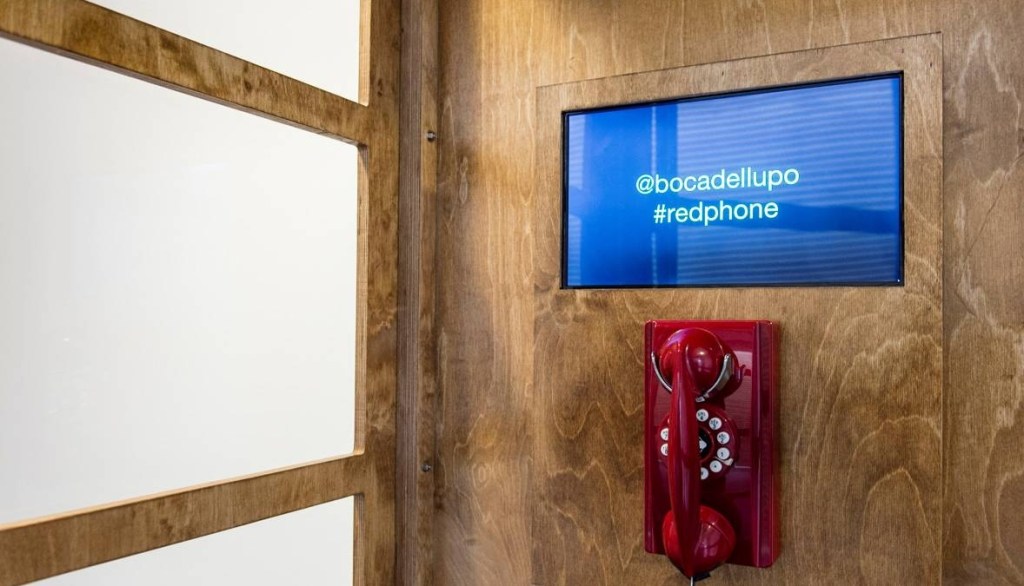
In 1926 the iconic red telephone box which was designed by British architect Sir Giles Gilbert Scott first appeared in the UK making communication between individuals easier.
Now 100 years later as part of the Auckland Arts Festival telephone users can enter a modern telephone booth as participants in an art event which breaks down the boundary between artist and audience.
For the next three days on Level 3 of the Aotea Centre, you can be part of an art event where you become the actor in scenarios which you create.
Pick up your phone and you are connected to another random audience member or friend. You are confronted with a teleprompter which provides you a collection of scripts, including one by New Zealand playwright Victor Rodger.
You become part of an evolving dialogue which is part theatre and part social intervention. You become both performer and spectator, creating unique dialogues which will surprise, embarrass and entertain you.
Jay Dodge, one of the creators of Red Phone“When this project started, we had five or six local writers, and now we have representation from dozens of countries.
“We asked writers to connect and think about what they love about performance but in a creative way where they can be free and not obliged to reflect what is happening right now,” said Sherry Yoon another creator. “There is so much now going on right now, that we will see artists being both reflective and relevant to now, but also to engage in work that can continue on past our global pandemic. What really resonated with us and the presenters and artists we have engaged is to give audiences a work that isn’t here to replace theatre but is in essence of what we love about live performance — the emotional ride, the intimacy, etc.”
This free installation by Canadian interdisciplinary theatre company Boca del Lupo has toured Canada, Norway, and Latin America to critical acclaim. Now it is presented in Auckland for a strictly limited season.
With (alphabetical) Laura Bird, Haley Flaherty, James Bisp, Kristian Lavercombe, Ryan Carter-Wilson, Daisy Steer, Stephen Webb, Morgan Jackson, Edward Bullingham, Jesse Chidera, Nathan Zach Johnson, Tyla Dee Nurden, Bethany Amber Perrins
Civic Theatre, Auckland 26 Feb – 9 Mar 2026
Then Isaac Theatre Royal, Christchurch
St James Theatre, Wellington
Reviewer Malcolm Calder
27 Feb 2026
Many words have been spilled detailing the Rocky Horror story, some with a little licence, so I won’t reiterate them here. Rather, what follows are a couple of more personal anecdotal recollections. Well, maybe a couple of reflections towards the end.
When in my early teens I joined a bikie gang hooning around the streets of Hamilton and haunting bars on weekends. A pushbike gang. In milk bars. And most Saturdays we would go to the ‘pitchers’ at the Embassy ‘pitcher’ Theatre – especially for the b&w serials which updated and changed weekly. The Phantom, The Lone Ranger, The Roy Rogers Show with Trigger, etc. Our parents were not exactly supportive of our adventures but tolerated them mainly after trotting out the usual parental missives of the day … you know, smarten yourself up son, wash your face, get a haircut, and taking the mudguards off does NOT necessarily make your bike go faster! But we did. And maybe even managed the very occasional haircut from the apprentice barber next to the Embassy (remember, these were pre- Beatles days.
Fast forward a dozen or more years, by which time I was living in the UK and had developed something of an interest in ‘legit’ theatre. A friend convinced me to accompany him to the ‘veddy, veddy proper’ Royal Court Theatre in Chelsea’s Sloan Square. Apparently a budding youngish Australian theatrical tyro named Jim Sharman, already with productions of Hair and Jesus Christ Superstar to his name, was putting together an experimental and very avant garde piece called They Came from Denton High. It had been originally devised by an actor no one had heard of called Richard O’Brien, and was planned as only a very brief season at the tiny, semi-round, and recently-renovated roof space of the Royal Court known affectionately as simply ’The Upstairs’.
There were heaps of improvisation, script changes, musical variations, some additions, some deletions and, just prior to opening, Sharman felt that Rocky Horror Show better aligned with its intermeshed themes of transvestism, a satirical take on horror movies and science fiction all built around a full-on rock score. My friend and I were both becoming enamoured of the new, the daring and the provocatively different and to say we were blown away would be an understatement. This show ventured where theatre had rarely been before. It was rough, raw and totally outrageous. I remember being particularly enthralled by the pure power and presence of Tim Curry and a by the omnipresence of a rather scrawny little bloke playing Riff Raff. Richard O’Brien we discovered later.
Many others were similarly excited of course. Rocky Horror Show had somehow struck exactly the right chord at exactly the right time in 1970s Britain. Fairly rapidly, various eminent British producers saw its commercial potential, it was upscaled to a more proscenium-arch staging and the rest, as they say, is history.
Subsequently I moved onto various humble roles in the industry and have been fortunate to have either seen, or hosted, many productions of the Rocky Horror Show across the US, Australia and New Zealand as well as Europe. In several different languages.
Fast forward a few more years and I even recall convincing a couple of rather cynical American friends to accompany me to the recently-released Rocky Horror Picture Show at a drive-in near Philadelphia in 1976. Unfortunately, that particular screening cooincided with a rather heavy snowstorm and both wipers and the plug-in heater-on-a-pole had to work overtime. Needless to say, the car bounced up and down more than a bit and my American friends enrolled on the spot as members of the international Rocky Horror Show cheer squad.
Or, a few years on again, an Australian colleague’s costume hire business in Adelaide avoided bankruptcy only as a direct result of seemingly endless late-night, dress-up singalongs at the Goodwood (‘pitcher’) Theatre.
I even recall seeing a stage production in Barcelona where the audience knew all the words. In English!
Anyway, I digress. Fast forward quite a few more years and I returned to Hamilton where, celebrating Rocky Horror’s 50th anniversary, the Hamilton Operatic Society staged a remarkably workmanlike pro-am production under the capable guidance of David Sidwell. Initially I felt the bronze statue of Riff Raff in Victoria Street sort of acknowledged this and I thought how kind of the city fathers to allow some well-made street art. However, a little research revealed, only then, that Richard O’Brien hailed from Hamilton. I had previously known of him only as an actor chasing his dream in London and had always presumed him to be English. I had no idea.
However … there’s more. The Embassy Theatre is now long gone and so is part of the block adjacent – which used to be a barbershop. That is where statue stood … on the very spot where the apprentice barber had cut my hair, and that of the entire bikie gang, all those years ago!
Today my understanding is that Richard is now a Patron of HOS and the statue has been relocated to the recently- opened new BNZ Waikato Regional Theatre. How appropriate.
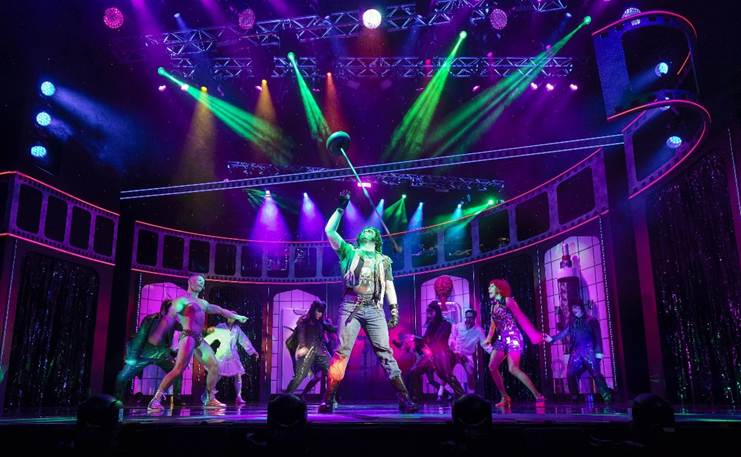
This Rocky Horror Show has a crispness and a professionalism that will linger. It extended from before the house lights went down, right through to when they went up again.
This was a cast of strong experienced actors rather than one padded out with soap stars, rock singers and ‘personalities’ as has sometimes been the case elsewhere.
Laura Bird’s opening Science Fiction – Double Feature. backed by a strong, tight and semi-visible band under Adam Smith, sets the scene and made one immediately sit up and think ‘wow this is serious stuff’. She was followed by the Brad and Janet’s Damnit Janet with a Janet (Haley Lafferty) who bore an uncanny (if unintentional) resemblance to a certain Deputy Mayor!
From there it … well it just flowed. James Bisp gave us a surprisingly strong Brad, Stephen Webb an even stronger Frank N Furter, and Kristian Lavercombe (Welsh-born but we’ll claim him as ‘ours’) a Narrator that was deliciously nuanced, through to the dynamically scene-stealing Eddie (Edward Bullingham) and a truly professional ensemble. That showed everywhere. In spades.
This current production of Rocky Horror Show goes on to Christchurch and Wellington after its Auckland season and that is to be applauded. In fact the Civic, and perhaps other venues too, has been looking and feeling a little forlorn of late and to see a full-on high-calibre British music-theatre production on its stage is something to be savoured. So congratulations to the producers on this venture. Let’s hope there’s more to come.
A delightful ending to the evening too when elder statesman Richard O’Brien was introduced to the stage post-curtain to rapturous applause, and who then brought on Little Nell Campbell, the original Columbine back in 1973.
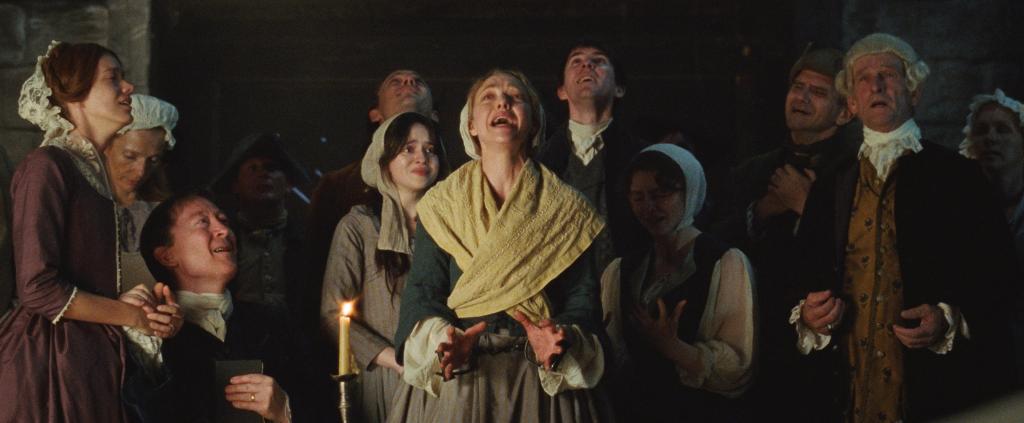
The Testaments of Ann Lee comes with excellent credentials having been written by Mona Fastvold and her partner Brady Corbet, with whom she co-wrote The Brutalist which was based on the life of émigré architect Marcel Breuer. That film was a metaphor for the struggles of an artist in post-war America. Testament follows the life of Shaker founder Ann Lee and is a metaphor for religious and social change in pre and post Revolutionary America
It is an earnest attempt to give Ann Lee her place in history as a major religious figure who endured religious persecution in 18th-century England for her position as a female preacher as well as in America where she and the Shaker movement were seen as unpatriotic pacifists.
The early American Shakers were known for their skill in what is now seen as stylish, minimalist furniture and their approach to simple architecture and there are sequences of constructing buildings and simple objects but not much about the tenets of the religion
Lee is played by Amanda Seyfried, with Lewis Pullman as her brother William and Christopher Abbott as her husband Abraham, who fathers her four children, all of whom die in infancy. Their deaths probably affected her, contributing to her aversion to marriage and sexual activity, influencing the subsequent Shaker celibacy doctrine.
Director Mona Fastvold is great at meaningful close-ups and handles the dance sequences as if they were only part of this religion/cult which has any merit or meaning. In these dramatic Broadway musical – like sequences there is lot of shaking, shivering, hand clapping and foot stomping ranging from some ecstatic dancing in her early Manchester days where the dancers look to be on acid trips to the more sedate Shaker dances the groups still perform
While the film has obvious good intentions, illuminating the history of Ann Lee and her contribution to American religious history it can also seen a cautionary tale about the dangers of being captured by religious leaders and ideology. The dangers of believing what self -declared prophets tell you, believing in visions and biblical interpretations. The film demonstrates how people can be sucked into religions or cults based on false information and interpretations.
Maybe audiences know about the revolt and reforms of religion in eighteenth century. Europe and the growth of alternative faiths and religious leaders such the Methodist Movement with John Wesley and early feminists like Selina Hastings, the Countess of Huntingdon, but the film provides little about what Ann Lee was reacting against.
While we see Ann Lee commanding groups of people we don’t get a sense of her charisma or oratory skills and her occasional visions of deities and paradise make her out to be more of a charlatan than prophet.
The big unanswered question looms over all the intense close-ups and hectic dance sequences is What is Ann Lee’s testament? What is her way to save souls. – celibacy, public acknowledgment of sins and misdeeds as well as dancing – I could go with the dancing.


 New Zealand Arts Review