Categories
Reviews, News and Commentary

A thrilling “The Planets” from the NZSO

Reviewed by John Daly-Peoples

The Planets

New Zealand Symphony Orchestra

Auckland Town Hall

November 23

Reviewed by John Daly-Peoples

One of the disappointing aspects of the NZSO’s recent “The Planets” concert was the short duration of the first work on the programme.

The Finnish composer Kaije Saariaho’s  “Asteroid 4179: Toutatis” was performed for four minutes, but many in the audience would have been delighted if it had run for twice or three times that length.

“Asteroid 4179: Toutatis”, is named for an actual asteroid, a two-kilometre rock fragment which moves between Mars and Jupiter. The work is a confluence of science and art with the music sounding like music many composers have used for the soundtracks of science fiction movies or to create otherworldly sounds Her ethereal sounds which represent the movement of the asteroid were mysterious and saw her turning scientific notations into music.

The composer was trying to describe the pattern of Toutati’s movements, its chaotic orbit, its unfixed north pole and its complex pattern of rotation so we had music which described the various ellipses, parabolas and  cosmic curves tracing out celestial journeys.

The work contained  multiple combinations, of strings and huge sounds from the full orchestra . Many of the sounds were unusual with shimmering strings, eerie sounds  from  the wind instruments  and even fleeting sounds from the harp.
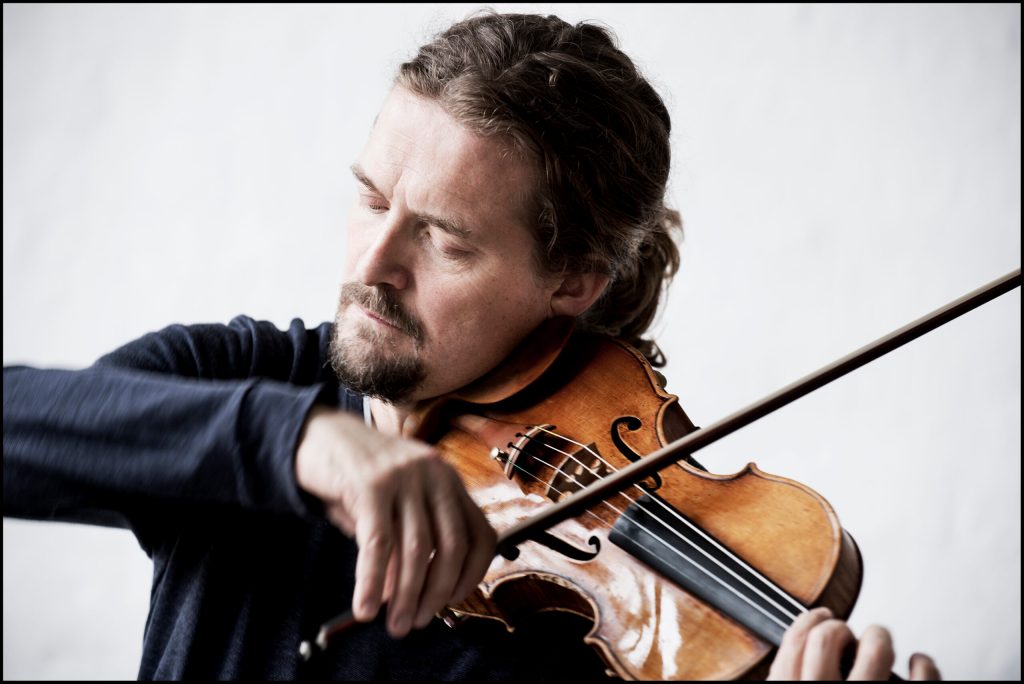
Christian Tetzlaff

Christian Tetzlaff gave an electrifying performance with his playing of Elgar’s Violin Concerto and he seemed to become one with the violin, It was not just his bowing arm but his whole body which appeared to be affected by the music.

He opened with some  ferocious bowing but this soon morphed into playing which was not much more than a whisper with Tetzlaff gently rocking as though playing a lullaby, taking him into a state of reverie.

There were times when the bow met the strings with a piercing sound,  while there were other passages when the bow barely touched the strings.

Several times his feverish playing was matched by Gemma New’s demonstrative conducting where she conducted with her body and not just baton and hands. Then there were times when violinist and conductor appeared to be linked in a dance, their bodies  swaying in harmony.

There were many passages in the work which were extremely taxing for the violinist but Tetzlaff handled these with style and self-assurance. At times he was sharply focused with some aggressive playing, as though he was trying  to outrun the orchestra  before changing to a more serene mode, melding with the orchestra.

With the slower second movement he was like a different violinist, the torments of the first movement replaced by an  engaging romanticism  Before the spirited finale he effortlessly dashed off a spirited theme with some grand gestures.

That Gustav Holst composed his The Planets suite early on in the twentieth century saved a lot of problems later on. Pluto was not discovered until 1930 so was not one of the planets which the composer included in his work. So, with Pluto now being dropped as one of the planets his work doesn’t have to be seen as an oddity just one of the great British musical works of the early twentieth century.

Under the brilliant direction of Gemma New the orchestra managed to give each of the sequences a thrilling interpretation, exploring their emotional and narrative themes. At times New seemed carried away by the music performing little dances and jigs, her hands and arms tracing out the music as though replicating planetary arcs.

From the relentless marching sounds of Mars, The Bringer of War through to the almost spiritual Neptune there was an urgency and  drama from the orchestra.

Jupiter featured an onslaught from the full strings along with an array of percussion including bells and triangle which added to the intense atmosphere.

Emotional and expressive playing by the violins, cellos, and double basses introduced Venus along with percussion instruments – gongs, triangles, bells, timpani, celesta and drums, which provided a serene and imposing atmosphere.

Saturn gave us the sombre sounds of the double basses  and  plucked cellos and  this then changed with a nice contrast to harps and double bass.

The opening harps and organ of Neptune, created an enigmatic sound with the  orchestra joined by Voice New Zealand Chamber Choir which was beautifully expressive, becoming another instrument  to finish the work in style,

Categories
Reviews, News and Commentary

APO’s Romantic Journeys

Reviewed by John Daly-Peoples

Johannes Moser

Auckland Philharmonia

Romantic Journeys

Auckland Town Hall

November 21

Reviewed by John Daly-Peoples

The opening and closing works on the APO’s Romantic Journeys programme featured travelogues from Tchaikovsky and Schumann. Tchaikovsky Capriccio Italien is a record of one of his  trips to Italy whileSchumann’s Symphony No.3 ‘Rhenish’ was written in response to a journey along the Rhine and a visit to Cologne.

Tchaikovsky travelled many times to Italy, partly to escape the Russian winter and it was on one of these trips that he was inspired to compose his Capriccio Italien partly inspired by Carnivale, of which he wrote – “seeing the public raging on the Corso, you are convinced that no matter how strangely the joy of the local crowd manifests itself, it is nevertheless sincere and unconstrained,”

A  blaze of horns opens the work,like a curtain being lifted to reveal a colourful panorama of landscape, cities and spectacle. There are some slow and precise passages before we hear traces of folk music which introduce a sense of Italian life with lively  and charming dance melodies and bugle calls.

This was followed by a fast-paced tarantella-like sequence with the lively strings and woodwinds allowing the composer to capture the ebullient moods of the people as they danced through Carnivale  from dawn to dusk.

Throughout the work with its changing, colours and tempos there is a sense of the composer delighting in parading these sounds which would be new to a Northern European  audience

Schumann’s Symphony No 3 (Rhenish) is a portrait of the Rhine but it can be seen as part of the nationalist ethos which had been developing since the end of the Napoleonic  Wars and was particularly strong in the Rhineland.

From the opening fanfare, there is a sense of celebration of the land, the buildings and the people. The Rhine is central to this depiction and the music paints a picture of the flowing river indicated by the sinuous sounds and overlapping melodies of the orchestra.

The work is like a musical diary depicting the changing landscape as the composer passes through towns and villages capturing his changing impressions.

The voluptuous second movement also has landscape images – clouds, fields and activity, all highlighted with bursts of dramatic brass while the third continues with descriptive passages which are increasingly jaunty.

The fourth movement is  full of majestic sounds and is a description of the composers visit to Cologne Cathedral, the largest in Germany. The building was still in its unfinished state, surrounded by scaffolding, the two massive spires yet to be installed. It would still have provided an impressive scene and the music conveys that sense of size and grandeur, with traces of liturgical and choral music. The full range of the brass instruments provided  the orchestral texture and the movement climaxed in a massive, repeated fanfare for brass and winds.

With the finale, the vibrancy of the first movement was revisited emphasising the rhythms, giving the music a headlong movement that drove the Symphony to its thrilling, conclusion.

Between the two descriptive works the orchestra played Tchaikovsky’s Variations on a Rococo Theme with German / Canadian cellist Johannes Moser who replaced Edgar Moreau.

Moser glided  effortlessly through the work revelling in the interplay with the orchestra in a tantalising display which emphasised aspects of the sophisticated composition. He made use of the various solo sections  to show an understanding of the work as well  displaying his extraordinary technical skills.

He was able to combine, as did Tchaikovsky, an understanding of the romanticism of the Rococo theme as well as debt to Mozart which gives the work its spectacle in the way that cello and orchestra intertwine. The theme was dissected and re-formed in different guises with Moser seemingly finding new opportunities in the melodies as well as exploring its tones, and textures.

Categories
Reviews, News and Commentary

NZ Trio’s Untamed Hope

Reviewed by John Daly-Peoples

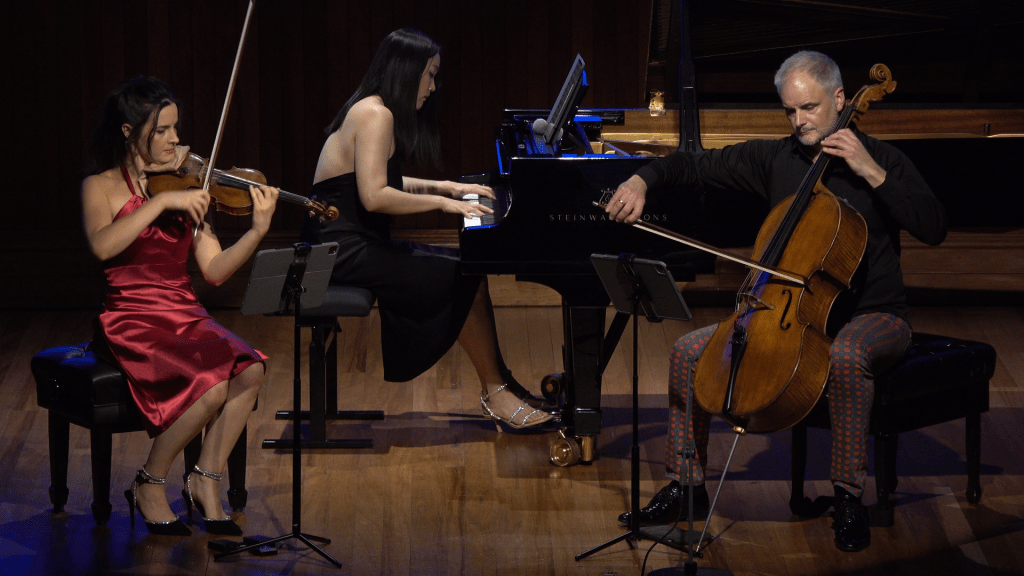
NZ Trio. Amalia Hall, Somi Kim and Ashley Brown

NZ Trio

Triptych 3: Untamed Hope

Auckland Concert Chamber

November 17

Reviewed by John Daly-Peoples

NZ Trio as well as being one of the finest groups of players in Australasia are also one of the most innovative and inspiring with their stimulating programmes. This was clear in their latest concert, “Untamed Hope” which featured four women composers from New Zealand, England, Germany and the USA with works spanning three centuries.

The title of the concert, “Untamed Hope”: probably alludes to the fact that at least three of the  women were constrained in some way by the environments in which they began their musical careers. Their hopes of being able to be in the concert hall on equal terms with their male counterparts was largely tamed by that environment.

The opening work was English composer  Ethel Smyth’s Trio  in D minor, a work  written when she was twenty-two having left the England to study in Leipzig.  At the time she met many contemporary composers including Clara Schumann and Brahms.

The first movement could even have been written by Brahms, which was apparent in the  sinuous playing of Somi Kim who was accompanied by delicate melodies from the strings. Initially violin and cello were in harmony with the piano but then their playing began to diverge, with each of the instruments developing their own musical themes.

Parts  of the second movement seem to be based on a folk song (French or English) with theme passed between the three instruments, all suggesting a soulful introspection as well as displaying the composers sophisticated writing.

Third movement entitled “Leid” had many aspects of the “song without word” with hints of a Scottish dance melody played by Amalia Hall

The dramatic finale saw a long  passage by the piano with the strings entering, playing a Hungarian-like tragic theme.

Eve Bedggood’s Ukiyo 浮世 –The Floating World relates to the Japanese concept of “the floating world” which evokes an imagined universe of wit, stylishness, and extravagance, a state which was often experienced through theatre, song, stories  and pictures.

Bedggood says of the notion of “the simplicity of just existing  and immersing yourself in the floating world or sense of calm is something I think music and other art forms can evoke”.

Much of the work had musical images of floating, flowing and meditation states with the work opened with dark rumbles from the piano suggesting sombre depths with strains of the violin and cello making interventions .

We heard exciting glissando from the Amelia Hall’s violon and careful, controlled repetition from Ashley Brown cello, while many of the sequences  saw an almost minimalist backing with the scudding sounds of the strings hovering above.

The work was like a reverie, the various themes creating dreamlike images much like those of many Japanese prints of an earlier period.

The American Joan Tower’s “Trio Cavny” opened with some tingling high notes from the piano with the violin and cello responding with equally high-pitched sounds creating a taut musical mood.  A following sequence saw Somi Kim creating crashing waves of sound leading to a tension between the three instruments which then played independently of each other before arriving at a point of intense harmonisation.

The music ranged from the soundtrack of a horror movie to a musical version of the Doppler Effect to the sounds of sympathetic voices in  minimalist mediation.

The final work on the program was Fanny Mendelssohn’s Piano Trio in D Minor. It is a beautifully conceived work with the violin and cello flowing around the energetic displays of Somi Kim

Amalia Hall provided both a delicacy and sharpness with her playing, contrasting with Ashley Browns sedate cello.

The introspective and reflective  second movement which opens with  a romantic  sequence from the piano contained elements of waltz tunes  while the third suggested elements of German folk song.

In the final movement the three players displayed a vigorous drive and energy, beginning with some  mesmerising playing by Kim before Hall and Brownjoined in creating an eloquent dialogue, leading to repeated motifs to end the work with an optimistic conclusion

The group announced that cellist Ashley Brown will be leaving the group to take an appointment as Principal Cellist with the Auckland Philharmonia Orchestra next year. He  has been involved with the trio since its founding twenty-three years ago and his presence with the trio will be greatly missed.

Categories
Reviews, News and Commentary

The passion and drive of Alexander Gavrylyuk

Reviewed by John Daly-Peoples

Alexander Gavrylyuk

New Zealand Symphony Orchestra

Alexander Gavrylyuk

Auckland Town Hall

November 16

Reviewed by John Daly-Peoples

Opening the NZSO’s latest concert “Alexander Gavrylyuk”, conductor Vasily Petrenko spoke about the three works on the programme and what he saw as the  links between them. The three composers had all left their native homes – Lera Auerbach and Sergie Rachmaninov from Soviet Russia and Bela Bartok from Hungary to escape the Nazis. He also noted the three composers search for freedom of expression and the nature of transformation in the three works.

The major work on the programme was Rachmaninov’s “Rhapsody on a Theme of Paganini” which has some interesting history or mythology to it  . The nineteenth  century violinist Nicolò Paganini was such a virtuoso, that many believed he had made a pact with the devil. Rachmaninov seems to have subscribed to that view as he  includes a reference to  the medieval melody Dies Irae (Day of Wrath) and some of the darker elements in the music reflect those diabolic aspects.

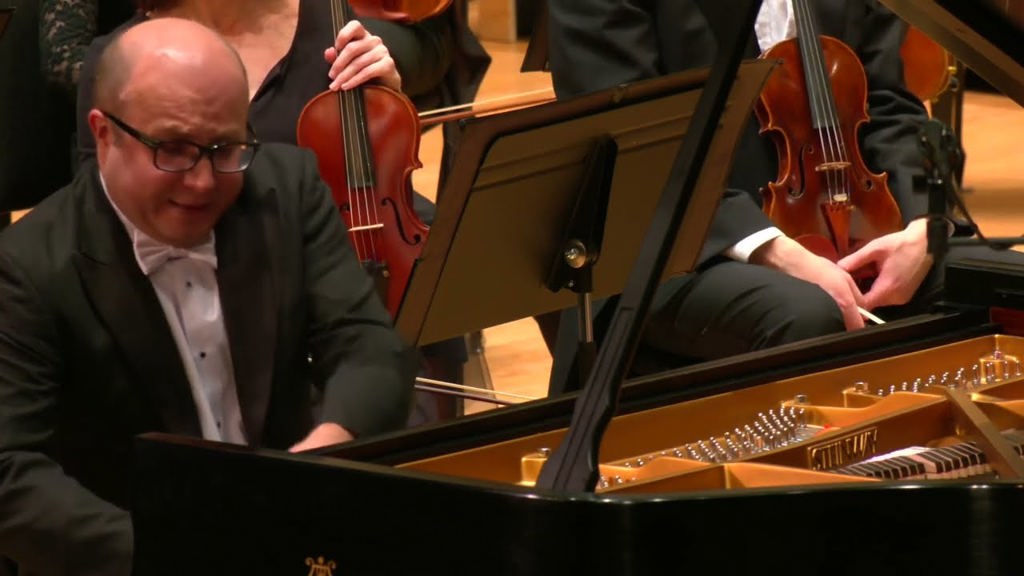
This drama and other elements were highlighted by pianist Alexander Gavrylyuk in a perfect performance that showed a perceptive approach to the music

He displayed a mastery of stylish playing, able to ignite the orchestra with his passion and drive.

His playing technique: changing tempos, charging through themes and varying the tonal qualities added to the excitement of the playing and appeared to enliven conductor Vasily Petrenko well as the orchestra.

Hunched over the piano his playing was by turns delicate, whimsical and ferocious. There were times when his sounds were like rippling water while at other times they were more like gushing torrents.

This was brazen and adventurous playing which slowly revealed the technical and emotional depths of the work moving from the childlike to the theatrical and  onto the grand and funereal.”

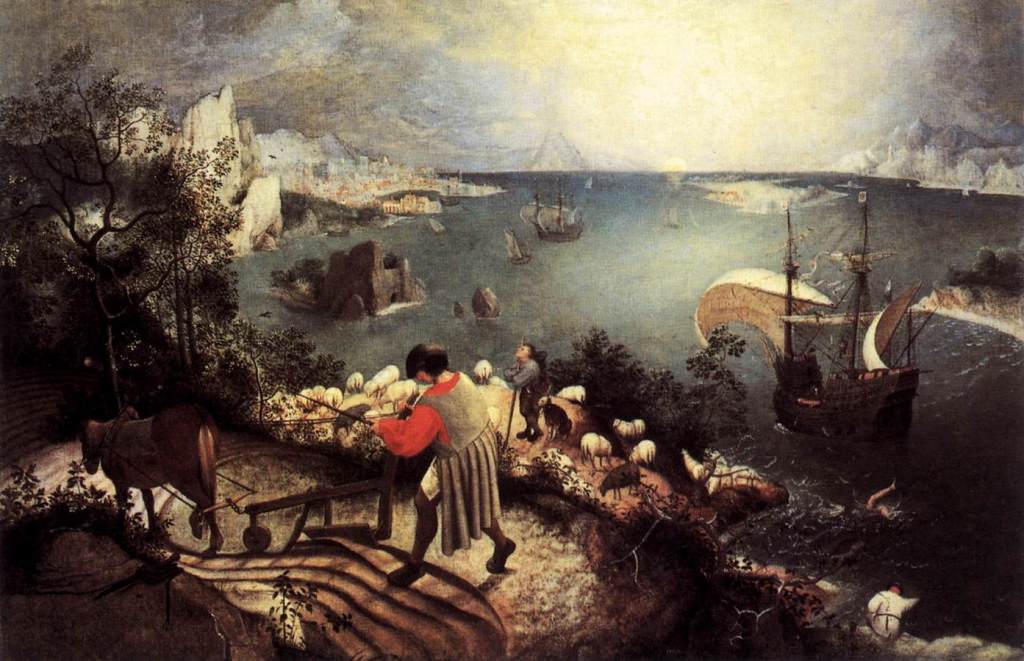
Breugel “The Fall of Icarus

The first work on the programme had been Lera Auerbach’s “Icarus” which tells of the myth of Icarus who ignored his father Daedalus and flew too close to the sun, causing the beeswax securing his wings to melt and him to fall into the sea.

The composer said of the work “What makes this myth so touching is Icarus’s impatience of the heart, his wish to reach the unreachable, the intensity of the ecstatic brevity of his flight and inevitability of his fall.”

The opening strings and brass provided a sense of take-off and the exhilaration of Icarus. This was followed by a galvanised orchestra and flutes suggesting flight. Sounds of alarm from  the orchestra signalled the coming disater  and Concertmaster  Vesa-Matti Leppanen brilliant little solo took a dreamlike diversion which became increasingly tense. This led to the insistent brass heralding Icarus’ fall.

The final sequences could be seen as the composer’s response to Bruegel’s painting “The Fall of Icarus” where the action of the event is reduced to a leg just visible, poking up  from the water . The pulsing strings suggested the vibrancy of the sun which is a counterpoint to the disaster, the quivering sounds a refence to Icarus’ fall into the water and the scattering of feathers. The work ends with a gentle requiem suggesting Icarus becoming a mythic hero.

The final work on the programme was Bartok’s five movement Concerto for Orchestra

It was his last major work and can be seen as some sort of musical autobiography of his last few years having had to leave his native Hungary and settle in the US

Composed a couple of years after his escape from Hungary it traces out his journeying from a bleak Europe to a new life, moving from a dark period in his life to one of  freedom and light. The music reflects this moving with ominous and threatening sounds through to lively and energetic melodies.

The work opened with sombre music punctuated by the flutes and raucous brass. Anguished strings confronted by ferocious brass, woodwind and percussion and the continued presence of the flutes sounded out the call for  freedom.

There was a sense of evolving events and narrative and about remembrance and loss with whimsical passages as well as a constant sense of oppression and mystery.

While there were references to horrors and drama of WWII the work is filled with inventive  music which was constantly evolving with a carnival-like sequence, playful sounds as well as hints of folk melodies  and strains of Eastern music.

The success of the work was in part due to the focused conducting of Vasily Petrenko with his lively and energetic approach and his precise direction in shaping the music’s dramatic sounds

Categories
Reviews, News and Commentary

This Doll’s House Sizzles

Reviewed by Malcolm Calder

Laura Hill (credit Tatiana Harper)

A Doll’s House Part 2

By Lucas Hnath

Directed by Paul Gittins

Design John Parker

Costumes Elizabeth Whiting

Lighting Jane Hakaraia

Production/SM Teresa Sokolich

With Laura Hill, Stephen Butterworth, Danyelle Mealings, Maya Dalziel

Herald Theatre, Aotea Centre, Auckland

14 Nov to 1 Dec 2024

Reviewed by Malcolm Calder

A Doll’s House, Part 2 runs about 90 minutes with no interval and is a bit like a well-cooked, multi-course series of tastes – or tapas if you will.  It is a meal that sizzles and left me feeling delightfully sated.

Each taste is marvelously well-prepared and each is impeccably presented.  Chef Hnath’s initial offerings covered ground prepared by others although he put an individual tweak to each and ensured they were delightfully delivered in ways that addressed time-proven issues of women’s independence, choice and self-fulfillment. 

His chief protagonist Nora Helmer arrives through the same door through which Ibsen had exited her 15 years previously.  But now she bears the scars, world-weariness and hard-won wisdom of a woman who has emphatically found and secured her place in the world as a clearly successful writer.  She is confronted by the worldly-wise Ann-Marie , Nanny to her abandoned children, an older woman who has looked, listened and learned much.  Ann-Marie is able to match Nora when it comes to verbal sparring and their discussion, debate, and general discourse delves into independence, freedom, patriarchies and the expectations of society.  And what that means.  But up to this point Hnath’s menu largely provides tastes with which we are familiar – albeit extremely well done with lashings of aspiration and confidence and some magical energy exchange between the two women.

Humour is never far away, arguments are sophisticated and standpoints and circumstances are outlined one after the other.

However well-presented these standpoints are and just as I was thinking I had heard most of their supporting arguments previously and had mistakenly arrived at a law moot, Hnath introduces Nora’s perhaps-former husband and not quite-ex Torvald.  His arrival is somewhat unexpected to the two women and now the meal and its courses becomes successively tastier.  New garnishes are added – subtly at first as incomprehension, resentment and self-doubt became apparent between all three.  But liberal sprinklings of emotion that initially bubble to the surface and then burst forth as spicy aromas that grow as they are savoured.

And that is the crux of Hnath’s play.  I sat enthralled as each new dish was served raising questions about family, marriage and responsibility.   Again, hardly new arguments, but assembled in dramatic combinations.

The dialogue is fast and vibrant – some of it using very modern vernacular. There is confusion and disagreement and miscomprehension that is sharp and pointed.

Director Paul Gittins is the interpreter of Hnath’s dishes and adds depth and nuance to each.  Designer John Parker enhances them with a simple set that is little more than a platform containing three or four chairs, a small table and an omni-present door frame that acknowledges where Ibsen left off.  Its very simplicity allows Gittins’ cast to better explore and extract light and shade.  Elizabeth’ Whiting’s costumes hint at Ibsen’s period, but nor are they of the present.  Timeless and script-driven are terms that spring to mind.

Rightly so, Laura Hill is billed as the ‘star’ and makes a compelling Nora as the chemistry between her and others is abundantly clear.  Her initial interactions with a remarkably strong Maya Dalziel as Nanny Anne-Marie and then with Torvald reveal the maelstrom that lurks beneath the surface of their worlds.

From being initially nervous and confused Torvald’s emotions soon take over and A Doll’s House 2 really starts to sizzle.  His Torvald is achingly sympathetic one moment, a blustering tyrant the next and ultimately a confused soul.

Their calm and rationale daughter Emmy (Danyelle Mealings) attempts to metaphorically and literally patch up the father-she-never-has-known as a voice of balanced reason but her voice is largely ignored, becoming almost that of a rather more dispassionate audience.

In conclusion one can only applaud.  This is an actor’s play that provokes its audience to empathise with different perspectives and director Gittins allows his universally strong and highly experienced cast to do so.

It is rather like that tapas meal where each course sizzles making A Doll’s House Part 2 a delight and, for me, one of the standouts of Auckland theatre in 2024.

As advised in all the pre-promotional material, familiarity with Ibsen’s 1879 original is not essential, but there are direct and indirect references and clues to it are strewn liberally throughout Hnath’s 21st century sequel. One might think of them as yet another layer of satisfaction – or a hidden dessert if you prefer.

Categories
Reviews, News and Commentary

Luise Fong’s “Nexus” examines the body and the cosmos

Reviewed by John Daly-Peoples

Luise Fong, Pathology

Luise Fong, Nexus

Bergman Gallery, Auckland

Until November 30

Reviewed by John Daly-Peoples

When I reviewed the work of Luise Fong in the “Cultural Safety” exhibition at the Frankfurter Kunstverein in 1996 I noted that her surfaces had much in common with an exhibition in the adjacent Jewish Museum which was displaying lampshades made from human skin.

Works from that time such as Pathology Sample ($5200) which refers to the examination of tissue and the wider aspects of death and mutability are central to Fong’s work. These images allude to the body and the forces—physical, psychological and social which affect it.

Luise Fong, Omni

While there is a focus on the body in her works there are wider connections which  encompass the nature of the cosmos as well as with works such as Small Orbit  8 ($6800). This contradiction or ambivalence between the microscopic and macroscopic infuses much of her work. This other worldliness is also suggested in the two photogram works included in the show where objects are transformed into strange shapes as in the UFO Series X ($3000).

There is also a sense of this ambiguity in the ethereal sounds of the Icelandic musical group Sigur Ross which have inspired the artist.

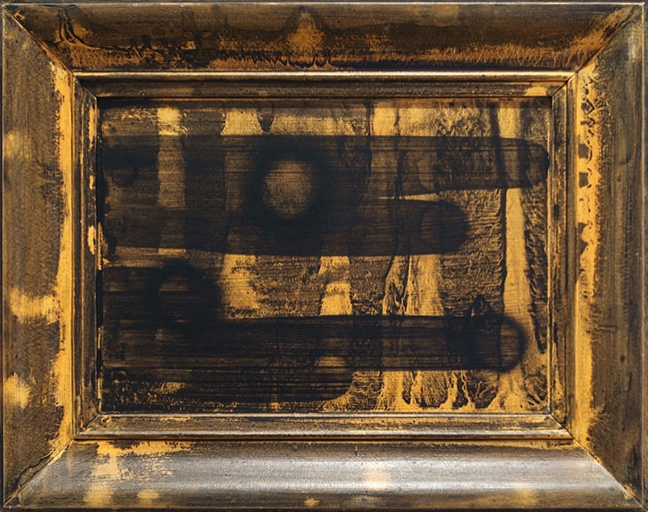
With many of the images such as the sperm-like streaks of paint in Omni ($9800) , the cellulear forms  in Pool ($7700) or the planetary shapes in Orbit ($6800) we are aware of the artists manipulating the painted surface, creating other surfaces and changing our perceptions.

Luise Fong, Twilight III

Some of her more recent work extends the notion of skin with work which look more like fabric, reflecting her Chinese/Malaysian heritage and her interest in textile design. With work such as Twilight III  ($3200) with its vibrant reds and oranges as well as other with dramatic blues, colour plays an important role. These images which can be seen as displaying planetary shapes, and solar flares are also suggestive of MRI s scans of the body, returning her work to its origins of thirty years ago.

Categories
Reviews, News and Commentary

Te Whare o Rehua Sarjeant Gallery

Reviewed by John Daly-Peoples

Te Whare o Rehua Sarjeant Gallery

A Whanganui biography

By Martin Edmond

Massey University Press

RRP $65.00

Reviewed by John Daly-Peoples

Whanganui’s Serjeant Gallery has just reopened after having been closed for ten years with  an opening season entitled “Nō Konei | From Here” (Until 11 May 2025). The exhibition features over 200 artworks, spanning four centuries of European and New Zealand art history. Filling the gallery’s newly expanded exhibition spaces, works range from traditional gilt-framed paintings to contemporary practice in a variety of media.

Coinciding with the opening is the publication of “Te Whare o Rehua Sarjeant Gallery” which tells the gallery’s 100-year history.

Written by Martin Edmond the book charts the Sarjeant Gallery’s early years and its development as a collecting and exhibiting institution that is now recognised as one of the major New Zealand’s art galleries.

The gallery  which is one of the most elegant and imposing buildings in the country is located at a central point in the city and has been of significance to the development of the city.

Henry Sarjeant whom the gallery is named after had lived in the area since the 1860’s and had  a lifelong interest in the arts, visiting the major galleries of Europe during a number of trips abroad. When he died in 1912, aged 82, he left property valued at £30,000 in trust to the Wanganui Borough Council for the purpose of building and maintaining an art gallery. The design of the gallery was won by Dunedin architect Edmund Anscombe and the building was constructed in the shape of a Greek Cross and  faced with Oamaru stone.

The Governor General, the earl of Liverpool, laid the foundation stone on 20 September 1917, and on 6 September 1919 the Prime Minister, W. F. Massey, officially opened the gallery.

Frank Denton, The Sarjeant Gallery, 1926. Collection of Te Whare o Rehua Sarjeant Gallery.

While the gallery was the dream of Henry Serjeant Martin Edmond notes that it was Sergeant’s wife, Ellen who was the driving force after his death.

“Ellen Sarjeant was a remarkable woman and without her we probably wouldn’t have the gallery we do today. She was almost 40 years younger than her first husband, Henry Sarjeant, the benefactor of the gallery; the eldest daughter of one of his close friends. It would be interesting to have some insight into the dynamics of their marriage but they were very discreet. It’s possible that he had the money and she had everything else: the drive and enthusiasm, the artistic insight, the business sense and the administrative skills. He would have seen this and I suspect their partnership was intended to transform the city the way the Sarjeant has. Ellen was among those who oversaw the building of the gallery; she was, with her second husband, John Neame, the initiator of its first acquisitions, both in New Zealand and overseas.”

The importance of Bill Millbank (Director 1978 – 2006) in developing the galleries status in his time at the gallery was a period when the institution became an important institution in developing a major programme as well as curating exhibition of national importance.

Edmond notes that the while Millbank initially had no real interest in the arts this changed with his travels overseas.

“crisscrossing Europe in a Kombi van, visiting galleries and churches, looking at art ‘all the time’. There was a revelation in Toledo, in front of an El Greco, when Milbank understood a hitherto obscure (to him) connection between these works and a painting he had admired on his weekly visits to the Sarjeant. He wondered, naively, if the Sarjeant painting was in fact by El Greco. It turned out to be the aforementioned Gethsemane by New Zealand artist Lois White.

Among the significant exhibitions that Millbank was responsible for was the first exhibition of “The Given as an Art-Political Statement” by Billy Apple in 1979. The exhibition included a controversial intervention by Apple, where he removed the sculpture “The Wrestlers” (Raffaello Romanelli) from its prominent position and replaced it with photographs of the sculpture on the surrounding walls.

He also initiated Te Ao Marama: Seven Māori Artists which showcased contemporary Māori art and travelled to Sydney.

Millbank was also responsible for the development of the Tylee Cottage residency which has seen over sixty artists make use of the programme including Laurence Aberhart, Mervyn Williams, Bronwynne Cornish, Adrian Jackman, Anne Noble  and Jade Townsend

Edmond also writes of the pivotal role of Gordon Brown  who was the first full time director between 1974 and  1977).

The book has the subtitle of “A Whanganui biography” and Edmond rounds out both history of the gallery and its place in the city’s history as well as the directors of the institution. He includes many incidental aspects of the city’s history both of artistic as well as general interest.

He includes the D’Arcy Cresswell drama where the poet was shot and injured  by  the  Mayor Charles Mackay who had made homosexual advances towards him in the mayoral office. The incident brought Mackay’s 11-year career as mayor of Whanganui and as a major supporter of the gallery to a shocking end.

While the galleries new extension has been many years in planning and execution it was hampered early on by the mayor Michale Laws. He had Goebbels-like approach to culture, seeing the “arts community consisting mainly as bludgers and elitists”. His attempts to stop the building was a low point in the city’ s artistic history.

Threaded through the gallery’s history are accounts of the developing collection including donations, European buying sprees and local acquisitions. Over its 100 year the  gallery has acquired a number of important works as well as establishing a fine collection of local artists including Edith Collier.

It is a compelling read full of lively, far sighted and dubious characters along with interesting accounts of the development of a public institution.

The book is generously illustrated with many works from the Sarjeant’s rich, varied and important collection. It also provides a full list of all the staff since the gallery’ inception as well as all the artists who have been Tylee Cottage residents.

Categories
Reviews, News and Commentary

ATC’s six plays for 2025

John Daly-Peoples

Murder on the Orient Express

AUCKLAND THEATRE COMPANY 2025 SEASON

John Daly-Peoples

Auckland Theatre Company have announced their 2025 Season of six plays ranging from Shakespeare’s 400-year-old Romeo and Juliet to Roger Halls latest.

These plays include two world premieres, an Auckland premiere, and a translation of a one of the classics. The productions will be directed by some of the country’s best talent including Shane Bosher, Oliver Driver, Benjamin, Alison Quigan QSM and Katie Wolfe,

The Plays

a mixtape for maladies
by Ahi Karunaharan
4 – 23 Mar
Ahi Karunaharan’s talesweeps from 1950s Sri Lanka to modern-day Aotearoa. Directed by Jane Yonge (Scenes from a Yellow Peril) this is both a love letter to Sri Lanka and a lament, the story plays out over 17 songs – ranging from Dusty Springfield to La Bamba to the hit single from a Tamil rom-com.

A collaboration between Agaram Productions, Auckland Theatre Company and Te Ahurei Toi o Tāmaki Auckland Arts Festival.

Agatha Christie’s Murder on the Orient Express
Adapted for the stage by Ken Ludwig
22 Apr – 10 May
The classic that birthed an entire genre comes to the stage with Cameron Rhodes (King Lear, North by Northwest) as the inscrutable Hercule Poirot, supported by Rima Te Wiata, Sophie Henderson, Ryan O’Kane and Mayen Mehta. This play was adapted for the stage by Tony-nominated playwright Ken Ludwig and is directed by Shane Bosher.

Roger Hall’s End of Summer Time
17 Jun – 5 Jul
New Zealand’s most successful playwright Sir Roger Hall brings back one of his most famous characters, Dickie Hart who made his first appearance almost 30 years ago in C’mon Black. This is an affectionate and hilarious skewering of an old grump who realises he still has a lot to learn about the world when he moves to Auckland to be closer to his grandkids. Directed by theatre stalwart Alison Quigan, the play sees Andrew Grainger (Peter Pan, North by Northwest) bringing his big-hearted comedic talent to this solo show that like, all of Hall’s plays, has more than a little bite to it.

William Shakespeare’s Romeo and Juliet
15 Jul – 9 Aug
William Shakespeare’s tale of passion and heartbreak is recast as a fast-paced thriller in this large-scale production of Romeo and Juliet, directed by the co-director of 2023’s runaway hit King Lear, Benjamin Kilby-Henson. Theo Dāvid (Shortland Street) and Phoebe McKellar (One Lane Bridge) make their Auckland Theatre Company debuts as the star-crossed lovers in a Missoni and Pucci-inspired take on 1960s’ Italy, supported by a stellar cast including Bronwyn Bradley, Miriama McDowell and Beatriz Romilly. As potent today as it was when written more than four centuries ago, this tragedy celebrates the triumph of love over hate.

Mary

MARY: The Birth of Frankenstein
by Jess Sayer
19 Aug – 7 Sep
A villa in Switzerland, in the dark winter of 1816. Mary Shelley stands over a bloodied corpse and knows her words are to blame. The script, written by award-winning playwright Jess Sayer in collaboration with Oliver Driver, builds on the bones of history to re-imagine the events of the infamous night that birthed one of the most famous novels of all time: Frankenstein. In Mary: The Birth of Frankenstein, co-created and directed by Oliver Driver (Amadeus), the production transforms from a parlour drama into an unsettling, drug-fueled, lust-drenched Gothic horror as Shelley, played by Olivia Tennet, casts off the men who seek to control her and steps from childhood into life.

Tiri: Te Araroa Woman Far Walking

TIRI: TE ARAROA WOMAN FAR WALKING
by Witi Ihimaera
4 – 23 Nov
The Season closes out with a history-making new adaptation of the epic tale of Tiri Mahana, a 185-year-old matriarch, from her birth at the signing of the Treaty of Waitangi to present day Aotearoa. For the first time, the play will be performed in two parts, English and te reo Māori, with both versions capturing the enduring spirit of Te Ao Māori. With the multi-award-winning team of The Haka Party Incident creator Katie Wolfe (Ngāti Mutunga, Ngāti Tama) and actor Miriama McDowell (Ngāti Hine, Ngāpuhi); Witi Ihimaera’s (Te Whanau a Kai and Ngāti Porou) extraordinary play will shine once again, re-imagined in te reo Māori by Maioha Allen and company.

Categories
Reviews, News and Commentary

Tempo Dance Festival: In Transit, Matter and Slip

Reviewed by John Daly-Peoples

In Transit

Te Rerenga o Tere | Tempo Dance Festival 2024

Rua, – In Transit & Matter

Q Theatre

October18

Slip , Rebecca Jensen

October 20

Reviewed by John Daly-Peoples

In Transit

Choreographer, Louise Pōtiki Bryant

Sound / Av, Paddy Free

Lighting, Jo Kilgour

Costumes , Kasia Pol

Slip, Rebecca Jensen

Louise Pōtiki Bryant’s In Transit imagines the links between Maori  myth, ritual and their notion of the ancestors observing the nutuarl  world and its cretasures. Here the shaping of the creation myths, are given narratuives and images which give meaning to the transition in human life  paralleling those of the spirit world.

The work appears to dwell on several aspects of Māori myth such as the creation story of Ranginui and Papatūānuku, whose, children exist for a time in  in the dark world until Tāne, separates their parents, bringing the children into light.

There is also reference to the evolution of the  taiaha which Tū, the god of war asks Rūrūtangiākau, the weapon maker of the gods to create a weapon.

The dance opens with a low droning sounds as the sole figure, representing Tū or Rūrūtangiākau who dances through shafts of light with a  branch balanced on his head., He moves from an underworld into light and is joined by five other dancers who perform with long sticks or the evolving taiaha. They dance to a soundscape which [provides a sense of the being under water along with bird sounds.

The dancers seemingly inspired by bird and reptile  movement, move with short sharp steps id birds, strutting, foraging and pecking. These  movements were accompanied by staccato like breath which add to the sense of existing n another dimension.

Some of the dancers entwine cresting manaia shapes suggesting the notion of messenger between the mortal and spirit worlds.

The slender taiaha are used to create a Papatūānuku womb-like shape out of which  a figure emerges.

The work is full of robust dancing, flickering shafts of light along with a mesmerizing soundtrack along with relentless beats. It blends together sound, music, visual and movement describing the transitions between the physical world and the spirit dimensions.

Matter

Matter

Choreographer & Sets, Ross McCormack

Composer, Jason Wright

Lighting, Jo Kilgour

Costumes , Vicki Slow

“Matter” choreographed by Ross McCormack opens with a lone figure seemingly transfixed by one of the five post erected on the stage. He was joined by another figure and from their fitful movements it appears that they are inhabiting a world where they are seeking, discovering or being activated by lines of force or energy, possibly emanating from the poles.

Then they are joined by a group of dancers who move to a cacophony of sound, inching forward, creating a reptilian-like form with a nod to the work of the German choreographer Pina Bausch. Their erratic shuffling moves, driven by an inner tension and massive roars of music is by turns orderly as though responding to laws of Nature or manipulated by an unseen hand.

Two of the dancers appear to respond to other sounds as though out of their control and they engage in movements which area mix of tussle and dance, their movements  hinting at forces which are attracting and repelling g them.

We get the sense that the poles are the xxx of these forces-  electromagnetic, natural rhythms or xx.  Other bodies separate and merge becoming alien creatures and the sounds and music we hear are the sound of  massed bodies  and the arms and legs becomes tentacles.

Throughout the work the dancers seemed to be either seduced or buffeted by the music and sounds, their movements at times urgent and  sharp while at other times graceful and submissive.

In the latter part of the dance the poles /  pou are moved taking on more symbolic meaning- the crucifixion, the triumphal Iwo Jima image  of WWII.

There is a surreal beauty to the dancing which is created with a subtle mix of  sound and lights while at one point the music takes on the rhythms of the Pacific with a hypnotic quality.

Another dramatic sequence involves first two dancers and ultimately all eight moving and dancing as mirror images of each other creating a dramatic frieze. This architectural aspect is also present in many of the other sequences, deriving from the five poles.

Much of the time the dancing could be likened to the movements of atoms and molecules in chemical and physical reactions, conforming to notions of particle physics and string theory.

Slip

Slip, Rebecca Jensen

We don’t often get to see true absurdist dance in the style of the absurdist dramatic works of the 1950s and ’60s. Nothing that suggest the human condition is essentially absurd and devoid of purpose.

Rebecca Jensen’s “The Slip” seemed to offer an absurdist dance which was set in a bizarre or surreal environment. The stage looked like an art installation  – a step ladder, bucket, watering can, a table cluttered with apparatus, a sole cup and a large, directional microphone.

The opening minutes of the work continued the absurdist premise as we watched a couple of stagehands pouring water into containers and splashing it over  the stage. It looked as though it was a work about sea level and climate change. This idea was reaffirmed throughout  the production with images and the sounds of water.

After that opening  sequence Rebecca Jensen appeared, dressed in a medieval gown, the first of her iterations. She sat, meditatively  on the stage, performing simple gestures which were  in marked contrast to her hectic movement in the latter part of the work.

“Slip” is a filled with precise  and deliberate movements, mixed with moments of humour and provocation. It is an experimental work where the  flaws and interventions that show up over the course of the performance add to its idiosyncratic quality.

It’s a work which can be interpreted as having  surreal narratives, the themes of which will occur to the individual viewer as they come to grips with  the many vignettes.

The focus of the work comes from the title, ”Slip”. There is a constant slippage between what we see and what we hear, between what is natural and what is fabricated between the  role of the performer and the place of the technician.

While Jensen is the dancer/actor in “Slip” she is aided by Aviva Endean who acts as sound technician, participant and  guide,  controlling a table full of noise producing devices both physical and electronic.

When Jensen first appears, she dives into her backpack extracting various items such as a key, a bag of chips a bottle of water and a newspaper. But when she handles these items, it is not their natural sound we hear, it is Endean – shaking her own newspaper and pouring her own bottle of water, the sounds picked up and enhanced by the large microphone. When Jensen eats a chip, the crunch we hear is from Endean’s microphone enhancing the sound of her biting on a stick of celery.

This dislocation and enhancement occurs throughout the work in different forms. When Jensen walks around the stage we hear the sounds of Endean’s feet crunching on shells. At other times when Jensen walks, we hear the sounds of her body creaking as though she is robotic.

Jensen explores a range of movements from small gestures though fluid and dramatic balletic moves to the volatile actions which see her almost out of control.

The soundscape produced by Endean is similar to the enigmatic sounds created by the experimental group From Scratch and like that group she uses unlikely items to create the sounds.

Categories
Reviews, News and Commentary

The APO’s 2025 Season revealed

John Daly-Peoples

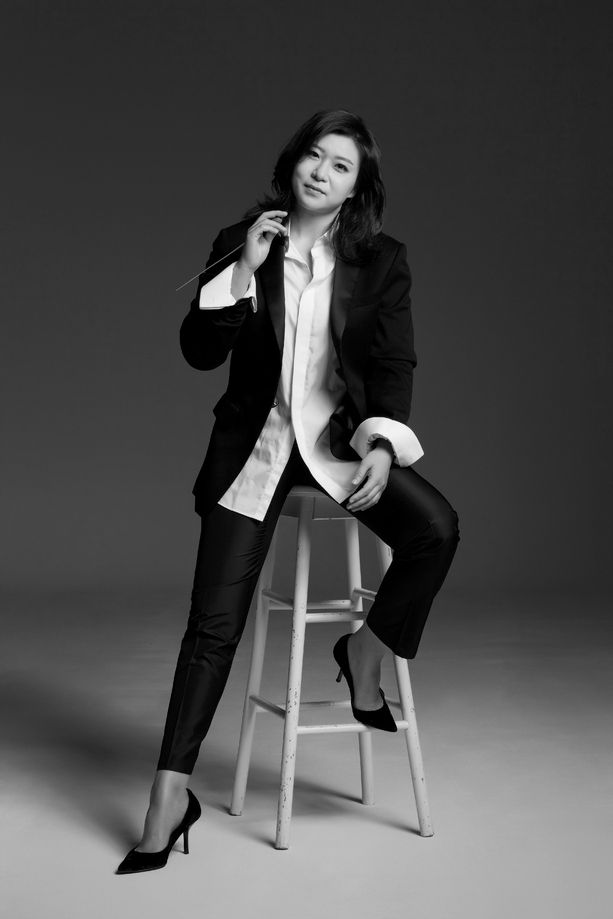
Principal Guest Conductor, Shiyeon Sung Credit Yongbin Park

Auckland Philharmonia Orchestra 2025

John Daly-Peoples

The  Auckland Philharmonia has just released its 2025 Season, of forty concerts featuring some of the world’s most-important artists including violinist James Ehnes, Spanish pianist Javier Perianes, guitarist JIJI, cellist Daniel Müller-Schott, and conductor Pierre Bleuse.

Javier Perianes Credit Julia Severinsen

The opening concert will feature New Zealander Claire Cowan’s “My Alphabet of Life”, Beethoven’s ‘Emperor’ Piano Concerto and  Strausstone-poem,Ein Heldenleben. All of the following concerts will provide a similar mixture of the great classics along with new and surprising works from the classical period and more recent compositions.

There will be a complete performance of Ravel’s ballet, Daphnis et Chloé.as well as  a selection from The Creatures of Prometheus, Beethoven’s only published ballet.

Other major works will include performances of Beethoven’s  Symphony No.5, Tchaikovsky’s Symphony No 5 and Mahler’s Symphony No 3 with mezzo-soprano Deborah Humble.

Principal Guest Conductor, Shiyeon Sung will conduct fellow Korean Clara-Jumi Kang, playing Tchaikovsky’s Violin Concerto, and Mozart’s Piano Concerto No.21 performed by British pianist Benjamin Grosvenor, who was recently named in Gramophone magazine’s list of the 50 greatest all-time pianists.  

The New Zealand Herald Premier Series will include major symphonic works by Elgar, Brahms, Shostakovich, Wagner, Mozart, and Tchaikovsky, as well as some rarely programmed gems by Ravel, Respighi, Liszt, Schoenberg and Grieg, complemented by music from leading New Zealand composers Claire Cowan, Kenneth Young and Louise Webster.

There will also be the New Zealand premiere of Sir James MacMillan’s newest concerto ‘Ghosts’, an Auckland Philharmonia co-commission with the London Symphony Orchestra, Melbourne Symphony Orchestra, Singapore Symphony Orchestra, Royal Stockholm Philharmonic Orchestra and St. Louis Symphony Orchestra.

The Canadian violinist James Ehnes will return for a two-week residency, performing two of the most demanding works in the violinist’s arsenal –  Bartók’s Violin Concerto No.1 and Brahms’ Violin Concerto.

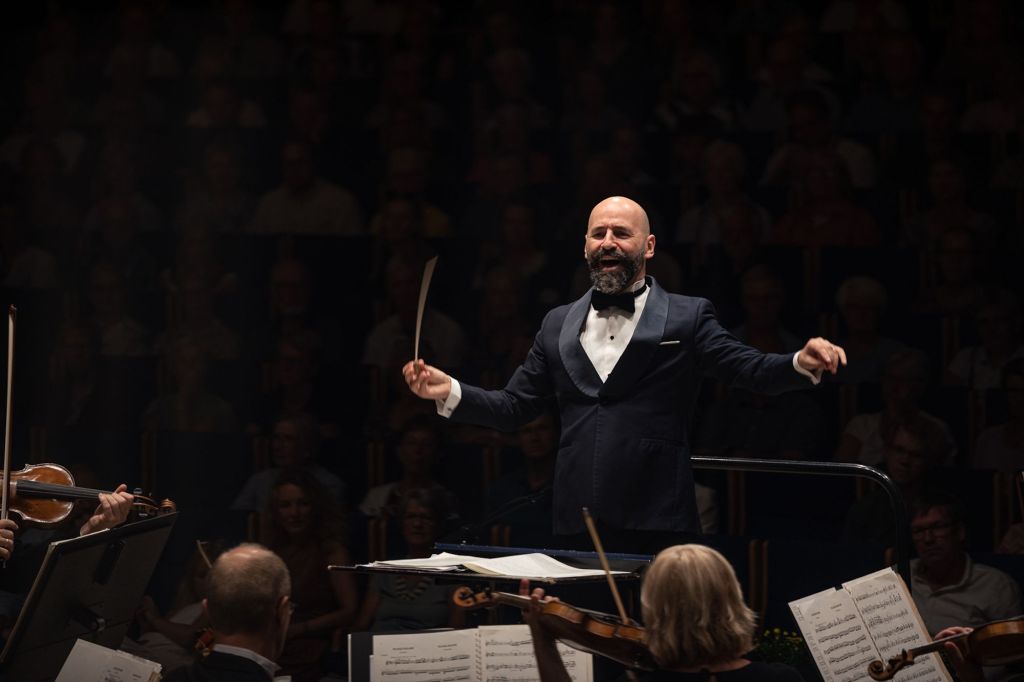
Pierre Bleuse

Other soloists include Korean guitarist JIJI, German cellist Daniel Müller-Schott, Sylvia Jiang and Alexander Gavrylyu. There will also be several visiting conductors leading the orchestra including Pierre Bleuse, Karl-Heinz Steffens and Jun Märkl.

The Classic Series of five concerts will feature major masterpieces, such as Mendelssohn’s ‘Scottish’ Symphony, Haydn’s Symphony No.93, Tchaikovsky’s Violin Concerto and Brahms’ Piano Concerto No.2.

The Pub Charity Opera in Concert production of Verdi’s La traviata will see Giordano Bellincampi exploring the raw dramatic power of this sublime score with a celebrated New Zealand and Australian cast; including Amina Edris as Violetta, Oliver Sewell, as her lover Alfredo, and Phillip Rhodes as Germont.

The multifaceted Baroque & Beyond series will be returning with two concerts directed by Concertmaster Andrew Beer that celebrate the masters of the Baroque era from Handel’s Water Music to works by Sir Michael Tippett along with Baroque masters Biber and Corelli and 20th century composers Bloch and Respighi.

In 2025 the music of the movies will be heard  in Art of the Score: The Music of Hans Zimmer. Hans Zimmer is one the most influential film composers of all time and is behind the iconic scores for Interstellar, Inception, The Dark Knight Trilogy and themes from Pirates of the Caribbean and Gladiator. Audiences will be taken on a journey through Zimmer’s music, presented by Australian Art of the Score podcasters and film buffs, Andrew Pogson and Dan Golding, with Nicholas Buc on the podium.

Matariki with Ria Hall will be a popular night to celebrate the Māori New Year. One of Aotearoa’s most compelling and thoughtful voices, Ria Hall, will join forces with the the orchestra to recreate her evocative songs ‘They Come Marching’, ‘Te Ahi Kai Pō’, and ‘Black Light’, with a magnificent symphonic soundscape.   

Bic Runga Credit Tom Grut

Bic Runga with Auckland Phil will feature Runga performing such classics as ‘Something Good’, ‘Precious Things’ and ‘Bursting Through’, reimagined together with a full orchestra, this will be an extraordinary evening of musical fusion.

There will be a  fun-filled interactive show featuring New Zealand’s beloved canine icon, Hairy Maclary’s Greatest Hits presented by Jackie Clarke, and a captivating show for the whole family starring everyone’s favourite duo, Wallace & Gromit, at Wallace & Gromit in Concert. including The Wrong Trousers screened in full.

Season brochures are available online from aucklandphil.nz or by phoning Auckland Philharmonia Ticketing on (09) 623 1052