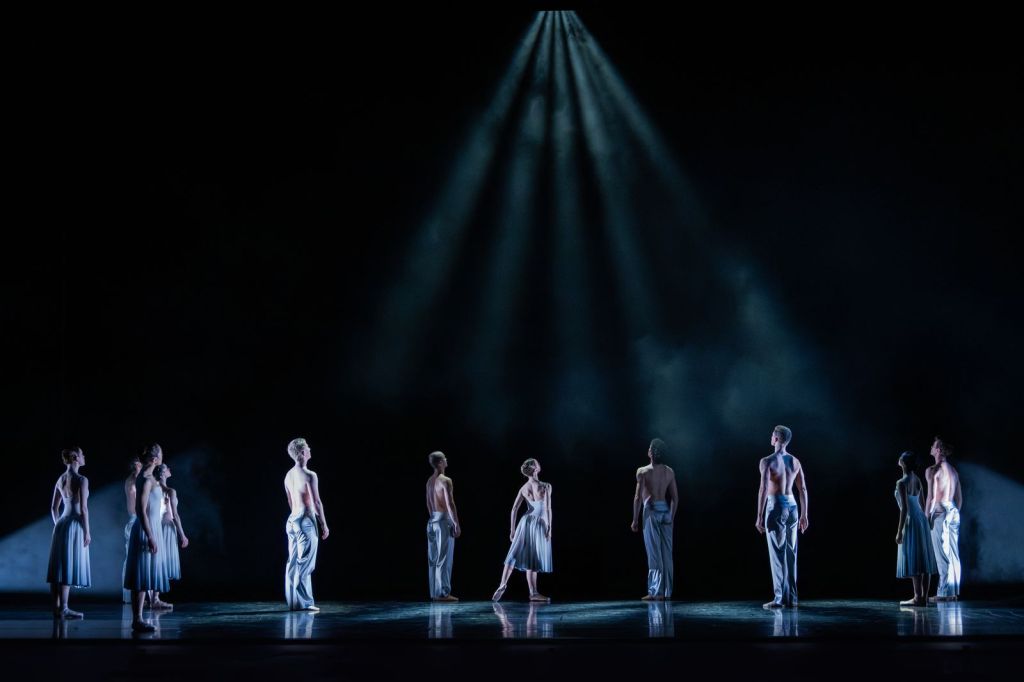
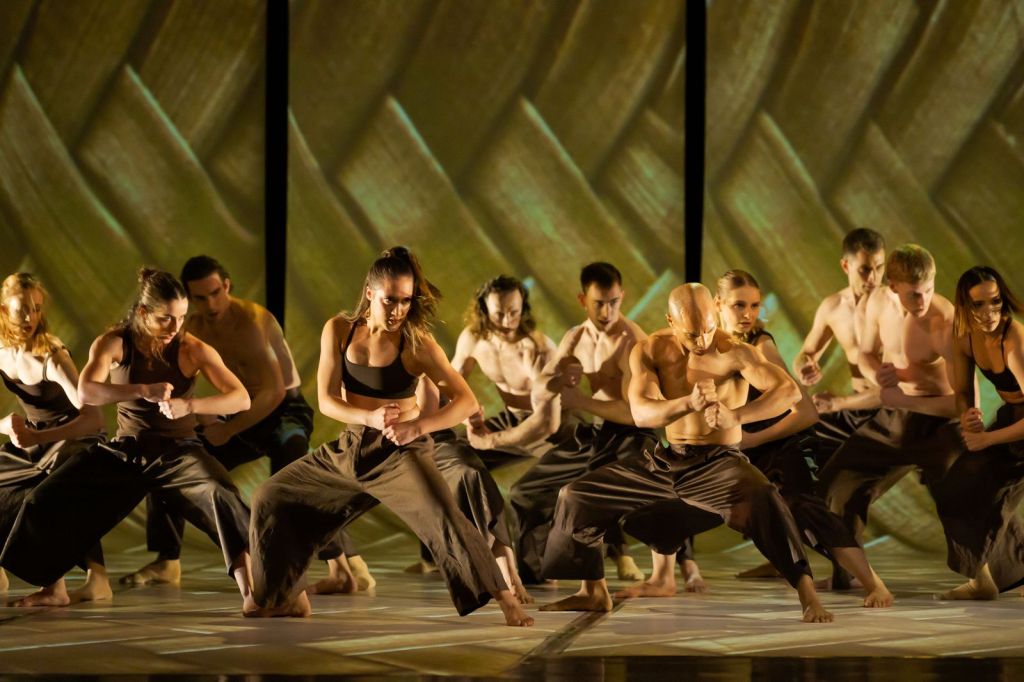
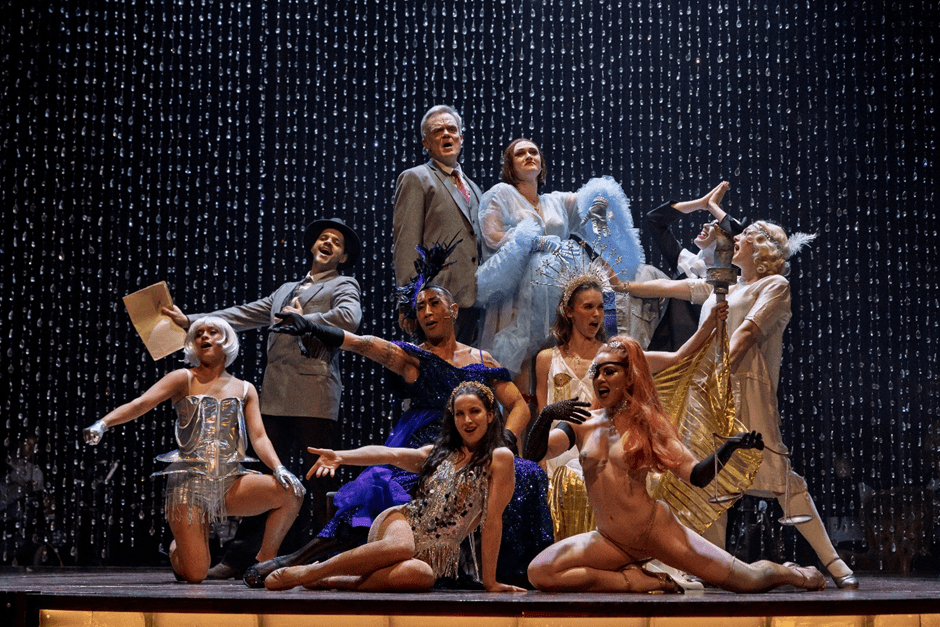
The Lula Washington Dance Theatre is a contemporary modern dance company in Los Angeles which has performed across the United States and toured internationally. It was established forty years ago when Lula Washington realised there were few black dance institutions in America .
They have a stylish approach to contemporary dance incorporating elements of African and Caribbean dance as well as contemporary modern dance and ballet. All these elements were seen in the opening number where three dancers – Love, Faith and Hope, performed to heavy beats, foot stomping and clapping with the audience encouraged to add to the heavy clapping to that of the dancers and he riotous drumming morphed from African beats to something closer to hip hop.
Three female dancers were joined by male dancers who became intertwined and there was a sense of the dancers and audience all part of a church service, street performance or gym workout.
Accompanying the hectic dancing were references to American segregation, slavery, lynchings and race riots – Charleston, Springfield, Watts and an image of George Floyd
Accompanying this dancing was some relentless drumming with and intense energy more akin to that of a night club and each of the sequences was given multiple bursts of applause from the audience.
Throughout this sequence the woman danced like ghost or departed spirits, their dancing a combination of celebration and remembrance of the African roots of the movements and music.
Because of the emphasis on these aspects the dances all seemed to be something of a political force and the dancers’ political activists.
In a later sequence one of the dancers shouts out the repeated chant “America is killing me” and this was accompanied by a visceral scream, a dramatic event one would not encounter in a Royal New Zealand Ballet performance and shows the level of the political urgency behind the Lula Washington project.
There was an intensity to many of the dances with a physically close to that of a Whirling Dervish. But alongside this there were elements of playfulness and whimsy which were all performed with a finesse close to that of classical ballet dancers.
The political or polemical aspects of the dances often felt to be less satisfying of the performance without a dance vocabulary which did not express the angst and anger which was conveyed in the words which accompanied the dance.
Many geniuses are recognized early on in their lives. Mozart had written 10 symphonies by the time he was 14, Pablo Picasso was turning out some skilful nudes when he was 14 and Dick Frizzell did a drawing of Christopher Lee as Frankenstein’s monster at the same age.
However, neither Mozart nor Picasso wrote a decent autobiography about growing up which is where Frizzell has the edge over the other two.
His new book recounting his early years, “Hastings, A boy’s own adventure” is an entertaining set of stories which probably mirrors the life and times of many young men growing up in provincial New Zealand in the 1950’s and 60’s. It was a time of complete freedom when young men like Frizzell were learning the first of life’s lessons and enjoying life’s experiences.
In thirty chapters Frizzell recounts his adventures which provide portraits of his family, descriptions of Hastings and sketches of his encounters with the day-to-day activities he was immersed in. Through these he manages to provide an insight into his growing awareness and understanding of the world around him, conjuring up the experience of most young boys of his age, encountering the world of adults – aunts, uncles, family friends and teachers.
We also get a sense of how he became Dick Frizzell the artist with a mother who had been to art school and taught him some artistic skills and a father who was well read and a technically accomplished engineer with his own enquiring and adventurous nature. There are also his experiences of the landscape – Te Mata Peak and the farms of relatives where he worked or holidayed There is also his love of comics and movies, his interest in working environments and workmen It’s what we see in his artwork – a celebration of landscape and culture, history and everyday objects.
Frizzell says of these early years “I felt that I had the town covered: our Parkvale kingdom, Uncle George’s market gardens, Aunty Molly’s frock shop, Dad’s freezing works, my high school . . . the town was pretty much ring fenced by Frizzell’s! And I was there growing up with it. Rock ’n’ roll came along, the town became a city, Fantasyland was built, hoodlums trashed the Blossom festival, I learnt the Twist in the Labour and Trades Hall . . . everything I took within me towards adulthood came from Hastings.”
‘If I’d been asked to vote on it I would’ve said I’d landed at the centre of the universe. Standing on our corner of Sylvan Road and Victoria Street, with Te Mata Peak, the Tukituki River and the mad wilderness of Windsor Park to the back of me and the distinctly non-wilderness of Cornwall Park and the misty vista of the Ruahines in front of me, I was the master of all I could barely survey.”
We learn about his jobs, the same that probably every youth got living in Hastings – spells at the Tomoana Freezing Works (where his father worked) and at the Wattie’s canning factory.
But while his portraits of his mother and father and the likes of his aunts Molly and Nora the figure which we most appreciate is the author with his achievements, blunders, successes and failures.
While the artist may have gained the image as the suave man about town. his early encounters with the opposite sex by his own accounts were less prepossessing. He recounts his inauspicious attempt at the seduction of Bunny as well as his fleeing from the amorous advances of the older Trixie.
It’s a coming-of-age book which will resonate with many older readers with its half-remembered tales of family life, friendships and growing awareness of one’s place in the world.
The “Follow button” at the bottom right will appear and clicking on that button will allow you to follow that blog and all future posts will arrive on your email.
Most stories have a beginning, a middle and an end. Most stories have a central idea, a kernel from which the tale expands like a sinuous river which follows a plot or a life. Other books can have a very different structure as with the new book “You Are Here”.
“You Are Here” which is the sixth book in the “kōrero series”, edited by Lloyd Jones, features Jann Medlicott Acorn Fiction Prize winner Whiti Hereaka and artist Peata Larkin, cousins who share the same whakapapa. in a collaboration. Unlike the previous stories in the collection Larkin’s images are not merely illustrations of the text but rather complementary representations of similar ideas.
Here the story line is cyclical, expanding and contracting. Like James Joyce’s “Finnegans Wake” the work begins and ends at the same point but with an elaborate structure in between
The poem starts with the line “You are here” and ends with the line – “Return to where you belong”, seemingly following the mathematical notions of the Fibonacci number sequence.
In tracing out the narrative the narrator recalls their youth and their experiences of life. Threaded through this personal journey are images of water and the stones of a lake as well as images of birds and journeys. like the symbolic use of the Piwakawaka by Colin McCahon.
Language, memories and landscape are seen as linked in the development of the narrator, their memories of school and the shaping of the person through language and experiences. the physical and the metaphorically linked in this journey.
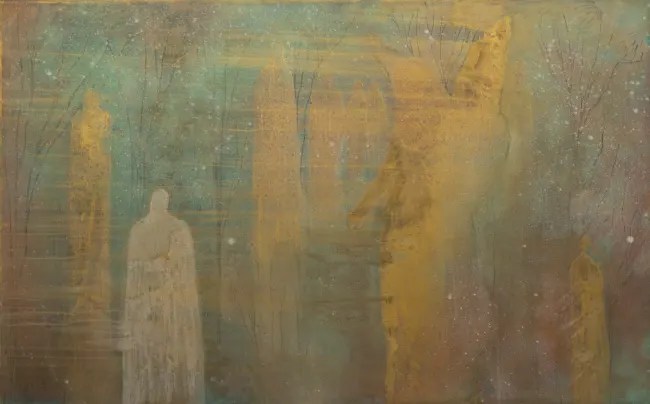
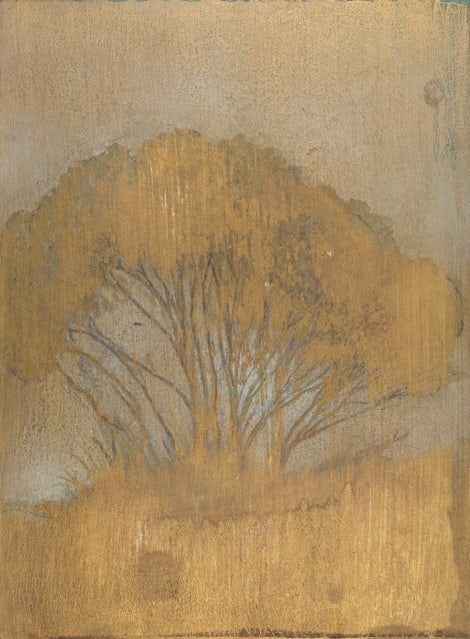
Parallel to Hereaka’s storyline are Peata Larkin’s multi-layered visual images in which ideas inherent in the structure of the story are the linked to her exploration of the DNA structure as well as images of Māori design. Drawings of tāniko and whakairo on gridded shapes are linked to European notions of embroidery and mathematical structures.
Peata Larkin says of the work “Working on this project has been very special to me …Being cut from the same cloth enables the threads of the fabric to shine through and hopefully we achieved that.
Hereaka says. ‘It is my hope that by the time you have walked that path that you are now a different reader and will read those words in a new way,’
The “Follow button” at the bottom right will appear and clicking on that button will allow you to follow that blog and all future posts will arrive on your email.
The Sri Lankan Civil War of the latter part of the 20th century provides the backdrop for Ahklan Karunaharan’s “A Mixtape for Maladies” which explores the lives of a Tamil family, who are caught up in the conflict, some of whom are killed or immigrate to New Zealand.
The play explores the reality of living in a different time and culture in a period of tension and transition and we identify and sympathize with the family’s trials of living through a war.
I was jolted back to another reality at the end of the show however. My Uber driver looked South Asian, so I mentioned about the show and how it combined politics and family. He was from Sri Lanka and acknowledged the tragedy of the war and its impact on the country. But his experience was very different from the family I had just witnessed on stage as he had been an air force pilot during the war contributing to the death and destruction, providing an alternative history of the period
One of the few things that Sangeetha (Ambicka G.K.R.) one of the daughters has brought to New Zealand was a tape recording of songs she loved growing up. Her New Zealand born son, Deepan (Shaan Kesha) finds the tape and plays the songs during his online podcast which trigger personal and political memories for her.
Through the course of the play Deepan plays these songs and Sangeetha remembers elements of the family’s life – hearing about the war, her and her sister hanging around the store where Anton (Bala Murali) works because he plays all the latest local and international songs as well as songs from the movies.
While some of the songs are played on the tape recorder others are sung by various members of the cast, accompanied by a duo (Ben Fernandez and Seyorn Arunagirinathan) playing a variety of instruments – keyboard, Carnatic violin and flute. Ahilan Karunaharan (Rajan), and Bala Murali give particularly fine vocal performances while Tiahli Martyn’s (Subbalaxmi) display of Tamil dance was skillful. These vocal and dance performances had many of the Tamil audience singing and swaying along to the music.
Among the tunes were Doris Day singing” Que Sera Sera”. “La Bamba” and some Tamil songs. These songs act as a cultural glue which holds the family together but also reminds us that these songs had universal appeal listened to by Sri Lankans as well as New Zealanders at the time.
The play is a mixture of social history, family exploration, cabaret and personal journey with music playing a central role in the play as well as the instruments the family would have listened to the songs on – an old turntable, a hi-fi player and the tape recorder.
The simple set features Dareen and Sangeetha in his podcast studio on one side and musicians on the other, flanking the family home and Anton’s general store.
The exploration by Dareen is initially an innocent enquiry into his mother’s music choices but becomes a journey into Sri Lanka’s history as well as triggering memories of his mothers and her family’s past and the impact of the war on their lives.
The “Follow button” at the bottom right will appear and clicking on that button will allow you to follow that blog and all future posts will arrive on your email.
“Belle” had all the elements to make it a stand-out performance however it never quite managed to make it a truly thrilling show.
The all-female cast of skilled aerialist / dancers/ singers performed a range of acts with a touch of magic and their routines were all immersed in a riotous soundscape and a remarkable light and fog environment.
Sometimes it felt a though someone had told the musicians that they only needed to play loudly and that would cover any mistakes or lack of continuity.
There was also a lack of cohesion between the various sections or vignettes which was a major problem. Even though the acts were spectacular, there was no sense of narrative or trajectory.
Many of the sections had a sense of cavorting angels or goddesses and this could have related to the figures and Ranginui and Papatūānuku in the digital work “Ihi” by Lisa Reihana which is in the Aotea Centre foyer.
Most of the acts were performed in a half light, with the performers often seen in silhouette. Along with the dramatic use of light this added to the drama of the performance but it also meant the audience was often not able to appreciate the athleticism of the performers.
Some of the acts were brilliant conceived with figure rising and falling from the stage and disappearing into the enveloping fog of the stage. Other sequences saw the cast using elaborate equipment such as aerial wheels and large pivoting wheels.
But the lack of interconnection and lack of coordination between the sequences and music did a disservice to the acts and a disappointment to the audience.
Neil Ieremia is one of Aotearoa’s most astonishing and prolific home-based creatives. His ever-growing body of work has easily and unselfconsciously graced stages in many parts of the world and he is rapidly becoming a one-man export machine. In part this is because of his perfectionism that never forgets the past, stands firmly rooted in the present and yet finds time to seriously address the future – sometimes simultaneously.
His works combine different personal histories, different body shapes and abilities, and different musical and dance backgrounds.
May of his works have a strong musical underpinning that ranges from pop to hip hop, traditional to church, coupled with soundscapes that underscore the everyday concerns of young people today. It leaps from recollections of things past to things that might have been and things that are very much of the present, uses the simplest of props and creates some beautiful moments.
His latest work celebrates the company’s 30th year milestone with ‘THIS IS NOT A RETROSPECTIVE’, the ultimate interactive dance party at the Auckland Town Hall, Saturday March 22
Joining Blackl Grace will be CHE FU and THA FEELSTYLE along with the many amazing friends of Black Grace already down to party including; DJ Manuel Bundy, drag queen diva Buckwheat and the NZ Trio, working alongside a stellar production team, with Artistic Direction by Neil Ieremia, ONZM, sound designer Faiumu Matthew Salapu aka Anonymouz, internationally respected NYC-based lighting designer JAX Messenger, along with the incredible Black Grace Dancers.
But the fun doesn’t stop there, Black Grace has a number of special events planned throughout their birthday year. To be in the know join them at blackgrace.co.nz
Main event 1hr 10min, followed by a party which will continue after main event until late
It would be easy to pigeon-hole SIX as a high energy show with lots of froth and bubble, and aimed fairly and squarely at the tiktok generation. But you would be wrong. It is rather more.
All things must change and musical theatre is no different. SIX is important enough to represent another of those significant change points in history – following in the footsteps trodden by Oklahoma or West Side Story or Cats or Hamilton.
On leaving, I overheard an audience member mutter something about SIX being really just a glossed up pub cabaret. And, to a certain extent, it is. Originally conceived by a couple of then relatively unknown Cambridge students in 2017, Moss and Marlow took it to the Edinburgh Fringe that year, was a huge success and soon wound up at the Arts Theatre in the West End before a Broadway opening almost immediately before Covid struck. There was a sort of relaunch in 2021 and SIX now enjoys semi-permanent residence in both London and New York and has gone on to world-wide success with multiple productions all over the anglosphere, as well as Europe and in Asia.
So what has driven this success? A well-known Australian commentator once suggested it resembles a Spice Girls concert directed by Baz Luhrman – but one where the girls can actually sing. Quite apt I thought at the time. But this show is a lot more than that. It is VERY much a significant part of the musical theatre tradition. In fact there are so many references, acknowledgments and subtle nuances running through SIX that enumerating all of them becomes difficult.
First and foremost, this is a NOW show. As such it reaches its target easily and then some. So, yes, to the tiktok generation. But it is bigger than that and, while it might help grow memberships of amateur music theatre organisations, that is rather simplistic view as it impact is considerably greater. Not to put too fine a point on it, the key fundamental of SIX is pure entertainment built around that old adage – a good story told well that enthrals its audience. And good entertainment knows no age boundaries – the grandmother in front of me was up and out-boogying her two grandchildren at the end. Underlying import counts too.
The stories of the six queens are told in the language of the second decade of the 21st century – not by the archival or even slanted recollections of historians about the politics and intrigue surrounding the first Tudor king. Most of whom were men, and of a fairly clearly-defined social class at that. Further, it is told from a women’s perspective. And remember, some of the queens were all exceptionally young when they married and the Royal Court revolved around power, politics and intrigue. So we leap immediately to empowerment for women – a rallying cry for millions – and a clear audience profile for SIX.
Structurally, as the fairly comprehensive promotional campaign has pointed out, SIX is built around a history lesson and a competition. OK. Thank you. Got that. It puts the six queens up against each other each other – an Eisteddfod if you will – or is that merely a device for something bigger?
The six queens never leave the stage and their individual songs merge into six-voice choral arrangements, complimentarily and contrapuntally at times, with occasional snatches of spoken dialogue (but not very much at all). The staging itself is outstandingly conceived by Emma Bailey and reflects a modern high-tech concert stage that integratesTim Deiling’s dynamic lighting and Paul Gastrehouses’s sound in a way that clearly works. The stage is also peopled by an astonishingly well-rehearsed, syncopathic and complimentary all-girl band for the entire show.
This primarily Australian cast comes well credentialled. Dancing skills are clearly in evidence with very tight routines throughout and, even if there were one or two very minor vocal wobbles, vocal strength was generally strong and led by the assurance of Loren Hunter (Jane Seymour). But let’s face it, this show is presented more like an eisteddfod or a competition and it doesn’t really matter – one voice will always overlap another. The tenderness of Heart Of Stone and the hilarious rap of Haus of Holbein were both standouts for me.
The primary focus of attention however is largely rivetted on Gabriella Slade’s award-winning costumes. Little wonder that her outfits have a dash of Spice Girls about them as she devised Spice World back in the 1990s. But now she has embellished some glittering and futuristic sequinned outfits in ways that not only catch the eye, but help tell each queen’s story. The ‘beheadeds’ have chokers for example, Jane Seymour’s black and white bodice echoes the half-timbered houses of Tudor England, the green of Anne Boleyn’s outfit references the popular myth that this evergreen was composed by the much-wedded Henry VIII himself (that’s factually incorrect, but let’s stick with the myth). It’s interesting that one interpretation of this song concerns the promiscuity in young women, something Henry’s henchman Archbishop Cranmer used in arranging divorce and subsequent beheading.
The references go on. In fact they are never ending. There are the pop divas found in the songs : I think I heard echoes of Beyonce, Ariana Grande and Alicia Keys and probably missed a few more.
The sense of fun and campness is constant. SIX takes neither itself, nor musical theatre in general, seriously and whimsy is everywhere. Phones in the theatre, for example, were quite correctly asked to be turned off pre-show and then during the encore (or more correctly the ‘finale’), encouraged the audience to light them up again. And they certainly did. It was another moment of sheer joy and made the audience a part of the show. I think that grandma in front of me got a pretty good video take.
Any good production simply tells a story. SIX does so with succinctness and very, very well. It is not a long show, but is pretty demanding on both voices and the attention-span of audiences.
I always relish a well written show that is objective and contemporary rather than one that delves into the introspective meanderings of L-plate writers. SIX is mature writing and very clever staging.
The filmed on-stage reunion of Six’s original West End queens will be released in cinemas next month and, rather ironically, Auckland’s Civic remains one of the larger in-theatre venues it has played. After here, it’s off to complete its second lap of Australia at the Civic’s sister in Newcastle, while Asia awaits
The “Follow button” at the bottom right will appear and clicking on that button will allow you to follow that blog and all future posts will arrive on your email.
The “Brahms 3”concert began with Romanian composer Gyorgy Legeti’s “Concert Romanesc” written in 1951. The work opens with joyous images of landscape studded with hints of folk music. These passages combined humour and experimentation, qualities which inhabit much of his later music.
From the middle of the piece there were more sombre sounds, as though confronting the history of his country as well as the suffering and death of his parents in Auschwitz during World War II.
As the work became darker and bleaker there was a whirling dance of death moving to a finale where the whole orchestra exploded with lively, suffocating sounds.
Following his performance last week James Ehnes’ performance of Bartok’s “Violin Concerto No 1” was highly anticipated. He did not disappoint. With the soulful opening movement he was initially joined by Andrew Beere and Lauren Bennett before others from the string section joined, adding to the density and complexity of Ehnes’ playing.
Following on from the strings, the woodwinds provided a slightly unsettling voice and even as the orchestra gained in intensity, Ehnes’ violin rose up , soaring above the sounds of the orchestra with some strident sounds which were reflected in Ehnes’ rigid demeanour and exacting playing.
From the second movement on, his playing style changed, taking on a more passionate and expressive approach with some more hectic, gypsy-like playing as he battled against the sweep of the growling orchestra. However, even when he was frantically playing there was a sense of his being totally in control.
With his mastery of the violin, his skilful changes in pace, and tone the audience was treated to a display by a consummate violinist.
While Ehnes received a rapturous ovation for the Bartok it was his encore, Eugene Ysaÿe’s “Violin Sonata No.3 ‘Ballade” .that got a tumultuous reception. The solo work dedicated to the Romanian violinist and composer George Enescu which was beautifully structured requires an intelligent and skilful player – all the qualities that Ehnes was able to bring to the piece.
The big work on the programme was the Brahms “Symphony No 3, a work which is full of marvellous melodies but which is something of an enigmatic work.
In many ways it is a forerunner of the impressionist works of Debussy and Ravel reflecting the interest of the Impressionist artists of the late nineteenth century. Much of the music is linked to visions of landscape, light and shade, colours and texture.
These images parallel a world of emotions and feelings, the composers inner and exterior worlds mingling. In building a structure based on these links Brahms explores the nature if the human condition. This is very evident in the final movement with its passages of drama and tumult suggesting natural forces as well as the inner turmoil of love and passion.
The final works on the programme, three of Brahm’s Hungarian Dances had Conductor Bellincampi conducting at breakneck speed and while he spent much of his time dancing on the podium the orchestra were swept up by the music and carried along by its own impetus.
Bellincampi used the dances to book-end a farewell to the orchestra’s Music Librarian, Robert Johnson who has worked at the orchestra for over thirty years.
The “Follow button” at the bottom right will appear and clicking on that button will allow you to follow that blog and all future posts will arrive on your email.
Claire Cowan My Alphabet of Light Beethoven Piano Concerto No.5 ‘Emperor’ R. Strauss Ein Heldenleben
Auckland Town Hall
February 13
Reviewed by John Daly-Peoples
The Auckland Philharmonia’s “Emperor” concert marked the tenth anniversary of Giordano Bellincampi’s position as Music Director of the orchestra and for the concert he reprised Richard Strauss’ “Ein Heldenleben” (A Heros Life), a work he had conducted at his first outing withe orchestra ten years ago.
It was a fitting work, acknowledging the conductor’s monumental contribution to the development of the orchestra over the last decade.
Opening the programme was Claire Cowan’s :My Alphabet of Life, a piece she had written in 2005 when she was 21. With this revised version she presented short musical phrases or conversations about the language of music and how compositions are structured. These ranged in tempo and style from the formal to the more abstract – from the simple to elaborate. These were conveyed by the various instruments – brass, percussion strings woodwinds as they experiment with their individua voices.
Haochen Zhang Photo Sav Schulman
Playing Beethoven’s Piano Concerto No 5 pianist Haochen Zhang gave an agile performance as he carefully negotiated the work.
His playing at times was at times lethargic, at other times precise and refined and then he would appear to be chasing the orchestra with bravura displays. He managed to express what Beethoven intended, balancing the memorable themes played by the orchestra with the passionate displays of the soloist, allowing the drama of the piano to evolve out of the landscape of the orchestra.
The second movement was full of magical moments At the opening his slow delicate approach to the music made every single note seem special and with his other raised hand he appeared to conduct the orchestra himself. In another passage the woodwinds provided an exhilarating accompaniment to Zhang. Midway through this movement comes one of the great moments where the pianist always seems to stall as the tempo changes before returning with thundering chords, a passage which Zhang handled superbly.
Zhang’s mastery of the work was his ability to provide a real sense of cohesion and an understanding of the structure of each of the movements as well as the work as a whole. He never allowed the simple demonstration of his own technical facility to obscure his larger purpose.
He fully captured the textures, scope and power of the work and the heroic spirit as conceived by Beethoven is revealed to be both physically robust and spiritually refined.
Throughout the work Zhang and the orchestra took the audience on an emotional roller coaster, as the work fluctuates from being a sonata to more like a symphonic work. One is also conscious of the nature of Beethoven / pianist conveying the sense of the heroic struggle.
Richard Strauss’ “Ein Heldenleben” was his response and update to Beethoven’s notion of the heroic struggle with this six-movement tone poem. It is both a wide-ranging tribute to the German notion of the Übermensch or Superman as well as an autobiographical work in which the composer portrays elements of himself, his work, his critics and his wife becoming something of picaresque account of his life.
It is a beguiling and charming work, musically impressive with many wonderful sounds recalling some of his earlier pieces such as “Thus Sprach Zarathustra” and “Till Eulenspiegel”.
Strauss can be very good at big atmospheric works and with “Ein Heldenleben” the orchestra was boosted with lots of brass – horns, trumpets, trombones, tuba, tenor tuba as well as percussion and harps. Under the direction of conductor Bellincampi the orchestra made full use of their massive sound
Along with the monumental sounds there were more playful moments such as Andrew Beere’s various interventions with his gypsy-like solos where Strauss’ own voice punctuated the musical landscape. Another intervention saw three trumpet players delivering a brassy anthem from offstage.
The music ranged from the expansive and belligerent to the meditative and ethereal Some of the passages having the terse drama of his later operatic works like Electra while other had the charm of Der Rosenkavalier, all carefully controlled by Bellincampi.
James Ehnes
Forthcoming Concert
February 20th
Ehnes & Bellincampi
Conductor Giordano Bellincampi Violin James Ehnes
Schumann Manfred: Overture Brahms Violin Concerto Mendelssohn Symphony No.3 ‘Scottish’
One of the world’s supreme violinists, James Ehnes playing Brahms’ Violin Concerto
It is framed by Mendelssohn at his most romantic, inspired by the tragic history of Scotland, and Schumann at his most Gothic, painting a portrait of Byron’s hero.
Playing the Brahms Violin Concerto with the Houston Symphony Orchestra the reviewer Everett Evans noted “Ehnes again proved notable not only for technical proficiency, but also for the warmth and understanding of his playing. His decisive bowing and precise attack lent definition and drama to the work’s more emphatic statements, and he flew through the trickiest effects with alacrity and ease. Yet the delicacy and restraint of his pianissimo moments proved just as impressive.
He was at his most expressive in the adagio, his graceful phrasing and soulful tone lending an elegiac quality. He gave the right zest and exuberance to the finale, whose main theme advances by leaps and bounds.
Graf kept the interplay of orchestra and soloist lively and neatly balanced. The orchestra sustained a warm, rich sound, smoothly legato in lyrical passages, matching Ehnes’ solo work for irrepressible energy in the finale”.
Claude Monet, French, 1840-1926; Water Lilies ; about 1922;oil on canvas Toledo Museum of Art, purchased with funds from the Libbey Endowment, Gift of Edward Drummond Libbey
A Century of Modern Art
Auckland Art Gallery
June 7 – September 28
John Daly-Peoples
Auckland Art Gallery has announced that the exhibition “A Century of Modern Art” will be its special winter exhibition this year, running from June & through till September 28th.
The exhibition will be on loan from the Toledo Museum of Art, Ohio, and will provide a survey of the major artists who transformed modern art.
The exhibition will consist of 57 works by 53 artists, including Paul Cezanne, Edgar Degas, Helen Frankenthaler, Édouard Manet, William Merritt Chase, Amedeo Modigliani, Berthe Morisot, Claude Monet, Pablo Picasso, Camille Pissarro, Robert Rauschenberg, Pierre-Auguste Renoir, Vincent van Gogh, James McNeill Whistler, among others.
Director of Auckland Art Gallery Toi o Tāmaki, Kirsten Lacy says the calibre of works and artists in this collection is exceptional and not to be missed. “A Century of Modern Art showcases the diversity and innovation that defined modern art movements,” says Lacy. “From the emotive brushstrokes of Van Gogh to the evocative landscapes of Monet and Rauschenberg’s bold abstractions, these works not only revolutionised Western art history but continue to inspire new generations.”
“The exhibition includes works by legendary art figures, including Vincent van Gogh, whose work hasn’t been publicly displayed here in Aotearoa in over a decade. It is made available to us due to renovations that are taking place at Toledo Museum of Art, and we are honoured to be working with the Museum to make the most of this rare opportunity.”
The centrepiece of the show will be Claude Monet’s “Water Lilies” Purchased with funds from the Libbey Endowment, Gift of Edward Drummond Libbey Plants, water, and sky seem to merge in Claude Monet’s evocative painting of his lily pond at Giverny. The disorienting reflections, bold brushstrokes, and lack of horizon line or spatial depth make Water Lilies appear almost abstract. Painted about 1922, it belongs to a grand project that Monet had conceived as far back as 1897:
“Imagine a circular room whose wall . . . would be entirely filled by a horizon of water spotted with [water lilies]… the calm and silence of the still water reflecting the flowering display; the tones are vague, deliciously nuanced, as delicate as a dream.”
Monet began this ambitious project in 1914, finally completing it shortly before his death in 1926. Over those years he executed more than 60 paintings of his water garden, capturing the light conditions at different times of day and in different weather. Twenty-two of these large panels were installed in the Orangerie in the Tuileries Gardens, Paris, as a gift to France. The Toledo’s work was is possibly a study for one of the three panels of the Orangerie composition” Morning”.
Berthe Morisot, In the Garden at Maurecourt. (Purchased with funds from the Libbey Endowment, Gift of Edward Drummond Libbey)
Included in the exhibition is a work by artists Berthe Morisot one of the few female Impressionist artists. Her work “In the Garden at Maurecourt” (Purchased with funds from the Libbey Endowment, Gift of Edward Drummond Libbey) is set in Morisot’s sister Edma country house outside Paris and probably shows Morisot’s daughter, Julie, and one of Edma’s daughters.
She was born to an upper-middle class family and was the great-niece of Rococo artist Jean-Honoré Fragonard. Morisot rejected the social expectations of her class and gender by pursuing a professional career as an artist. In 1868 she met and became close friends with artist Édouard Manet, marrying his younger brother Eugène in 1874, the same year she participated in the first Impressionist group exhibition.
Paul Gauguin, French, 1848-1903; Street in Tahiti; 1891;oil on canvas (Purchased with funds from the Libbey Endowment, Gift of Edward Drummond Libbey)
There is also a work by the recently deemed “controversial” Paul Gauguin. His work “Street in Tahiti” (Purchased with funds from the Libbey Endowment, Gift of Edward Drummond Libbey) which predates his Tahitian figurative works was among the first group of paintings Gauguin produced in Tahiti during his initial two-year stay. He conveyed something of the special character of the place—the limpid light, rich colour, lush vegetation, and lofty mountains—through his use of strong contours, flattened shapes, repeated curving rhythms, and tautly patterned brushstrokes. However, minor notes of strain, such as the brooding woman and heavy clouds pressing down from above, introduce undertones of sadness and disquiet.
A Century of Modern Art will make use of its current major exhibition “The Robertson Gift: Paths through Modernity” which includes works by. Georges Braque, Paul Cezanne, Fernand Léger, Henri Matisse, Piet Mondrian and Pablo Picasso.
Together the two exhibitions will trace out the birth of modern painting, beginning with the Impressionists in the 1860s, and follows its evolution through key movements such as Post- Impressionism, Symbolism, Cubism, Surrealism, Constructivism, German Expressionism, Bauhaus, De Stijl, Precisionism, and Colour Field Painting and Abstract Expressionism.
Adam Levine, the Edward Drummond and Florence Scott Libbey President, Director and CEO of the Toledo Museum of Art, says, “The Toledo Museum of Art is distinguished by the quality of its collection. Each acquisition in our institution’s history has been oriented to acquiring artworks of superlative aesthetic merit. Never have so many of our masterworks travelled together, and we could not be more excited for them to debut in Auckland.”
A Century of Modern Art is organised by the Toledo Museum of Art, Ohio and has been supported by HSBC and Auckland Art Gallery Foundation. Co-ordinating curator of the exhibition is Dr Sophie Matthiesson
The “Follow button” at the bottom right will appear and clicking on that button will allow you to follow that blog and all future posts will arrive on your email.