Reviewed by John Daly-Peoples
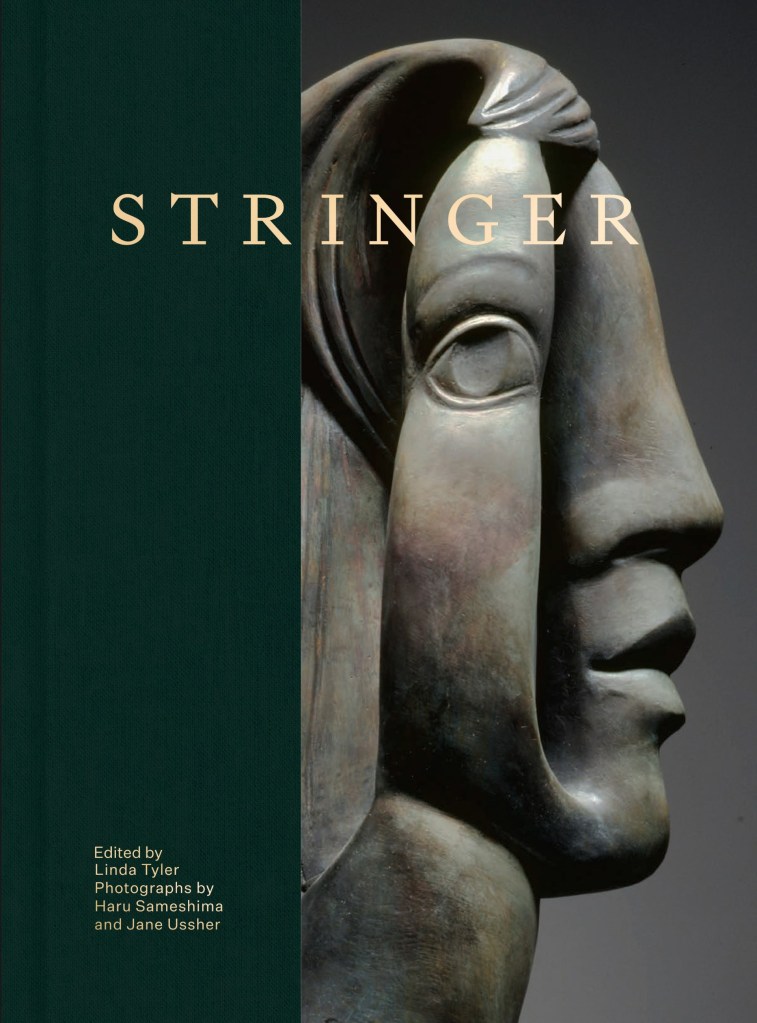
The Art of Terry Stringer
Edited by Linda Tyler
Massey University Press
RRP $90.00
Reviewed by John Daly-Peoples
Terry Stringer has been a leading New Zealand sculptor and a key figure in the history of art in New Zealand. Working predominately in bronze, the majority of Stringer’s sculptures depict figures and still-life subjects. Many of his works reveal his interest in classical sculpture, Renaissance art, cubism and architecture along with mythology and literature.
It is these wide range of influences which are explored in a new book “The Art of Terry Stringer” which examines his life and work.
Along with a substantial introductory biographical essay by Linda Tyler, the book features essays by Peter Simpson, Mark Hutchins-Pond, Mark Stocker, Andrew Douglas and Robin Woodward, each focusing on different aspects of Stringer’s body of work. It is handsomely illustrated with photos of Stringer in his studio by Jane Ussher, and of the artist’s work by art photographer Haru Sameshima.
It is a book that reveals the inspirations, the thinking, the processes, and the way he perceives his art within various environments ant the writers, photographers and designers have crafted a book which seems to have all the characteristics of the artist’s approach to creation.
Some of his major works can be seen at public sites throughout Aotearoa/New Zealand. These include The Risen Christ in Christchurch’s Cathedral Square (now in storage), Mountain Fountain, in the forecourt of Auckland’s Cathedral of the Holy Trinity and The World Grasped in Newmarket.
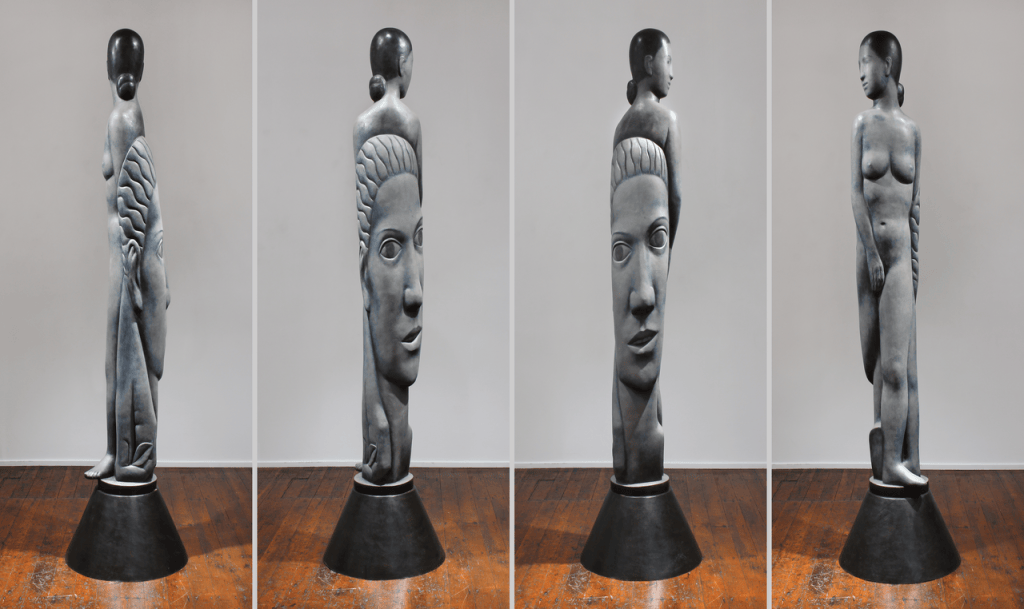
Stringer says of his approach to sculpture making, “For me, it has been a lifetime of pursuing one idea. I have to say that I am making the same sculpture over and over, and that it changes just a little each time, each piece of it being a new puzzle to solve. In the making of a work two contradictory ideas are clashed together — perhaps one subject transforms into another as the work is turned, or it might be that a figure that has been distorted for formal reasons needs to be brought to life.”
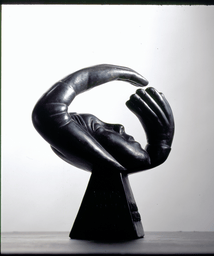
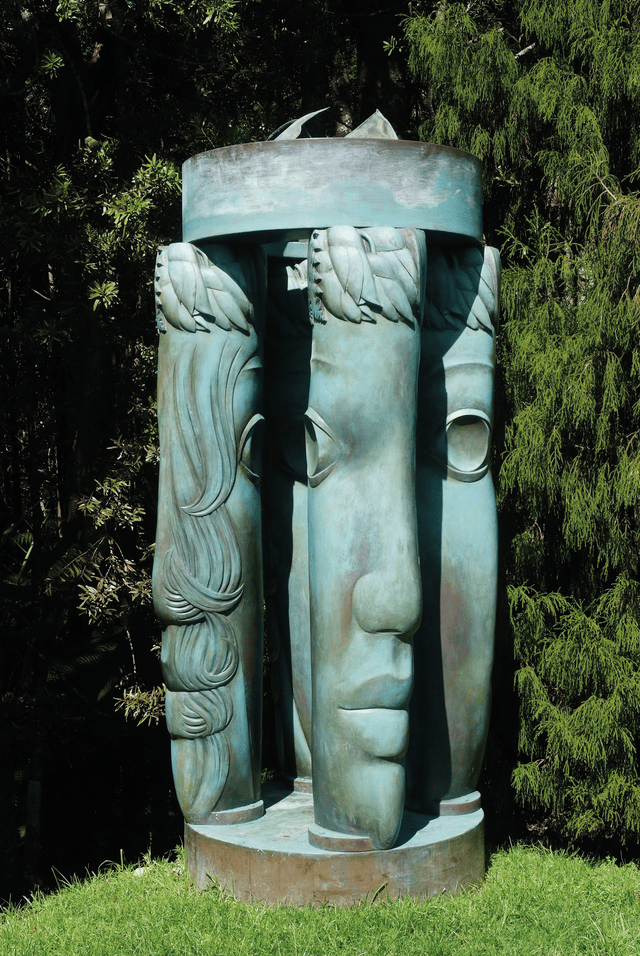
With many of the artists’ works he provides the viewer with multiple viewpoints, as Peter Simpson notes in his essay “The Intercut Image”. One of these sculptures “Gather ye Rosebuds” takes its title from the Robert Herrick poem and the work’s multiple images reference images from the poem – a young girls face, a blooming rose and a reaching hand.
The intercut images are not just a way of rewarding the viewer with changing perspectives we also see the artist exploring the nature of three-dimensional art.
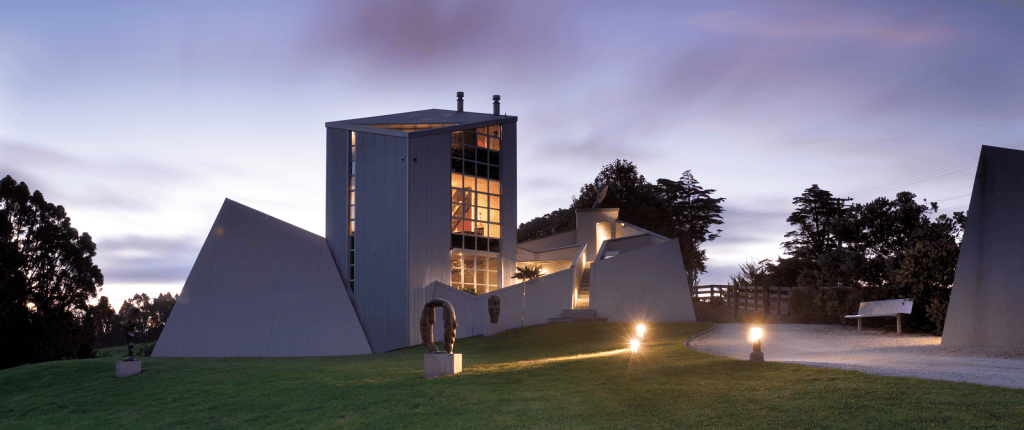
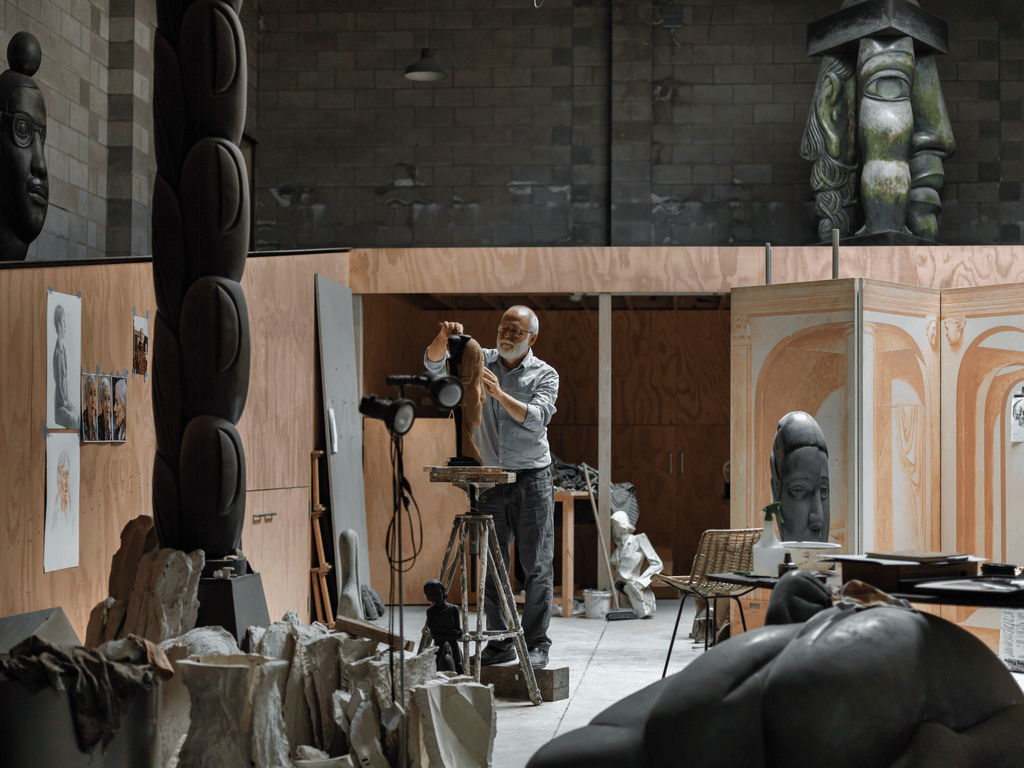
The book has over one hundreds photographs by Jane Ussher and Haru Sameshima which feature many of the artists’ works as well as his studio and residences. The images of his studio are particularly revealing, Ussher has captured the artist at work in his current cavernous studio in Couldry St in Mt Eden as well as at the foundry where his works are made.
The photographs provide a visual record of the artist which sees the artist in the various stages of producing his work, revealing the almost magical steps in the creation of the artworks.
There is also a photographic essay on the evolution of a sculpture he was making of the painter Jacqueline Fahey. From initial sketches of the artist through the various stages of making the original clay figure, going to the foundry and the finishing processes.
He says of the process ‘Bronze sculpture-making has many stages. This sequence of images showing the evolution of a head of the painter Jacqueline Fahey starts with a drawing and then the clay work. From there it is plaster-moulded in my studio and wax is poured into it before it goes to the foundry. There it is prepared, re-moulded and baked out to create a ceramic shell for the bronze to be poured into. In this manufacturing process the artist starts the sequence and then decides the final presentation. Bronze-making is a story of life, death and rebirth over several episodes, until the work is finally realised.’
Of the photography by Jane Ussher several of which show Stringer in his studio he says “They have the atmosphere of old master paintings. And I had huge fun collaborating with Jane in staging still life groups that referenced various sources of inspiration.”
Linda Tyler says of his work “His ideas for sculpture are typically quirky and engaging as well as beautifully executed, and while his works belong to different series, there are certain constants. For example, he communicates his sense of fun by encouraging viewers to move around each sculpture and make (sometimes startling) discoveries for themselves. I think that this derives from his love for Victorian ‘optical amusements’ such as folded pictures and puzzles where you see one image when you look in a certain direction, and something different when you look back the other way.”
Throughout his practice he has produced a number of figurative works which celebrate New Zealand artists with works depicting Charles Rose, Frank Sargeson, Frances Hodgkins, Kiri te Kanawa and Jacqueline Fahey.
Along with Tyler’s writings there are five essays by gallery directors, arts writers and university teachers – Andrew Douglas, Peter Simpson, Mark Stocker, Mark Hutchins-Pond and Robin Woodward. These writers investigate particular areas of nth artists work — his purpose-built residences / studios, the intercut images, the medals and maquettes and assemblages.
Stringer was awarded a Queen Elizabeth II Arts Council Scholarship four times – 1977, 1981, 1982 and 1986. His contribution to New Zealand art was acknowledged in 2003, when he was the recipient of the country’s national honour, the ONZM (Officer of the New Zealand Order of Merit).
Throughout his career Terry Stringer has exhibited extensively, with solo shows in Auckland, Sydney, Los Angeles and London. He is represented in major public collections, including the Auckland and Christchurch Art Galleries, Museum of New Zealand Te Papa Tongarewa and the Alexander Turnbull Library.


