Auckland Theatre Company and Auckland Arts Festival
Until March 22
Reviewed by John Daly-Peoples
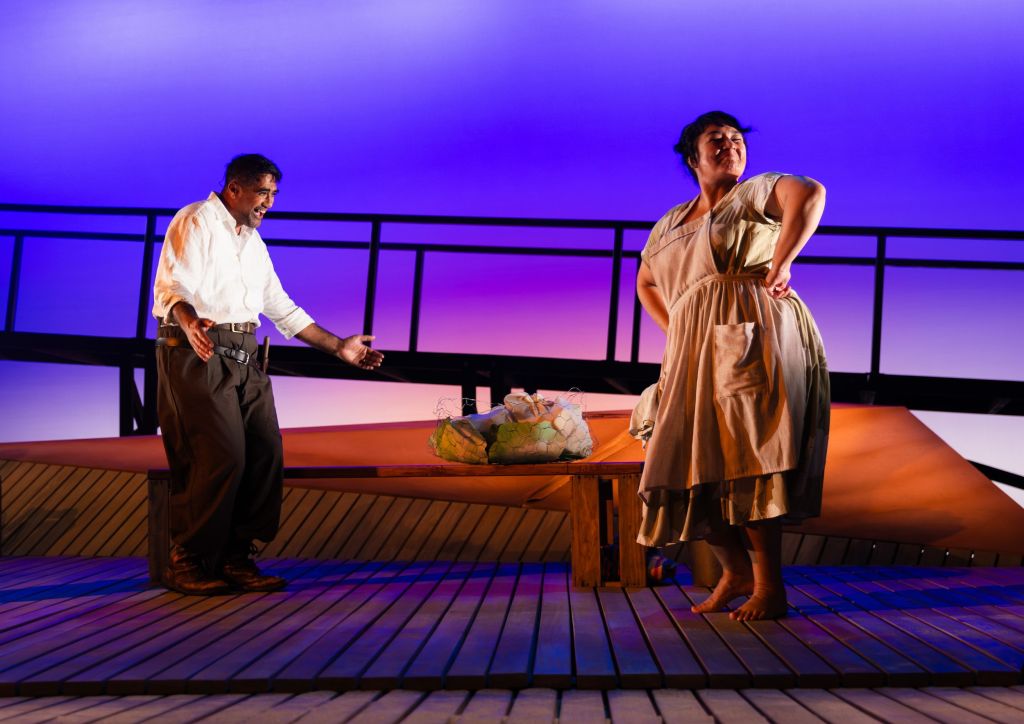
Set in the 1960s, Waiora explores the dynamics of a Māori family – John (Regan Taylor), Sue (Erina Daniels), Amiria (Rongopai Tickell), Rongo (Tioreore Ngatai-Melbourne) and Boyboy (Te Mihi Potae) – who have moved away from their East5 Cape marae looking to create a new life and new opportunities for the adults and children in a South Island mill town. They are in search of the Kiwi dream but have uprooted themselves from Waiora, their homeland.
The tensions between the older generation and the youthful members of the family are seen early on with patriarch John singing O Sole Mio while Amiria and her teacher friend Louise are singing a Beatles song. It’s a scene which leads to the development of disagreement on a range of issues.
Alongside the generational divide we discover separations within the family itself which has an estranged son working in the big city and another son, Boyboy who has been suspended from school.
A major theme revolves around the success of highly regarded John at the mill and his expectation of becoming foreman. This notion of Māori success in industry and business is juxtaposed with the lives of the two privileged Pakeha in the play. Louise, a teacher from a wealthy family and Steve, the mill owner.
Much of the play deals with issues related to colonialism, dislocation from the land, language and the spiritual dimension. These are issues which are still important for Māori and pakeha. Merely confronting these issues is not a solution, how much compromise, concession and negotiation must occur.
Cutting across the stage is a bridge by which all the characters must move. It acts as a potent symbol of the bridge needed to solve the problems of racism and opportunity in New Zealand.
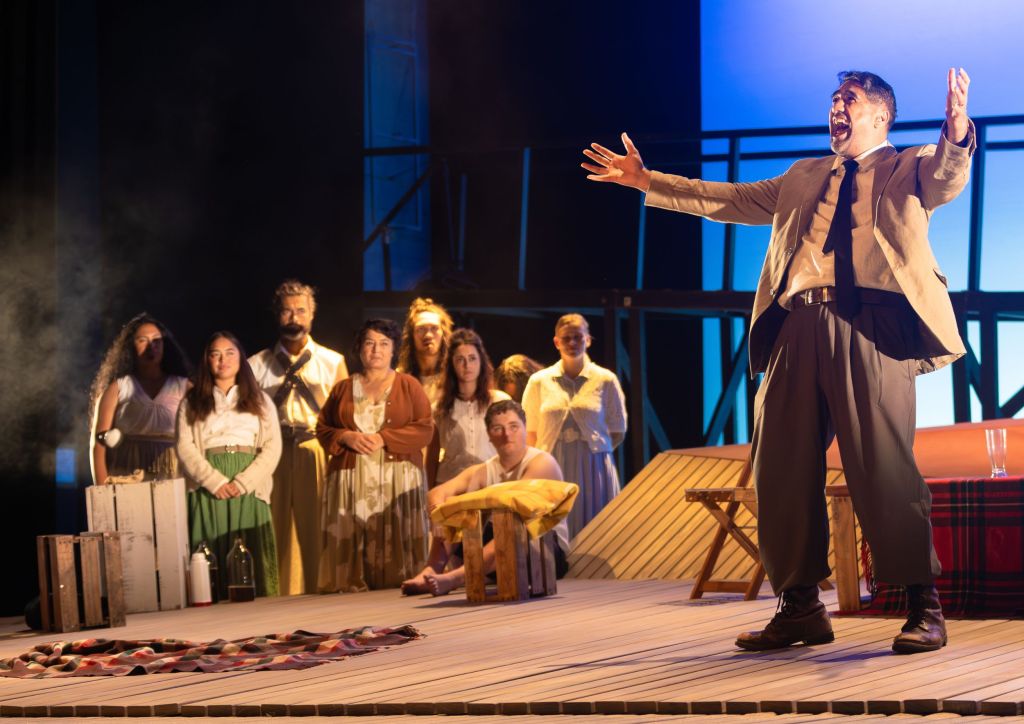
Central to the play is the acting of Regan Taylor as John. He articulates all the aspirations and objectives of the family as well as the problems of not recognising some of the contemporary social issues. Some of his monologues were brilliant, drawing various themes together, conveying the personal, historic and spiritual.
While the play appears ot be rooted in the day-to-day life of the family we become aware of another dimension – wairuatanga or the spiritual life. Several white clad figures move in and around the family seemingly part of everyday but also existing as European equivalents of guardian angels or the Greek mythological figures who bridge the gap between the immortal and mortal.
The play has a rich musical landscape created by Hone Hurihanganui and Maarire Brunning-Kouka consisted of waiata, haka and contemporary sounds.
The entire cast work well together creating a witty, emotional and honest approach to the issues as they each show how they are caught up in an historic, social, and spiritual bind which offers few solutions – that is for the audience to come to terms with.
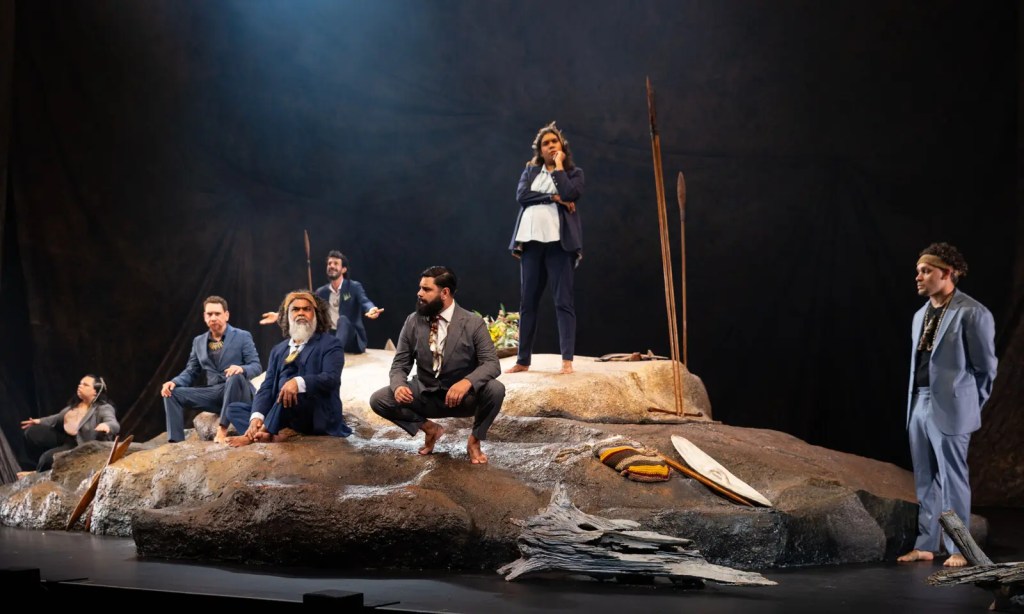
“It is 1788, and six senior lawmen (with one young man sent as a representative) witness the arrival of the First Fleet. The play features a talented cast: John Blair, Damion Hunter, Colin Kinchela, Nathan Leslie, Leroy Parsons, Glenn Shea, Kerri Simpson. As we approach the 250th anniversary of Cook’s arrival, this play is timely and fresh given the paucity of publicly available sources that document first encounters from an Indigenous perspective. Visitors had come and gone for many years and the play includes reference to Cook’s visit 18 Summers prior. But previous visitors always left.
Humour provides relief to this intensely imagined moment in history. The Visitors is written by Jane Harrison. Dir. Frederick Copperwaite. Carriageworks Theatre, 2020. Photo: Jamie James.
The script involves much discussion about whether to engage in war or allow the visitors to come ashore. After lengthy debates, the men notice that the visitors are landing. They make the fatal decision to welcome them. The Visitors’ dialogue is witty and satirical. The men at its center describe the visitors in derogatory ways that mirror the way colonizers described us – “wretched people” with nothing to offer.
The Design
The set is beautifully designed with large trees framing the meeting place. Fog drifts in, allowing the audience to imagine a time long ago by the ocean. The sound of the sea and birds amplifies the experience.
The men are dressed in suits symbolizing their status in contemporary terms. They are given clan names that relate to Countries such as Eel clan or Bay people. This avoids any contest around traditional boundaries and clan names.
Personalities, But Where Are The Women?
Aboriginal protocols are clear – the men pay respect to the Country as they each arrive. Formal proceedings begin with being welcomed onto the Country, just like what the audience experienced before the performance.
Formalities aside, there is also a lot of humour in this play. Fun is made of one of the men who has complained he can’t connect with his new wife. Grandfather Elder examines him and concludes that his new wife probably just doesn’t like him. Personalities are clear – something that is often missed in the colonial writing of Indigenous peoples. We are human, we laugh, we disagree and we engage in combat, revenge, grudges, and all manner of human frailty.
The experience could have only been improved by the inclusion of Aboriginal women in the cast. The women, we are told, are away on Women’s business and although they are often referred to, are missing from the decision making process. In one scene one of the men refers to women as “spoils” of battle and in another, after hearing the younger man simulate the mooing of a cow, a comment is made that it sounds like his wife. Perhaps this is just banter between men, however, historically a range of tropes have been used to typecast Aboriginal women into roles imagined by the colonizers.
The women’s absence suggests there was — or is — a lack of senior Aboriginal women knowledge holders. The truth is far from this assumption. There is ample evidence Aboriginal women were involved in early interactions, amicable and otherwise, with early settlers. For example, it is believed local fisherwoman Barrangaroo — noted for her presence and authority — was present at the first meeting between settlers and her Cammeraygal people at Manly in 1788, and also participated in warfare with settlers at North Harbour in November 1788. She is remembered in early colonial documents as having a commanding presence, inciting respect and fear in those around her. Likewise across the country, there are stories of Aboriginal women emerging including their heroic efforts to defend Country.
A Place in the Sultan’s Kitchen
A review of A Place in the Sultan’s Kitchen (or How to Make the Perfect One-Pot Chicken Curry) by Nance Haxton in Brisbane’s Indaily
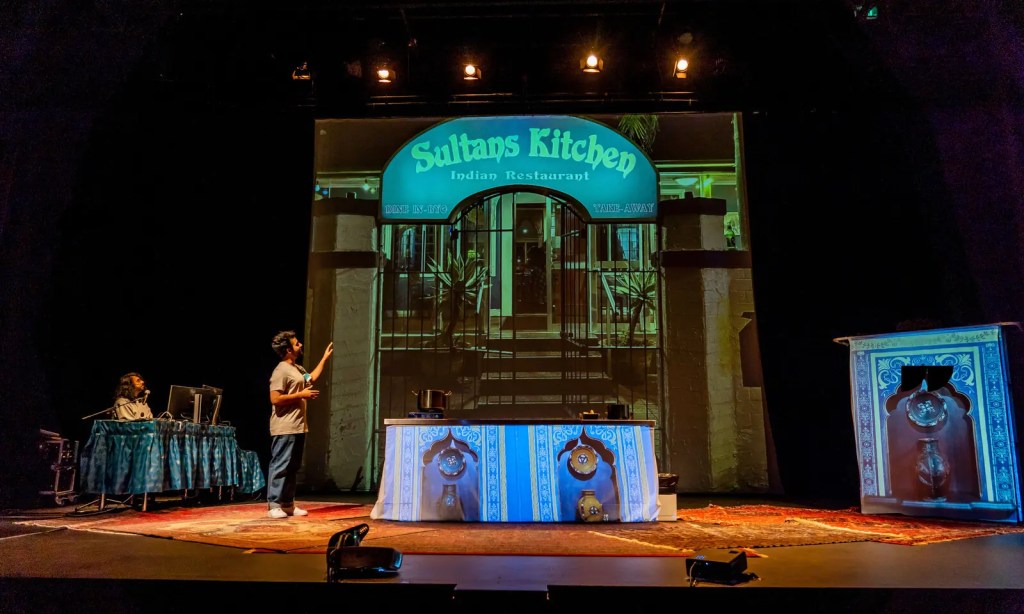
“There aren’t many shows where you emerge and say the play was as good as the food, but A Place in the Sultan’s Kitchen (or How to Make the Perfect One-Pot Chicken Curry) certainly passed the taste test.
Telling the multi-layered story of his family’s past while cooking his grandmother Mehmeh’s chicken curry, Joshua Hinton recalls his heritage, sprinkled with a message so needed right now – that we are all not as far apart culturally as we think. And that food unites us all.
The Australian singer-songwriter unpicks his origins going back generations by skilfully weaving into his conversation audio interviews with his grandmother while the aromas of turmeric, garam masala, cinnamon, chilli, tomato and chicken float over the audience like a spell.
The spice bottles from his onstage kitchen become integral parts of the story, with photos of his family emerging from the spice rack to become characters in his grandmother’s recollections. Kitchen utensils magically becoming war planes in war stories.
Joshua’s brother Dominic is also on stage throughout, on guitar and supporting his brother by controlling multi-media shots from a range of angles around the kitchen to highlight crucial elements in the evolution of the curry. This all reveals aspects of Joshua’s identity, living between cultures.
For Brisbane lovers and appreciators of Sultans Kitchen, a staple of the Paddington foodie scene for more than 40 years, this is somewhat compulsory viewing to see the incredible challenges that the founders of this Brisbane institution overcame to build this restaurant.
Hinton is a skilled storyteller as well as musician, wrapping up his culinary journey around the world with an original song sung with his brother, satisfying all the senses before the audience steps outside to partake of the chicken curry that formed the backbone of the tale. It was a beguilingly simple device executed perfectly, and a night to remember.”
Duck Pond
A review of Duck Pond in The Guardian by Lindsey Winship “Australian company Circa are masters of modern circus, often eschewing obvious exhibitionism, and instead weaving acrobatic skills with a dance and theatre sensibility to make mood pieces. Previous works have considered the plight of refugees (The Return), tragic tales of Orpheus and Eurydice or Dido and Aeneas, and have taken on music from Stravinsky’s Rite of Spring to Beethoven’s Ninth – all serious business.
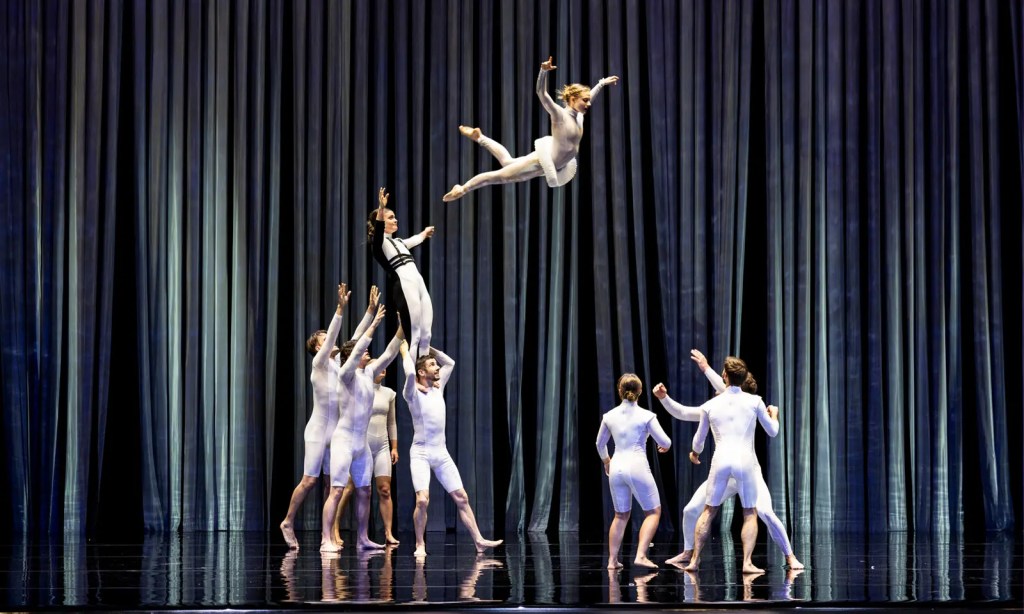
Duck Pond is, on the surface, a less serious proposition. The name is a parody of Swan Lake and it borrows from the famous ballet – shards of Tchaikovsky’s score feed into Jethro Woodward’s soundtrack – and also from another fairytale, the Ugly Duckling. So we get a love triangle of sorts between a prince, an ugly duck and a vivacious black swan. The conceit might seem to promise a more conventional narrative, but it delivers something a little different. The mood is understated, classy, colours of black and gold, a clan of performers in shimmering velvet catsuits. The music is a constant underscore rather than a game of set-ups and climaxes.
There is a lot of beautiful skill on show. Acrobats climb up human towers; flyers somersault between bases. Their formations of three are especially inventive: ornate arrangements of bodies in fine-tuned equilibrium, toes anchored on hips, lower backs, shoulders, anywhere they can get a foothold. There are some lovely moments of flow between couples who lift and fling, curl and unfurl, balance and counterbalance. Bodies tie themselves in knots on the trapeze; others soar on the silks. The ugly duck is revealed to be a swooping swan; the black swan has a dominatrix moment walking over a man’s bare back in red stilettos. But there are lulls too, such as a pillow fight that turns into an anticlimax.
Story-wise, director Yaron Lifschitz puts a couple of nice twists on the Swan Lake narrative but it lacks a big emotional payoff. Low-key lyricism, rather than transactional tricks for applause is Circa’s way and Duck Pond is a lovely show, with warmth, skill and some wow moments, but you can’t help feel it could do with a dash more pizzazz.”
A visionary plan to preserve, establish and maintain the home of Gil and Pat Hanly as an artist’s residency and museum at 7 Walters Road, Mt Eden was recently announced at the artist’s former home.
The house and extensive tropical garden located in the heart of Mt Eden, would operate as a social hub, gallery and museum as well as an education and research space for New Zealand art history, and a unique supported urban artists’ residency and studio for emerging contemporary artists locally and from across the world.
Iconic New Zealand artists Pat, a painter and Gil, a documentary photographer, contributed significantly to the social, political and cultural landscape of Aotearoa. Through the Hanly House project the family wish to celebrate Pat and Gil’s contributions to the cultural landscape of Aotearoa, and for visitors and researchers to enjoy and be inspired by it.
The Artist Residency Programme would support artist at a critical point in their career development by providing the house rent free for up to five years.
The residency would work with key stakeholders including Te Papa, AAG, ELAM and ILAM to achieve that goal.
Initial aims of the Hanly House would be to raise capital to purchase the house and garden from the Family. Once established it is intended that house would host regular arts focused functions and support public access to events at the house, support public access to the garden and raise operational funds through events, endowment fund, and edition sales.
ARTIST RESIDENCY DETAILS
Long term (3 -5-year residency programme)
Open to national and international artists through an arts partner organisation.
Selection Process and Programme in Partnership with Te Papa, AAG, ELAM, ILAM
Artist to be between 30 and 40 years old
Artist’s family welcome to reside with artist
On acceptance of the residency, The Artist will be expected to reside and work at the address for the duration of the period, with standard holiday breaks.
The residing Artist participation and outcome expectations would include
Attend the Annual Garden Party Functions at the house.
Speak at quarterly In Conversation programmes at the house or another arts organisation.
Deliver a body of work or installation that responses to the region.
Produce and gift to the Trust a series of limited edition to the value of $20,000 for fundraising purposes.
The Hanly Family Trust is currently supporting the development of the Hanly House proposal and is calling on individuals for support. Supporters can make immediate donations of $5 or more and can pledge donations which will help offset the establishment costs and enable the commissioning of further development plans.
Supporters can register at various tiers:
Heart 1M+
Kowhai 500K+
Dove 100K+
Hope 5K+
Activist 1K+
Benefactors will be acknowledged, onsite, in print material and at functions.
The “Follow button” at the bottom right will appear and clicking on that button will allow you to follow that blog and all future posts will arrive on your email.
The “Follow button” at the bottom right will appear and clicking on that button will allow you to follow that blog and all future posts will arrive on your email.
The opening work on the Auckland Philharmonia’s “Mozart & Mischief” programme was Respighi’s music for the ballet “La boutique fantasque” of 1919 which he had adapted from some of Rossini’s piano music from fifty years before.
The eight-part work is set in dolls shop and revolves around the dollmaker on a pair of cancan dolls who are going to be sold and separated. The two heartbroken dolls are eventually saved and united by the other dolls in the shop.
The eight-part work developed a narrative not unlike the ballet Coppelia written by Léo Delibes and features similar music with various clever dances designed to present different styles of dance and show off the dancers’ skills. So, there is a cancan, a waltz, a Cossack dance and a galop.
The music replicated the sprightly steps and graceful movement of the dolls with some spirited music from the greatly expanded orchestra which included a harp, celesta and castanets to create inventive sounds.
The eight sections of the work meant there were changing moods and magical moments such as the pizzicato section for the strings, the vigorous cancan and the sounds of the busy workshop.
The second work n the programme was Mozart’s Piano Concerto No 21 which features the well-known “Elvira Madigan” theme in the second movement.
Pianist Benjamin Grovsner played with a restrained focus which suited the piece with its charming lyricism. His shimmering arpeggios and his careful detailing of individual notes showed him to be in total control as well as understanding the structure of the work.
Conductor Shiyeon Sung ensured that the graceful opening of the work, with the flute introducing the piano before Grovsner embarked on his many arpeggios and other technical feats. His faultless command of the keyboard with light, tentative playing had a delicacy to it but which he was able to slowly transform to more elaborate and tantalizing passages. Throughout that first movement he moved from the introspective to the more dramatic and expansive
Throughout the work Sung conducted with the same precise approach which Grosvenor displayed, carefully and deliberately picking away at the keys.
In the second movement (Elvira Madigan) he manged to expertly deliver the lyrical qualities of the work with playing which captured an emotional quality before embarking on invigorating finale.
The other major work on the programme was Shostakovich’s Symphony No 9 which when it premiered in 1945 was expected to be like his earlier wartime symphonies, reflected the scale and horror of the Great Patriotic War.
Instead, this short work was full of humour and cynicism rather then heroism and valour. The irony of the work reflected the composer’s regard with Stalin’s regime. Within the jollity of much of the work there is a kernel of melancholy, his only way of showing his despair and distrust of the ruling elite.
The irony of the work can be heard in passages like opening movement with its classical style and an impish piccolo which seems to hide something malignant and then the wistful opening of the second movement where the clarinets and flutes sound as they are on the edge of despair.
Throughout work the music is full of tentative elements suggesting freedom along with passages which seem to be hemmed in, as though the melodies are trying to escape the music continually undercutting the false jollity.
The third movement featured a playground scene but it reveals, not happy children’s activity but detritus and barren landscape conveyed by mournful strings and soulful brass with more dark sounds from the bassoons before turning into a sequence of edgy, mocking music.
The work concluded with a Carnival of Lost Souls, a weird dance or march of hopelessness and death.
The “Follow button” at the bottom right will appear and clicking on that button will allow you to follow that blog and all future posts will arrive on your email.
We all know that godwits undertake an annual marathon migration to Siberia, but the bar-tailed godwit or kuaka owes much of its successful flight to its feathers. While its high metabolic rate and other factors add to its remarkable ability to make the journey, it is actually its feathers and their design which are significant. The feather’s unique design keep it warm and provide protection from rain as well as having flight surfaces designed for long distance flight.
Niels Meyer-Westfeld, Bar-tailed godwits, pied stilts and red knots
The importance of feathers in the evolutionary development of birds is the focus of a new book “Feathers of Aotearoa” by artist / illustrator Niels Meyer-Westfeld who has focussed on the plumage of New Zealand birds. It follows on from his previous book “Land of Birds” (Craig Potton Publishing) published in 2014. Inspired by the tradition of naturalist journals, he has created a very personal and sensitive tribute to Aotearoa’s remarkable birdlife.
Born in Germany he initially studied graphic design at the University of Hannover, before completing a Masters in communication design at Central St Martin’s in London.
However, it was his early exposure to the natural world which motivated his interest in birds. “My father is a passionate lepidopterist and botanist and growing up in Germany, I was lucky enough to accompany him on trips around Europe while he pursued his interest,” says Niels. “His love of nature inspired me artistically and I’ve always drawn the flora and the fauna that surrounds me.”
Having moved to New Zealand he has spent nearly twenty years in a variety of creative endeavours with a particular interest in the bird life of New Zealand.
Like other New Zealand artists such as Ray Ching and Russell Jackson he has the ability to meticulously render his subjects, seemingly able to give his subjects anthropomorphic characteristics.
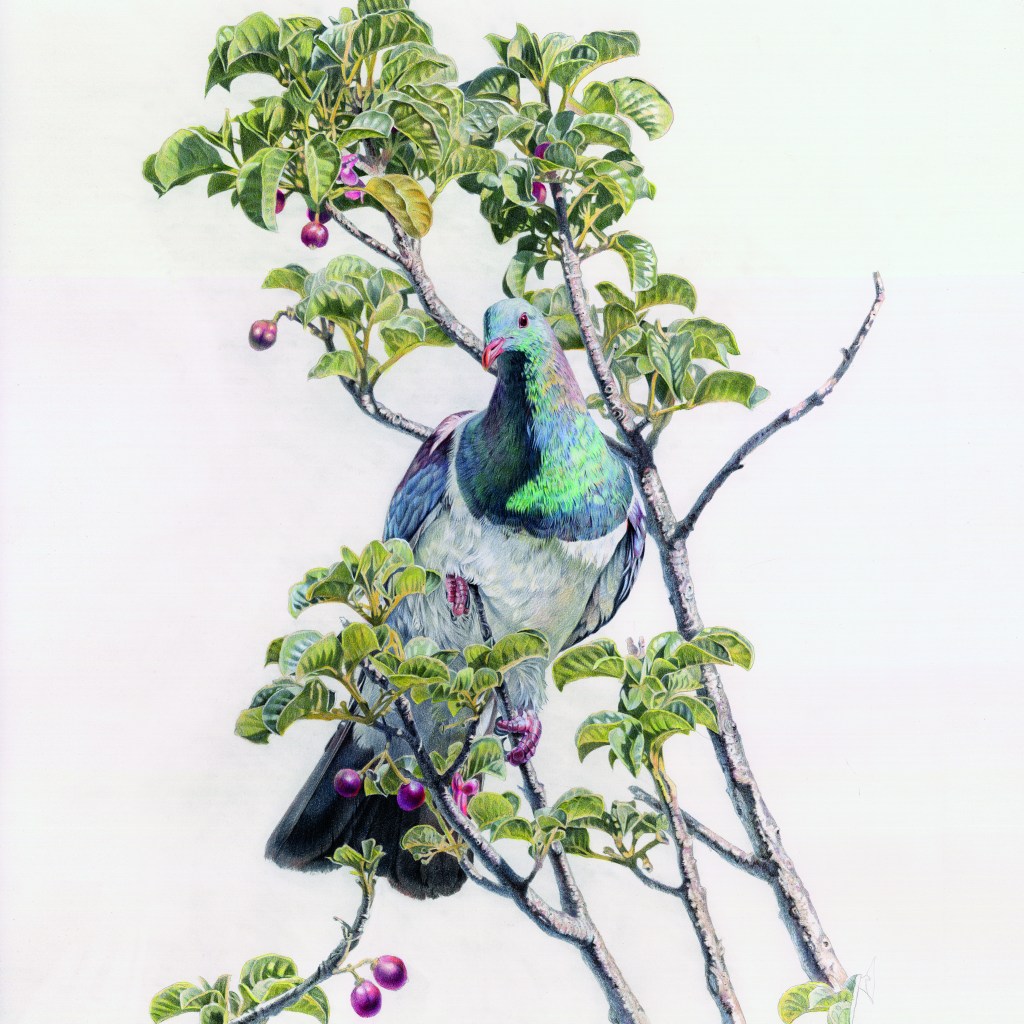
The book illustrates thirty birds which the artist lists under six categories – Flightless, Ground Dwelling, Skilled Flyers, Swift, Wanderers, Divers and Swimmers. Under the heading of flightless we find Kakapo, Kiwi, Moa, Weka and Takahe. Each of the birds is given several pages of illustration with full page renderings of the bird in its habitat or perched on native foliage. So, there is a tui atop a flax and a kereru in a kowhai bush. There are also drawings of the feathers, not one or two as most birds have more than a dozen separate feathers.
Niels Meyer-Westfeld, Kereru
We are provided with information about each of the bird’s plumage as well as general information. We learn that the colours found in the feathers are formed in one of two ways, either from pigmentation or from light refraction caused by the structure of the feather.
We also learn about the evolution of the feather the science of which has been evolving since the 1990’s when fossil evidence revealed that several lineages of dinosaur had primitive forms of feather which have evolved into the contemporary form such as the tiny, insulating feathers of a penguin.
The artist illustrates and explains in the accompanying text aspects of the unique nature of many of the feathers found in New Zealand native birds. He explains how the feathers of the tui which initially appear to be black but on closer inspection have a shimmering quality with the microscopic scales on the feather creating a range of changing colour rather than relying on pigmentation.
Accompanying the images of birds are illustrations of the bird’s feathers, at least dozen for each bird which show the different colours, shapes and designs, demonstrating the myriad types of feather.
Niels Meyer-Westfeld, Barn Owl feathers
The book is very much like an artist’s notebook or diary, some of the drawing fully coloured with others in simple black pencil of ink with accompany description. Most of the illustrations are of birds the artist has observed in the wild but other are of dead birds where he has captured their limp form.
It is a beautifully designed book, with a particularly impressive cover, the whole production being as striking as many of the birds the artist has illustrated.
The “Follow button” at the bottom right will appear and clicking on that button will allow you to follow that blog and all future posts will arrive on your email.
Gow Langsford (Onehunga) is currently showing works by Don Binney from the 1960s and through to one of his final paintings which he completed in 2010. A Flight Through Time contains a number of works held in private collections, the majority of which have not been publicly exhibited in many years.
In 1972 I interviewed Don Binney for the video series “Six New Zealand Artists” about his fascination with birds. The following is the transcript of part of that interview.
JDP: Why do you choose birds to use as your visual images?
DB: Well, that’s because I’ve been a bird watcher for a lot longer than I’ve been a painter. In fact I was seriously watching birds by the time I’d turned ten and I was still at primary school, and I’ve only really been seriously exhibiting my own paintings, with or without the bird images, since about 1962.
JDP: Do you treat the birds as the real objects or do you abstract them?
DB: This is not a simple question to answer. I was thinking this to myself today as I was sitting up at Aorangi Pt looking at a number of the spotted shags hatching their clutches on the rocks, in their little nests on the headland, and I was also, at the time, chewing over what I’d been saying to the local ranger last night at Juliet’s place. It seems to me that birds are a pretty fundamental human image, it seems to me that the human species if you like, has perhaps, twenty or thirty or forty odd, primary image references, perhaps tables may be one, perhaps death may be another, the sun is almost certainly another, stars very likely another, birds I think come well within the short-list of ‘say, very essential human images, and birds mean a hell of a lot, whether you’re a cosmopolitan twentieth or twenty-first century person or an eighteenth century person or a barbaric [person]… a bird is an image, is a life quality, imbued with a great many, I think, tangible references to people. It’s a very sensitive point.
JDP: Yes, so you see them as anthropomorphic.
DB: No, I see them as anthropomorphic, but I see them as a whole quality of existence in themselves, and I see them as forms, recurrent forms in space and in place, reappearing in the world of men as they’ve done in New Zealand, as long as men have co-existed with them, in this country and as they’ve always done over the world-.birds have lived in the world for so much longer than the human species, the hominid species and I think we owe them tremendous respect for this alone.
JDP: Do you see the links between bird forms and the natural forms of the landscape?
DB: Oh sure, this of course carries on, without my sounding presumptuous, but what I was saying is that the birds have lived in harmony and have co-existed with the topography, with the space, with the light, of habitable earth space, so much longer than people, and they have won their place, by means of flight, by means of nesting patterns, by means of migration, by means of their feeding habits, and the whole way that they deploy themselves against this, this land and this life, be it in New Zealand, be it New Guinea, be it Iceland or be it East Africa.
Image Ye Aung Thu Documenting the conflict in Burma
World Press Photo Contest
Presented by Rotary Club of Auckland
131 Queen St Auckland
Until 24 August,
Reviewed by John Daly-Peoples
The World Press Photo Contest is one of the most important photographic exhibitions and has been held every year since 1955.
While the focus is on the major political, social development and changes around the world it also presents aspects of sports and culture along with the drama and humour of everyday life.
The 2025 exhibition has six worldwide regions – Africa, Asia, Europe, North & Central America, South America, and Southeast Asia & Oceania and four categories (Single, Story, Long Term Project and Open Format). The winning entries from the six regions in each category form this exhibition with four global winners chosen.
The exhibition highlights significant global events and issues through powerful photojournalism and documentary photography. This year’s exhibition, presents a diverse range of subjects, including the human cost of conflict, the impact of climate change (like the Amazon droughts), political events, and stories of human resilience and cultural identity.
The exhibition rarely shows New Zealand work but this year the Belarusian, New Zealand based photographer Tatsiana Chypsanava is included with her award-winning group of photographs titled “Te Urewera The living ancestor of the Tuhoe people” which includes is an image of Tama Iti.
The top honour for 2025 was awarded to Samar Abu Elouf’s haunting image of nine-year-old Mahmoud Ajjour, who lost both arms in an Israeli airstrike in Gaza City.
Image by Samar Abu Elouf
The exhibition includes a special display marking 70 years of World Press Photo, offering a look back at the evolution of photojournalism and its impact.
Donald Trump is the focus of a work by Jabin Botsford showing members of the US Secret Service helping Republican presidential nominee Donald Trump off stage moments after a bullet hit his ear during a campaign rally at the Butler Farm Show Grounds, Pennsylvania
Image by Jabin Botsford
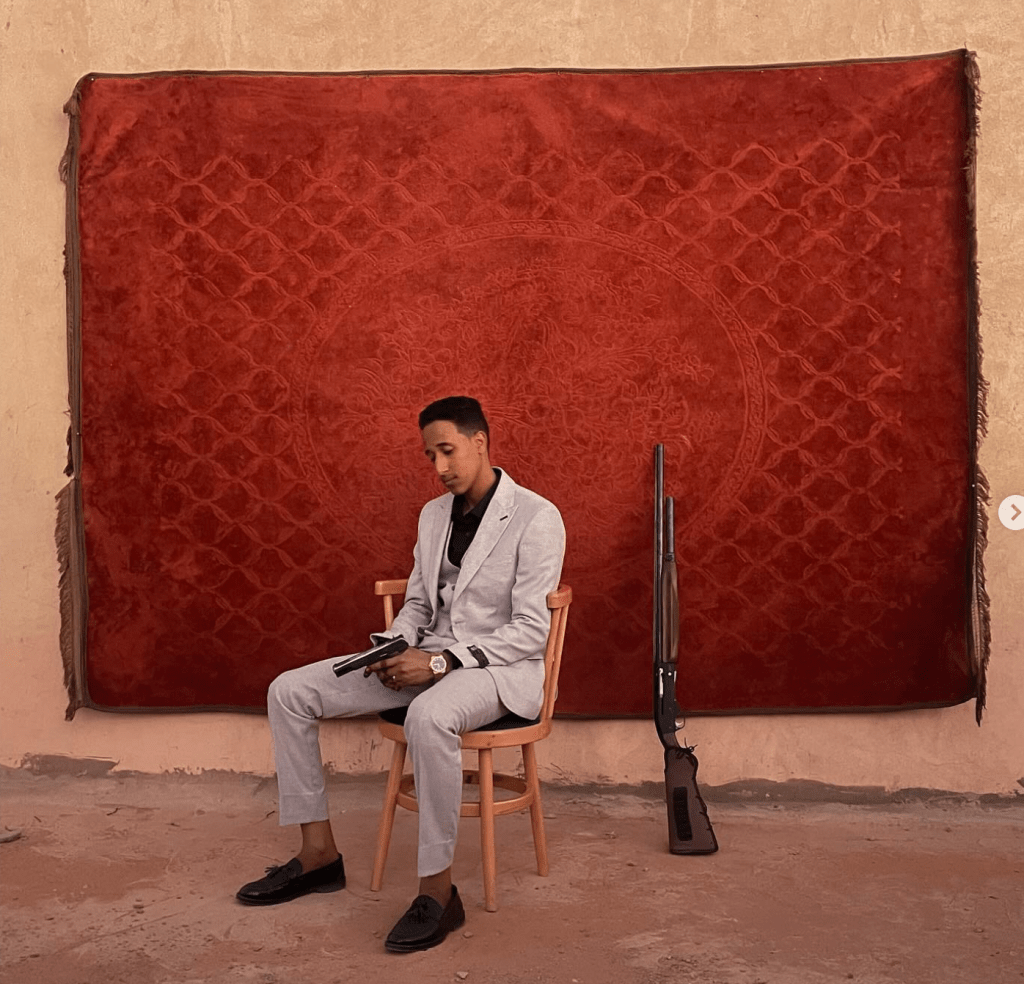
Mosab Abushama’s image of a groom at his wedding in Omdurman, Sudan, where weddings are traditionally announced with celebratory gunfire. He asked a friend to document his wedding on his cellphone in a city constantly targeted by airstrikes.
image by Mosab Abushama
Gaby Oráa photograph shows Venezuelan opposition leader María Corina Machado as she greets supporters during a campaign rally in 2024. She was barred from running and as a result, she endorsed the former ambassador as the opposition’s candidate and led his political campaign across the country.
Image Gaby Oráa
Brazil’s Gabriel Medina was captured by Jérôme Brouillet as he bursts out triumphantly from a large wave in the fifth heat of round three of men’s surfing, during the Olympic surfing at Teahupo’o, Tahiti, French Polynesia in 2024.
Jérôme Brouillet
The exhibition is brought to Auckland by the Rotary Club of Auckland as a fundraiser for charity. This year the profits will go to Rotary youth programmes, interact and Rotaract, and PHAB an inclusive organisation dedicated to empowering individuals with disabilities.
Murray Savidan’s new photographic book “Stop. Look Both Ways” is something of a travel diary, a record of his journeys through Aotearoa/New Zealand and around the globe to diverse locations in Europe, Africa, Asia and the Americas. There are images of his time in Vietnam and Nepal, Egypt and Zanzibar, Italy and Spain, Japan and Vietnam.
But as well as a travel diary documenting the places he has been the images are also a record of the people of these places, seeing the aspects of other people’s lives which make them distinct but also seeing the similarities between us – partly ethnographic and partly the photographers own quirky approach to life.
Each of the individual photographs are the result of a keen eye, often capturing a moment, a contrast, a reflection or a facial expression which offers more than a simple photograph.
With many of the photographs Savidan has paired them in a way which emphasises their stories and creates new narratives. These often-subtle connections are an indication that he has reflected on the images and his way of contemplating the world around him.
There are spreads where he has contrasted the physical world a such as pairing the architectural shapes of the Guggenheim Gallery in Bilbao with those of a shrine in Bhaktapur – two different temples to culture.
The clash of cultures is seen is several of the works such as the linking of a beach on the Cinque Terra filled with sunbathing figures with a horde of burqa clad woman on a beach in Zanzibar.
Murray Savidan, Zanzibar
With some of the works there isa nod to other photographers such as his image of a crocodile in Madagascar which owes much to a similar work by Peter Peryer and his image of a woman contemplating a painting by Christian Schad at the Pompidou Centre is reminiscent of the similar gallery photographs of Thomas Struth.
He manages to find quirky connections as well. So, his view of the Anish Kapoor Dismemberment, Site 1 at Gibbs Farm is contrasted with horn shapes in an atrium in South Africa.
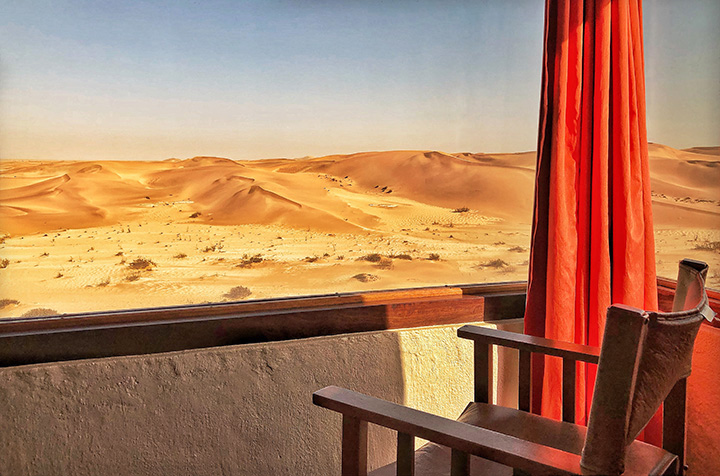
Then there are the landscapes such his pairing of a forlorn, misty landscape at Meola Reef with a desert landscape in Namibia. There are also some individual landscapes such as the drama view of a climber scaling a mountain in Fiordland.
Murray Savidan, Namibia
He contrasts a street scene in Kathmandu with one in Madagascar and a simple church in Northland with one in Madagascar as well as the contrasting portraits of a father and his child in Nepal and Egypt
While these paired images are serious reflections on culture and society there are many in which Savidan is making witty, or ironic comments.in one spread he pairs a gaudy jukebox with a church organ and in another he has juxtaposed the various parts of fish at a fish market in Vietnam with a figure lazing on a beach during a fishing competition on the East Cape., an image which itself is a droll comment on recreational fishing.
Murray Savidan, East Cape, New Zealand
He uses these images to create drama, explore history, culture and sexuality which become meditations on society and the individual, but in all of them he captures humanity.
Destination Sydney recently manged a unique promotion which has highlighted Sydney as a cultural destination and the arts and architecture on offer.
Dorothy Smith a 102-year-old from San Francisco visited Sydney completing her bucket list dream of visiting all seven continents.
Two young men, Ammar Kandil and Staffan Taylor who produce Yes Theory, a YouTube channel with almost 9.3 million subscribers, met Dorothy in October 2024 while filming a story at The Redwoods Retirement Village in Mill Valley, California.
They discovered Smith had always dreamed of visiting all seven continents. She had been to Asia, South America North America, Antarctica, and Europe but never made it to Australia.
Kandil and Taylor partnered with destination NSW and Qantas to make her dream come true and organised a flight to Sydney .
“It’s never too late for an adventure, just try and see and I think you will be surprised how well you do.” she said in a video Yes Theory shared about her trip yesterday. “You either rust out or wear out. I chose to wear out.”
Smith’s visit involved a Sydney Harbour cruise, a koala and kangaroo encounter at Sydney Zoo, touring Sydney Opera House and Bondi Beach, the Botanic Gardens and the Museum of Contemporary Art.
The video of her visit which has had 500,000 views online highlights the opportunities for older travellers and their ability to have art experiences over walking tours, ski slopes and surf beaches.
Julia Mehretu, Haka and Riot
The MCA currently has a major exhibition of works by Julie Mehretu an Ethiopian artist now living in the US. She is one of today’s most acclaimed living painters and the exhibition which blurs distinctions between abstraction and figuration. One of her works, Haka and Riot which evolved from photographs of children held in US detention centres refers to exorcism or a dancer performing the haka.
They also have New Zealander Kate Newby’s installation “Hours in Wind” in the Sculpture Terrace on the top floor of the gallery.
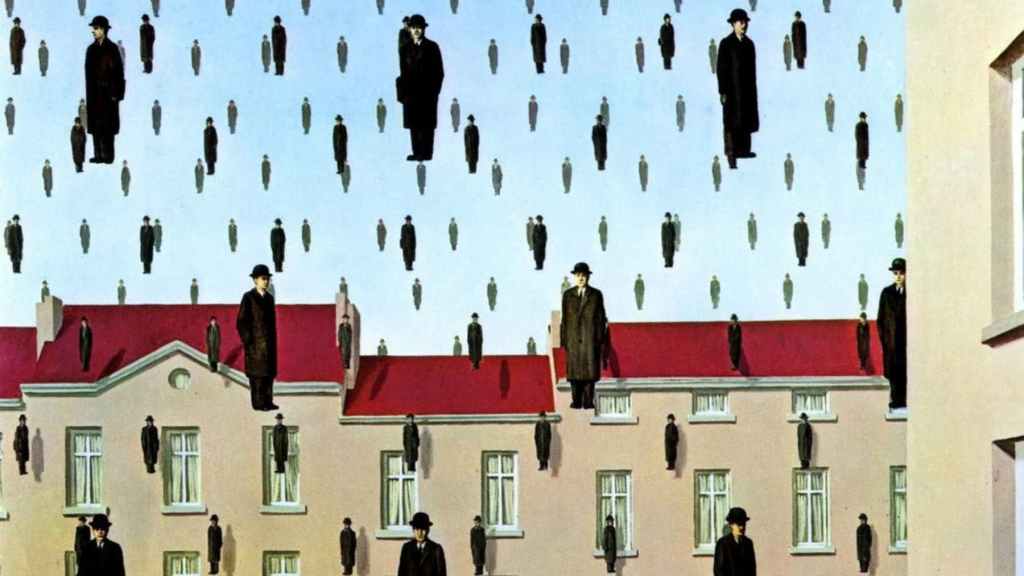
The other major exhibition on in Sydney during her visit was “Magritte” which features one hundred works by the artist – paintings of clouds, hats, pipes and apples among the most recognisable images of surrealism. Renowned for his deadpan, realist style, the Belgian artist depicted ordinary objects and everyday settings, revealing them to be mysterious and enchanting.
Rene Magritte
“Magritte” journeys from the artist’s first avant-garde explorations and commercial works in the 1920s, to his groundbreaking contributions to surrealism, his surprising provocations of the 1940s, and the renowned paintings of his final years, before his death in 1967.
With her stop at the Sydney Opera House Smith could have seen the current production of Tchaikovsky’s “The Nutcracker” or even a concert by the New Zealand band Crowded House.
Smith said she loved visiting Sydney, saying the city was beautiful and the people were so friendly.
“The people are charming, the food is good, the scenery is just wonderful, and even the weather is nice,” she said. Although she didn’t expect the city to be quite so developed.
The Sydney Opera House was a particularly special place to visit, with Smith being more than twice as old as the iconic building.
Ans Westra, who died in 2023 was probably the most prolific contemporary photographer who focussed on recording the life and times of New Zealanders.
With a career spanning over sixty years, she took hundreds of thousands of photographs of people, places and events.
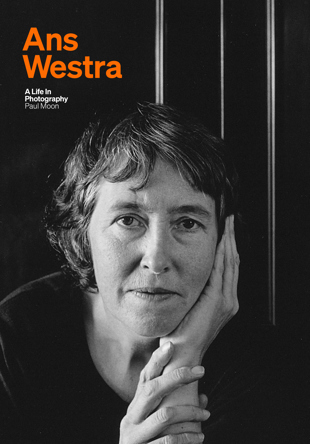
Now a new book “Ans Westra: A life in photography” by cultural historian Paul Moon documents her life and her contribution to the cultural life of the country.
The book charts her photographic career from her early involvement with the Wellington Camera Club in the 1960’s and her first sale of a work to the quarterly journal Te Ao Hou, a publication she would continue to provide images for,
She also gained early recognition in 1961 winning a prize in a photographic competition run by Arts Committee of the Festival of Wellington.
Much of her work was commissioned for publications originated with the Department of Education and several of her books were for educational publishers as well. One of her earliest publications was ”Viliami of the Friendly Isles” based on her travels to Tonga, Fiji and Samoa in 1962. As well as taking the pictures she wrote the text which describes the dramas, tragedies and excitement of the various locations and events she encountered.
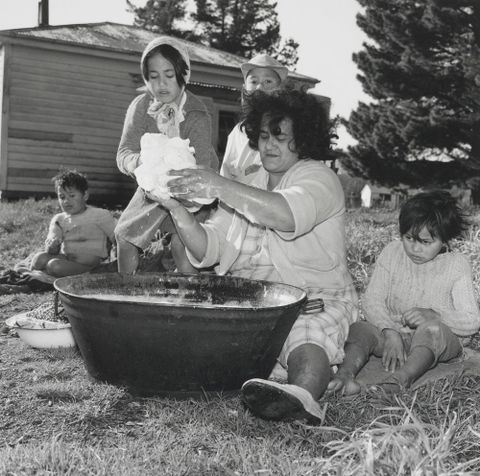
Then there was the controversial booklet “Washday at the Pa” which was a school bulletin published in 1964 by the Education Department’s School Publications section. Ans Westra wrote the text and took the photographs during a visit to Ruatōria.
Ans Westra, Ruatoria, 1963 (from ‘Washday at the Pa’), courtesy of {Suite} Gallery
The bulletin followed a day in the life of a rural Māori family with nine children. Her images of the family’s living conditions caused enormous controversy, notably from The Māori Women’s Welfare League and the work was subsequently removed from schools and destroyed. Only latterly was the work republished by her Wellington gallery Suite.
Her more substantial publication “Māori” was published by Alistair Taylor in 1967 which was co-produced with James Ritchie and designed by Gordon Walters.
Her motive for participating in the project was the misguided notion, held by many pakeha writers that Māori were likely to become extinct at some time in the future and their culture needed to be recorded.
She was also involved with another controversial publication “Down Under the Plumtree” published by Alistair Taylor. Published in 1972, the book openly discussed sex, sexuality and drugs at a time when there was very little reliable information on these issues for young people.
Moon writes about all her major bodies of work such as “Notes on the Country I live in” and “We Live by a lake” which was written by Noel Hilliard.
He also outlines the rational and impetus for the various projects, the political and social climate at the time and the reactions to them.
The 84 images used to illustrate the book show the various aspect of her photographic approach which changes over the years. One is conscious of her ability to frame an image, capture the sense of a person or place and find the drama of the moment.
Ans Westra, Wellington, 1974 courtesy of {Suite} Gallery
This ability to capture the sense of place can be seen in her “Wellington” of 1974 with the wet streets of the capital by the cenotaph.
She also shows an understanding of architectural space with an image of the dam structure in “We Live by a Lake” and she is aware of the possibilities of contrast through light and shade as well as means of creating drama and movement as shown in her image of a policeman and dog confronting a protestor during the anti-Springboks tour campaign.
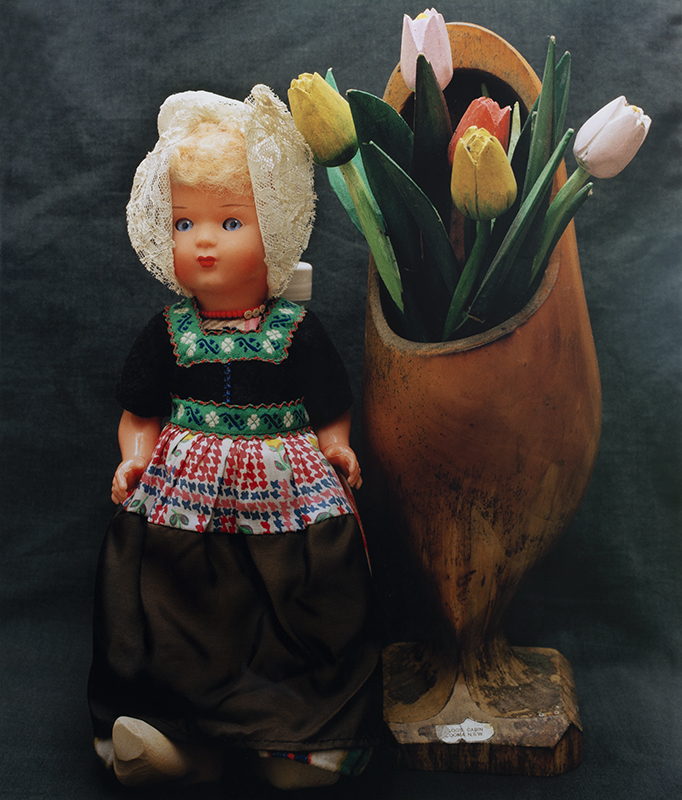
While she did not photograph all that much in colour, when she did, she was able to use colour to great effect as in her image of a Dutch doll from her Toyland series.
Ans Westra, Dutch Doll, 2004, courtesy of {Suite} Gallery
The book not only documents Westra’s immense contribution to our history in documenting social change but also reveals an enthusiastic and dedicated artist.
The book deals with several of the important events in her own life from her move from Holland in her youth, the brief return to Holland in the late 1960’s and her short-lived affair with the writer Barry Crump and the resulting son, Erik.
Dr Paul Moon ONZM is professor of history at Auckland University of Technology’s Te Ara Poutama, the Faculty of Māori Development, where he has taught since 1993. He is the prolific author of many books, including biographies of William Hobson, Robert FitzRoy, and the Ngāpuhi rangatira Hone Heke and Hone Heke Ngapua. He is a Fellow of both the Royal Historical Society at University College London and of the Royal Society of Arts.
All Images extracted from Ans Westra: A Life In Photography by Paul Moon, published by Massey University Press,










 New Zealand Arts Review