Categories
Reviews, News and Commentary

Trent Dalton’s “Love Stories”

Reviewed by John Daly-Peoples

Trent Dalton, Love Stories

Based on the book by Trent Dalton
Additional Writing and Story: Trent Dalton and Fiona Franzmann
Adaptor: Tim McGarry
Choreographer & Movement Director Nerida Matthaei
Associate Director Ngoc Phan
Set & Costume Design Renee Mulder
Lighting Design Ben Hughes
Video Design and Cinematographer Craig Wilkinson
Composition & Sound Design Stephen Francis

Civic Theatre

October 17

Reviewed by John Daly-Peoples

Before heading off to see Trent Daltons “Love Stories” a quick survey of what love is was in order. First stop would be Shakespeare, and he almost nails it with

“Love looks not with the eyes, but with the mind” from a Midsummers Night Dream

The audience filled the Civic Theatre and on stage all we see is a panorama of the audience looking back at ourselves. All of those people who know about their own encounters with love. They are the mass of humanity who are hoping to find out the truth / answer to the eternal question. – What is love?. And each one of them knows what it is. Each one can tell their own story

And then scrolling across the screen are the answers we could give, all provided by previous audience members

LOVE IS

Lasting the distance. Even when you think you can’t do it.

The perfect coffee with crema on Sunday morning

Saying sorry and meaning it

Being confident in the silent moment

Magical; poetic, sometimes messy

And dozens more some profound, some very personal, some cliched

Trent Dalton spent two months in 2021 gathering stories on his 1960’s blue Olivetti typewriter, on a prominent street corner in Brisbane’s CBD. He had sign which read “Sentimental writer collecting love stories. Do you have one to share” Speaking with Australians from all walks of life, he received hundreds of them.

The show opened with Jean- Benoit and his drumming as he introduced the show and it closes with his taking us backstage through to a simple doorway which led us back out of the theatrical world of make believe into the real world.

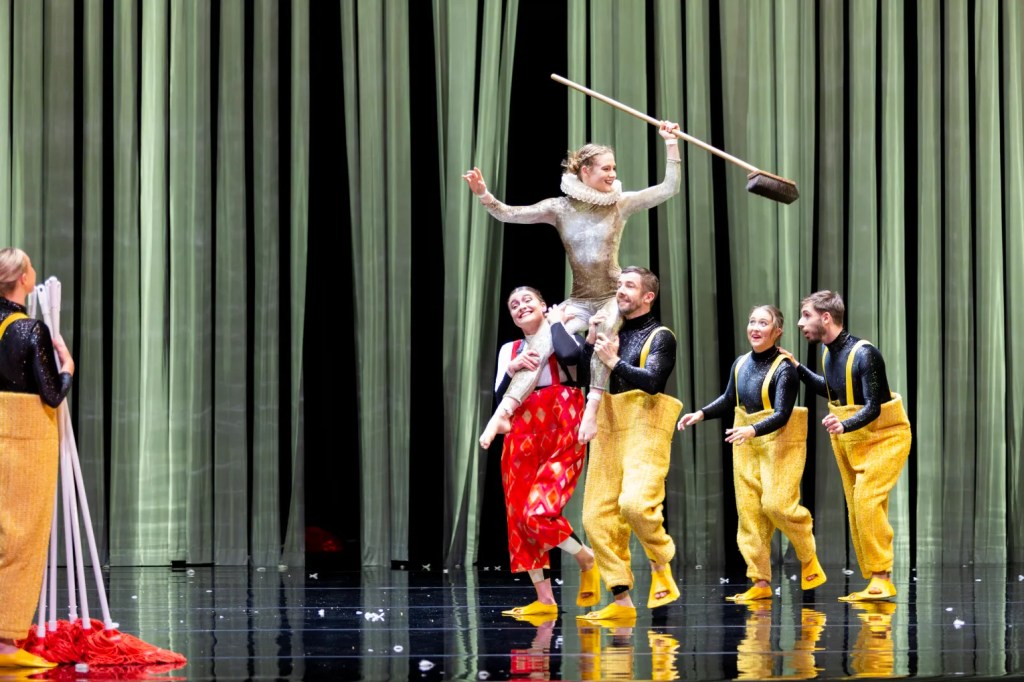
The dozen actors who swarmed the stage enacting the stories, some lasting a few minutes, other only a few brief moments created a topography of love with its range of, stories, anecdotes and remembrances.

Some of the stories are profound, some of them flippant, some of them might have been written by the writers at Hallmark Cards. Other could have been written by your partner, boyfriend, girlfriend.

Director Sam Shepheard wove the various stories together, the actors changing guises as they connected and parted. Sometimes cameras made their faces balloon up large on the screen as they addressed the audience. Many of the stories are moving, rich in compassion, witty, and full of allegories.

The entire cast created impressive range of characters and encounters and there were some clever sequences – a bit of a Juliet speech, a quote from Emily Dickinson, a scientist explaining about technical aspects of dopamine

Holding much of the performance together was Jason Klarwein (the Writer / Husband) and Anna McGahan (The Wife) where the actual world of the couple seems at odds with his accounts of the people from the street with their passionate, flawed and intermingled lives.

And there are several life stories all woven together such as a film segment delivered by Joshua Creamer, a barrister and human rights activist who not only tells his personal story but also the story of land rights, family, and his identity as an Aboriginal man.

There is also the Asian woman Sakuri Tomi whose story is trapped inside a nightmare is told in several vignettes.

The video montages combined with live video feed help create a dynamic flow and the choreography of Nerida Matthaei adds to this dynamism which works brilliantly in sequences like the State of Origin game.

While it’s not in the play they could have used Marilyn Munroe phlegmatic quote about love –  “If you can make a woman laugh, you can make her do anything.

Categories
Reviews, News and Commentary

End of Summer Time: Unexpected Ode to Auckland

Andrew Grainger as Dickie Hart Image Andi Crown

END OF SUMMER TIME 

By Roger Hall

Auckland Theatre Company

Director – Alison Quigan

Set/Costume – John Parker

Lighting – Phillip Dexter

Sound – Sean Lynch

With Andrew Grainger as Dickie Hart

ASB Waterfront Theatre, Auckland

Until 5 July

Reviewer Malcolm Calder

Andrew Grainger as Dickie Hart     Photo Andi Crown

Gidday Dickie,

Great to see you last night.  I think we last met when you’d just moved up to Wellington and I was still milking in the ‘naki after our African adventure.  Then you moved again.  Up north.  

After Glenda pretty neatly convinced you both to take that Takapuna joint with a sea view, you never stopped grumbling and grouching about the place.  For years.  Y’know – its humidity, traffic, its prices, its pretentious people and so on.  Not to mention its upsy-downsy football team of course.  As for natural disasters, lockdowns, etc … I won’t go on.

But, bluddy hell mate, since then it’s almost like you’ve had what that Ayckbourne mate of yours would call a car-thar-sis.  Family disruptions aside, it seems that you’ve stopped moaning and fallen in love with the place.  Auckland!  Never thought I’d see the day. 

Blow me down, you seem to have become an advocate for just about everything and everyone.  From Auckland’s buses to its ferries, from its oddball characters to its libraries.  To lots of its bits too – from Riverhead to Moolfud even if the grandkids are your excuse to explore lots of Maccas and KFCs. 

Quite honestly, mate, it seems like you’ve discovered some sort of extra-special non-energetic energy in your post-Covid life.   Part of me thinks you have somehow grown an extra leg.  Or at least grown up.  And good on ‘yer. 

Never even dreamed I’d see such a contented, reflective and accepting Dickie.  I can see you now sitting on that playwright feller’s beach gazing contentedly at Rangitoto.

Nice looking apartment too and that ever-helpful sheila deserved the flowers as well.

Probably a few lessons in there for me.  Perhaps, after 50 years – yes FIFTY years – it’s time for me to stop getting irate about suss hotel food, Mendela, Pienaar and 747s.

Yes it was pretty definitely good to see you again.  Might even visit sometime.

Cheers mate

Jock

To subscribe or follow New Zealand Arts Review site – www.nzartsreview.org.

The “Follow button” at the bottom right will appear and clicking on that button  will allow you to follow that blog and all future posts will arrive on your email.

Or go to https://nzartsreview.org/blog/, Scroll down and click “Subscribe”

Categories
Reviews, News and Commentary

Ruth Cleland’s exploration of the enigmatic quality of concrete

Reviewed by John Daly-Peoples

Ruth Cleland Concrete 3

Ruth Cleland, Concrete

Sumer Fine Art

Until July 22

Reviewed by John Daly-Peoples

In her latest exhibition ”Concrete” Ruth Cleland continues her interest in the accurate depiction of her environment along with the use of the grid.

Gridding is a technique that has been used by many artists throughout history using horizontal and vertical lines over drawings or photographs for enlargement and transfer purposes.

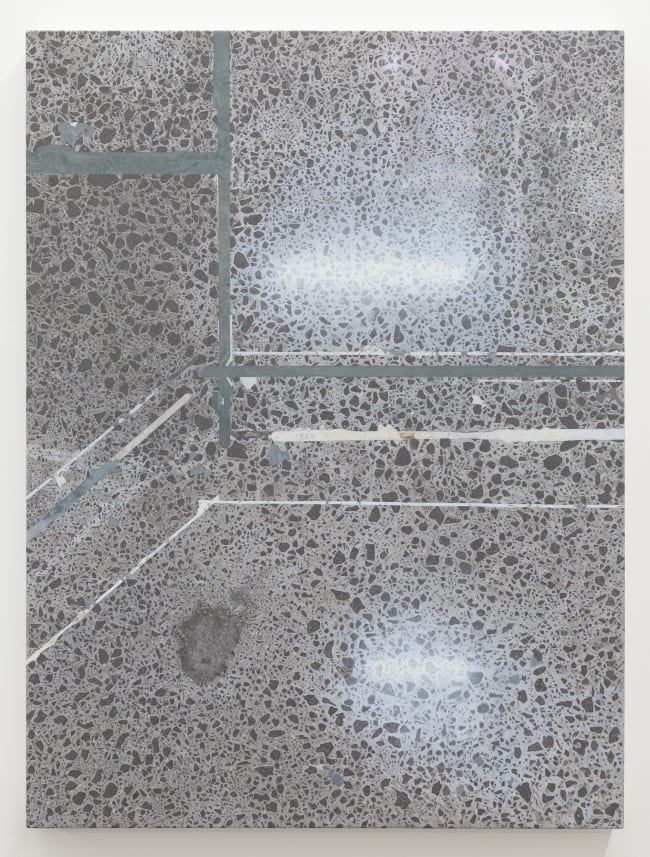
Cleland uses a grid to transfer images of concrete floors onto board using either graphite pencil or acrylic. These images such as “Concrete Floor 3” ($12,8000) show the polished concrete surface with imbedded scoria along with signs of previous uses and marks.

The works are akin to the work of the Boyle Family who randomly chose sites or parts of the body which they then recreated, the completed work offering new interpretations of the environment or body.

These images of concrete floors could be of the floor of the gallery with its various  sections of ground and polished concrete laid over the years. They are in fact of a supermarket floor that the artist has previously used as subject matter. One image, “Concrete Path” ($12,800) has a more personal connection being the concrete path outside the artist’s home.

These images of concrete are meticulous in their accuracy but the artist shows her skill in the depiction of both ambient light sources as well as overhead lights.

Ruth Cleland, Concrete Floor 1
Ruth Cleland Gris (Concrete Floor 1)

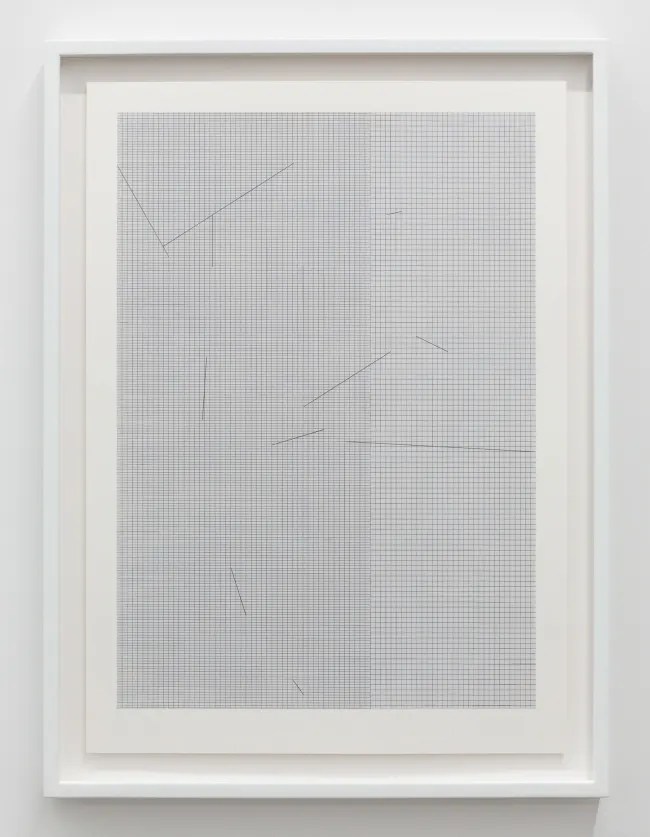
In some cases there is a companion piece to the photorealistic image as with “Concrete Floor 1” and “Grid / Concrete Floor 1” ($12,800 pair). The lines drawn on the grid have been used here to indicate the striations seen in the drawing as well as light intensity. This recording adds to the enigmatic nature of the work suggesting there is an underlying plan or logic inherent in the image itself which the artist has revealed.

To subscribe or follow New Zealand Arts Review site – www.nzartsreview.org.

The “Follow button” at the bottom right will appear and clicking on that button  will allow you to follow that blog and all future posts will arrive on your email.

Or go to https://nzartsreview.org/blog/, Scroll down and click “Subscribe”

Categories
Reviews, News and Commentary

La Clique: A magical and adventurous show

Reviewed by John Daly-Peoples

Tara Boon Image Liam Newth /Auckland Live

La Clique

Cabaret Festival

Civic Theatre

June 3 – 15

Reviewed by John Daly-Peoples

Headlining Auckland’s Cabaret Festival starting this week is La Clique featuring a range of performers with some of them presenting at a press preview.

La Clique has been performing for many years with their performers changing over the years. It was here at the Auckland Arts Festival in 2007 and while some of the performers have changed the class, innovation  and magic is still there.

Performing in the Civic, the show is particularly magical, not just being in the Civic but being on the Civic’s stage. The lights, curtains and apparatus that we never see takes the audience into a very different space and looming over us are the seats of the stalls and balcony  and above them the ceiling of the Civic with its twinkling stars of the solar system.

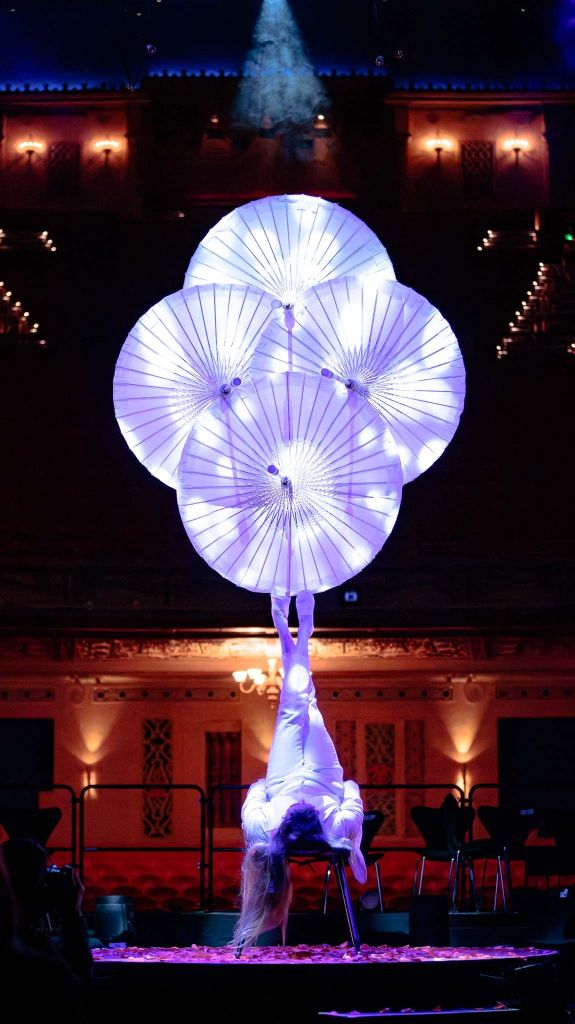
Tara Boon is a foot juggler which sounds like a pretty easy trick to take to the beach  later in the year,  that is,  until you realise that some people can’t even get their shoes on without becoming a contortionist.  Boon is as dexterous with her feet as ordinary people are with their hands. Resting on her reclining chair, she initially upends an umbrella which showers the stage with red petals and with her act she is able to manipulate up to four oriental umbrellas – on the handle or on their edges.

It’s a simple  slick stylish  act performed to the song “Umbrella” by Mechanical Bride and you keep forgetting how difficult it is to manipulate an umbrella, let alone four of them.

Byron Hutton is a juggler who is as clever with his hands as Boon is with her feet. He manages to juggle with his hands as well as other parts of his body, the  clubs dancing  and cavorting around him in fluid  movements.

He showed his consummate skill a couple of times when he lost a club and instantly caught another from his offsider before moving on to the next routine.

Heather Holliday Image: Liam Newth / Auckland LIve

The act which attracted thy most gasps was the fire eating Queen, Heather Holliday. I’ve seen a few fire eaters before but never up close, so close I could feel the heat of the flames. I know they use low combustion fuels which are less dangerous than things like alcohol and petrol but even so it all looks a bit scary, especially when she takes her flaming batons and drags them across her skin

At the end of her performance, her offsider came on with a flute  full of what I thought was a celebratory glass of champagne. But no. This was a glass full of her flame throwing fluid. She drank the flute and then spouted out a flaming jet like a flamethrower which had all the audience recoiling .

We saw just three acts but on the night, there will be a dozen. It will be a night full of the  sexy, the funny and the dangerous

Categories
Reviews, News and Commentary

HEDY! The Life & Inventions of Hedy Lamar

Reviewed by John Daly-Peoples

HEDY! The Life & Inventions of Hedy Lamar

Written and performed by Heather Massie

Q Theatre

March 13- 16

Reviewed by John Daly-Peoples

While she never got an Oscar, Hedy Lamarr was considered the most beautiful woman in the world and was one of the great movie stars of the mid twentieth century. She starred in many films including “Samsom and Delilah and the Czech film “Ecstasy” which featured a controversial orgasm scene which was banned in many countries.

She was divorced six times, making her one of the most divorced women of the twentieth century, a distinction beaten only by Elizabeth Taylor with seven.

But, in many ways, her greatest distinction was her invention (along with George Antheil} of  a “Secret Communication System,” which was a radio-guided device with anti-jamming frequencies which would have had the capacity to interfere with torpedo guidance systems during WWI. The US Navy declined to make use of it.

This device is a component of present-day satellite technology and cellular phone technology.

Her work as an inventor was eventually recognized in 1997 with the Sixth Annual Pioneer Award bestowed on her by the Electronic Frontier Foundation.

These are some of the highlights of her career which were revealed in Heather Massie’s one-woman autobiographical show, “Hedy Lamarr”.

Lamarr reminisces about her life, her father, her time in Vienna and later her career in Hollywood. There are her relationships with the various men in her life – an armaments producer, a count, Louis B Meyer and various director and actors.

Many of them were presented by Heather Massie using a of range voices to create to give depth to her performance, although she gave most of the men pretty much the same clichéd accent. Her account of Jimmy Stewart, however, was a delightfully, breathless portrait of the actor.

The various events and activities referred to showed the range of Lamarr’s interests and encounters with her quotes indicating a shrewd mind and a keen observer of life.

Massie managed to turn Lamarr into a remarkable complicated but simple figure who seems to know a lot about life, men and the workings of the world as well as making shrewd observation about her life and her inventions.

However, Massie galloped through her “tutorial” about her guidance system with not much time to appreciate just how important the invention could have been to the war effort.

Massie’s presentation has Lamarr engage the various people in her life over the phone or in having on stage conversations so effectively that in retrospect it seems they were with there on stage.

She also engaged with the audience as a whole and in many cases with individual audience members, a technique which worked as a means of creating Lamarr as well as providing a classy example of how to create a character.

To subscribe or follow New Zealand Arts Review site – www.nzartsreview.org.

The “Follow button” at the bottom right will appear and clicking on that button  will allow you to follow that blog and all future posts will arrive on your email.

Or go to https://nzartsreview.org/blog/, Scroll down and click “Subscribe”

Categories
Reviews, News and Commentary

Luise Fong’s “Nexus” examines the body and the cosmos

Reviewed by John Daly-Peoples

Luise Fong, Pathology

Luise Fong, Nexus

Bergman Gallery, Auckland

Until November 30

Reviewed by John Daly-Peoples

When I reviewed the work of Luise Fong in the “Cultural Safety” exhibition at the Frankfurter Kunstverein in 1996 I noted that her surfaces had much in common with an exhibition in the adjacent Jewish Museum which was displaying lampshades made from human skin.

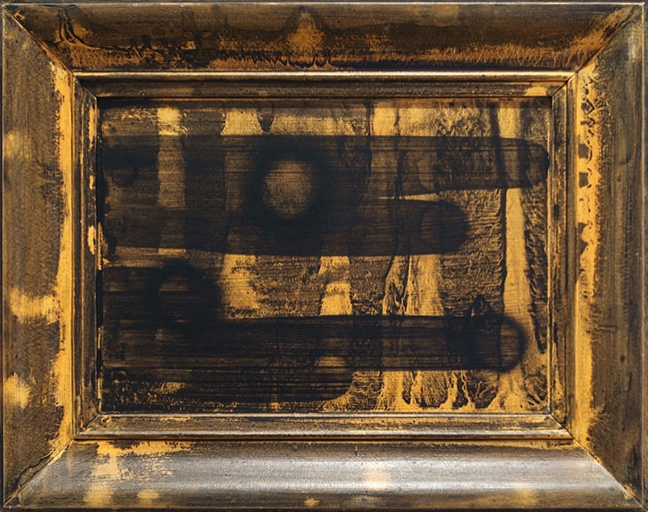
Works from that time such as Pathology Sample ($5200) which refers to the examination of tissue and the wider aspects of death and mutability are central to Fong’s work. These images allude to the body and the forces—physical, psychological and social which affect it.

Luise Fong, Omni

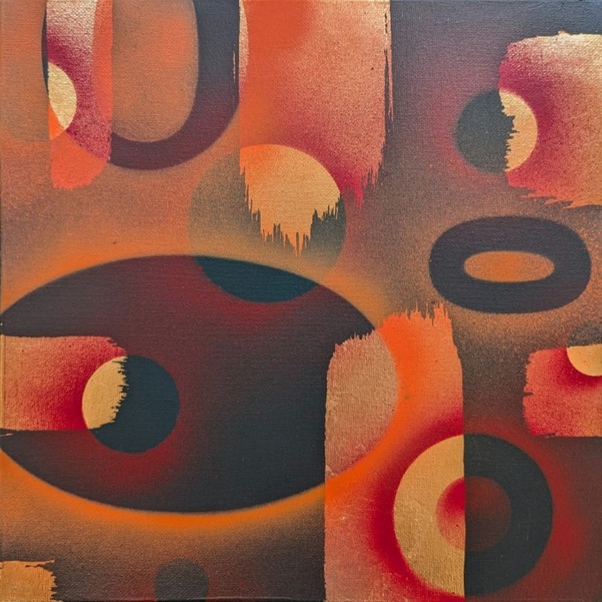
While there is a focus on the body in her works there are wider connections which  encompass the nature of the cosmos as well as with works such as Small Orbit  8 ($6800). This contradiction or ambivalence between the microscopic and macroscopic infuses much of her work. This other worldliness is also suggested in the two photogram works included in the show where objects are transformed into strange shapes as in the UFO Series X ($3000).

There is also a sense of this ambiguity in the ethereal sounds of the Icelandic musical group Sigur Ross which have inspired the artist.

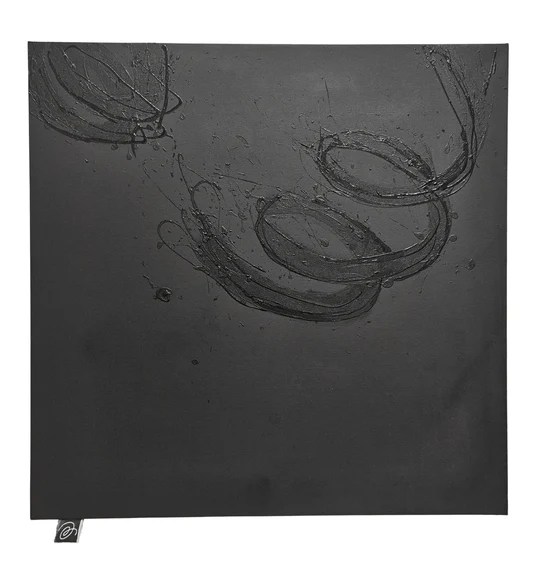
With many of the images such as the sperm-like streaks of paint in Omni ($9800) , the cellulear forms  in Pool ($7700) or the planetary shapes in Orbit ($6800) we are aware of the artists manipulating the painted surface, creating other surfaces and changing our perceptions.

Luise Fong, Twilight III

Some of her more recent work extends the notion of skin with work which look more like fabric, reflecting her Chinese/Malaysian heritage and her interest in textile design. With work such as Twilight III  ($3200) with its vibrant reds and oranges as well as other with dramatic blues, colour plays an important role. These images which can be seen as displaying planetary shapes, and solar flares are also suggestive of MRI s scans of the body, returning her work to its origins of thirty years ago.