Categories
Reviews, News and Commentary

Music without end: A book of listening

Reviewed by John Daly-Peoples
Music Without End; A book of listening

Roger Horrocks

Atuanui Press

RRP $45.00

Reviewed by John Daly-Peoples

We are surrounded by music every day, in our houses, in the public space in shopping malls and with our audio devices and through this soundscape to our lives which we build up a huge sound bank of songs and music. Often, we are not aware of how this music is created but we are conscious of its components such as melody, harmony, rhythm, tempo, dynamics, timbre, texture, and form, which work together to create a piece of music. But we rarely investigate them, they are magically and mysteriously assembled, providing enjoyment and diversion There are many though who become obsessed by what a composer, band  or singer have created and how these creators have seemingly produced something which touches on our psyche, our emotions and our way of seeing the world. There are some writers, composers and philosophers who try and understand this fascination with what music is and what it does.

Roger Horrocksm is deeply interested in this world of music and his new book  “Music Without End; A book of listening” which follows on from his 2022 book “A book of Seeing” delves  into areas of music which will resonate with readers as well as offering new perspectives and insights.

As the author says in his preface “I take a very broad approach … since I am interested in popular music, jazz, classical music contemporary classical sounds and music form non-Western traditions (including, Indian, African and Māori).

This very catholic approach has resulted in a book which covers the musical landscapes which most readers will be aware of but also presents new landscapes which will be new, novel and intriguing sending readers off in a quest for these often unknown composers, musicians and compositions.

The four chapters of the book are Music and Listening: A personal History, On Listening, Interviews and Music without End: A History of Western Classical Music

The opening chapter reads very much like the account many music lovers would write- early encounters with music which stimulated great interest in listening and collecting music. For Horrocks this has led to a very wide interest in both classical and popular music. He recounts his exploration of music with its various interwoven strands such as hearing Vivaldi’s “Four Season as the soundtrack to Kenneth Angers 1953 short film “Eaux d’Artifice” filmed at the Villa d’Este

His music education really developed when he spent time in the1960’s is the US One encounter meant that he saw the Merce Cunningham dance groups performing to music by John Cage and David Tudor and also got to talk with John Cage. An encounter with Arab / Andalusian music in a taxi in Paris as well as exposure to the experimental jazz of the of the 1960’s hearing musicians such as Ornette Coleman and archie Shepp

He also includes miscellany of musical events such as a performance of Handel’s “Messiah” at Crystal Palace in 1857 which had an orchestra of 500 and 2000 singers. Providing a New Zealand context, he notes that two years before the concert the infant Auckland Choral Society had performed the work in Auckland.

For the third chapter the author interviewed ten contemporary musicians who offer different perspectives on the Importance of listening, inspiration and process in the creation of music. These include contemporary composers Eve De Castro Robinson and Annea Lockwood, conductor / composer /performer, Petere Scholes and   singer Caitlin Smith,

“Music Without End: A history of Western Classical Music”, is the final chapter in the book takes a broad approach to the history of Western Music. As the author notes, ‘What interests me is the constant evolution of styles and genres, along with development of instruments, venues and technologies.

Here he follows the course of the Western music over 800 years looking at the major periods – Baroque, Romanticism, Late Romanticism, Modernism, as well Atonal Music Serialism and Minimalism, He also devotes space to many of the Russian composers. including Sofia Gubaidulina, Alfred Schnittke and Valentin Silvestrov.

As well as looking at various aspects of music he devotes much of the book in tracing out the historical threads of Western Music he interested is in trying to understand how the music got to be written and the changes in approaches to composition.

In his exploration of the nature of listening he broadens out his enquiry, looking (and listening) at music from various perspectives such as the compositions of John Cage where the music is close to a theoretical or philosophical model.

This exceptional book not only introduces readers to many specialist areas of music, but it does so using an accessible language, providing interesting anecdotes and providing readers with a way of understanding their own approaches to music.

To subscribe or follow New Zealand Arts Review site – www.nzartsreview.org.

The “Follow button” at the bottom right will appear and clicking on that button  will allow you to follow that blog and all future posts will arrive on your email.

Or go to https://nzartsreview.org/blog/, Scroll down and click “Subscribe”

Categories
Reviews, News and Commentary

Joyce DiDonato’s ravishing singing of Berlioz’s Summer Nights

Reviewed by John Daly-Peoples

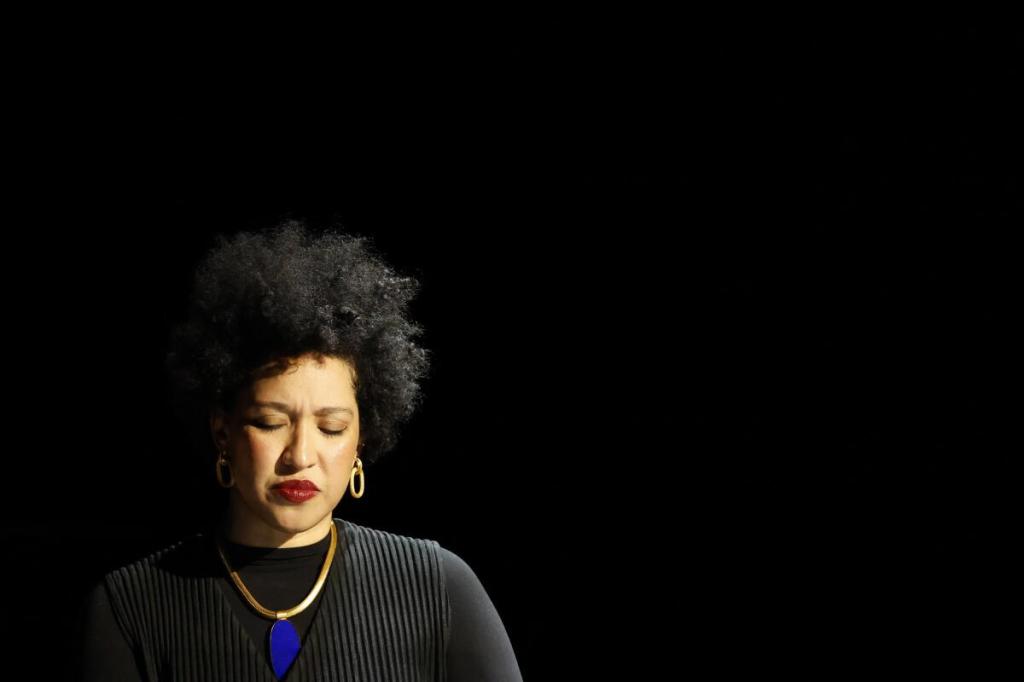
Joyce DiDonato Image; Phoebe Tuxford/NZSO

Summer Nights, Joyce DiDonato

New Zealand Symphony Orchestra

Auckland Town Hall

November 29

Reviewed by John Daly-Peoples

The message came though just a short time before the NZSO’s “Summer Nights” concert – “Due to the global grounding of Airbus aircraft today, the NZSO can’t fly enough players from Wellington to Auckland to perform Bruckner’s Seventh Symphony in tonight’s programme. It has been replaced by Mozart’s Symphony No.41 Jupiter

The change does not impact on American mezzo-soprano Joyce DiDonato’s debut with the NZSO in Auckland tonight.

So, it was the Mozart symphony No 21 which opened the “Summer Nights” concert with Berlioz’s “Les Nuits de ete” becoming the major work of the concert featuring Joyce DiDonato’s.

The song cycle is a setting of six poems by Theophile Gautier which Berlioz began in 1841. The work which began as a piece for soloist and piano accompaniment was later orchestrated with an additional song in 1856. It is now one of the composer’s most popular works.

 The theme of the work is the progress of love, from youthful innocence to loss and finally renewal.

The opening “Villanelle” invites the beloved to wander through the forest in springtime and features a simple, melody above a chirping accompaniment but there were intimations of darker forces hovering above the surface.

There followed the evocative “The Spectre of the Rose”, the lament “On the lagoon”, the chilling “In the Cemetery” and onto the surreal “Unknown Sea”, depicting a lover steering a ship into the unknown future.

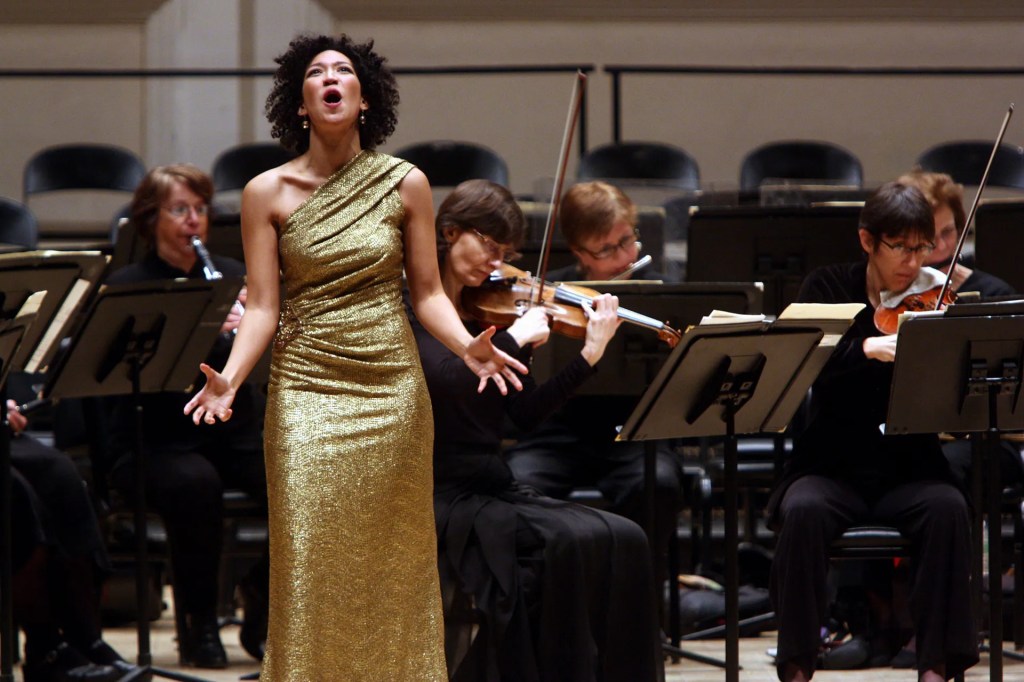
 Along with her expressive voices DiDonato conjured up the notion of the lover with gestures which reinforced the text.

Between the songs she appeared to enter a period of repose in which she contemplated the sounds of the orchestra as well as apparitions in the hall as though taking inspiration from them

Her ravishing  voice, full of depth flowed effortlessly around the hall, along with the inventive music – the soft pizzicato of the strings or the almost whispering sequences of the strings where the orchestra played what seemed like the soft rumour of a voice.

Then her voice would be increasingly dramatic, singing with an intensity which hovered over the orchestra like cloudburst, a voice which could shatter glass as well as hearts.

She was very attentive to Conductor New, the orchestra as well as the audience and with many of the sequences her forceful gestures and demeanour meant that her singing took on a more  operatic dimension, her singing drenched with power and emotion which almost overwhelmed the orchestra.

After rapturous applause she delivered two powerful encores. The first a stunning interpretation of Bizet’s “Habanera” from Bizet’s Carmen which she delivered in true operatic style. This was followed by “Somewhere over the Rainbow” a song which was personally relevant to be sung by a gal from Kansas.

Opening the concert was Mozart’s Jupiter Symphony, a remarkable work which the composer himself probably never heard performed; it certainly owes its name to somebody else. One scholar described it as ‘the greatest orchestral work of the world which preceded the French Revolution’ and the NZSO played the work as if they agreed with that dizzy estimation.

Gemma New reinforced the dance-like qualities of the music with some of her gesture and dance movements. She also was able to explore the qualities of the music bringing out the elegance of the music. So, the opening had an operatic quality much like the opening of “Don Giovani” (which he composes at the same time as the symphony) and many parts of the music had a sense of a conversation, the music often sounding soto voce.

She also highlighted some of the instruments notably the flute playing of Bridget Douglas and the double basses.

 The way the symphony combines both clarity and complexity, especially in the last movement, was apparent throughout the orchestra’s sparkling rendition. We may not have got to hear Bruckner’s great work we were well compensated by one of Mozart’s last symphonies.

To subscribe or follow New Zealand Arts Review site – www.nzartsreview.org.

The “Follow button” at the bottom right will appear and clicking on that button  will allow you to follow that blog and all future posts will arrive on your email.

Or go to https://nzartsreview.org/blog/, Scroll down and click “Subscribe”

Categories
Reviews, News and Commentary

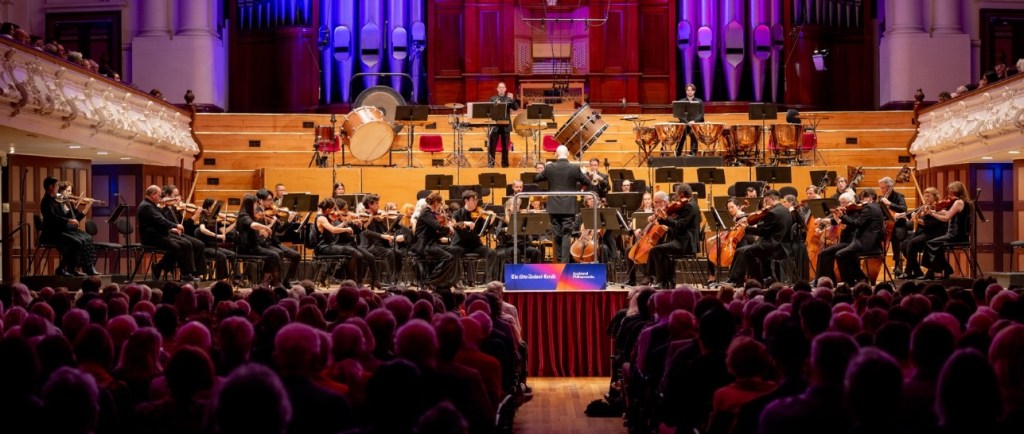
Auckland Philharmonia’s astounding performance of Mahler’s Symphony No 3

Reviewed by John Daly-Peoples

Auckland Philharmonia, Deborah Humble, Kirstin Middle School Singers and Women of Choirs Aotearoa Photo: Thomas Hamill

Mahler 3

Auckland Philharmonia (in association with the Australian Academy of Music)

Auckland Town Hall

November 20

Reviewed by John Daly-Peoples

With the last of the Auckland Philharmonia Premier Series concerts for the year the orchestra presented Mahler’s Symphony No3. This is Mahler’s longest work of six movements and close to an hour and three quarters long. It also features over one hundred musicians, two choirs, (Women of Choirs Aotearoa and Kirstin Middle School Singers) and mezzo-soprano Deborah Humble.

It was described by Mahler as a gigantic musical poem and offers one of the most complete statements of the Austrian composer’s world view. Each of the movements represents an element of the universe – plants, animals, people, angels – culminating in a tranquil deeply felt finale, the celebration of divine love and the culmination of the works giant structure. Mahler once said “A symphony must be like the world. It must contain everything”. This performance certainly had everything with a huge range of instrument including four flutes, four oboes, four bassoons, eight horns, four trumpets, post horn, three trombones, bass and contrabass tuba, timpani, glockenspiel, and a large string section.

Where many great nineteenth century composers explored the nature of Man, in this symphony however it was the composer’s relationship with Nature which was his focus.

The massed sounds of the orchestra were impressive, notably the opening of the first movement with its two march-like themes which can be seen as a description and reflection on Nature and the evolutionary theories of Darwin.

There were several other sequences which featured the delicate and nuanced playing of individual instruments such as Andrew Beer’s violin solo and the sounds of birds brought to life by the woodwinds.

Deborah Humble and Giordano Bellincampi Image Thomas Hamill

Mezzo-soprano Deborah Humble sang Nietzsche’s Midnight Song from Thus Spoke Zarathustra, her mournful voice soaring above the plaintive orchestra, expressing sadness and frailty, suggested the words of a requiem.

The choirs gave a bright, simple delivery of one of the composer’s songs, “Kling! Glocken hell kling!” (Ring! Bells, ring!). Here, the choir imitating sounds of bells and a female chorus joined by the soloist represent the voice of angels in a joyous and innocent depiction of a heavenly scene.

Mahler’s used the instrument to create a sense of life evolving which along with the relentless march tunes which suggest the progress of Man. Throughout the work the massed instrument, often led by the horns sounded like the breathing of a huge entity.

Conductor Giordano Bellincampi generally took a precise and measured approach, balancing the various parts of the orchestra and ensuring that even the quietest of moments made an impression. However, with the more dramatic sequences he seemed to be imbued with the same fervour as the music.

This was an intense and rewarding performance by an orchestra which could take its place in any great concert chamber in the world with an astounding performance filled with profound emotion.

To subscribe or follow New Zealand Arts Review site – www.nzartsreview.org.

The “Follow button” at the bottom right will appear and clicking on that button  will allow you to follow that blog and all future posts will arrive on your email.

Or go to https://nzartsreview.org/blog/, Scroll down and click “Subscribe”

Categories
Reviews, News and Commentary

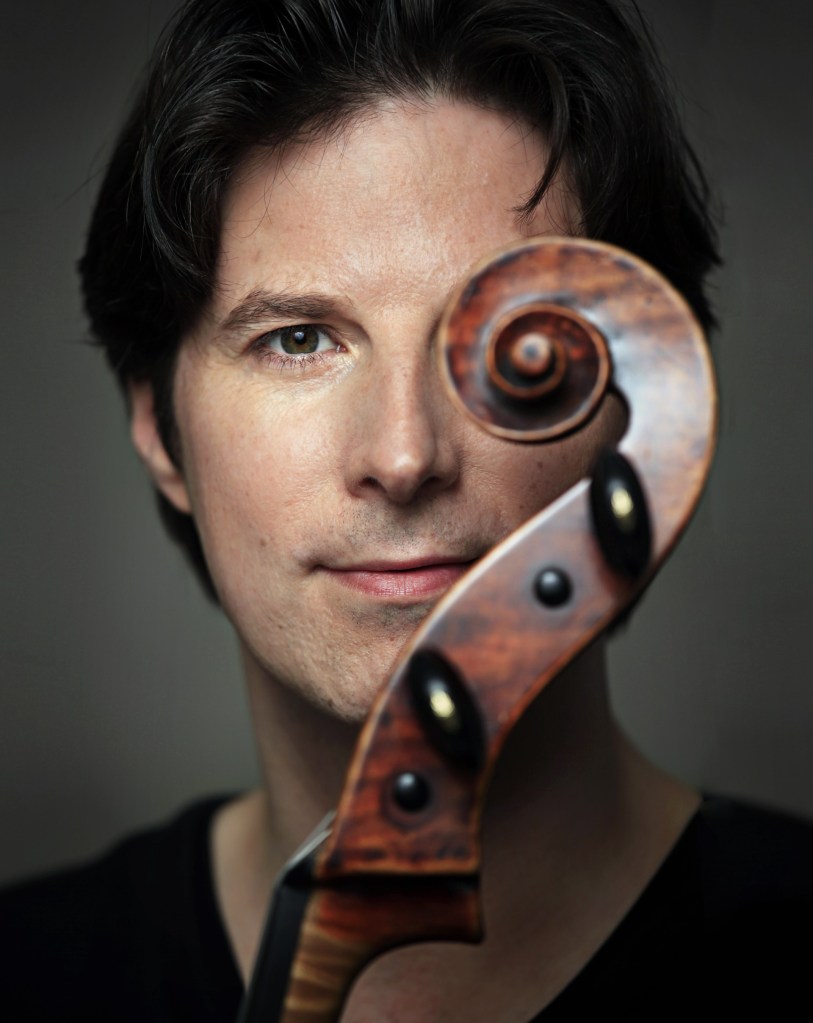
Daniel Muller-Schott’s elegant and expressive performance

Reviewed by John Daly-Peoples

Daniel Muller-Schott Image, Uve Arens

Auckland Philharmonia

Schumann Cello Concerto

Auckland Town Hall

November 13

Reviewed by John Daly-Peoples

The Auckland Philharmonia’s Schumann’s “Cello Concerto” concert opened with Schubert’s “Rosamunde Overture”, a work which was written at a time when all of Beethoven’s symphonies (apart from his final – the Ninth) had been performed and composers made attempts at homages to the composer.

The opening features much of the drama typical of Beethoven with the dance-like passages caried along by the woodwinds. The joyous melodies are an ideal introduction to the play Rosamunde which tells of the adventures of a shepherdess in some idyllic settings.

Some of the dance-like music sounds like precursor of the later Viennese dance music which would come several years later. Conductor Giordano Bellincampi seemed to be inspired by the music, his arms performing arabesques as he responded to the passionate dance-like melodies.

The major work on the programme was Schumann’s “Cello Concerto”, a work which has some funereal tones throughout and is often thought of as foreshadowing his death. Cellist Daniel Muller-Schott opened the work with some melancholic sounds which slowly evolved into playing which was more ethereal and meditative with sequence which were supported by the strings.

With much of his playing he took a serious and studious approach as he explored some of the darker elements of the work which then morphed into more uplifting passages.

The second movement saw Muller-Schott playing in a more cautious manner and there was sense of apprehension before returning to the earlier theme as both he and the orchestra engaged in dramatic interchanges.

Muller-Schott played with a range of approaches. At times he was lethargic while at other times dramatic and towards the conclusion he took a more tentative approach as through trying to rediscover the main theme before producing a dramatic conclusion.

Overall Muller-Schott gave an elegant and expressive performance which showed him to be totally in control but also that he had an awareness of the orchestra and the emotional qualities of the music.

The final work on the programme was one of Beethoven earliest major works, “The Creation of Prometheus”, written for a ballet at the imperial court of Austria choreographed by Calvatore Vigano. The work has a similar theme to that which Mary Shelley explored in her “Frankenstein – a Modern Prometheus” – the implication s of man attempting to create life.

The ballet tells of Promethea creating a man and woman from stone statues, but they have no souls. Apollo helps Prometheus teaching them music, dance and drama. Through the series of dances Beethoven’s provides music which explores the qualities which make humans more knowledgeable and spiritual.

Each of the sections featured one of the orchestral sections – delicate music with strings harp and woodwinds, a brilliant cello sequence played by Ashley Brown, flute playing for a court dance sequence and a country dance by strings and woodwind. Beethoven seemed to have allocated certain instruments to characters in the ballet – Apollo the harp, Melpomene the oboe, the Male Creature the oboe bassoon.

While the music serves the ballet well it can also be seen as something of a calling card for Beethoven who had only written two of his symphonies at the time. With this work he showed his mastery of composition, his knowledge of the orchestra’s instruments.

With the various sections Beethoven also provided himself with melodies which he used in some of his later work with one of the sequences being used for his Eroica symphony.

To subscribe or follow New Zealand Arts Review site – www.nzartsreview.org.

The “Follow button” at the bottom right will appear and clicking on that button  will allow you to follow that blog and all future posts will arrive on your email.

Or go to https://nzartsreview.org/blog/, Scroll down and click “Subscribe”

Categories
Reviews, News and Commentary

Sylvia Jiang’s intense and vivid “Totentanz” at Auckland Philharmonia’s Fantastique concert

Reviewed by John Daly-Peoples

Auckland Philharmonia Image Sav Schulman

Fantastique

Auckland Philharmonia

Auckland Town Hall

September 16

Reviewed by John Daly-Peoples

The three works on the Auckland Philharmonia’s “Fantastique” programme to a lesser or greater extent reflected on the religious teachings and practices of the Christian churches many of which confused, condemned and persecuted people. These in turn resulted in isolation, banishment and often death.

Opening the programme was New Zealand composer Louise Webster’s “Proof against Burning” which was inspired by the historical witch trials and the tests used to judge the accused. 

The four sections – Cauldron and Stone, Floating on Water, Spectral Evidence and Ordeal of the Cross all related to methods of judging, condemning and execution of those charged with the practice of witchcraft. These would be boiling, drowning, crucifixion and evidence of magical or supernatural appearance.

The opening movement had a sense of oppression provided by the portentous sounds of wailing strings, sharp percussion and screaming brass where the second having a more contemplative sounds from the strings and wind instruments which suggest the notion of dunking of witches into water, the placid image of flowing water ends with some apprehensive sounds which suddenly stopped, as though death had come quickly.

In the third movement, the concept of the spiritual or spectral is suggested by the various instruments shifting tones and sounds, transforming the aural landscape. The Ordeal of the Cross section was introduced by blaring horns along with drumbeat accompanying the condemned in their final walk. Strings produced heart rending sounds of torment along with hints of birdsong including the sounds of a crow, the messengers of death.

Liszt’s piano work “Totentanz” was inspired by both “The Comedy of Death” a series of woodcut by Hans Holbein and “The Triumph of Death” a monumental fresco by Andrea Orcagna in the Camposanto in Pisa both of which depict religious myths concerning the fate of the damned and the saved at the end of the world.

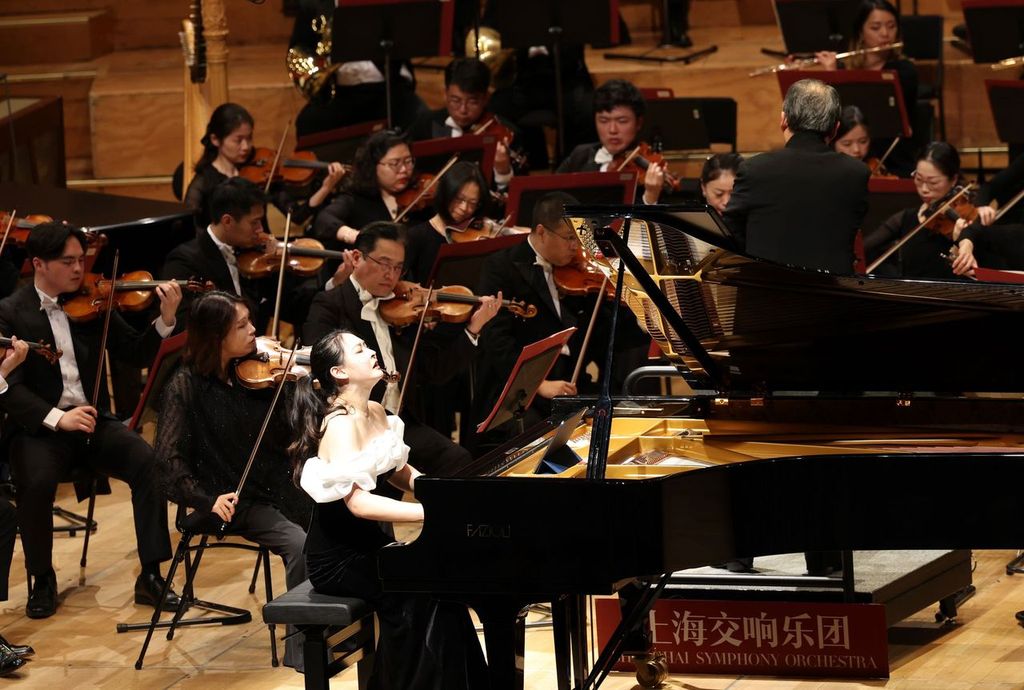
Sylvia Jiang Image Sav Schulman

The work was played by Sylvia Jiang a Chinese born New Zealander who has previously played with the Auckland l Philharmonia. Last year she performed Prokofiev’s “Piano Concerto” and previously Liszt’s “Second Piano Concerto”

Liszt himself was fascinated by ideas of death and he incorporated variation on the Dies Irae throughout the work. The work transitioned from Webster’s work with more sounds of oppression. The  heavy brass and piano opened with a dance of death which introduced us immediately to the sounds of a nightmare.

With Jiang hovering over the piano, she attacked the keyboard with a series of arpeggios and runs based of the Dies Irae while the orchestra contributed savage bursts of sound.

At times it seemed as though Jiang’s feverish playing was creating a vortex of sound replicating the idea of bodies spiraling in their descent into Hell. Conductor Pierre Bleuse was equally feverish in some of his conducting, leading the orchestra with dramatic gestures. Generally, Bleuse was curt and crisp in his conducting, attentive to all the players in the orchestra, managing to bring out the subtleties of the music from them.

While much of the time Jiang’s playing was vivid and intense, she was also able to produce more delicate and nuanced sounds showing a pianist with a true understanding of the music and the composer’s intention.

Her assaults on the piano became more intense at the finale of the work where she joined with the violent percussion display.

For her encore she played a minimalist work by the Chinese composer Gao Ping.

The major work on the programme was Hector Berlioz’s “Symphonie Fantastique”, which through its five movements tells the story of an artist’s self-destructive passion for a beautiful woman. The work describes his obsession and dreams, moments of anguish and tenderness along with visions of suicide and murder, ecstasy, and despair.

Berlioz was obsessed with the Irish actress Harriet Smithson, and the symphony was his mating call to the actress.  The music attempts to render the story of his own life intertwined with that of The Artist, musically and emotionally.

The piece begins with an impressive percussion sequence and the sounds of a reverie as though embarking on a spiritual journey. The orchestra’s free flowing melodies were a mixture of the dramatic and Romantic creating both dreams and nightmares.

There was also a description of The Artist and the object of his love with an elusive theme which recurs through the work. Then we encounter him at a ball, trying to gain the attention of his love and then in a pastoral setting possibly seeing his beloved with another suitor. This ballroom scene with its opening waltz also seemed to affect the sprightly conductor as he swayed to the music.  However, even in this ballroom sequence there was tense undertone of tension beneath the jollity

The serenity of the countryside was introduced by the woodwinds and strings with ecstatic sounds of dawn before darker sounds of the strings herald a stormy period before we return to sunnier moments with the sounds of birds returning to rest and sleep.

A fourth movement is a narcotic dream sequence where he sees himself led to the scaffold in the belief that his love has been rejected.

The final movement is another dreamscape, this time a vision of hell where The Artist is carried into the underworld watched over by the object of his craving.

Under the direction of an agile Pierre Bleuse the orchestra provided an energetic performance of the work ensuring the drama and intensity was expertly delivered. There were the thrilling violins and flutes which conjured up the image of The Artist’s beloved through the two harps leading the delicate ballroom scene to the military band escorting the prisoner to the scaffold and onto the final ominous bassoons and tubas roaring out the funeral chant of the Dies Irae. 

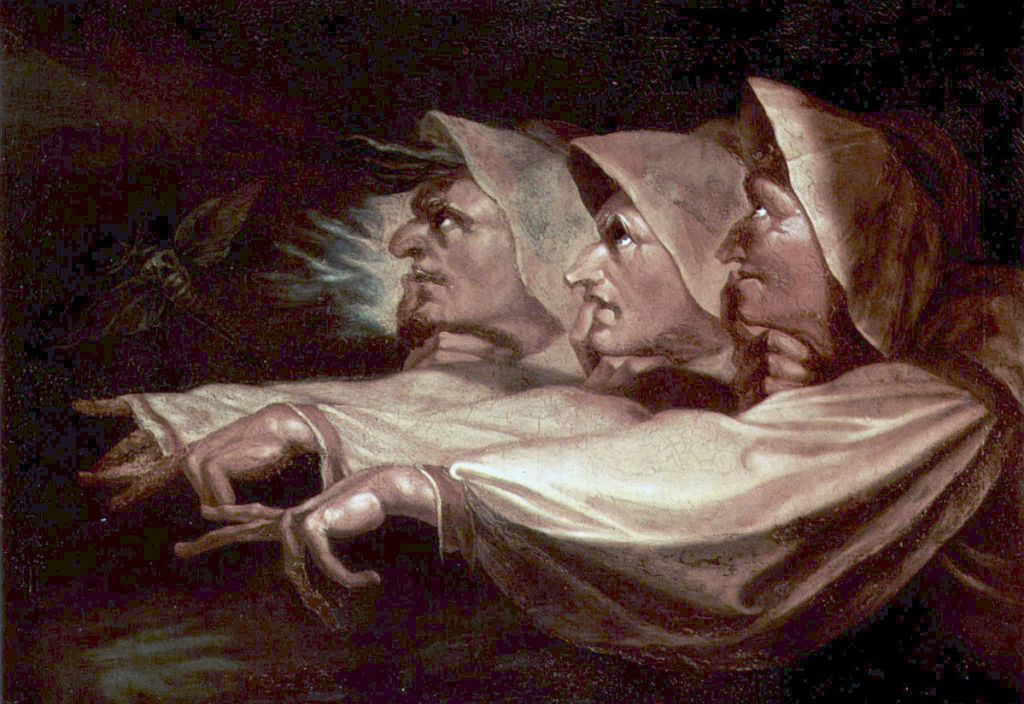
The final Dream of the Witches Sabbath has much in common with the Swiss Romantic painter Henry Fuseli with their shared interest in demonological fantasies, Gothic atmosphere of and a fascination with the supernatural.

Frightening outbursts alternated with moments of the greatest tenderness. Massive onslaughts by the percussion and timpani contrasted with the delicacy and melancholia of the ballroom and pastoral scenes

Categories
Reviews, News and Commentary

Mozart & Shostakovich impress at Auckland Philharmonia concert

Reviewed by John Daly-Peoples

Benjamin Grovsner

Auckland Philharmonia

Mozart & Mischief

Auckland Town Hall

September 9

Reviewed by John Daly-Peoples

The opening work on the Auckland Philharmonia’s “Mozart & Mischief” programme was Respighi’s music for the ballet “La boutique fantasque” of 1919 which he had adapted from some of Rossini’s piano music from fifty years before.

The eight-part work is set in dolls shop and revolves around the dollmaker on a pair of cancan dolls who are going to be sold and separated. The two heartbroken dolls are eventually saved and united by the other dolls in the shop.

The eight-part work developed a narrative not unlike the ballet Coppelia written by Léo Delibes and features similar music with various clever dances designed to present   different styles of dance and show off the dancers’ skills. So, there is a cancan, a waltz, a Cossack dance and a galop.

The music replicated the sprightly steps and graceful movement of the dolls with some spirited music from the greatly expanded orchestra which included a harp, celesta and castanets to create inventive sounds.

The eight sections of the work meant there were changing moods and magical moments such as the pizzicato section for the strings, the vigorous cancan and the sounds of the busy workshop.

The second work n the programme was Mozart’s Piano Concerto No 21 which features the well-known “Elvira Madigan” theme in the second movement.

Pianist Benjamin Grovsner played with a restrained focus which suited the piece with its charming lyricism. His shimmering arpeggios and his careful detailing of individual notes showed him to be in total control as well as understanding the structure of the work.

Conductor Shiyeon Sung ensured that the graceful opening of the work, with the flute introducing the piano before Grovsner embarked on his many arpeggios and other technical feats. His faultless command of the keyboard with light, tentative playing had a delicacy to it but which he was able to slowly transform to more elaborate and tantalizing passages. Throughout that first movement he moved from the introspective to the more dramatic and expansive

Throughout the work Sung conducted with the same precise approach which Grosvenor displayed, carefully and deliberately picking away at the keys.

In the second movement (Elvira Madigan) he manged to expertly deliver the lyrical qualities of the work with playing which captured an emotional quality before embarking on invigorating finale.

The other major work on the programme was Shostakovich’s Symphony No 9 which when it premiered in 1945 was expected to be like his earlier wartime symphonies, reflected the scale and horror of the Great Patriotic War.

Instead, this short work was full of humour and cynicism rather then heroism and valour. The irony of the work reflected the composer’s regard with Stalin’s regime. Within the jollity of much of the work there is a kernel of melancholy, his only way of showing his despair and distrust of the ruling elite.

The irony of the work can be heard in passages like opening movement with its classical style and an impish piccolo which seems to hide something malignant and then the wistful opening of the second movement where the clarinets and flutes sound as they are on the edge of despair.

Throughout work the music is full of tentative elements suggesting freedom along with passages which seem to be hemmed in, as though the melodies are trying to escape the music continually undercutting the false jollity.

The third movement featured a playground scene but it reveals, not happy children’s activity but detritus and barren landscape conveyed by mournful strings and soulful brass with more dark sounds from the bassoons before turning into a sequence of edgy, mocking music.

The work concluded with a Carnival of Lost Souls, a weird dance or march of hopelessness and death.

To subscribe or follow New Zealand Arts Review site – www.nzartsreview.org.

The “Follow button” at the bottom right will appear and clicking on that button  will allow you to follow that blog and all future posts will arrive on your email.

Or go to https://nzartsreview.org/blog/, Scroll down and click “Subscribe”

Categories
Reviews, News and Commentary

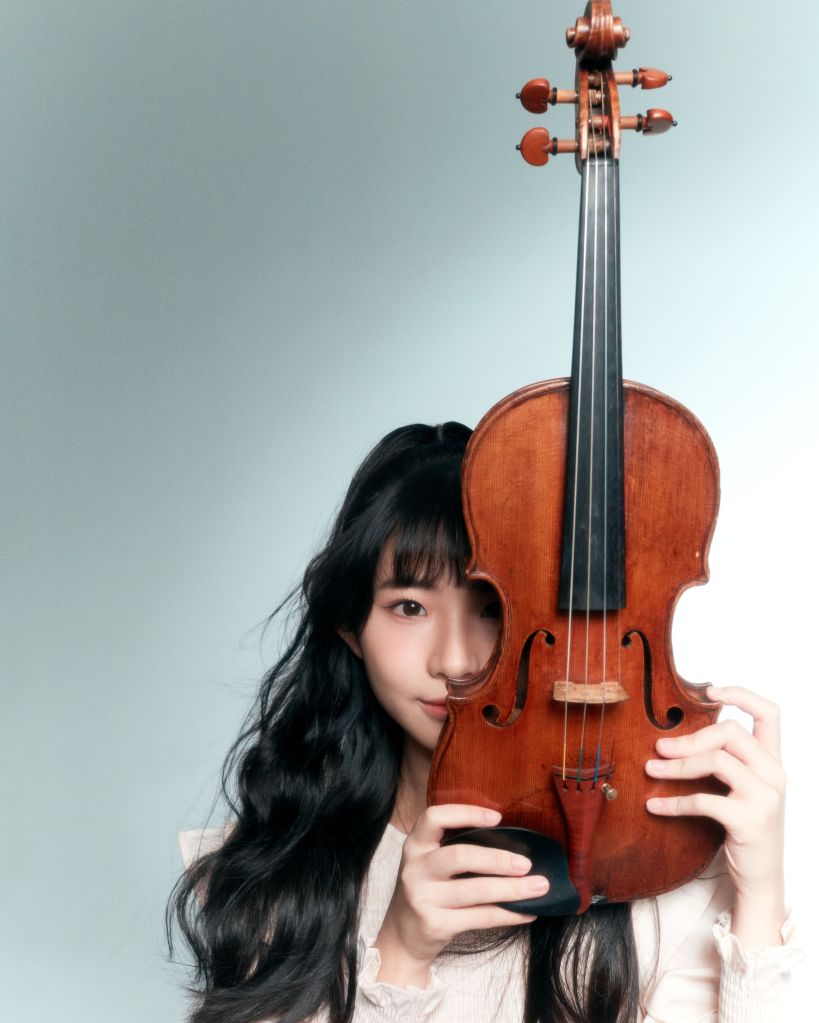
A mesmerizing performance by Chloe Chua with the Auckland Philharmonia

Reviewed by John Daly-Peoples

Chloe Chua Image: Joel Low

Tchaikovsky’s Violin

Auckland Philharmonia

Auckland Town Hall

September 26

Reviewed by John Daly-Peoples

The major work in the latest Auckland Philharmonia’s concert was Tchaikovsky’s Violin Concerto with soloist Chloe Chua who came with well-established credentials having won the Yehudi Menuhin International Competition for Young Violinists when she was 11.

It was immediately clear that she was an exceptional player with a self-contained, flawless approach to playing. But as well as a technical virtuosity she displayed an emotional sensitivity.

With her playing she maintained a distance from the orchestra, with an internal focus and much of the time she seemed to be in a reverie.

The concerto according to many who have played the work since it was composed is notoriously difficult to play, as it requires exceptional technical mastery of various techniques like double stopping and arpeggios as well as playing at a fast pace for extended periods.

Chua manged the piece effortlessly, notably with the cadenza where she was masterful in her control and delivery. Her playing was impressive with a technical brilliance as well as providing and intelligent and sympathetic interpretation of the music.

After the dramatic display in the first movement her delivery of the second movement revealed the sweet lyricism before she performed a range of tones, textures and tempos, continually testing the limits of the violin.

Throughout the work she was a whirlwind of musical dynamism and it was miracle that she didn’t collapse at the end of the work.

While she may have given a spirited performance of the Violin concerto receiving rounds of applause it was her mercurial version of Amazing Grace which showed another aspect of her approach. Her playing of the work and her variations were mesmerizing and by turns anguished, sprightly and whimsical.

Sung as ever conducted with dramatic flourishes as well as intensive elegant hand gestures and at other times seemed to exude an electrical force directed at the orchestra.

Franz von Suppe who was a rival of Strauss in producing Viennese light music provided the opening piece on the programme with his “Morning Noon and Night in Vienna Overture” which features waltz and polka rhythms, reflecting Viennese musical traditions. The work was originally the incidental music to a comic play “Morning Noon and Night in Vienna” which captures the vibrant atmosphere of Vienna through its three distinct sections.

The opening section featured an impressive cello solo, following on from a brass chorale. The solo, played by a meticulous Ashley Brown was like a mini cello concerto imbedded in the work and consisted of a lengthy Viennese style melody accompanied by the harp.

The work had several dynamic dance sequences which had the orchestra racing at a hectic pace, barely contained by conductor, Shiyeon Sung.

With Haydn’s  Symphony No 93, the first of his London Symphonies Sung showed brilliant control of the orchestra allowing each of the instruments to shine and ensuring  the drama and contrasts of the work were clear and that the intricate and unusual dynamics of the work were allowed to evolve, slowly revealing the beauty of the work.

The final work on the programme was Stravinsky’s “Divertissement from The Fairy Kiss” a ballet he composed in 1928 based on the Hans Christian Anderson tale and dedicated to the memory of Tchaikovsky.

Each of the four sections used elements of Tchaikovsky’s piano works and songs including a reference to one of his preludes in the first movement and in the final minutes of the last movement he quotes Tchaikovsky’s song, “None But The Lonely Heart”.

The music featured magical and unusual sounds and was filled with drama and lively movement which conveyed a sense of narrative and the creation of character. Though not as novel as his other ballet music Sung was able to reveal the works lyricism and romanticism shaping the music with elegant hand gestures

To subscribe or follow New Zealand Arts Review site – www.nzartsreview.org.

The “Follow button” at the bottom right will appear and clicking on that button  will allow you to follow that blog and all future posts will arrive on your email.

Or go to https://nzartsreview.org/blog/, Scroll down and click “Subscribe”

Categories
Reviews, News and Commentary

A celebration of Shostakovich

Reviewed by John Daly-Peoples

Peter Clark, Arna Morton, Gillian Ansell and Callum Hall Photo: Kāhui St David’s

Shostakovich: Unpacked

New Zealand String Quartet with Ghost Trio

Kāhui St David’s

September 24

Reviewed by John Daly-Peoples

For their latest concert “Shostakovich Unpacked” the New Zealand String quartet joined with the Ghost Trio to perform three works by the composer acknowledging the fiftieth anniversary of the composer’s death.

They performed in the recently renovated Kāhui St David’s church which has become a valuable addition to the music performing spaces in Auckland.

The concert featured his “Five Pieces for Two Violins and Piano” which consisted of early works which had been arranged by Lev Atovmian, a student of the composers.

The Five Pieces are relatively easy to play works which were originally written as film background music which are Romantic dance like works including a gavotte, waltz and polka.

Throughout the work violinists Monique Lapins and Peter Clark responded to the lively music engaging in their own dance moves, notably in the last piece, a gypsy style polka.

The concert opened with the composers “String Quartet No. 4” which was composed in 1949 and premiered in 1953 after the death of Stalin. Before that Soviet composers could only write proletarian music for the Russian masses. With Stalin’s death Shostakovich’s music was more accepted and his reputation restored and he could express himself more freely

The work was written for his friend Pyotr Williams the artist and scene painter and in a sense a requiem.

Violinist Peter Clark playing was animated, his sinuous playing matched by his sinuous, vigorous movements.

The sounds of his violin were at times mournful with some ecstatic moments like the voice of a Jewish cantor.

Where his voice might be seen as that of a souring angel the two other violinists Arna Morton and Gillian Ansell provided more human responses with sounds representing human grief.

In the third movement there was lively a conversation between the violists and Callum Hall’s cello with some abrupt sounds and ricochet bowing creating a tense atmosphere which morphed into more whimsical but soulful sequence.

There was some effervescent playing as the strings seems to compete with each other, the cello providing a solid base in a headlong race. There were passages filled with pizzicato playing representing Jewish folk melodies along with some strangled voice and jazz sounds.

At times the group sounded like a choir full of disparate voices with the plucking of strings and the clashing of bows against strings. Between these harsh attacks which had an intense physicality there were sections of reverie with the work ended with an almost whispered sequence of light pizzicato.

Ken Ichinose, Gabriele Glapska and Monique Lapins Photo: Kāhui St David’s

The final, work on the programme played by the Ghost Trio was the composers “Piano Trio No 2” which was written in the middle of the Great Patriotic War and is the composer’s response to the drama and destruction of the time. It opened with the high-pitched sounds of the cello played by Ken Ichinose, a sole voice in a deserted landscape followed by the mournful piano. The insistent cello and repeated phrases of the piano suggested the harsh sounds of battles followed by victory followed by defeat and retreat.

The subversive use of the ‘forbidden’ Jewish folk themes which Shostakovich often used as a subversive element can be heard, especially in the third and fourth movements.

Throughout the work there are massive sequences in which piano violin and cello seem to compete with each other but in the end merge. There were parts where the piano performed a death march and the three instruments provided a tapestry of dispiriting sounds as the instruments wove an intricate pattern of some elaborate game, the violinist and cello in a futile dance of death. One of the final themes, possibly a Jewish dance turns into a militaristic theme before ending in a whisper.

The concert also featured the New Zealand composer Robert Burch’s “An essay to the Memory of Dmitri Shostakovich for cello and piano composed in 1975 featuring the cello of Callum Hall and pianist Gabriela Glapska. The work was evocative of Shostakovich’s work with the meticulous cello of Hall interspersed with violent interruptions from the piano.

To subscribe or follow New Zealand Arts Review site – www.nzartsreview.org.

The “Follow button” at the bottom right will appear and clicking on that button  will allow you to follow that blog and all future posts will arrive on your email.

Or go to https://nzartsreview.org/blog/, Scroll down and click “Subscribe”

Categories
Reviews, News and Commentary

Mahler’s dynamic Symphony No 6

Reviewed by John Daly-Peoples

Gemma New

New Zealand Symphony Orchestra

Mahler 6

Auckland Town Hall

September 6

Reviewed by John Daly-Peoples

With their latest concert “Mahler 6” the NZSO and conductor Gemma New have shown that they are a major symphonic force, particularly with their performances of Mahler’s symphonies.

Mahler composed his Symphony No. 6, Tragic between 1903 and 1904 at the peak of his professional life as a conductor, at a time when Europe was experiencing a significant political and social upheaval, with tensions building up to World War I, Mahler’s personal life was marked by turmoil, including strained relationships and health issues. However, this was also a period of intense creativity for Mahler, having just completed his Symphony No. 5 a year prior. Mahler drew inspiration from philosophical and literary sources such as Friedrich Nietzsche and the Austrian poet Heinrich Leopold Wagner, whose themes of destiny and human suffering resonated with Mahler. The symphony’s title, Tragic, reflects Mahler’s engagement with the tragic nature of the times as well as huis own fraught life.

The title of The Tragic, has been given to the work in part because the work has often been considered prophetic as the composer suffered several tragic events after he had composed the work. But the tragic element of the work is only part of the complex work.

As with most of the composers works there is a personal element in their work and his output can be seen as a series of autobiographical symphonies, charting his reactions to his evolving development, physically, artistically and emotionally. The sixth symphony looks back over his life as well as looking forward and envisaging a life full of drama, excitement and tragedy.

It is these personal and psychological issues the fears, anxieties and pleasures of his life which form the basis of the work, and we are presented with the man and his attempts to understand and explore his inner psychological struggles, endeavouring to express himself through his music in a way few other composers have managed to achieve.

While it is an autobiographical work exploring the composer’s personality, there are parallel themes as he depicts narratives, landscapes and other emotional states.

The work opens with a martial march with strong beats which suggest the relentless march of time, a feature which recurs throughout the work. After that dramatic opening there is a sublime lyrical passage which expresses contentment and even  jollity. It is these contrasting elements which fill the symphony, a series of encounters and emotions which are musical metaphors for the incidents in the passage of life.

Throughout the symphony, Mahler weaves this recurring musical motif known as the “Alma theme,” named after his wife. This haunting melody, first introduced in the opening movement, serves as a motif representing Mahler’s conflicted feelings towards Alma and provides a layer of autobiographical depth to the work.

The final movement opens with some magical sounds produced by the strings and bells as though one was entering a dream world with several of the instruments seeming to be out of key, giving the work a surreal, disconnected feel.

New’s conducting is always dynamic and with this work she showed her approach to be focused with attention to detail. While she always appears to be in total control there were times when  she appeared to be demanding more of the players,  exhorting them to greater efforts.

Her conducting was generally strict with firm directions and hand gestures carefully controlling the orchestra but then there would be passages when she seemed like a choreographer / dancer, more concerned with the spontaneity, the arc and flow of the music.

The work was full of the composer’s favourite percussion instruments – cymbals, bass drums and gongs, but in his Sixth Symphony he added two timpanists, snare drum, celeste, xylophone, glockenspiel, church bells and cowbells. He added one other dramatic instrument  – a giant hammer designed to create a dull thump, a fatal blow which occurs twice in the final movement of the symphony.

In that final movement the music becomes exalted and inspiring, the harps and strings producing a transcendental sound before the fateful surges which turn the music into tragedy, ending not with a bang but a whimper.

Categories
Reviews, News and Commentary

NZSO’s Ascension: three contemplations of Nature

Reviewed by John Daly-Peoples

Jerome Kavanagh Poutama and André De Ridder

Ascension

NZSO

Auckland Town Hall

August 9

Reviewed by John Daly-Peoples

The three works on the  NZSO’s “Ascension” programme featured  the responses of the composers to Nature with responses that ranged from encounters with the  small incident to contemplation of its vastness and complexity.

Ralph Vaughan Williams’ observation and reflection on the simple action of a bird taking flight is turned into a metaphor for Spring and the awakening  of consciousness in his “The Lark Ascending”.

The work opens with both  bird and orchestra being roused from their slumber, the sounds of the orchestra capturing the notion of bird flight while the woodwinds and brass build a picture of the forest and bush

Inspired by the poem of the same name by George Meredith, the poem’s imagery of water and nature conveys a sense of fluidity and renewal, while the bird’s song inspires a profound sense of harmony and contentment.

Lines sauch as

For singing till his heaven fills,
’T is love of earth that he instils,

Show that Merdith and Williams saw their works as metaphors for both the simplicity and drama of Nature.

The orchestra’s brooding tones depicting a landscape blended well with the solo violin of Vesa-Matti Leppänen, the concert master of the NZSO. He managed  to evoke a spirit of celebration tinged with a  sense of the  melancholic.

The central work on the programme was “Papatūānuku”, a joint collaboration by composer Salina Fisher and taonga pūoro   specialist Jerome Kavanagh Poutama. It was a work honouring the Earth Mother, Papatūānuku and featured a number of instruments played by Jerome which produced music  which  replicated sounds of the natural world.

The musical landscape featured an intertwining of the orchestra’s instruments with the taonga pūoro which including pūtātara and pōrutu pounamu. Throughout  the work the two groups of instruments called to each other with both sets of instruments replicating bird sounds. The percussion instruments of the orchestra, including the piano  responded to the taonga pūoro, often mimicking their sounds. As well as bird calls Jerome’s instruments also captured the sounds of sea shore and bush. The work becomes a dreamscape of drifting sounds.

As the work progressed, we seemed to drift further  and further into the bush, some of the instruments sounding like voices enhanced by the breathing of Jerome himself.

Jerome had laid out his instruments on a table covered with a Palestinian keffiyeh so his performance took on a reflective mood referencing Gaza where no birds sing.

The major work on the programme was Schumann’s “Symphony No 1 (Spring)”. It opened with a  dramatic introduction ,something of a welcome to Persephone, the Goddess  of spring, acknowledging her return from the underworld each spring, a symbol of renewal and  immortality.

After the sprightly first movement there was the softness to the second movement which morphed into an heroic sequence featuring a vibrant dance. Here conductor André de Ridder took a few tentative dance steps to the music which flicked between the languorous and the dramatic. This-was followed by the Scherzo with its rapid tempo creating a sense of liveliness. before the  final movement’s farewell to Spring.

Throughout the work the composer celebrated aspect of spring – the blossom erupting, the sounds of birds and animals and the cries of children at play.

André De Ridder has been announced as the NZSO’s next Music Director, and will take  up the position in 2027.