Categories
Reviews, News and Commentary

ATC’s six plays for 2025

John Daly-Peoples

Murder on the Orient Express

AUCKLAND THEATRE COMPANY 2025 SEASON

John Daly-Peoples

Auckland Theatre Company have announced their 2025 Season of six plays ranging from Shakespeare’s 400-year-old Romeo and Juliet to Roger Halls latest.

These plays include two world premieres, an Auckland premiere, and a translation of a one of the classics. The productions will be directed by some of the country’s best talent including Shane Bosher, Oliver Driver, Benjamin, Alison Quigan QSM and Katie Wolfe,

The Plays

a mixtape for maladies
by Ahi Karunaharan
4 – 23 Mar
Ahi Karunaharan’s talesweeps from 1950s Sri Lanka to modern-day Aotearoa. Directed by Jane Yonge (Scenes from a Yellow Peril) this is both a love letter to Sri Lanka and a lament, the story plays out over 17 songs – ranging from Dusty Springfield to La Bamba to the hit single from a Tamil rom-com.

A collaboration between Agaram Productions, Auckland Theatre Company and Te Ahurei Toi o Tāmaki Auckland Arts Festival.

Agatha Christie’s Murder on the Orient Express
Adapted for the stage by Ken Ludwig
22 Apr – 10 May
The classic that birthed an entire genre comes to the stage with Cameron Rhodes (King Lear, North by Northwest) as the inscrutable Hercule Poirot, supported by Rima Te Wiata, Sophie Henderson, Ryan O’Kane and Mayen Mehta. This play was adapted for the stage by Tony-nominated playwright Ken Ludwig and is directed by Shane Bosher.

Roger Hall’s End of Summer Time
17 Jun – 5 Jul
New Zealand’s most successful playwright Sir Roger Hall brings back one of his most famous characters, Dickie Hart who made his first appearance almost 30 years ago in C’mon Black. This is an affectionate and hilarious skewering of an old grump who realises he still has a lot to learn about the world when he moves to Auckland to be closer to his grandkids. Directed by theatre stalwart Alison Quigan, the play sees Andrew Grainger (Peter Pan, North by Northwest) bringing his big-hearted comedic talent to this solo show that like, all of Hall’s plays, has more than a little bite to it.

William Shakespeare’s Romeo and Juliet
15 Jul – 9 Aug
William Shakespeare’s tale of passion and heartbreak is recast as a fast-paced thriller in this large-scale production of Romeo and Juliet, directed by the co-director of 2023’s runaway hit King Lear, Benjamin Kilby-Henson. Theo Dāvid (Shortland Street) and Phoebe McKellar (One Lane Bridge) make their Auckland Theatre Company debuts as the star-crossed lovers in a Missoni and Pucci-inspired take on 1960s’ Italy, supported by a stellar cast including Bronwyn Bradley, Miriama McDowell and Beatriz Romilly. As potent today as it was when written more than four centuries ago, this tragedy celebrates the triumph of love over hate.

Mary

MARY: The Birth of Frankenstein
by Jess Sayer
19 Aug – 7 Sep
A villa in Switzerland, in the dark winter of 1816. Mary Shelley stands over a bloodied corpse and knows her words are to blame. The script, written by award-winning playwright Jess Sayer in collaboration with Oliver Driver, builds on the bones of history to re-imagine the events of the infamous night that birthed one of the most famous novels of all time: Frankenstein. In Mary: The Birth of Frankenstein, co-created and directed by Oliver Driver (Amadeus), the production transforms from a parlour drama into an unsettling, drug-fueled, lust-drenched Gothic horror as Shelley, played by Olivia Tennet, casts off the men who seek to control her and steps from childhood into life.

Tiri: Te Araroa Woman Far Walking

TIRI: TE ARAROA WOMAN FAR WALKING
by Witi Ihimaera
4 – 23 Nov
The Season closes out with a history-making new adaptation of the epic tale of Tiri Mahana, a 185-year-old matriarch, from her birth at the signing of the Treaty of Waitangi to present day Aotearoa. For the first time, the play will be performed in two parts, English and te reo Māori, with both versions capturing the enduring spirit of Te Ao Māori. With the multi-award-winning team of The Haka Party Incident creator Katie Wolfe (Ngāti Mutunga, Ngāti Tama) and actor Miriama McDowell (Ngāti Hine, Ngāpuhi); Witi Ihimaera’s (Te Whanau a Kai and Ngāti Porou) extraordinary play will shine once again, re-imagined in te reo Māori by Maioha Allen and company.

Categories
Reviews, News and Commentary

Tempo Dance Festival: In Transit, Matter and Slip

Reviewed by John Daly-Peoples
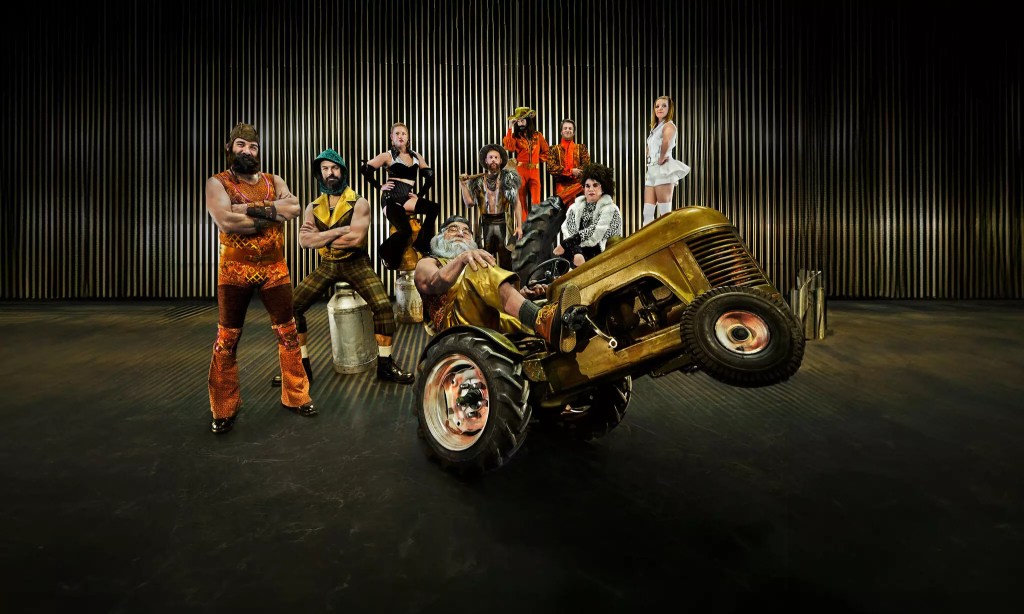
In Transit

Te Rerenga o Tere | Tempo Dance Festival 2024

Rua, – In Transit & Matter

Q Theatre

October18

Slip , Rebecca Jensen

October 20

Reviewed by John Daly-Peoples

In Transit

Choreographer, Louise Pōtiki Bryant

Sound / Av, Paddy Free

Lighting, Jo Kilgour

Costumes , Kasia Pol

Slip, Rebecca Jensen

Louise Pōtiki Bryant’s In Transit imagines the links between Maori  myth, ritual and their notion of the ancestors observing the nutuarl  world and its cretasures. Here the shaping of the creation myths, are given narratuives and images which give meaning to the transition in human life  paralleling those of the spirit world.

The work appears to dwell on several aspects of Māori myth such as the creation story of Ranginui and Papatūānuku, whose, children exist for a time in  in the dark world until Tāne, separates their parents, bringing the children into light.

There is also reference to the evolution of the  taiaha which Tū, the god of war asks Rūrūtangiākau, the weapon maker of the gods to create a weapon.

The dance opens with a low droning sounds as the sole figure, representing Tū or Rūrūtangiākau who dances through shafts of light with a  branch balanced on his head., He moves from an underworld into light and is joined by five other dancers who perform with long sticks or the evolving taiaha. They dance to a soundscape which [provides a sense of the being under water along with bird sounds.

The dancers seemingly inspired by bird and reptile  movement, move with short sharp steps id birds, strutting, foraging and pecking. These  movements were accompanied by staccato like breath which add to the sense of existing n another dimension.

Some of the dancers entwine cresting manaia shapes suggesting the notion of messenger between the mortal and spirit worlds.

The slender taiaha are used to create a Papatūānuku womb-like shape out of which  a figure emerges.

The work is full of robust dancing, flickering shafts of light along with a mesmerizing soundtrack along with relentless beats. It blends together sound, music, visual and movement describing the transitions between the physical world and the spirit dimensions.

Matter

Matter

Choreographer & Sets, Ross McCormack

Composer, Jason Wright

Lighting, Jo Kilgour

Costumes , Vicki Slow

“Matter” choreographed by Ross McCormack opens with a lone figure seemingly transfixed by one of the five post erected on the stage. He was joined by another figure and from their fitful movements it appears that they are inhabiting a world where they are seeking, discovering or being activated by lines of force or energy, possibly emanating from the poles.

Then they are joined by a group of dancers who move to a cacophony of sound, inching forward, creating a reptilian-like form with a nod to the work of the German choreographer Pina Bausch. Their erratic shuffling moves, driven by an inner tension and massive roars of music is by turns orderly as though responding to laws of Nature or manipulated by an unseen hand.

Two of the dancers appear to respond to other sounds as though out of their control and they engage in movements which area mix of tussle and dance, their movements  hinting at forces which are attracting and repelling g them.

We get the sense that the poles are the xxx of these forces-  electromagnetic, natural rhythms or xx.  Other bodies separate and merge becoming alien creatures and the sounds and music we hear are the sound of  massed bodies  and the arms and legs becomes tentacles.

Throughout the work the dancers seemed to be either seduced or buffeted by the music and sounds, their movements at times urgent and  sharp while at other times graceful and submissive.

In the latter part of the dance the poles /  pou are moved taking on more symbolic meaning- the crucifixion, the triumphal Iwo Jima image  of WWII.

There is a surreal beauty to the dancing which is created with a subtle mix of  sound and lights while at one point the music takes on the rhythms of the Pacific with a hypnotic quality.

Another dramatic sequence involves first two dancers and ultimately all eight moving and dancing as mirror images of each other creating a dramatic frieze. This architectural aspect is also present in many of the other sequences, deriving from the five poles.

Much of the time the dancing could be likened to the movements of atoms and molecules in chemical and physical reactions, conforming to notions of particle physics and string theory.

Slip

Slip, Rebecca Jensen

We don’t often get to see true absurdist dance in the style of the absurdist dramatic works of the 1950s and ’60s. Nothing that suggest the human condition is essentially absurd and devoid of purpose.

Rebecca Jensen’s “The Slip” seemed to offer an absurdist dance which was set in a bizarre or surreal environment. The stage looked like an art installation  – a step ladder, bucket, watering can, a table cluttered with apparatus, a sole cup and a large, directional microphone.

The opening minutes of the work continued the absurdist premise as we watched a couple of stagehands pouring water into containers and splashing it over  the stage. It looked as though it was a work about sea level and climate change. This idea was reaffirmed throughout  the production with images and the sounds of water.

After that opening  sequence Rebecca Jensen appeared, dressed in a medieval gown, the first of her iterations. She sat, meditatively  on the stage, performing simple gestures which were  in marked contrast to her hectic movement in the latter part of the work.

“Slip” is a filled with precise  and deliberate movements, mixed with moments of humour and provocation. It is an experimental work where the  flaws and interventions that show up over the course of the performance add to its idiosyncratic quality.

It’s a work which can be interpreted as having  surreal narratives, the themes of which will occur to the individual viewer as they come to grips with  the many vignettes.

The focus of the work comes from the title, ”Slip”. There is a constant slippage between what we see and what we hear, between what is natural and what is fabricated between the  role of the performer and the place of the technician.

While Jensen is the dancer/actor in “Slip” she is aided by Aviva Endean who acts as sound technician, participant and  guide,  controlling a table full of noise producing devices both physical and electronic.

When Jensen first appears, she dives into her backpack extracting various items such as a key, a bag of chips a bottle of water and a newspaper. But when she handles these items, it is not their natural sound we hear, it is Endean – shaking her own newspaper and pouring her own bottle of water, the sounds picked up and enhanced by the large microphone. When Jensen eats a chip, the crunch we hear is from Endean’s microphone enhancing the sound of her biting on a stick of celery.

This dislocation and enhancement occurs throughout the work in different forms. When Jensen walks around the stage we hear the sounds of Endean’s feet crunching on shells. At other times when Jensen walks, we hear the sounds of her body creaking as though she is robotic.

Jensen explores a range of movements from small gestures though fluid and dramatic balletic moves to the volatile actions which see her almost out of control.

The soundscape produced by Endean is similar to the enigmatic sounds created by the experimental group From Scratch and like that group she uses unlikely items to create the sounds.

Categories
Reviews, News and Commentary

The APO’s 2025 Season revealed

John Daly-Peoples

Principal Guest Conductor, Shiyeon Sung Credit Yongbin Park

Auckland Philharmonia Orchestra 2025

John Daly-Peoples

The  Auckland Philharmonia has just released its 2025 Season, of forty concerts featuring some of the world’s most-important artists including violinist James Ehnes, Spanish pianist Javier Perianes, guitarist JIJI, cellist Daniel Müller-Schott, and conductor Pierre Bleuse.

Javier Perianes Credit Julia Severinsen

The opening concert will feature New Zealander Claire Cowan’s “My Alphabet of Life”, Beethoven’s ‘Emperor’ Piano Concerto and  Strausstone-poem,Ein Heldenleben. All of the following concerts will provide a similar mixture of the great classics along with new and surprising works from the classical period and more recent compositions.

There will be a complete performance of Ravel’s ballet, Daphnis et Chloé.as well as  a selection from The Creatures of Prometheus, Beethoven’s only published ballet.

Other major works will include performances of Beethoven’s  Symphony No.5, Tchaikovsky’s Symphony No 5 and Mahler’s Symphony No 3 with mezzo-soprano Deborah Humble.

Principal Guest Conductor, Shiyeon Sung will conduct fellow Korean Clara-Jumi Kang, playing Tchaikovsky’s Violin Concerto, and Mozart’s Piano Concerto No.21 performed by British pianist Benjamin Grosvenor, who was recently named in Gramophone magazine’s list of the 50 greatest all-time pianists.  

The New Zealand Herald Premier Series will include major symphonic works by Elgar, Brahms, Shostakovich, Wagner, Mozart, and Tchaikovsky, as well as some rarely programmed gems by Ravel, Respighi, Liszt, Schoenberg and Grieg, complemented by music from leading New Zealand composers Claire Cowan, Kenneth Young and Louise Webster.

There will also be the New Zealand premiere of Sir James MacMillan’s newest concerto ‘Ghosts’, an Auckland Philharmonia co-commission with the London Symphony Orchestra, Melbourne Symphony Orchestra, Singapore Symphony Orchestra, Royal Stockholm Philharmonic Orchestra and St. Louis Symphony Orchestra.

The Canadian violinist James Ehnes will return for a two-week residency, performing two of the most demanding works in the violinist’s arsenal –  Bartók’s Violin Concerto No.1 and Brahms’ Violin Concerto.

Pierre Bleuse

Other soloists include Korean guitarist JIJI, German cellist Daniel Müller-Schott, Sylvia Jiang and Alexander Gavrylyu. There will also be several visiting conductors leading the orchestra including Pierre Bleuse, Karl-Heinz Steffens and Jun Märkl.

The Classic Series of five concerts will feature major masterpieces, such as Mendelssohn’s ‘Scottish’ Symphony, Haydn’s Symphony No.93, Tchaikovsky’s Violin Concerto and Brahms’ Piano Concerto No.2.

The Pub Charity Opera in Concert production of Verdi’s La traviata will see Giordano Bellincampi exploring the raw dramatic power of this sublime score with a celebrated New Zealand and Australian cast; including Amina Edris as Violetta, Oliver Sewell, as her lover Alfredo, and Phillip Rhodes as Germont.

The multifaceted Baroque & Beyond series will be returning with two concerts directed by Concertmaster Andrew Beer that celebrate the masters of the Baroque era from Handel’s Water Music to works by Sir Michael Tippett along with Baroque masters Biber and Corelli and 20th century composers Bloch and Respighi.

In 2025 the music of the movies will be heard  in Art of the Score: The Music of Hans Zimmer. Hans Zimmer is one the most influential film composers of all time and is behind the iconic scores for Interstellar, Inception, The Dark Knight Trilogy and themes from Pirates of the Caribbean and Gladiator. Audiences will be taken on a journey through Zimmer’s music, presented by Australian Art of the Score podcasters and film buffs, Andrew Pogson and Dan Golding, with Nicholas Buc on the podium.

Matariki with Ria Hall will be a popular night to celebrate the Māori New Year. One of Aotearoa’s most compelling and thoughtful voices, Ria Hall, will join forces with the the orchestra to recreate her evocative songs ‘They Come Marching’, ‘Te Ahi Kai Pō’, and ‘Black Light’, with a magnificent symphonic soundscape.   

Bic Runga Credit Tom Grut

Bic Runga with Auckland Phil will feature Runga performing such classics as ‘Something Good’, ‘Precious Things’ and ‘Bursting Through’, reimagined together with a full orchestra, this will be an extraordinary evening of musical fusion.

There will be a  fun-filled interactive show featuring New Zealand’s beloved canine icon, Hairy Maclary’s Greatest Hits presented by Jackie Clarke, and a captivating show for the whole family starring everyone’s favourite duo, Wallace & Gromit, at Wallace & Gromit in Concert. including The Wrong Trousers screened in full.

Season brochures are available online from aucklandphil.nz or by phoning Auckland Philharmonia Ticketing on (09) 623 1052

Categories
Reviews, News and Commentary

Shane Cotton. New Paintings and new directions

Reviewed by John Daly-Peoples

Shane Cotton, Super Radiance

Shane Cotton

New Paintings

Gow Langsford, Onehunga

Until November 16

Reviewed by John Daly-Peoples

Shane Cotton has progressively mined the history and myth of Māori along with its intersection with European colonisation, featuring images which recall stories, along with references to historical and mythical figures and locations.

With his latest exhibition of “New Paintings” the artist  could be seen as entering his  Fauvist period with many of the paintings having the features of the Fauves. Those painters of the early part of the twentieth century employed simplified shapes along with intense and juxtaposed colours.

The “He Waka Karaka” ($9000) featuring a small  Pacific craft with a sail exemplifies this aspect with intense blues, purples and green while the large, colourful “Super Radiance” ($90,000) is an example of one of the new directions of Cottons painting – more traditional landscape painting. Even though his previous works have featured landscape forms these were generally refined and abstracted.

There are several works of Cotton’s Toi Moko works where the  tattooed and preserved ‘shrunken’ Māori heads reference conflict, trade, and repatriations. In works such as “The Great Attractors” ($55,000) the tattoo lines tracing out genealogy are linked to the notion of neural connections, knowledge links and computer networks.

Shane Cotton, The Great Attractors

Apart from the shrunken heads Cotton has rarely included figures in his work but in this show, there are several which connect with his living in Northland and revisiting some of his earlier work and the notions of colonialism and cultural exchange.

Shane Cotton, The Walker

In “The Walker” ($8500) he has replicated the self portrait of the early explorer/artist Augustus Earle taken from Earle ‘s painting “Distant view of the Bay of Island”. Cotton has also appropriated another figure from the work , A Māori with a taiaha who is leading Earle . This figure is also present in “Super Radiance”, “Sunset Gate” ($48,000) and “He tangata hikoi” ($8500) acting as a guide through the landscapes of the North.

Augustus Earle, Distant view of the Bay of Island

Cotton has also used an image of missionary and publisher of Māori works Thomas Kendall taken from the painting “Hongi Hika and Waikato” with Thomas Kendall in England in 1820” by James Barry.

James Barry, Hongi Hika and Waikato” with Thomas Kendall in England in 1820

This image is used in the small portrait “Internal Visions” ($8750) and “The Visitation” ($8500) where Cotton has depicted him contemplating a colourful, modernist manaia form where in the original painting he is looking at Hongi Hika and Waikato.

Shane Cotton, The Visitation

There are also a few of the artists flower painting such as “Insert” ($12,500) which have developed over the years for his early  plant paintings.

There are a number of the artist’s three panel works most of which feature a manaia figure flanked by delicate foliage while others have landscape/vegetation  panels or in the case of ”Ahuaiti’s Cave” ($130,000) images of the sea. This work refers to the Ahuaiti who was rejected by her husband, forcing her to live in a cave on the Northland coast with her son Uenuku Kuare who is depicted at the base of the painting as a tiny figure, the same image as Earle’s guide  in “Distant view of the Bay of Island”.

Shane Cotton, Ahuaiti’s Cave

This linking of mythic figure to historical figure to an  invented guide inhabiting some the paintings is an example of Cottons ability to transition across myth, history, time and location.

To subscribe or follow New Zealand Arts Review site – www.nzartsreview.org.

The “Follow button” at the bottom right will appear and clicking on that button  will allow you to follow that blog and all future posts will arrive on your email.

Or go to https://nzartsreview.org/blog/, Scroll down and click “Subscribe”
Categories
Reviews, News and Commentary

Peter Pan: Loads of Command but little Control

Review by Malcolm Calder

Jennifer Ludlum as Captain Hook Photo Andi Crown

Peter Pan

By Carl Bland

Adapted from the story by J M Barrie

An Auckland Theatre Company and Nightsong production

Directors, Ben Crowder and Carl Bland

Set, John Verryt

Lighting Sean Lynch

Costumes Elizabeth Whiting

Composer and Music Claire Cowan

Sound Max Scott

Choreography Dayna Pomare Pai

With Andrew Grainger, Jungwhi Jo, Tupe Lualua, Jennifer Ludlam, Anika Moa, Nova Moala-Knox, Lotima Nicholas Pome’e, Theo Shakes, Angus Stevens, Tess Sullivan, the Nightsong Youth Company and Roux the dog.

ASB Waterfront Theatre

Until 27 October

Review by Malcolm Calder

Whether as Captain Hook or the understated Mr Darling, Jennifer Ludlum commands the eyes, the ears and the senses every time she takes to the stage in this rather unique production.  Striding around guiding, leading and even cueing other actors, she is totally in command.  Her pedigree and experience is clear in her every nuanced action and clearly demonstrates why she is one of this country’s finest character actors. 

However it seems she is not supported by any kind of control structure at all in this Peter Pan and that is a great pity.

Nightsong has developed a fine reputation over the years and its I Want To Be Happy remains one of my 2023 standouts.  But this collaboration under the Auckland Theatre Company umbrella has confused me.  It would be easy to dismiss it as a rather ginormous mishmash with no one in control.  That is possibly true to a degree but there are clues as to what it is trying to do.

Writer Carl Bland pays homage to Barrie’s 1920s original.  This is not a hi-tech show and he has kept it old-fashioned in many ways.  However his work as a director is where things go a little awry – a good reason why writers who direct their own work sometimes incline towards the over-indulgent.  Bland has tinkered with Barrie’s original and thrown in many asides, one-liners and loads of whimsy.  Many of them work while others are wasted and become mere throwaways.

It is a bit like all those things got put in a bucket and then someone threw them at the stage.  As a result things just sort of ‘happen’ in this Peter Pan rather than become magically ‘revealed’ after characters evolve, situations develop their own dynamic energy and tension has been drawn tighter and tighter.

Perhaps these things may have evolved after another week or two of rehearsal, but inter-character dynamics were all but absent and few did little more than appear onstage and utter their lines.

Some did their best. Theo Shakes developed a certain presence as Pan, especially in Act 2, Lotima Nicholas Pome’e sang with beauty towards the end of Act 1 and Andrew Grainger blustered about a lot.

Perhaps the whole thing could be summed up by the inclusion of Anika Moa.  Apart from providing some, admittedly nuanced, contributions to the accompanying soundscape I have no idea why she was included.  Her Mermaid Queen simply occupied a space, may have added an occasional vocal harmony and tickled a few percussion instruments.  Poor Anika wound up a distracting sideshow. I felt sorry for her.

John Verryt’s set looked like it might possibly have been relocated from Barrie’s era, a beautifully-crafted wolf suit seemed to cover Tess Sullivan’s mic so we could barely hear her words, low-tech flying is a bit yawn-inducing these days and the whole thing looked under-rehearsed –at a production level too.  Even the intelligently-included ATC Youth Company, making up numbers as pirates and Lost Boys, occasionally looked a little lost themselves.

Through all of this the missing element was command.  One could almost sense Ludlum willing others in the cast to react, respond and become personalities matching the energy, effort and detail she put into her work  – but this production allowed them to do so only rarely.  As her Captain Hook met his demise I’ll swear I could hear her sigh of relief as the crocodile finally clamped its jaws around her and carted her off to who knows where.

And, while conceding that Barrie’s original has a dark side and may provide a few giggles for children I’m inclined to believe its moral about transitioning from childhood is somehow lost in translation for children anyway.  On leaving the theatre I overheard a 10-year-old son respond to his father’s question about what he thought of the show.  His response ‘too long but I liked the dog’ was his summation.

So, thank you ATC for your policy of diversifying your product range in 2023.  However this Peter Pan raises other questions too.  Not least its timing – one wonders why a show specifically targeting children and families should open at the very end of the school holidays.  There have been many successes this year and I am sure this little blip does not negate the others.

But, finally, congratulations to Jennifer Ludlum for two finely-crafted characters.  They commanded the stage.

To subscribe or follow New Zealand Arts Review site – www.nzartsreview.org.

The “Follow button” at the bottom right will appear and clicking on that button  will allow you to follow that blog and all future posts will arrive on your email.

Or go to https://nzartsreview.org/blog/, Scroll down and click “Subscribe”

Categories
Reviews, News and Commentary

Ray Ching: the huia & our tears

reviewed by John Daly-Peoples

Ray Ching

the huia & our tears

ARTIS Gallery

RRP $80.00

Reviewed by John Daly-Peoples

With his latest book “the huia & our tears” Ray Ching has shown once again that he is not just a great painter, he is also a clever storyteller and an expert ornithologist.

The large format book like all his previous publications is impressive with full colour reproduction, Illustrations spread over two pages, great typography and well researched text. It adds greatly to our understanding and appreciation of the huia which disappeared in the early years of the twentieth century.

The book is a remarkable collection of memories, observations, research and reflections on the huia and its place in New Zealand ornithological and national history.

Ching has had an interest bordering on obsession with the huia from an early age noting that he had always had the bird with him, connected by its image on the old New Zealand sixpence.

Included in the book are the artist’s encounters with taxidermists, ornithologists, writers artists and major figures in New Zealand’s history who provide fascinating insights into the history of the huia.

The Kite and the huia (detail)

In many of his previous books notably his Aesop’s Kiwi Fables  he has included moral tales featuring figures from the animal kingdom. In this  book he has included several examples of these including  “The huia and our tears as well as “The kite and the huia”

He includes early reports of the huia by Charles Heaphy, Edward Jerningham Wakefield and Ernest Dieffenbach as well as Walter Buller’s description of the huia where he wrote:

“The Huia never leaves the shade of the forest. It moves along the ground, or from tree to tree, with surprising celerity by a series of bounds or jumps. In its flight it never rises, like other birds, above the tree tops”.

There are a number of other mentions about the bird such as the poem “The Huia” included in Eileen Duggan’ s 1929 publication “New Zealand Bird Songs”  The final verse of this poem reads:

Where is it now that once was high?

Where is it now, where is its wing?

Where is the Prince of the leaves and sky?

Where is the King?

Ching notes that many of the illustrations of the huia are from examples held in museums but only few from recently killed birds which accounts for the lack of dramatic colouring as the plumage has faded.

Ray Ching, Huia (detail)

In this respect he notes that the work of Keulemans who produced the illustrations for Walter Bullers books on New Zealand birds may be the most accurate as he normally received his birds sent by Buller to Europe within a few weeks of their death.

There is a series of portraits of  Māori by Lindauer and Goldie in which the sitters have worn huia feathers in their hair with Ching referencing the use of the bird’s feathers by high-ranking Māori. Included in these portraits are images Pane Watene (Ngati Maru) and Tawhiao Matutaera Te Wherewhere (Ngāti Mahuta).

Gottfried Lindauer, Pane Watene (Ngati Maru)

As well as Chings account of his sixty-year interest in the huia he includes another important text.

The now out of print publication “The Book of the Huia” written by W.J. Phillipps and published in 1963 is reproduced in full providing additional information . In it the author included conversations and correspondence of early settlers and the place of the huia in the lives of Māori.

He also provides details of the bird’s life from birth through its use as a food and its feathers for decoration both for Māori and later Europeans and its wholesale slaughter in the late nineteenth century and inclusion in museums across the globe.

Ching also includes  details of all the huia held in the many New Zealand locations as well as the UK, America Germany

Categories
Reviews, News and Commentary

The Apprentice: Trump’s early days of learning the art of corruption

Reviewed by John Daly-Peoples

Jeremy Strong (Roy Cohn) and Sebastian Stan (Donald Trump)

THE APPRENTICE

Directed by: Ali Abbasi

Duration: 120min

In cinemas from October 10th

Reviewed by John Daly-Peoples

Some of the more interesting aspects of the Donald Trump biopic, “The Apprentice” are around its funding and distribution. Unlike most US films it was largely financed by Irish and Danish organisations and none of the major distributors would touch the film, fearing the wrath of the ex-president. To fund the distribution of the film in the US the producers initially had to launch a Kickstarter fund before it was eventually picked up.

The film is directed by  the award-winning Iranian-Danish filmmaker Ali Abbasi and looks at the life of Donald Trump in the 1970’s and 1980’s as he made his first moves into the New York real estate business.

It’s in two parts with the first set in the seventies when Trump is just starting out, working for his father as not much more than a rent collector as he embarks on his own career. The second part is set in the eighties when he is wielding more power and influence.

Along with Trump, the main protagonist is the influential attorney Roy Cohn  who gained prominence for  successfully prosecuting the American spies, Julius and Ethel  Rosenberg leading to their execution in the early 1950’s.

He  manipulated the legal system on behalf of powerful, conservative figures but lived as a closeted gay man, publicly denying his AIDS till the day he died.

Trump becomes the apprentice to Cohn as he assists him in his efforts to circumvent New York City planning restrictions to build Trump Tower and helps Trump amass wealth and power through deception, intimidation and media manipulation.

Cohn’s advice to Trump consisted  of three simple rules.

Rule 1. Attack. Attack. Attack. Rule 2. Admit nothing. Deny everything. Rule 3. Claim victory and never admit defeat.

We see how these become the foundations of Trump’s later ways of dealing with individuals, organisations and the media, as President and in his present-day speeches and interviews.

Abbasi depicts Trump as something of a loner, often in the presence of other people but with no close friends. Even his family relationships are fraught notably  with his “loser” brother Freddie who is only an international pilot and later a drug user who Trump won’t put up at his place.

The film does not completely vilify Trump and there are some sympathetic touches but it does show that he is a flawed character both from his upbringing as well as  his relationship with Cohn and these experiences do nothing to make him more sympathetic towards other people.

Sebastain Stan cleverly displays many of the characteristics of the later Trump and we see how he is progressively imbues Cohn’s cynical view of people and the world – there to be taken advantage of.

Jeremy Strong as Roy Cohn presents an almost totally amoral character who apart from his three rules of getting ahead also reveals a disdain for weakness in others and a savagery in getting his own way.

Maria Bakalova (Ivana Trump) and Sebastian Stan (Donald Trump)

Trump’s relationship with his first wife Ivana (Maria Bakalova) and his father Fred (Martin Donovan) are loosely sketched in but they could well have been fleshed out a bit more to add depth to the psychological study of Trump but they do suggest aspects of his personal relationships and the need to dominate .

Screenwriter Gabriel Sherman has skilfully crafted Trumps ascent with his actual recorded dialogue, written words  as well as some  well devised dialogue.

Categories
Reviews, News and Commentary

Some Neo Impressionists: Gary McMillan and Elizabeth Rees

Reviewed by John Daly-Peoples

Gary McMillan, Scene 60 (detail)
Elizabeth Rees, Low Tide

Gary McMillan, City in Progress

Fox Jensen McCrory Gallery

September/October

Elizabeth Rees, The Bay

ARTIS Gallery

Until October 7

Reviewed by John Daly-Peoples

Two recent exhibitions see artists responding to the to the light, colours and textures of the environment just as artists of 150 years ago did with some variations on Impressionism.

In his latest exhibition “City in Progress” Gary McMillan has continued his depiction of views of the inner city, the motorways and industrial buildings.

These are nearly all seen from the interior of a car, capturing the often-fleeting images we have when driving. He also captures light in its various forms –sunlight at dawn and dusk, reflected light, refracted light, motorway lamps, industrial lights and traffic lights.

Each of the images has the simple title of “Scene” plus a number, an indication of the artist’s referencing photography and film which gives many of the works a slightly surreal quality.

As well as the connections to film and photography his work connects with traditional realist painting, pointillism and neo-Impressionism.

Many of the works capture the flash of recognition, of half seeing objects seen from a moving car as Scene 52 ($9500) – the rain speckled windscreen, parts of the car, overhead road signs, lamp standards and a blinding sun. They are the impressions  the brain takes in as it makes the journey.

Gary McMillan, Scene 63

Scene 63 ($9500) provides a complex view – light blooming on the car’s window screen, light shining through obscuring foliage, another view reflected in the cars side mirror. It becomes an image composed of different elements of light. But these various elements of light are all painted illusions created by the artist.

In these works, he investigates the way in which paint creates the illusion of the photographic pixel as well as the painterly impressionist dot.

At a distant his works look like photographs but as the viewer gets closer to the work one is more aware of the Seurat-like pointillism or the pixilation of low-resolution photographs.

With “Scene 57” ($5500) the pointillism is far more apparent with the sky and clouds stippled with the small dots of colour. The artist has added a sense of structure to the work with parallel power lines and one of his ever-present lamp posts.

Gary McMillan Scene 60

This focus on sky and cloud is also seen in “Scene 60”($8000) where the billowing cloud looks like a massive explosion saturated  with colour.

Where Gary McMillans exhibition looks at the urban environment Elizabeth Rees’s work is focussed on an isolated area of Northland. As she notes in the catalogue – “”The Bay” is a response to my new small-town life in the Bay of Islands where light ever changes the sea and bushclad land. My recent acquisition of a boatshed in a small tidal bay has now become my full-time studio. Being surrounded by water, this change has offered me yet another perspective – being able so closely connected to the natural environment.”

Her paintings owe much to the style of the Impressionists with a sense of the artist painting in the open air surrounded by her subject.

In responding to an environment she feels some connection with these paintings are a record of the various times of day, moods and qualities of light she has observed

Many of her previous works featured figures in a landscape, their presence providing a sense of isolation. In these newer works it is the landscape itself which provides that sense of isolation.

Elizabeth Rees, A High Tide

Here there are brooding landscapes such as  “Summer Shade” ($10,000) where the touches of colour seep through the dark foliage.

With works like “A High Tide” ($8000)) the  colours are almost bleached out with light swirling around the shapes of trees.

Elizabeth Rees, On the Beach

A similar work “On the Beach” ($8000 where the foliage is almost shattered by light, could have been used as the cover illustration for  the Nevil Shute novel “On the Beach” which tells of impending nuclear pollution in the South Pacific

A further connection could also see the work in reference to the origins of the title in the lines from T S Eliots “The Wasteland”

In this last of meeting places
We grope together
And avoid speech
Gathered on this beach of the tumid river. connection

Two of the works features figures as in   “Low Tide” ($8000) where the small figures contribute to the sense of isolation and drama. “Last Light” ($10,500) feels less successful as the two figures contemplating the vista do not contribute to the  sense of remoteness.

With “The Bay” ($10,500) there is  more colour contrast with the blue of the water and the sky more dominant and the colours of the foliage picked out by light.

Elizabeth Rees, The Bay

“Nestled in the Bay” ($13,500) also alludes to the human presence with several low buildings or boathouses which merge with the light colours of the sand and sea.

The merging of sands and sea is also apparent in “Dunes Beyond” ($10,500) where the dunes seem to be the foam of crashing waves.

With nearly all these works it is light which is the dominant aspect with the artist endeavouring to create an ethereal presence of cloud and sky .The hills and foliage created with scumbled paint give a sense of seeing through a darkened or fogged glass.

Categories
Reviews, News and Commentary

Matilda the Musical: Fun to Go

Review by Malcolm Calder

Revolting children in Matilda the Musical

Roald Dahl’s Matilda the Musical

Book Dennis Kelly

Music and Lyrics Tim Minchin

North Shore Music Theatre and Amici Trust

Co-directors Grant Meese and Hamish Mouat

Musical Director Jack Barnard

Bruce Mason Theatre

Until 13 October 2024

Review by Malcolm Calder

 ‘My mummy says I’m a miracle,’ lisps a pampered early-maturer near the top of this deliciously-dark family show.  It is echoed by her diverse classmates and quickly becomes their mantra because, as they well know, even if you’re little you certainly can do a lot.

And they do.  In fact, there are sometimes so many little people doing things in this Matilda, one can readily understand why two directors are occasionally required.  Which might suggest that the principals, the subprincipals, the alternating Maggots, Worms and childrens’ choruses could easily get tangled up a bit.  Not on your life.  They flow as one.  And that is a credit Grant Meese, Hamish Mouat and those who have supported them.  The energy levels never flag and I came out feeling just a tad breathless.

Based on the splendidly grotesque Roald Dahl novel from 1988, and turned over to Tim Minchin and Dennis Kelly prior to its original West End opening in 2010, the music and the songs quickly become owned by the children, the story develops a life of its own and the whole thing becomes a fun-filled romp driven largely by Minchin’s nonsensically-wondrous lyrics as by Roald Dahl’s original.

It tells a tale of the collective power of children and how they address the perceived wrongs of the world they inhabit.  Their ringleader is one Matilda Wormwood – a young girl with the gift of telekinesis. She loves reading, has an unsupportive and cringe-worthy family and ends up at a school run by the terrible Miss Trunchbull.  But, with the help of teacher Miss Honey and town librarian Mrs Phelps, she and the other children overcome all the odds and triumph.  Of course they do.

In the process the character of Matilda’s awful parents are stripped bare; Mrs Trunchball,the butch, granite-faced principal who used to be an Olympic hammer thrower and unleashed by George Keenan-Davies is effectively neutered; the sweet natured Miss Honey – that teacher we all love to love – provides a neat balance that demonstrates not all grownups are nasty. 

As for the children themselves, they are irresistible, stomping and skipping through some marvellous choreography through both this show and through life, demonstrating that growing up is a lifelong endeavour. For kids, yes, but also for the children that we all remain at heart, this is wise, wicked, glorious fun.  Both chocolate cake and the hammer throw will never be the same again.

Of special note is the choreography of Hamish Mouat who manages to sustain multiple overlapping conversations yet never loses sight of a group statement.

Falling neatly into the school holidays, the timing of his show is impeccable.  It is pure, top-end family fare.

Categories
Reviews, News and Commentary

The NZSO’s Copland, Cresswell and Mozart concert

Reviewed by John Daly-Peoples

Gemma New

Jupiter: Mozart & Copland

New Zealand Symphony Orchestra

Auckland Town Hall

September 21

Reviewed by John Daly-Peoples

Aaron Copland’s Appalachian Spring which opened the NZSO’s latest concert featured music the composer originally wrote for Martha Graham’s ballet of the same name. The work has a simple narrative  following aBride and Husband as they get married and celebrate with the community. The work contains  various themes – faith, love and the joys of a new life.

The work is a celebration of the American West as well as an acknowledgement of the country’s past times of violence, referencing both the Civil War and World War II (the work was written in the midst of the war).

Copland used American folk music for melodies, harmonies and textures, that he had used in previous works such as Billy the Kid and  Rodeo and he also  included a theme and variations on the Shaker tune “Simple Gifts”.

Like those other two ballets the composer has responded to the notion of fluidity, representing the dancer’s movements.

The piece starts off with one of the great descriptions of the dawning day but with it is also the couple’s wedding day. This is described with soft chords from the strings, followed by soaring woodwinds with the flute and clarinet sketching out the storyline.

Quiet and wistful vistas and activity merge into cheery dance-like passages echoing the early American folk tunes and Conductor Gemma New responded with a little dance, caught up in these lively  rhythms

The work was punctuated by dramatic use of the percussion and horns which contrasted with the lively, dancing strings.

The finale with its grand statement along with Copland’s others works added a new dimension to the idea of rural America and the West elevating them to a sophisticated and iconic level.

The second work on the programme was Lyell Cresswell’s Piano Concerto No 3  which was given its world  premiere, played by Stephen De Pledge, a long-term admirer and advocate of the composer’s work.

The concerto is full of contrasts, between the instruments  themselves as well as the musical colours and textures which are all bound together with innovative instrumentation.

It opened much like the Copland with a dawning with suggestions of Nature, the stillness of landscape and the sounds of the forest. This was soon followed by the aggressive orchestra which merged with De Pledge’s piano where shimmering clouds hovered over the raucous strings.

Throughout the work there were musical suggestions of observations of his environment linked to a strange, abstract realm of sound with De Pledge and the orchestra contributing a range of textures – delicate, frenzied, lush and meticulous.

The brutal sounds of the orchestra were often matched by the equally brutal sounds of the piano, orchestra and piano creating interweaving and inventive sounds. These included the pianist using the instrument as a percussion instrument, knocking on the piano keys or playing long passages of a repeated single note.

Much of the piano work was sparse but there were occasional energetic bursts of sound accompanied by the orchestra  with the whispering strings at time sounding like the gentle wind in the trees or a breath slowly exhaled.

The final work in the programme was Mozart’s Symphony No 42 , The Jupiter one of his last symphonic works and one in which the composer is producing work which is at the centre of the transition of music form the classical to the Romantic…

With this work Gemma New seemed to be interested discovering nuance and depth in the composer’s work.

Even in the opening sequence which is full of drama she created contrasts so that the great melodies took on a more impressive sound with New seeing possibilities in the music that even Mozart  may not have been  aware of.

Her approach was obvious in the intensity of many passages, reducing some to more of a sigh while the dramatic moments featured immense surges of sounds.

The mysterious quality of the second movement featured  some beautiful balance between the woodwinds and orchestra while the energetic final movement with multiple themes and intricate playing  demonstrated the orchestra’s superior musicality.

To subscribe or follow New Zealand Arts Review site – www.nzartsreview.org.

The “Follow button” at the bottom right will appear and clicking on that button  will allow you to follow that blog and all future posts will arrive on your email.

Or go to https://nzartsreview.org/blog/, Scroll down and click “Subscribe”