John Daly-Peoples
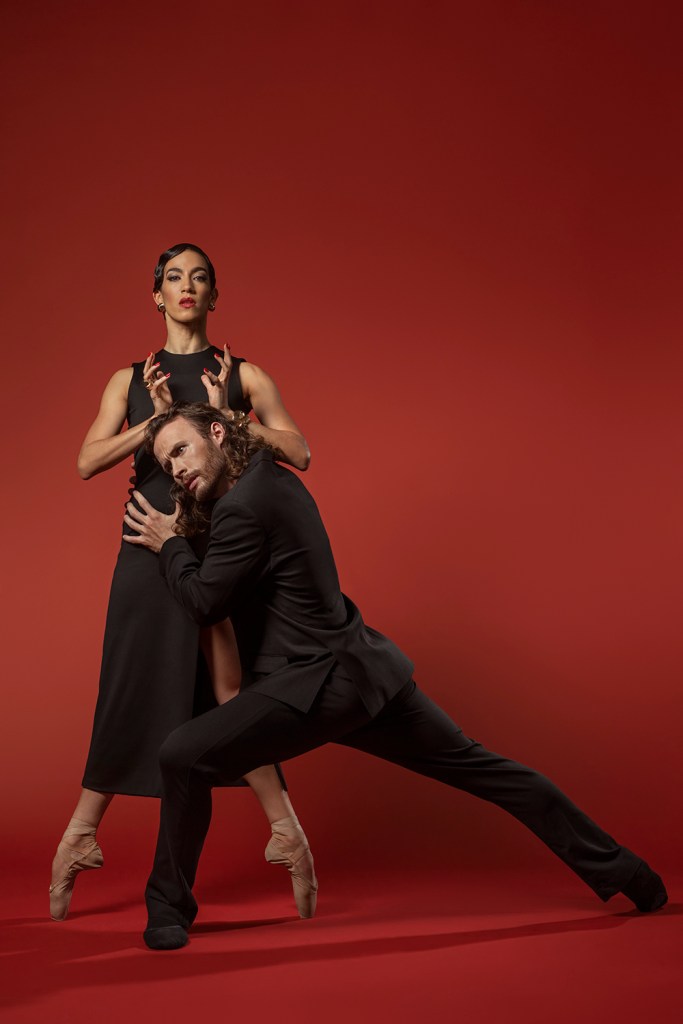
The Royal New Zealand Ballet
Macbeth
Wellington, Auckland and Christchurch
March 2026
John Daly-Peoples
The Royal New Zealand Ballet open its 2026 season with a contemporary reimagining of Macbeth, Shakespeare’s most brutal tragedy. Created by internationally acclaimed choreographer Alice Topp (Aurum, Logos, High Tide), the ballet unfolds in a ruthless modern world shaped by political ambition, media manipulation and the fatal seduction of power.
The production will feature Ana Gallardo Lobaina as Lady Macbeth and Branden Reiners as Macbeth.
“Macbeth is one of Shakespeare’s great tragedies, exploring themes as current today as they were when first written,” says Alice Topp. “An epic story fuelled by political ambition, passion, desire for power and the burden of guilt, its potency endures. Our Macbeth is set in a hierarchy-hungry, high-society city, where political storms, media frenzy and personal ambition collide.”
While ballet companies across the world regularly perform “Romeo and Juliet” and “A Midsummers Night Dream” based on Shakespeare’s plays very few of his other works are performed. “A Winter’s Tale”, “Hamlet”, “Othello” and “The Tempest” are occasionally performed.
Just in the last couple of years there have been other productions of Macbeth with the National Ballet of Japan performing “The Tragedy of Macbeth” by British choreographer and director Will Tuckett in 2023 and last year the Dutch National Ballet presented a “Lady Macbeth” choreographed by Helen Pickett.
This new co-production with West Australian Ballet will see Macbeth premiere as part of the Aotearoa New Zealand Festival of the Arts in Wellington and the Auckland Arts Festival, before touring to Christchurch and Dunedin. Presented in association with Avis, this ambitious new work places Shakespeare’s iconic story of ambition, power and moral collapse into a volatile modern world shaped by political manoeuvring and relentless media scrutiny.
At the centre of the ballet is the rise and fall of Macbeth and his formidable wife – a dazzling power couple whose ascent to influence is as intoxicating as it is catastrophic. Propelled by ambition and fanned by public adulation, the Macbeths scale extraordinary heights, only to find themselves consumed by guilt, paranoia and violence. Through the visceral language of contemporary ballet, their psychological unravelling is laid bare in an explosive portrait of power gained and power lost.
For Topp, the translation of Shakespeare’s dense, language-driven tragedy into movement is not an act of reduction, but of revelation. “Shakespeare’s text might be dense, but it also has movement written into the language,” she says. “The story is a psychological drama, full of behaviours, emotions and atmosphere. All the movement is right there in his words, and my role is to find where those emotions land in the body and let them speak physically.”
Award-winning designer Jon Buswell, a long-time RNZB collaborator, will create both set and lighting, shaping a darkly glamorous world that reflects the ballet’s volatile political landscape. Costumes are by Sydney-based designer Aleisa Jelbart, renowned for her bold contemporary designs across ballet, opera and theatre, bringing a sharp modern aesthetic that underscores the work’s themes of power, status and image.
The production will also feature a newly commissioned contemporary score by composer Christopher Gordon, performed with a live string ensemble from the New Zealand Symphony Orchestra. Layering full orchestral textures with driving, heavy-metal influences, the music provides an unrelenting pulse that mirrors the characters’ accelerating descent.

Ana Gallardo Lobaina has danced numerous roles for the RNZB including Cinderella and Stepmother in Loughlan Prior’s Cinderella. and she featured roles in Alice Topp’s Aurum and Logos.
Branden Reiners joined the Royal New Zealand Ballet in 2023 and his roles to date include Siegfried and Rothbart in Swan Lake, Tybalt and Lord Capulet in Romeo & Juliet, Serenade, the ‘Clay’ pas de deux in Alice Topp’s Logos.
Artistic Director Ty King-Wall says the new production showcases the RNZB at its most daring and expansive. “Macbeth is the Royal New Zealand Ballet as you’ve never seen us before,” says King-Wall. “Alice is bringing a world of bloodshed, betrayal and intrigue to our stages, in a cutting-edge production which draws upon the versatility of our dancers, the skill of our technical team, and demonstrates our incredible artistic range as a company.”
Macbeth stands as one of the most ambitious new works in the company’s recent history. A bold and bloody retelling of Shakespeare’s tragedy, it promises audiences
a searing, high-octane theatrical experience – one that speaks urgently to the contemporary world while honouring the enduring power of the original story.
2026 TOUR DATES
Wellington, St James Theatre, 25-28 February
Auckland, Kiri Te Kanawa Theatre, Aotea Centre, 4-7 March
Dunedin, The Regent, 13-14 March
Christchurch, Isaac Theatre Royal, 18-21 March





 New Zealand Arts Review