Categories
Reviews, News and Commentary

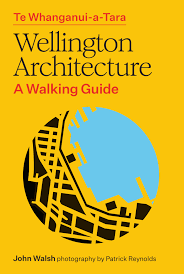
Wellington Architecture: a Walking Guide

Wellington Architecture: A Walking Guide

John Walsh and Patrick Reynolds

Massey University Press

RRP $37.00

Reviewed by John Daly-Peoples

John Walsh and photographer Patrick Reynolds have just launched “Wellington Architecture, A Walking Guide”  a revised edition of the book first published in 2022. This is their third book in the series of architectural walking tours following on from their books on Auckland and Christchurch. It is a great addition to books which explore and explain our built environment.

 John Walsh in the introduction notes that he was born in Wellington which was as “compact and confined as a medieval city-state, intensely impressed itself on me, in the most impressionable part of my life. I remember the Freyberg Pool, where I learned to swim; the summer lights strung on the Norfolk pines along Oriental Parade; and the council yard where my father worked, next to the Herd Street Post and Telegraph Building. My high school was near the old National Art Gallery and Dominion Museum; we’d be sent to mass at St Mary of the Angels and, in blazers and ties, despatched from Wellington Railway Station on rugby expeditions into the hinterlands of the Hutt Valley.”

A building with a dome on the top

AI-generated content may be incorrect.Public Trust Building

This reviewer also grew up in Wellington, living in the National Hotel across from the corner of Stout St and Lambton Quay. From our front room we had an impressive architectural vista including The Public Trust Building, The Government Departmental Building and The State Insurance Building. Further down the street was the Wellington Railway Station.

On my way to school I passed Ernst Plischke’s Massey House, The Old Supreme Court, The Old Government Building, The Beehive, Parliament building, the General Assembly Library, Turnbull House and the rather unfortunate Cathedral of St Paul. These were the background to my life at the time and it was only when I moved to suburban Karori that I noticed the difference in my daily environment.

A building with a dome top

AI-generated content may be incorrect.Shed 7, Wellington Harbour Board

The place of architecture in our environment and in our personal and social history is important often more noticeable when we are in foreign cities. A city’s buildings are important in defining the nature of a place. When visiting a place for the first time the visitor will map a city through its buildings. The materials, the orientation, the colours, the decoration and the forms all help create the language of the way the city is perceived.

The buildings of Auckland Wellington and Christchurch have many similarities but the accumulation of the various periods of construction and styles in each of those places has created very individual environments.

“Wellington Architecture, A Walking Guide” features more than 126 significant buildings describing their purpose and history as well as providing a background on the architects who designed them. The buildings are grouped into five self-guided walking routes, each with a map together with itineraries which collectively create a portrait of the city.

A church with a tall steeple

AI-generated content may be incorrect.St John’s

The building are a mix of colonial, nineteenth century Gothic, mid-century modernism and buildings of the last fifty years illustrating the changing nature of the architecture along with the changing nature of New Zealand and the city. The buildings are banks, businesses, government departments, churches, apartment buildings libraries, hotels, apartments, and a few private houses.

One of the tours features several of the government institutions surrounding Parliament including the Old Government Building (now the Victoria University Law School) and one on the largest wooden buildings in the world, all those other buildings I passed on the way to school along with the more recent  brutalist National Library and the modernist Freyberg Building.

Several architects feature with a number of buildings such as Gummer & Ford, Thomas Turnbull and Ian Athfield who is represented by the Wellington Library (soon to be reopened) and his Oriental Parade flats as well as a few, often controversial,  additions he made to existing buildings.

Asked which building he regarded as the most interesting nee building in Wellington he has stated that it is Heke Rua the new building for New Zealand’s Archive beside the National library, both for its architecture as well its signaling a commitment to preserving the nations documentary heritage.

Categories
Reviews, News and Commentary

Case Studies: Where did our plants go

Reviewed by John Daly-Peoples

Felicity Jones and Mark Smith

Case Studies: A story of plant travel 

Massey University Press

RRP $85.00

Reviewed by John Daly-Peoples

Case Studies Exhibition

Silo Park

October 9 – 19

The movement of plants and foods between countries and around the globe has been going on for centuries, linked to human migration, creating new trading routes, altering the appreciation of plants and changing diets.

The rose which is so central to English culture originated in Asia while the now staple food of the potato and the tomato came from South Ameruca. Even the kūmara was brought to New Zealand by Polynesian voyagers around 700-800 years ago. 

Since the voyages of Captain Cook and other European explorers in the eighteenth and nineteenth century there has been a huge increase in the movement of plants species between Europe and New Zealand and a new book “Case Studies” explores this activity.

The book explores how the British Empire came to dominate the globe linked to the intriguing story of how the Wardian Case designed by Nathaniel Bagshaw Ward. The case was an early type of terrarium, a sealed protective container for protecting foreign plants imported to Europe from overseas.

Mark Smith / Felicity Jones, Foraged, Nevis Rd, Central Otago

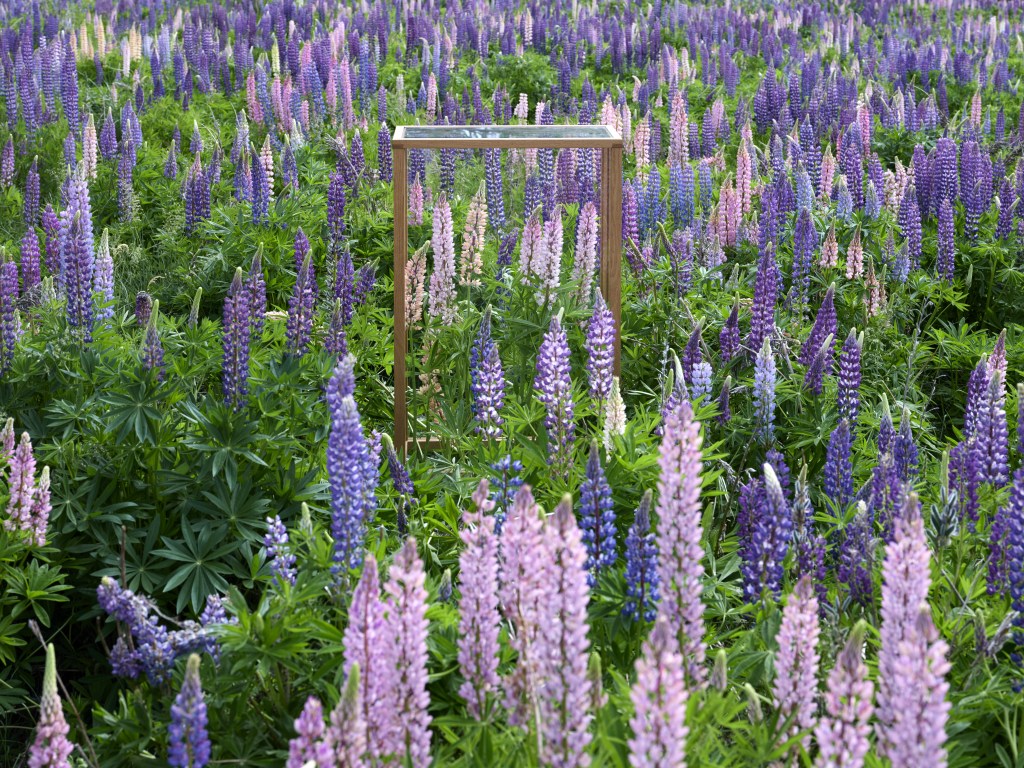
However the book is much more than an historic account of the Wardian case, plant movement and transfer. It is also a catalogue of an exhibition featuring numerous ‘Installations’ by Jones of plants in small glass cases placed in various environments. It is also a journal of the journey of artist / writer Felicity Jones and photographer Mark Smith as they research the book and exhibition.

As the two say about the project “What started as quite a personal exploration has definitely grown into something much larger. Each new idea and road trip revealed another layer, presenting deeper questions about the entanglement of people and plants. We started to realise the work was limitless as it moved backwards and forwards in time, and as we explored notions of beauty and dislocation, systems of knowledge and science, hierarchies of value in the botanical world and the motivations, aspirations, attitudes and beliefs that lay behind plant travel. Early on, we sat down and made a kind of wish list — plants and locations that had always interested us or that linked back to Dr Ward in some way”.

Mark Smith / Felicity Jones Lupins, Lindis Pass, Otago

Over the seven years of the project, Jones and Smith created and photographed evocative case installations in Aotearoa New Zealand and the United Kingdom. Their journey took them from the forest and beach of Auckland West Coast, Central Otago and the Lindis River to Oxford punts, London’s Natural History Museum and the Chelsea Physic Garden.

The book traces that story through photographs and essays with reflections on the implications of plant transfer/movement. Across six essays by Gregory O’Brien, Dame Anne Salmond, Luke Keogh, Mark Carine, Markman Ellis and Huhana Smith, the book considers not only the scientific and colonial ambitions that drove botanical exchange, but also its consequences: ecological disruption, the spread of invasive species, and the marginalisation of Indigenous knowledge systems.

The book tells of the way in which many of the plants species which were sent to the UK are now being returned. The ngutukākā or kakabeak is now one of New Zealand’s most endangered plants but seeds taken to Kew by Banks and Solander are being now being used to reestablish the plant.

Then there are the more surreal settings of Tower Bridge in London, The Natural History Museum and Kew Gardens.

Mark Smith / Felicity Jones The Kings Entrance, Chelsea Physics Garden

There are also photographs which are intriguing for their wider history as well. Many of the plants collected by Banks and Solander were wrapped in printers discarded paper with some having been wrapped in copies of the Spectator including an article entitled “Notes upon the 12 books of Paradise” by Joseph Addison. This was an early eighteenth version of Milton’s “Paradise Lost” with illustrations by William Blake.

It is a handsomely designed book thanks to designer Murray Dexter which includes two page spreads with smaller photographs, mixing the descriptive and documentary with the quirky, thoughtful and reflective.  It is an unusual and slightly surreal book in many ways. While the text and many of the photographs provide both an historical and personal narrative these same photographs of the glass cases in the environment convey a strange dreamlike vision, somehow disconnected from the physical worlds.

The launch of the book will coincide with an exhibition of many of the photographs.

Exhibition title: Here, There, Now

Venue: Silo 6, Silo Park Wynyard Quarter

Exhibition dates: October 9-19, 11am-6pm daily, free, open to the public.

To subscribe or follow New Zealand Arts Review site – www.nzartsreview.org.

The “Follow button” at the bottom right will appear and clicking on that button  will allow you to follow that blog and all future posts will arrive on your email.

Or go to https://nzartsreview.org/blog/, Scroll down and click “Subscribe”

Categories
Reviews, News and Commentary

Feathers of Aotearoa: The colours and designs of New Zealand birds

Reviewed by John Daly-Peoples

Feathers of Aotearoa: An Illustrated Journal

Niels Meyer-Westfeld

Potton & Burton

RRP $59.99

Published  October 1

Reviewed by John Daly-Peoples

We all know that godwits undertake an annual marathon migration to Siberia, but the bar-tailed godwit or kuaka owes much of its successful flight to its feathers. While its high metabolic rate and other factors add to its remarkable ability to make the journey, it is actually its feathers and their design which are significant. The feather’s unique design keep it warm and provide protection from rain as well as having flight surfaces designed for long distance flight.

Niels Meyer-Westfeld, Bar-tailed godwits, pied stilts and red knots

The importance of feathers in the evolutionary development of birds is the focus of a new book “Feathers of Aotearoa” by artist / illustrator Niels Meyer-Westfeld who has focussed on the plumage of New Zealand birds. It follows on from his previous book “Land of Birds” (Craig Potton Publishing) published in 2014. Inspired by the tradition of naturalist journals, he has created a very personal and sensitive tribute to Aotearoa’s remarkable birdlife. 

Born in Germany he initially studied graphic design at the University of Hannover, before completing a Masters in communication design at Central St Martin’s in London.

However, it was his early exposure to the natural world which motivated his interest in birds. “My father is a passionate lepidopterist and botanist and growing up in Germany, I was lucky enough to accompany him on trips around Europe while he pursued his interest,” says Niels. “His love of nature inspired me artistically and I’ve always drawn the flora and the fauna that surrounds me.”

Having moved to New Zealand he has spent nearly twenty years in a variety of creative endeavours with a particular interest in the bird life of New Zealand.

Like other New Zealand artists such as Ray Ching and Russell Jackson he has the ability to meticulously render his subjects, seemingly able to give his subjects anthropomorphic characteristics.

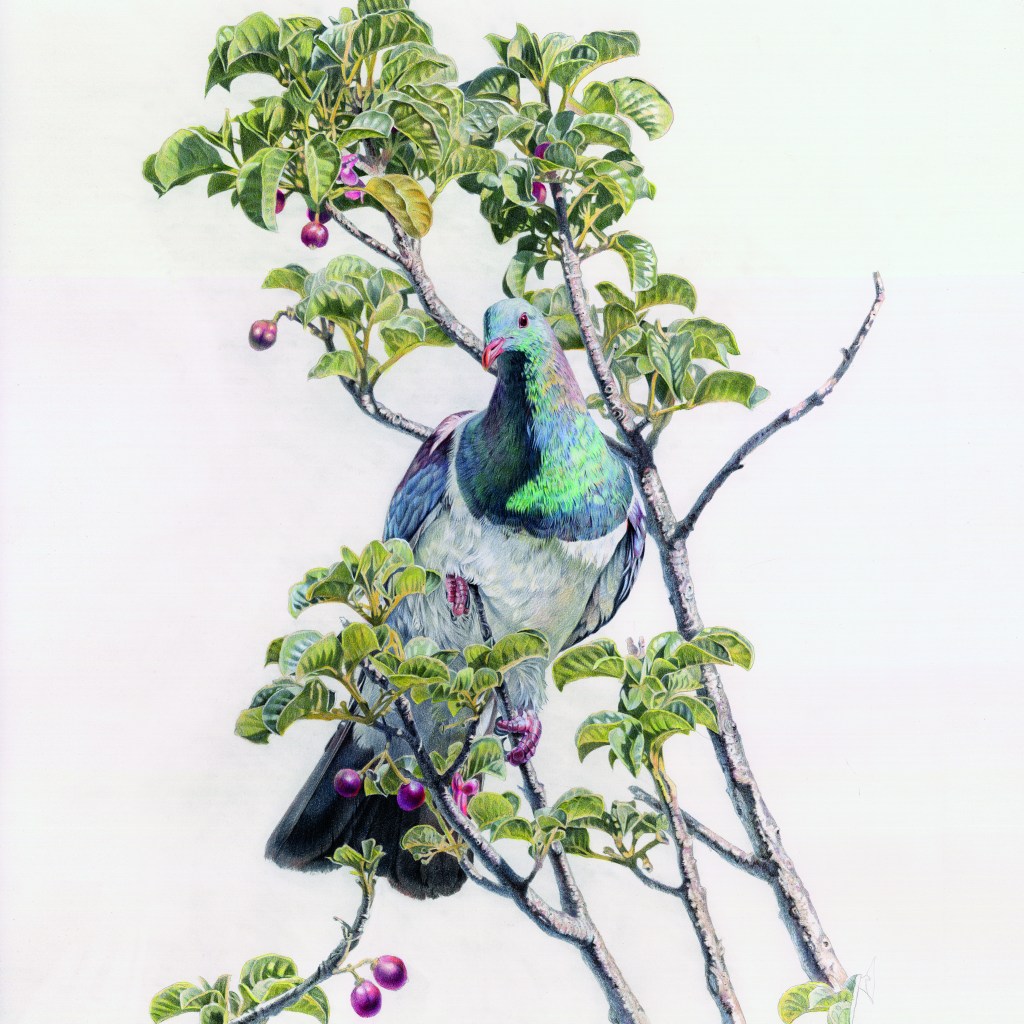
The book illustrates thirty birds which the artist lists under six categories – Flightless, Ground Dwelling, Skilled Flyers, Swift, Wanderers, Divers and Swimmers. Under the heading of flightless we find Kakapo, Kiwi, Moa, Weka and Takahe. Each of the birds is given several pages of illustration with full page renderings of the bird in its habitat or perched on native foliage. So, there is a tui atop a flax and a kereru in a kowhai bush. There are also drawings of the feathers, not one or two as most birds have more than a dozen separate feathers.

Niels Meyer-Westfeld, Kereru

We are provided with information about each of the bird’s plumage as well as general information. We learn that the colours found in the feathers are formed in one of two ways, either from pigmentation or from light refraction caused by the structure of the feather.

We also learn about the evolution of the feather the science of which has been evolving since the 1990’s when fossil evidence revealed that several lineages of dinosaur had primitive  forms of feather which have evolved into the contemporary form such as the tiny, insulating feathers of a penguin.

The artist illustrates and explains in the accompanying text aspects of the unique nature of many of the feathers found in New Zealand native birds. He explains how the feathers of the tui which initially appear to be black but on closer inspection have a shimmering quality with the microscopic scales on the feather creating a range of changing colour rather than relying on pigmentation.

Accompanying the images of birds are illustrations of the bird’s feathers, at least dozen for each bird which show the different colours, shapes and designs, demonstrating the myriad types of feather.

Niels Meyer-Westfeld, Barn Owl feathers

The book is very much like an artist’s notebook or diary, some of the drawing fully coloured with others in simple black pencil of ink with accompany description. Most of the illustrations are of birds the artist has observed in the wild but other are of dead birds where he has captured their limp form.

It is a beautifully designed book, with a particularly impressive cover, the whole production being as striking as many of the birds the artist has illustrated.

Niels Meyer-Westfeld, Kea

To subscribe or follow New Zealand Arts Review site – www.nzartsreview.org.

The “Follow button” at the bottom right will appear and clicking on that button  will allow you to follow that blog and all future posts will arrive on your email.

Or go to https://nzartsreview.org/blog/, Scroll down and click “Subscribe”

Categories
Reviews, News and Commentary

Don Binney. The 1972 interview

John Daly-Peoples

Don Binney. Summer Fernbird II, 1966

Don Binney, A Flight Through Time

Gow Langsford  Gallery

Until September 27

John Daly-Peoples

Gow Langsford (Onehunga) is currently showing works by Don Binney  from the 1960s and through to one of his final paintings which he completed in 2010. A Flight Through Time contains a number of works held in private collections, the majority of which have not been publicly exhibited in many years.

In 1972  I interviewed Don Binney for the video series “Six New Zealand Artists” about his fascination with birds. The following is the transcript of part of that interview.

JDP: Why do you choose birds to use as your visual images?

DB: Well, that’s because I’ve been a bird watcher for a lot longer than I’ve been a painter. In fact I was seriously watching birds by the time I’d turned ten and I was still at primary school, and I’ve only really been seriously exhibiting my own paintings, with or without the bird images, since about 1962.

JDP: Do you treat the birds as the real objects or do you abstract them?

DB: This is not  a simple question to answer. I was thinking this to myself today as I was sitting up at Aorangi Pt looking at a number of the spotted shags hatching their clutches on the rocks, in their little nests on the headland, and I was also, at the time, chewing over what I’d been saying to the local ranger last night at Juliet’s place. It seems to me that birds are a pretty fundamental human image, it seems to me that the human species if you like, has perhaps, twenty or thirty or forty odd, primary image references, perhaps tables may be one, perhaps death may be another, the sun is almost certainly another, stars very likely another, birds I think come well within the short-list of ‘say, very essential human images, and birds mean a hell of a lot, whether you’re a cosmopolitan twentieth or twenty-first century person or an eighteenth century person or a barbaric [person]… a bird is an image, is a life quality, imbued with a great many, I think, tangible references to people. It’s a very sensitive point.

JDP: Yes, so you see them as anthropomorphic.

DB: No, I see them as anthropomorphic, but I see them as a whole quality of existence in themselves, and I see them as forms, recurrent forms in space and in place, reappearing in the world of men as they’ve done in New Zealand, as long as men have co-existed with them, in this country and as they’ve always done over the world-.birds have lived in the world for so much longer than the human species, the hominid species and I think we owe them tremendous respect for this alone.

JDP: Do you see the links between bird forms and the natural forms of the landscape?

DB: Oh sure, this of course carries on, without my sounding presumptuous, but what I was saying is that the birds have lived in harmony and have co-existed with the topography, with the space, with the light, of habitable earth space, so much longer than people, and they have won their place, by means of flight, by means of nesting patterns, by means of migration, by means of their feeding habits, and the whole way that they deploy themselves against this, this land and this life, be it in New Zealand, be it New Guinea, be it Iceland or be it East Africa.