Shane Cotton has progressively mined the history and myth of Māori along with its intersection with European colonisation, featuring images which recall stories, along with references to historical and mythical figures and locations.
With his latest exhibition of “New Paintings” the artist could be seen as entering his Fauvist period with many of the paintings having the features of the Fauves. Those painters of the early part of the twentieth century employed simplified shapes along with intense and juxtaposed colours.
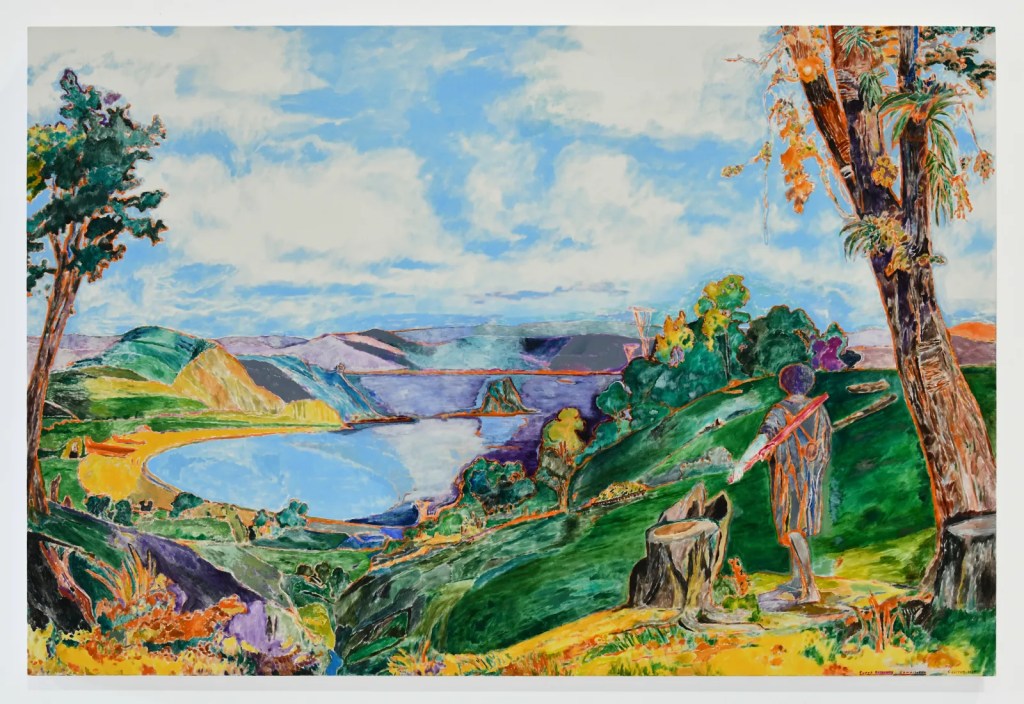
The “He Waka Karaka” ($9000) featuring a small Pacific craft with a sail exemplifies this aspect with intense blues, purples and green while the large, colourful “Super Radiance” ($90,000) is an example of one of the new directions of Cottons painting – more traditional landscape painting. Even though his previous works have featured landscape forms these were generally refined and abstracted.
There are several works of Cotton’s Toi Moko works where the tattooed and preserved ‘shrunken’ Māori heads reference conflict, trade, and repatriations. In works such as “The Great Attractors” ($55,000) the tattoo lines tracing out genealogy are linked to the notion of neural connections, knowledge links and computer networks.
Shane Cotton, The Great Attractors
Apart from the shrunken heads Cotton has rarely included figures in his work but in this show, there are several which connect with his living in Northland and revisiting some of his earlier work and the notions of colonialism and cultural exchange.
Shane Cotton, The Walker
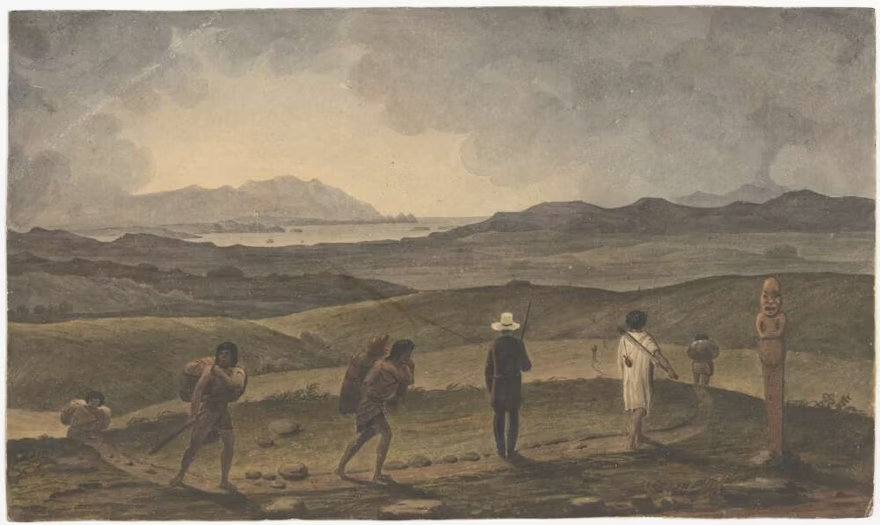
In “The Walker” ($8500) he has replicated the self portrait of the early explorer/artist Augustus Earle taken from Earle ‘s painting “Distant view of the Bay of Island”. Cotton has also appropriated another figure from the work , A Māori with a taiaha who is leading Earle . This figure is also present in “Super Radiance”, “Sunset Gate” ($48,000) and “He tangata hikoi” ($8500) acting as a guide through the landscapes of the North.
Augustus Earle, Distant view of the Bay of Island
Cotton has also used an image of missionary and publisher of Māori works Thomas Kendall taken from the painting “Hongi Hika and Waikato” with Thomas Kendall in England in 1820” by James Barry.
James Barry, Hongi Hika and Waikato” with Thomas Kendall in England in 1820
This image is used in the small portrait “Internal Visions” ($8750) and “The Visitation” ($8500) where Cotton has depicted him contemplating a colourful, modernist manaia form where in the original painting he is looking at Hongi Hika and Waikato.
Shane Cotton, The Visitation
There are also a few of the artists flower painting such as “Insert” ($12,500) which have developed over the years for his early plant paintings.
There are a number of the artist’s three panel works most of which feature a manaia figure flanked by delicate foliage while others have landscape/vegetation panels or in the case of ”Ahuaiti’s Cave” ($130,000) images of the sea. This work refers to the Ahuaiti who was rejected by her husband, forcing her to live in a cave on the Northland coast with her son Uenuku Kuare who is depicted at the base of the painting as a tiny figure, the same image as Earle’s guide in “Distant view of the Bay of Island”.
Shane Cotton, Ahuaiti’s Cave
This linking of mythic figure to historical figure to an invented guide inhabiting some the paintings is an example of Cottons ability to transition across myth, history, time and location.
The “Follow button” at the bottom right will appear and clicking on that button will allow you to follow that blog and all future posts will arrive on your email.
John Pule. As we stood one misty morning near the ocean the desire the solitude gone gone forever
Haia
John Pule
Gow Langsford, Onehunga
Until June 8
Vai Manino
Fatu Feu’u
Artis Gallery
Until June 9
Reviewed by John Daly-Peoples
Two recent exhibition by Pacific artists focus on the ways in which artists draw on the physical and topographic and historic , merging them, with social, political and personal insight and visions.
John Pule’s latest exhibition “Haia” was the result of a nine-month residency in Niue provided by the government in 2023. The work contains much of the artist previous iconography but have a greater immediacy given the artists response to in his ancestral land.
The works are in a sense both a discovery and rediscovery of the land and its mythologies as well as the artists own journeys.
As he says in his notes to the exhibition
“For nine months I rode my bike each day through the canopy forest from Liku to Alofi [around 15 kilometres]. Through rain or shine, winds, storm, or calm. The road is bordered with plantations, forests, tracks into the interior. Big blue skies and clouds, shadows of trees stretch across the makatea (limestone) road. Returning to Liku every evening, the sun is warm on my back. These paintings and drawings are about that particular time.”
His works have often dealt with his growing up in New Zealand, his discovery of traditional Niuean art, the islands history, flora and fauna and developing his own iconography. This had led to him dealing with wider issues of colonialism, the impact of Christianity as well as the mythology and spirituality of Niue.
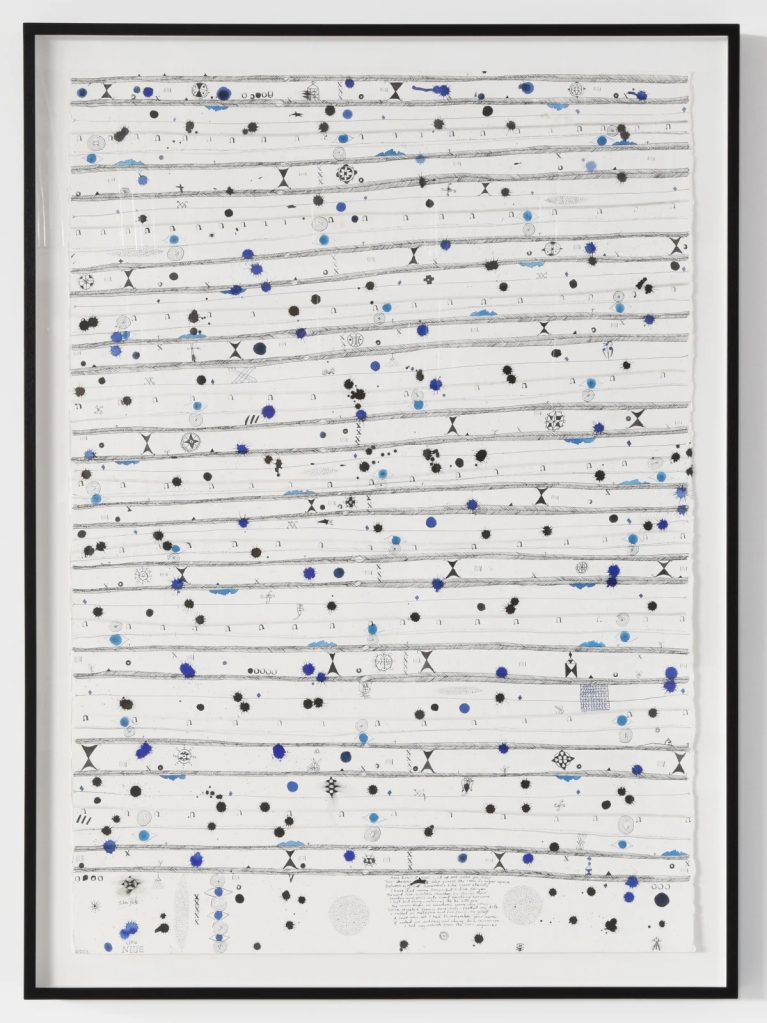
John Pule. Many times at night I sit up and watch you sleep
Works such a “Many times at night I sit up and watch you sleep” with their strips of images – symbols, shapes and figures are like the trails that that the artist has ridden on his bike but also the pathways which reach back in time. They are analogous to the songlines of aboriginal art as well as the lines of musical compositions, imagining the way the sounds evolve, carrying a narrative expressing joy. sorrow and wonderment.
In the more dramatic paintings such as “As we stood one misty morning near the ocean the desire the solitude gone gone forever” a road snakes into the distance and there are several figures depicted recalling tales of the Bible and other mythological histories.
The foliage depicted is at once colourful and local as well as surreal and mythological – a portrays of Pule’s Niue as well as an imagined paradise.
The pathways and journeys depicted in his paintings are metaphors for the artist’s own physical, spiritual and aesthetic journeys.
John Pule. Foulua Pukenamo Tau Misi
Other works such as “Foulua Pukenamo Tau Misi” feature plans, grids and designs – locating islands, stars, measuring winds and sea currents, all ways of comprehending the environment
Fatu Feu’u. The Golden Age
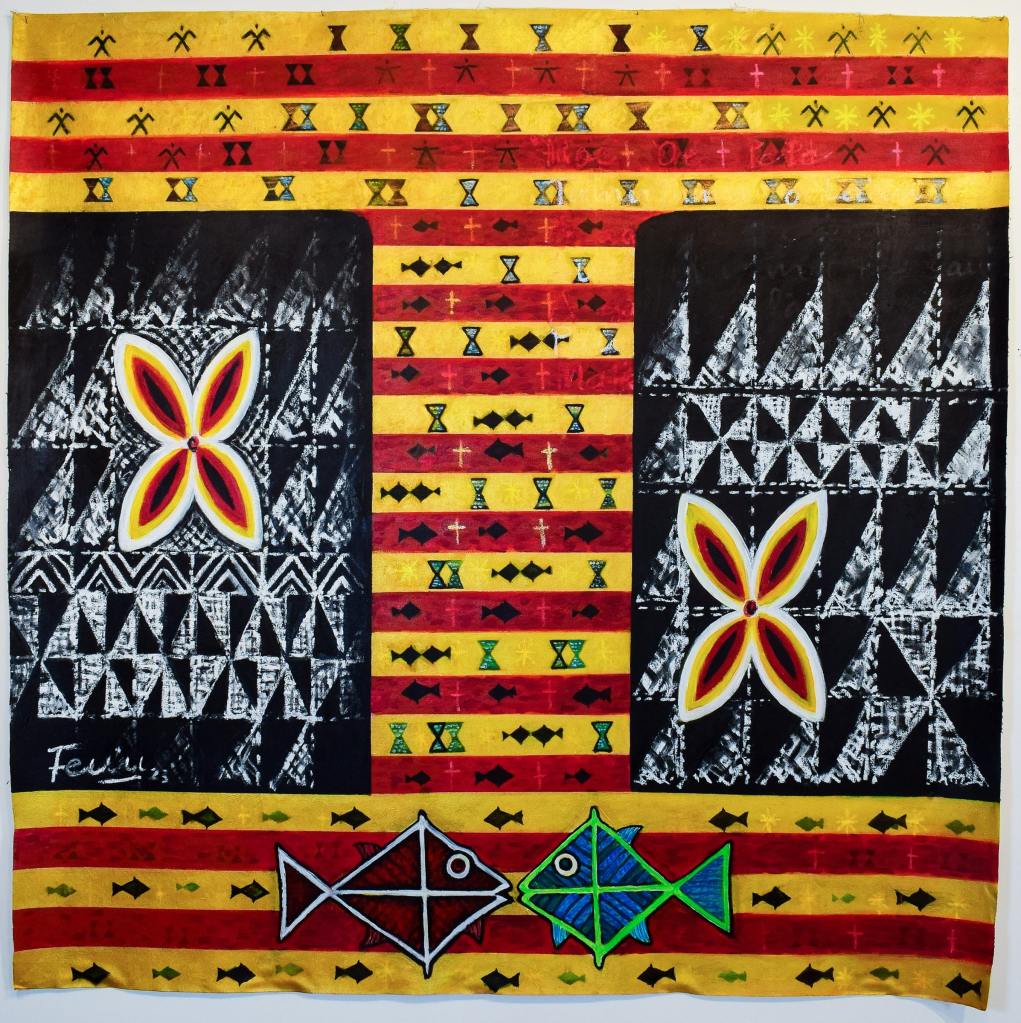
In his latest exhibition “Vai Manino” (Clear Water) Fatu Feu’u focusses on the social political and historical aspects of Samoan fisheries with works that follow on from his previous exhibitions which have addressed social, political and environmental issues which are confronting Samoan society. Several are based on the Samoan tradition of ‘ifoga’ or reconciliation/rebuilding with the dominating central letter ‘I’ as a motif captures this, with different colours coalescing. The large “I” which he has used many times before also references Colin McCahons use of the letter / symbol.
His work draws inspiration from ancient designs and patterns – from tapa cloth. siapo, lapita pottery and tattoo along with contemporary Samoan design. There are also the influences of abstract art and that of other artists such as Colin McCahon and Tony Fomison. The artist has employed shapes and symbols that he has developed over many years – masks, fish, birds and sails along with hints of human figures and landscape. Many of the siapo patterns themselves are derived from insects, leaves, shells, animals and fish.
Fatu Feu’u First Ritual
In many of the works such as “First Ritual” there are swirls of colours which seem to reference shoals of fish and the ocean currents along with curving lines which can indicate the trawling nets used by fisherman.
Works such as “Pacific Conference II” have more complex structures with reference to the historical and mythological past pf the Pacific with an Easter Island monolith. The swarms of fish which morph into humans and birds refence journeys, distance and the dependence on the sea.
Fatu Feu’u. “Pacific Conference II”
Like the works of John Pule several of the paintings feature bands of colour representing journeys and histories. And with both artists there are gridded area which are related to cartography, structure and measurement
The “Follow button” at the bottom right will appear and clicking on that button will allow you to follow that blog and all future posts will arrive on your email.
Ans Westra, who died in 2023 was probably the most prolific contemporary photographer who focussed on recording the life and times of New Zealanders.
With a career spanning over sixty years, she took hundreds of thousands of photographs of people, places and events.
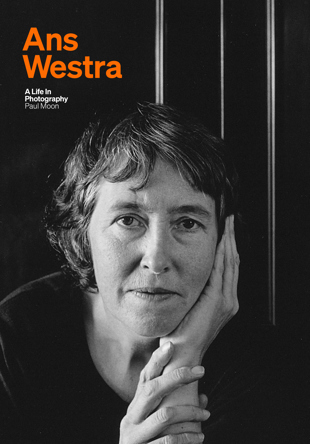
Now a new book “Ans Westra: A life in photography” by cultural historian Paul Moon documents her life and her contribution to the cultural life of the country.
The book charts her photographic career from her early involvement with the Wellington Camera Club in the 1960’s and her first sale of a work to the quarterly journal Te Ao Hou, a publication she would continue to provide images for,
She also gained early recognition in 1961 winning a prize in a photographic competition run by Arts Committee of the Festival of Wellington.
Much of her work was commissioned for publications originated with the Department of Education and several of her books were for educational publishers as well. One of her earliest publications was ”Viliami of the Friendly Isles” based on her travels to Tonga, Fiji and Samoa in 1962. As well as taking the pictures she wrote the text which describes the dramas, tragedies and excitement of the various locations and events she encountered.
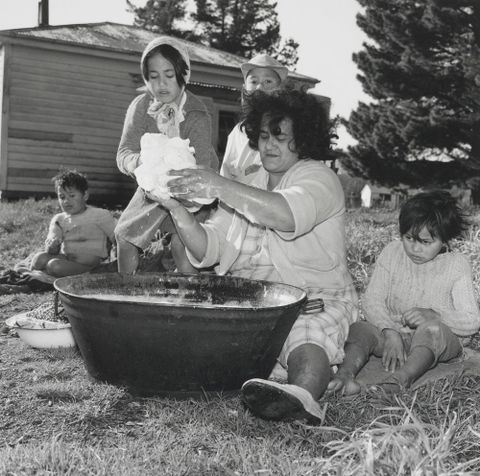
Then there was the controversial booklet “Washday at the Pa” which was a school bulletin published in 1964 by the Education Department’s School Publications section. Ans Westra wrote the text and took the photographs during a visit to Ruatōria.
Ans Westra, Ruatoria, 1963 (from ‘Washday at the Pa’), courtesy of {Suite} Gallery
The bulletin followed a day in the life of a rural Māori family with nine children. Her images of the family’s living conditions caused enormous controversy, notably from The Māori Women’s Welfare League and the work was subsequently removed from schools and destroyed. Only latterly was the work republished by her Wellington gallery Suite.
Her more substantial publication “Māori” was published by Alistair Taylor in 1967 which was co-produced with James Ritchie and designed by Gordon Walters.
Her motive for participating in the project was the misguided notion, held by many pakeha writers that Māori were likely to become extinct at some time in the future and their culture needed to be recorded.
She was also involved with another controversial publication “Down Under the Plumtree” published by Alistair Taylor. Published in 1972, the book openly discussed sex, sexuality and drugs at a time when there was very little reliable information on these issues for young people.
Moon writes about all her major bodies of work such as “Notes on the Country I live in” and “We Live by a lake” which was written by Noel Hilliard.
He also outlines the rational and impetus for the various projects, the political and social climate at the time and the reactions to them.
The 84 images used to illustrate the book show the various aspect of her photographic approach which changes over the years. One is conscious of her ability to frame an image, capture the sense of a person or place and find the drama of the moment.
Ans Westra, Wellington, 1974 courtesy of {Suite} Gallery
This ability to capture the sense of place can be seen in her “Wellington” of 1974 with the wet streets of the capital by the cenotaph.
She also shows an understanding of architectural space with an image of the dam structure in “We Live by a Lake” and she is aware of the possibilities of contrast through light and shade as well as means of creating drama and movement as shown in her image of a policeman and dog confronting a protestor during the anti-Springboks tour campaign.
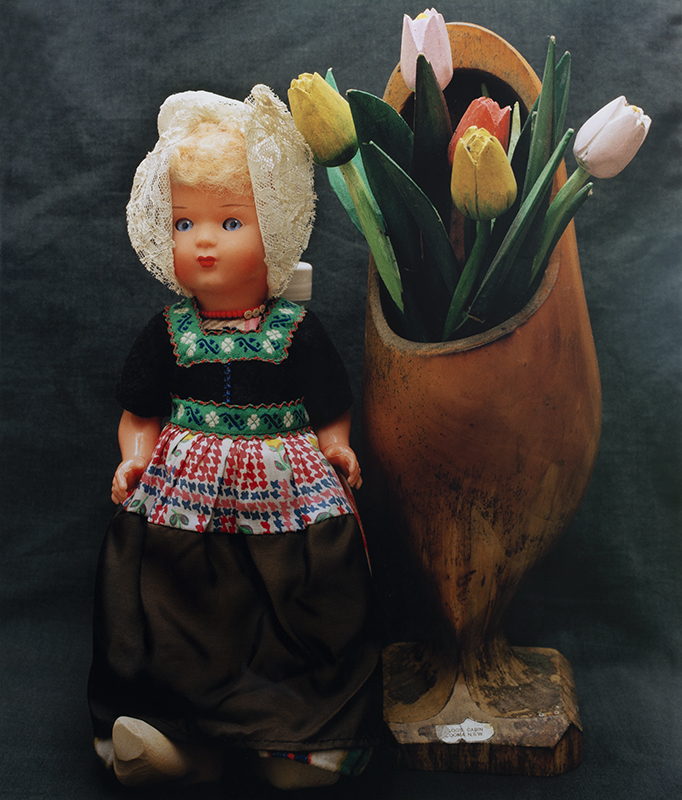
While she did not photograph all that much in colour, when she did, she was able to use colour to great effect as in her image of a Dutch doll from her Toyland series.
Ans Westra, Dutch Doll, 2004, courtesy of {Suite} Gallery
The book not only documents Westra’s immense contribution to our history in documenting social change but also reveals an enthusiastic and dedicated artist.
The book deals with several of the important events in her own life from her move from Holland in her youth, the brief return to Holland in the late 1960’s and her short-lived affair with the writer Barry Crump and the resulting son, Erik.
Dr Paul Moon ONZM is professor of history at Auckland University of Technology’s Te Ara Poutama, the Faculty of Māori Development, where he has taught since 1993. He is the prolific author of many books, including biographies of William Hobson, Robert FitzRoy, and the Ngāpuhi rangatira Hone Heke and Hone Heke Ngapua. He is a Fellow of both the Royal Historical Society at University College London and of the Royal Society of Arts.
All Images extracted from Ans Westra: A Life In Photography by Paul Moon, published by Massey University Press,
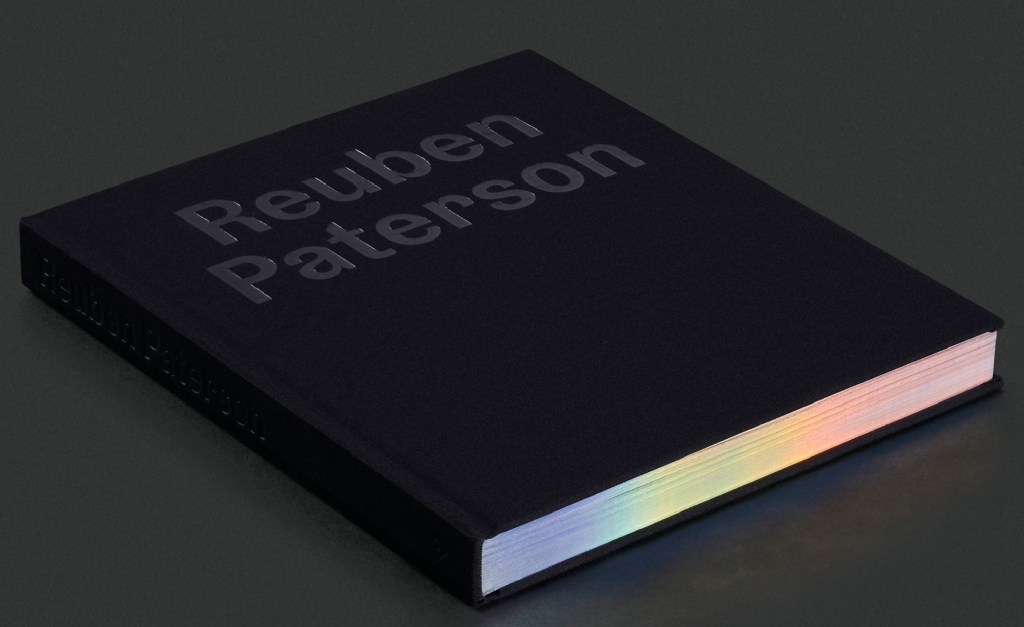
City Gallery Wellington has recently published a stunning monograph on Reuben Paterson which follows on from his exhibition Reuben Paterson: The Only Dream Left which was exhibited at the gallery last year.
The book is lavishly illustrated with works covering his thirty years of art practice and features writings by Witi Ihimaera, curator and writer Geraldine Barlow, and the exhibition’s curators Aaron Lister and Karl Chitham.
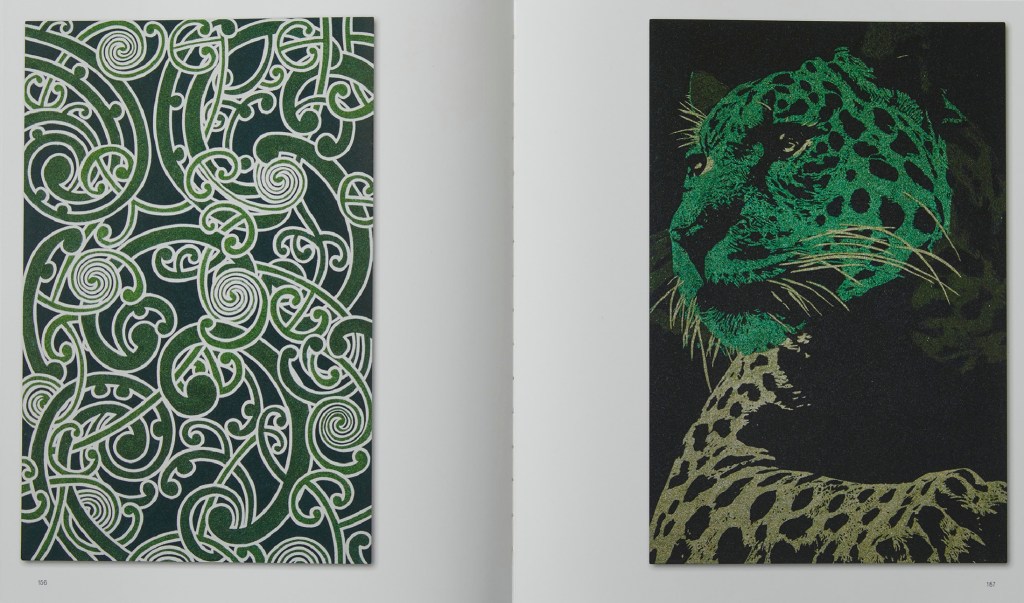
Reuben Paterson, Pounamu and The Jade Cat
There are over 100 full colour illustrations as well as some ”booklet” inserts which captures the unique range and depth of Paterson’s art from his early glitter paintings to his recent major sculptural commissions.
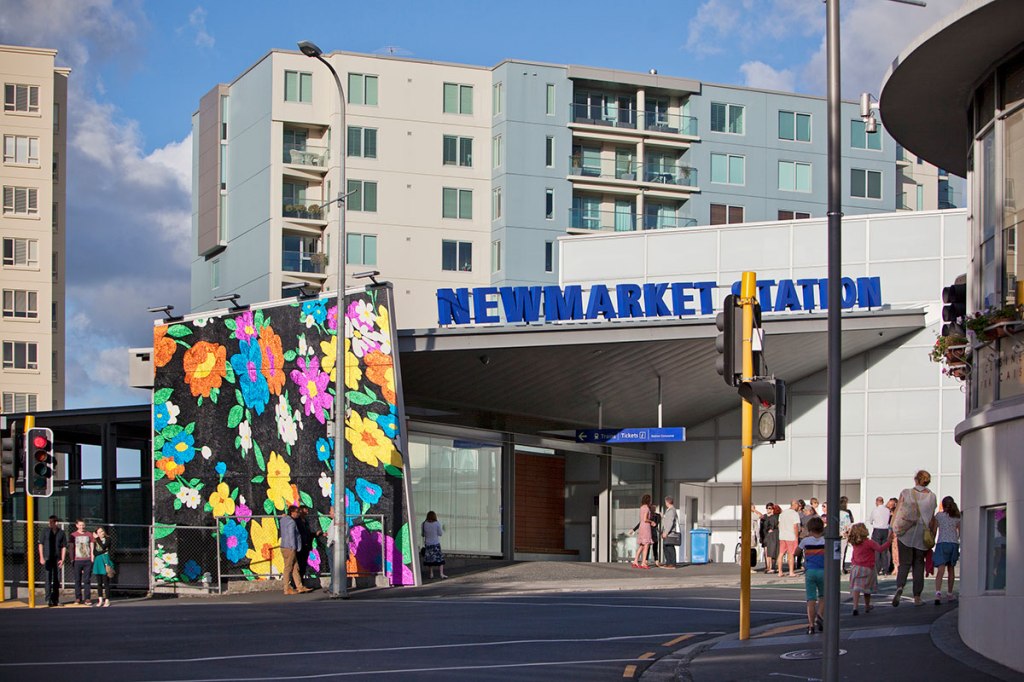
There are images of several of his monumental works such as the “Get Down Upon Your Knees”, the 8-metre square work shown at the Asia Pacific Triennial in Brisbane as well as the mural work “Andale, Andale” at Auckland’s Newmarket Railway Station. There are also the “The Golden Promise” at the Massey University Albany campus as well as the controversial ”Freedom Flowers”, the ANZ cash point terminal on Ponsonby Road commissioned for the 2015 Pride Festival.
His use of glitter and diamond dust on canvas or paper of stereotypical images are manipulated and transformed by his individual treatment of colour, design, pattern and texture. His images often referenced botanical, op art, or Māori iconography along with images which are commercial or kitsch. The sparkling surfaces create an ambivalent visual description with works such as the “Take my hand and off we stride” featuring the idyllic Pacific Island palm tree landscape.
Underneath the seductive images there are more complex ideas and viewpoints which take the viewer into the artist’s view of nature, the tangible and the symbolic as well as his own whakapapa referencing his Ngati Rangitihi, Ngai Tuhoe, Tuhourangi and Scottish descent.
Paterson’s political or social messages are also referenced in some of the works where he has used animal images such as the tiger in “Blessing”, conveying the sense of power, sexuality and fear. These works were motivated by his efforts to highlight the inequality of the ‘gay panic’ provocation defence for murder that was in place before a repeal of the Crimes Act in 2009.
A culmination of many of his ideas and technical expertise has been “Guide Kaiārahi” the major commission for the Auckland Art Gallery. The idea for the ten-metre-high waka which is made from hundreds of shimmering crystals, originated in the legend of a phantom waka that appeared at Lake Tarawera ten days before the eruption of Mt Tarawera in 1886. Combining references to natural and supernatural realms, the sculpture draws upon Māori cosmology and creation narratives.
Reuben Paterson, “Guide Kaiārahi” (detail)
The book shows the extent of his influences and interests apart from his use of cheesy imagery – Dutch still life painting, elements of Greek and Roman art, Op art and Rorschach patterns. The essays also reveal some of his interests in scientific, political and social ideas along with the spiritual aspects of his work.
Nature and botanical subjects are central to the artists life and many of the artist works His father was a landscape gardener and he has a garden himself which can be seen as an influence on his work with its emphasis on colour, seasons, birth and transformation.
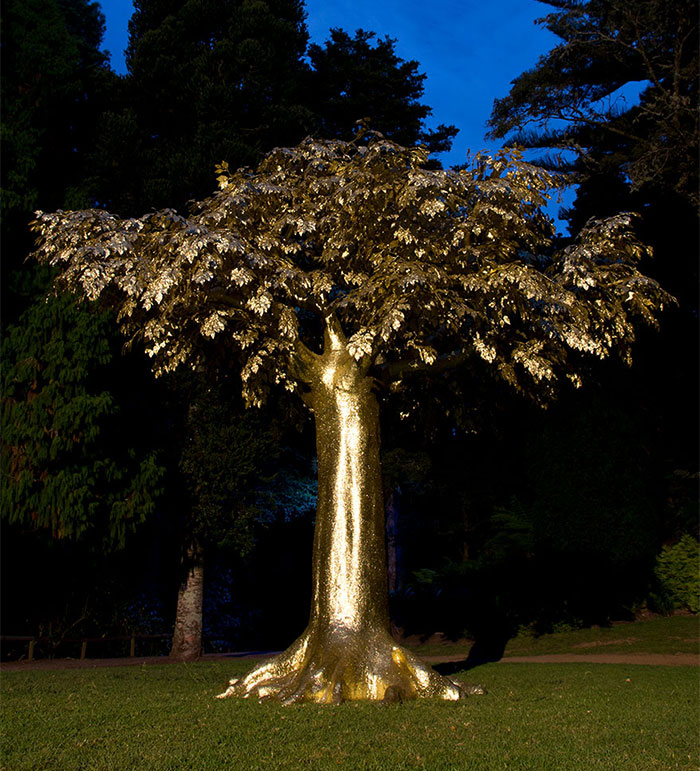
One major work which focusses on Nature is “The Golden Bearing”, a life size golden tree which links to the various emblematic trees over history, from George Fraziers “The Golden Bough”, Eastern and Mayan ideas of creation as well as that of Maori.
Reuben Paterson, The Golden Bearing
As Witi Ihimaera says of the work “In Paterson’s garden the tree is a promise of the legacy of nature for a humankind that appears hellbent on destroying the planet. It is an achingly awe-inspiring way point from which we can orient ourselves to a future if we wish it to become a paradise regained rather than lost”.
The book itself is an elegant and lavish production with designers Extended Whānau ensuring that Paterson’s work is presented in a way which allows for an appreciation and understanding of his paintings and sculptural work.
The images and texts manage to not only show the development of the artist’s work but link the poetic, the political and the personal to show an artist who is deeply committed to exploring the many threads which make up contemporary New Zealand culture.
The “Follow button” at the bottom right will appear and clicking on that button will allow you to follow that blog and all future posts will arrive on your email.
Pablo Picasso, Mère aux enfants à l’orange (Mother and children with an orange), 1951, Auckland Art Gallery Toi o Tāmaki, gift of Julian and Josie Robertson through the Auckland Art Gallery Foundation, 2023
The Robertson Gift: Paths through Modernity
Auckland Art Gallery
February 9 – February 2026
Opening at the Auckland Art Gallery on 9 February and running for two years will be the exhibition “The Robertson Gift: Paths through Modernity” comprising fifteen major artworks valued in excess of $250million. The works are a long-promised gift from the collection of New York philanthropists Julian (1932– 2022) and Josie Robertson (1943–2010).
The collection features influential modern European artists, including Pierre Bonnard, Georges Braque, Paul Cezanne, Salvador Dalí, André Derain, Henri Fantin-Latour, Paul Gauguin, Fernand Léger, Henri Matisse, Piet Mondrian and Pablo Picasso.
Director of Auckland Art Gallery, Kirsten Lacy says that the Gallery could not realise such a selection of artworks without Julian and Josie’s vision.
“Patronage of this scale is unprecedented, and the collection of modern masterpieces is unique. The Robertson’s gift is unquestionably the most transformative bequest of international art to the country in the past century,” says Lacy.
The couple divided their lives between New York and Aotearoa New Zealand ever since their first visit to Tāmaki Makaurau Auckland in 1978–1979. The Robertson’s extraordinary gift acknowledges the lasting connections the couple formed with Aotearoa New Zealand and their passion for modern art. Robertson was an investor and developer in the US and New Zealand. He owned three lodges including Kauri Cliffs Lodge and several wineries. He was also one of the few non-New Zealanders to receive a knighthood.
Beginning with post-Impressionist works of the late 19th century and ending with a monumental colour-field painting from the 1960s, the exhibition takes visitors on a journey through the major art movements of the modern era, including Impressionism, Post-Impressionism, Fauvism, Cubism, Surrealism, and post-war abstraction.
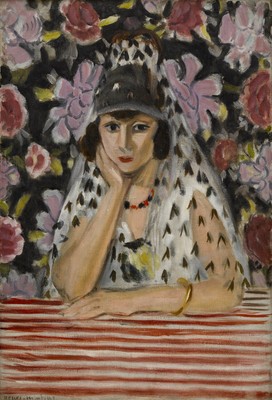
Henri Matisse, Espagnole (buste). (The Spanish Woman), 1922. Auckland Art Gallery Toi o Tāmaki, gift of Julian and Josie Robertson through the Auckland Art Gallery Foundation, 2023
Included in the 23 mainly works on paper by Matisse is “Espagnole (buste) [The Spanish Woman]” painted in 1922. The work was purchased at Sotheby’s in 2007 for between USD 12,000,000 – 16,000,000 .
The auction house described the work as one of the finest portraits from Matisse’s Nice period of the 1920s, when his skills as a colourist were at their most expressive. This is one of his more intimate compositions that allows for a close engagement with the young model, who is dressed in the exotic costume of a Spanish women. Matisse’s best pictures of this period focused on light-filled, and often profusely decorated interiors, with seductive models.
The work is very similar to “Espagnole: Harmonie en bleu (Spanish Woman: Harmony in Blue)” of the same period which is in the collection of the MET in New York.
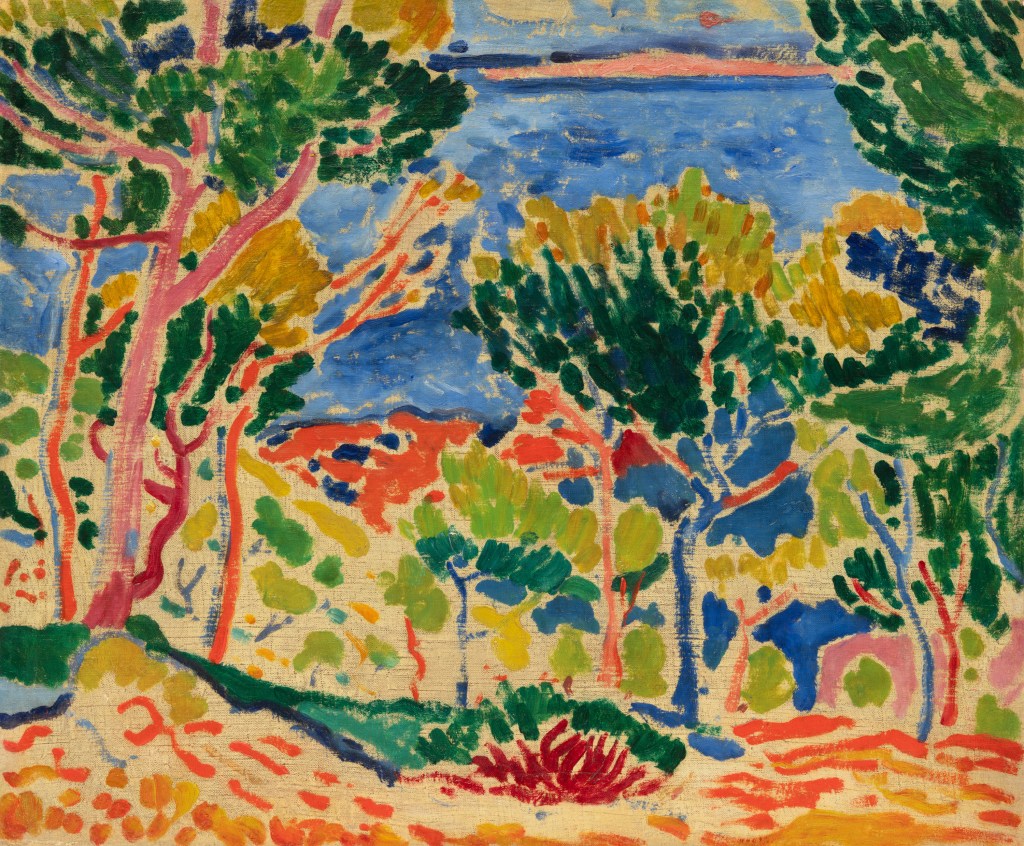
André Derain, Paysage à l’Estaque (Estaque Landscape), 1906, Auckland Art Gallery Toi o Tāmaki, gift of Julian and Josie Robertson through the Auckland Art Gallery Foundation, 2023
Derain’s “Estaque Landscape” of 1906 was painted when the artist and Henri Matisse, spent the transformative summer of 1905 in Collioure in the south of France. Together, they painted similar views of the coastal village, encouraging one another to adopt brighter colours, bolder brushstrokes, and flatter compositions in their depictions of the surrounding landscape. This style of painting, became known as Fauvism
A recent Christies Auction featured a similar work which sold for USD $5,580,000
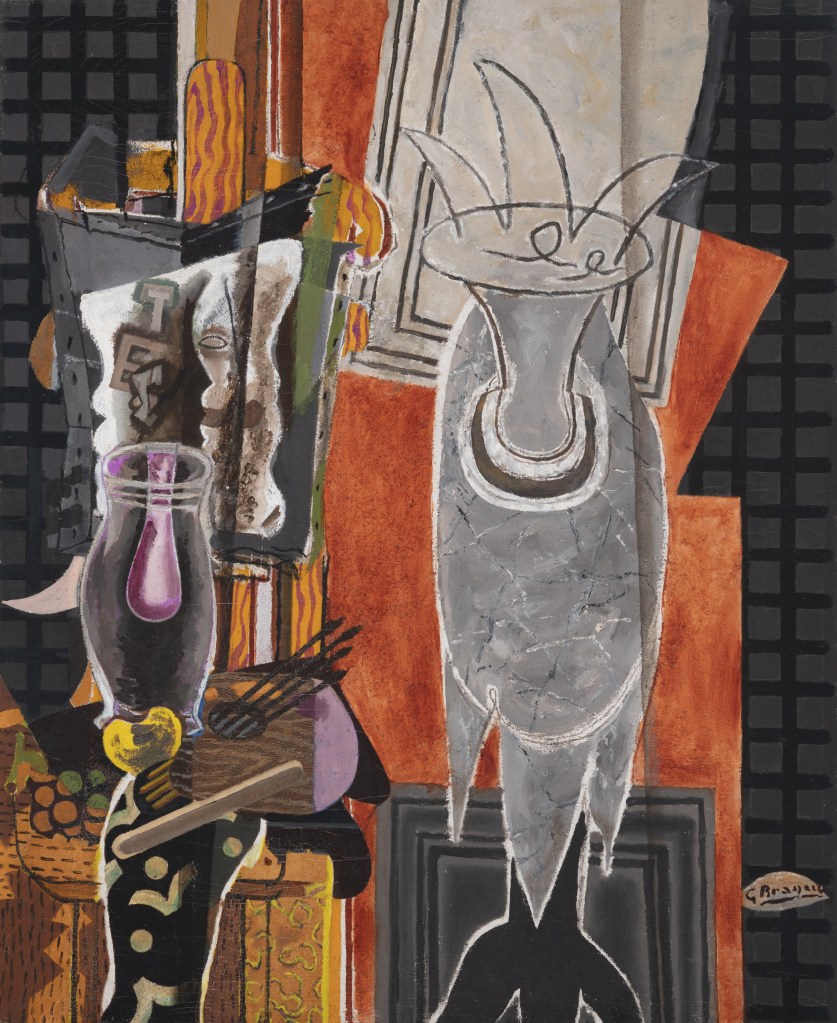
Georges Braque, Le Guéridon (Vase Gris et Palette). Pedestal table (Grey vase and palette), 1938, Auckland Art Gallery Toi o Tāmaki, gift of Julian and Josie Robertson through the Auckland Art Gallery Foundation, 2023
Georges Braque, said of works such as “Le Guéridon (Vase Gris et Palette). Pedestal table (Grey vase and palette)”, “No object can be tied down to any one sort of reality. Everything, I realized, is subject to metamorphosis; everything changes according to the circumstances. So when you ask me whether a particular form in one of my paintings depicts a woman’s head, a fish, a vase, a bird, or all four at once, I can’t give you a categorical answer, for this ‘metamorphic’ confusion is fundamental to what I am out to express”
Fernand Léger, Les Pistons (The Pistons), 1918, Auckland Art Gallery Toi o Tāmaki, gift of Julian and Josie Robertson through the Auckland Art Gallery Foundation, 2023
Fernand Léger’s, Les Pistons (The Pistons), of 1918, is from a series which references contemporary urban life and features many abstract shapes including mechanical, tubular forms, discs, vertical, horizontal and diagonal bands of colour as well as other less clearly definable shapes that coexist with glimpses of modern urban architecture and the anonymous citizens who animate it.
Salvador Dalí, Instrument masochiste (Masochistic Instrument), circa 1934, Auckland Art Gallery Toi o Tāmaki, gift of Julian and Josie Robertson through the Auckland Art Gallery Foundation, 2023
Salvador Dalí’s, “Instrument masochiste (Masochistic Instrument)’ shows a nude woman shedding a part of her skin in the form of a violin. The violin is the protagonist and the woman is an antagonist in the painting. Symbolically, it identifies Dali’s strong resistance towards music. The bow hitting the cypress tree adds his imagination of equating music with mortality and despair. It also represents Dali’s impotence obsession and overall neurosis. The cypress trees reminded him of the Pitchot estate, where he would spend long, happy hours in erotic daydreams.
Another of the works from this series sold recently 2019 for GBP 611,250
Paul Gauguin, Cow in Meadow, Rouen, 1884, Auckland Art Gallery Toi o Tāmaki, gift of Julian and Josie Robertson through the Auckland Art Gallery Foundation, 2023
Paul Gauguin’s “Cow in meadow Rouen” is part of a group of interrelated paintings, where he focused his attention on rural views such as a stream where cows came to water, selecting a different vantage point for each composition Three or four canvases from this experimental group were among the nineteen paintings that Gauguin showed at the eighth and final Impressionist Exhibition in 1886.
A similar work from the period sold in 2019 for USD 783,750
Pablo Picasso, Femme à la résille (Woman in a hairnet), 1938, Auckland Art Gallery Toi o Tāmaki, gift of Julian and Josie Robertson through the Auckland Art Gallery Foundation, 2023
Pablo Picasso painted “Femme à la résille (Woman in a hairnet)” in 1938, at the height of his relationship with the photographer Dora Maar
A similar work from the series but twice the size of the Robertson work sold at Christies in 2015 for USD67million.
The other Pablo Picasso in the collection, his “Mere Aux Enfants A L’Orange” was sold at Sotheby’s November 2002. for USD 3,639,500
The “Follow button” at the bottom right will appearand clicking on that button will allow you to follow that blog and all future posts will arrive on your email.












 New Zealand Arts Review