Reviewed by John Daly-Peoples
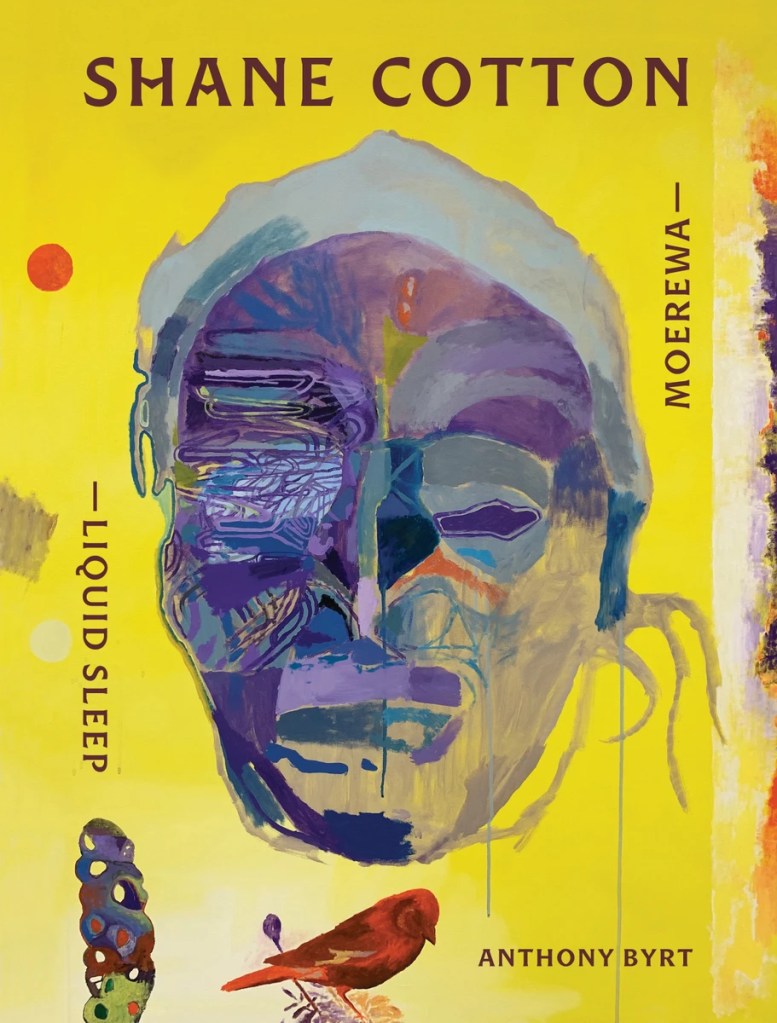
Shane Cotton: Moerewa — Liquid Sleep
Anthony Byrt
Auckland University Press
RRP $89.99
Reviewed by John Daly-Peoples
Anthony Byrt’s new book “Shane Cotton: Moerewa — Liquid Sleep” is more than a biography of one of the country’s foremost artists. Byrt’s Northland whakapapa links him to that of the artist with his documentation and analysis of the artist’s life making the book more of a personal survey and discovery.
Byrt dispenses with the usual early biographical history of the artist (Ngāpuhi, Ngāti Rangi, Ngāti Hine, Te Uri Taniwha) and his family, beginning the book when Cotton is an almost fully fledged artist.
He traces out the more than thirty years of the artist’s practice with Cotton developing an evolving visual language through which he has confronted his personal, tribal and national histories.
In this voyage into Te Tai Tokerau he deals with the relationships, landscapes and histories that are the basis of Cotton’s thinking and his art. We enter the world of Kororāreka and Hongi Hika, of mission stations and religious ideas which shaped Māori society in the nineteenth and twentieth centuries.
Byrt is skilful in providing insights and analysis which help us make sense of the paintings and the thinking of the artist.
He presents Cottons life through six chapters which hint at the artist as being some sort of latter-day prophet, dividing his life and work into six approaches – The Covenant, Mission Station, The First Book, The World Turned Over, White Hole and The Return.
He shows how Cotton has progressively mined the history and myth of Māori along with its intersection with European colonisation, with images that recall stories referencing historical and mythical figures, western and Māori knowledge as well as locations.
Byrt delves into the artist’s work showing the various influences, appropriations, inspirations and interests which have helped shape the artists’ works – artist such as Dick Frizzell and Gordon Walters and his diverse interests such as gaming and gang patches.
His early sepia-coloured paintings in which he linked landscape, symbols and history, Māori Folk Art, Op and Pop as well as Biblical texts explored his thinking about art and the early history of New Zealand.
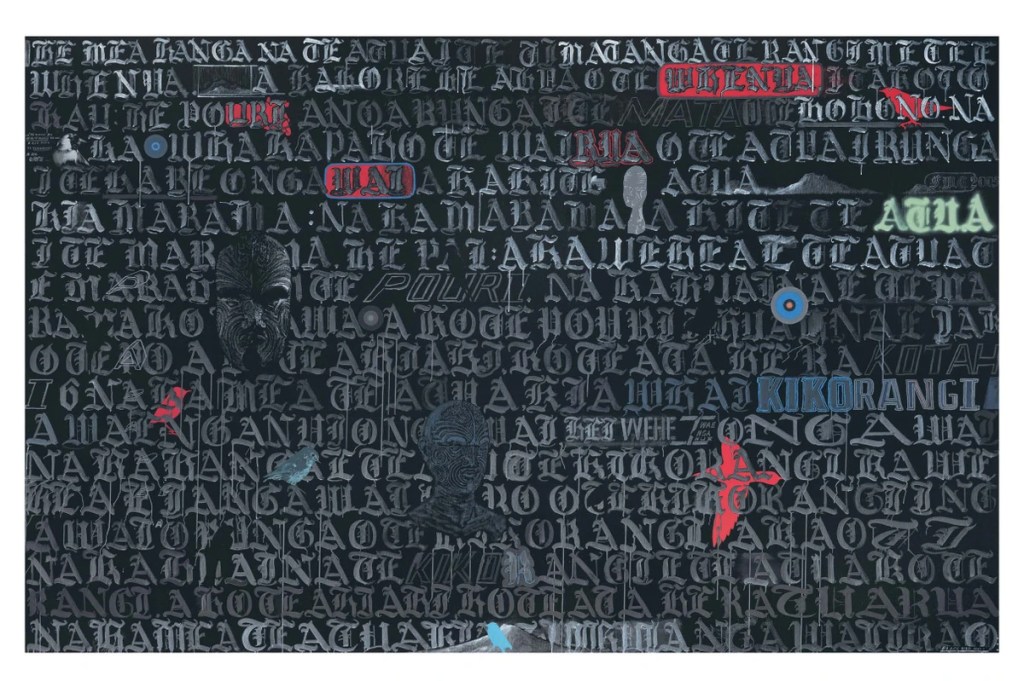
Since then, his work has featured brightly coloured targets shapes, preserved heads dramatic cliffs and flower paintings, these works hinting at human and mythic histories.
More recently his works have connected with his living in Northland and revisiting some of his earlier work and the notions of colonialism and cultural exchange.
With his very recent work the artist could be seen as entering his Fauvist period with many of the paintings having the features of those early twentieth century artists who employed simplified shapes along with intense and juxtaposed colours.
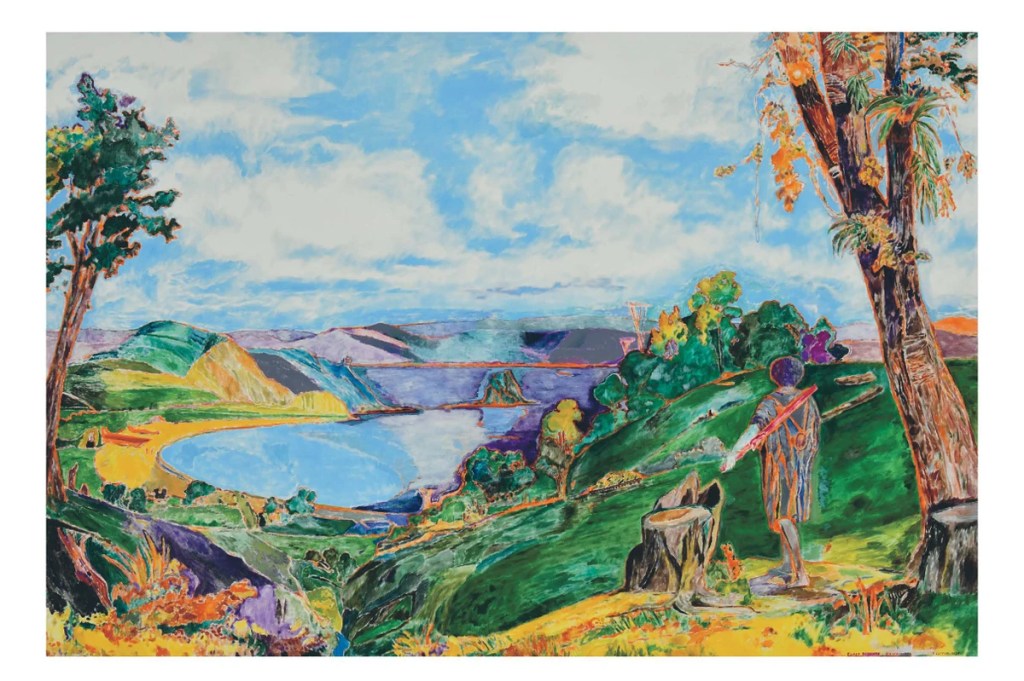
With works such as “Super Radiance” he has appropriated the Augusts Earle painting “Distant View of the Bay of Island”. Depicting a Māori with a taiaha who is acting as a guide through the landscapes of the North. These works connect with his (and the authors) living in Northland and revisiting some of his earlier work with the notions of colonialism and cultural exchange.
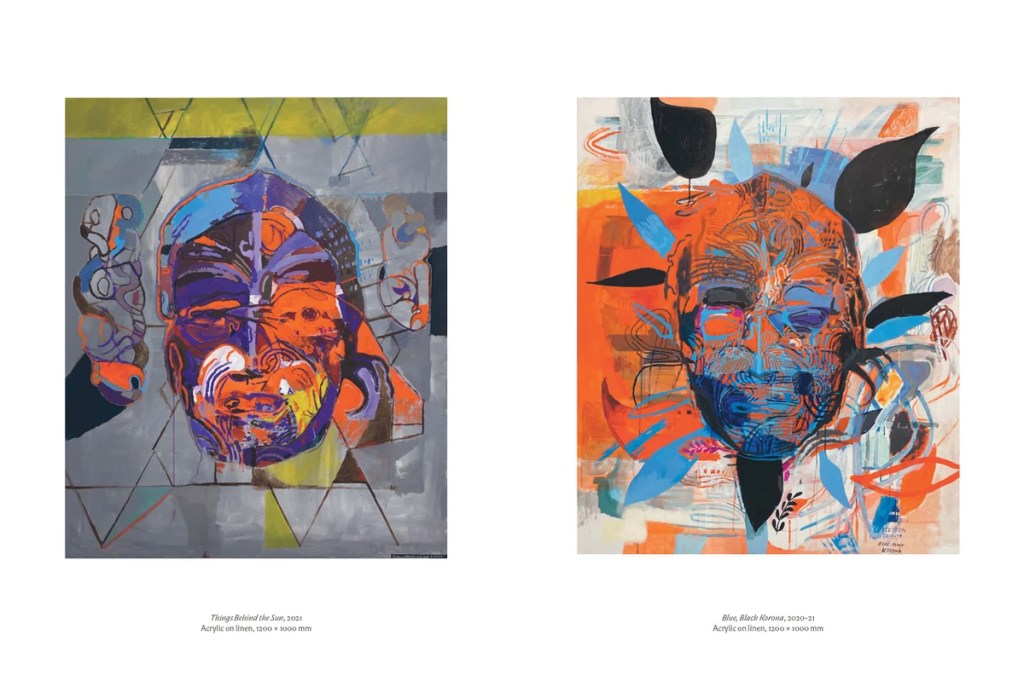
There are several works of Cotton’s Toi Moko works where the tattooed and preserved Upoke Tuhtuhi Māori heads reference conflict, trade, and repatriations. The tattoo lines tracing out genealogy are linked to the notion of neural connections, knowledge links and computer networks.
Byrt writings about the artists’ iconography provide clarity and depth to our understanding of the artist’s work exploring how the artist adds many dimensions to our understanding to the art and our history.
The fully illustrated book provides an excellent visual history of the artist’s work with some double page spreads which all help in providing an appreciation of the artist’s work.


