Reviewed by John Daly-Peoples
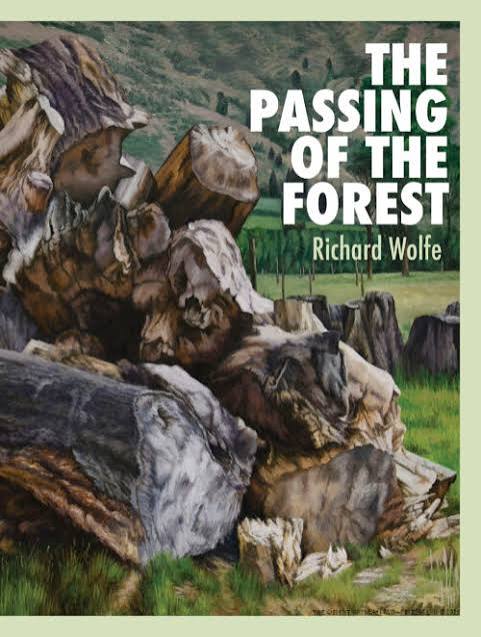
The Passing of the Forest
Richard Wolfe
RRP $75.00
Oratia Books
Publishing: 8 October
Reviewed by John Daly-Peoples
Richard Wolfe’s book The Passing of the Forest takes it title from the poem by the poet / parliamentarian William Pember Reeves published in 1898. The poem which celebrates the landscapes and forests of New Zealand also alluded to the destruction of the extensive forest with lines such as
Well may these plundered and insulted kings,
Stripped of their robes, despoiled, uncloaked, discrowned,
Draw down the clouds with white enfolding wings,
And soft aerial fleece to wrap them round,
To hide the scars that every season brings,
The fire’s black smirch, the landslip’s gaping wound;
The writings and depictions of the forests in course of New Zealand’s history have been ambivalent. In the early nineteenth many descriptions of the landscapes showed the huge resource available to the colonist which was tied to the notion of taming nature to the benefit of man. On the other hand, there were an increasing number of writers concerned at the long-term viability of constant deforestation and milling.
As the author notes “Although New Zealand was the last sizeable habitable landmass to be settled by humans … the impact on its native forest has been little short of dramatic.”
Wolfe profiles the devastation of native forests in a history which has parallels in the history of Australia. He quotes writers about the growing appreciation of conservation and management, and he uses examples of New Zealand art from the early nineteenth century to the present of art depicting the forests.
The Passing of the Forest explores how large areas of forest were burned by Māori, and then European setters drawing parallels with colonisation in Australia with illustration by Australian artists. The book illustrates how New Zealand’s deforestation has impacted on leading artists and thinkers and explores ways forward to replace what has been lost.
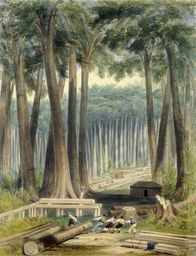
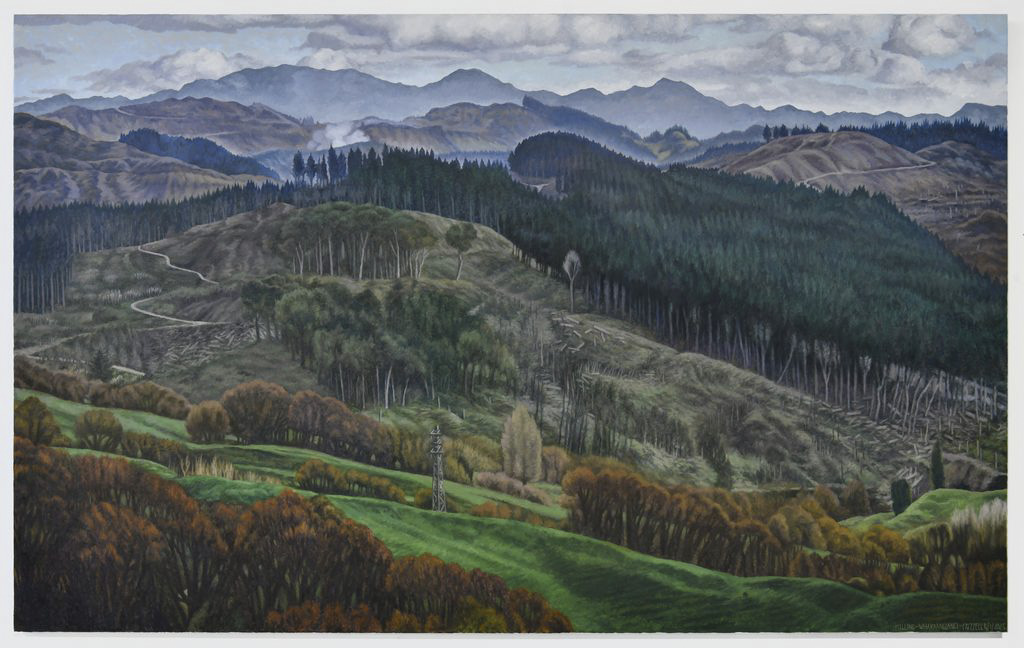
The book has more than 50 colour images from leading artists who have depicted the New Zealand forests. These range from the early images by Charles Heaphy which depict the forests as an endless resource, through to artists like Dick Frizzell who have depicted both the forests as well as the results of massive milling and deforestation. There is his image of the forest at Whakaangianga which shows stands of trees as well as the desolate landscape and also an image of piled up stumps ready for burning in “The Weight of the World”.
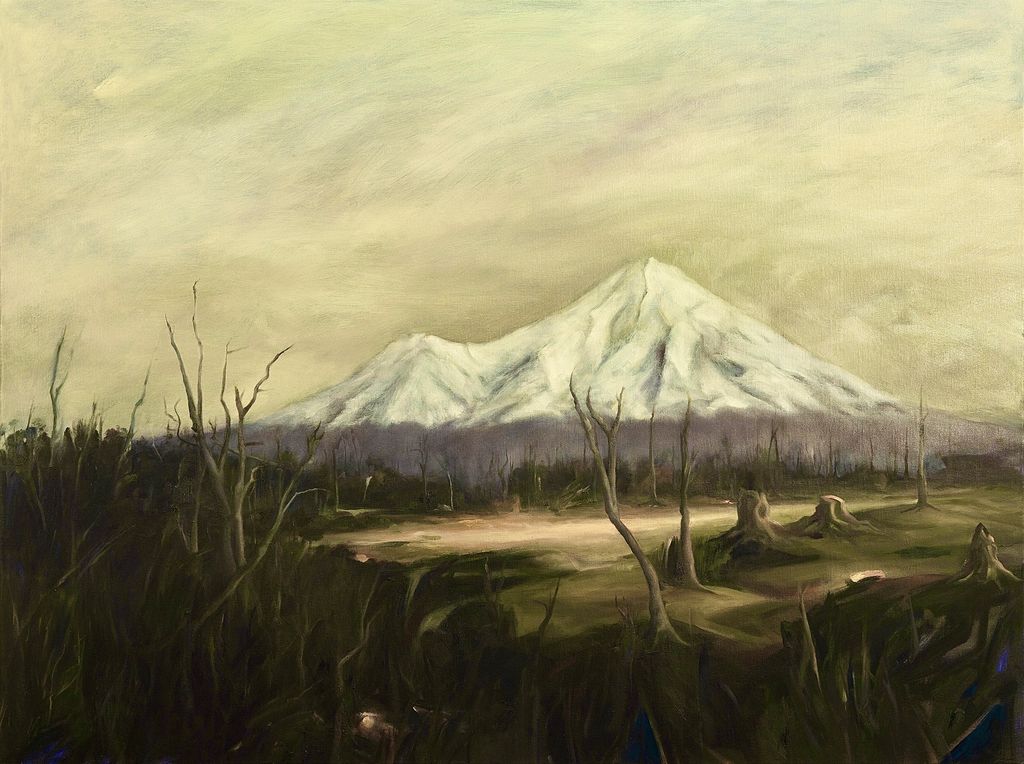
As well as Frizzell the stump and dead trees has been an image used by many artists such as Dennis Knight Turner, John Holmwood, Doris Lusk and the famous 1931 image “Frozen Flame” by Christopher Perkins.
Included are a number of works showing the damage wrought by milling with George E Pruden’s “Early Colonial NZ Farm Clearing” of 1909 and Shane Foley’s “Ghost Forest” painted one hundred years later in 2009.
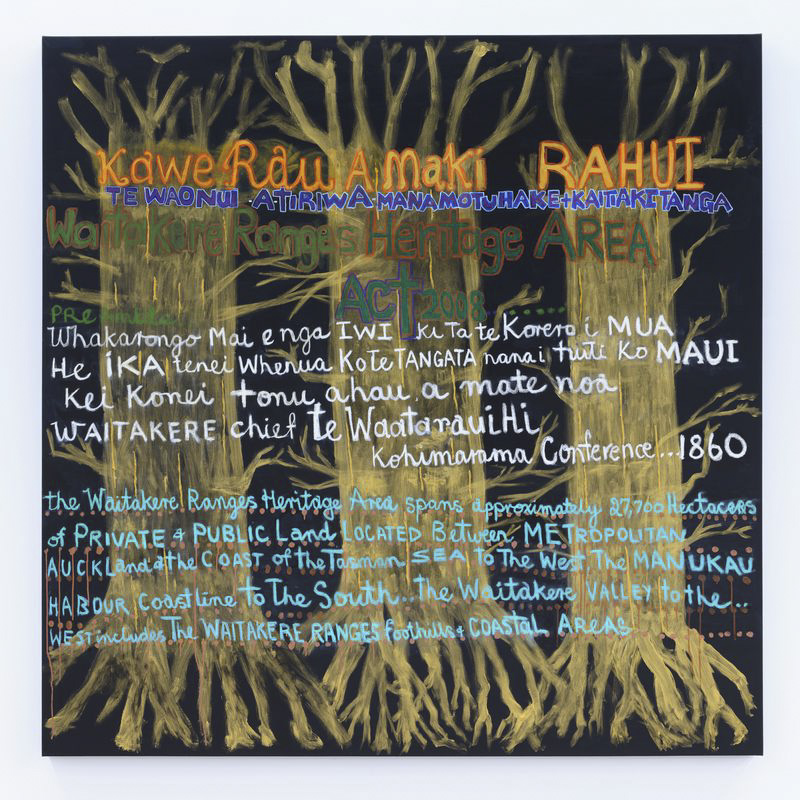
While Māori have been unwise in their approach to forest management in the past, they are now very concerned about the intertwined ideas around preservation and landownership. Emily Karaka’ s paintings such as “Kawerau, A Maki WHRA Act 2008” are a response to these issues.
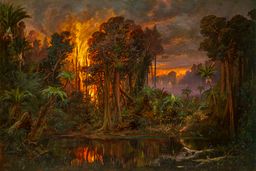
Several artist in New Zealand and Australia depicted the fires that ravaged the forests and bush of both counrtries `Edwyn Temples “Doomed – a bush fire” being one of the more dramatic and
Other paintings by contemporary artists revisit images from the past such as Shane Foley’s “Ghost Forest” and Robyn Litchfield’s “Enclosed Within It’s Own Shadow”
Many images are a celebration of the forests themselves such as the Romanic view by Charles Blomfield with his “The Vaulted Aisles of nature’s cathedral” and a study of the New Zealand bush by one of the early female artists, Jenny Wimperis.
Other paintings such Nigel Brown’s “Family of an Axeman” is a depiction of an heroic, black singlet clad man holding an axe which is a figure similar to William Strutt’s self portrait of the artist wielding an axe
There are also several depictions of the impact of fires lit to create new pastoral land with Edwynn Temple’s “Doomed – a Bush Fire” and Margaret Stoddart’s 1908 “Bush Fire.
The author also includes some dramatic scenes by Australian artists of bush fires with John Longstaff’s “Gippsland, Sunday Night February 20th, 1906”, and William Strutt’s “Black Thursday”.
The book provides a wide-ranging history of the fate of New Zealand’s forests over the past two hundred years and its depictions by New Zealand artists, but it is also a history of efforts by government agencies and conservation groups to prevent its destruction.


