Categories
Reviews, News and Commentary

Demanding Play is a Festival Highlight

Reviewed by Malcolm Calder

Auckland Arts Festival

The Sun and the Wind

Taurima Vibes

Loft, Q Theatre

Writer and Set Design, Tainui Tukiwaho

Director, Edward Peni

With Taungaroa Emile, Julie Edwards, Joe Dekkers-Reihana, Tuakoi Okia

Lighting, Katrina Chandra

Sound, Eve Gordon

Until 24 March

Review by Malcolm Calder

Conceived during lockdown, Tainui Tukiwaho’s The Sun and the Wind is demanding for an audience. At times it mixes the real and the surreal, throws in a pinch of the tender and the touching, and then explodes with emotion, truth becomes blurred and we start unravelling things all over again. It is a highlight of this year’s Festival.

Set at a birthday party for an ageing couple, heartrendingly comfortable and practised in each other’s company,  Hūkerikeri seems like a kind and gentle kuia caring for her Rangi in his dotage.  I initially wondered if I had accidentally strayed into some kind of social commentary on contemporary aged care.

But the sudden and noisy arrival of a younger couple crashing into their home intent on robbing them quickly put that thought to bed. 

The newcomers soon become mistaken for a long-deceased son and his pregnant wife – in the mind of the birthday couple anyway.  From there The Sun and the Wind quickly becomes an emotional rollercoaster.  Factual memory blurs with confused recollection, two levels of whanau intermingle and become one or maybe not, and quiet introspection gives way to sudden violence.

How much of it is real ?  Perhaps that is summed up by the presence of a gun – which may or may not be real.

The Sun and the Wind owes something Aesop’s fable The North Wind and the Sun, a moral allegory which sees persuasion triumph over force.  The way Tukiwaho spins it though, things are never quite that simple.   That is why this play demands a lot from its audience.

Nevertheless, I occasionally wondered if Tukiwaho had over-written in patches, but he quickly jolted me back to the main course with more sudden and unexpected twists, turns and confusions.

Edward Peni directed with aplomb – an extremely demanding task on a play if this type.

Julie Edwards makes an enchanting Hūkerikeri, endearingly loveable but with sudden vituperative barks of fury.  She is so, so on point. Taungaroa Emile gives us a Rangi, whose mind wanders with vivid clarity, his love of whanau omnipresent.

I felt quite sorry for poor Hihi (Joe Dekkers-Reihana) who is flung from doorpost to doormat as he struggles to make sense of everything.  It is left to his heavily pregnant partner Kate (Tuakoi Okia) to slide the occasionally grounded, and often humourous, comment in from time to time.

Although it generates the occasional laugh, this play is not a comedy.  It marks a big step forward for Tainui  and demands a lot from its audience.  So, if you are one of those who lament the  plethora of highly subjective immature frivolity seen today on many of Aotearoa’s stages, you should certainly not miss this one.
Categories
Reviews, News and Commentary

New book on Reuben Paterson links the poetic, the political and the personal

Reviewed by John Daly-Peoples

Reuben Paterson

City Gallery Wellington and Extended Whānau

RRP $110.00

Reviewed by John Daly-Peoples

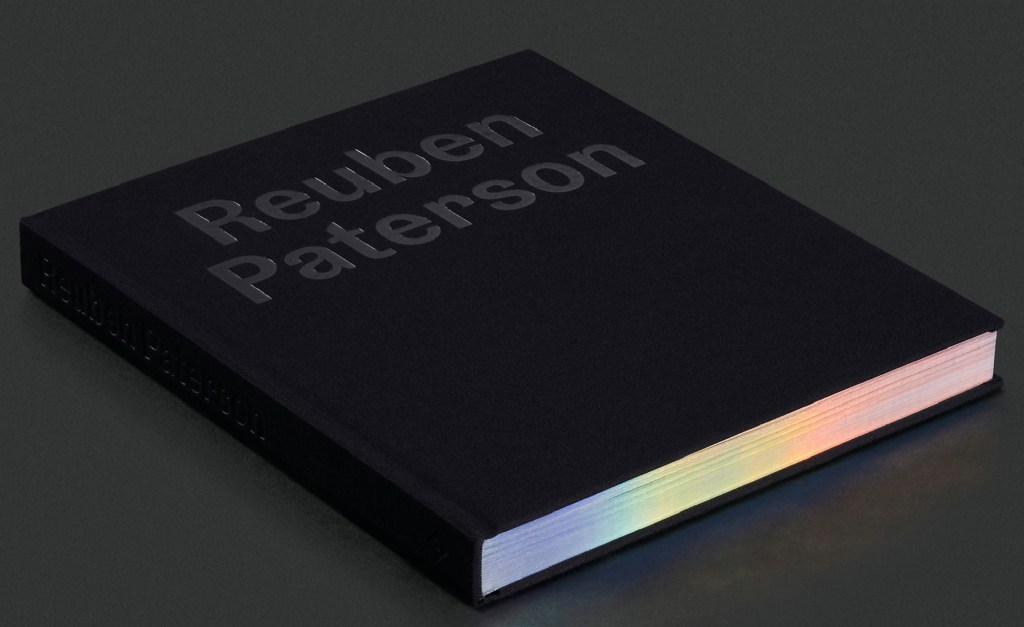
City Gallery Wellington has recently published a stunning monograph on Reuben Paterson  which follows on from his exhibition Reuben Paterson: The Only Dream Left  which was exhibited at the gallery last year. ​

The book is lavishly illustrated with works covering his thirty years of art practice and features writings by Witi Ihimaera, curator and writer Geraldine Barlow, and the exhibition’s curators Aaron Lister and Karl Chitham.

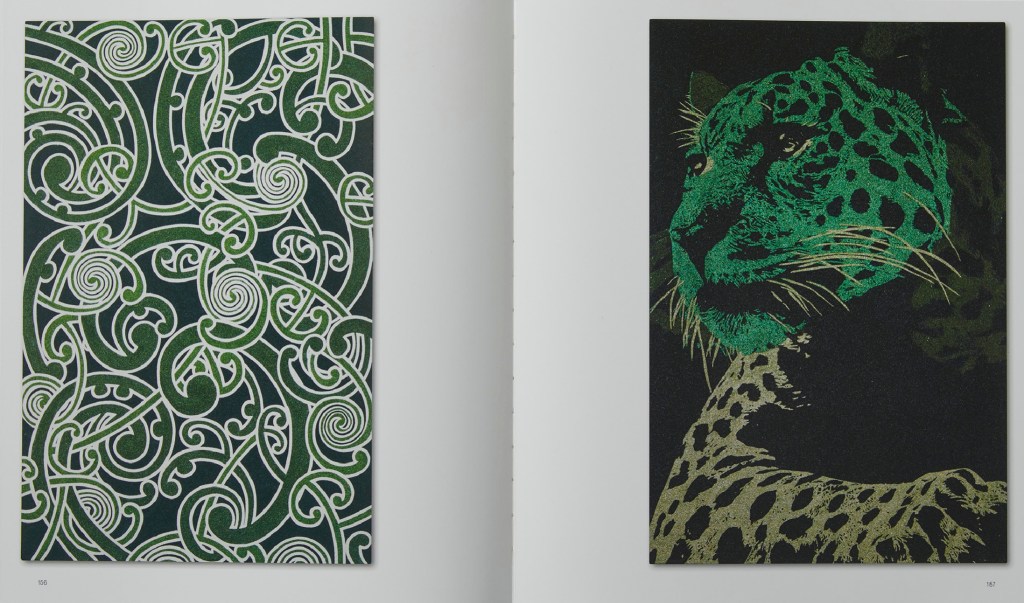
Reuben Paterson,  Pounamu  and The Jade Cat

There are over 100 full colour illustrations as well as some ”booklet” inserts which captures the unique range and depth of Paterson’s art from his early glitter paintings to his recent major sculptural commissions.

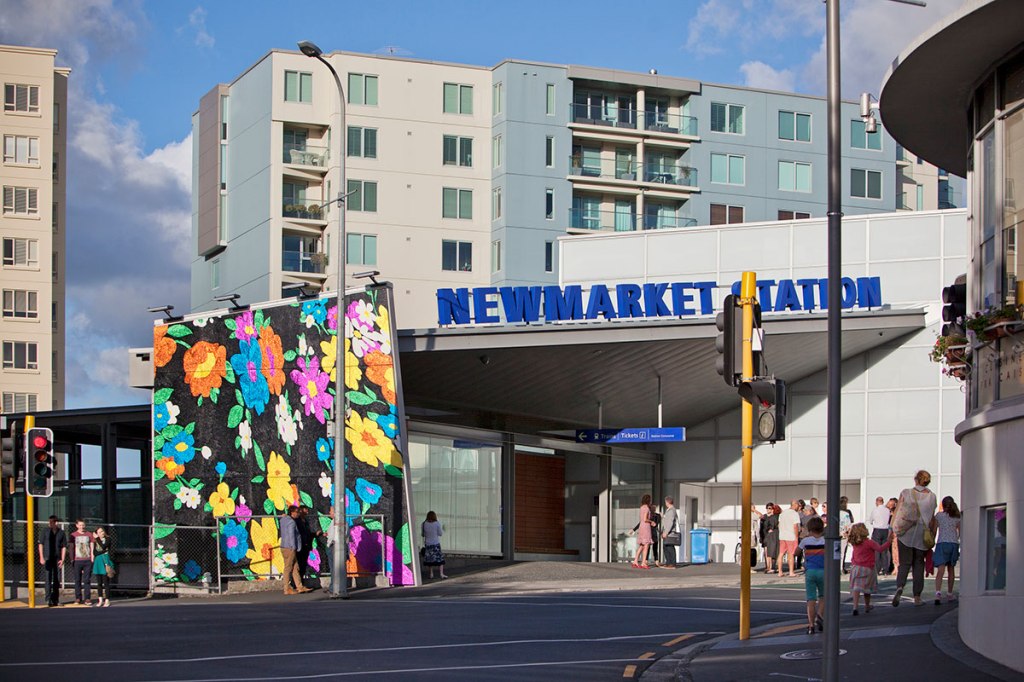
There are images of several of his monumental works such as the “Get Down Upon Your Knees”, the 8-metre square work shown at the Asia Pacific Triennial in Brisbane as well as the mural work “Andale, Andale” at Auckland’s Newmarket Railway Station. There are also the “The Golden Promise” at the Massey University Albany campus as well as the controversial ”Freedom Flowers”, the ANZ cash point terminal on Ponsonby Road commissioned for the 2015 Pride Festival.

Reuben Paterson,  “Andale, Andale” Auckland’s Newmarket Railway Station.

His use of glitter and diamond dust on canvas or paper of stereotypical  images are manipulated and transformed by his individual treatment of colour, design, pattern and texture. His images often referenced botanical, op art, or Māori iconography along with images which are commercial or kitsch. The sparkling surfaces create an ambivalent visual description with works such as the “Take my hand and off we stride” featuring the idyllic Pacific Island palm tree landscape.

Underneath the seductive images there are more complex ideas  and viewpoints which take the viewer into the artist’s view of nature, the tangible and the symbolic as well as his own whakapapa referencing his Ngati Rangitihi, Ngai Tuhoe, Tuhourangi and Scottish descent.

Paterson’s political or social messages are also referenced in some of the works where he has used animal images  such as the tiger in “Blessing”, conveying the sense of power, sexuality and fear. These works were motivated by his efforts to highlight the inequality of the ‘gay panic’ provocation defence for murder that was in place before a repeal of the Crimes Act in 2009. 

A culmination of many of his ideas and technical expertise has been “Guide Kaiārahi”  the major commission for the Auckland Art Gallery. The idea for the ten-metre-high waka which is made from hundreds of shimmering crystals, originated in the legend of a phantom waka that appeared at Lake Tarawera ten days before the eruption of Mt Tarawera in 1886. Combining references to natural and supernatural realms, the sculpture draws upon Māori cosmology and creation narratives.

Reuben Paterson, “Guide Kaiārahi”   (detail)

The book shows the extent of his influences and interests apart from his use of cheesy imagery –  Dutch still life painting, elements of Greek and Roman art, Op art and Rorschach patterns. The essays also reveal some of his interests in scientific, political and social ideas along with the spiritual aspects of his work.

Nature and botanical subjects are central to the artists life and many of the artist works  His father was a landscape gardener and he has a garden himself which can be seen as an influence on his work with its emphasis on colour, seasons, birth and transformation.

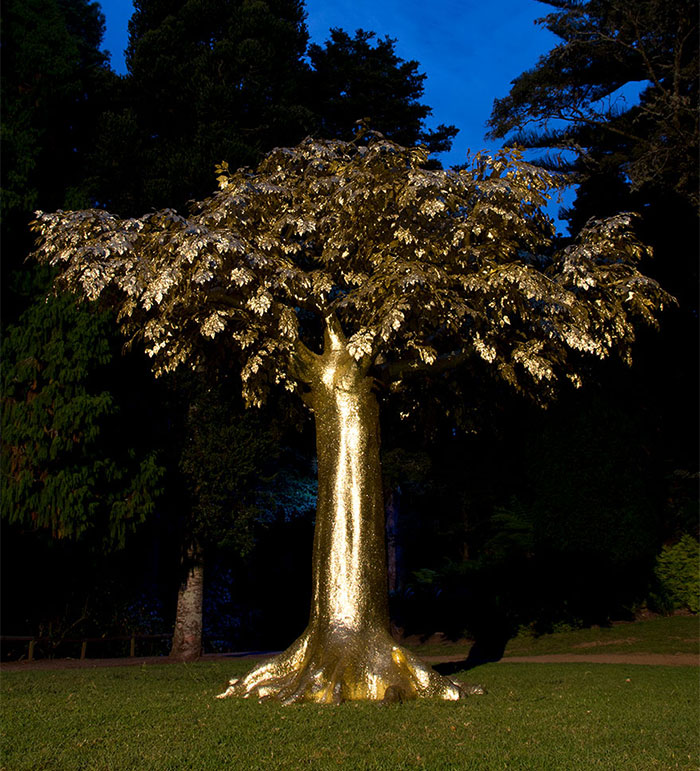
One major work which focusses on Nature is “The Golden Bearing”, a life size golden tree which links to the various emblematic trees over history, from George Fraziers “The Golden Bough”, Eastern and Mayan ideas of creation as well as that of Maori.

Reuben Paterson, The Golden Bearing

As Witi Ihimaera says of the work “In Paterson’s garden the tree is a promise of the legacy of nature for a humankind that appears hellbent on destroying the planet. It is an achingly awe-inspiring way point from which we can orient ourselves to a future if we wish it to become a paradise regained rather than lost”.

The book itself is an elegant and lavish production with designers Extended Whānau ensuring that Paterson’s work is presented in a way which allows for an appreciation and understanding  of his paintings and sculptural work.

The images and texts manage to not only show the development of the artist’s work but link the poetic, the political and the personal to show an artist who is deeply committed to exploring the many threads which make up contemporary New Zealand culture.

To subscribe or follow New Zealand Arts Review site – www.nzartsreview.org.

The “Follow button” at the bottom right will appear and clicking on that button  will allow you to follow that blog and all future posts will arrive on your email.

Or go to https://nzartsreview.org/blog/, Scroll down and click “Subscribe”