Reviewed by John Daly-Peoples
Hiria Anderson-Mita
PĀ – Te Huarahi ki te Kāinga Finding my way Home’
Tim Melville Gallery
Until November 15
Reviewed by John Daly-Peoples
Writing about Hiria Anderson-Mita a couple of years ago I noted that she “has never had to look far for subject matter. She only has to look around the room, out the window or down the road. Her paintings are essentially documentation of her daily life, painting what she sees, the people she encounters and her immediate experiences.”
Her domestic interiors or local views of her local environment were both mundane and intriguing.
This incongruity in many of her works give the images both a simplicity and sophistication. One could compare her paintings to the simple French Impressionist paintings as well as the recent landscape paintings of David Hockney, in creating timeless views.
In her latest exhibition the paintings and view points have been extended, broadening out from the local to the wider area of hers and her ancestors land so the exhibition becomes for her “a return to the ancestral landscapes that have shaped who I am.”
In the catalogue notes she writes “The tracts of farmland in these artworks hold the DNA and stories of my ancestors. Their ridges and valleys are layered with the pā sites of my tūpuna; connections that survey pegs and ownership papers can never sever.
In fact those pegs and papers are reference points for rediscovery.
Through researching Māori Land Court records and field books made by 19th Century Government Surveyor William Cussen – alongside maps, archaeological files, photographs, oral histories and the living landscape itself – I am tracing the footprints of my tūpuna.
Each painting in this exhibition describes and locates a site of history and connection within the rohe of Ōtewa, Rangitoto Tuhua and the surrounding pā of Ngāti Maniapoto and Rereahu.
The pā tuna, the kohatu, the maunga, and the awa I paint were once sources of sustenance for entire communities. I want to make them visible once more; to bring them into the light. And to reinsert our knowledge and our presence into the whenua from which we have been separated by pen and politics.
I have been guided by ancestors who still reside within me. My paintings are my journey home.”
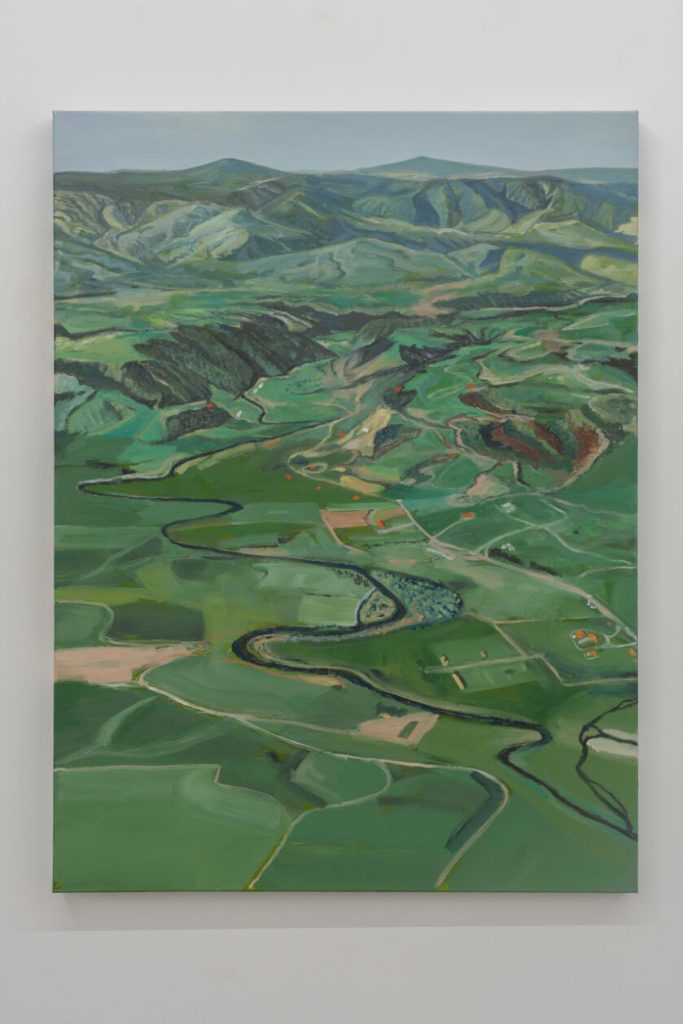
Central to the works is the large “Ōtuaoroa” ($11,500) which is the original name for the area. The artist calls the painting “A map”, so the image is like the chart of a mythical land or a treasure map found in a children’s book with each road, farm, bend in the river all bearing a history. Many of these places are then seen in a larger format in other paintings such as “Puketarata Rd No2” ($3500) which is the view from her childhood home or “Hikurangi Pa” ($3250) a bend in the river where her ancestors had been born and which sustained the local population with food.
There are also links to the geomorphological qualities of the land which had intrigued Colin McCahon and his study of the landforms and their history.

This idea of discovering the history and formation of the land is seen in Puketarata Pā ($7500) where the landscape is inscribed with other information such a pre-European name, survey number, the indication of tracks or landforms as well as the Google Earth Coordinates.
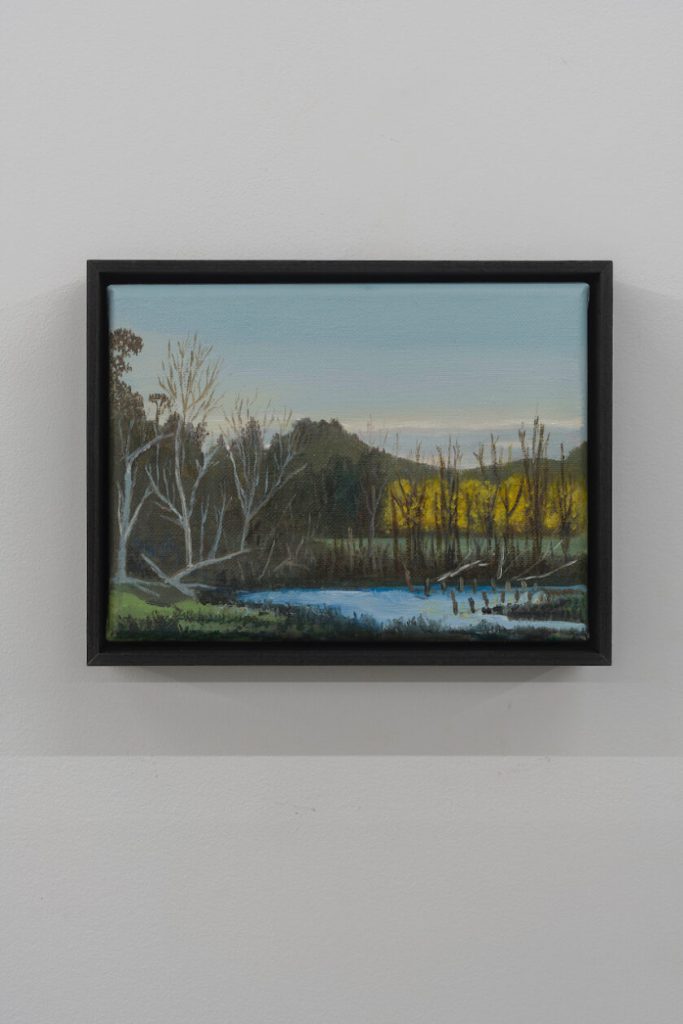
Most of the works have personal connection to the artist and their importance and significance is made clear from their titles of the catalogue notes. So, there is the obvious “Otewa – My Mothers Ancestral Home ($3500) as well as “Turamoe Pa Otuaoroa (Te Kooti’s Lookout)” ($3250) featuring the hill site where Te Kooti spent the last years of the Land Wars.
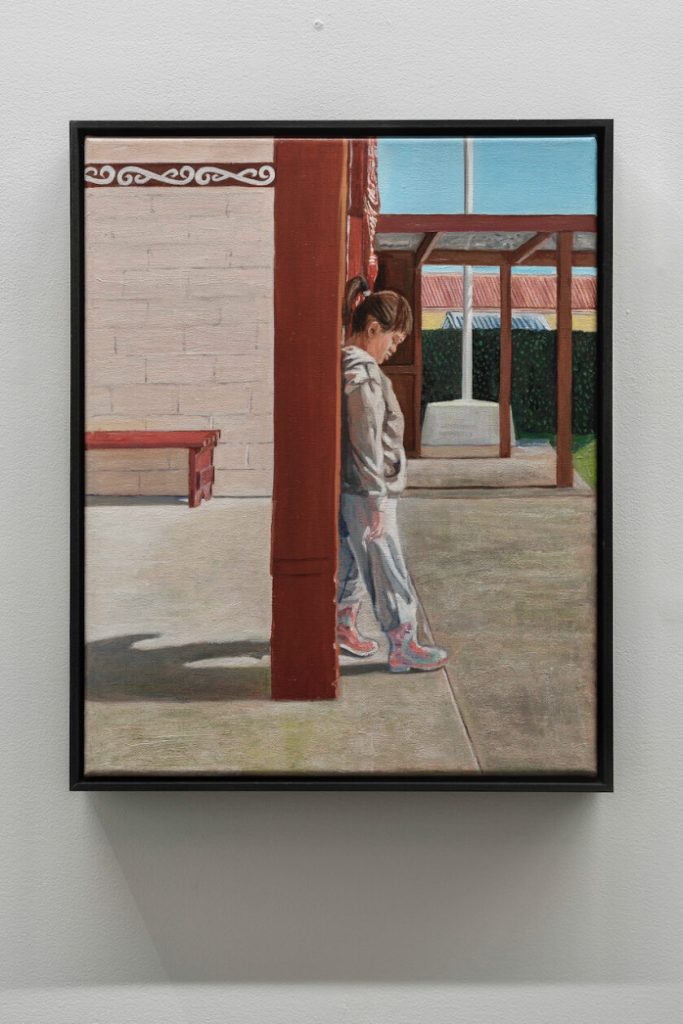
Most of the works in the exhibition are landscapes but there are a few are more emblematic. One “Otewa Pa – Into the Future ($5750), a portrait of a niece where the artist envisions the future and there is the more abstract “Hinaki a Rautawhiri / Te Awa a Tane Pa Tuns” ($4750) which looks to the past with a design featuring netting used to trap fish and fowl.
The paintings in the exhibition paintings along with a poem she has written, “her return Home” as well as many of her previous paintings build a visual biography of her personal connections with the land, a history which is both personal, tribal and mythological.

 New Zealand Arts Review