Reviewed by John Daly-Peoples

Mark Adams A survey — He kohinga whakaahua
Mark Adams and Sarah Farrar
Massey University Press
80.00
Mark Adams: A Survey | He Kohinga Whakaahua
Auckland Art Gallery
Until August 17
Reviewed by John Daly-Peoples
The current exhibition “Mark Adams: A Survey | He Kohinga Whakaahua” is the artists first comprehensive exhibition of his work and features more than 65 works spanning his 50-years as a photographer. documenting the land, the people and its history. These photographs are of places across the Pacific, the United Kingdom and Europe.
Much of his practice documenting sites of significance across the country, include places where Captain James Cook and his crew came ashore on their visits in 1769 and the 1770s, as well as locations where Te Tiriti o Waitangi was signed in 1840.
Over the decades, Adams has sustained a deep and ongoing engagement with subjects of interest. He has photographed whakairo Māori (Māori carving) both here and overseas and the work of, Samoan master tattoo artists, Māori–Pākehā interactions in Rotorua, carved meeting houses, locations of significance for Ngāi Tahu in Te Waipounamu and the place of museums and photography in the area of cross-cultural exchange.
It includes photographs taken across the Pacific, the United Kingdom and Europe that explore the migration of artistic and cultural practices across the globe, and examine the role of museums, and photography itself, in the ongoing area of cross-cultural exchange.
The various sections of the book show Adams’ range of work from his early works, his focus on Rotorua, tatau, Treaty Signing Sites, Museums, Cooks Sites Māori meeting house in overseas locations, Te Waipounamu and his more recent interest in Photograms.
Several of his multi-image work are fascinating in their scope and production but the book does not do them credit, even when spread across several pages. With these works the exhibition at the Auckland Art Gallery make an impression in some cases filling an entire wall of the gallery. “0 degrees” is such a work, a panoramic 360-degree set of images taken at Greenwich Park which includes the Royal Observatory, the home of Greenwich Mean Time and Prime Meridian.
Other works on a grand scale include his “Nine Fathoms Passage”, the photographers view replicating William Hodges view of Dusky Sound, and his panorama of the meeting house, Hinemihi in the grounds of Clandon Park in Surrey, England as well as the magnificent meeting house Rauru in the Museum am Rothenbaum in Hamburg.

Author of the book Sarah Farrar says “You could say that, in many respects, Mark has been ahead of his time as a Pākehā and Palagi artist. But what does that really mean — to be ‘early’ or ‘ahead of one’s time’? It’s all relative and I’m sure many people would view a respectful approach to tangata whenua and tangata o le moana as seriously overdue.”
Adams’ photographs are of exceptional quality and intriguing in their distinctive approach to subject matter. The viewer is challenged to interpret , question and reflect on them. One commentator, Damian Skinner has noted that Adams photographs “offer no resolution, only problems. They patiently track the material traces of various forces that coalesce in specific sites”.
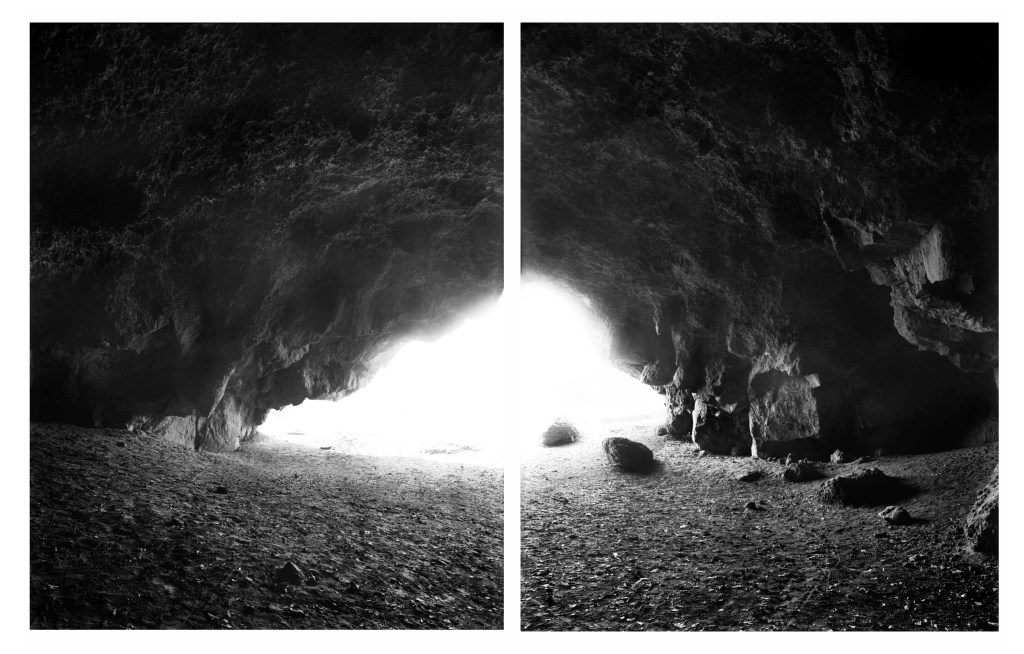
Generally, with photographs of important sites the photographer is essentially saying – “I was here – this is how it looks”. However, with many of Mark Adams photographs of historical sites, the land seems of little interest, often devoid of figures. With these the photographer seems to be saying “this is how it looked”. The photographs require the viewer to transport themselves back to that place but in another time.
Sarrah Farrar notes “His photographs of museums and art galleries remind me of the artifice and stagecraft that we are actively involved in as curators and museum professionals. Every decision we make communicates something to audiences. We construct meaning through the selection of objects (even those that are absent), their placement and their interpretation. Mark’s photographs remind me of the power dynamics and knowledge systems that are inscribed in museum, library and art gallery experiences — even embedded into the design of the buildings themselves. A great example of this is Mark’s panorama of the science-fiction-like modernist design of Berlin’s Staatsbibliothek, which feels so at odds with the fact that it’s the home of the journals of Georg Forster, the naturalist who travelled with James Cook on his second voyage.”
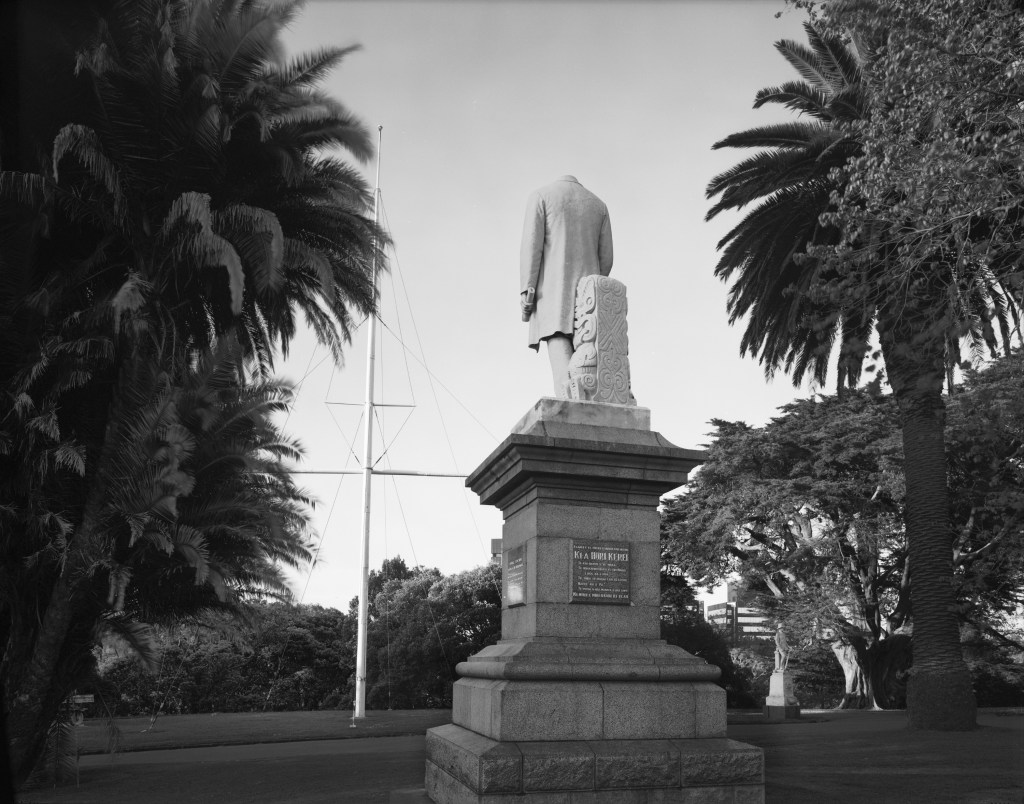
The book is a stylish, superbly-designed production with over 200 images, mainly black and white. It features an excellent text by Sarah Farrar as well as a forward by Ngahuia te Awekotuku and afterword by Nichlos Thomas

 New Zealand Arts Review