Reviewed by John Daly-Peoples
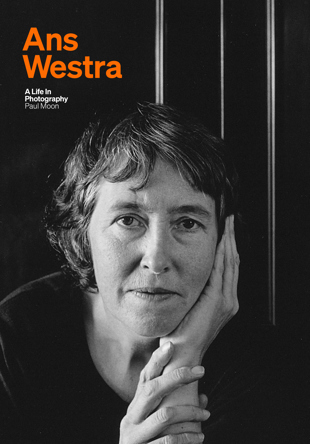
Ans Westra: A life in photography
By Paul Moon
Massey University Press
Published May 2024
RRP $49,99
Reviewed by John Daly-Peoples
Ans Westra, who died in 2023 was probably the most prolific contemporary photographer who focussed on recording the life and times of New Zealanders.
With a career spanning over sixty years, she took hundreds of thousands of photographs of people, places and events.
Now a new book “Ans Westra: A life in photography” by cultural historian Paul Moon documents her life and her contribution to the cultural life of the country.
The book charts her photographic career from her early involvement with the Wellington Camera Club in the 1960’s and her first sale of a work to the quarterly journal Te Ao Hou, a publication she would continue to provide images for,
She also gained early recognition in 1961 winning a prize in a photographic competition run by Arts Committee of the Festival of Wellington.
Much of her work was commissioned for publications originated with the Department of Education and several of her books were for educational publishers as well. One of her earliest publications was ”Viliami of the Friendly Isles” based on her travels to Tonga, Fiji and Samoa in 1962. As well as taking the pictures she wrote the text which describes the dramas, tragedies and excitement of the various locations and events she encountered.
Then there was the controversial booklet “Washday at the Pa” which was a school bulletin published in 1964 by the Education Department’s School Publications section. Ans Westra wrote the text and took the photographs during a visit to Ruatōria.
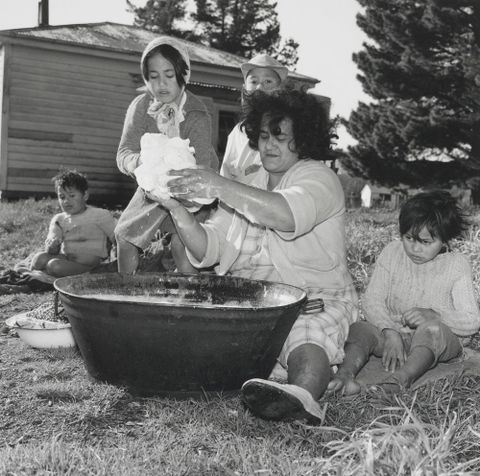
The bulletin followed a day in the life of a rural Māori family with nine children. Her images of the family’s living conditions caused enormous controversy, notably from The Māori Women’s Welfare League and the work was subsequently removed from schools and destroyed. Only latterly was the work republished by her Wellington gallery Suite.
Her more substantial publication “Māori” was published by Alistair Taylor in 1967 which was co-produced with James Ritchie and designed by Gordon Walters.
Her motive for participating in the project was the misguided notion, held by many pakeha writers that Māori were likely to become extinct at some time in the future and their culture needed to be recorded.
She was also involved with another controversial publication “Down Under the Plumtree” published by Alistair Taylor. Published in 1972, the book openly discussed sex, sexuality and drugs at a time when there was very little reliable information on these issues for young people.
Moon writes about all her major bodies of work such as “Notes on the Country I live in” and “We Live by a lake” which was written by Noel Hilliard.
He also outlines the rational and impetus for the various projects, the political and social climate at the time and the reactions to them.
The 84 images used to illustrate the book show the various aspect of her photographic approach which changes over the years. One is conscious of her ability to frame an image, capture the sense of a person or place and find the drama of the moment.

This ability to capture the sense of place can be seen in her “Wellington” of 1974 with the wet streets of the capital by the cenotaph.
She also shows an understanding of architectural space with an image of the dam structure in “We Live by a Lake” and she is aware of the possibilities of contrast through light and shade as well as means of creating drama and movement as shown in her image of a policeman and dog confronting a protestor during the anti-Springboks tour campaign.
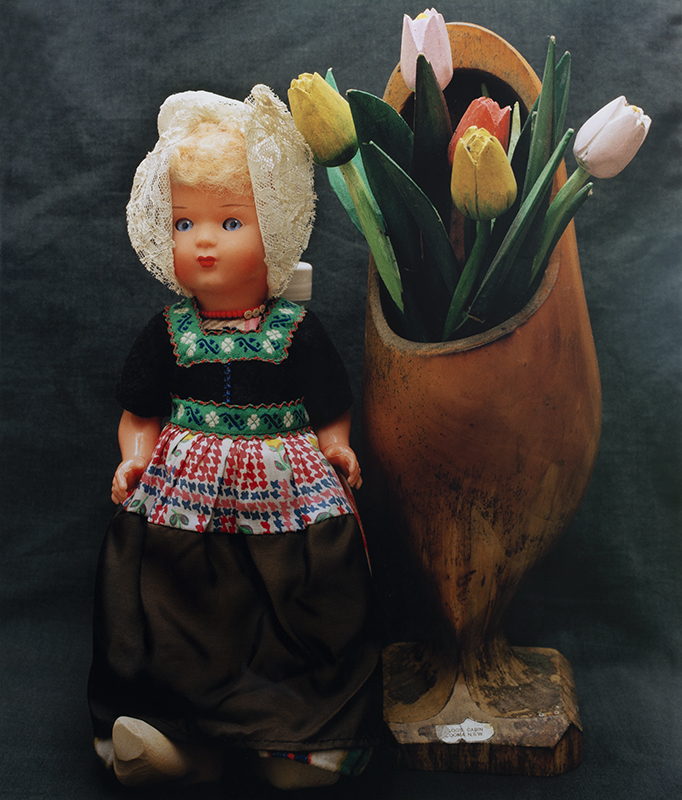
While she did not photograph all that much in colour, when she did, she was able to use colour to great effect as in her image of a Dutch doll from her Toyland series.
The book not only documents Westra’s immense contribution to our history in documenting social change but also reveals an enthusiastic and dedicated artist.
The book deals with several of the important events in her own life from her move from Holland in her youth, the brief return to Holland in the late 1960’s and her short-lived affair with the writer Barry Crump and the resulting son, Erik.
Dr Paul Moon ONZM is professor of history at Auckland University of Technology’s Te Ara Poutama, the Faculty of Māori Development, where he has taught since 1993. He is the prolific author of many books, including biographies of William Hobson, Robert FitzRoy, and the Ngāpuhi rangatira Hone Heke and Hone Heke Ngapua. He is a Fellow of both the Royal Historical Society at University College London and of the Royal Society of Arts.
All Images extracted from Ans Westra: A Life In Photography by Paul Moon, published by Massey University Press,

 New Zealand Arts Review