Reviewed by John Daly-Peoples

Auckland Philharmonia
Mozart & Mischief
Auckland Town Hall
September 9
Reviewed by John Daly-Peoples
The opening work on the Auckland Philharmonia’s “Mozart & Mischief” programme was Respighi’s music for the ballet “La boutique fantasque” of 1919 which he had adapted from some of Rossini’s piano music from fifty years before.
The eight-part work is set in dolls shop and revolves around the dollmaker on a pair of cancan dolls who are going to be sold and separated. The two heartbroken dolls are eventually saved and united by the other dolls in the shop.
The eight-part work developed a narrative not unlike the ballet Coppelia written by Léo Delibes and features similar music with various clever dances designed to present different styles of dance and show off the dancers’ skills. So, there is a cancan, a waltz, a Cossack dance and a galop.
The music replicated the sprightly steps and graceful movement of the dolls with some spirited music from the greatly expanded orchestra which included a harp, celesta and castanets to create inventive sounds.
The eight sections of the work meant there were changing moods and magical moments such as the pizzicato section for the strings, the vigorous cancan and the sounds of the busy workshop.
The second work n the programme was Mozart’s Piano Concerto No 21 which features the well-known “Elvira Madigan” theme in the second movement.
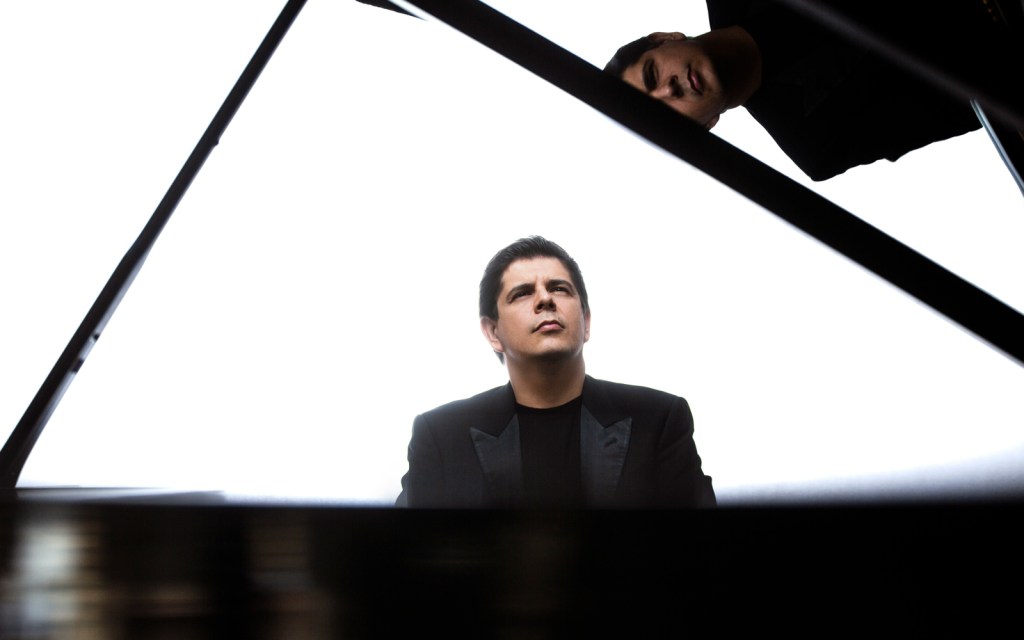
Pianist Benjamin Grovsner played with a restrained focus which suited the piece with its charming lyricism. His shimmering arpeggios and his careful detailing of individual notes showed him to be in total control as well as understanding the structure of the work.
Conductor Shiyeon Sung ensured that the graceful opening of the work, with the flute introducing the piano before Grovsner embarked on his many arpeggios and other technical feats. His faultless command of the keyboard with light, tentative playing had a delicacy to it but which he was able to slowly transform to more elaborate and tantalizing passages. Throughout that first movement he moved from the introspective to the more dramatic and expansive
Throughout the work Sung conducted with the same precise approach which Grosvenor displayed, carefully and deliberately picking away at the keys.
In the second movement (Elvira Madigan) he manged to expertly deliver the lyrical qualities of the work with playing which captured an emotional quality before embarking on invigorating finale.
The other major work on the programme was Shostakovich’s Symphony No 9 which when it premiered in 1945 was expected to be like his earlier wartime symphonies, reflected the scale and horror of the Great Patriotic War.
Instead, this short work was full of humour and cynicism rather then heroism and valour. The irony of the work reflected the composer’s regard with Stalin’s regime. Within the jollity of much of the work there is a kernel of melancholy, his only way of showing his despair and distrust of the ruling elite.
The irony of the work can be heard in passages like opening movement with its classical style and an impish piccolo which seems to hide something malignant and then the wistful opening of the second movement where the clarinets and flutes sound as they are on the edge of despair.
Throughout work the music is full of tentative elements suggesting freedom along with passages which seem to be hemmed in, as though the melodies are trying to escape the music continually undercutting the false jollity.
The third movement featured a playground scene but it reveals, not happy children’s activity but detritus and barren landscape conveyed by mournful strings and soulful brass with more dark sounds from the bassoons before turning into a sequence of edgy, mocking music.
The work concluded with a Carnival of Lost Souls, a weird dance or march of hopelessness and death.
To subscribe or follow New Zealand Arts Review site – www.nzartsreview.org.
The “Follow button” at the bottom right will appear and clicking on that button will allow you to follow that blog and all future posts will arrive on your email.
Or go to https://nzartsreview.org/blog/, Scroll down and click “Subscribe”




 New Zealand Arts Review