Categories
Reviews, News and Commentary

Daniel Muller-Schott’s elegant and expressive performance

Reviewed by John Daly-Peoples
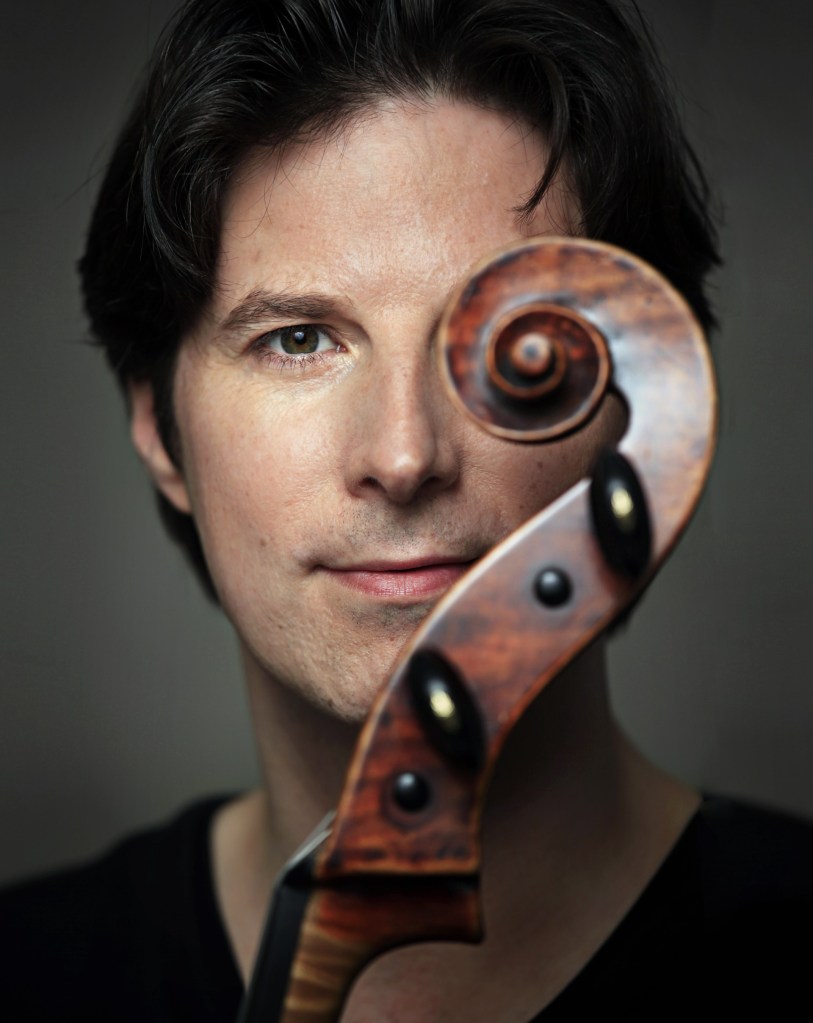
Daniel Muller-Schott Image, Uve Arens

Auckland Philharmonia

Schumann Cello Concerto

Auckland Town Hall

November 13

Reviewed by John Daly-Peoples

The Auckland Philharmonia’s Schumann’s “Cello Concerto” concert opened with Schubert’s “Rosamunde Overture”, a work which was written at a time when all of Beethoven’s symphonies (apart from his final – the Ninth) had been performed and composers made attempts at homages to the composer.

The opening features much of the drama typical of Beethoven with the dance-like passages caried along by the woodwinds. The joyous melodies are an ideal introduction to the play Rosamunde which tells of the adventures of a shepherdess in some idyllic settings.

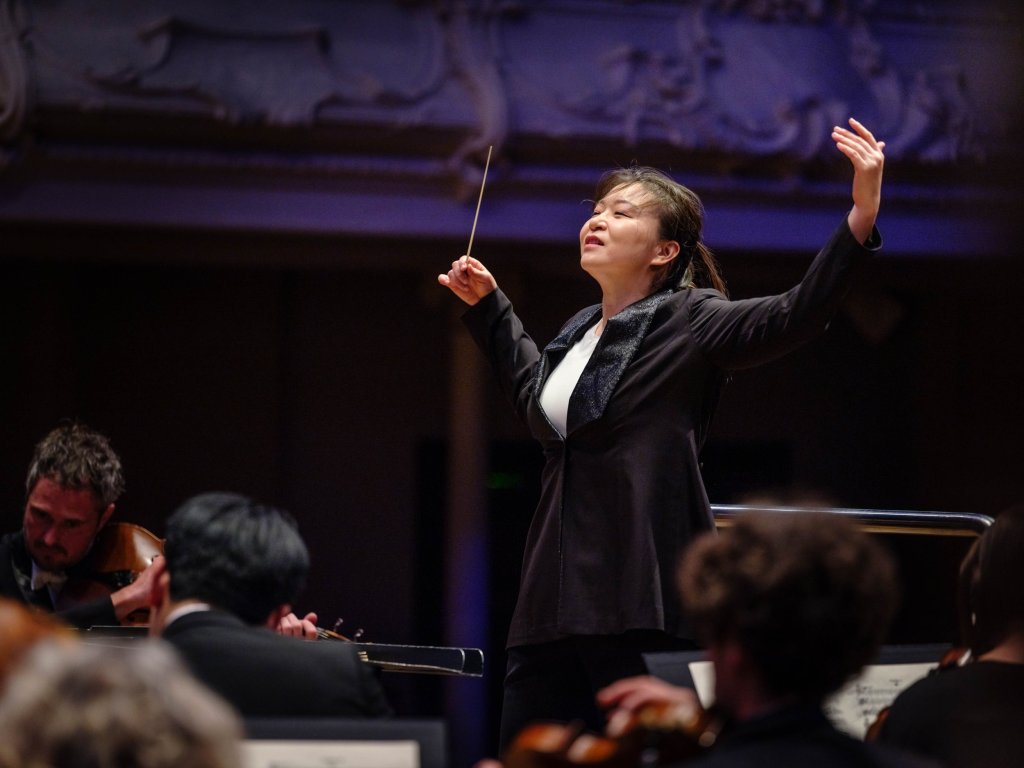
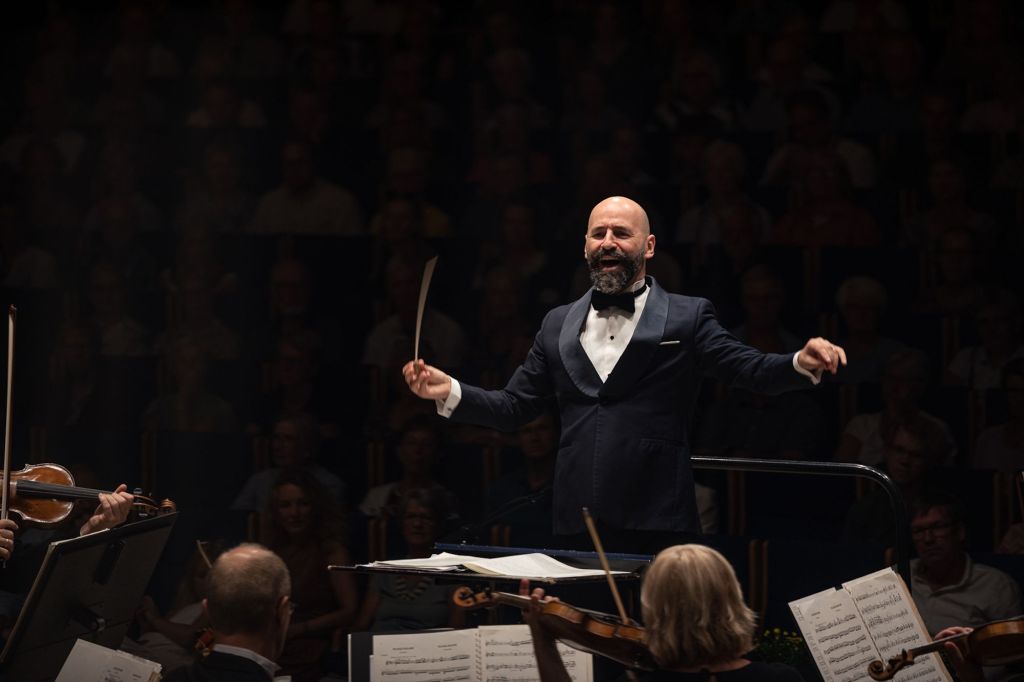
Some of the dance-like music sounds like precursor of the later Viennese dance music which would come several years later. Conductor Giordano Bellincampi seemed to be inspired by the music, his arms performing arabesques as he responded to the passionate dance-like melodies.

The major work on the programme was Schumann’s “Cello Concerto”, a work which has some funereal tones throughout and is often thought of as foreshadowing his death. Cellist Daniel Muller-Schott opened the work with some melancholic sounds which slowly evolved into playing which was more ethereal and meditative with sequence which were supported by the strings.

With much of his playing he took a serious and studious approach as he explored some of the darker elements of the work which then morphed into more uplifting passages.

The second movement saw Muller-Schott playing in a more cautious manner and there was sense of apprehension before returning to the earlier theme as both he and the orchestra engaged in dramatic interchanges.

Muller-Schott played with a range of approaches. At times he was lethargic while at other times dramatic and towards the conclusion he took a more tentative approach as through trying to rediscover the main theme before producing a dramatic conclusion.

Overall Muller-Schott gave an elegant and expressive performance which showed him to be totally in control but also that he had an awareness of the orchestra and the emotional qualities of the music.

The final work on the programme was one of Beethoven earliest major works, “The Creation of Prometheus”, written for a ballet at the imperial court of Austria choreographed by Calvatore Vigano. The work has a similar theme to that which Mary Shelley explored in her “Frankenstein – a Modern Prometheus” – the implication s of man attempting to create life.

The ballet tells of Promethea creating a man and woman from stone statues, but they have no souls. Apollo helps Prometheus teaching them music, dance and drama. Through the series of dances Beethoven’s provides music which explores the qualities which make humans more knowledgeable and spiritual.

Each of the sections featured one of the orchestral sections – delicate music with strings harp and woodwinds, a brilliant cello sequence played by Ashley Brown, flute playing for a court dance sequence and a country dance by strings and woodwind. Beethoven seemed to have allocated certain instruments to characters in the ballet – Apollo the harp, Melpomene the oboe, the Male Creature the oboe bassoon.

While the music serves the ballet well it can also be seen as something of a calling card for Beethoven who had only written two of his symphonies at the time. With this work he showed his mastery of composition, his knowledge of the orchestra’s instruments.

With the various sections Beethoven also provided himself with melodies which he used in some of his later work with one of the sequences being used for his Eroica symphony.

To subscribe or follow New Zealand Arts Review site – www.nzartsreview.org.

The “Follow button” at the bottom right will appear and clicking on that button  will allow you to follow that blog and all future posts will arrive on your email.

Or go to https://nzartsreview.org/blog/, Scroll down and click “Subscribe”

Categories
Reviews, News and Commentary

Violinist Arabella Steinbacher shines in Auckland Philharmonia’s “Beethoven 5” concert

Reviewed by John Daly-Peoples

Arabella Steinbacher image: Sav Schulman

Beethoven 5

Auckland Philharmonia

June 26

Reviewed by John Daly-Peoples

It is rare for a New Zealand orchestra to perform the  same concert twice  in a week, something which is common with European orchestras and even Australian ones. However, this week the Auckland Philharmonia performed its Beethoven programme on a Wednesday and Thursday, both to sold out audiences.

The orchestra’s “Beethoven 5” concert opened and closed with two very different compositions composed within ten years of each other. The first, Rossini’s Overture to La Cenerentola, composed in 1817 is an effervescent work based on a fairy / folk story while Beethoven’s Symphony No 5 of 1808 is a dramatic work reflecting the composers view of the political climate of the time as well as a growing awareness of his own fate.

Between those two pieces was an elegant display of violin playing by Arabella Steinbacher

The Rossini opened with an engaging display by the woodwinds and brass evolving into a dance-like piece.

The woodwinds held much of this musical adventure together which captures the essence of the opera, its comedy and convoluted storyline.

The Auckland Philharmonia manages to attract some of the world’s great soloists and with the Japanese / German violinist Arabella Steinbacher the audience was treated to a stunning performance of Mozart’s “Violon Concerto No 5”.

She opened the work with some silky playing, slowly revealing the intricacies of the work. At times her playing flowed along with the orchestra while at other times she appeared to add new musical themes to which the orchestra responded.

With the cadenza she showed a skill and insistence which gave the work a very contemporary and adventurous sound.

Throughout the piece she seemed to be perfectly in control of her playing, never trying to outdo the orchestra preferring to let her exquisite, often restrained  playing  shine. In the second movement some of her playing was almost ethereal while at other times her deft and refined.

In the third movement as the orchestra became more dynamic, she seemed to revel in their playing adding an urgency to her own playing.

Having heard Beethoven’s “Symphony No 5” several times it is still rewarding to hear another orchestral performance. The drama, the nuance, the intensity of the conductor and the players, all add the spectacle. As well as appreciating the music there is also a sense of the composer himself grasping for musical ideas, responding to the momentous events of his  times and seeing his own political and spiritual condition connected to those events.

No section of the work is irrelevant or unnecessary, it can can be loud and dramatic with rousing sequences but also gentle, soothing. delicate and  sprightly. Beethoven certainly knew how to create drama, mystery and atmosphere.

Apart from the symphony’s well-known dynamic opening and other dramatic sequence the symphony also has superb moments provided by individual instruments  such as the clarinet and flutes in the opening minutes or the mass pizzicato of the strings.

Conductor  Bellincampi guided the orchestra  brilliantly showing his ability to reveal the drama, tension, and revolution within the work. He also highlighted the nuances of the work, emphasising the  contrasts and  moods of the piece.

To subscribe or follow New Zealand Arts Review site – www.nzartsreview.org.

The “Follow button” at the bottom right will appear and clicking on that button  will allow you to follow that blog and all future posts will arrive on your email.

Or go to https://nzartsreview.org/blog/, Scroll down and click “Subscribe”

Categories
Reviews, News and Commentary

Auckland Philharmonia’s “Tchaikovsky 5”

Reviewed by John Daly-Peoples

Alexander Gavrylyuk Image Adrian Malloch

Tchaikovsky 5

Auckland Philharmonia

Auckland Town Hall

April 15

Reviewed by John Daly-Peoples

First up on the Auckland Philharmonia’s “Tchaikovsky 5” programme was Kenneth Young’s “Douce Tristesse”, a work composed in 2012 in response to the composer’s final visit to the  long-time family holiday spot near Tauranga.

Strings and woodwind opened the work with a description of landscape, with swathes of colour conveying the changing light and textures of the land, sea and sky.

These vignettes were studded with musical highlights deftly conveyed by the small group of percussion instruments – cymbals, glockenspiel, crotales and harp suggesting the sparkles of light on water, the movement of clouds and the chirping of birdlife.

The work manages to suggest panoramic images from dawn to dusk suggesting the romanticism of the idyllic as well as a nostalgia for lost times and memories.

The composer says that the title ‘Douce Tristesse’ means ‘ sweer sadness and that the piece is about looking at a familiar scene for the last time, a view never to be seen again.

Prokofiev’s third Piano Concerto was written in 1921 during a period of self-imposed exile from Russia and a period when he did not feel oppressed by war or demands on his time and seems to have  more leisurely ambience . The work was first performed in Chicago with the composer playing. The audience and press raved over the music with The Chicago Daily Herald calling it the “the most beautiful modern concerto for piano,”

It opens with the sounds of a clarinet and strings playing a floating melody emblematic of his own more relaxed life. This led quickly to pianist Alexander Gavrylyuk racing into the first movement of the work with fiery sounds from both orchestra and  pianist who played as  though the piano were a percussion instrument

Hunched over the piano his playing was by turns delicate and ferocious as he grappled with the various sequences. There were times when his sounds were languid and romantic and other times when he took a delicate almost spiderly  approach to his playing.

In the second movement he turned the slow dance-like opening into a cacophony of jarring sounds and the intense finale of the third movement saw him in studious concentration.

He displayed a mastery of stylish playing, able to ignite the orchestra with his passion and drive.

His playing technique – changing tempos, charging through themes and varying the tonal qualities added to the excitement of the playing and appeared to enliven conductor Shiyeon Sung well as the orchestra.

Shiyeon Sung Image Adrian Malloch

The major work on the programme was Tchaikovsky’s “Symphony No 5” which saw Shiyeon Sung and the APO deliver one of their outstanding performances. The work is full of sensuous melodies, intense emotions and dramatic climaxes which make it one of the composers more invigorating works.

Some of the sequences are monumental with music similar to his 1812 Overture while there were traces of his ballet music in others.

Sung deftly, guided the orchestra, building musical images, of landscapes, seasons and events creating a world of sensation and emotions.

There were joyous  moments throughout the work but these were set against contemplative sections with the composer finding redemption in the grandeur of the work.

From the anguish of the first movement through the graceful mid-section and onto the final tumultuous fourth movement the orchestra provided a rich and satisfying performance.

While the orchestra was expertly conducted and the players superbly coordinated there were some stand-out performances by the bassoons, flutes, clarinets and French horns.

Categories
Reviews, News and Commentary

Delicacy and grandeur in nineteenth century masterworks

Inon Barnatan. Image. Sav Schulman

Romantic Brahms

Auckland Philharmonia

Auckland Town Hall

April 10

Reviewed by Peter Simpson

The April 10 concert of the Auckland Philharmonia headed ‘Romantic Brahms’, placed the audience squarely in the nineteenth century (where most audiences most like to be), with an overture from 1834, a concerto from 1881 and a symphony from 1888. The conductor was the Swiss-Australian Elena Schwarz who is currently with Klangforum, a chamber orchestra specialising in contemporary music based in Vienna; she is also a guest conductor with leading orchestras in Europe, America and Australia.  Elegant and agile in her dark trouser suit she seemed completely in command of these complex scores.

Louise Farrenc (1804-1975) was famous in her time (and is now undergoing recuperation) as a pianist, teacher and composer in Paris, earning the respect of Schumann and Berlioz for her compositions which included symphonies and chamber works as well as two orchestral overtures in 1834, the second of which played in Auckland demonstrates her confident control of the post-Beethoven orchestra and musical idioms.

Brahms’ Piano Concerto No. 2 is possibly his greatest orchestral work, at least I have thought so since the early 1960s when I first heard Sviatoslav Richter’s famous recording with the Chicago Symphony under Erich Leinsdorf made during Richter’s first tour of America. Israeli-pianist Inon Barnatan was well up to the demands of this heroic score ranging as it does from  extreme delicacy – as in the opening exchanges between piano and horn (the beginning slightly fluffed by APO’s horn soloist) – to full orchestral grandeur in the many climactic passages. For his encore the pianist unusually chose a graceful duet by Rachmaninov with a cellist instead of a solo piece, perhaps in recognition of the lovely ‘cello solo at the start of the third movement of the concerto.

According to Heath Lees’ programme notes, César Franck’s Symphony in D has somewhat lost favour with modern audiences compared to its earlier fame, but it still comes across as a noble and majestic piece, especially in its swelling major theme which recurs throughout the circular structure The texture of the work can sometimes seem a bit muddy but not in Elena Schwarz’s expert separating out of the separate layers of sound. It was a fitting conclusion to a stirring and satisfying evening of Romantic music.

Categories
Reviews, News and Commentary

The APO’s 2025 Season revealed

John Daly-Peoples

Principal Guest Conductor, Shiyeon Sung Credit Yongbin Park

Auckland Philharmonia Orchestra 2025

John Daly-Peoples

The  Auckland Philharmonia has just released its 2025 Season, of forty concerts featuring some of the world’s most-important artists including violinist James Ehnes, Spanish pianist Javier Perianes, guitarist JIJI, cellist Daniel Müller-Schott, and conductor Pierre Bleuse.

Javier Perianes Credit Julia Severinsen

The opening concert will feature New Zealander Claire Cowan’s “My Alphabet of Life”, Beethoven’s ‘Emperor’ Piano Concerto and  Strausstone-poem,Ein Heldenleben. All of the following concerts will provide a similar mixture of the great classics along with new and surprising works from the classical period and more recent compositions.

There will be a complete performance of Ravel’s ballet, Daphnis et Chloé.as well as  a selection from The Creatures of Prometheus, Beethoven’s only published ballet.

Other major works will include performances of Beethoven’s  Symphony No.5, Tchaikovsky’s Symphony No 5 and Mahler’s Symphony No 3 with mezzo-soprano Deborah Humble.

Principal Guest Conductor, Shiyeon Sung will conduct fellow Korean Clara-Jumi Kang, playing Tchaikovsky’s Violin Concerto, and Mozart’s Piano Concerto No.21 performed by British pianist Benjamin Grosvenor, who was recently named in Gramophone magazine’s list of the 50 greatest all-time pianists.  

The New Zealand Herald Premier Series will include major symphonic works by Elgar, Brahms, Shostakovich, Wagner, Mozart, and Tchaikovsky, as well as some rarely programmed gems by Ravel, Respighi, Liszt, Schoenberg and Grieg, complemented by music from leading New Zealand composers Claire Cowan, Kenneth Young and Louise Webster.

There will also be the New Zealand premiere of Sir James MacMillan’s newest concerto ‘Ghosts’, an Auckland Philharmonia co-commission with the London Symphony Orchestra, Melbourne Symphony Orchestra, Singapore Symphony Orchestra, Royal Stockholm Philharmonic Orchestra and St. Louis Symphony Orchestra.

The Canadian violinist James Ehnes will return for a two-week residency, performing two of the most demanding works in the violinist’s arsenal –  Bartók’s Violin Concerto No.1 and Brahms’ Violin Concerto.

Pierre Bleuse

Other soloists include Korean guitarist JIJI, German cellist Daniel Müller-Schott, Sylvia Jiang and Alexander Gavrylyu. There will also be several visiting conductors leading the orchestra including Pierre Bleuse, Karl-Heinz Steffens and Jun Märkl.

The Classic Series of five concerts will feature major masterpieces, such as Mendelssohn’s ‘Scottish’ Symphony, Haydn’s Symphony No.93, Tchaikovsky’s Violin Concerto and Brahms’ Piano Concerto No.2.

The Pub Charity Opera in Concert production of Verdi’s La traviata will see Giordano Bellincampi exploring the raw dramatic power of this sublime score with a celebrated New Zealand and Australian cast; including Amina Edris as Violetta, Oliver Sewell, as her lover Alfredo, and Phillip Rhodes as Germont.

The multifaceted Baroque & Beyond series will be returning with two concerts directed by Concertmaster Andrew Beer that celebrate the masters of the Baroque era from Handel’s Water Music to works by Sir Michael Tippett along with Baroque masters Biber and Corelli and 20th century composers Bloch and Respighi.

In 2025 the music of the movies will be heard  in Art of the Score: The Music of Hans Zimmer. Hans Zimmer is one the most influential film composers of all time and is behind the iconic scores for Interstellar, Inception, The Dark Knight Trilogy and themes from Pirates of the Caribbean and Gladiator. Audiences will be taken on a journey through Zimmer’s music, presented by Australian Art of the Score podcasters and film buffs, Andrew Pogson and Dan Golding, with Nicholas Buc on the podium.

Matariki with Ria Hall will be a popular night to celebrate the Māori New Year. One of Aotearoa’s most compelling and thoughtful voices, Ria Hall, will join forces with the the orchestra to recreate her evocative songs ‘They Come Marching’, ‘Te Ahi Kai Pō’, and ‘Black Light’, with a magnificent symphonic soundscape.   

Bic Runga Credit Tom Grut

Bic Runga with Auckland Phil will feature Runga performing such classics as ‘Something Good’, ‘Precious Things’ and ‘Bursting Through’, reimagined together with a full orchestra, this will be an extraordinary evening of musical fusion.

There will be a  fun-filled interactive show featuring New Zealand’s beloved canine icon, Hairy Maclary’s Greatest Hits presented by Jackie Clarke, and a captivating show for the whole family starring everyone’s favourite duo, Wallace & Gromit, at Wallace & Gromit in Concert. including The Wrong Trousers screened in full.

Season brochures are available online from aucklandphil.nz or by phoning Auckland Philharmonia Ticketing on (09) 623 1052

Categories
Reviews, News and Commentary

On the cusp: a trio of masterworks

Review by Peter Simpson

Yeol Eum Son Photo: Marco Borggreve

Beethoven 7

Auckland Philharmonia

Auckland Town Hall

February 22

Reviewed by Peter Simpson

The three works in the second APO concert of the Premier Series for 2024: Mozart’s Piano Concerto No. 24 in C Minor, Beethoven’s Symphony No. 7, and the Overture to Rossini’s The Barber of Seville were all written within a thirty year period, 1786-1816: the Mozart in 1785-86, the Beethoven in 1812, and the Rossini in 1816. This period, on the cusp between the ‘classical’ and ‘Romantic’ periods, is one of the most consequential in the history of music. Each of these works is a masterwork in its own right; collectively they made for a supremely enjoyable and satisfying evening. The APO under Giordano Bellincampi, with South Korean soloist Yeol Eum Son in the Mozart, were in fine fettle.

Rossini just missed out on being a contemporary of  Mozart’s by being born in the year after Mozart’s death in 1791; Beethoven was twenty when Mozart died, just on the brink of his great career.

The Overture to The Barber of Seville scurries along entertainingly in Rossini’s instantly recognisable and ingratiating style. It is ‘feel good’ music, clearly enjoyed by the musicians, and bound to put listeners into a receptive frame of mind.

With her pale skin and flamboyant scarlet gown, Yeol Eum Son made a striking visual contrast to the pervasive black-and-white of the orchestra. She proved to be an elegant and forceful soloist plunging instantly and confidently into the minor-key depths and mysteries of one of Mozart’s greatest scores.

One of only two piano concertos in a minor key (the other is No. 20), this work has the most elaborate instrumentation of any of Mozart’s concertos, being scored for one flute, two oboes, two clarinets, two bassoons, two horns, two trumpets, timpani and strings: it is especially rare in Mozart for oboes and clarinets to be used simultaneously. One of the great pleasures of seeing this work performed live is to be able to witness as well as hear the subtle and intricate interplay between the wind instruments and strings so important in the emotional ambience of the music. After the rapt complexities of the long opening movement, the limpid simplicity of the slow movement was ravishing; the deft variations of the finale, too, were finely executed.

Apparently the young Beethoven once witnessed a rehearsal of this concerto (presumably with Wolfgang Amadeus at the keyboard) and remarked to his companion: “We shall never be able to do anything like that’. His own break-through piano concerto No. 3 written in 1800, four years later, shares the same C-minor key. Twelve years later Beethoven’s grand Seventh Symphony was one of the triumphs of his career. It was performed with the composer conducting in Vienna in 2013 at a charity concert for soldiers wounded in a battle with the forces of Napoleon (Beethoven’s fallen hero). The first audience apparently demanded an immediate repeat of the second movement allegretto. While not going quite so far as that, the shouts of acclamation from Auckland’s Town Hall audience registered genuine excitement at the conclusion of this electrifying performance. From the solemn and sonorous opening bars to the disciplined frenzy of the finale this marvellous music engaged both musicians and audience alike.

To subscribe or follow New Zealand Arts Review site – www.nzartsreview.org.

The “Follow button” at the bottom right will appear and clicking on that button  will allow you to follow that blog and all future posts will arrive on your email.

Or go to https://nzartsreview.org/blog/, Scroll down and click “Subscribe”