Reviewed by John Daly-Peoples
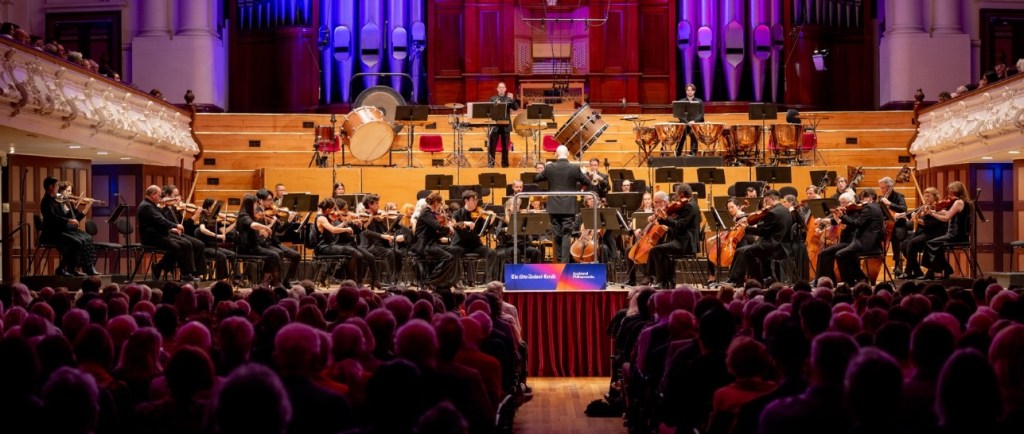
Fantastique
Auckland Philharmonia
Auckland Town Hall
September 16
Reviewed by John Daly-Peoples
The three works on the Auckland Philharmonia’s “Fantastique” programme to a lesser or greater extent reflected on the religious teachings and practices of the Christian churches many of which confused, condemned and persecuted people. These in turn resulted in isolation, banishment and often death.
Opening the programme was New Zealand composer Louise Webster’s “Proof against Burning” which was inspired by the historical witch trials and the tests used to judge the accused.
The four sections – Cauldron and Stone, Floating on Water, Spectral Evidence and Ordeal of the Cross all related to methods of judging, condemning and execution of those charged with the practice of witchcraft. These would be boiling, drowning, crucifixion and evidence of magical or supernatural appearance.
The opening movement had a sense of oppression provided by the portentous sounds of wailing strings, sharp percussion and screaming brass where the second having a more contemplative sounds from the strings and wind instruments which suggest the notion of dunking of witches into water, the placid image of flowing water ends with some apprehensive sounds which suddenly stopped, as though death had come quickly.
In the third movement, the concept of the spiritual or spectral is suggested by the various instruments shifting tones and sounds, transforming the aural landscape. The Ordeal of the Cross section was introduced by blaring horns along with drumbeat accompanying the condemned in their final walk. Strings produced heart rending sounds of torment along with hints of birdsong including the sounds of a crow, the messengers of death.
Liszt’s piano work “Totentanz” was inspired by both “The Comedy of Death” a series of woodcut by Hans Holbein and “The Triumph of Death” a monumental fresco by Andrea Orcagna in the Camposanto in Pisa both of which depict religious myths concerning the fate of the damned and the saved at the end of the world.

The work was played by Sylvia Jiang a Chinese born New Zealander who has previously played with the Auckland l Philharmonia. Last year she performed Prokofiev’s “Piano Concerto” and previously Liszt’s “Second Piano Concerto”
Liszt himself was fascinated by ideas of death and he incorporated variation on the Dies Irae throughout the work. The work transitioned from Webster’s work with more sounds of oppression. The heavy brass and piano opened with a dance of death which introduced us immediately to the sounds of a nightmare.
With Jiang hovering over the piano, she attacked the keyboard with a series of arpeggios and runs based of the Dies Irae while the orchestra contributed savage bursts of sound.
At times it seemed as though Jiang’s feverish playing was creating a vortex of sound replicating the idea of bodies spiraling in their descent into Hell. Conductor Pierre Bleuse was equally feverish in some of his conducting, leading the orchestra with dramatic gestures. Generally, Bleuse was curt and crisp in his conducting, attentive to all the players in the orchestra, managing to bring out the subtleties of the music from them.
While much of the time Jiang’s playing was vivid and intense, she was also able to produce more delicate and nuanced sounds showing a pianist with a true understanding of the music and the composer’s intention.
Her assaults on the piano became more intense at the finale of the work where she joined with the violent percussion display.
For her encore she played a minimalist work by the Chinese composer Gao Ping.
The major work on the programme was Hector Berlioz’s “Symphonie Fantastique”, which through its five movements tells the story of an artist’s self-destructive passion for a beautiful woman. The work describes his obsession and dreams, moments of anguish and tenderness along with visions of suicide and murder, ecstasy, and despair.
Berlioz was obsessed with the Irish actress Harriet Smithson, and the symphony was his mating call to the actress. The music attempts to render the story of his own life intertwined with that of The Artist, musically and emotionally.
The piece begins with an impressive percussion sequence and the sounds of a reverie as though embarking on a spiritual journey. The orchestra’s free flowing melodies were a mixture of the dramatic and Romantic creating both dreams and nightmares.
There was also a description of The Artist and the object of his love with an elusive theme which recurs through the work. Then we encounter him at a ball, trying to gain the attention of his love and then in a pastoral setting possibly seeing his beloved with another suitor. This ballroom scene with its opening waltz also seemed to affect the sprightly conductor as he swayed to the music. However, even in this ballroom sequence there was tense undertone of tension beneath the jollity
The serenity of the countryside was introduced by the woodwinds and strings with ecstatic sounds of dawn before darker sounds of the strings herald a stormy period before we return to sunnier moments with the sounds of birds returning to rest and sleep.
A fourth movement is a narcotic dream sequence where he sees himself led to the scaffold in the belief that his love has been rejected.
The final movement is another dreamscape, this time a vision of hell where The Artist is carried into the underworld watched over by the object of his craving.
Under the direction of an agile Pierre Bleuse the orchestra provided an energetic performance of the work ensuring the drama and intensity was expertly delivered. There were the thrilling violins and flutes which conjured up the image of The Artist’s beloved through the two harps leading the delicate ballroom scene to the military band escorting the prisoner to the scaffold and onto the final ominous bassoons and tubas roaring out the funeral chant of the Dies Irae.
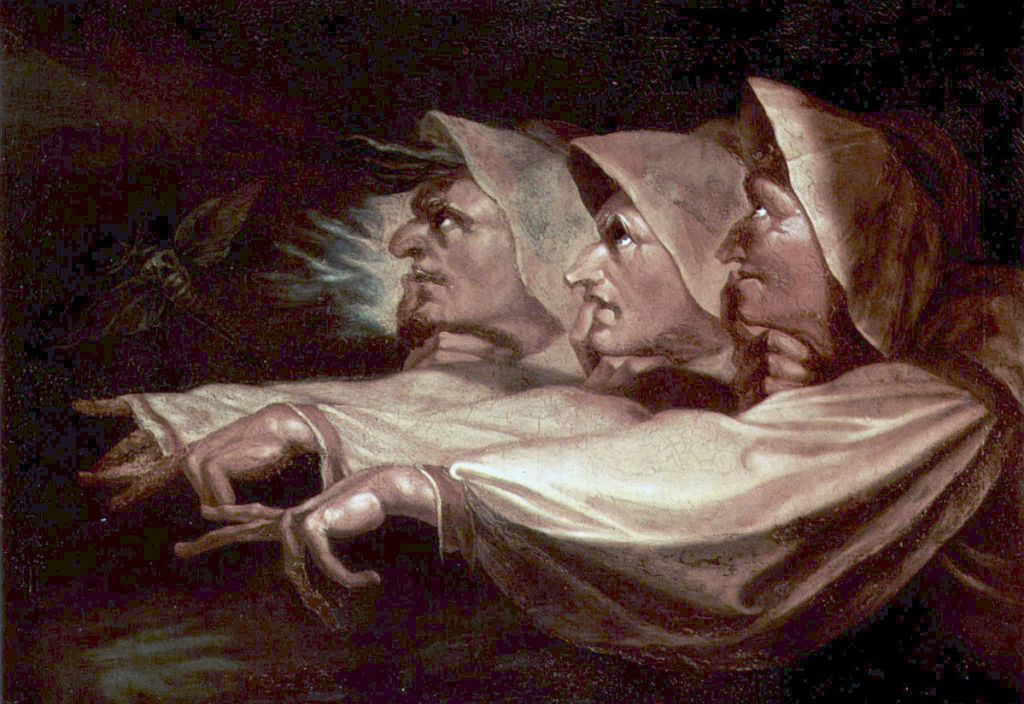
The final Dream of the Witches Sabbath has much in common with the Swiss Romantic painter Henry Fuseli with their shared interest in demonological fantasies, Gothic atmosphere of and a fascination with the supernatural.
Frightening outbursts alternated with moments of the greatest tenderness. Massive onslaughts by the percussion and timpani contrasted with the delicacy and melancholia of the ballroom and pastoral scenes
 New Zealand Arts Review