Review by John Daly-Peoples
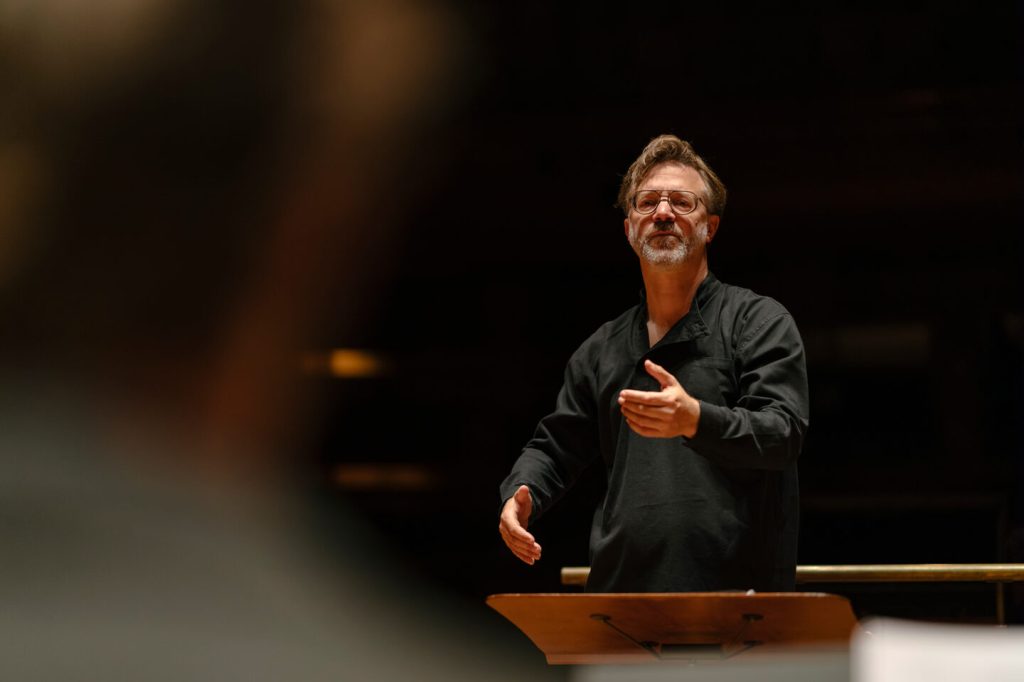
New Zealand Symphony Orchestra
Resonance
Conducted by André de Ridder
Auckland Town Hall
April 10
Reviewed by John Daly-Peoples
In introducing Shostakovich’s Symphony No 8 conductor André de Ridder mentioned a young Ukrainian conductor who had reservations about playing any Russian music during the present conflict. De Ridder acknowledged the complex issue of politics and music but insisted that with a work such as the Shostakovich which is considered to be an antiwar composition that there was a reason for it to be included in contemporary concerts.
De Ridder said he considered the work to be a requiem for all people and the most profound and honest of works which dealt with the outcome of the Second World War.
The work which was written in 1943 in the midst of the war was not well received. It was written after the Battle of Stalingrad and while the composer wrote that it was an optimistic work the Soviet authorities banned it for being pessimistic and “anti-Soviet”.
Ther work opened with huge sounds of dark strings similar to the composers Symphony No 5 written six years before. Some whispering violins could be heard trying to rise above the sounds of the darker strings like voices crying out in a dark and barren landscape.
Even the few rays of light which were suggested seemed to be infused with a darker element, light which seemed to be continually repressed, the darker strings overwhelming the lighter.
There was sense of relentless night and fog which only got darker and more overpowering and then a snare drum heralded a ferocious dance of death followed by a parody of a marching army leading to a fateful conclusion full of pessimism and an eerie solo woodwind sounding like a lone voice or birdcall on the battlefield.
The second movement opened with sounds of glorious martial celebration or like those of a fairground but these sounds were all brash, discordant and false. It is a section which ends with a plaintiff tin whistle which accompanying the mocking sounds of a parade which become increasing more hectic as the instruments took us on a crazed march of fools.
The final three movements were full of contrasts. There were the pulsing mechanical sounds of war interspersed with moments of light along with the screams of individuals.
Great onslaughts of sound were followed by whispering violins offering a bleak contrast. These contrasts between fragility and power, between darkness and light between triumph and defeat were central to the work and the composer’s choice of instruments.
This ambivalence reached its conclusion in the fifth movement where the intense light of the violin’s heralds not so much a triumph but a time of reflection and prayer as the orchestra faded to silence leaving the audience to reflect on a deeply tragic event.
The opening work on the programme was Ravel’s “Pavane pour une infante défunte”, is a work somewhere between a tribute and farewell to a long departed princess. Ravel indicated that the piece depicted a pavane as it would be danced by an Infanta such as the one found in Las Meninas the painting by Velazques. He seemed to have imagined the young princess depicted in the painting as preparing to attend a dance or engaged in one. This was not a requiem but a remembrance of a past time, a past elegance and a past princess.
The sweet melodies of the work provided a sensation of fleeting clouds or the passing of frothy dancing gowns and gave the work a sense of meandering either through the ballroom or the corridors of the palace.
The trill of the harp provided images of sunlight on a river or highlighting the dancing figures. The movements of the dance are beautifully realised, the colours and sounds of dance as well as the elegance of the event.
There was change of programme for the trombone work which meant the audience heard a special work composed by Bryce Dessner who had written the music for the film The Revenant. It was played by David Bremner the Principal trombonist of the NZSO.
The work certainly exploited the sounds of the instrument resulting in an intriguing and satisfying work. From the opening we were confronted with an onslaught of notes which worked well with the pizzicato of the orchestra when they combined to give a sense of momentum.
The brass instruments provided a subtle layering of sounds underneath the blaring trombone while the strings created a hovering mysterious sound.
Bremner exploited the sounds and tones of the trombone from its blaring sounds to its eerie breath-like eruptions.
From second movement the orchestra created a changing sonic field as though it was tuning up and the trombone provided a series of short sequences whish seemed designed to test the instruments percussive sounds…
There was also an elaborate conversation between the trombone and the other brass instruments providing some very original sounds and a clever display of the trombones range and tonal textures.

 New Zealand Arts Review