Reviewed by John Daly-Peoples
Auckland Philharmonia
Schumann Cello Concerto
Auckland Town Hall
November 13
Reviewed by John Daly-Peoples
The Auckland Philharmonia’s Schumann’s “Cello Concerto” concert opened with Schubert’s “Rosamunde Overture”, a work which was written at a time when all of Beethoven’s symphonies (apart from his final – the Ninth) had been performed and composers made attempts at homages to the composer.
The opening features much of the drama typical of Beethoven with the dance-like passages caried along by the woodwinds. The joyous melodies are an ideal introduction to the play Rosamunde which tells of the adventures of a shepherdess in some idyllic settings.
Some of the dance-like music sounds like precursor of the later Viennese dance music which would come several years later. Conductor Giordano Bellincampi seemed to be inspired by the music, his arms performing arabesques as he responded to the passionate dance-like melodies.
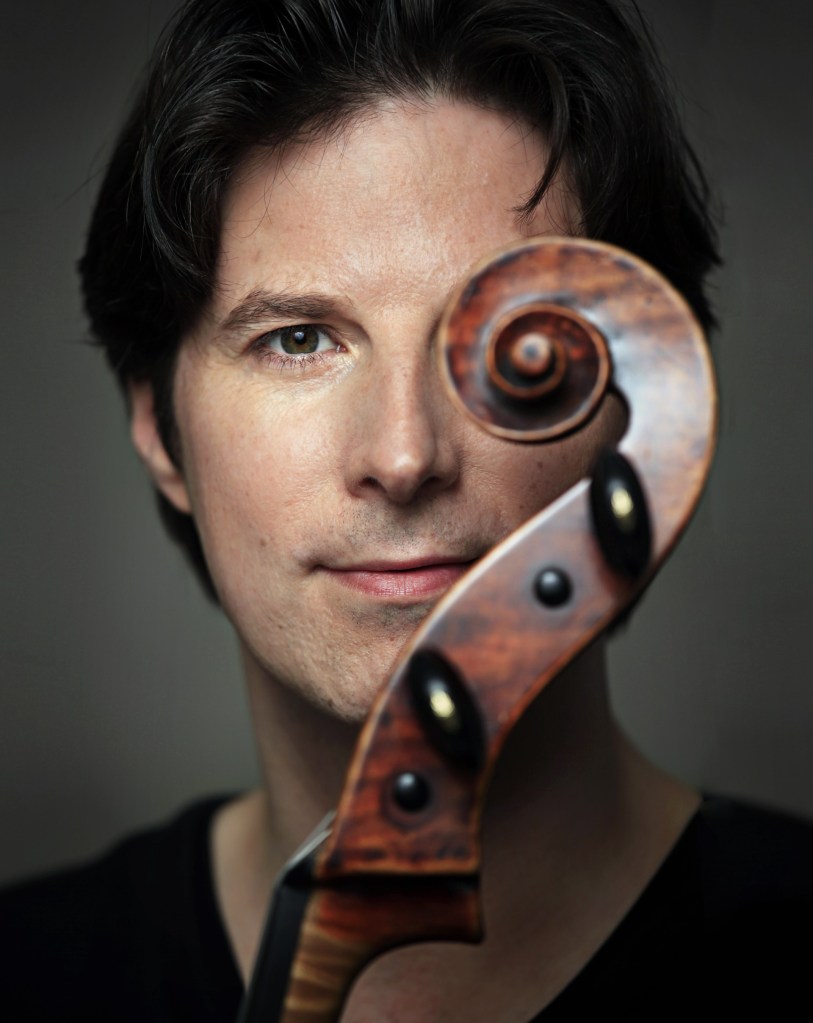
The major work on the programme was Schumann’s “Cello Concerto”, a work which has some funereal tones throughout and is often thought of as foreshadowing his death. Cellist Daniel Muller-Schott opened the work with some melancholic sounds which slowly evolved into playing which was more ethereal and meditative with sequence which were supported by the strings.
With much of his playing he took a serious and studious approach as he explored some of the darker elements of the work which then morphed into more uplifting passages.
The second movement saw Muller-Schott playing in a more cautious manner and there was sense of apprehension before returning to the earlier theme as both he and the orchestra engaged in dramatic interchanges.
Muller-Schott played with a range of approaches. At times he was lethargic while at other times dramatic and towards the conclusion he took a more tentative approach as through trying to rediscover the main theme before producing a dramatic conclusion.
Overall Muller-Schott gave an elegant and expressive performance which showed him to be totally in control but also that he had an awareness of the orchestra and the emotional qualities of the music.
The final work on the programme was one of Beethoven earliest major works, “The Creation of Prometheus”, written for a ballet at the imperial court of Austria choreographed by Calvatore Vigano. The work has a similar theme to that which Mary Shelley explored in her “Frankenstein – a Modern Prometheus” – the implication s of man attempting to create life.
The ballet tells of Promethea creating a man and woman from stone statues, but they have no souls. Apollo helps Prometheus teaching them music, dance and drama. Through the series of dances Beethoven’s provides music which explores the qualities which make humans more knowledgeable and spiritual.
Each of the sections featured one of the orchestral sections – delicate music with strings harp and woodwinds, a brilliant cello sequence played by Ashley Brown, flute playing for a court dance sequence and a country dance by strings and woodwind. Beethoven seemed to have allocated certain instruments to characters in the ballet – Apollo the harp, Melpomene the oboe, the Male Creature the oboe bassoon.
While the music serves the ballet well it can also be seen as something of a calling card for Beethoven who had only written two of his symphonies at the time. With this work he showed his mastery of composition, his knowledge of the orchestra’s instruments.
With the various sections Beethoven also provided himself with melodies which he used in some of his later work with one of the sequences being used for his Eroica symphony.
To subscribe or follow New Zealand Arts Review site – www.nzartsreview.org.
The “Follow button” at the bottom right will appear and clicking on that button will allow you to follow that blog and all future posts will arrive on your email.
Or go to https://nzartsreview.org/blog/, Scroll down and click “Subscribe”

 New Zealand Arts Review