Reviewed by John Daly-Peoples
Tchaikovsky’s Violin
Auckland Philharmonia
Auckland Town Hall
September 26
Reviewed by John Daly-Peoples
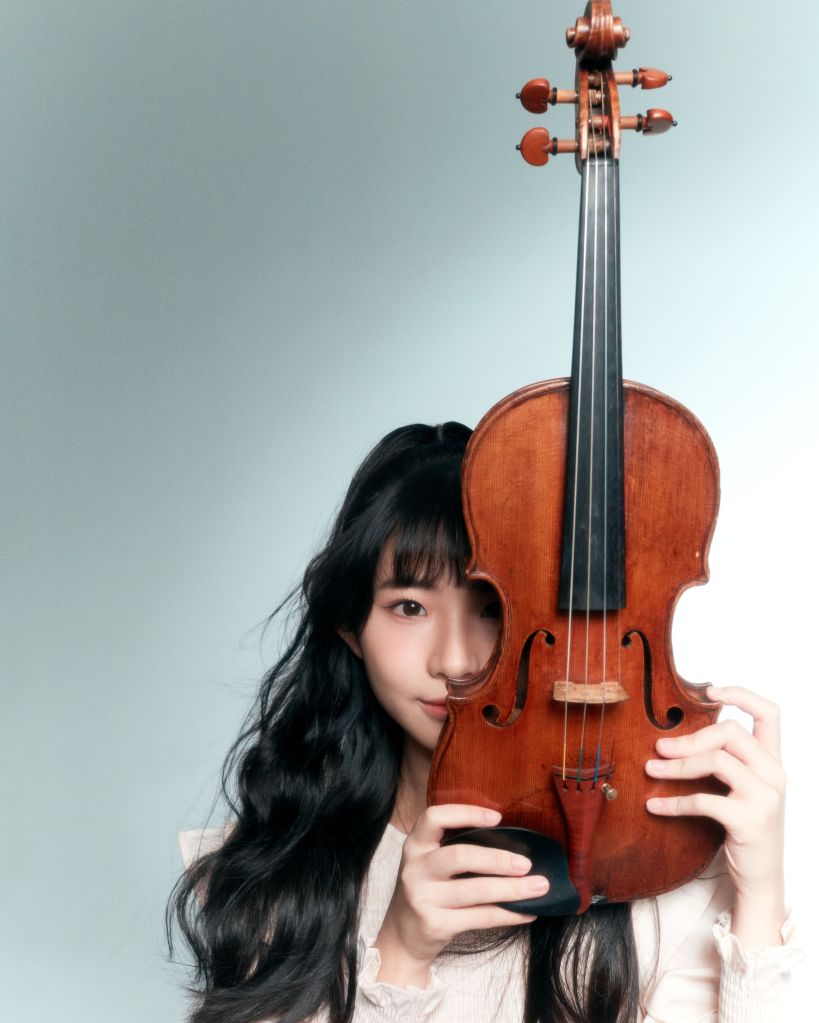
The major work in the latest Auckland Philharmonia’s concert was Tchaikovsky’s Violin Concerto with soloist Chloe Chua who came with well-established credentials having won the Yehudi Menuhin International Competition for Young Violinists when she was 11.
It was immediately clear that she was an exceptional player with a self-contained, flawless approach to playing. But as well as a technical virtuosity she displayed an emotional sensitivity.
With her playing she maintained a distance from the orchestra, with an internal focus and much of the time she seemed to be in a reverie.
The concerto according to many who have played the work since it was composed is notoriously difficult to play, as it requires exceptional technical mastery of various techniques like double stopping and arpeggios as well as playing at a fast pace for extended periods.
Chua manged the piece effortlessly, notably with the cadenza where she was masterful in her control and delivery. Her playing was impressive with a technical brilliance as well as providing and intelligent and sympathetic interpretation of the music.
After the dramatic display in the first movement her delivery of the second movement revealed the sweet lyricism before she performed a range of tones, textures and tempos, continually testing the limits of the violin.
Throughout the work she was a whirlwind of musical dynamism and it was miracle that she didn’t collapse at the end of the work.
While she may have given a spirited performance of the Violin concerto receiving rounds of applause it was her mercurial version of Amazing Grace which showed another aspect of her approach. Her playing of the work and her variations were mesmerizing and by turns anguished, sprightly and whimsical.
Sung as ever conducted with dramatic flourishes as well as intensive elegant hand gestures and at other times seemed to exude an electrical force directed at the orchestra.
Franz von Suppe who was a rival of Strauss in producing Viennese light music provided the opening piece on the programme with his “Morning Noon and Night in Vienna Overture” which features waltz and polka rhythms, reflecting Viennese musical traditions. The work was originally the incidental music to a comic play “Morning Noon and Night in Vienna” which captures the vibrant atmosphere of Vienna through its three distinct sections.
The opening section featured an impressive cello solo, following on from a brass chorale. The solo, played by a meticulous Ashley Brown was like a mini cello concerto imbedded in the work and consisted of a lengthy Viennese style melody accompanied by the harp.
The work had several dynamic dance sequences which had the orchestra racing at a hectic pace, barely contained by conductor, Shiyeon Sung.
With Haydn’s Symphony No 93, the first of his London Symphonies Sung showed brilliant control of the orchestra allowing each of the instruments to shine and ensuring the drama and contrasts of the work were clear and that the intricate and unusual dynamics of the work were allowed to evolve, slowly revealing the beauty of the work.
The final work on the programme was Stravinsky’s “Divertissement from The Fairy Kiss” a ballet he composed in 1928 based on the Hans Christian Anderson tale and dedicated to the memory of Tchaikovsky.
Each of the four sections used elements of Tchaikovsky’s piano works and songs including a reference to one of his preludes in the first movement and in the final minutes of the last movement he quotes Tchaikovsky’s song, “None But The Lonely Heart”.
The music featured magical and unusual sounds and was filled with drama and lively movement which conveyed a sense of narrative and the creation of character. Though not as novel as his other ballet music Sung was able to reveal the works lyricism and romanticism shaping the music with elegant hand gestures
To subscribe or follow New Zealand Arts Review site – www.nzartsreview.org.
The “Follow button” at the bottom right will appear and clicking on that button will allow you to follow that blog and all future posts will arrive on your email.
Or go to https://nzartsreview.org/blog/, Scroll down and click “Subscribe”

 New Zealand Arts Review