Reviewed by John Daly-Peoples
Home, Land and Sea
Royal New Zealand Ballet & The New Zealand Dance Company
Kiri te Kanwa Theatre, Aotea Centre, Auckland
July 31
Reviewed by John Daly-Peoples
Choreography: Stephen Baynes, Shaun James Kelly, Moss Te Ururangi Patterson
Music: Pyotr Ilyich Tchaikovsky, Philip Glass, Shayne P. Carter
Set Design: Jon Buswell (Home, Land and Sea)
Costume Design: Stephen Baynes with RNZB Costume Department, Rory William Docherty, Moss Te Ururangi Patterson with RNZB Costume Department
Lighting Design: Jon Buswell, Daniel Wilson
“Home, Land and Sea”, The Royal New Zealand Ballet’s Triple Bill featured three very different works each with a distinctive mood and choreography, all had links to the land with styles ranging from the abstract to the deeply connected.
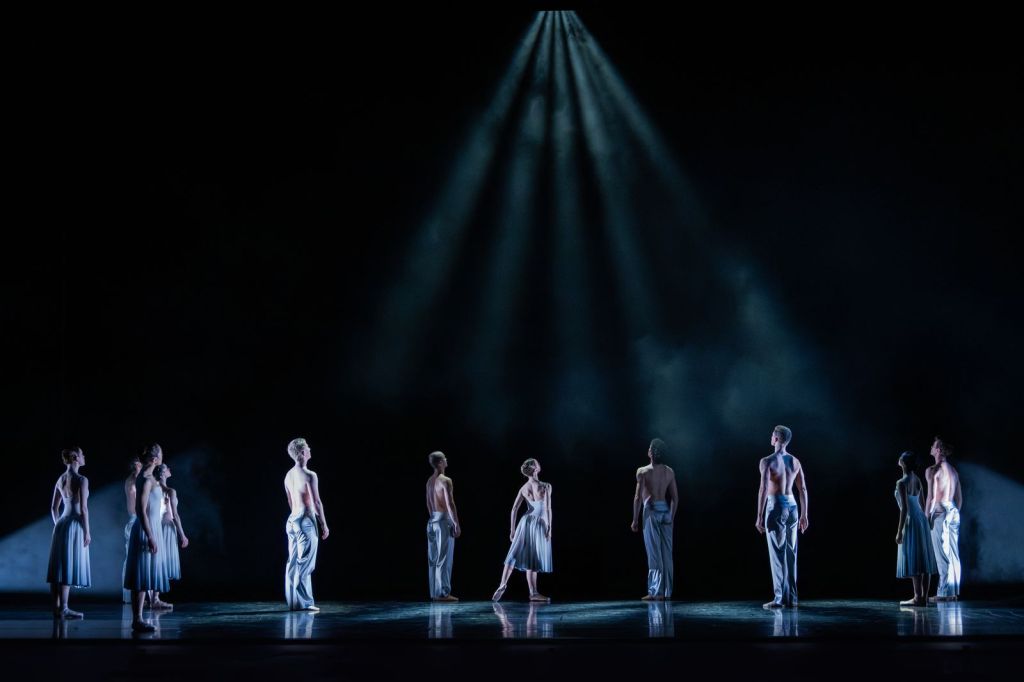
The opening work, Stephen Baynes’ “The Way Alone” was originally performed in Hong Kong in 2008 for a Tchaikovsky programme and is a response to some of the composers lesser-known music included some of his choral works. Firmly in the classical tradition the dancing was a direct response to the textures and rhythms of the music. the choreography emphasising the qualities of weightiness, graceful movements and subtle gestures as well as accentuating the dancer’s integration with aspects of light and shadow.
The work owed much to concepts of ritual with an elegance and refinement to the dancing which featured some beautifully articulated pas de deux and pas de trios.
The only problem with this sequence was that the recorded sound lacked the refinement of the dancing and created a disconnection between audio and visual. It was an issue that did not affect the other two works.

After the first interval was the premiere of Shaun James Kelly’s “Chrysalis” set to the Phillip Glass music “Metamorphosis” which was inspired by the Franz Kafka short story of a man who wakes up to find his body has been changed to that of a large insect or chrysalis.
The setting for the dance also gave a nod to Kafka’s other work “The Trial” with various figures, some in trench coats roaming the stage, divesting themselves of items of clothing , an act which provided a clever metaphor for transformation – the shedding of skin and the emergence of the butterfly from the chrysalis.
The music features Glass at his minimalist best with repeated phrases and eerie looping sequences. There were also long, enigmatic silences which were as expressive as the music and emphasised the notions of the dream, the surreal and the transformation.
The musical landscape with its abrupt, stark sounds was echoed by the dancers with their carefully choreographed movements, rapid changes and tense interactions.
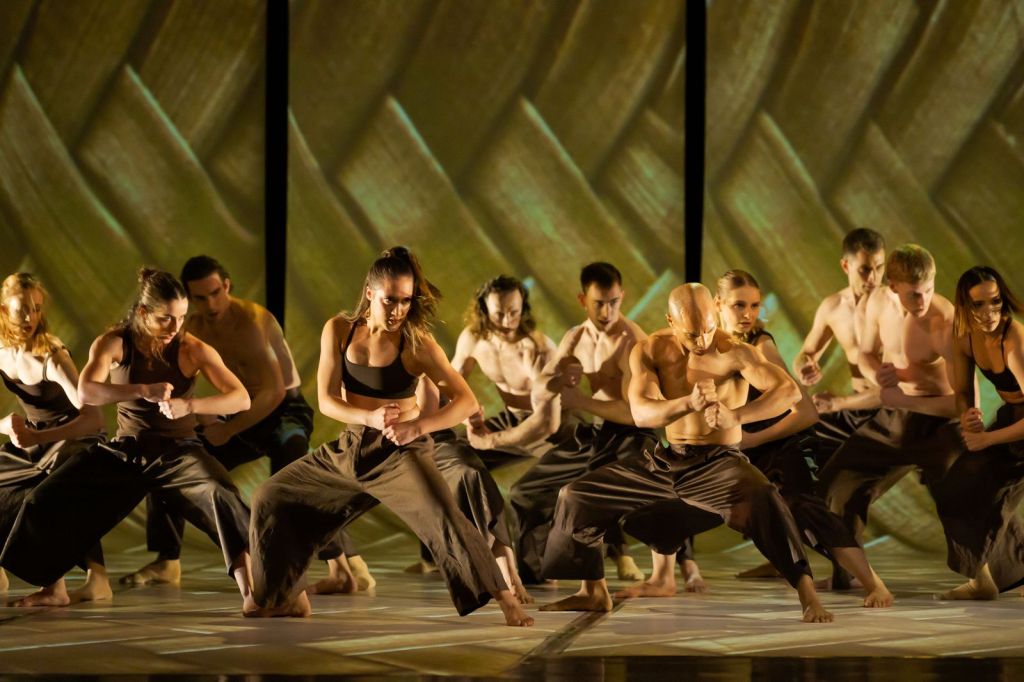
The third work on the programme was “Home, Land and Sea” choreographed by Moss Te Ururangi Patterson’s (Ngāti Tūwharetoa), the Artistic Director of The New Zealand Dance Company. This was the first the Royal New Zealand Ballet has partnered with The New Zealand Dance Company with members from both companies performing.
The stage featured five panels on which were projected images linked to the dance – tāniko, vegetation, clouds and sea.
The work combined contemporary dance and kapa haka suggesting elements of journey, history and tradition.
The music for the work composed by Shayne P. Carter had a harsh quality to it which was emphasised by the dancing where there was much angularity in the gestures and movements, combining the sinuous quality of contemporary dance with the intensity and athleticism of kapa haka.
The element of sound often associated with kapa hake -was also much in evidence – slapping, stamping and breathing, all adding to the physicality of the work.
In the latter part of the dance when the dancers became more dynamic and the music more aggressive, the roiling mass of dancers seemed to become a force of nature transcending their human condition to become god-like in their expression.

 New Zealand Arts Review