Reviewed by John Daly-Peoples
New Zealand Symphony Orchestra
Alexander Gavrylyuk
Auckland Town Hall
November 16
Reviewed by John Daly-Peoples
Opening the NZSO’s latest concert “Alexander Gavrylyuk”, conductor Vasily Petrenko spoke about the three works on the programme and what he saw as the links between them. The three composers had all left their native homes – Lera Auerbach and Sergie Rachmaninov from Soviet Russia and Bela Bartok from Hungary to escape the Nazis. He also noted the three composers search for freedom of expression and the nature of transformation in the three works.
The major work on the programme was Rachmaninov’s “Rhapsody on a Theme of Paganini” which has some interesting history or mythology to it . The nineteenth century violinist Nicolò Paganini was such a virtuoso, that many believed he had made a pact with the devil. Rachmaninov seems to have subscribed to that view as he includes a reference to the medieval melody Dies Irae (Day of Wrath) and some of the darker elements in the music reflect those diabolic aspects.
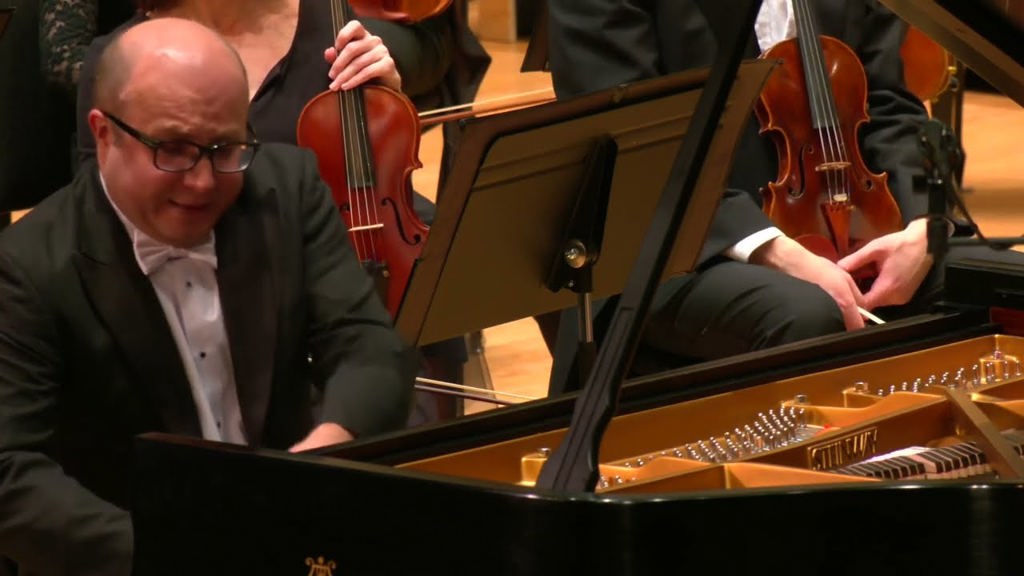
This drama and other elements were highlighted by pianist Alexander Gavrylyuk in a perfect performance that showed a perceptive approach to the music
He displayed a mastery of stylish playing, able to ignite the orchestra with his passion and drive.
His playing technique: changing tempos, charging through themes and varying the tonal qualities added to the excitement of the playing and appeared to enliven conductor Vasily Petrenko well as the orchestra.
Hunched over the piano his playing was by turns delicate, whimsical and ferocious. There were times when his sounds were like rippling water while at other times they were more like gushing torrents.
This was brazen and adventurous playing which slowly revealed the technical and emotional depths of the work moving from the childlike to the theatrical and onto the grand and funereal.”
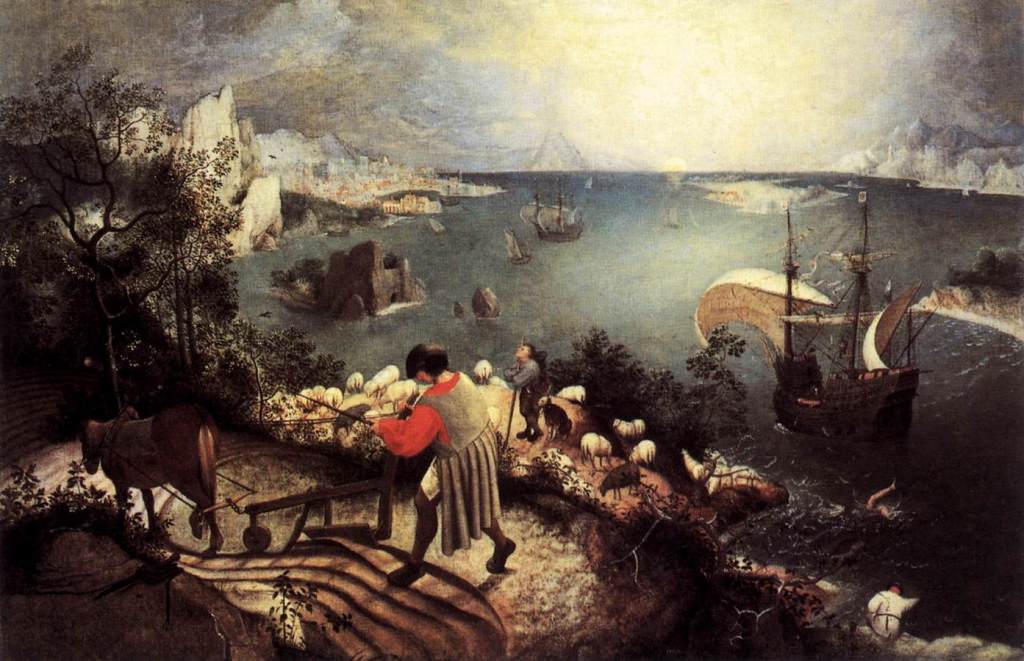
The first work on the programme had been Lera Auerbach’s “Icarus” which tells of the myth of Icarus who ignored his father Daedalus and flew too close to the sun, causing the beeswax securing his wings to melt and him to fall into the sea.
The composer said of the work “What makes this myth so touching is Icarus’s impatience of the heart, his wish to reach the unreachable, the intensity of the ecstatic brevity of his flight and inevitability of his fall.”
The opening strings and brass provided a sense of take-off and the exhilaration of Icarus. This was followed by a galvanised orchestra and flutes suggesting flight. Sounds of alarm from the orchestra signalled the coming disater and Concertmaster Vesa-Matti Leppanen brilliant little solo took a dreamlike diversion which became increasingly tense. This led to the insistent brass heralding Icarus’ fall.
The final sequences could be seen as the composer’s response to Bruegel’s painting “The Fall of Icarus” where the action of the event is reduced to a leg just visible, poking up from the water . The pulsing strings suggested the vibrancy of the sun which is a counterpoint to the disaster, the quivering sounds a refence to Icarus’ fall into the water and the scattering of feathers. The work ends with a gentle requiem suggesting Icarus becoming a mythic hero.
The final work on the programme was Bartok’s five movement Concerto for Orchestra
It was his last major work and can be seen as some sort of musical autobiography of his last few years having had to leave his native Hungary and settle in the US
Composed a couple of years after his escape from Hungary it traces out his journeying from a bleak Europe to a new life, moving from a dark period in his life to one of freedom and light. The music reflects this moving with ominous and threatening sounds through to lively and energetic melodies.
The work opened with sombre music punctuated by the flutes and raucous brass. Anguished strings confronted by ferocious brass, woodwind and percussion and the continued presence of the flutes sounded out the call for freedom.
There was a sense of evolving events and narrative and about remembrance and loss with whimsical passages as well as a constant sense of oppression and mystery.
While there were references to horrors and drama of WWII the work is filled with inventive music which was constantly evolving with a carnival-like sequence, playful sounds as well as hints of folk melodies and strains of Eastern music.
The success of the work was in part due to the focused conducting of Vasily Petrenko with his lively and energetic approach and his precise direction in shaping the music’s dramatic sounds

 New Zealand Arts Review