Categories
Reviews, News and Commentary

Cirque Du Soleil – Corteo: The mystery and delight of childhood and the surrealism of adult dreams.

Reviewed by John Daly-Peoples
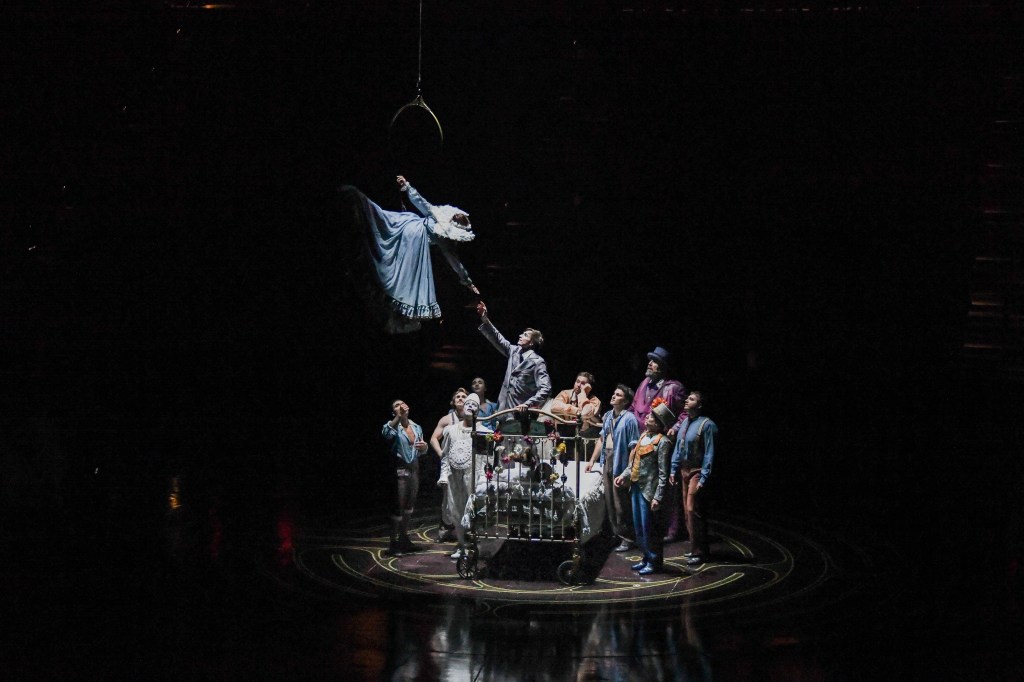
Cirque Du Soleil – Corteo

Spark Arena

Until November 9

Reviewed by John Daly-Peoples

Cirque du Soleil shows are always elaborate gymnastic displays, but they are always imbedded with a story or narrative which looslye holds all the characters and the events together. There is also a circus elemnst running through the shows, an element which recalls the mystery and delight of childhood and the surrealism of adult dreams.

The story line for “Corteo” is that we are welcomed to the last minutes of the life of the famous clown Mauro and are then present as he reminiscences about his great days of his life on stage. He lies in his bed and his former colleagues visit him, bringing back memories and some of his acts which are repeated as the angles hover over his death bed.

After establishing the reason for being there the evening takes on a rather casual approach to the narrative which we are reminded of occasionally with angels making their appearance and in one scene providing  Mauro with a set of wings and then, with a nod to the film ET Mauro also rode a bicycle up high, above the stage

The cast of circus characters that parade before Mauro are reminiscent of the closing scene in Fellin’s 8½ – a mixture of standard circus folk – ringmaster, clowns and acrobat along with the characters from Commedia dell’Arte.

This show, is one of the earliest of the Cirque shows, originally made in 2005 and since then has been performed to more than 12 million people and still has all the elements which make the shows impressive – world-class acrobatics, whimsical romanticism,  some clever buffoonery and  comedy all overseen by the angels floating on high.

Corteo, Cirque Du Soleil, Credit: Johan Persson

Unlike most other Cirque show which are set in a big tent the audience was seated on either side of the stage  which featured amazing displays of ability and agility where technical expertise and extravagant design were woven together with fabulous costumes, amazing lighting, humour, and enchanting live music. The musicians tucked away at the sides of the stage displayed not only great musicianship but were remarkable performers themselves as they negotiate their various instruments – violin, drums, keyboard, bass, percussion and guitar.

Some of the performances were more spectacular than others with some not given the attention they deserved such as the Crystal Balls sequence where the subtly of the performance was probably lost on most. But there were more dramatic routines such as the young woman suspended from five balloons who floated around Spark Arena being helped by dozens of audience hands as drifted and bounced giving all her helpers a “thank, I love you”.

All the routines had something to offer whether the languid female performers swaying from the chandeliers, the beds transforming into trampolines where the performers didn’t try  for height but rather split-second timing  and there was the traditional balancing act which showed real agility as well as looking as though the body was being turned in on itself.

There was even a slightly confusing small theatrical work telling the Romeo and Juliet story which seemed to be closer to a Punch and Judy show full of the knock about comedy.

Then there was the clever duet between the Ringmaster and musicians with the Ringmaster whistling a Mozart melody before going into a ferocious duel with the violinist, backed by the orchestra.

This is a show packed with drama, comedy, colour and surprise to delight the whole family.
Categories
Reviews, News and Commentary

An Arts Festival show which has the reviewers wondering

John Daly-Peoples

Auckland Arts Festival

Scott Silven “Wonders”  

March 19 – 24

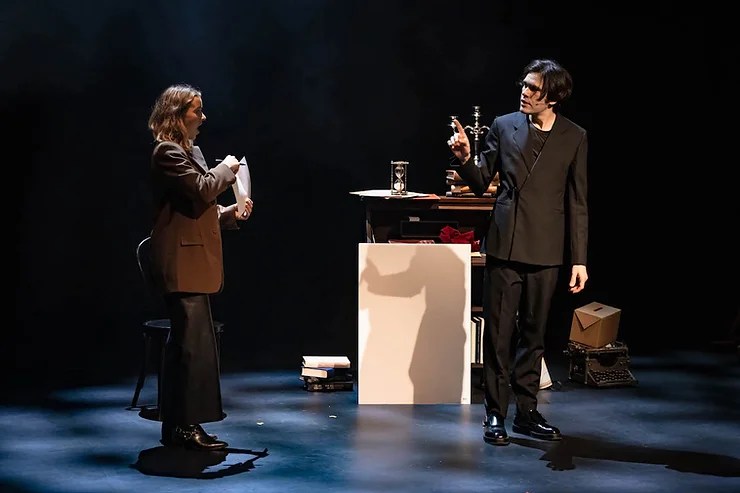
One of the more intriguing acts on at the Auckland Arts Festival this year will be Scott Silven’s Wonders.  The clairvoyant, mentalist, and performance artist has dedicated his career to unique form of theatrical  illusionism which fascinates audiences.

He studied hypnosis in Milan at 15, gained recognition from the American illusionist David Blaine at 19, and headlined one of the United Kingdom’s most prestigious theatres at 21.

In Wonders, Silven invites the audience on a journey through his childhood memories in the lowlands of Scotland, connecting his participants with the myth and mystery of the landscapes that shaped him. This show is said to go beyond the traditional theatre experience, offering an interactive, audience led, performance that explores the power of connection through illusions.

What is extraordinary about his show is the response of reviewers who grapple with trying to explain what they have witnessed in seeing one of his shows

A Melbourne Time Out reviewer said of Silven, who talks to the audience about his early exploration of the family attic –  “he also explored the corners of his own mind, and he claims that he began to discover his ability to make mental connections to the world around him in weird and wonderful ways. Interspersed in this narrative are demonstrations of Silven’s extraordinary skill as a mentalist, which involves audience members at every turn. His ability to convince that he’s reading minds – and that random audience members are able to perform similar feats under his instruction – is absolutely dazzling. The complexity of his work is spectacular, and he draws together the threads of just about every “ta-dah” moment in the final moments of the show. Even non-believers, like myself, will be blown away by the artistry.”

A Sydney reviewer was also baffled  “Silven does not perform your typical brand of magic, using visual illusions and tricks to stun the audiences. Instead, he uses the power of language and of the imagination to draw the audience in, fostering magic out of the power of human connection. One by one, he brought members of the audience up and seemed to be reading their minds. In reality, a lot of the time he was actually guiding them as to what to think. That prepared monologue at the start that felt out of place was actually an ingenious way of planting motifs and ideas in the audience’s mind that they would bring back to him later. Every little bit of speech had a purpose.

Some moments felt scarcely believable. When an audience member said their prize possession as a child was a “Snoopy” dog, Silven reached under his chair and pulled out a billboard he had written earlier predicting that the prize possession of the audience member he called upon would be a “Snoopy” dog. Is this too much of a coincidence? Did he have plants in the audience? Did he have an assistant furiously typing up a billboard backstage and slipping it under the stage curtain to his chair when we weren’t watching?”

And The Guardian reviewer said of another of his shows  “Silven’s use of storytelling and setting creates something genuinely magical, and it’s a joy to willingly suspend disbelief and slide into a sense of wonder not experienced since childhood.

And with that comes connection. Not the psychic kind Silven suggests, but the kind forged by a shared sense of discovery. Across the table, eyes are shining, guards are down, and there’s the odd report of goosebumps. The childhood game of Chinese whispers, further confounded by whisky, brings things to a delightfully silly finish.

I emerge still a sceptic, but certainly not a cynic.”