In the early hours of Sunday morning, 3 May 2015, thirty-one-year-old Sheku Bayoh set out to walk home from his friend’s place after watching a boxing match. Just hours later, he had lost his life when police attacked and asphyxiated him on the streets of his hometown – Kirkcaldy, Fife.
Lament for Sheku Bayoh adapted and directed by Hannah Lavery from her book attempts to examine and explain the tragic event. While expressing the grief and the effects on the family it also looks at the endemic racism which exists in Scotland.
It questions the notion of Scotland as a liberal and welcoming country and whether this liberalism is only a veneer.
The work was originally commissioned by the Royal Lyceum Theatre, Edinburgh and filmed on stage at the Royal Lyceum Theatre as part of 2019 Edinburgh International Festival.
The work is structured like a traditional Greek drama with all the action happening offstage and the three fates represented by Saskia Ashdown, Patricia Panther and Courtney Stoddart commenting on the action and the ethical nature of the events and of the characters.
The lone guitarist, Beldina Odenyo acts as the chorus who opens the play with a gospel-style version of Roberts Burns’s “A Man’s a Man for A’ That” .
Much of the play uses the words from accounts by eyewitnesses and the police testimony along with comments made by news media. These lines are repeated in an almost poetic manner over and over like a refrain.
“I heard the man shout to get the police off him and they never moved”
“The BBC understands… The BBC understands”
Mr Bayoh’s muscles were bulging, He wasn’t listening to commands and he looked intimidating and he looked aggressive”
“Move along”
“Textbook training”
“Appropriate action”
There is also a repeated reference to the thirty seconds that it took for Bayoh to die once he had been wrestled to the ground and that thirty seconds is counted down in the final moments of the play.
The stage is in shadows and the three actors move through the dark brooding space articulating the poetic expression of grief for the individual behind the headlines which mirrors the tragic events behind the death of George Floyd 2020 death in America. The three actors switch skilfully from impassioned, expression to forensic detailing of events creating an ominous and threatening atmosphere
Bayoh’s family launched a campaign seeking justice and a statutory public inquiry was established in 2019 to determine the manner of his death, and whether ‘actual or perceived race’ had played a part in it. The inquiry which has been delayed several times will not actually begin until later this year.
Nightsong’s “A Stab in the Dark” opens with the Old Testament Noah moaning, “Why God chose me to save the world is a fucking mystery?” We never really get to deal with Noah’s question but there are lots of other ambiguities and mysteries to be explored.
With “A Stab in the Dark” there is a melding of two interpretations of the phrase. The main plot line is about a stabbing which has occurred and the police investigation into the murder. Another less specific part of the narrative is around the notion of the random stab in the dark, where we make choices or decisions which are just as likely to fail as succeed.
The main character John (Joel Tobeck) is accused of murdering Ann (Alison Bruce) and much of the work focuses on his interview with the police in which he tells of meeting his doppelganger Warren who invites him to dinner where he meets Ann, Warren’s wife.
After a short affair with Ann which is discovered by Warren Ann is killed and Warren disappears. Just who is the killer is a bit murky.
However, this is a Surrealist/Absurdist drama in the tradition of Ionesco or Beckett so neither story or staging follows traditional presentation. The interviewing police officer is a large puppet, several times the size of John and towers over him during questioning. Various elements of the production are outsize such as a large glass of water, a fly twice the size of John’s head, a metre long cigarette and a giant pen.
Alongside the main plot line, we encounter Noah and his story of the Deluge as well as a wooden puppet who informs us that it is by turns a sandpiper, a crocodile, a caterpillar / butterfly and a peacock. The symbolism of these events and animals never really becomes clear but does provide for some philosophical and psychological ruminating. The play can be seen as an inquiry into the nature of the psychotic as well as dealing with the issues of guilt and innocence, trust and lies, reality and illusion
The play would normally have been on stage but with this Covid era production the creators have used other theatrical techniques such as Noh Theatre and film noir gives the work a visual density which is mesmerizing.
The set which is just a large circular panel is ingeniously used as a podium, a table and a screen which along with the puppets give the play a disconcerting appearance where everything is tilted, on edge and bizarre.
Joel Tobeck gives a compelling performance as he switches between his two characters as well as being presented in a filmed version of John. Ann played by Alison Bruce is only partially and fleetingly seen but adds a nice dimension to the work. Carl Bland voices the giant police inspector with a commanding, overbearing tone and Dave Fane, the puzzling Noah.
When you first encounter Yona Lee’s installation “An Arrangement for 5 Rooms” from the stairway at the South Atrium of the Auckland Art Gallery, the handrail on your right doesn’t end at the top of the steps like a normal handrail. It just keeps going, becoming part of a maze of interlinked pipes, becoming part of the architecture.
Many years ago, when I worked at MOW Power Design a Bauhaus trained architect on the staff asked me about a handrail I had designed, wanting to know what it was saying apart from my notions of functionality. For him the handrail was not just there to hold onto, it was an extension of the eye, the hand and the footstep, leading them into the next space. It was not just a utilitarian addition to the architecture it was an intimate part and experience of it.
Lee’s installation provides that idea of design and architecture being more than pragmatic shapes and spaces. The network of pipes alerts us to the hidden infrastructure of pipes, tubes and conduits which are all around us but often invisible, underground and inside walls. These become metaphors for interconnectedness of the world in general.
Across five rooms she has installed a maze-like construction from hundreds of metres of stainless-steel pipe of the same shape and texture as the gallery’s handrail taking the hand and eye into a series of surreal Alice in Wonderland-like spaces. The circuitous pipes are both a guide to travelling through the spaces and an experience of the spaces.
In the journey through the five rooms we encounter a domestic interior, a café, a bus, a picnic area and possibly a public bathhouse.
The lone double bus seat sits with its back to the view of Albert Park and a room away is the bus call button (which can be buzzed) and a hanging strap fixed to a pipe five metres above.
The domestic interior is like a small apartment – a bunk room, a dining space, work bench some hanging plants and a fan which gently blows a shower curtain.
Some of the piping snakes outside through the windows of the gallery to an outside “picnic” area under the trees in Albert Park. It features a table, two benches an umbrella and at night the shapes are picked out in neon tubing. There is also a letterbox stuffed with some irises.
Her constructions recall the quote of Le Corbusier’s that “A house is a machine for living in” and also the exposed functional structural and utilitarian elements of the Pompidou Centre in Paris
The artist says of the work “‘My ambition for this project is to activate the whole building. To break down the barriers between what is art and non-art, the inside and outside, the day and night, and the public and private. The highlight of the work is where it transitions from the inside to the outside. There is a sense of freedom in this moment that I believe is necessary for this current environment.”
The show is open-ended with various interpretations – as structures or systems, as serious or playful, as authoritarian or utopian, as utilitarian or pointless. But there is one unanswered question – who delivers the irises each day.
A few years ago Waiheke’s Sculpture on the Gulf was included in the New York Times top things to do and the event is regarded by many as one of the great outdoor sculpture exhibitions, not just for the standard of the sculpture but also for the experience of the two kilometre walk with a backdrop of bush, hills, sea and headlands as well as panoramic views of distant Auckland and the islands of the gulf.
Now in its tenth year the event attracts tens of thousands of people for the three week show which features over fifty works by thirty artists although this year one work is still in transit from China.
The works range from the monumental Corten steel “Head Within” ($39,800) by Jorge Wright to the small-scale resin works of Joel Dyer ($4850 – $9850). Wright’s work features two smaller head shapes inside a large head referencing the various levels of “self” we have and our perceptions of ourselves and others.
Julie Moselen, “Continuum Amplas
There are works which link to nature such as Margaret Feeney’s “Bird and Insect Bath” ($8000) as well as abstract art works such Julie Moselen’s “Continuum Amplas” ($32,800) which is a Corten steel version of a Mobius Strip. There are also several works which reference the history of Waiheke’s Māori and European history.
Aiko Groot, Three
Aiko Groot was one of the artists to exhibit in the first Sculpture on the Gulf in 2015 with a kinetic work which was at the time wired up to an electricity source. This year his “Three” ($70,000) is powered by solar panels which are incorporated into the works design. Three stainless steel columns create a grove of metallic trees which mimic the movement created by winds, the upper ‘branches’ slowly moving in what seems to be a random or unnerving fashion.
Chris Moore. Introduced Species
The most successful artist as of opening day has been Chris Moore who sold six of his large, curved forged steel “Introduced Species” ($14,500 – $18,450) which reference the impact of introduced plants which have impacted on the local flora.
Several of the works have links to the manu whenua of the island. On the main headland is Janine Williams’ “Black Picket Fence” ($59,800) a five metre square enclosure composed of black painted palings which sees the space enclosed partly as a European picket fenced area and partly with palings designed for surrounding a pah site.
With Te Riongo Kirkwood’s “Te Rangi I totongia a Tamatekapua” ($38,000) the artist recalls the clash between Tainui and Arawa for authority over Waiheke. The large piece of basalt is rent into four sections referencing four dimensions of life with discs of glass signifying the blood spilt in the battle.
Anton Forde’s “Te Kotahitanga o Whakamaru” ($145,000) consisting of fifty-five pou with pounamu adornment positioned above the harbour at Matiatia in an arrowhead formation act as a welcome and a protector, again referencing the contested position of the island. Forde also addresses issues of climate change in using jarrah rescued from the Australian bush fires
Several works are of a more architectural nature with Francisco Carbajal’s Unified Peaks” ($35,000) addressing the issues of sustainability related to the design and construction of buildings. His work is made from mainly recycled materials taken from building sites.
Jonas Raw, Reflect
Jonas Raw has constructed “Reflect” ($158,850) a small shelter which has a beautifully finished interior of cedar and an exterior sheathed in reflective polished steel. As one circles the exterior the whole area of Matiatia is reflected – the water the boats the various buildings and the hills enclosing the bay. This panorama contrasts with the meditative interior.
Natalie Guy’s three works titled “The Genius Loci of the Chapel” ($22,500 – $24,000 ) are a response to Le Corbusier’s Notre-Dame du Haut chapel at Ronchamp and John Scott’s Futuna Chapel in Wellington. These two buildings are examples of early cotemporary modernism where the architects were interested in the geometry of structures and in the play of light and colour from stained glass on the interior surfaces. The deep-set windows of the Ronchamp Chapel in Guys work are pared back to their abstract forms as fragments of the original.
Denis O’Connor, The last Post Office
Denis O’Connor’s has returned to his delving into the history of the island with “The Last Post Office”, a work which follows on from some of his previous built works for Sculpture on the Gulf such as the “Tanglers Cave” in a horse float and “The Archive Wine Bar” which is now part of the Mudbrick Bistro. With “The Last Post Office” he has envisaged a post office with sets of private post boxes inscribed with the names and nicknames of local identities. Inside he pays homage to Waiheke’s history and the cultural identities who have had connections with the island including Sam Hunt and Janet Frame.
With several of the works a little background is necessary as with Virginia Leonards set of ceramic constructions. These seven “Urns for Unwanted Limbs and Other Things” ($4200 – $22,000) were inspired by the artists struggle with the complications of possible foot amputation. Rather than being containers for actual objects these are containers for the concepts of real or imagined things. These highly coloured, ornamental works have their origins in the reliquaries of many religious where the body parts of saints are preserved, taking on great spiritual significance with healing properties.
Lang Ea, KA BOOM!
Lang Ea’s “KA BOOM!” initially seems to be a playful celebration of spring with showers of red blossom bursting from the Pohutukawa. But this celebration is also a remembrance of the thousands of lives lost to the Kymer Rouge in the artists home country of Cambodia.
SOTG Small Works Showcase
Janine Williams, Virginia Leonard, Lang Ea, Julie Moselen
At the Waiheke Community Art Gallery there is an exhibition SOTG Small works Showcase featuring maquettes, smaller works and sculptures by walkway artists and invited exhibitors.
Jorge Wrights has a small “Head Within II” ($1250) and Julie Moselen has a version of her “Continuum Amplas” with “Balance” ($6500) in Corten steel.
Virginia Leonard is showing a further three urns (($3500 – $3800) and there are also maquettes or models by Aika Groot, Anton Forde, Janine Williams, Lang Ea and Chris Moore
Also included in the show is an archival history of Sculpture on the Gulf with maquettes and archival imagery from previous SOTG events held in the gallery’s permanent collection.
Over the next few months, the Auckland Art Gallery will be showing a wide range of exhibition with works of art from the 14th century through to contemporary International and Pacific works.
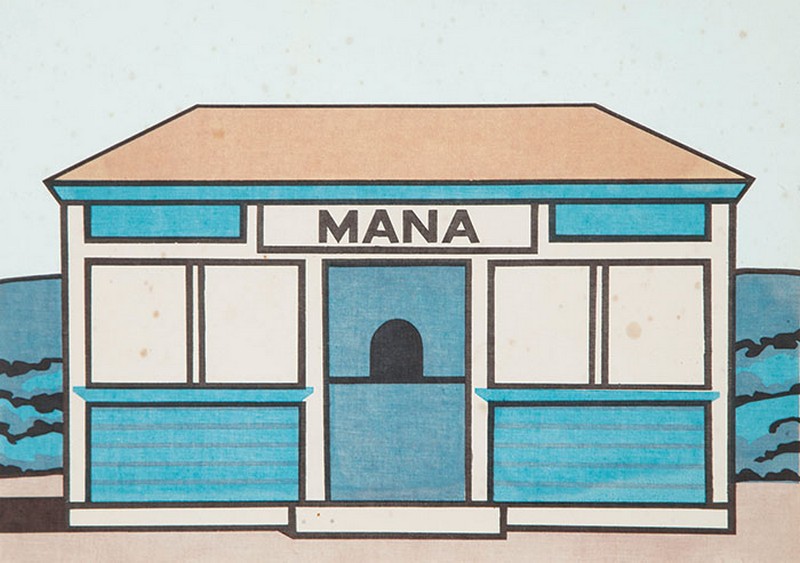
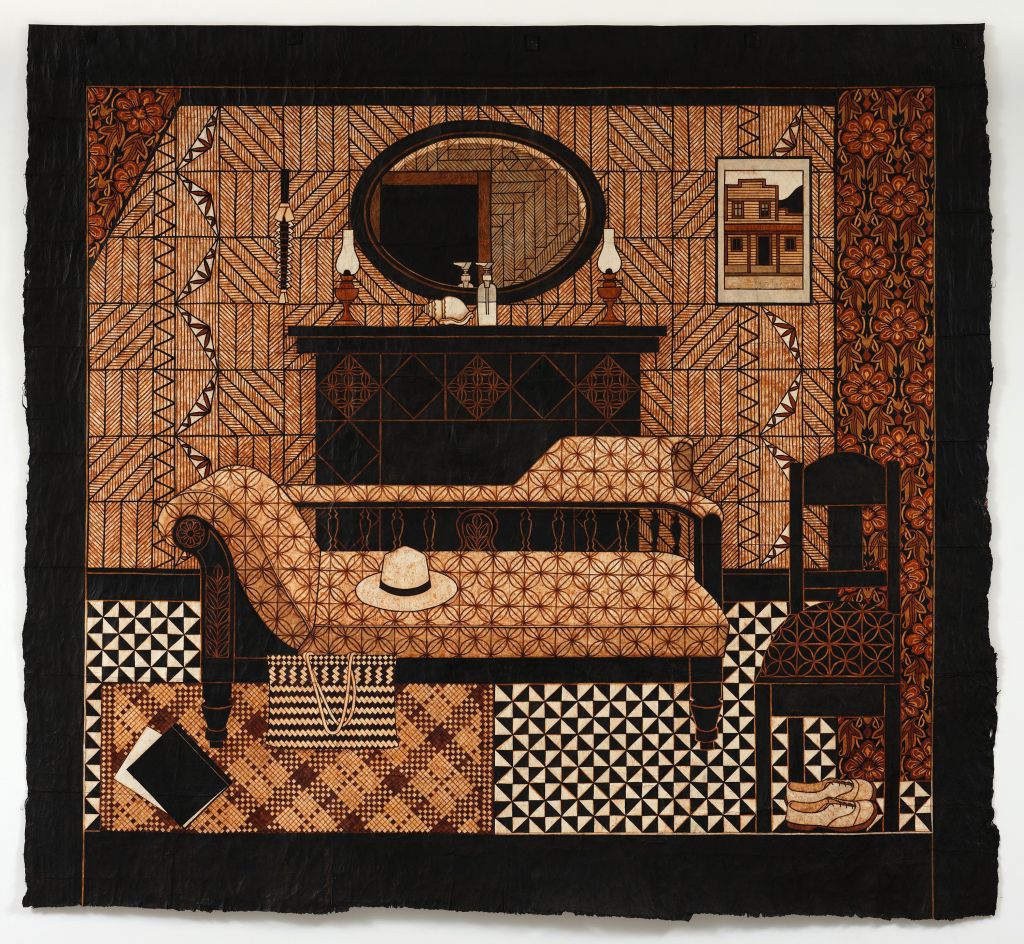
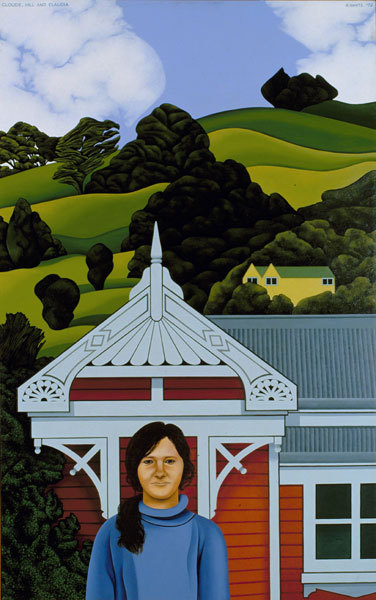
There will be the controversial British art duo Gilbert & George, icons from the Christian Orthodox tradition, contemporary feminist art from New Zealand as well as installation by Yona Lee and Sione Monū and Manuha’apai Vaeatangitau
Yona Lee, An Arrangement for 5 Rooms
Yona Lee: An Arrangement for 5 Rooms From Sat 26 Feb – A free exhibition
Yona Lee makes large, maze-like installations from hundreds of metres of stainless-steel pipe which are cut and welded to form elaborate linear structures, bisecting and transforming gallery spaces and the activities that take place there.
In her installation Yona Lee: An Arrangement for 5 Rooms she negotiates the relationship between domestic and public spaces and objects. The five rooms of the Gallery adjacent to Albert Park will be the site of a meandering journey through both densely and sparsely filled rooms.
The Auckland-based, New Zealand–Korean artist’s work can be variously interpreted – as structures or systems, as serious or playful, as authoritarian or utopian, as utilitarian or pointless.
For her installations Lee maps the gallery space analysing its particular spatial and social dynamics. In the case of her Auckland show Lee picks up the signature handrail of the Gallery’s architecture and weaves it playfully through the building, turning it into sculpture, and supplying new seating and lighting for visitors. She even pushes the railing into Albert Park where it knots and pauses in the shade of a neighbouring tree. Incorporating familiar signs, like the fabric of Auckland Transport seating and bus bells, this new sculptural installation will interweave common experiences of transit for many across the Auckland region.
She says of the work “‘My ambition for this project is to activate the whole building. To break down the barriers between what is art and non-art, the inside and outside, the day and night, and the public and private. The highlight of the work is where it transitions from the inside to the outside. There is a sense of freedom in this moment that I believe is necessary for this current environment’ says Lee, prior to the exhibition’s opening.”
Jessicoco Hansell, AUNTIFM: To be of Secret Service
Declaration: A Pacific Feminist Agenda From Sat 26 March – A free exhibition
Declaration: A Pacific Feminist Agenda brings together 12 prominent artists from across the Pacific whose works set a feminist agenda by bringing to the fore the most pressing issues of our times: climate change and resilience, activism, social justice and tino rangatiratanga.
Artists in this exhibition draw on the power of matrilineal knowledge, put their bodies on the line and amplify voices to reflect an approach to feminism that empowers the agency of all genders. Presenting major commissioned projects, rarely seen artworks and ephemera from institutional and private collections,
Declaration: A Pacific Feminist Agenda will feature works by Jasmine Togo-Brisby, Marti Friedlander, Jessicoco Hansell, Taloi Havini, Lonnie Hutchinson, Ioane, Sione Monū, Suzanne Tamaki, Latai Taumoepeau, Molly Rangiwai-McHale & Luisa Tora, Kalisolaite ’Uhila and more.
Sione Monū, Image from 2020 film “Only Yesterday”
New commission – Sione Monū & Manu Vaeatangitau: Kindred: A Leitī Chronicle From Sat 26 March – A free exhibition
Tāmaki Makaurau-based Tongan artists Sione Monū and Manuha’apai Vaeatangitau present Kindred: A Leitī Chronicle, a multisensory installation that projects leitī (transgender women) experiences into a futuristic alternate reality. Executed in Monū and Vaeatangitau’s animated and playful graphic style, each portrait pays homage to these leitī and their significance in these artists’ lives.
Set in a time where colonisation has not occurred, we follow the journeys of ultimate leitī in an alternate world firmly embedded in the familiar landscape of Tāmaki Makaurau. Their portraits include important leitī leaders such as activist and advocate Joey Mataele and Monū’s family members Tisha Manumua and George Manumua. Together they move freely in a utopian world, undertaking mundane activities such as eating sushi whilst listening to The Meaning of Mariah Carey audiobook and spiritual pilgrimages to Māngere Mountain.
Further drawing viewers into the work is an accompanying soundscape which, like many of Monū’s video works, intertwines speech with minimalist music to evoke emotional responses, memories and space to dream. This mashup of imagery and sound, crossing between the material and immaterial, creates dreamlike sequences that are at once fleeting, humorous and fragile.
Suji Park, “Dust Collector”
Suji Park: Meonji Soojibga | Dust Collector From Sat 9 April – A free exhibition
Suji Park is a Korean-New Zealand ceramic sculptor and artist, known for creating pieces of distorted human forms, vessels and abstract objects.
Her Dust Collector project consists of many heads. Heads that turn, pushed and pulled, pressed and cracked, holding space within them like vessels. The forms themselves are imaginatively based on the traditional totem poles found in South Korea across the countryside.
Of her exhibition Park says “When I was travelling around visiting small villages in Korea I could find janseung (Korean totem poles), sotdae (wooden poles or stone pillars with carved birds on their top), doltap (a stone-built pagoda) and sinmok (sacred trees) in the entrance way. While the origin of these structures is unknown, they are believed to bring protection.”
Park’s installation reveals her creative handling of clay, drawing from linguistic, cultural, ceramic and sculptural traditions – its highly material display will be a sumptuous feast of hand-melded traditions.
St George and the Dragon. Crete, c1500
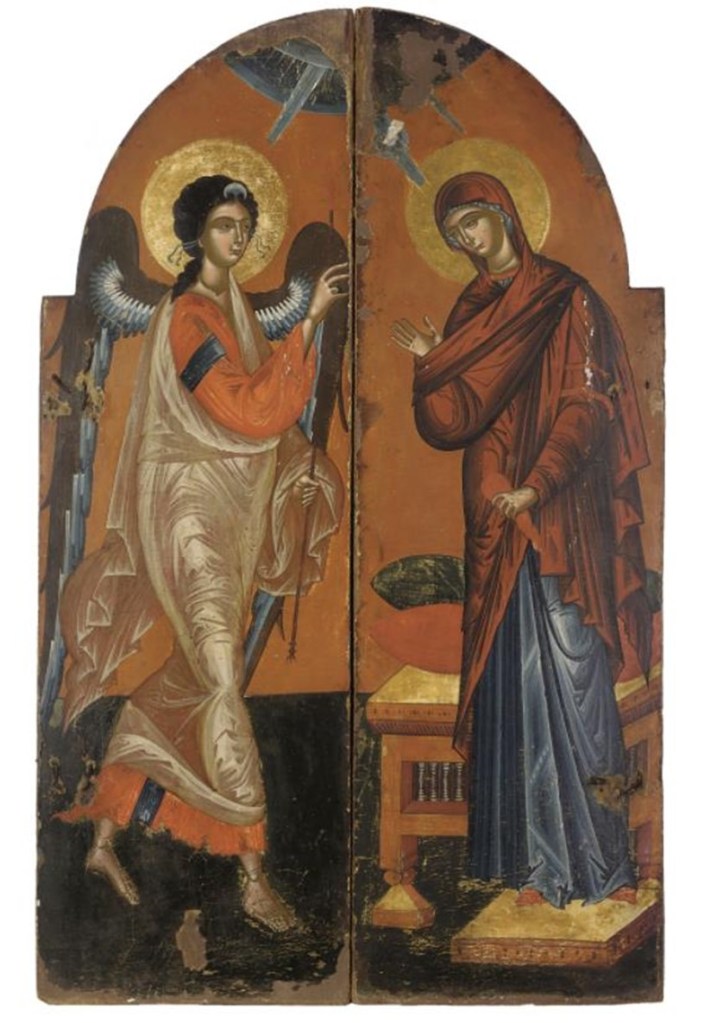
Heavenly Beings: Icons of the Christian Orthodox World
From Fri 15 April – Adults $24.50
Heavenly Beings: Icons of the Christian Orthodox World introduces the profound and timeless tradition of icons, the devotional art of the Orthodox Christian world. This ancient visual tradition, which until 1453 was centred in the Byzantine Empire, is surveyed through over 100 hauntingly beautiful icons dating from 1350- 1800. To believers then and today such images of holy figures, painted on gilded wood panels according to age-old methods, serve as ‘windows into heaven’ during the act of prayer. The works also show how Christian iconography was created and developed based on the Bible, myth and invented stories.
The exhibition includes work by some of the great icon-painting regions and workshops and of Russia, Crete and beyond. The spirit of the Russian artist-monk Andrei Rublev and the touch of Cretan masters, Angelos Aketantos, Andreas Pavias, Nicholas Tzafouris and Constantine Tzanes animate icon after icon, created in deference to the divine. Discover the beauty and power of icons, and their dynamic role in the lives of pilgrims, priests and everyday believers of the early modern world.
Gilbert and George
Gilbert & George: The Tāmaki Makaurau Auckland Exhibition From Sat 7 May – Adults $24.50
Often controversial, sometimes cheeky and always questioning, British artists Gilbert & George have been creating art together ever since they met in 1967 at one of London’s leading art schools. From the very beginning, they have appeared as subjects in their own art and shared a belief in ‘Art for all’.
For Gilbert & George anything – and everything – is a potential subject matter for art. They have peered closely at the big questions of life: religion, sex, violence, hope, addiction and death. Through their films and ‘Living Sculptures’ they have challenged taboos, fought artistic convention and taken a fresh look at the way we live now. From their own bodies to their long-time home in London’s East End, nothing is too personal or too forbidden for these two artists whose work is a portrait of life today.
Developed exclusively with Gilbert & George by Auckland Art Gallery Toi o Tāmaki, The Tāmaki Makaurau Auckland Exhibition brings together existing and new work from the 21st century to look back over a joint career that has courted controversy, challenged the status quo and championed alternative views. Exhibiting work direct from Gilbert & George’s own personal collection, it brings some of the most exciting of British art to New Zealand for the very first time.
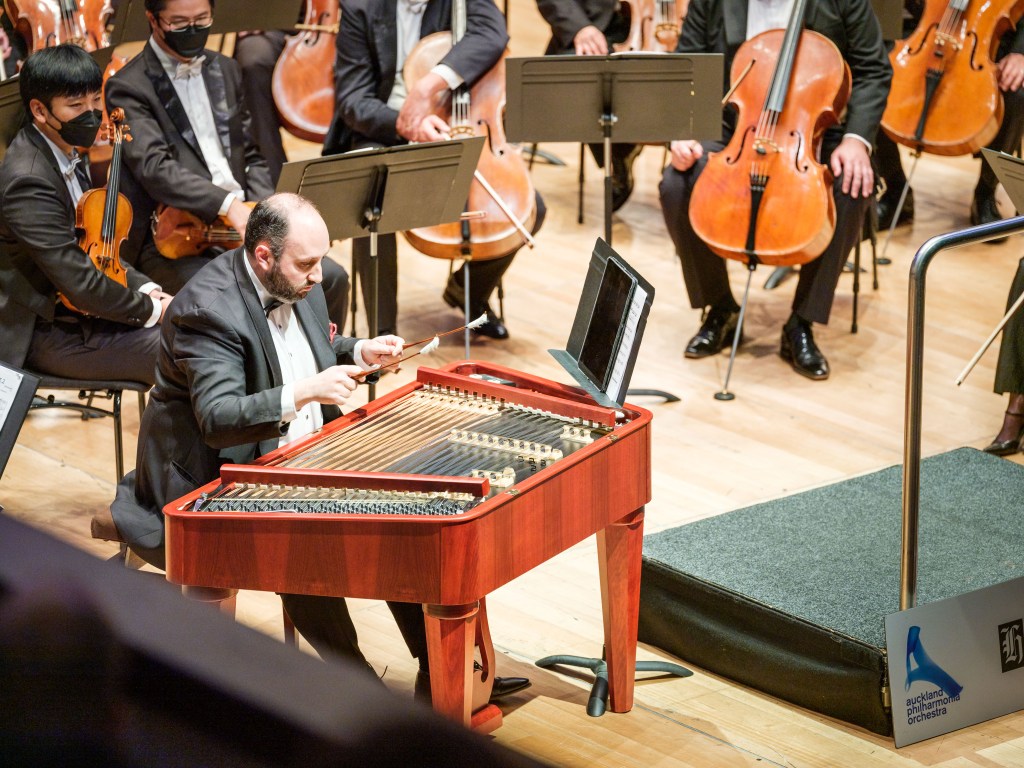
The APO’s opening concert for the year, “Magnificent Mendelssohn” was a strange event. One hundred people scattered through the circle of the Auckland Town Hall above an empty auditorium. There was not the usual hectic crowd and buzz of an opening night but one of the main topics of conversation was the about the luck of having acquired seats in the ballot for the concert.
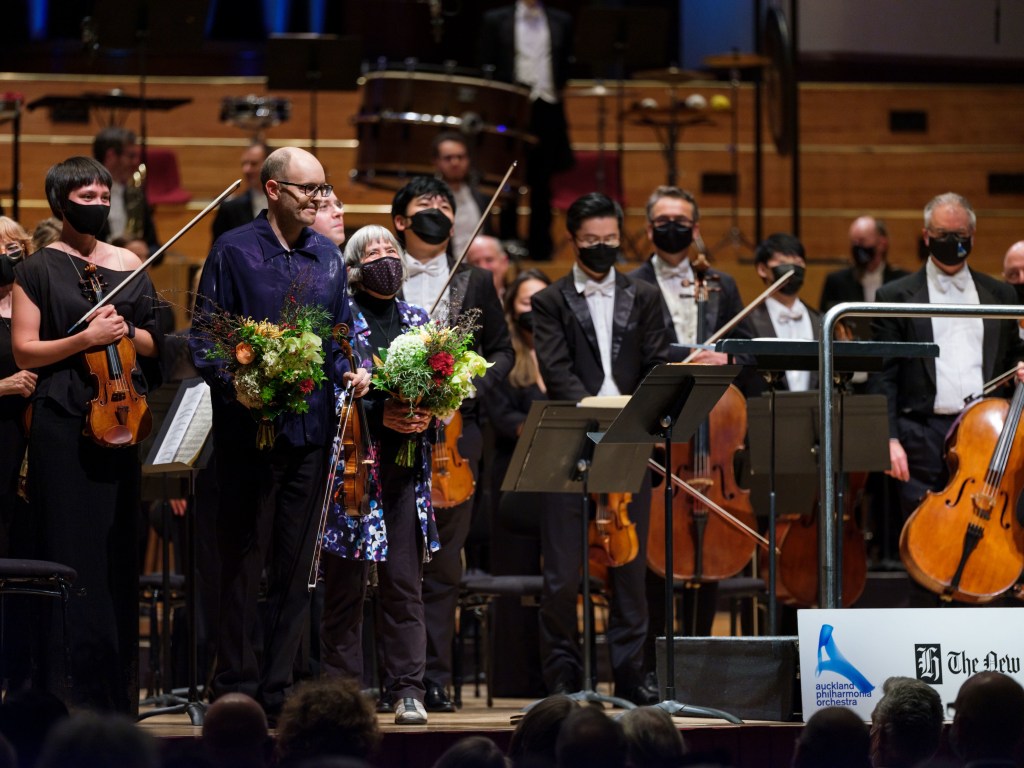
Along with the masked audience, members of the orchestra were all masked except for the brass and woodwind players along with conductor Giordano Bellincampi
The opening work was Niels Gade’s “Echoes of Ossian” based on the mythic poems of the Scots poet James Macpherson or more likely the large painting “The Dream of Ossian” by Ingres, where poet Ossian dreams of warriors, and maidens.
The triumphal sounds of the music, the surging brass and strings conveyed a sense of a new dawn which was appropriate for the occasion as the orchestra entered its new challenging times.
Gade had a connection with the next work on the programme, Mendelssohn’s “Violin Concerto” having conducted the first performance of the work in 1845 replacing an ill Mendelssohn.
Mendelssohn had spent nearly ten years writing the concerto adhering to the classical style of Beethoven while containing much of the romantic ethos which leads on to the music of Brahms. In several ways he broke with tradition such as having the violin make an instant introduction to the work . Then there is no break between the first and second movements, with a bassoon note held between the two and the work also calls on the soloist to function as an accompanist to the orchestra for extended periods.
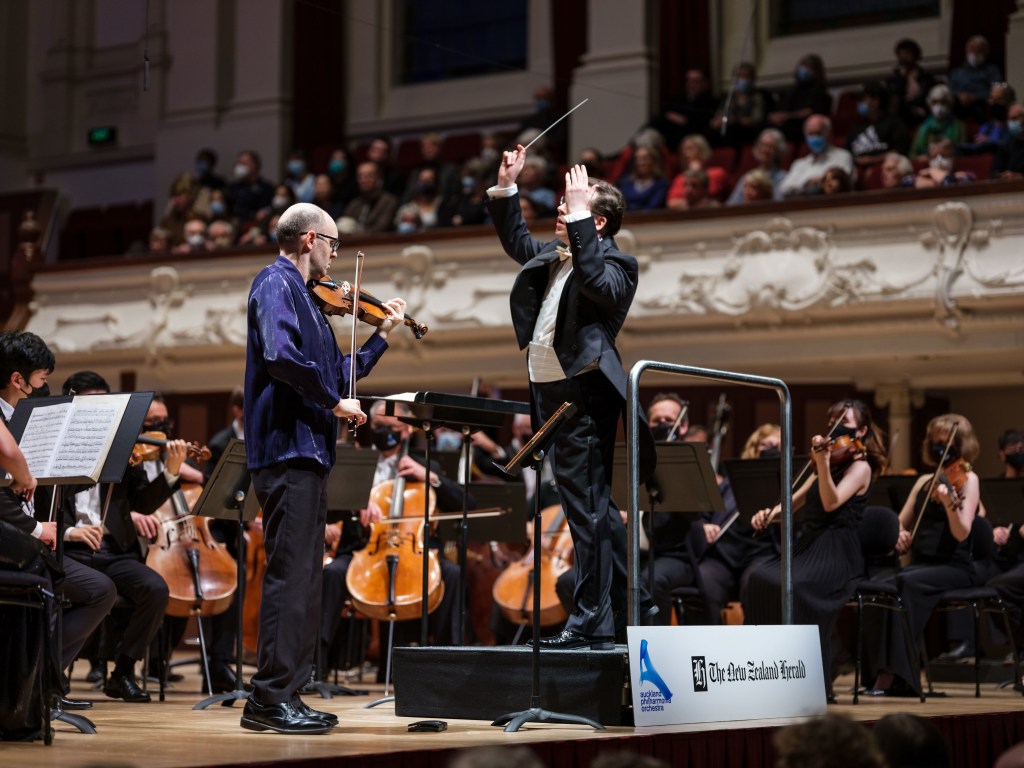
Monique Lapins Photo: Adrian Malloch
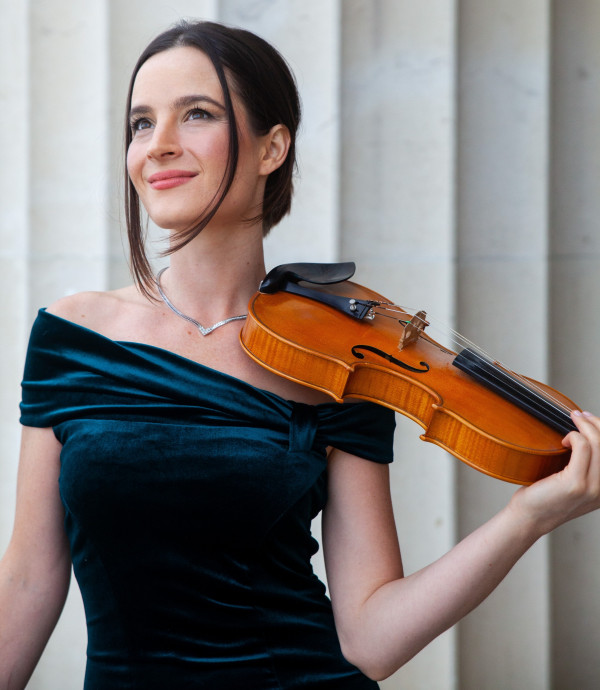
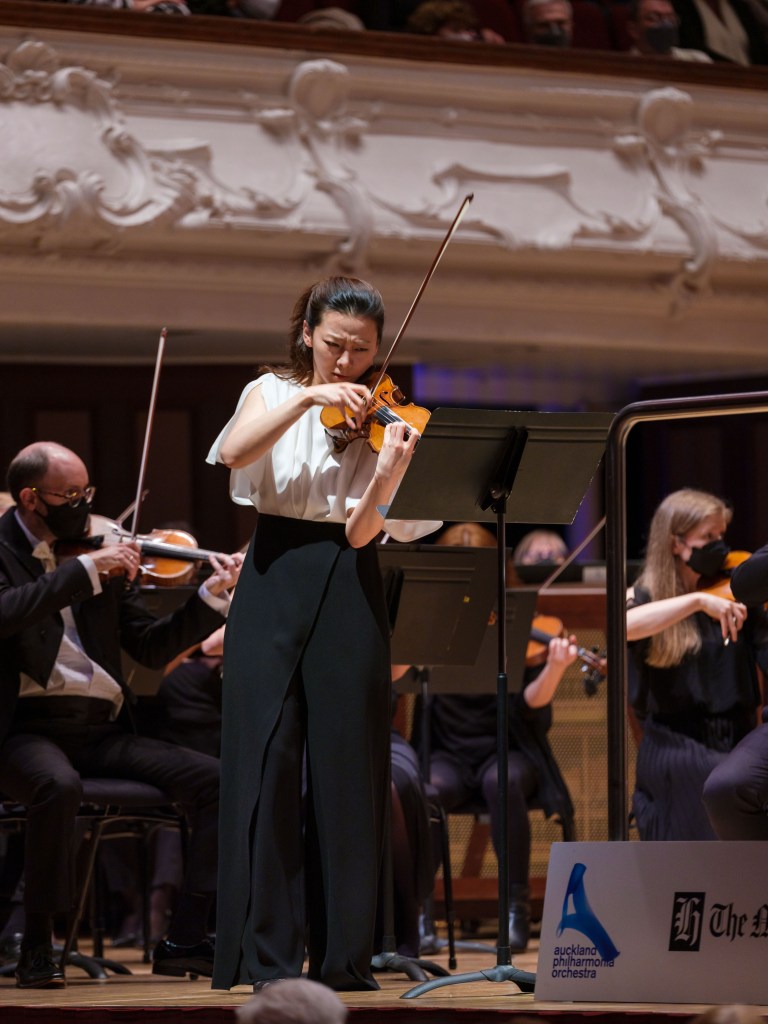
Soloist Monique Lapins who is the Second Violinist for the NZ String Quartet opened the turbulent first movement with a relentless vigour, grappling with the music as though she were in competition with the orchestra. At times her playing was raw, almost feral while at other times she exposed the delicate and sensual elements of the music.
While very much in control there were times when she struggled with the music, as though it was going to overwhelm her but she tackled the work with lively self-confidence, even the passages which Mendelssohn must have written to technically challenge any performer.
The dynamic energy she put into the playing was echoed in her general deportment, her body contorted and writhing as though immersed in an internal struggle.
In the second movement with its more restful mood there were passages where she was dominated by the orchestra as though sinking under the weight of the music but this changed when she erupted like a blossoming flower with a exuberant intensity.
In the third movement in which many of the motifs of the first movement were restated she responded in an almost playful way engaging with the music in a very physical manner even appearing to do a surprised jig.
Throughout she managed to conjures up some graceful unforced tones with crisp articulation heightening the romantic sweep of the music, discovering emotional depths in the music
The major work on the programme was Dvorak’s “Symphony No 8” which is like the soundscape to a Czech epic tale. Like other composers of the period this is nationalist music like Sibelius “Finlandia”. We encounter nature, landscape, events and dancing, it is the music of adventures, heroics, and larger than life figures,
The music is focused on the landscape and ethos of the country with Dvorak presenting changing moods and unfolding spectacle. He moves from the playful to the picaresque, from the dramatic to the contemplative. There is wit and there is angst.
The third movement is full of shimmering, sounds created a spring-like impressions full of joy followed by passages of dark foreboding. The fourth movement opens with a big bold march tune which erupts into a sequence of Czech dance tunes such as the polka, Dvorak turning these simple melodies into clever musical inventions.
Conductor Bellincampi guided the orchestra through the lively four movements with a familiar flair and the musicians responding to their first big outing with one of their scintillating performances.
Brian (Todd Emerson), Bill (Roy Billing), Nancy (Annie Whittle), Ben (Keven Keys) Jess (Beatriz Romilly) Photo. Andı Crown
Grand Horizons by Bess Wohl
Auckland Theatre Company
ASB Waterfront Theatre
Until March 5
Reviewed by John Daly-Peoples
Before Grand Horizons opens, we hear the strains of the Fred Astaire song
A fine romance with no kisses A fine romance, my friend, this is We should be like a couple of hot tomatoes But you’re as cold as yesterday’s mashed potatoes
This is not going to be a sweet romantic comedy
Then we are watching Nancy and Bill in their Grand Horizons retirement home as they watch Dan presenting the weather on TV1. He is forecasting thunderstorms for Auckland and he’s not wrong. Within minutes Nancy has delivered a lightning bolt.
“I think I would like a divorce”
To which Bill replies
“Right”
This sets in train the upheaval and gradual dissolution of what was supposedly a 50-year picture-perfect marriage. For Nancy it is an opportunity to start a new phase in her life – have her own cheque account and to eat in a restaurant by herself. For Bill its bewilderment.
For their two grown-up sons and their daughter in law, it’s a devastating betrayal. Their notions about love, family and security are shaken. There is Ben, the wealthy lawyer, Brian the earnest drama teacher and Jess the well-intentioned couple’s counsellor who all have their own approaches and solutions – something is wrong they will fix it.
The play could have been written by Roger Hall with its setting in a middle class retirement home living room and the instantly recognisable characters – the grumpy old man, the put-upon wife, the grown-up kids who aren’t sure about how they are supposed to be adult.
Roy Billing (Bill) and Annie Whittle (Nancy) Photo. Andı Crown
The children don’t what to hear them talk about sex at their age and the occasional revelations of infidelity while not all that dramatic for the audience are a shock to the children, highlighting their own problems
Brian is a bit aggrieved that they didn’t get divorced earlier like normal people. “Adults cannot do what they want,” he says. “The defining feature of adulthood is that you never get to do what you want.”
The play has its serious side in exploring the problems facing all families with aging parents. Who is the child and who is the adult, who is the caretaker and who is the recipient in the family.
What holds the play together is the deft direction of Jennifer Ward-Lealand who has put together a strong cast, and developed well defined characters to create this particular family. She has followed the dictum of Tolstoy that “Happy families are all alike; every unhappy family is unhappy in its own way.” So, we see the various family members with their strengths and their flaws and their different ways of loving. She also understands the power of the astute small acts, gestures and objects which helps build tension and comedy as the play unfolds. So we see Nancy salting and peppering Bill’s evening meal and she prepares a sandwich for him as he is about to leave the home for good.
Whittle plays Nancy with a fine sense of self possession and aplomb which suddenly turns to an authentic glee when she extolls the pleasures of cunnilingus. Unlike all the others she is solidly in control of what she wants, what she does and what she thinks.
Roy Billing does an excellent job of Bill. A job of not doing much. He can stand, sit or sprawl with a dazed expression, a lost man who life has passed by. When he attempts to realise his dream of being a stand-up comedian his performance is both endearing and forlorn.
Ben played by Keven Keys is the true older son who feels overburdened and overprotective which comes out as just being overbearing just managing to hold his rage and bossiness in check
Beatriz Romilly as Jess as the stereotypical counsellor can’t help but tell everyone that as a professional she knows best, resorting to her counsellor approach, trotting out predictable lines and approaches such as getting them to hold hands and tell each other what they want from the marriage. Romilly perfectly captures her earnestness in voice and manner.
Todd Emerson plays Brian a gay teacher who is working on a school production of The Crucible and to please all the children (and presumably the parents) he has created parts for two hundred children. This desire to satisfy people is in contrast to his failing to help his parents and his own precarious gay relationship where he trying to work out his own priorities.
The two additional cast members, Andrea Kelland and Esau Mora provide some excellent foils to the tension in the other characters – Kelland as the animated unmarried older woman Carla and Mora as the untroubled exuberant gay lover.
One of the pleasures of this production is the set designed by Tracey Grant-Lord. The clean white interior is an elegant setting for the perfect background to a disintegrating marriage as well as providing the opportunity for a real shock at the end of act I.
Because of Covid 19 the audience was restricted to one hundred people, distanced throughout the theatre. They may have been reduced in number but their responses were as energetic as if there had been a full house.
Following on from the impressive “Toi Tū Toi Ora: Contemporary Māori Art” exhibition at the Auckland Art Gallery last year the new exhibition Kowhaiwhai at the Tim Melville Gallery features ten Māori artists providing their versions and responses to the notion of Kowhaiwhai.
Kowhaiwhai patterns are central imagery to much Maori art and are used in a variety of way which allows artists to address and expound on concepts of the land, history, myth, genealogy and the natural world. The patterns can be used as decoration or as pure form in paintings and design as well as integral to architecture.
The various designs of kowhaiwhai derive from the study of natural forms and often take their names from them. There are designs related to plant forms, wave shapes , the kaka beak, the shark and fish.
In this exhibition some of the artists use the design in a simple way while others have created more complex works.
Russ Flatt, “Aroha mai, aroha atu
The photographs of Russ Flatt seem to address the beginnings of Kowhaiwhai designs seeing their patterns in the masses of flowers in “Kahikatoa” ($2750) and the shape and design of leaf patterns in the small photograph of “Aroha mai, aroha atu” ($4500). The larger work of “Aroha mai, aroha atu” which has what seems to be a partial human / ethereal figure also refers to the idea that the kowhaiwhai designs embody spiritual connections.
Several works by Ra Gossage reference the traditional form of kowhaiwhai with “Kowhai ngutu kaka” – Kaka-beak Flower ($1950) and “Pohutukawa Flower” ($3250). Kura Te Waru-Rewiri also uses traditional forms but within a circular format such as “He kokonga o te ngakau” ($4750) which creates a more dramatic design.
Tracey Tawhiao, Light Beacon
Tracey Tawhiao also uses a version of traditional patterns but these are applied to glass bowls which she calls “Light Beacon” ($500 large and $350 medium). Where Tawhaio’s work appears to hold light the two ceramic works by Maiai McDonald “Upu Pere” ($6750) and “Pouaka Iti” ($1500) could contain something darker more mysterious.
The large, crocheted wool powhenua which greets the visitor at the entrance to the gallery by Lissie and Rudi Robinson-Cole is a brightly coloured feminist version of the pou, traditionally marking a place of transition This work which combines a female European traditional craft with the traditionally male carving practice is both playful and substantial.
They have also shown three photographs of whakairo, abstract representations of faces in multi-coloured crocheted wool versions such as “Paki” ($1650). There are also the whimsical “Anahera Angel Wings” ($450 each) combining notion of European angels and taniwha.
Nigel Borell,
Nigel Borell’s work seems to be seeking a new way of expressing concepts using traces of kowhaiwhai design and areas of colour. This combination of the descriptive line of kowhaiwhai, landscape and abstract colour as in “E manu rere I” ($4250) creates ethereal images and enigmatic ideas.
Hiria Anderson, “Electric Kowhaiwhai – Teohaoturoa Whare on Turongo St” and “Abstract Koru & Lock – Teohaoturoa Whare on Turongo St
Where Borell’s works may be ethereal the paintings of Hiria Anderson are embedded in the real world of the present. Her kowhaiwhai patterns are the wallpaper framing a power socket in “Electric Kowhaiwhai – Teohaoturoa Whare on Turongo St” ($3000) and in “Abstract Koru & Lock – Teohaoturoa Whare on Turongo St” ($3000). In these she presents the patterns as part of her lived environment.
Patrick Lundberg, Denys Watkins, Matthew Browne (details)
Patrick Lundberg, Three Big Works
Denys Watkins, Save the last Dance for Me
Ivan Anthony Gallery
Until February 22
Matthew Browne, Moment of Tangency
Gow Langsford Gallery
Until February 19
Reviewed by John Daly-Peoples
Three recent exhibitions of work by Patrick Lundberg, Denys Watkins and Matthew Browne show artists using colour in both subtle and dramatic ways expressing ideas and emotions.
On first seeing Patrick Lundberg’s latest show of “Three Big Works” one is reminded of William Blake’s line about seeing “ a World in a Grain of Sand”
Patrick Lundberg, Untitled
His exhibition of small painted spheres and other geometric shapes which are fixed to the walls in a seemingly casual manner taking on the appearance of a map of the heavens creating something of the ambivalence we have in regarding the universe seeing it as something between ordered and the random.
One work ($8200) consists of twenty-four of these shapes while the other two ($6200 each) have 16 shapes.
The work can be appreciated at a distance seeing them as a map of the universe or up close where the individual spheres and shapes can be studied. The delicate lines and colours of these miniature works reinforce the Blake line along with another of his quotes about being able to,
Patrick Lundberg, (detail)
“Hold Infinity in the palm of your hand And Eternity in an hour.”
Some of the small spheres themselves are intricately painted so that they look like tiny planets while some of the small red ones could be mistaken for Jaffas.
The Denys Watkins paintings in his “Save the last Dance for Me” show range from compact work such as “Heathen Dance” ($2500) to the larger “Boomsville” ($8000)
Watkins is wide-ranging in his references to popular culture, music, art, architecture and other cultural forms. An obvious connection here is with “Ronettes” ($2500) referring to the three members of the 60’s and 70’s girl group, The Ronettes.
Denys Watkins, Frank L W
Some of the titles are obstruse while others provide a sense of Watkins’ way of thinking through his creations. Presumably “Frank L W” ($4800) refers to Frank Lloyd Wright, the mandala like shape of the painting referencing the geometric forms which Wright saw as having spiritual dimensions related to Celtic or Theosophical notions.
Similarly, “Louis K” ($4800) could be referring to the abstraction of the American architect Louis Kahn while Rudolph S ($4800) connects to the work of Rudolph Steiner and his spiritual approach to the arts, drama and architecture,
Then there is “Holland Park” ($2500) which could be a reference to the English artist Howard Hodgkins, the small painting looking like one of artist’s colourful, gestural works.
Denys Watkins, Holland Park
Where Watkins has a fluid approach to colour Matthew Browne’s exhibition Moment of Tangency takes a more rigorous approach. In speaking about the artists geometric colour works writer Emil McEvoy notes about the artist that “In Browne’s process, a painting evolves in an unplanned and improvised manner, as each new component – a coloured shape, line or layer – intuitively responds to the former. They unfold one element at a time until a composition comes together where successive lines, forms and planes meet.”
Matthew Browne, Onism
The titles of his works generally refer to ideas or concepts it is difficult or impossible to define, attempting to find ways to describe the indescribable or transitory thoughts.
With many of the works the artist has resorted to titles which could gave come from the Dictionary of Obscure Thoughts and Emotions with definitions such “Trumspringa” – the temptation to step off your career track and become a shepherd in the mountains or “Daguerrologue” – an imaginary interview with an old photo of yourself, while the entire series of works titled “Morii” is defined as The desire to capture a fleeting experience.
Matthew Brownw, Mori 9
This approach results in paintings which often look like components of a three-dimensional jigsaw, as though there are missing components which if discovered will solve the problem, answer the question and there is a certain cinematic quality to some of the work with bands of colour sliding across the surface.
They can also seem like the components of a fashion designer patterns, seemingly abstract shapes which when combined and assembled in the correct manner result in a complex structure or shape.
His work explores Minimalism through experiments with space and geometry, through the use of colours, exactitude, and precision manipulating images and arrangements of objects in order to challenge the perception of the viewer. It is as though there is a secret language in his work to be discovered.
While there is a conceptual approach with his work this is balanced by a playful and quirky aspect to the paintings with the artist enjoying the spontaneity of assembling collages,
The works range from the relatively simple “Socha” ($4500) with two interlocking shapes and “Morii 17” through to the larger and more intricate works such as “Onism” ($18,000) and “Flashover” ($18,000).
While colour contrasts are a major aspect of the show his “Pouri” ($18,000) features a dominant black which overwhelms the smaller slices of colour emphasising the importance of shape.
The various shapes have connections with Abstract Geometric Art and artists such as Ellsworth Kelly and Josef Albers as well as the sculptures of Henry Moore and Barbara Hepworth.
Hei Taonga mā ngā Uri Whakatipu | Treasures for the Rising Generation: The Dominion Museum Ethnological Expeditions 1919–1923
Te Papa Pres
RRP $75.00
Reviewed by John Daly-Peoples
Māori were the subject of many books and monographs throughout the nineteenth century but these often lacked a systematic or scientific approach It was not until the early twentieth century that proper ethnological studies were undertaken the most important being four expeditions by teams from the Dominion Museum. Their studies coincided with the end of World War I and the Spanish Flu Epidemic and at the time of several major hui which celebrated the return of Māori soldiers from the battlefields of Europe. These hui which involved many tribes, featured performance, demonstrations of Maori arts and crafts as well as, food preparation.
In the early years of the twentieth century there was a burgeoning of ethnographic studies around the world particularly in the Pacific, the most notable being the studies done by Margaret Mead in the early 1920’s which resulted in her book “Coming of Age in Samoa”. It was a characteristic example of twentieth century ethnography which placed reliance on observation rather than statistics for data. That book which had an underlying notion of cultural determinism caused some later 20th-century ethnographers to question both the accuracy of her observations and the soundness of her conclusions
Expeditions and studies by Mead and others were generally undertaken within a colonial framework where the input of the indigenous people was only as subject matter and had no say in the planning, observations and recordings of the events and interviews.
A New book “Hei Taonga mā ngā Uri Whakatipu, Treasures for the Rising Generation” tells the story of the four expeditions that The Dominion Museum undertook in 1919–1923 and the efforts of early twentieth century Māori leaders, including Sir Apirana Ngata, Sir Peter Buck (Te Rangihiroa), James Carroll, and those in the communities they visited, to pass on ancestral tikanga for new generations.
The expeditions made by the Dominion Museum were initiated by Ngata’s and travelled to tribal areas across The North Island to record tikanga Māori that Ngata believed might be disappearing.
Ngata wrote about the issues in the 1920’s saying “It seems to me that the language must be maintained. Indeed the English language fails in appeal to those subtle things that influence the mind & the heart of the Māori no matter how well educated he may be … So also must we hang on to Māori arts and crafts”.
The book provides insights into the ways in which efforts had been made to acknowledge the need to engage in preservation and to see Maori as part of the cultural fabric of the country.
These ethnographic expeditions, the first in the world to be inspired and guided by indigenous leaders used then cutting-edge technologies that included cinematic film and wax cylinders to record fishing techniques, art forms (weaving, kōwhaiwhai, kapa haka and mōteatea), ancestral rituals and everyday life in the communities they visited.
James McDonald, Henare Te Raumoa Baineavis,and Elsdon Bestr at a recoding session with an unnamed man at the Hui Aroha in Gisborne 1919
The first of these was the Hui Aroha, held at the Gisborne Racecourse and billed as “The Largest Meeting of Māori ever attempted.” The hui also saw the official arrival of the Māori Battalion back to New Zealand. The team from the Dominion Museum used the opportunity to record the various activities on film, on phonograph along with general observations, interviews and discussions
They also attended the 1920 welcome to the Prince of Wales in Rotorua, visited communities along the Whanganui River (1921) and in Tairāwhiti (1923). The doctor-soldier-ethnographer Te Rangihīroa the expedition’s photographer and film-maker James McDonald, the ethnologist Elsdon Best and Turnbull Librarian Johannes Andersen recorded a wealth of material.
The accounts of each of these expeditions features observations by the various members of the team, an overview of the daily proceedings along with photographs of the events and participants. The book itself is something of a study of the ethnographic process and provides an example of the way in which other such international expeditions should have been undertaken.
James McDonald and Johannes Anderson
James McDonald acknowledges that as a European ethnographer engaging with and filming the indigenous people was difficult and that it was the involvement of peoples like Ngata and Te Raumoa Baineavis which ensured the success of their enterprises.
The book also provides biographical material on many of the important Māori leaders of the time and how they were able to incorporate their knowledge of tikanga with European concepts of law, social history and science. The lives of the Europeans engaged in the work are also of interest with the work of Elsdon Best, the photographer James McDonald and the Danish polymath Johannes Carl Anderson who was responsibility for the sound recordings during the expeditions.
The appendices include two articles by Apirana Ngata, one on the terminology of whakapapa where he links the notions of weaving, the architecture of the meeting house and genealogical structure. The other article is a detailed account of the relationship terms used in the study of genealogy
It’s a significant book recounting remarkable times in the history of New Zealand revealing some remarkable people who attempted to understand and record the history, skills and tikanga f Māori
The book is superbly designed and the inclusion of original and contemporary photographs provides a real insight into the period of these expeditions.
The authors of the various chapters are Wayne Ngata, Arapata Hakiwai, Anne Salmond, Conal McCarthy, Amiria Salmond, Monty Soutar, James Schuster, Billie Lythberg, John Niko Maihi, Sandra Kahu Nepia, Te Wheturere Poope Gray, Te Aroha McDonnell and Natalie Robertson