Categories
Reviews, News and Commentary

North by Northwest takes a comic turn

Review by John Daly-Peoples

Antonia Prebble (Eve Kendall) and Ryan O’Kane (Roger O. Thornhill) Image Andi Crown

North by Northwest

Written by Carolyn Burns

Screenplay Ernest Lehman

Directed by Simon Phillips

Auckland Theatre Company

Auckland Waterfront Theatre

Until November 19

Reviewed by John Daly-Peoples

“Roger. This is silly”

So says Eve Kendall to Roger Thornhill after being rescued off the face of Mt Rushmore at the end of “North By Northwest”. the latest production at Auckland Theatre Company.

She is right. The whole play seems to be a bit silly, continually turning the dramatic events which occur throughout the play which have been lifted from the film into comic moments.

The play follows the movie scene by scene and also word for word. Just in case you haven’t seen the movie the plot concerns Roger Thornhill (Ryan O’Kane) a twice-divorced New York advertising executive who is mistaken for a man named George Kaplan and abducted by criminal masterminds. He escapes their clutches and a thrilling chase ensues taking him from New York to Chicago and all the way to South Dakota.

Over this time he is variously force-fed bourbon, arrested, beaten up, seduced, shot, pursued and nearly blown up by a plane and then chased across the stone heads of the presidents at Mount Rushmore.

What was a spine-tingling drama  has been turned by director Simon Phillips into a witty romp which takes all the tropes of the chase / espionage movie and gives them a comic twist.

In many ways the approach emulates Hitchcock’s own style of working with humour not far from the dramatic action and although Roger Thornhill  is an ordinary man caught up in  events out of his control, he also demonstrates a few James Bond qualities.

Phillips and designer Nick Schlieper’s set uses simple props on wheels, supported by a square metallic grid of walls that becomes doors, balconies and the edges of buildings. On either side of the set are production suites where miniatures are filmed and projected onto the rear of the stage to enhance the on-stage action. Car chases are filmed using a rotating model hillside, a model plane replaces the biplane from the film and four of the actors faces replace the presidents on Mount Rushmore.
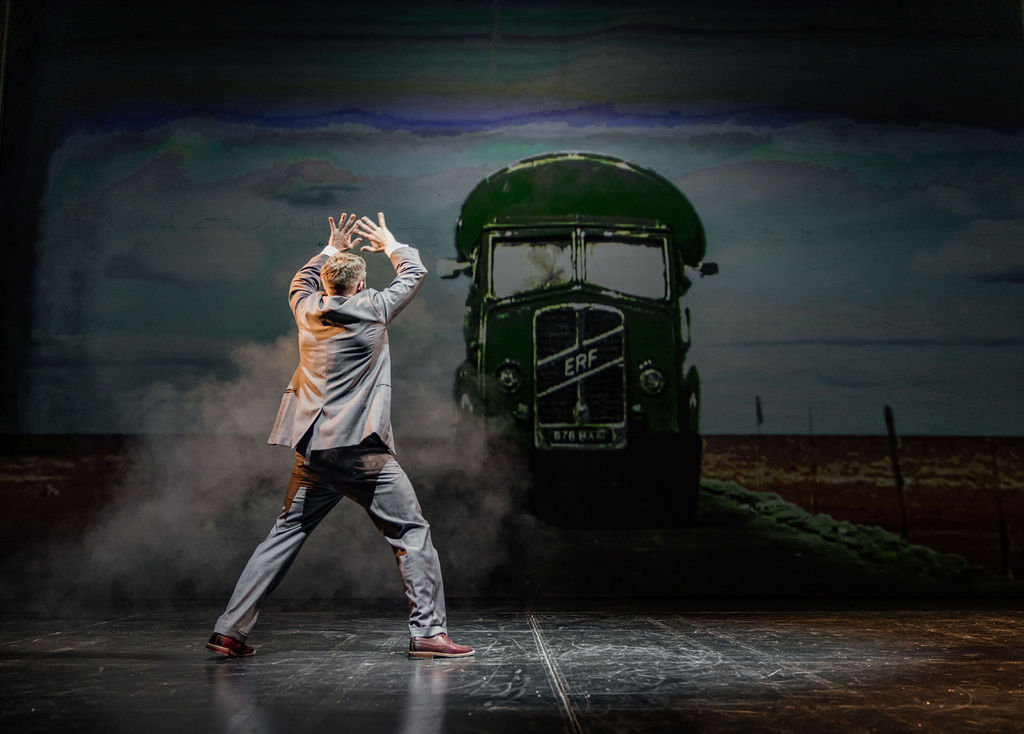
Image: Andi Crown

Cary Grant who played the original Thornhill with a mixture of bafflement and nonchalance but in the play Ryan O’Kane goes for more of the utterly panicked as he races from disater to disater with a pace  and animation which is riveting.

Antonia Prebble  in the role of the femme fatale  Eve Kendall, the professional spy and part-time seductress is totally convincing and an ideal foil to O’Kane.,

The other ten members of the cast paly a myriad of roles from cops, train steward, FBI agent, clerks, auction-goers with Roy Snow as the arch villain   Philip Vandamm,

In the effort to mimic all the scenes from the film the play suffers occasionally from some unnecessary  and overly hectic scenes. At least the actors haven’t spoilt the fun by trying out bad American accents.

Categories
Reviews, News and Commentary

Rooms: Portraits of Remarkable New Zealand Homes

Reviewed by John Daly-Peoples

Rooms: Portraits of Remarkable New Zealand Homes

By Jane Ussher and John Walsh

Massey University Press

RRP $85

Reviewed by John Daly-People4s

New Zealanders have a fascination with homes and interiors evidenced by the sales of numerous magazines on architecture and house interiors. The former mainly deal with the forms, spaces and structures of building with the other focused on objects, decoration  and the use of the spaces.

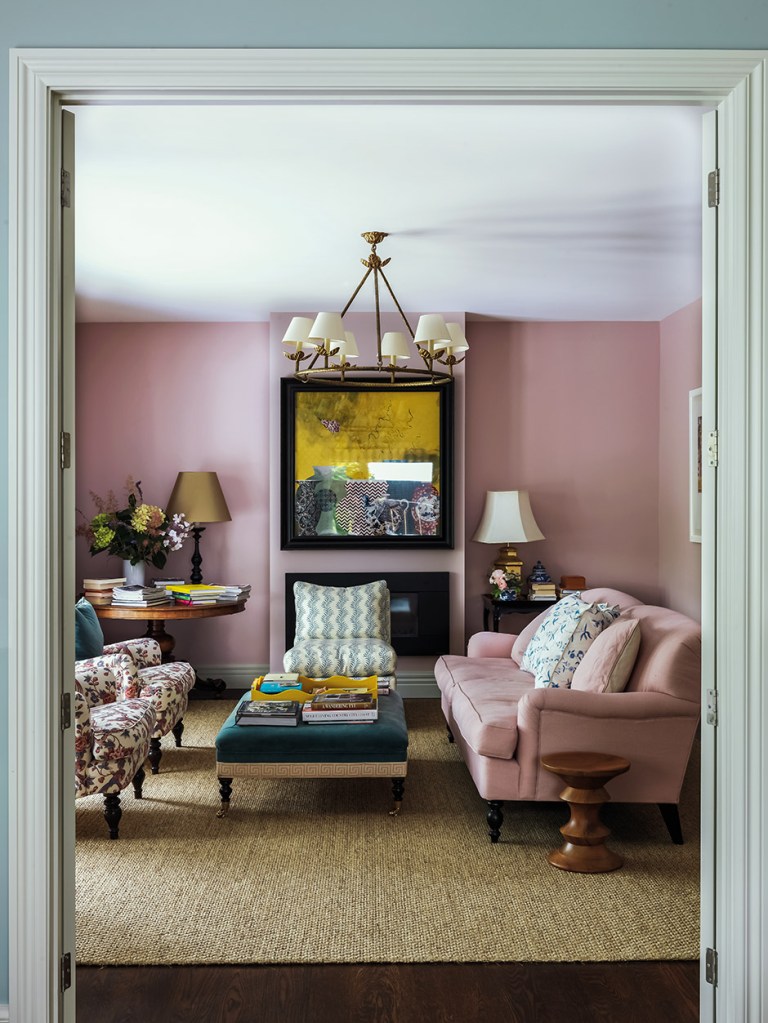
Both these elements are brought together in  the new book “Rooms” by photographer Jane Ussher and architectural writer John Walsh looks at the range of interior spaces in New Zealand homes from the small villa through to grand mansions.

It is an eclectic collection which is a mixture of historical, social  and aesthetic enquiry. These are not all images of “home beautiful”, but rather ordinary, lived-in homes but lived in with a sense of the interiors reflecting something of the owners rather than reflecting current design trends.

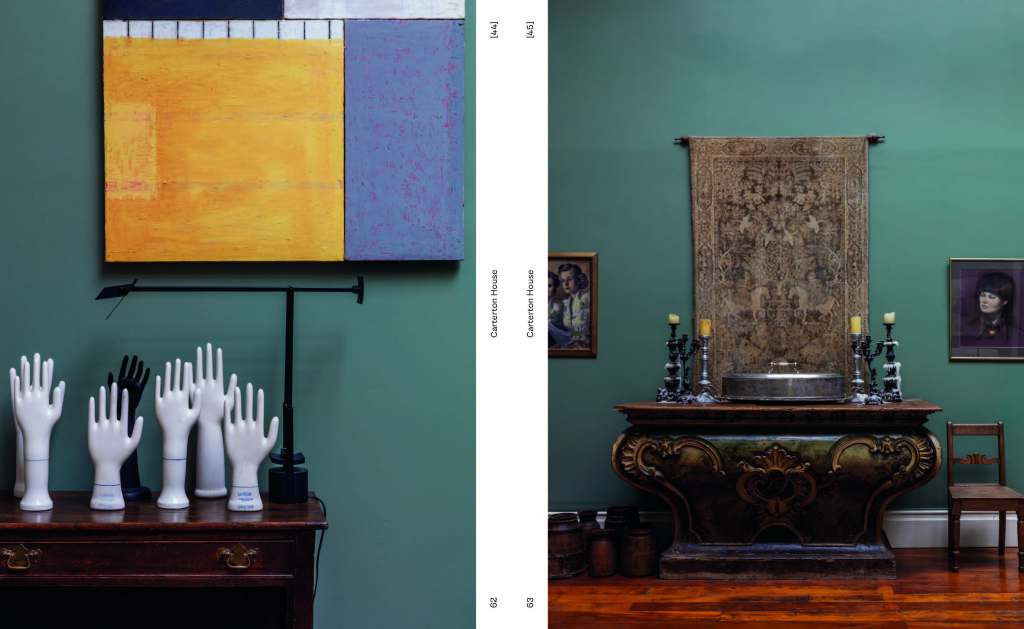
Carterton House

Jane Ussher is a perceptive and knowledgeable photographer having photographed buildings as diverse as Shackleton’s Antarctic hut through to Government House while John Walsh is a perceptive writer about New Zealand’s architectural history.

In the book Ussher focuses her camera on a range of rooms that she considers to be beautiful, intriguing, distinctive and unique. Shot in a range of locations across New Zealand, from simple cottages through to some of the country’s most important buildings such as Olveston and Larnachs Castle in Dunedin and Mansion House on Kawau Island

The more than 300  images are introduced with an excellent essay by John Walsh who provides context for the interiors as well as the photographers approach. As he notes in his introduction “Ussher’s journey  through some of the nations most photogenic interiors has taken her into rooms with the visual calorie count of French haute cuisine; just looking at portraits of these rooms will make  a viewer feel full. But there are palette-cleansers too, rooms as sparse as those found in traditional Japanese houses or voguish dealer galleries. Actually, the gallery analogy has a more general applicability. The interiors that Ussher most commonly portrays are living or sitting rooms and hallways – spaces with surfaces free for the display of things and experiments in colour.”

Merivale House, Christchurch

In some of these houses it is art which dominates as with Parnell Cottage where there are six images of the place presenting artworks by Jude Rae, Peter Robinson, Michael Hight, Terry Stringer, Layla Walker, Gavin Hurley, Hannah Maurice, Yvonne Todd, Michael Parekowhai Francis Upritchard, Judy Millar, Richard Killeen and Imogen Taylor.

By contrast Otahuhu Studio is represented with just one image – a door painted by the owner /artist Sam Mathews

With The Chapman-Taylor House, Takapuna Ussher seem to have been taken with the juxtaposition of a  yellow glazed vase  and  painting of a yellow glazed bowl by Neil Driver. This house also has a large wall mural by the jeweller Reuban Watts who commissioned the house nearly a century ago.

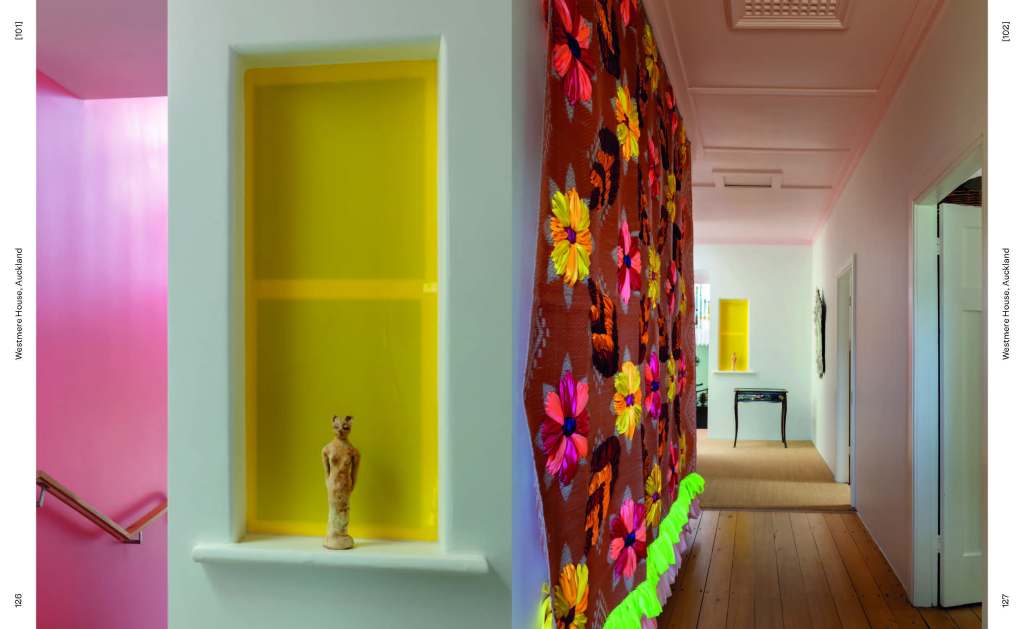
Westmere House, Auckland

Other interiors are included for their lavish or exotic decorations such as the French wallpaper used in Remuera House featuring an oriental scene which stretches around virtually the whole dining room

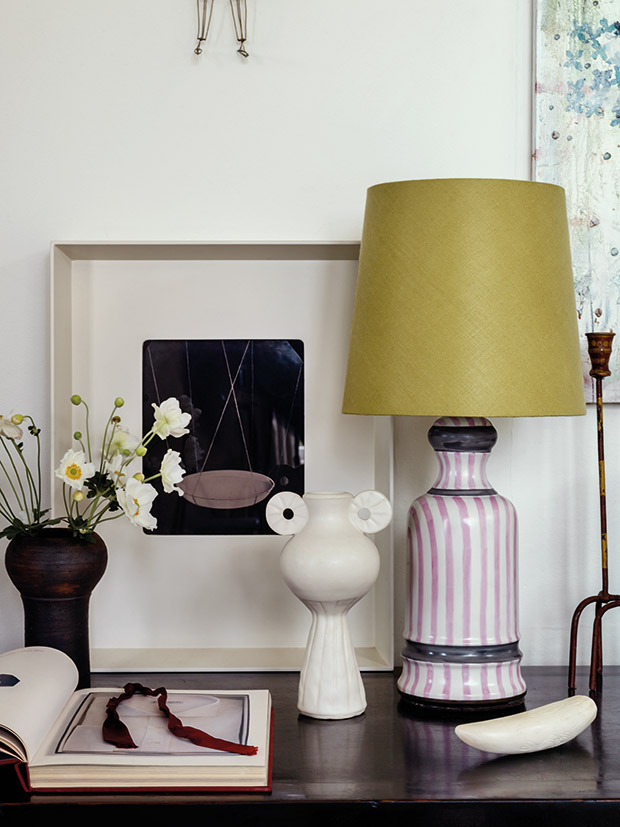
With some of the interior Ussher focusses on the minimalist such as Freemans Bay Cottage with its three modernist lamps or the Toomath / Wilson Modernist House, Wellington where the architectural fittings are given prominence.

Some rooms are included because of their use of colour, dramatic contrasts and refined placement of furniture. Other demonstrate the careful architecture design elements while others show how sheer abundance of objects and detail can make an impression.

No individuals appear in these photographs but what we get from them is not just a “portrait” of the room. There is also a sense of the people who inhabit these spaces. Their selected objects, works of art, designer and traditional furniture, the colours and fabrics speak about aesthetic and design decisions which are often very different.

Ussher spent about two years actually taking the photographs but the idea behind the book had been developing for a lot longer as the photographing of spaces and rooms was something of an obsession for her.

“Planning for the trips was complicated by the resurgence of Covid but the time away from the camera allowed me to clarify what I wanted to include in the book so in some ways it was advantageous. The two major Auckland lockdowns meant we couldn’t get out of town to shoot and later on, when the borders were open, we didn’t want to create anxiety for homeowners by being visitors from Auckland into parts of the country with low Covid numbers.”

Brooklyn House, Wellington

“I think trust played a major role. Amazingly, almost no one said no. The fact that we were offering anonymity to people whose homes had never been published before certainly helped, but I also think that they were curious to see what the photographs would say about their space. In some cases, taking the photographs was a very collaborative process, with the owners contributing ideas or helping create a better composition by moving things while in other instances the owners were happy to give me free reign.”

Jane Ussher and John Walsh have created not just a valuable resource and a great coffee table book, this is a work of insight into our history made possible by the breadth of knowledge and experience of the two collaborators.

Categories
Reviews, News and Commentary

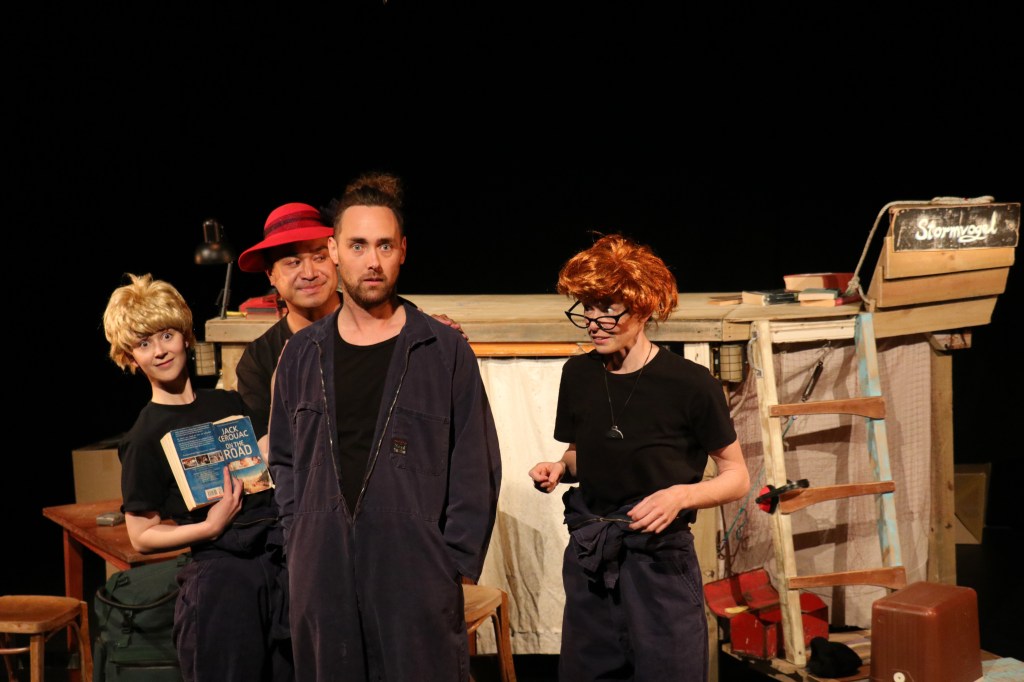
Foreign Canines: A Travellers Guide to Turkish Dogs

Reviewed by Malcolm Caldcer

A Travellers Guide to Turkish Dogs Photo:  Eleanor Strathern

A Travellers Guide to Turkish Dogs

Amulled Whine

By Barnaby Olson, Jonathan Price, Stevie Hancox-Monk, Andrew Paterson, and Tess Sullivan

Q Theatre Loft

Until 23 October

Reviewed by Malcolm Calder

What Can One Say

I got home after this performance, sat down at the keyboard and wondered what on earth I could write. 

Scratching my head, I figured I just might have to fall back on that old reviewer’s chestnut and outline the basic plot, but comprehensive advance publicity has already done so.  I could comment on the production values and skills this production demonstrates, but that would be an injustice to those who show them.  I could talk about or even ‘rate’ the performers, but they do so themselves far better than my words can. 

Suffice to say that director Jonathan Price has led this ensemble-devised work, built around a true story by Barnaby Olson, to create something that becomes an entity in itself.  We are interested, intrigued and ultimately enthralled.  And we go home feeling pretty damned good about the world in general.

Good successful theatre always requires two essential ingredients: it must tell a simple story well and it must enable a mutual trust between those on stage and their audience.

This story is a simple one.  Turkish Dogs is a can-do, make-it-up-as-we-go-along, truly gentle story of discovery and happenstance.  It’s a journey to which we can all relate whether boomer, parent or someone starting their OE.  Many of us have lived it – or dreamed of doing so, or at least a version of it.    It is peopled by characters we have all met, the majority of whom we like, the occasional one we detest and some we just chuckle quietly about. But we have all met ‘em. In this play they pop up throughout the journey – some more colourful than others, some more memorable.  And, after all, that’s what life is all about.  People.

The second essential is trust.  Any audience gives its trust to a cast that enables a story to be told.  And a cast trusts an audience to understand that story.  This giving of trust happens every time a play hits to the stage.  Sometimes it works.  Sometimes less so.  And very, very occasionally it goes beyond trust, becomes immersive and both cast and audience become one, sharing the experience.  This production has mutual trust in spades.

This is only a small production that delivers on both counts yet somehow still manages to surprise. It should be mandatory for those with even the slightest interest in NZ theatre – and they should bring their non-theatre neighbours along as well.

My prediction: Turkish Dogs has legs and will go further.  At one point I felt it could work pretty well anywhere in the English-speaking world, even in different mediums, although I initially wondered about localising it a bit – you know, a few Australianisms here or the odd Englishism there.  But then I thought no.  It doesn’t need it.  It is a uniquely Kiwi story told in a uniquely contemporary way with not a shred of self-consciousness.  Yes, people elsewhere will get the accents.  If they don’t that’s their problem. Kiwi accents could even become a USP.

Finally, here’s a tip.  Get in well before the show starts.  You just might meet someone worth talking to.

Categories
Reviews, News and Commentary

New Zealand Symphony Orchestra 2023 Season

John Daly-Peoples

Sir Donald Runnicle

New Zealand Symphony Orchestra

Season 2023

Paul Lewis who this year performed all the Beethoven Piano Concertos with the NZSO over a one week will be repeating the task again in three concerts Orpheus Reverence and Emperor conducted by conducted by Brazilian Eduardo Strausser. In reviewing his playing earlier this year I noted that Lewis “fully captured the textures, scope and power of the work and the heroic spirit as conceived by Beethoven is revealed to be both physically robust and spiritually refined”. The orchestra will also be playing other works by the composer the including his popular Symphony No 5.

Other symphonic works in the season include Shostakovich Symphony No 10, Schumann Symphony No 3, Copland  Symphony No 3, Bernstein Symphony No 2 and Brahms Symphony No 4.

There will also be Mahler’s monumental, six movement Third Symphony which is  the longest  symphony he wrote  will feature Voices New Zealand, multiple children’s choirs more than 100 musicians and  Grammy Award-winning alto Sasha Cooke.

One of the programmes which focusses on the American composers Copland  and Bernstein also includes a work about another US /NZ artist – Len Lye. This will be “Len Dances” a work by Eve de Castro-Robinson and Roger Horrocks from 2012 from the opera Len Lye which had  short season. Had “incisive  The work was an impressive work bringing together the life of the artist and his ideas in way that showed how “the personal, the social and the aesthetic intersect”

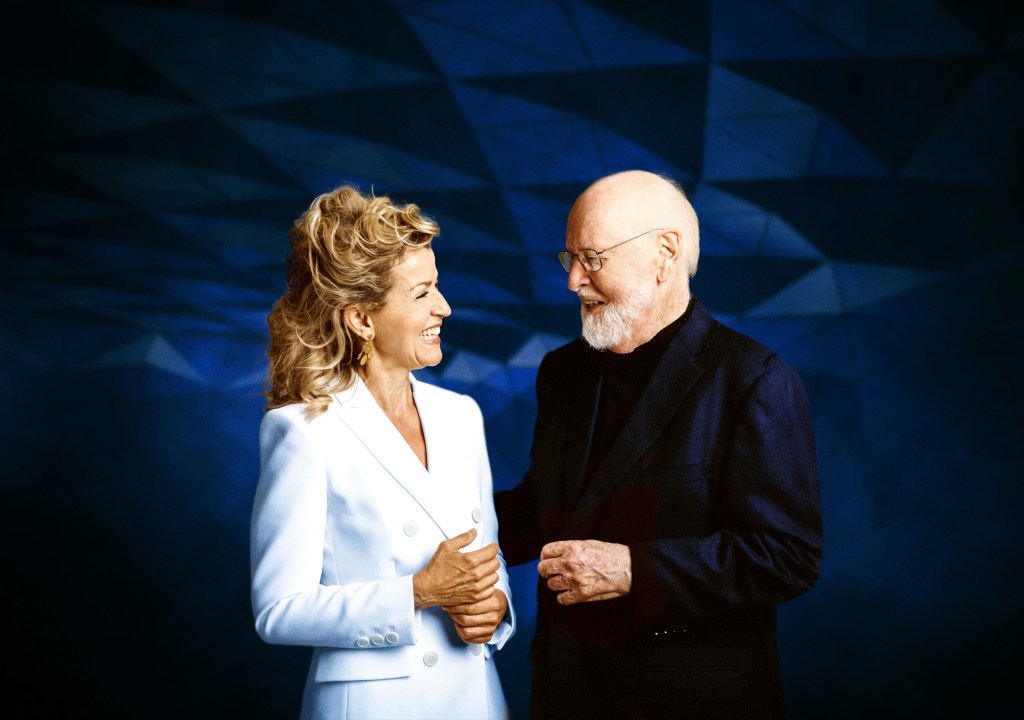
Anne- Sophie Mutter and John Williams Image David Acosta

The music of cinema legend John Williams will be celebrated in two special concert programmes by the New Zealand Symphony Orchestra in 2023. The tribute concerts feature Williams’ music from more than 15 films, including Jaws, Star Wars, E.T. The Extra-Terrestrial, Raiders of the Lost Ark, Jurassic Park and Harry Potter.

In Wellington and Auckland, the NZSO will be joined by one of the world’s greatest violinists Anne- Sophie Mutter, a long-time Williams collaborator, including three albums with the Oscar-winning composer since 2019.

Mutter’s performances, led by NZSO Artistic Advisor and Principal Conductor Gemma New, include Williams’ Violin Concerto No. 2, written especially for the Grammy Award-winning virtuoso. She will also perform several of Williams’ movie themes, arranged by Williams for Mutter and orchestra.

Andre de Ridder conductor Photo: Marco Borggreve

Also in 2023, the NZSO will be led for the first time by esteemed German conductor André de Ridder. De Ridder is known for his work across music genres,  ranging from classical and opera, to electronicand pop. He has featured on albums by Gorillaz, electronic duo Mouse on Mars, Radiohead’s Jonny Greenwood and Max Richter’s hit 2012 interpretation of Vivaldi’s The Four Seasons.

With the NZSO, de Ridder’s three concert programmes include a work by Bryce Dessner of American band The National, jazz great Wynton Marsalis’ Blues Symphony and the outstanding contemporary work Become Ocean by Pulitzer Prize and Grammy Award winner John Luther Adams.

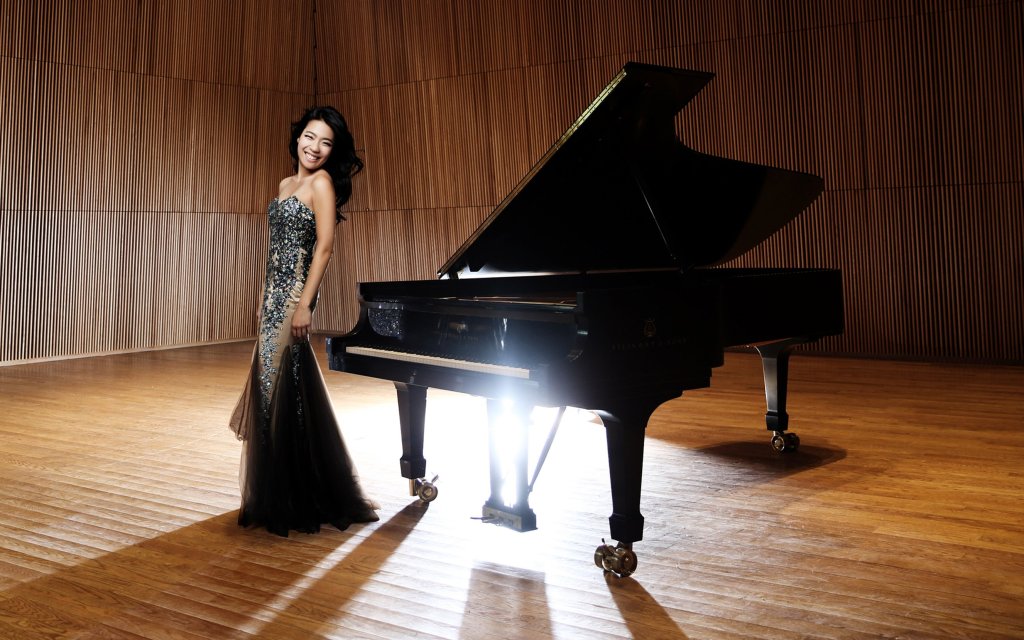
Joyce Yang

Celebrated American pianist Joyce Yang returns for concerts in Wellington and Auckland with the NZSO conducted for the first time by six-time Grammy Award-winning conductor Giancarlo Guerrero. The conductor will also lead the NZSO National Youth Orchestra for two concerts. Another legendary conductor to make his NZSO debut is the renowned Sir Donald Runnicles in concerts with sought-after German-French cellist Nicolas Altstaedt in Wellington and Auckland

Large-scale productions and special collaborations also feature. In Auckland Mana Moana and the NZSO collaborate with a Pasifika choir in performances of traditional songs from across the Pacific.

Innovative composer Alexander Scriabin’s mystical-like “The Poem of Ecstasy” is included in concerts in Dunedin and Hamilton conducted by New and featuring soprano Madeleine Pierard and NZSO Section

 In 2023 the NZSO will perform in Kerikeri, Gisborne, Auckland, Hamilton, Tauranga, Taupō, Napier, Hastings, Havelock North, Palmerston North, Carterton, Paraparaumu, Wellington, Nelson, Blenheim, Greymouth, Westport, Christchurch, Dunedin, Oamaru and Invercargill.

Categories
Reviews, News and Commentary

What They Said: Drama meets Dance

Reviewed by Malcolm Calder

What They Said

By Jo Lloyd

NZ Dance Company

Q Theatre – Rangitira

Auckland

Until October 8, 2022

Reviewed by Malcolm Calder

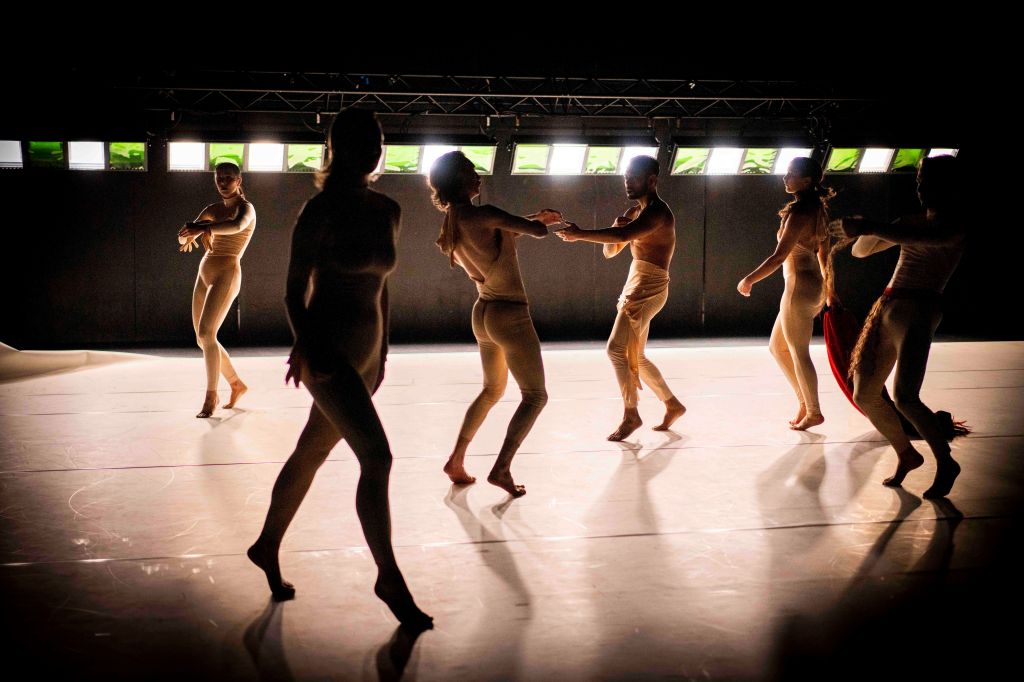
Taking their cues from one another, seven shell-less terrestrial gastropod molluscs slither slowly onto the stage. One pauses, they all pause.  Another slithers, then a third follows.  They stop.  They continue.  Each is an individual.  Together they comprise a group. 

This opening is a wonderful metaphor for What They Said.  It is an evolving sociological interaction that’s all about collaboration.  Obliquely whispering to, and then encouraging, listening, and working closely with her sound and costume designers is how choreographer/director Jo Lloyd has brought this new contemporary dance work together.  It is created as much by the entire team as by their leader who draws it from them. 

The initial slugs quickly morph into humans who adopt many different personae, both singularly and collectively.  They hear and see one another, agree and disagree, misinterpret and explore, all the while undergoing a seemingly endless series of costume changes, designed by Andrew Treloar, that hint but never state. 

And just like the people I see every day at my local coffee shop, they interrelate, they socialise, they bitch, they moan, they adopt others’ habits and they also experience joy.

Jo Lloyd has said this work is more like a play performed by dancers that both explores and pushes her own comfort zones.  But it is much more than just the dancers and the interactions between them.  Yes, there are words and phrases – deliberately repetitive at times – but not ones that form sentences or monologues.  Instead the dancers’ movements are underlined by a Duane Morrison soundscape and a resulting score to which the dancers mouth, move and mime.  But we are also reminded that dance is at the heart of this work as counting and the word ‘repetition’ both have a lurking omnipresence.

For any creative leader, doing so poses a huge creative risk that requires bravery, supreme confidence, nuanced eyes and ears and a mind that pulls everything together and keeps it on track.  At times I found Jo Lloyd to be a choreographer, at others a director.  She certainly enthrals.

Bringing her highly-credentialled background from Melbourne, she has created something very special for this NZ Dance Company world premiere as a part of the 2022 Tempo Dance Festival and something that celebrates the company’s 10th year.

What They Said is hard work for audiences and, as Jo herself mentioned in her post-performance korero, this work provides no answers for audiences, merely the potential of food for thought – perhaps at some time in the future.

Categories
Reviews, News and Commentary

Auckland Philharmonia’s 2023 concert series

Previewed by John Daly-Peoples

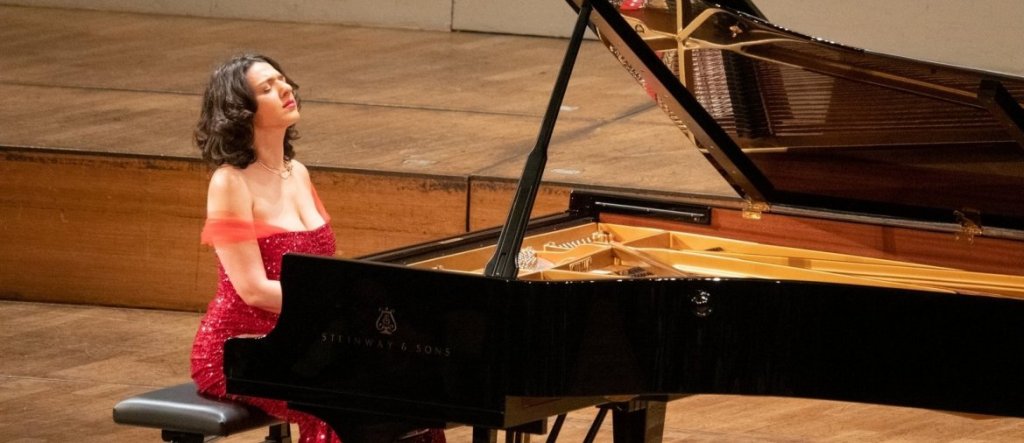
Khatia Buniatishvil

Auckland Philharmonia Orchestra

2023 Season

Previewed by John Daly-Peoples

One of the highlights of next year’s APO concerts will be the Trusts  concert version of Eric Korngold’s opera “Die Tote Stadt “(The Dead City) which debuted in Germany in the1920’s and  was performed around the globe at the time. However his work was banned under the Nazi regime and it was some time before it began appearing in opera houses, only having its first UK performance in 2009.

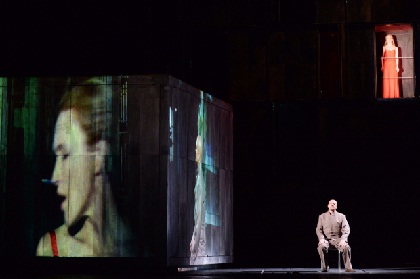
I saw it in Frankfurt five years ago and wrote at the time “The opera’s theme of the loss of a loved one and coming to terms with and moving on was a theme which was particularly relevant to a Europe which had suffered widespread loss during World War I but the work can now be interpreted in terms of sexual obsessions and disillusioned sacrifice. There is a surreal element to the work with several dream sequences some of which feature the red dress of the main characters wife.”

Die Tote Stadt (Frankfurt Opera)

“Korngold’s music is expressionist as was much of the art of the period but he managed to combine this with the romanticism of the nineteenth century along with a melodic modernism. There are traces of Verdi and Puccini as well as Strauss and Lehar with the music providing a strong melodic line which gives great scope for all the singers”

As well as the opera the APO will .be playing several other works by Korngold including “Dance in the Old style”, “Overture to a drama”, and the “Sea Hawk Suite” which was his music for the soundtrack of the Errol Flynn movie The Sea Hawk which he wrote when he became a major composer for Hollywood films.

Shiyeon Sun

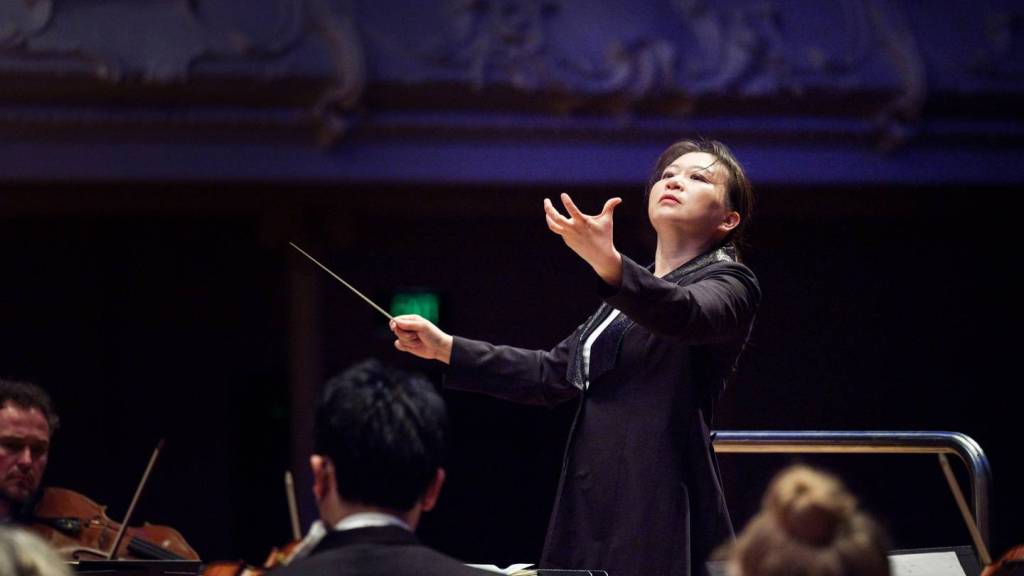
An important addition to the orchestra next year will be  the appointment of South Korean conductor Shiyeon Sung to the role of Principal Guest Conductor for three years. Sung debuted with the orchestra this year and I noted that “she  guided the orchestra effortlessly through the Dvorak Cello Concerto played by  Julien-Laferrière”..She is a major international conducting force having won both the Solti and Mahler Competitions.

The concerts will feature soloists from Europe, Asia, North America and Australia as well as from New Zealand and include Geneva Lewis (violin)– also daughter of NZ tennis champion Chris Lewis), Lise de la Salle (piano), Jaemin Han (cello), Sergey Khachatryan (violin), Annelien Van Wauwe (basset clarinet) and French-Georgian superstar Khatia Buniatishvili (piano).

Many of the great symphonic works are on the programme including Beethoven Symphony No 9 with soloists Kirstin Sharpin,S ally-Anne Russell, Manase Latu and Teddy Tahu Rhodes. That programme will also feature the composers Symphony No 8.

Other symphonies include Glazunov Symphony No 8, Elgar Symphony No 1, Mozart Symphony No 40, Dvorak Symphony No 9 (From the New World), Schumann Symphony No 1 and Mendelssohn Symphony No 5. There is also Shostakovich Symphony No 5 which the orchestra played this year and I described the work as a “contemplation of the battlefield, the horror of battle and the eerie aftermath. But this is not some reimagining of Tchaikovsky’s triumphant 1812 and it  sems very relevant to the present day as Ukraine had been focus of Russian territorial ambition in WWI and the site of much fighting and destruction.

There are a number of notable concertos being presented  as well  with the Haydn Cello Concerto No 1, Prokofiev Violin Concerto No 1 the Bruch Violin Concerto No 12 and Tchaikovsky Piano Concerto No 1.

Next year will be the 150th anniversary of Rachmaninov and the orchestra will be playing several of his works including his Piano Concerto No 2, Symphonic Dances, Rhapsody on a Theme of Paganini and his Isle of the Dead.

As usual he orchestra is providing some popular concerts with   a tribute concert to late, great Broadway icon Stephen Sondheim and a family-friendly romp through Saint-Saëns’ Carnival of the Animals, featuring the comedic talents of Dynamotion which includes performances from Chris Parker, Alice Canton, Lara Fischel-Chisholm and Tom Sainsbury.

Several of the concerts have a theme linking disparate works such as the “In the Elements” programme which includes Sibelius’s ;last great work, his one movement Seventh Symphony which has  been described as a cosmic dance. The work will be preceded by three other works which touch on elemental forces with the Vaughan Williams’: “Fantasia on a Theme of Thomas Tallis”, Benjamin Britten’s ‘Four Sea Interludes from “Peter Grimes”, and  a new work by Salina Fisher “Taonga Puora Concert”

Matariki celebrations, will feature Rob Ruha, and the multi-award-winning artist Troy Kingi.

The hugely popular big-screen film in concert adventures return, with two of Disney’s modern classics scheduled, a Halloween film-in-concert performance of the 1993 film Hocus Pocus and in September, the APO heads to ‘infinity and beyond’ with the Pixar classic Toy Story.

Categories
Reviews, News and Commentary

The Made: A hilarious romp … with some food for thought thrown in

Reviewed by Malcolm Calder

 Hannah Tasker-Poland (Arie) Joe Dekkers-Reihana (John) Alison Bruce (Alice)  

The Made

By Emily Perkins

Directed by Colin McColl

Auckland Theatre Company

ASB Waterfront Theatre

Until 8 October

Reviewed by Malcolm Calder

Many years ago my then 7-y-o daughter received a birthday gift in the form of a tamagotchi or toy-pet.  Many of her cohort had similar tamagotchis and sustaining their welfare, longevity and happiness became a short-lived but major part of the kids’ lives.  

This half-buried memory leapt back into vivid and immediate focus when ‘I-woke-up-and-was-very-happee’ cyborg Arie (Hannah Tasker-Poland) who graces the stage with immobility right from the time the audience is first admitted, swings mechanically into action in the opening scenes of Emily Perkins’ hilarious new play The Made.

Chief protagonist Alice (Alison Bruce in a standout performance) is a driven, down to earth, working mother desperately trying to secure funding to develop her cyborg into a sentient* robot.  But successful sentience is a sometime thing and her claim for R&D funding is rebuffed while she staunchly suffers the trials and tribulations that middle age has thrust upon her. 

The sudden arrival of Alice’s mercurial drug-dealing, university dropout child Sam (played with verve and endearing vigour by Murdoch Keane) reveals that the future may lie in … mushrooms!  And this opens the door to … well, to a plethora of issues that are as relevant today as they are to the future.

Colin McColl ensures that the mirth flows in The Made.  He keeps the audience in stitches with the two cyborgs at point using highly successful one-liners, sight gags, deliciously overacted situational comedy and a more than capable cast.

Both cyborgs have a physical presence that features throughout the play.  Sam’s ‘Nanny’ (Bronwyn Bradley) is a kind of accidentally-sentient Mk 1 prototype.  She is rather unceremoniously unpacked from a box before demonstrating brief traces of sentience and goes on to reveal shreds of nuance!  And the aforementioned Arie, probably best described as a Mk 1.5-attempted-sentient with shortcomings, then jitters and judders her way throughout – sometimes at the most inopportune times – and always wakes being ‘very-happee’.

The issues that arise are immediately apparent and very, very funny.  How should we relate to inanimate things?  Why do humans try to make humanoid likenesses?  Do, and should, robots have feelings? What about interaction and who is ultimately in control?  What about procreation?  These, and a range of other popular conceptions and misconceptions, are what audiences will quickly love and laugh themselves silly over.

While the play quickly grabs its audience by the throat and thrusts issues in its face using outrageously unashamed comedy, playwright Emily Perkins skilfully allows other broader issues to bubble away just beneath the surface, The Made also reaches a completely different level and therein lies its real heart.   

Ultimately this is a play about humanity, about family and about values.  Alice questions sexual roles and stereotypes, marriage breakup, business decision-making and processes, as well as middle-age and menopause and more than a few other things as well.  All from that clear woman’s perspective. 

In her background, former cello-playing husband David (Peter Daube) is styled as her anchor, even if she does not initially realise it.  The Director (Adam Gardiner) from whom she seeks more funding furthers a business-as-patriachy theme in an appropriately two-dimensional role, and most of the other cast members also remain important caricatures that enhance the comedy.  With delightful irony, it is the effervescent Sam who steals the show and who will quite possibly best accommodate future-world. 

Production values in The Made maintain the high standards expected of Auckland’s premier theatre company.  There is a simple two-set stage, a well-handled sound-scape and some subtle cyber-voice generation. 

So, on balance, congratulations to ATC for generating new work, especially from a writer who is a standout among Aotearoa’s more recent generation of literary high achievers.

Meanwhile my daughter still wistfully concedes that she loved her tamagotchi years ago … and reckons the tamagotchi loved her back too.

*sentient – having reactions like living things would, ranging from positive states like pleasure to negative states like pain.

Categories
Reviews, News and Commentary

Macbeth : Passion, Pain and a  Triumph for Netia Jones

Reviewed by Malcolm Calder

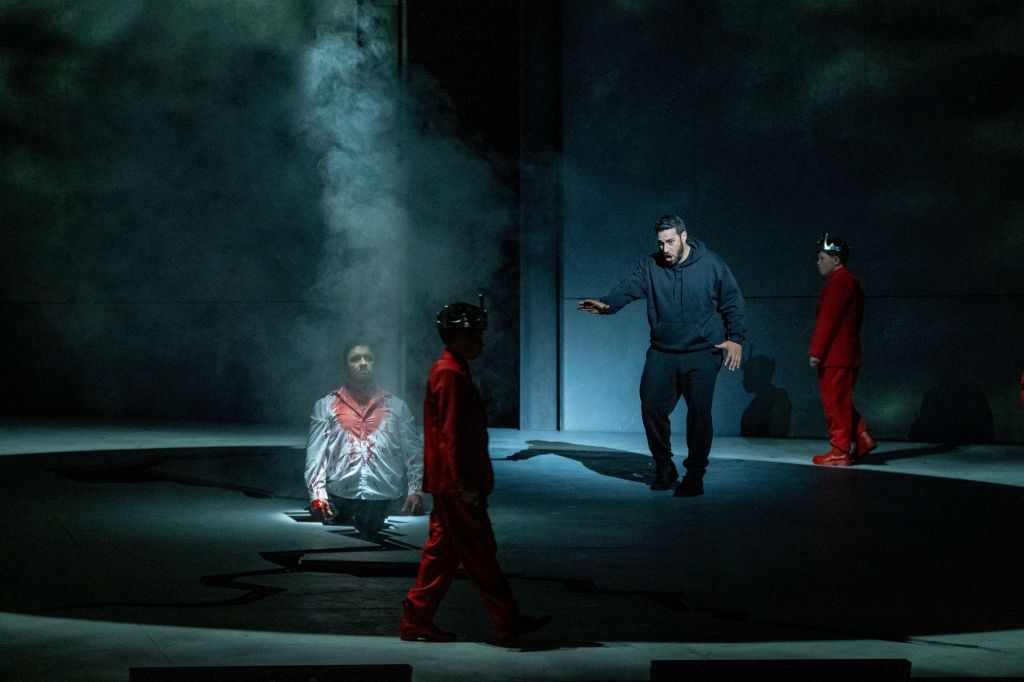
Banquo (Wade Kernot) and Macbeth (Phillip Rhodes) as young potential kings hover.  Photo Grant Triplow.

Macbeth

By Giuseppe Verdi and Francesco Maria Piave

Directed and designed by Netia Jones

Kiri Te Kanawa Theatre, Tāmaki Makaurau, Auckland

Until 25 September

Then

St James Theatre, Pōneke, Wellington, 5, 7 and 9 October

Isaac Theatre Royal, Ōtautahi, Christchurch, 22 and 22 October

Reviewed by Malcolm Calder

While Shakespeare’s Macbeth may have been initially published 400 years ago, followed by Verdi’s opera more than 100 years later, its prevalent themes of political ambition, corruption and tyranny remain universal.

And while Shakespeare may have conceived these original themes in Scotland, Verdi saw them as being just as relevant in a 19th century Italy moving inexorably towards a realignment of its own political future.  In fact, while breaking new ground away from the hitherto largely romantic nature of Italian opera, Verdi himself urged that Shakespeare’s original psychological insights were not lost in the opera.

He would likely be just as emphatic in the 21st century where the increasingly confrontational nature of national politics, the branding, brandishing and blamefulness of international geopolitics and even the chattering class’s tabloid hypotheses about the future of the British Monarchy demonstrate their relevance.

Netia Jones has certainly not lost sight of them in her new realisation of Macbeth for NZ Opera.   In something of a coup for the company, her services as director, set designer and video artist result in a visual feast that is a  wonderment to behold.  Her brilliantly innovative staging of this dark, twisted and internecine world manages to be contemporary while remaining true to the power of both Shakespeare and to Verdi.  It is a triumph. 

Using sensitively created digital imagery she creates a world that resembles a black and white movie and then overlays it with bursts and splashes of red until the stage fairly drips with blood.  But her sensitivity remains throughout with the stark and unexpected introduction of cyan highlights underscoring relevant dramatic moments.

The highlight of her creation is unquestionably the Birnham Wood scene.  Here she somehow manages to generate the illusion of tripling the numbers and the movement on stage, then creating near-documentary level imagery and mixing darkness with light in ways that that reach visceral levels.

NZ Opera has long been applauded for nurturing and assisting the development of many New Zealand artists and in this Macbeth each principal and sub-principal is sung by a New Zealander.

The sole exception is Amanda Echalaz, the South African soprano now resident in New York, who has risen to world prominence.  It is easy to see why after her astonishing “La luce langue” in Act I.  As Lady Macbeth she is fierce, formidable and manipulative. In a bravura performance she is the perfect foil for Macbeth, driven by power and greed that is ultimately futile and meaningless.

Phillip Rhodes appeared totally wrung out and exhausted as Macbeth after a marathon performance in his first principal role.  His brooding, troubled presence permeates everything and his eventual unravelling demonstrates a quality to his characterisation that only adds to its depth.  By way of an aside, Phillip would also have been delighted that his son Logan appeared as one of the young Future Kings.

Wade Kernot is near-spectral as Banquo and looms large as a Ghost, while Jared Holt is a standout as Macduff.  Emmanuel Fonoti-Fuimaono gives us a strong Malcolm who returns and is crowned as King of Scotland; while a compassionate and always in control Morag Atchison is the Lady in Waiting who knows a lot more than she lets on.

But it is the witches that provide the supernatural underpinnings of Macbeth, giving it an omnipresent tone and a structure.  First hinted at when they vanish through walls in the opening scene, the witches are played by the whole chorus and they ‘steam, storm and splutter’ as well as ‘hubble and bubble’.  They morph into crowd scenes, become party-goers, workers, exiles and troopers and then revert to witches once again.  They are everywhere and they dominate the stage and this production. 

Brad Cohen (Conductor) has noted that Verdi’s music was created to ‘terrify, not to soothe’ in his programme notes when conducting NZ Opera’s 1998 Macbeth.  It still does and, in Netia Jones’ setting, even more so.

Congratulations NZ Opera.

Categories
Reviews, News and Commentary

The Wasp: A Welcome Suspension of Disbelief

Reviewed by Malcolm Calder

Bree Peters (Heather) and Miriama McDowell (Carla)

The Wasp

By Morgan Lloyd Malcolm

Q Theatre Loft

Until 24 September

By Malcolm Calder

16 September 2002

Coleridge would not have had Morgan Lloyd Malcolm’s The Wasp in mind when he wrote of a willing suspension of disbelief.  Getting to the end of The Wasp certainly requires a lot of it. 

But it does so insidiously, initially sucking the audience into a fairly believable opening scenario laced with enough severed-sentences, innuendo and veiled suggestions for us to wonder where it might be going.  Playing ‘beat the playwright’ in my head, and knowing this would be a psychological thriller, I tried very hard to imagine a range of possibilities.  But I didn’t get even close.

Two pals from schooldays meet up again more than 20 years after they fell out as adolescents, never having spoken since.  Carla is pregnant for the fifth time, married to a man twice her age and has struggled to make the best of what she’s got (‘a bit of work at Countdown’).  Nor is she averse to other financial opportunities when they arise.

Heather lives a more upwardly mobile lifestyle, is childlessly married to a man we never meet and whom she remorselessly disparages (he gets only three words off-stage at the very end).  She has a special offer to make to Carla.  This is all revealed in a tightly-written initial scene in which Sam Snedden draws fine performances from a down to earth Miriama McDowell (Carla) and a slightly jittery Bree Peters (Heather).

That’s just the beginning and the disbelief kicks in shortly thereafter.  And somehow we almost believe it.  Well, some of it.  Maybe.   The two revisit their pasts and attempt to rationalise the course of their respective lives and minds.  The Wasp reveals things buried deep in those minds that have been festering for nearly a quarter of a century.  It becomes totally outrageous and pretty nasty in fact.

Localisation is well-handled in this highly entertaining and demanding two-hander.  However I felt the denouement of Act 1 was a bit rushed and diminished the impact of its shock value, while the pace of Act 2 was occasionally erratic.  But that shouldn’t distract the audience from enjoying the verbal and emotional gymnastics revealed as The Wasp twists, turns and eventually unravels.  Yes, the mayhem too.  And definitely that suspension of disbelief.

Q Theatre is deserving of acknowledgement for its Matchbox Series.  The Wasp certainly fits in well.

Categories
Reviews, News and Commentary

Aucklandia … and that other suburb

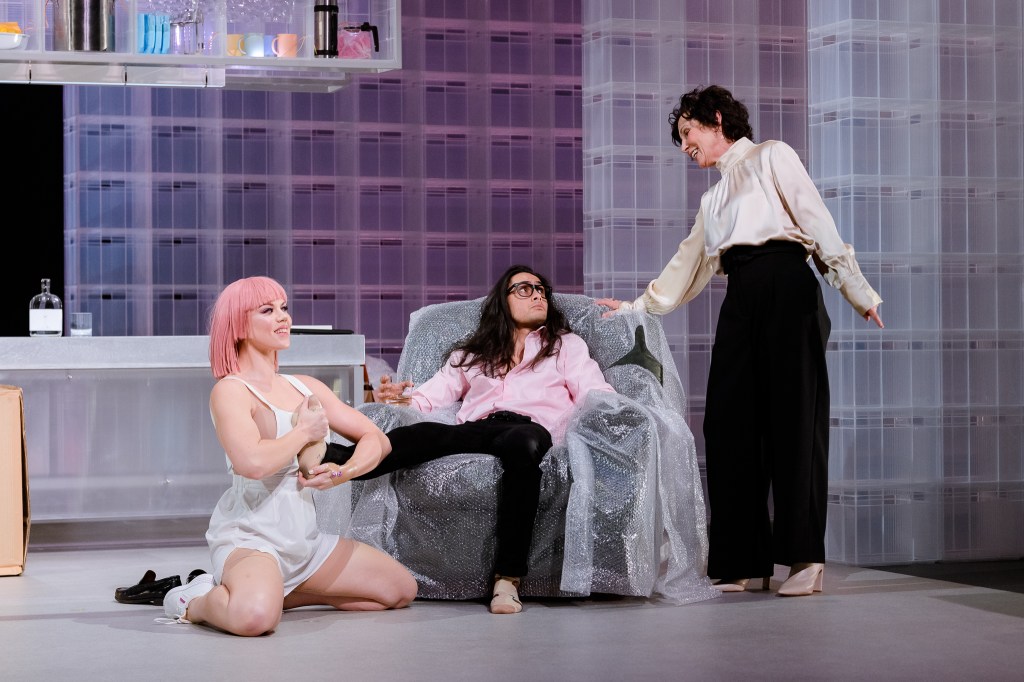
Andrew Grainger (Hugh) and Lisa Chappell (Gillian)

The Campervan

By Kathryn Burnett

Tadpole Productions

Pumphouse Theatre, Takapuna

to 18 September

Reviewed by Malcolm Calder

8 September 2022

Tadpole Productions know what they’re doing. Research boomers living on the North Shore, identify their tastes, ensure Tadpole product isn’t over-demanding and has a high entertainment quotient, throw in a bunch of well-credentialled actors and then the audience should lap it up.  And, just to be on the safe side, add in some delightful digs at another suburb (which had better remain nameless) and the recipe for success is looks even healthier.

Tadpole’s latest production is Kathryn Burnett’s The Campervan.  It’s a world premiere – great term that, helps even more with box office.

This play asks what happens when a blustering, over-entitled alpha male has a late mid-life crisis (or possibly an early later-life one) and decides to walk away from his massive share portfolio, sell off all his family’s 28 properties and a farm up north, not to mention getting rid of the wine cellar, sundry artworks and miscellaneous trinkets? Nope. He has had a revelation and is going to totally change his life by walking away from this consumerist lifestyle and live on-site in a two-berth Winnebago whilst creating an infinitely renewable city-based farm.

Wonderful  Admirable even. Um, err, no it’s not because he has unfortunately forgotten to discuss the plan with anyone who might be impacted by such a unilateral decision.  

The resulting hullabaloo, disruption and confusion opens the door to a gaggle of sight gags, some side-splitting one-liners and general hilarity.  It also provides The Campervan with a context.

Simon Prast fills this with a close-knit ensemble that overplays deliciously and delivers more than a few surprises.  The well-travelled Andrew Grainger switches from the besuited businessman Hugh to the manically single-minded idealist Hugh who blusters, bullies and freely admits to seeing others’ viewpoints – but conveniently forgets that he is holding a mirror.  He blindsides substantially younger second wife Tamsin (a not-quite coquettish Catriona Toop) who sees her future lifestyle potentially vanish overnight – shock, horror.  A trusted and thrice-divorced business colleague with a roving eye Johnny (Greg Johnson) is not consulted, generating strategies around own financial future.  And elastic-bodied, film-maker son Marco (fully funded by the Bank of Dad of course) can’t begin to even contemplate an instant digital demise.

However former first wife Gillian (Lisa Chappell) has seen it all before.  Her droll observations fill the gaps with an ascerbic wit that’s timed to perfection.  And her calm presence proves to be the glue that holds everything together.

Simon Prast surprises even got me!  At the beginning of Act 2 when a well dressed bloke re-entered with the audience and sat adjacent to me in an aisle seat.  I barely glanced at him apart from a fleeting second where I ‘sorta’ mentally noted that he looked ‘kinda’ familiar.  I felt like a right idiot of course when he stood and raced to the stage to commence a press conference as Hugh.

Campervan is ideally structured for a comedy and is essentially an old-fashioned type of play, much of its humour is derived from one-liners rather than being comedically embedded and the first Act might benefit from a tiny edit or two. But that’s unlikely to trouble Tadpole audiences. There is more than enough highly entertaining hilarity and craziness here for a jolly good night out.  Well done Tadpole.