Categories
Reviews, News and Commentary

Aotearoa Art Fair showing the diversity of contemporary art

John Daly-Peoples

A number of the galleries exhibiting at the Aotearoa Art Fair opening next week (March 2 – 5) will feature solo shows but most will exhibit a several of their exhibiting artists. These galleries will show the range of work and the  variety of materials used by contemporary artists as well as showing the extent of ideas being investigated.

Among these galleries are  Sanderson Gallery Trish Clark Gallery and Bartley & Company Art

Sanderson Galley is showing three different approaches to art making – a multi-disiplinary artist, a photo image artist and an artist focussed on drawing.

JOSEPHINE CACHEMAILLE

Josephine Cachemaille Four-to-the-floor, 2022, fired clay, 220mm x 80mm x 200mm, $1,100

‘Cachemaille’s work has this active and charged quality, as the artist sees herself in ‘collaboration’ with her objects, materials, and media, “It’s not ‘me’ ”, she says, “it is ‘US’”. Cachemaille draws on philosopher Jane Bennett’s concept of “material vibrancy”. This informs her artmaking strategies; by intentionally anthropomorphising objects she aims to in- crease our awareness of what they are contributing.’ Four-to-the- floor references the structure of disco and house beats, which traditionally use four beats to a bar in their construction. Cachemaille describes the experience of watching 90s DJ’s stomping in time with the beat while mixing their songs as inspiration for the work.

Kate van der Drift Waning Cresent to Waxing Gibbous, June, -37.429838, 175.510886, 2022, Chromogenic Photograph from 4×5” Negative, edition of 5 + 2AP, 1423mm x 1100mm, framed, $5,850

KATE VAN DER DRIFT

Kate van der Drift’s site-specific camera-less ‘river exposures’ are created by placing unexposed colour negatives in the Piako river for a period between two and four weeks. While the large format film rests in a light-proof container in the river, a durational augmentation occurs, created by water flowing past and interacting with the film’s chemical compounds. After weeks of comingling with cyanobacteria, agricultural waste, salt and freshwater currents, each field recording is transported back to the darkroom. Here the intangible and the toxic is translated by van der Drift’s hand from negative film to contact print; exposed to light, enlarged and transformed into a dazzling chromatic image.

LIAM GERRARD

Liam Gerrard Tutaritari Rd, Hahei, 2022, charcoal and pastel on paper, 710mm x 550mm, $5,750

Liam Gerrard is a painter whose practice explores the dichotomy between life and death, and the fragility of existence. The artist has most recently explored these themes through the depiction of plants and flowers, or other aspects of life that one can find in a rural or urban garden. Gerrard has become known for his depictions of the hydrangea (Hydrangea macrophylla) in various states of blossom and decay.

Bartley & Company Art is presenting an exhibition of four artists whose work looks to the past to look to the future, in referencing the famous Māori proverb.

The intentions of these four distinctly different artists are both political and poetic. They speak across diverse media to the importance of history and whakapapa in creating contemporary beliefs, thinking and meaning. All share an interest in whakapapa as a primary means of making sense of the world and their connection to self, others and the wider environment.

Entangled histories, the ancient and contemporary, and the place of place play out in all their work

Brett Graham one of the country’s most eminent sculptors examines indigenous histories; Lonnie Hutchinson addresses whakapapa and hybridity. Cora-Allan Lafaiki Twiss takes customary traditions into contemporary art.  Roger Mortimer combines foundational beliefs of the Western world with a deep respect for tangata whenua. 

BRETT GRAHAM

Brett Graham, Manawanui, 2022, hand carved American ash, lacquer, wax 1345 diameter x 370mm depth $75,000

Brett Graham creates conceptually rich, formally strong, beautifully crafted large sculptures that are grounded in Te Ao Māori while engaging with the best of 20th century Western sculptural traditions.

Across sculpture, drawing, prints and moving image works, he explore indigenous histories, politics and philosophies. His work, which has great presence, is imbued with poetry and metaphor. Materially and conceptually, he brings together traditional and contemporary to speak to the current moment. The local is combined with universal and topical issues on the shaping of historical narratives in colonised countries, the Anthropocene and role of monuments in the public domain. While works are often abstract, titles provide a way into the complex political, historical and cultural ideas embodied in his forms.

His large hand-carved spherical timber shields, here for example, reference the history of Parihaka and the leadership of the great pacifist leader Te Whiti. Manawanui, is the Māori word for forbearance which implies tolerance, patience, restraint. Manawanui was Te Whiti’s response to Government intervention at Parihaka. In these works Graham appears to suggests forbearance as a strategy for addressing differences and Aceldama, which references betrayal, as a reminder that differences in human values and beliefs have always existed.

Graham (Ngāti Koroki Kahukura) has a doctorate in Fine Arts from the University of Auckland and an MFA from the University of Hawaii. His work has been included in exhibitions and biennales all over the world and is in public and private collections around the world. He has also produced several major public artworks throughout New Zealand and undertaken artist residencies in Europe, the United States and across the Pacific.

His 2020-23 “career-defining” solo exhibition Tai Moana Tai Tangata is considered one of the most powerful and historically significant solo exhibitions ever to be staged in New Zealand. Large monumental sculptures explore the legacy of the New Zealand wars of the mid-19th century.

A few of the last remaining Tai Moana Tai Tangata prints are available.

LONNIE HUTCHINSON

Lonnie Hutchinson, Whakahā, 2023, stainless steel, 1200mm diameter, $12,000

Lonnie Hutchinson is a much acclaimed artist whose work is concerned primarily with whakapapa.

“Whakapapa,” she says, “accounts for the way in which the earth, sky, oceans, rivers, elements, minerals, plants, animals and all people have been created. All things are linked through whakapapa, as well as having their individual place in the world. Ultimately, it is whakapapa that connects people to each other, to their ancestors, to the land, to the oceans and the universe.”  

Hutchinson’s ancestry is Samoan, Māori (Ngāi Tahu, Ngāti Kuri) Scottish and English and this rich mix is brought to play in her circular stainless-steel discs, which operate as heraldic devices or clan shields, to assert and celebrate all aspects of her identity and heritage and the reality of hybridity in the 21st century. The forms themselves allude to round Saxon shields and the cut-out patterns incorporate kōwhawhai and kawakawa leaves referencing rongoā, traditional Māori medicine. The result a distinctive multi-cultural emblem for Aotearoa.

Cut-out works have become Hutchinson’s signature and are made in a variety of media – most prominently heavy black builders paper but also vintage wallpaper, aluminium and steel. The cut-out forms play with shadow, which becomes part of the work. That shadows captures a non-materiality, inherent in whakapapapa and the Samoan notion of ‘va’, which refers to the space between places, things and people, and connections across time.

Hutchinson has been exhibiting nationally and internationally for more than 20 years with work included in significant international exhibitions A survey show, with accompanying catalogue, Black Bird: Lonnie Hutchinson 1997 – 2013, was shown in Auckland and Wellington in 2015. A major solo exhibition was held at Christchurch Art Gallery in 2021. Her work is many significant public and private collections in New Zealand and overseas and she has also produced several major site-specific installations – most prominently for Hamilton Gardens, the Justice Precinct in Christchurch, the Convention Centre in Christchurch and the Britomart in Auckland.

CORA-ALLAN LAFAIKI TWISS

Cora-Allan Lafaiki Twiss, Sighting a snow-capped mountain in the Kaikoura Range as they headed for the open ocean, 2022, Whenua paint, 18ct Lemon bright gold, Kāpia ink on Hiapo, 1300 x 1750mm, $13,000

Landscape and narrative, place and history, traditional and contemporary, tangata whenua and moana, combine in the the contemporary hiapo paintings of Cora-Allan Lafaiki Twiss.

Her practice is built on the foundations of Niuean hiapo barkcloth traditions which she is credited with reviving. In the past two years her contemporary practice has expanded signficantly with the introduction of colour and new iconography drawing on her both her Niuean and Māori (Ngāpuhi, Ngatitumutumu) whakapapa. Significantly, even ground-breakingly, she materially incorporates her Māori heritage into her hand-made Niuean hiapo practice with the use of what she calls, whenua paints made from local clays. Gold leaf is a recent addition to her palette following an artist residency in Wānaka where she responded to that region’s gold-digging history.

Stories of migration and arrival have been a theme of Lafaiki Twiss’s work and here the embedded narrative shifts from the personal to draw on historic accounts of Tupaia the Tahitian navigator on board the HMS Endeavour’s first encounters with Aotearoa in 1769. The works survey markers and artefacts of this historical journey through a Moana lens with her mixed whakapapa we are offered a distinctive wahine response to land seen from the sea – contained in the grid form of a traditional hiapo composition.

Cora-Allan has a Masters in Visual Art and Design from AUT and although early in her career is attracting attention. In 2021, she had artists residencies at Te Whare Hēra Massey University Wellington, and McCahon House”. She was the recipient of an Arts Foundation Springboard Award which came with mentoring by leading New Zealand artist Shane Cotton. In 2020 she won the Creative New Zealand Arts Pasifika Award and received a Arts Foundation Springboard award in 2021.  She has exhibited in New Zealand, Australia, Niue, England, France and Canada. A solo exhibition of paintings from the McCahon residency was shown at Te Uru Waitakere Contemporary Gallery in the first half of 2022.

ROGER MORTIMER

Roger Mortimer, Miro, 2023, watercolour, gold dust and acrylic lacquer on canvas, 800 x 700mm, $10,000

Roger Mortimer creates fantastical paintings and jacquard weavings depicting epic and metaphorical stories of navigation and transformation. Charting terrains both recognisable and strange, his map works are visionary topographies in familiar geographies.

The maps are drawn from contemporary marine charts from Aotearoa New Zealand. This setting – complete with Māori place names, indigenous flora, finely rendered compasses or mandala, and contemporary guidance for mariners including depth markings and gold stars marking navigation light – points to the universality and timelessness of way-finding and the human search for meaning. The role of mapping in the colonisation process, with its naming and claiming of territory, is also directly suggested. The replacement of European settlor names on the maps is a political act acknowledging Aotearoa’s prior occupation.

The overlying graphic imagery, in which Mortimer has framed his interests over the past decade, comes from illustrated manuscripts of the 14th century Italian Dante Aligheri’s famous poem, the Divine Comedy, which traces the poet’s journey through hell to purgatory and heaven.

This distinctive juxtaposition of medieval European imagery and local setting provide a rich commentary on this country’s cultural history and led to him being describe as a “contemporary visual mythologist”.

Mortimer has Bachelor of Fine Arts from the University of Auckland, where, although Pākehā, he went through the Te Toi Hou (Māori Arts) programme at the Elam School of Fine Arts. In 2014 he was the Paramount Award Winner in the Wallace Art Awards.The judge described his work as “medieval in appearance and utterly contemporary contemporary in intent”. In 2017, a survey exhibition was shown in public galleries in Wellington and Auckland. His work is a range of collections in New Zealand, Europe and Asia. In 2020, a 160 page book was published on his map paintings-

Trish Clark Gallery

JULIA MORISON

Julia Morison, Segue 14 (2022) $38,000

Trish Clark Gallery will be showing Segue is a new series of large paintings by veteran artist Julia Morison, nationally and internationally renowned for her five-decades-long practice that has seen her innovate consistently across media and subject matter. While previous works utilised materials as diverse as blood, gold, hair and beeswax, these new large-scale paintings are notable for their gestural expressiveness standing in animated counterpoint to their gridded structure, and are exemplary of Morison’s persistent parallel investigations of form over decades. Referencing the internal gridded structure are a number of individual small works that are titled Pivot.

Julia Morison, Quadruple Pivot 1 (2021) $4,200

There are few artists working in New Zealand whose work so aptly suits the descriptor ‘embodied knowledge’, and a potent physical relationship exists between the viewer and the work. Morison’s use of a spectrum of materials has tested our assumptions and associations always eschewing easy categorization with multiple points of formal and symbolic return throughout her oeuvre. She has explored a range of subjects including Euclidian geometry, the legacies of constructivism and formal abstraction, through to interrogation and re-imagining of alchemy, number symbolism and in particular the Jewish mystical tradition called Kabbalah. How she draws upon or extrapolates from source materials is never slavish – the potency and veracity of a sign or symbol is something to be tested and toyed with.

Julia Morison, Pivot 1 (2021) $1,200 

Categories
Reviews, News and Commentary

ATC’s Heartbreak Choir: smart dialogue, engaging entertainment and classy acting

Reviewed by John Daly-Peoples

Image: Andi Crown

The Heartbreak Choir

By Aidan Fennessy

Auckland Theatre Company

ASB Waterfront Theatre

Until March 5

Reviewed by John Daly-Peoples

Directed by Lara Macgregor with a fine sense of pacing and drama, the entire action of The Heartbreak Choir is set in a Country Fire Association hall in an Australian country town. It looks as though it’s the 1950’s complete with old Zip water heater, clunky old piano and a wonky wall heater But the Australian and the Australian Aboriginal flags on either side of the stage tell us the play is set today.

Here five women and one man of varying ages and backgrounds get together to share food, give updates about  their lives and to rehearse for  a future concert.

It’s a small breakaway group from the larger one which rehearses at the local Catholic Church. They are led by choirmaster Barbara (Alison Quigan) and feature a range of voices and personalities. There’s the loudmouthed Mack (Kate Louise Elliott) and her seemingly shy daughter Savannah (Esmay August), the pregnant Zimbabwean Anesu (Munashe Tapfuya), a doctor waiting for her certification to come through, the rich focussed and aggressive Totty (Jodie Dorday) and the local policeman Peter (David Fane).

Quigan as choirmaster Barbara hold the play together linking the various aspects of the choir and their lives together. She is an astute actor within the group as well as providing some brief cameos at the beginning of each act with her opening few minutes of the play a fine silent comic display.

It’s a delightful feel good play about people connecting within small communities and the choir becomes something of a metaphor for wider aspects of human interactions.

There are many brilliant songs / vignettes particularly a Zimbabwean song complete with elaborate African dance moves which initially challenge the flat footed Peter

Interval comes and that feel good feeling seemed to beguile the audience (and this reviewer), looking forward to the possible tiff with the old (Catholic) choir and a sing-off between the two groups.

But no. There has been a unspoken secret about one of the former choir members who has committed suicide and the issues around moral pacifity and religious hypocrisy loom large.

Because of this much of the second part of the play has a darker undertone but it does end with some glorious music.

The company interact brilliantly, moving from their speaking roles to those as choristers with a dance-like quality which is a pleasure to observe. While they make valiant attempts at Australian accents the play feels very much like a portrait of a rural New Zealand settlement filled with people we all know dealing with issues we all face. It’s a play which offers smart dialogue, engaging entertainment and classy acting.

Categories
Reviews, News and Commentary

Looking for an Arts Policy – try the new Australian one

John Daly-Peoples

There has been much discussion recently about the need for all political parties to develop comprehensive arts policies. This has been partly as a result of the inadequate performance of Creative New Zealand. While we wait for the government and political parties to come up with some new schemes we might want to look at and even copy the new cultural policy published by the Australian Government. The new  National Cultural Policy, “Revive: a place for every story, a story for every place”  is a five-year plan to renew and revive Australia’s arts, entertainment and cultural sector, following the most difficult period for the sector in generations. Revive will change the trajectory of the creative sector and deliver new momentum to Australia’s arts, entertainment and cultural sector.

The policy is based on several pillars and principles.

Pillars

Revive is structured around 5 interconnected pillars which set out the Government’s strategic objectives:

  • First Nations First: Recognising and respecting the crucial place of First Nations stories at the centre of Australia’s arts and culture.
  • A Place for Every Story: Reflecting the breadth of our stories and the contribution of all Australians as the creators of culture.
  • Centrality of the Artist: Supporting the artist as worker and celebrating artists as creators.
  • Strong Cultural Infrastructure: Providing support across the spectrum of institutions which sustain our arts, culture and heritage.
  • Engaging the Audience: Making sure our stories connect with people at home and abroad.

Principles

Sitting across these pillars are 10 principles that guide the Government’s actions and investments over the next 5 years:

  • First Nations arts and culture are First Nations led.
  • All Australians, regardless of language, literacy, geography, age or education, have the opportunity to access and participate in arts and culture.
  • Artists and arts workers have career structures that are long-term and sustainable, supported by vocational pathways.
  • Australian students have the opportunity to receive an education that includes culture, creativity, humanities and the arts.
  • Creative talent is nurtured through fair remuneration, industry standards and safe and inclusive work cultures.
  • Arts and cultural organisations have representation and leadership that is reflective of contemporary Australia.
  • Cultural infrastructure, including galleries, libraries, museums, archives and digital collections, is restored, built and maintained.
  • Australian stories are seen and heard, regardless of platform.
  • Creative industries and practice are future focused, technology enabled, networked and globally recognised, including through reciprocal exchange, export and cultural diplomacy.
  • Arts and culture are generative (creating new works and supporting emerging artists) and preservative (protecting heritage and conserving cultural memory).

Key measures

The centrepiece of Revive is the establishment of Creative Australia, which will restore and modernise the Australia Council for the Arts.

With an additional $199 million in funding over 4 years from 2023-24, Creative Australia will provide greater strategic oversight and engagement across the sector.

Within Creative Australia, a dedicated First Nations-led Board will be formed. This is critical to self-determination, supporting the telling of First Nations histories and stories, and to strengthening the capacity of First Nations creative workers.

Recognising creative sector workers as vital contributors to our national culture and economy, Revive will establish a Centre for Arts and Entertainment Workplaces within Creative Australia. It will provide advice on issues of pay, safety, codes of conduct and welfare across the sector.

Creative Australia will also establish Music Australia, to support the Australian music industry to grow, including through strategic initiatives and industry partnerships, research, skills development and export promotion.

Writers Australia will also be established within Creative Australia, to provide direct support to the literature sector from 2025, including for writers and publishers, to grow local and international audiences for Australian books and establish a National Poet Laureate for Australia.

Other key measures within Revive include:

  • Sharing the national collection by establishing a program of long-term loans of works from the National Gallery of Australia’s collection to regional and suburban cultural institutions across Australia.
  • Introducing stand-alone legislation to protect First Nations knowledge and cultural expressions, including to address the harm caused by fake art, merchandise and souvenirs.
  • Establishing a First Nations Languages Policy Partnership between first Nations representatives and Australian governments to improve outcomes for First Nations peoples.
  • Enhancing the Resale Royalty Scheme to provide royalty payments to visual artists, including First Nations artists, from the commercial sale of eligible works internationally.
  • Developing an Arts and Disability Associated Plan, under Australia’s Disability Strategy 2021-31, to enable people with disability to access and participate fully in the cultural and creative life of Australia.
  • Increasing support for regional arts and culture through an increase to the Regional Arts Fund.
  • Supporting specialist in-school arts education programs that directly draw from cultural and creative sector expertise, focusing on areas of identified disadvantage.
  • Modernising and extending the Public and Educational Lending Right Schemes to include digital content under the schemes.
  • Providing pilot funding to support access to art and music therapy programs and generate valuable data on the broader community impact of, and demand for, these services.

The full policy can be read at

https://www.arts.gov.au/publications/national-cultural-policy-revive-place-every-story-story-every-place

Categories
Reviews, News and Commentary

Aotearoa Art Fair showing artists from Asia, Australia and the Pacific

John Daly-Peoples

Mike Hewson, Rock on Wheels

Auckland Art Fair

The Cloud

March 2 – 5

John Daly-Peoples

The Art Fair industry has seen a huge growth over the last few years and post Covid there has been a further resurgence. This has largely been part of a response by dealer galleries to the impact of the auction house / resale market. This has seen dealers and the auction houses in direct competition both for the art and for buyers.

Even in New Zealand the auction houses have bigger marketing  budgets and networks along with quality art works on offer which means they are able to attract a select  client group for a one or two night “exhibition” of major work  accompanied by a well-produced catalogue with in depth articles worthy of a public gallery exhibition.

Dealer galleries in  contrast mainly  operate with a limited invitation list and  also not much  in the way of international connections. With an art fair the dealers are  able to reach a wider audience by condsolidating their invitations lists along with wider media reach. They can  also offer a novel experience, a limited “buy now” opportunity along with a full programme of events and a lively party scene

The Auckland Art Fair in on next month  Thursday March 2–Sunday 5 March at The Cloud on Auckland’s Queens Wharf.

This year there will be forty exhibiting galleries representing  more than 180 artists. While most of the galleries are from New Zealand there are several international galleries.

Benjamin Work, Tautahi,

Bergman Gallery which has locations in Rarotonga and  Auckland will be showing Pasifika artists including Telly Tuita, Mahiriki Tasngaroa and Benjamin Work.

Redbase Foundation from Yogyakarta will be showing prominent Indonesian contemporary artists, including Lowpop, Agus Wijaya and He Wenjue.

Naarm Melbourne, is presenting Haydens Gallery, STATION and Savage while Michael Bugelli Gallery from Hobart will present a solo booth featuring New Zealand -born sculptor Mike Henson.

Categories
Reviews, News and Commentary

Auckland Art Gallery to be flooded with light later this month

John Daly-Peoples

James Turrell, Raemer Blue

Light from Tate: 1700s to Now

Auckland Art Gallery

February 25 – June 25

John Daly-Peoples

Auckland Art Gallery’s latest big exhibition, “Light from Tate: 1700s to Now” which opens later this month should be a crowd pleaser just because it is vibrant, colourful and playful – all the things that most people expect of art. But the exhibition also explores, expands and explains the nature of art itself without being elitist or obscure. 

The show comes from London’s Tate Gallery and follows on from the successful exhibition “Light Show at the Auckland Art Gallery nearly ten years ago.

It is a multi-sensory blockbuster exhibition featuring nearly 100 works by celebrated artists working across different media including painting, photography, sculpture, installation, drawing and the moving image.

Concepts of space, vision and light are present in much contemporary art and light has fascinated artists for centuries. However, one of the crucial turning points in the artists’ use of light came with Edison’s invention of the incandescent bulb. But even before then artists were fascinated with ideas about light and the means of depiction.

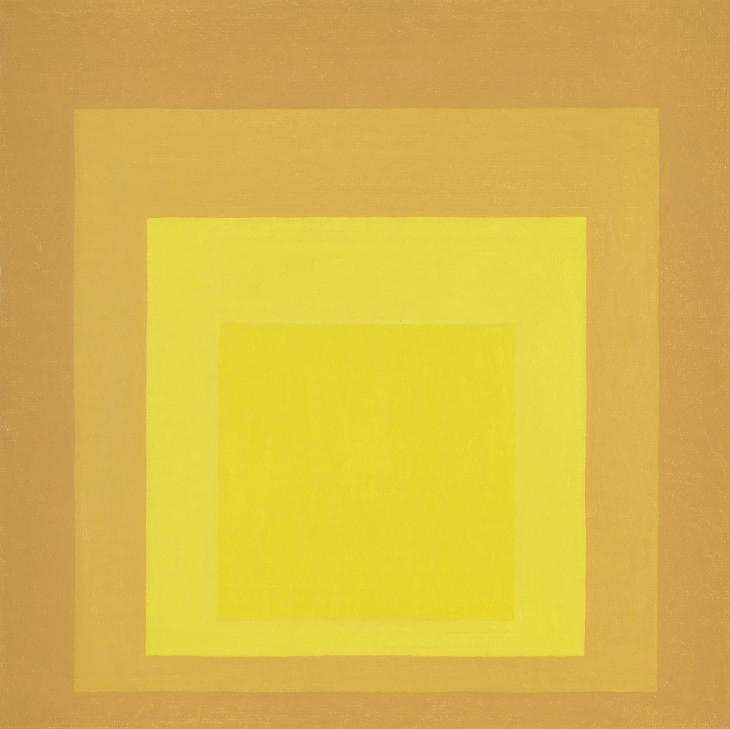
The exhibition showcases the work of some of history’s most thoughtful and enquiring artists as they grapple with light as a subject and medium such as Josef Albers, John Constable, Tacita Dean, Olafur Eliasson, Dan Flavin, Vilhelm Hammershøi, Wassily Kandinsky, Yayoi Kusama, Liliane Lijn, Claude Monet, Lis Rhodes, Bridget Riley, JMW Turner, James Turrell and Pae White.

Traversing three centuries, this expansive exhibition starts in the 18th century and finishes in the present, exploring light in the outdoors, through the lens, in the city and in the home. The show charts artists throughout time as they search for answers to their moral, spiritual and scientific questions through the subject of light.

J M W Turner, Light and Colour (Goethe’s Theory) – the Morning after the Deluge – Moses Writing the Book of Genesis

The craft of painting is juxtaposed with contemporary installations; Liliane Lijn explores light through solid form alongside JMW Turner while Yayoi Kusama’s The Passing Winter, 2005, immerses viewers in a seemingly infinite expanse of floating, luminescent dots, alongside her forebears, the Impressionists.

Auckland Art Gallery Director Kirsten Lacy says, ‘Light from Tate: 1700s to Now is a sensational exhibition. Every space is a homage to the transformative power of light and to the artists who sought to harness and explore it. Throughout the exhibition, visitors will feel enlivened, inspired and immersed as they experience the sensory and emotional impacts of light.’

Robert Nelson writing in The Age when the show was on in Melbourne last year said it was a “surprising and colourful knockout” show saying that the exhibition took up the theme of light “with the industrial revolution, where artists experimented with atmospheric conditions that limit the visibility of solid forms. The marine pictures of Turner marvellously explore the light-catching calibre of air thick with moisture. Using a combination of transparent glaze layers and opaque scumbles, the artist presents the spray and mists as diaphanous curtains over everything behind them.

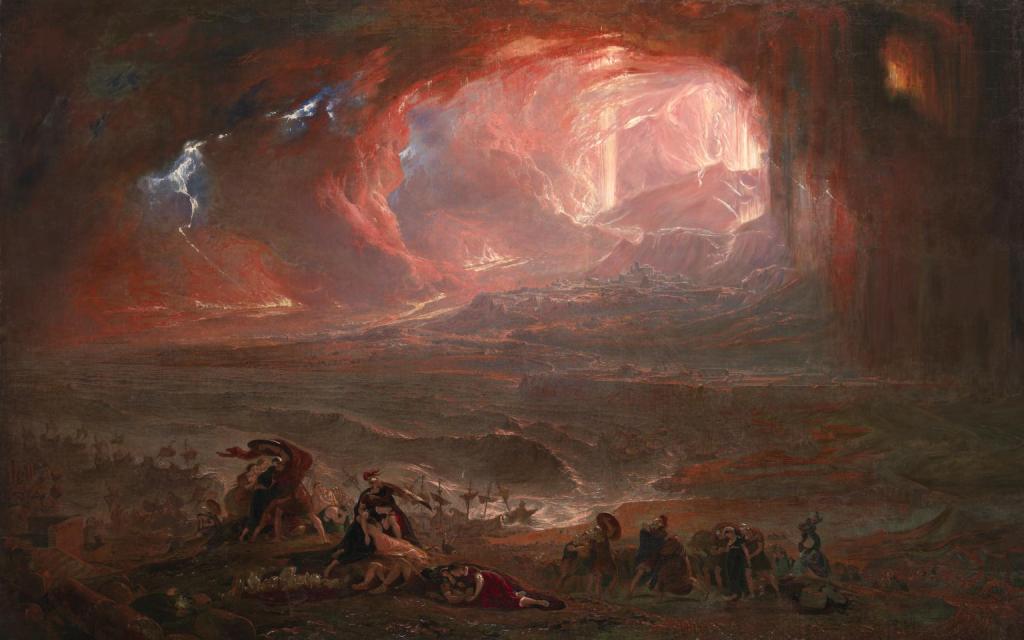
John Martin, The Destruction of Pompei and Herculaneum

… Erupting volcanoes also allow Joseph Wright of Derby and John Martin to make imaginary architecture in the sky, balancing explosive fires with tumbling ash and lava”.

“The sublime, the scientific and the sultry are all represented through this focus on light in 19th-century painting. There’s no doubt artists of the industrial age enjoyed painting light, sometimes at the expense of form. The upper half of John Constable’s landscapes are sometimes better painted than the lower half, because he was happier eyeballing the luminous skies than the dirt the light lands upon.”

“As the exhibition progresses, you become aware of a face-off between the art of painting and contemporary installations. The comparisons are often clever and heighten your curiosity to work out what you enjoy responding to.”

“In a room with early-20th-century interiors, a carpet by Philippe Parreno 6.00 PM 2000-6 registers the pattern on the floor that might be made by sunlight coming through a window. But you’ll notice that all the edges are equally sharp, whereas a similar motif that appears in Vilhelm Hammershoi’s painting Interior, Sunlight on the Floor of 1906 correctly shows the edges further from the window as a little fuzzier than those close to the window”.

Bridget Riley, Netaraja

“You cannot beat these painters at their own game. But against that, no one would ever worry that the graphic registration of shadows isn’t optically rigorous. Besides, it’s fun to see the rays from a window embedded in the carpet when the window doesn’t exist”.

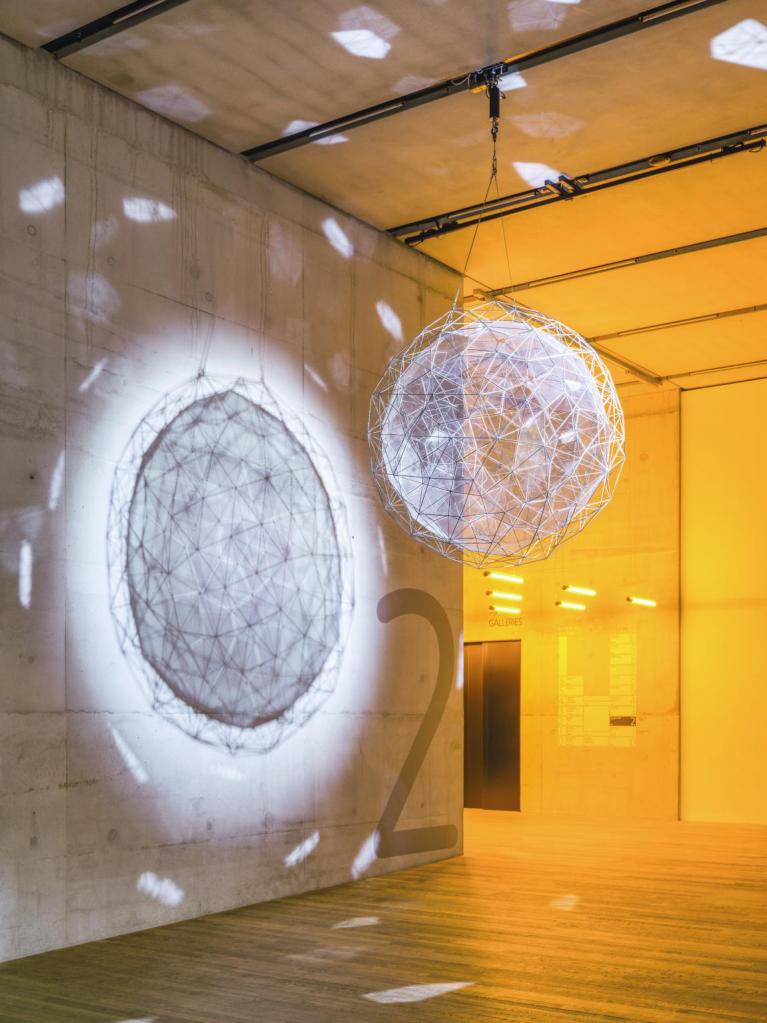
“In contrast to the earnest character of the paintings, the installations seem playful. Yayoi Kusama’s silver cube The Passing Winter of 2005 has small circular windows that seem to open up an infinity of mirrored discs. Olafur Eliasson’s sculpture Stardust Particle from 2014 is a spherical frame with internal skins that dangles in a beam of light. The reflections are almost random, in the same way that we might come across tiny bits of burning suns (stardust) that inspired the shape”.


Categories
Reviews, News and Commentary

New funding for the arts announced

John Daly-Peoples

Auckland Buskers Festival

Today the Ministry of Culture and Heritage today announced additional funding to the cultural sector.

The two new initiatives have been approved by Cabinet to help ensure the cultural sector has the certainty and support to thrive, announced Manatū Taonga Ministry for Culture and Heritage today.

$10 million of COVID-19 recovery funding is going to support established arts, cultural and diversity festivals, while $12 million will help meet increased funding demand being experienced by Creative New Zealand.

“As we kickstart 2023, we’re providing further support to the arts, culture and heritage sector, which brings joy to thousands of kiwis, and continues to be an engine of growth for the New Zealand economy,” says Leauanae Laulu Mac Leauanae, Manatū Taonga Tumu Whakarae Chief Executive.

“Cabinet has approved these two initiatives to help alleviate some of the uncertainty and stress that the cultural sector has acutely experienced during the COVID-19 pandemic and cost-of-living spike. Although these plans were underway before the flooding in Auckland last week, I hope this news will be welcomed by the city’s creative community.

“The extra support for creatives will be administered by Creative New Zealand with the aim of alleviating some of the pressures on over-subscribed funding rounds Creative New Zealand has been facing. Funding will be rapidly delivered to the sector starting later this month.

“We’re also announcing funding to enable Creative New Zealand to support established festivals. While many festivals have survived the pandemic, we know the long tail of COVID-19 has resulted in wide-spread cancellations and postponements. The new funding will give confidence to festival organisers to plan and host festivals in 2023,” says Leauanae Laulu Mac Leauanae.

The new initiatives will be the final additions to the range of funds that have come from the $495 million Arts and Culture COVID Recovery Programme, which was established to support the recovery of the arts, culture and heritage sectors.

“The COVID-19 pandemic brought unprecedented challenges for Aotearoa, which hit the cultural sector particularly hard,” says Joe Fowler, Pou Mataaho o Te Aka Tūhono Deputy Chief Executive, Investment and Outcomes.

“The new arts, cultural and diversity festivals funding will continue to support the live events community as the Arts and Culture Event Support Scheme (ACESS) comes to a close. It is fitting that ACESS funding set aside to underwrite many, many hundreds of arts and culture events throughout the last year is now enabling us to support the resurgence of festivals.

“The Arts and Culture Event Support Scheme paid out more than $30 million to events affected by COVID-19, giving event organisers the confidence to plan and deliver some incredible events, and ensuring that thousands of artists, subcontractors, and crew got paid if their events were disrupted by COVID-19.

“We’re now focused in Manatū Taonga on completing the final rounds of the Cultural Sector Regeneration Fund, investing in projects that will have a lasting benefit for the arts, culture and heritage sector. I am excited to see what initiatives will be successful in our remaining two rounds of funding,” says Joe Fowler.

The media release also noted:

  • Additional support for festivals: $10 million to support established festivals that celebrate the life experiences, stories, cultures and regional identities of New Zealanders, and that continue to be impacted by the effects of COVID-19 in 2023.
  • Additional support for artists, arts practitioners and arts organisations: $12 million to support artists, arts practitioners and arts organisations, including through Grants programmes or other existing programmes that help the arts, culture and heritage sector adapt and thrive in a post-COVID-19 environment.
  • Funding for both initiatives comes from existing funding from the Arts and Culture COVID Recovery Programme and will be administered by Creative New Zealand to enable the continued recovery of the arts, culture and heritage sector from the ongoing impacts of COVID-19.
Categories
Reviews, News and Commentary

Ōtautahi Christchurch Architecture – a gem of a guide

Reviewed by John Daly-Peoples

Ōtautahi Christchurch Architecture: A Walking Guide 

By John Walsh and Patrick Reynolds

Massey University Press

RRP $30

Reviewed by John Daly-Peoples

Its not often that books on architecture are best sellers but architectural writer John Walsh and photographer Patrick Reynolds have just brought out the second edition of Ōtautahi Christchurch Architecture: A Walking Guide , an update of their guide published in 2020. This follows on from their successful publication of Auckland Architecture a Walking Guide which came out in its second edition last year.

This new edition of Ōtautahi Christchurch Architecture includes twenty-five additional buildings constructed since the 2010 earthquake.

Walsh notes that “although many buildings in the central city had been destroyed in the quakes, or demolished after them, a number of important buildings had survived sufficiently intact to be saved and restored. … There have been definite losses, such as the Cathedral of the Blessed Sacrament (1905), which was a nationally significant building, but there have been some impressive heritage wins. Miles Warren’s Town Hall from the 1970s, for example, has been beautifully restored”.

There is an increasing awareness of the  place of architecture in our environment and in our personal, cultural and social history. A city’s buildings are important in defining the nature of a place and we map a city through its buildings. The forms, materials, the orientation, the colours, and  decoration all help create the visual language of the way the city is perceived.

The image of some cities such as Paris and New York are strongly linked to their architecture. So too is Christchurch which has managed to retain many of his historic buildings and the book is not just the basis for  several walking tours but also a history of the development of the city.

Benjamin Mountfort, Canterbury Museum Image: Patrick Reynolds

One of the unique aspects of Christchurch’s architecture is the importance of local architects who have designed buildings for the city over 150 years.

Benjamin Mountfort was Christchurch’s leading architect from the time of European settlement in the 1850s until the end of the nineteenth century designing many buildings in the Gothic Revival style which set the architectural style for the nineteenth and part of the twentieth century. One of his notable buildings which has always been symbolic of the city was Christchurch Cathedral which was originally designed by the leading British architect George Gilbert Scott but substantially modified by Mountford.  He used the Gothic style in several other buildings such as The Great Hall and Tower Block of Canterbury College, The Victoria Clock Tower and the Canterbury Museum.

Warren and Mahoney, 65 Cambridge Terrace Image: Patrick Reynolds

He was succeeded by architects of similar calibre such as  John Collins and Richard Harman, Samuel Hurst Seager and Cecil Wood. Then in the middle part of the twentieth century Miles Warren and the firm of Warren and Mahoney dominated the architectural scene.in designing many of the city’s Modernist architecture including the Dorset Street Flats. The Christchurch Town Hall and the recent  John Britten Building at the lIam Campus.

Shigeru Ban, Transitional Cathedral Image: Patrick Reynolds

More recently there have been several buildings which have pushed the boundaries of Contemporary architecture with buildings such as the  Cardboard Cathedral (Shigeru Ban), Te Pae, the Convention Centre (Woods Bagot – with Warren and Mahoney) and the innovative Boxed Quarter (Field Studio of Architecture +Urbanism).

Walsh includes some of the city’s little architectural gems such as the old Robert McDougall  Art Gallery designed by Edward Armstrong in 1932 ,Warren and Mahoney’s offices and apartments at 65 Cambridge Terrace and the more recent Ravenscar House Museum (Patterson Associates).

Patterson Associates, Ravenscar House Museum Image: Patrick Reynolds

The book which is a gem in itself offers six guided walking tours around different areas of the city with Walsh’s text providing valuable information. He managed to link ideas about architectures, the role and purpose of individual buildings along with a history of Christchurch which gives an insight into the importance of architecture in the environment.

Categories
Reviews, News and Commentary

Two Shoreside Shakespeare productions to enjoy this summer

Auckland Shakespeare in the Park 2023

  • The Merry Wives of Windsor
  • Antony and Cleopatra

Reviewed by Malcolm Calder
Sir John Falstaff (Jordan Henare) in Merry Wives of Windsor

Photo: Matthew Diesch

Outdoor performances can be traced back to a Greek tradition. However they acquired a religious significance over time, and were often a featured part of church services, particularly at Easter, and aimed fairly and squarely at a largely illiterate congregations. Although religious ceremony and celebration continues to play a part in Europe today, by the 14th century outdoor plays in England had become divorced from the church. They covered a broad range of subjects and were frequently performed by craft guilds in outdoor spaces. These frequently took place as wooden carts moved around the streets, drawing an audience as they went along, before coming to rest at an arranged site particularly at inn yards or enclosed courtyards. Indeed actors often relaxed and rested between shows on the village green – hence the term Green Room that is still in use today.

It wasn’t until the 19th century that a throwback to outdoor performances started to gain popularity – initially in England but also in the US – largely driven by women actors and managers. Instead of building a forest on stage, actors were now able to move amongst real trees. Instead of an image of a lake, actors paddled in real water.

In New Zealand this throwback was slow arriving and we leapt almost immediately to indoor spaces. Driven largely by the British colonial military presence and subsequently by an influx of gold diggers, our early theatres were mainly small rooms, pubs and the like. The throwback didn’t start until well into the 20th century and outdoor summer seasons are now almost de rigeur with the works of Shakespeare figuring prominently – largely because his work forms a significant part of our language and theatrical heritage, but also because they are widely known and many are scripted around outdoor settings. There are now thriving summer seasons in several different parts of the country, largely the work of community-based groups. One such group is Auckland’s Shoreside Theatre which performs at the cosy little outdoor ampitheatre behind the Pumphouse Theatre next to the lake at Takapuna. This summer season usually embraces two Shakespeare plays and in 2023 they are tackling Antony and Cleopatra and The Merry Wives of Windsor. These alternate over a 4-week season that extends well into February (see dates below).

For any actors, Shakespeare presents a huge challenge – even more so for amateurs who frequently experience difficulty with the rhythms inherent in Shakespeare’s words, with the timing required in his comedy and with the necessity of clearly articulating every single line so the audience does not get lost. As a result typical community-based productions run the gamut from the mediocre to the outstanding. Shoreside’s two offerings almost reach both extremes.

Merry Wives is the most purely farcical and chaotic of all of Shakespeare’s plays. The ‘meaning’ cannot be separated from the ‘performance. Director James Bell could easily have followed a recent trend of updating and contemporising the setting, but wisely sticks with the tried and true.

Because Merry Wives is a farce it is hugely reliant on lightning-quick timing, carefully controlled over-characterisation and tightly choreographed movement. The chemistry between principals was clearly evident on opening night. There is an easy flow and much of its bumbling over-characterisation is very, very funny. Apart from a couple of minor technical hitches, Director Bell and his well-drilled cast all know their stuff. This production certainly worked for me.

The lynchpin is of course Falstaff. I don’t know Jordan Henare. Have never met him and have never seen him onstage before. But he is every inch the bumbling, salacious buffoon. In attempting to woo two wealthy women into helping him out of his financial troubles he makes both outrageous identical suggestions to both of them – rather like Tinder I suppose. But his efforts make Tinder seem like a Sunday School lesson. Forward is an understatement. Nor would his non-discriminatory, drunken and blatantly misogynistic approach to women in general work any better in a pub, club or even at the beach today. Just as some (hopefully a shrinking minority) continue to do so, his approaches are totally lacking in sensitivity or, some might say, sobriety. Wouldn’t work today. Didn’t work then.

And all because the women are lot smarter than he is and trip him up at every step. In fact he is so full of himself that at one point he is tricked into hiding in a basket of dirty laundry, at another to disguising himself as an ‘F.A.T’ old woman and most of the time he seems completely unembarrassed about being embarrassed.

But if Falstaff is the lynchpin, the strength of this play are its women. Āria Harrison-Sparke and Charlotte Heath are the besties who trip up Falstaff at every step (literally on occasion) while Steph Curtis (Mrs Page) and Terri Mellender (The Host) provide a mature strength that underpins and provides a solid authority for everything else.. Supporting them is the ever-reliable Bess Brookes whose performance as Miss Cleverly suggests she now owns the part.

The blokes are mere counterpoints in this Merry Wives and this is sustained by their being a more predictably bland bunch. Quite appropriately too. But they remain true and authentic with just the right amount of boorishness and cuckolding thrown in – this play wouldn’t work otherwise. Christopher Raven is worthy of mention as the faux Frenchman Dr Caiaus and Daniel Rundle handles Fenton/Brook well even tossing in a flash of tartan and an unexpected burst of ‘braid scots’ at one point.

However, the entire show is almost stolen by the truly captivating work of Heather Maday (Nym). And she has barely any lines at all. Nym was written for a boy, although in a neat reversal of Shakespearean tradition, Bell casts him using a girl-in-a-wig this time around. I kept willing her back on stage and couldn’t take my eyes off her when she was, afraid I might miss something.

In the end of course, this is a Shakesperean comedy after all. Page-the-younger marries her true-love Fenton, Falstaff slightly redeems himself before the fairies and elves and the spirit of the play is well summed up in Page-the-elder’s last lines:

Master Fenton,
Heaven give you many, many merry days!
Good husband, let us every one go home,
And laugh this sport o’er by a country fire;
Sir John and all.

Samantha Ellwood and Grae Burton in Antony and Cleopatra

Photo: Phil Botha

Unfortunately I can’t wax as lyrical about Shoreside’s other offering Antony and Cleopatra. The company is to be applauded for blooding a number of younger people and enabling them to explore first-hand the complexities and subtleties required required to make Shakespeare’s work succeed. I understand that a critical last-minute cast change also became necessary and that may have unsettled rhythms within the cast. But it didn’t help either.

Nonetheless Grae Burton gave us a larger than life Mark Antony, wrought with a coloniser’s imperial view of Egypt. But his chemistry with Samantha Ellwood (Cleopatra) was hardly captivating and mainly notable for its faux qualities and even absence. That may have been partly explained by a Cleopatra who was overly petulant, sulky and quite honestly just plain naggy at times. What Antony saw in her I’m not sure as she evoked few of the qualities of a powerful siren that the role requires.

The third key player, Rama Buisson (Octavius Caesar) explored an imperial aloofness that was slightly out of touch with the hoi polloi. Quite interesting I thought and, for me, it had slight traces of a young Prince (now King) Charles.

I also smiled each time Kutumi Refferts brought his idiosyncratic Agrippa out, although I wondered if the character he created was perhaps an escapee from Merry Wives.

However, a final word for the Production Manager. Somehow he managed to conjure the overhead arrival of the Police Chopper just as Antony was nearing the end of one of Mr Shakepeare’s longest-ever death scenes before finally carking it. The helicopter drowned out most of the dying Antony’s final words unfortunately but that didn’t matter as it seemed the timely aerial arrival was orchestrated to bear his spirit away to a sarcophagus atop the Skytower. At least that’s where the helicopter headed. Or maybe a pyramid somewhere.

Shortly thereafter, as Mr Shakespeare’s death count continued to mount, a possum ambled across the P-side battlements and then darted across the stage roof before stopping and hitting its mark right on an atmospherically lit and highly strategic part of the OP-side battlements. Then lo and behold, precisely when and Cleo got finally asp-ed and right on cue it gathered up HER spirit and ran away with it too – it seemed the possum was chasing the helicopter to Antony’s sarcophagus on the southside too. The timing was perfect for both!

.

Antony and Cleopatra – Jan 21,22, 26, 28, Feb 1, 3, 4, 5, 8, 9, 13, 14, 17.

The Merry Wives of Windsor – Jan 25, 27, 31, Feb 7, 10, 11, 12, 15, 16, 18

Categories
Reviews, News and Commentary

Auckland Arts Festival International Theatre

John Daly-Peoples

Auckland Arts Festival Theatre

Among the dozen theatrical works being presented at this year’s Auckland Arts Festival will be a few international pieces including works from Japan, Australia, and South Korea.

Sydney Theatre Company’s “The Picture of Dorian Gray” comes to the festival after sold-out Australian seasons.

Kip Williams reimagines the Oscar  Wilde novella in a play about a deal with the devil. His novel approach to theatre follows on from a career of innovative interpretations  including a  2013  reimagining of  Romeo and Juliet focussing the text on  as well as an all-female  production of William Golding’s “Lord of the Flies”  

The story revolves around a portrait of Dorian Gray  painted by Basil Hallward. Having sold his soul Dorian is able to pursue a libertine lifestyle while only the portrait ages. This is a one woman show with the actress playing  where 26 characters linking on stage performances and video character combinations.

The Guardian review of the work said “It is ambitious, exuberant and whip-smart; it is an embrace of theatre’s past, present and future; it is in fluent conversation with our screens, with our feelings, with our fears, with our collective obsessions”.

Australia’s The Age noted that “Blending cinema and theatre requires utmost care, lest the immediacy of live performance be lost. This production takes that risk with daring creative intelligence, and audiences are rewarded with gloriously innovative, forward-looking hybrid performance that stands alongside the best in the business.”

Many will recall the Innovative dance/theatre work Betroffenheit, created by  Jonathon Young and Crystal Pite at a previous festival. Now they return with  “Revisor” a sensational hybrid of contemporary theatre and dance.

Young’s text derives from Nikolai Gogol’s 1836 play The Government Inspector” (Revizor in Russian), a farce about petty bureaucracy, mistaken identity and conflicting motives.

A review in the Guardian said “Revisor finds Pite’s phenomenal dancers performing a kind of physical lip-syncing to scripted voiceovers by Young’s actors. The result is astonishing not for its imitation, but for its exactitude: the rhythms and intonations of speech drive every gesture, stance and step. Choreographically, it’s riveting, both for the inventive articulation of individual bodies and for the fine-tuned dynamics of the ensemble, as responsive as conversation itself”.

OLYMPUS DIGITAL CAMERA

Skyduck; A Chinese Spy Comedy is written and performed by Sam Wang and Australian who trained as an actor at Toi Whakaari Drama School. It is set in 1993 with China undertaking Operation Skyduck. Captain Yan and Agent Chang are sent to steal America’s most prized flight simulation software, when they find themselves trapped by NSA agent, Commander Kendrick who intends destroying China’s military ambition.

This is a bilingual (Mandarin with English surtitles) solo show with Sam Wang, playing seven hilarious characters in a rollicking tale of international espionage – and half the story is in

The show combines lo-fi with high-tech, utilising projection, puppets, musical numbers, and handmade gadgets,

An Australian Arts Hub review described Wang as “a profoundly charismatic force on stage, with his versatility lying at the heart of the success of Skyduck. He plays an ever increasing number of characters, each detailed and enjoyably distinct. He dances, sings, speaks multiple languages, and can perform a commendable Matrix-inspired back bend.” And This production weaves Sam Wang into a rich, multicultural tapestry, often drawing on the humour that arises from viewing familiar cultural icons with fresh eyes.


From Scotland comes “The Chosen Haram” featuring   the Edinburgh born  Sadiq Ali as the lead actor in an emotionally candid work about sexuality, faith, addiction and connection that’s also a clever take on circus.

Something that is ‘Haram’ is forbidden by Islam. “The Chosen Haram” tells the story of two gay men and their chance meeting through a dating app, portraying the highs and lows of their relationship and the social, cultural and personal barriers they face in seeking happiness and fulfilment.

The work is based on Ali’s experience, combined with interviews with members of the LGBTQ+ community who identify as (ex) Muslim, with the work exploring the struggles faced by many people whose upbringing contradicts their personal truths, and how this can lead to self-destructive behaviour.

A review in The Voice noted that. “There is no dialogue in the show, except for a few grunts here and there, but it really doesn’t need it. The two characters are so expressive with their bodies, facial expressions – and each other – you can hear every word they are saying.

Homosexuality in Islam is a difficult subject to approach, but this done in a way that did not desecrate the religion. It’s a human story about trying to be the best version of yourself, but can you really do that if you’re suppressing a huge part of who you are.”

From Japan comes “Scored in Silence,” a solo theatre performance which tells the  story of the Deaf survivors of Hiroshima using beautifully crafted animation, movement and sound.

Through research, interviews and the study of original film footage, London-based Deaf Japanese artist Chisato Minamimura unpacks the hidden perspectives of Deaf people from the small number that survived the horrors of the atomic bomb atrocity in Japan in 1945.

Minamimura brings the untold narratives of survivors of the A-bomb – known as ‘hibakusha’ – into stark relief, touching upon the atrocity of the event and its aftermath, including the layers of discrimination experienced by these isolated members of Japanese society. Scored in Silence is available to stream online with English captions and/or Audio Description.

This stunning solo theatre performance tells the story of the Deaf survivors of Hiroshima using beautifully crafted animation, movement and sound.

A Canadian review said of the work “Scored in Silence is gorgeous in its rejection of any one single aesthetic — it’s dance, it’s animation, it’s mime, it’s spoken-word. A universe of performance styles meet in a fifty-five minute symphony of remembrance: it’s stunning work.”

“Minamimura, though firmly at the apex of her solo show, does not act alone: she’s joined by Dave Packer’s dreamy projected illustrations, which morph to represent planes, fields of grass, and, chillingly, the bomb itself. The illustrations are whimsical and gnarled, complicated and pure: they’re everything at once, a whole world in drawings projected upon a delicate, gossamer screen, behind which Minamimura can perform. Videos of Hiroshima survivors appear intermittently, framing Minamimura’s work with more tangible contexts and personalities.”

Scored in Silence will be available to stream online at Vidzing (March 12 – 16) with English Captions and/or Audio Description

There will be a screening and post-show talk with Chisato Minamimura at the Magic Mirrors Spiegeltent, Aotea Square on Saturday  11 March, 2.00pm

Categories
Reviews, News and Commentary

Renaissance: The Age of Genius – A spectacular view of the art of the past

Reviewed by John Daly-Peoples

Renaissance: The Age of Genius

Hunua Room, Aotea Centre, Auckland

From January 4

Reviewed by John Daly-Peoples


Last year one of the great visual art treats was the impressive multimedia show  Michelangelo – A Different View which provided viewers with an extraordinary view of Michelangelo’s Sistine Chapel ceiling.

This week a similar  immersive exhibition opens at the Aotea Centre.  RENAISSANCE: THE AGE OF GENIUS  brings together about 500 works by the major artists of the Renaissance including Leonardo da Vinci, Michelangelo, Raphael, Sandro Botticelli, Titian, Caravaggio, Giotto, Peter Bruegel the Elder, Lucas Cranach the Elder and Albert Durer. Each artist is presented in a four minute filmic sequence showing numerous works by the artist.

The images are of works from dozens of  art museums  around the world and  are presented using specialist multimedia projections which provide visitors with remarkable views of some the great works of art, many of which are difficult to see in their far-flung locations.

The forty minute filmic presentation opens with a magnificent view of Florence where many of the artists lived and worked. It is a view which would have been the same back in the fifteenth century.

This grand vista is followed by dramatic views of the ten artists’ works. Some are presented life size others in great detail such that the face of  Leonardo’s “Mona Lisa” is shown five metres high showing not just the detail of the painting itself but also the crazed paint surface . You could never get to see such detail standing even s few  metres away from the painting in The Louvre.

The least impressive is that of the work of Lucas Cranach where his works are presented all the same size on a scrolling “exhibition” of his work.

There is no commentary to any of any of the sequences  but they all provide clever presentations and interpretations of the artist’s work. Some of Leonardo’s inventions such as his  flying machine have been animated to show the working mechanisms and number of his portraits demonstrate the way he was able to render faces with genuine human  qualities.

Animation also brings to life some of Bruegel’s paintings such as his “Hunters in the Snow” where the distant figures of skaters on the ice are seen moving.

With Titian  the works are elaborate stories of classical  and Christian mythology while the Botticelli sequence contains works such as his  “Nativity” which combines earthly and divine  perspectives. Botticelli’s “Primavera” and “Birth of Venus” are example of the influence of classical mythology on Christian ideas. This sequence also shows the evidence of animation with petals floating over the images.

The sequence on Giotto opens with his small angels floating in the brilliant Lapis Lazuli  blue sky. His works demonstrate the beginnings of  the move from stylisation to naturalness and three-dimensional portrayals of figures and landscape.

The dramatic Caravaggio sequence depicts the sweet charm of many of his figures along with the darker underside of human nature  with the swirling snakes of his “Perseus” as well as the premonition of death in his “St Jerome”

With Durer one is aware of his interest in close observation of his world, demonstrating an enquiring mind  very much like that of Leonardo as he records his environment as well as the faces of the people he painted.

smart

Then there is the grandeur and enormity of scale with the work of Michelangelo and Raphael.

A major fault of the exhibition is the chronology of each artist, with no dates or titles of the works being shown so there is no real comprehension of their developments. There is a separate screen for each artist providing basic information of their careers and occasional details of work but these are of limited value.

The show lets one appreciate the development of perspective, the understanding of human anatomy, depiction of landscape and the combination of the mythic and local. One is also aware of how the human face, hand gestures  and posture are developed by the artists.

The exhibition is an art journey across two centuries of ground-breaking art but it is also a journey into the paintings in a unique experience.

New details are revealed, new connections between artists realised and new understandings gained

In seeing the detail of these works, one appreciates the gift of close observation and the skill in depiction which are the hallmarks of the great painter / genius. These are individuals who changed the way we see and understand our world and the ideas which maker our visual culture.

Its an exhibition which will entertain, educate, challenge and delight the whole family.

Bookings and times

https://www.aucklandlive.co.nz/show/renaissance-the-age-of-genius#tickets-times