Creative New Zealand has announced that the country will not have a national pavilion at next year’s Venice Biennale which runs from April 20 until November 24, 2024..
A report that CNZ produced found that, while the benefits of taking part were clear, some aspects were not sustainable.
In the longer term, New Zealand is seeking an alternative plan for a new national pavilion in 2026, 2028, and 2030, which will involve finding a partner organization or consortium.
The report highlighted “inadequate” resources as a major factor in the decision to withdraw. The pavilion costs approximately NZ$1.2 million ($715,000) to deliver each two-year cycle, with Creative New Zealand contributing NZ$800,000 ($475,000). This is about 1% of the organization’s annual budget, but the complex exhibition delivery process has previously required a workload that the report deemed “unacceptable.”
The report also investigated the artist selection process, finding that “while Māori artists have represented Aotearoa New Zealand at Venice, Western knowledge, artforms and institutions have historically been promoted and valued more.”
“New Zealand’s participation in Venice is currently designed to serve the individual artist,” the report added. “There is opportunity to move the conversation from personal and singular to how representation provides public and collective value for New Zealanders. Personal and public value should be intimately connected.”
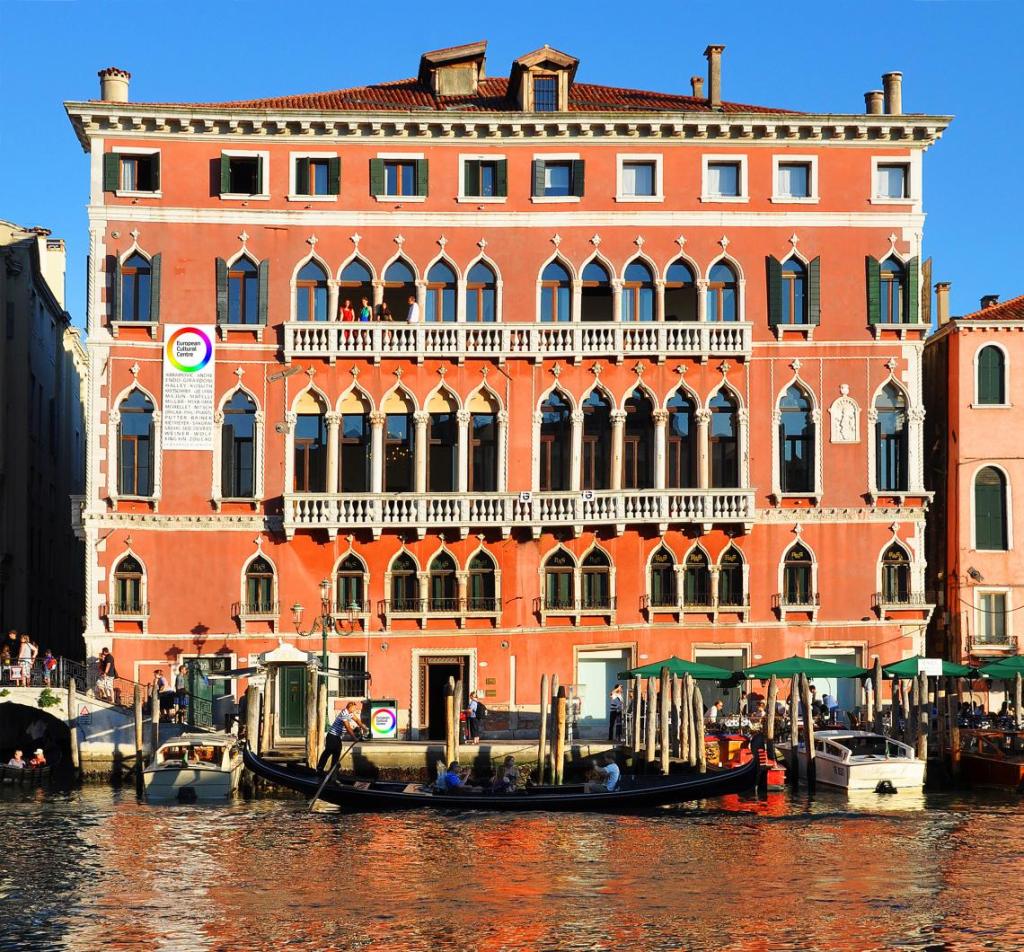
Instead of having a national pavilion next year, several artists from New Zealand who have yet to be announced will be included in the biennale’s main exhibition “Stranieri Ovunque – Foreigns Everywhere curated by Adriano Pedrosa The European Cultural Centre which is in the centre of Venice close to the Rialto Bridge is also including two New Zealand artists, Areez Katki and Caitlin Devoy, in the 7th edition of its “Personal Structures” exhibition that runs alongside the biennale. Their presentations are both funded by Creative New Zealand.
Katki has not yet revealed much about his project, which will be an exploration into the practice of archaeology. Devoy will present BodyObject, which comprises a performance video and playfully corporeal sculptures of everyday objects, including a floppy, phallic musical instrument suggestively titled Wall Hung (pink two-tone) (2020).
The New Zealand Pavilion was established in 2001 and recent highlights have included an exhibition by Berlin-based artist Simon Denny in 2015, Lisa Reihana in 2017 and Yuki Kihara with the exhibition Paradise Camp in 2019.
Peter James Smith – On Writing On painting On Objects
5 – 31 August 2023
OREX Gallery
Reviewed by John Daly-Peoples
Peter James Smith latest exhibition “On Writing on Paintings on Objects” continues the artists interests which combine painting, mathematics, history and romanticism.
His paintings are intended to be read in several ways. There is the pictorial aspect in which we are provided with visual descriptions of landscape which often are built on the Romantic landscape tradition as well as colonial descriptions of the land.
The diagrammatic symbols and marks he uses are abstractions of natural forces and aspects of scientific enquiry such as concepts of the angle of sunlight, speed of tide or ocean currents.
The marks can also be cartographic indicating the outlines of landscape, the ideal passages into harbours or the recording of rainfall.
Then there are the written description of the landscape giving the location, the dates of original or important events as well as a references to writers (Milton) or philosopher (Plato).
Accompanying the exhibition are notes by the artists which gives further detailed historical information which are like curator’s commentaries.
One of the simpler works is “Limelight” ($7000) which shows a streetlight at sunset. The artist notes that the work “presents the world as a stage at the end of the day with the title referring to the theatre footlights that produced radiant energy from the heated lime”. The theatre arched proscenium is suggested by a drawn curved line with the streetlight and foliage becoming props in his imagined scene.
The other works in the show have similar level of explanation which gives the exhibition a depth and relevance.
“The Divided Line” ($12,000) is an example of his more complex work. Using a romantic view of Mitre Peak and Milford Sound he overlays it with Plato’s concept of “the divided line” which imagines two worlds – the visible world and the intellectual world of ideas and concepts. The division is close to notion of The Golden Section which many artists, notably Billy Apple have used in their work. Smith’s use of the line can be applied to the artwork image in understanding that much of our appreciation or conceptualising of the view may be an intellectual understanding rather than a visual comprehension.
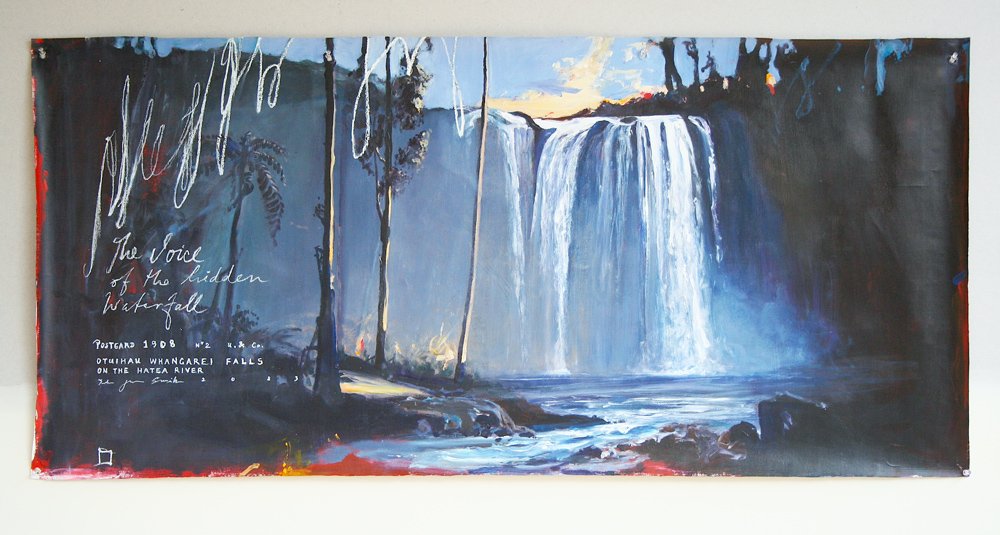
Peter James Smith “The Voice of the Hidden Waterfall”
He has based “The Voice of the Hidden Waterfall” ($12,000) on an old postcard of the Whangarei Falls and the actual post card is collaged into the work “Films Urgent (The Hidden Waterfall) ($2500) which imagines a roll of film taken of the falls.
With both these works he reflects on the way in which information about an event or location is appreciated and passed down. So, there are visual recordings of the photograph, the film the painting and the written record while the painting also refers to the sound of the waterfall itself,
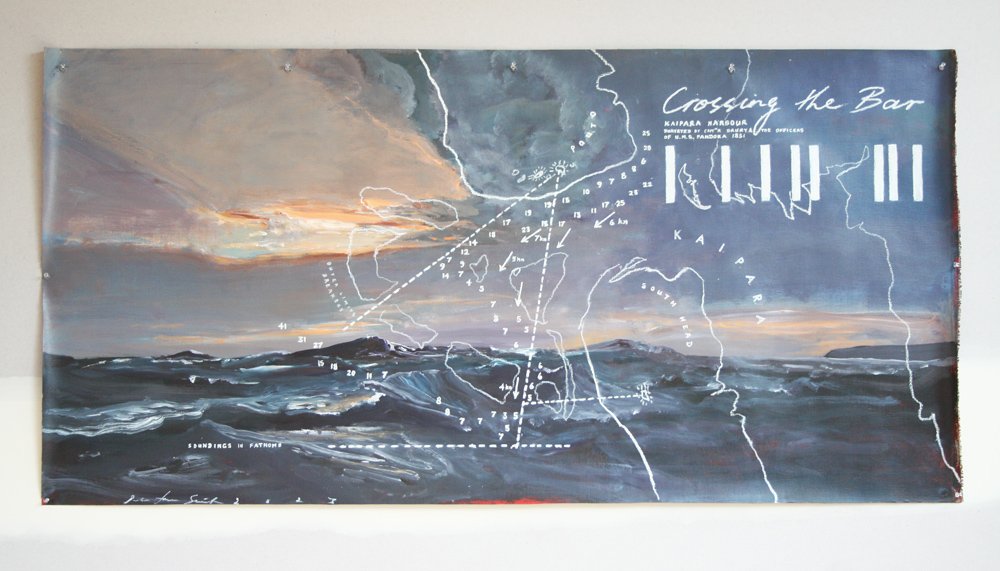
“Crossing the Bar” ($12,000) features four observations of the Kaipara Bar. There is the plan of the bar and the surrounding physical features, a painting of a dramatic sky and the rough seas between the two headlands and the cartographic information detailing the survey by the HMS Pandora in 1852. There is also an abstract addition of several white bars which refer to the various channels which run through the area between the two headlands. These bars can be seen as a musical notation, echoing the rhythm of nature or the keyboard of a piano with its reference to the film The Piano and the treacherous West Coast.
Last week saw the New Zealand Symphony Orchestra presenting a three-day mini music festival with compositions spanning three centuries from Beethoven’s Symphony No 5 through to John Luther Adams “Become Ocean” which won the Pulitzer Prize for Music in 2014.
The three concerts were all conducted by German Andre de Ridder, a champion of contemporary music.
The first work in the “Become Ocean” concert was Toru Takemitsu’s “Rain Tree” which takes its title from a passage in the novel “Atama no ii Ame no Ki” (The Ingenious Rain Tree) by Kenzaburo Oe: “It has been named the ‘rain tree’ for its abundant foliage continues to let fall rain drops collected from last night’s shower until well after the following midday. Its hundreds of thousands of tiny leaves – finger-like – store up moisture” The tree then continues to have droplets of water rain down.
The extraordinary percussion piece featured three performers playing various percussion instruments – bells, marimba, xylophone, and vibraphone. The performers were positioned high on the Town Hall stage with a row of seven instruments and each of the players were spot lit in the otherwise darkened hall, the oscillation of the lights between the players providing a visual enhancement to the music,
The various instruments represent the sounds and ambience of water and falling raindrops. At times this was the soft delicate sounds of light rain and at other times the greater intensity of sounds conveyed the noise of heavy rainfall.
The ringing, tinkling, jingling of the instruments created a subtly changing soundscape but the music also conjured up images of water falling on hard ground, on water, on colourful flowers and silently into foliage. At times there was a sense that we and the performers were under water, bathed in the soft blue light which shrouded the performers and the long lingering chimes gave a sense of depth. space and time.
The work was constantly evolving with repetition, changes in tone and volume, the sounds pulsing through the Town Hall, affecting both performers and audience.
The major work on the programme was John Luther Adams’s “Become Ocean”. The work played in a single movement, was inspired by the oceans of Alaska and the Pacific Northwest. The composer took his title from a phrase of John Cage in honour of Lou Harrison, and further explained his title.
“Life on this earth first emerged from the sea. As the polar ice melts and sea level rises, we humans find ourselves facing the prospect that once again we may quite literally become ocean.”
It was essentially a minimalist work in much the same mode as his fellow composer John Adams.
The orchestra under German conductor de Ridder was divided in to three groups with a centrally placed piano which maintained a constant murmuring presence. The way the groups competed and integrated with each other made the work more like a sound installation engineered by de Ridder.
Each of the sections had their own minamiilst sequence of musical phrases which in turn overlapped, contrasted or intertwined with each other. At times their playing was not much more than quiet breathing while at other times they surged with a monstrous roar
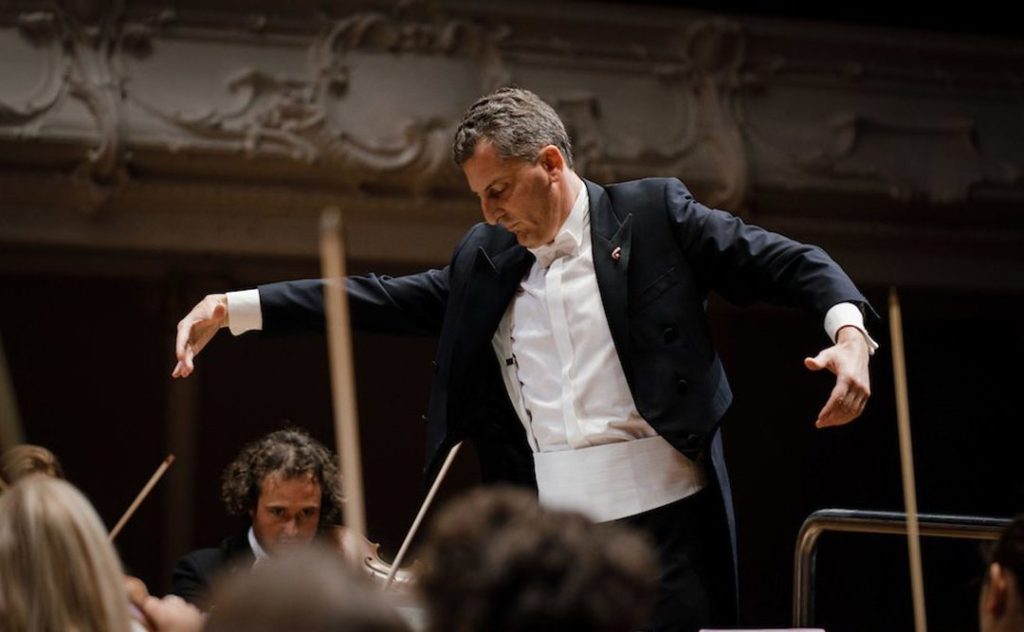
De Ridder was meticulous as he co-ordinated the various groups with feather-like arm gestures and crisp pointing to soloists and individual groups.
The orchestral instruments were largely used for their percussive qualities notably the timpani brass and woodwinds but even the violins were used at times, merely to quiver.
There were times when the orchestra seemed like a giant sea creature being brought to life with the roaring of the brass. At other times the discrete sounds made one aware of the “Butterfly Effect” where a single flap of the wing can have implications for changing weather and life cycles.
The conductor (and composer) seemed to continually discover new ways to create instrumental sounds – breathing, growling and shimmering which were aural metaphors for the land, sky and sea which created a grandeur of scale and space.
The Beethoven 5 concert opened with a performance of Beethoven’s “Coriolan Overture” in which the composer sought to convey the dramatic tale of the Roman general who planned a revenge on Rome until his mother entreats him to stop and he chooses to commit suicide.
This is a work of huge dramatic moments conveying both Coriolan’s heroic qualities as well as his compassionate side and De Ridder made this emotional conflict clear from the opening dramatic chords through to the deathly whispering conclusion.
the Korean composer Unsuk Chin’s “subito con forza” which was commissioned to commemorate Beethoven’s 250th anniversary takes its inspiration for the Beethoven overture, the title referring to the notion of a sudden shift from one musical texture to another, a method Beethoven’s often used in his work and obvious in the “Coriolan Overture.
De Ridder said of the work, “the point is not to mash-up styles and ensembles, but to contrast and complement, to create a bigger picture.” By doing this, de Ridder hopes to “find new audiences for [traditional] repertoire and putting it in new contexts”.
The work began with the opening chords of the Coriolan which the composer then explodes with furious sounds. The traces of the theme were rigorously developed with abrupt changes with competing piano, woodwinds and xylophone along with a crescendo of bells and cymbals.
The main work on the programmes was Beethoven Symphony No 5 and like his other works such as the Symphony No 3 reflected the period – revolutionary, transformative and dramatic. These works expanded the whole idea of the symphony giving them an epic scope and emotional impact.
Rather than being music with great melodies full of poise and balance this was music which attempted to advance new ideas and placed the composer at the forefront of the Romantic revolution where narrative, originality and emotion were all-important.
The Fifth is a work which can be heard countless times without becoming totally familiar but with de Ridder at the helm this was a magnificent performance which was both familiar and new. The opening of the drumbeats was familiar but the conductor’s exploration of the work seemed to give it an edgy drama with each section of the work given an ideal workout with displays of intense energy and refined restraint.
De Rider conducted with a supreme elegance throughout the performance taking the orchestra through to the glorious finale.
The “Follow button” at the bottom right will appear and clicking on that button will allow you to follow that blog and all future posts will arrive on your email.
The APO’s latest concert opened with the premiere of Ross Harris’s Symphony No 7, a one movement work based on three fragments of Gregorian chant, a medieval style of music which has a single melodic line with the singers following the single melody in unison.
The work felt as though it was constructed from faintly remembered phrases which are slowly pieced together before collapsing to reappear again overlaid with other phrases.
While much of the playing featured the strings there were several passages where the percussion instruments played as major part – tubular bells, timpani, gongs brass and harp were all intertwined. In other sequences the various parts of the orchestra took on jarring and discordant voices.
Halfway through the work the orchestra seems to go in search of the forgotten themes and then slowly restructures the work with traces of the original themes. Here there were some delightful passages as when the harp and xylophone were joined in with almost primitive drumming which seemed close to the fairground music of Stravinsky’s Petrushka, a sequence which then morphed into what was a Medieval Dance of Death supported by some robust frantic playing.
The finale of the work saw some elegant flute playing which led the orchestra into a percussion fuelled passage before the music became more lyrical as the orchestra discovered the final remnants of the original Gregorian chant theme.
Throughout the work one was aware of the composers intelligent use of the instruments as he experimented with sounds and contrasts, a feature which conductor Giordano Bellincampi was aware of ensuring they were used to maximum effect.
The major work on the programme was Brahms’s Symphony No 1, a work often referred to as Beethoven’s 10th symphony mainly because it makes use of one of the themes of Beethoven Symphony No 9 and also because Brahms himself always felt he lived in the shadow of the great composer.
There were fifty years between the two compositions and over that time there were big changes in music and in the zeitgeist of the times. The late nineteenth century saw a growth in psychological studies and an awareness of human psychology. Where Beethoven created music for the revolutionary, heroic man Brahms and composers such as Mahler were writing about personal experiences and personal emotions and feeling.
Brahms was also having to create a new musical language which built on that of Beethoven giving it a more personal style.
From the first we enter a brooding landscape of the mind filled with mystery. This is not the place of the noble, universal man of Beethoven but the the inner life of Brahms himself with all its flaws and desires.
In the second movement we encounter a more idyllic view and an awakening in the mind of the composer. Here conductor Bellincampi was almost dancing on the podium with his hands performing pirouettes as he led the orchestra. Concertmaster Andrew Beer with his refined solo performance at the end of the end of the movement added to the sense elation.
In the final movement with its reference to Beethoven’s ninth symphony a fog sems to lift from the composers’ ruminations and he encounters a new age of reflection. The words of Beethoven’s “Ode to Joy” took on a new contemporary meaning symbolising hope, unity and fellowship of the new revolutionary age.
Throughout the work Bellincampi was able to provide balance and nuance as he skilfully guided the orchestra, ensuring that the various highlight such as an enchanting passage from the flutes and woodwinds were clearly delivered.
Also on the programme and reflecting the musical changes happening at the end of the ninetieth century was a performance of Mahler’s “Songs of a Wayfarer” sung by baritone Benson Wilson
With these four songs Mahler envisaged a wayfarer, reflecting on his past life and his destiny as he travels the land. The first depicted his despair that his lover has married someone else while in the In the second Wilson expressed the joy of the wayfarer with a bird-like thrill as he sang from the bird’s perspective.
With the third which opens with the word “I feel a knife burning in my breast” the singer dwells on his thoughts of suicide and Wilson managed to convey the wayfarer’s anguish with a soulful expression
In the fourth song he expresses an anger and defiance with a voice which seems to grow out of the orchestra and his pleading voice railed against the orchestra and its dark funereal march.
The “Follow button” at the bottom right will appear and clicking on that button will allow you to follow that blog and all future posts will arrive on your email.
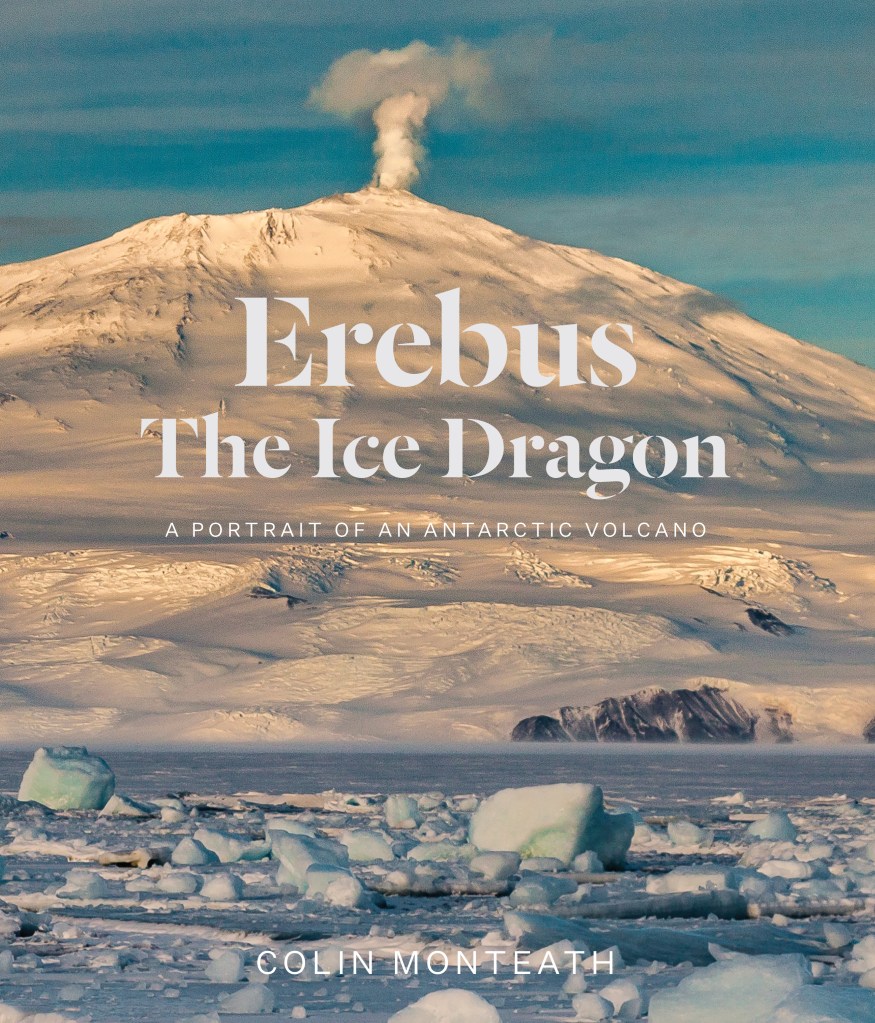
The name Erebus for most New Zealanders is associated with tragedy after the fatal crash of flight TE901 in 1979. In many ways that is appropriate as Erebus, in Greek myth was the son of Chaos, the god of the dark region of the underworld and the personification of darkness.
Erebus has excited explorers, scientists , artists, climbers and tourists, all attracted by various aspects of the mountain. It is an extraordinary feature of Antarctica being an active volcano with dozens of ice caves, a lava lake and home to amazing ecosystem.
A new book” Erebus The Ice Dragon” by Antarctic veteran Colin Monteath brings together the history, science, art and feats of adventure which make the Erebus and Antarctica a place of amazing beauty filled with secrecy and new areas to be explored and understood.
The book is a broad history about Erebus and Antarctica but also about the adventures and explorations from its earliest discovery though to the present-day. The extraordinary tales featuring extraordinary characters are accompanied by superb images of the explorations from the earliest sketches to the present. These images illustrate the landscape, the men , and their equipment which have travelled to this white continent.
Erebus was discovered by James Clark Ross who was one of the great explorers of his time. Before journeying to the Antarctic, he had made many voyages to the Arctic and discovered North Magnetic Pole. It was his ship Erebus, along with Terror which discovered Erebus on January 28th, 1841.
The book is filled with the stories about the amazing characters who followed Ross in pursuit of adventure and discovery These included men like the geologists from Shackleton’s Nimrod expedition who made the first ascent of Erebus in 1908 and the second ascent in 1912 during Scott’s Terra Nova expedition.
The exploders and scientists who came after them spent years in the dangerous scientific searches. The range of scientific inquiry included the study of fossils, meteorological studies, upper atmosphere research as well as the geological and volcanic studies which continue to provide valuable information about the Antarctic but also about global future changes and adaptations,
The author was one of the mountaineers involved in supporting the authorities after the crash of Flight TE901 and the chapter on the disater is written from the perspective of Monteath as well as fellow mountaineers , Rex Hendry, Hugh Logan and Harry Keys, who each of whom was involved in the recovery operation. The four accounts help bring an understanding to what actually happened in the build-up to the tourist flights as well as the recovery phase.
Beaufort Island and Mount Erebus , J E Davis
There is also a chapter by Dr Adele Jackson looking at the artists who have visited the area inspired by the landscape, its history and the Southern Lights. Probably the first artist to record Erebus was J E Davis the second master of the Terror whose painting is a remarkable plein air work done with supreme skill. Since then, numerous writers, musicians and artists have visited the continent under the auspices of many agencies including the Antarctica New Zealand Artists and Writers Programme. Artist under the programme have included artist Nigel Brown, poets Bill Manhire and Chris Orsman and Musician Chis Cree Brown.
In previous years major artists such as the Australian Sidney Nolan and New Zealander Peter McIntyre journeyed to south adding to the pictorial record of the area.
Monteath’s portrait of Erebus is filled with his own personal experiences which provides a unique understanding of the history and allure of the volcano exploring the mysteries of this extraordinary place.
“Ever Present: First Peoples Art of Australia” is a survey show of over 160 artists spanning more than a century of art making in aboriginal communities. While the artworks have been drawn from period 1890 up to the present they span time and place across many centuries connecting histories through stories and experiences.
The exhibition celebrates First Nations Australian art exploring the interlinking themes of Ancestors, Community, Culture, Colonisation, and Identity. Knowledge systems are passed down through oral histories, dancing, stories and songlines or songspirals that tell the creation stories that cross the country and put all geographical and sacred sites into place in Aboriginal culture. These come together to evoke Ancestral creation stories as well as describing the laws and culture of individual communities often known as The Dreaming.
There a no early example of pre-European aboriginal cave, rock or bark art works but some of works in the show display many of the characteristics of the classical period. The more recent works deal with urgent political, social and personal issues such as Daniel Boyd’s “Treasure Island” with its multi-coloured map of Australia which is a visual reminder of the richness and diversity of the hundreds of Aboriginal and Torres Strait Islander communities, as opposed to the early colonial maps which presented the continent as holding mineral treasures and land suitable for exploitation.
In the adventure stories such as Robert Louis Stevenson’s “Treasure Island” those seeking treasures had a map, where X marked the spot and other symbols were used to indicate landmarks, dangers and resources.
In many ways the mark making of aboriginal artists is similar to early European methods of communication. The lines, dots and colour link to the semaphore flag system of communication or the primitive morse code system composed of dots and dashes.
As in aboriginal art the ideas or information is in a coded form and only by understanding the code system does the observer get to understand the message.
Some of the classical aboriginal style works which use chevron shapes and lines are similar to the European methods of geological description using distinctive symbols, patterns and colours.
While these designs are similar, the aboriginal artworks are also able to carry notions of history, myth and community.
Albert Namatjira, Quarta Tooma -Ormiston Gorge
One of the interesting inclusions in the exhibition is the work of Albert Namatjira who was largely ignored in the middle of last century as it was thought that his work showed he had given way to the European pictorial tradition and by implication to the of European privilege over the land. His landscapes have now been reassessed and rehabilitated and seen as another form of expression which acknowledge sacred sites and knowledge.
Christopher Pearce, “Beyond the Hay”
Another work in the European tradition is Christopher Pearce’s “Beyond the Hay” which reverses the idea of European imposition of the ideal and the exotic. Pearce based his work on a hand-coloured engraving by the British artist John Sykes “A deserted Indian village” which he had made of an aboriginal settlement in Western Australia. In the nineteenth century anyone caught within the area (beyond the Hay River) faced the possibility of being shot.
Julie Dowling explores the idea of European with her work which has the surreal qualities of a Magritte painting while Yvonne Koolmatrie’s “Eel Trap”, uses traditional weaving techniques to create art works which transcend their original utilitarian purposes.
In the work of Yhonnie Scarce the dark glass objects in the shapes of the traditional bush fruit and vegetables eaten by Aboriginal become metaphors for the Aboriginal people and the forceps represent the experiments and invasions by medical and other institutions.
The abstract expressionist works of Emily Kam Kngwarray which trace the lines of travel in the dreamtime also represent the tangled underground root system of the tuber plants such as the yam. These complex twinning lines can also be seen as the representing the complex communication of the cables and lines of our contemporary network of our underground service such as telephone and internet.
Mabel Juli, “Garnkiny Ngarrangkarni”
The severe abstraction of Mabel Juli with her “Garnkiny Ngarrangkarni” is able to use simple symbols to encapsulate the complex myths about the relationship between the heavens and humans.
The exhibition provides endless opportunities for discovery about the techniques and range of aboriginal art. They also allow the viewer to explore connections with art of the European tradition as well as those of the Pacific and Māori.
The National Gallery of Australia’s Curator of Aboriginal and Torres Strait Islander Art, Tina Baum, Gulumirrgin (Larrakia)/Wardaman/Karajarri peoples, says ‘The National Gallery is the custodian to the largest collection of Aboriginal and Torres Strait Islander art in the world and through partnering with overseas galleries to present touring exhibitions like Ever Present, we elevate First Nations voices on a global stage. To fully understand the richness, diversity and depth of Aboriginal and Torres Strait Islander art and culture would take many generations and many lifetimes – but to appreciate it only takes a moment.’
The exhibition includes some of the most influential First Nations Australian artists including Brook Andrew, Richard Bell, Bindi Cole, Karla Dickens, Jonathan Jones, Mabel Juli, Vernon Ah Kee, Kunmanara Ray Ken, Emily Kam Kngwarray, Yvonne Koolmatrie, Alex Mingelmanganu, Archie Moore, Albert Namatjira, Dorothy Napangardi, Christopher Pease, r e a, Yhonnie Scarce, Damien Shen, Christian Thompson and Clifford Possum Tjapaltjarri.
The “Follow button” at the bottom right will appear and clicking on that button will allow you to follow that blog and all future posts will arrive on your email.
Pat Hanly, ‘Rainbow Pieces’ (1972), Ōtautahi Christchurch, Christchurch Town Hall
Public Art Heritage Aotearoa New Zealand’s new website publicart.nz was officially launched this week at Parliament by The Minister for Art, Culture and Heritage, Hon Carmel Sepuloni.
The website is a New Zealand first, providing a single place for New Zealanders to gain knowledge of 20th Century public artworks located in towns and cities across Aotearoa, including works that have been hidden, lost, destroyed, or deaccessioned.
At launch the register contains over 380 works which can be searched by information about each of the artworks, the artists, and their locations.
The register will be an invaluable resource for researchers, the arts community, local communities, and tourists as well as local authorities, schools, hospitals, churches, and other public-facing organisations. Public Art Heritage Aotearoa New Zealand (PAHANZ) is a research initiative based at Toi Rauwhārangi College of Creative Arts, Massey University Wellington, and was established to find, document, and protect what remains of Aotearoa’s 20th century public art. Dr Bronwyn Holloway-Smith, co-director of PAHANZ said today: “Sadly, many 20th Century works have already been destroyed, hidden, or simply lost, while others remain undocumented and at risk due to a lack of public knowledge of their significance and cultural value. Through this initiative, we’re hoping to change that.”
Dr Holloway-Smith and co-director Sue Elliott have spent the past six years researching and documenting these artworks with the aim of sharing their research to help promote and protect these works of significance.
Sue Elliott said: “During the 20th Century and particularly post World War II, many of Aotearoa’s most talented artists turned their attention to enriching public space, often hand -in-hand with leading architects. As a result, some of the largest and most ambitious artworks in the country were placed in publicly accessible sites throughout urban and regional centres.
“Many of these works are hiding in plain sight or have fallen victims to privatisation, and/or contemporary fashion trends among interior designers and architects of the 20th century. PAHANZ has been established to ensure that future generations of New Zealanders have knowledge of, and access to these cultural treasures.”
Molly Macalister, ‘Little Bull’ (1968), Hamilton Gardens, Kirikiriroa Hamilton
Many household names are among those listed on the website: such luminaries as: Rita Angus, Tanya Ashken, Jim Allen, John Bevan Ford, Russell Clark, Roy Cowan, Neil Dawson, John Drawbridge, Fred Graham, Pat Hanly, Ralph Hōtere, Molly Macalister, Paratene Matchitt, Colin McCahon, Guy Ngan, E. Mervyn Taylor, Dame Robin White, and Cliff Whiting to name but a few.
Holloway-Smith said: “Our ultimate goal is to build a comprehensive database of Aotearoa’s 20th Century public artworks, whether they are still publicly accessible, lost, hidden, or destroyed. Each of the works on the site at present has been researched, audited, and documented, but this is just the start. There are hundreds more that still require this attention, and we plan to continue growing this resource in the future.
Paratene Matchitt ‘Untitled (Maia)’ (1990) Aotea Centre, Auckland
We are also working with Toi Māori Aotearoa to establish relationships with Māori artists, whānau and kaitiaki of artworks on our register, alongside our own work developing connections with the remaining artists, families, estates, and owners. Happily, responses have been overwhelmingly positive to date.”
Hon Carmel Sepuloni said at the launch: “It is inspirational to see the contribution these artists have made throughout Aotearoa New Zealand, and how important this initiative will be in safeguarding these artworks which are much loved by their communities. I am proud the Government was able to assist in helping make this important initiative possible.”
At the time of launching, the website database comprises PAHANZ’s first set of audited works: approximately 380 that are spread throughout the country. But this is just the beginning: PAHANZ currently have a further 900 works recorded that still require research, auditing, assessing, and uploading.
“The site will be organic as we continue our research, but we are also calling on members of the public to assist in building the register and protecting these important 20th century public artworks,” Holloway-Smith said. “We are constantly discovering more works that fall in our scope, through our research and by learning of them from members of the public who contact us with their information about works.”
PAHANZ will be working with Heritage New Zealand and Regional District Councils to gain heritage listings for works of national significance. “We are also pursing the restoration and reinstallation of significant works that have been neglected or removed, and the installation of plaques near unlabelled works of significance to ensure local audiences are made aware,” Holloway-Smith said.
“We were fortunate to have received funding from the Ministry for Culture & Heritage, Manatū Taonga’s Te Tahua Āki Auahatanga Innovation Fund to develop the website and the register launched today. “This is an important milestone, and it was fitting that it took place beneath John Drawbridge’s work in the Beehive’s Banquet Hall: a work that is both on the register, and one of the very few 20th century public works that already has a heritage listing.
Guy Ngan, ‘Taiaha’ (1972), Reserve Bank Building, CBD, Te Whanganui-a-Tara Wellington
PAHANZ also began work four years ago to have the large Joan Calvert/Guy Ngan textile hanging, Forest in the Sun, reinstated in the Beehive entrance foyer. The work was commissioned specifically for the site, and thanks to Te Papa and Parliamentary Services, it was returned to its original site last week,” Elliott said.
The list of works has some major gaps and it is likely that various institutions and councils will alert the register of works which should be added.
A quick perusal of the current list shows that there a number of public art works in Auckland that need to be added. These include Robert Ellis “Aotea Tapestry” and Barry Lett, Red Man both at the Aotea Centre Richard Gross’s Domain sculpture and Auckland Grammar War Memorial sculpture and George Rickey Double L Gyratory at the Auckland Art Gallery
PAHANZ is seeking the public’s help to continue building the register and assist in the protection of these important 20th Century public art works.
• Via an Artists/Ngā Ringatoi directory (listing artists and art collectives alphabetically by last name).
• Via an Artworks/Ngā Toi directory where works can be filtered and sorted through a range of options including the status of the work, type, media used, and year of production.
• There is also a map view that shows the distribution of works throughout the country: a handy resource for those planning a trip somewhere who want to know what public artworks they can visit along the way
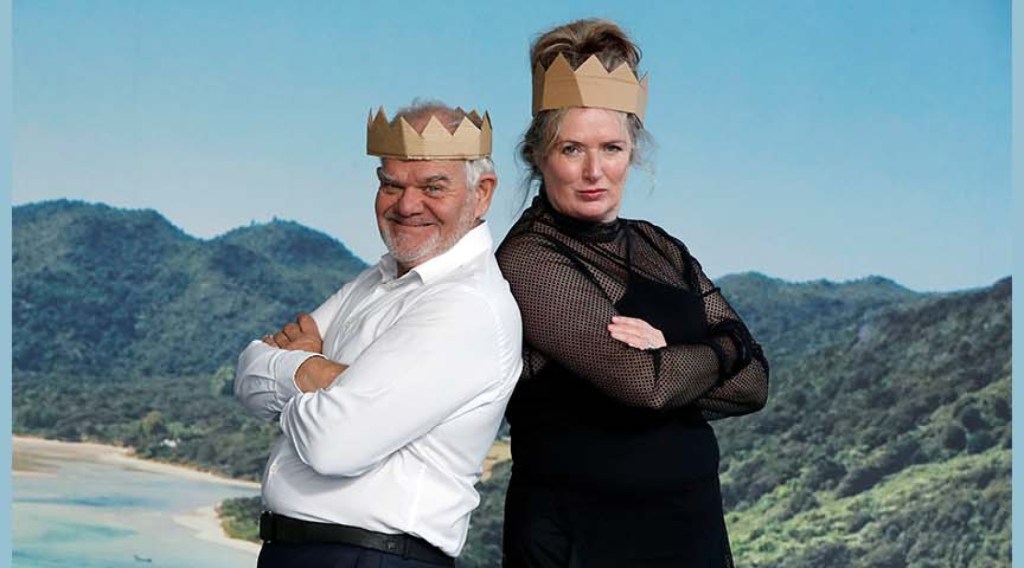
Vying for one of the longest titles of new work in 2023, Gregory Cooper’s Mr & Mrs Macbeth of Dobson Valley Road opened this week at SkyCity Theatre – an Auckland venue that appears to be losing a little of its dormancy these days.
Cooper has followed a mainstream bent trodden by many. He firmly establishes the stale, apparently disillusioned marriage of erstwhile and ageing actor-couple Jo and Tom in their shared dressing room just before opening their own production of Shakespeare’s Macbeth. They snipe, they criticise and they are endlessly dismissive of each other’s foibles and of pretty much everyone else. Together they represent an anachronism between that ancient theatrical world where tyrannical actor-managers ruled and a much more recent one inhabited by ‘interns’, Instagram and starstruck wannabees.
Be that as it may, their relationship is really what this play is about. While initially carping and contradicting each other – most of Act I in fact – underneath lies a bittersweet understanding, acknowledgement and appreciation and of each other built on three-decades together as people.
Yes, it’s been done before, but Cooper adds a different twist by introducing Shakespeare’s Macbeth as the device that opens the door to their eventual realisation and appreciation. As well as to all manner of theatrical one-liners, customs and references which enable him to easily maintain an ever-present bubbling undercurrent of humour. In fact all of the humour, as this is only a two-hander. Huge ginormous laughs however, there are few.
The pedigrees on display in this production are indeed impressive and well-known to Auckland audiences. One of Aotearoa’s finest actors Mark Hadlow gives us a carefully-crafted and nuanced Tom. At some points he is considered and rational, and at others he becomes a ranting whisky-bottle inspired, near-alzheimic blusterer.
Hadlow’s Tom is partnered by Lara Macgregor as Jo, perhaps most-recently known to Auckland audiences for her direction of ATC’s recent Heartbreak Choir, and many years of outstanding work on both stage and screen, particularly with Court Theatre in Christchurch. The waxing and waning of power and put-downs and the finely-honed timing between the two is delightful at times.
Playwright Gregory Cooper is also largely Christchurch-based, has worked as an actor, director and writer and many will recall his MAMIL with Hadlow a few years back Of further note is a very simple set, skilfully-conceived by Mark McEntyre, that enables the SkyCity stage to occasionally become Shakespeare’s stage.
If I have a criticism of this production it is that I feel it may have sat more comfortably in a smaller venue – although hopefully one that still has a proscenium of some type. And while the ever-present chuckles and smiles never stopped, a really big chunk of belly-wrenching laughter may have enhanced it further.
Interestingly, Mark Hadlow is largely behind the establishment of this new regionally-based company – the aptly named The Professional Company. Based at Wakatū,near Nelson, it has a clearly articulated regional focus and, if this production is anything to go by, aims to tour extensively. So congratulations to The Professional Company. Its new work is not ‘new’, nor ‘leading edge’, nor ‘culturally-focussed’. It is traditional. And a lot of people will like that.
After a three-year absence due to COVID-19 the World Press Photo Exhibition has returned to Auckland. The exhibition showcases the winning images of the World Press Photo competition, selected from over 60,000 entries from around the world.
The World Press Photo Contest has recognised professional press and documentary photographers since it began in 1955. The 2023 contest has six worldwide regions – Africa, Asia, Europe, North & Central America, South America, and Southeast Asia & Oceania and four categories (Single, Story, Long Term Project and Open Format). The winning entries from the six Regions in each category form this remarkable exhibition with four global winners chosen.
Many of the photographs in the exhibition deal with conflicts around the world including the war in the Ukraine. Evgeniy Malotetka has documented the battle for Mariupol with images of a pregnant woman being carried from the Maternity Hospital, people sheltering in a basement and bodies being put into a mass grave.
Maya Levin
The civil war in Myanmar has been documented by Mauk Khan Wah showing a group of soldiers in his photo “Retrieving the Dead”. Maya Levin has followed the conflict in Israel and one of her photographs is of the funeral of the journalist Shireen Abu Akleh where Israeli troops confront a crowd of Palestinian mourners.
Simone Tramonte
As well as the brutal side of conflicts the photographers have captured more positive aspects of life. A series of photographs by Simone Tramonte titled “Net-Zero Transition” documents developing technologies offering new routes to a net-zero economy. His photographs include images of a solar plant in Spain which uses solar heat to provide electricity a fourteen floor vertical farm and a photobioreactor.
On the flip side of this drive for sustaining agriculture is the series of photographs titles “Beautiful Poison’, which is an exploration by Christopher Roger Blanquet of the legal but lethal pesticides used in the flower and agriculture sectors of Mexico.
Jonas Kakop
There is also a surreal image by Jonas Kakop of three white clad beekeepers in the Arizona desert who are providing water to bee hives as the Colorado River dries up.
While there has been mention made over the last decade about Egypt building a new capital there have been few images of this development. A set of images by Nick Hannes show the scale of the construction of the new administrative capital east of Cairo. Here we see the huge scale of the development with multi storied buildings, one of the largest mosques In the world and the huge new Arc de Triomphe. Also included is a large billboard celebrating the new area with an image of President el-Sisi .
In contrast to these images of the new Egypt is a series of photos by Mohamed Mandy who has documented the canal slums of Alexandria and the eviction of the local residents.
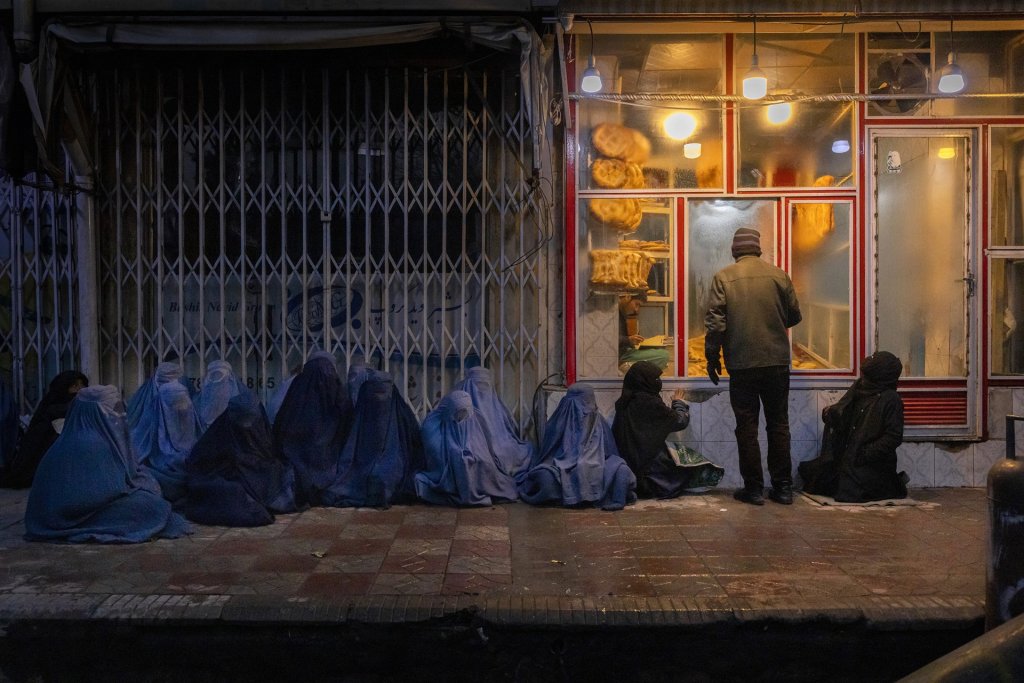
Mads Nissen
Mads Nissen has documented the fate of Afghanistan showing the impact of the Taliban takeover with the image of a 15 year old boy who has sold a kidney to earn money along with an image of burka clad women begging for bread outside a bakery.
This exhibition was brought to New Zealand by The Rotary Club of Auckland as a fundraiser for charity.
The “Follow button” at the bottom right will appear and clicking on that button will allow you to follow that blog and all future posts will arrive on your email.
J.S. Bach, (arr. Webern) The Musical Offering: Ricercar
Mendelssohn, Symphony No.5 ‘Reformation’
July20
Reviewed by John Daly-Peoples
The highlight of the APO’s Might & Majesty concert was Max Bruch’s Violin Concerto played by violinist Benjamin Beilman, a work which offers great rewards every time it is played. Beilman gave an intelligent and passionate account of the work, bringing fresh insights to the work which expresses sorrow, melancholy, regret and ultimately redemption. It was these qualities that Beilman was able to draw from the music.
Following the introduction of soft timpani and woodwinds Beilman’s opening plea was forceful and energetic with his whole body responding to the music, quivering with emotion. There were times when his sounds captured the image of a bird taking flight and others where the sounds and images he created seemed to disappear into the ether.
Both the soft, wispy passages as well as the more dramatic ones were given full expression. At times the violin sounded tearful in its grief while at other times there was a restless anger.
He responded to the orchestra’s huge blast of overwhelming sound with his own anguished sound which was also reflected in his tight bodily movements.
In the more lyrical passages, he seemed to dance with the joy of the work while in the final celebratory section his playing became feverish as he skirmished with the orchestra.
Following the thunderous applause of the audience he played a delicate interpretation of Bach’s Gavotte.
Following the interval was another Bach work which offered an interesting history of musical composition. The work’s main theme was originally written for Bach by Frederick II, the King of Prussia. The composer then developed the theme into his major work “The Musical Offering”. The kings simple work, probably for solo flute was thus made into a work for a string quartet.
Then in the twentieth century Anton Webern orchestrated the Bach for a full orchestra. This distinctly modernist version of the Bach made one aware of structural nature of the original composition. Webern deconstructs the original with the various sections of the orchestra along with solo instruments making variations on Bach’s original work, expanding it with themes and variations.
The opening work on the programme was Carl Maria von Weber’s overture to his opera Euryanthe. While not as well-known as his more popular Der Freischütz the work had the same spirited music as Der Freischütz with a rich emotional core.
Conductor Giordano Bellincampi ensured that the music evolved from the opening sense of mystery into passages of high energy drama which can ultimately be seem in the later work of Verdi and Wagner.
The major work on the programme was Mendelssohn’s Symphony No 5 (The Reformation} celebrating the Protestant Reformation and Martin Luther. The various passages of drama, contemplation and celebration can be interpreted as reflecting Luther’s life and the growth of Protestantism.
The work opened with some delicate, atmospheric sounds which evolved into grand brass sounds pitted against the soft strings which in turn led to some rousing depictions of natural forms and dramatic landscape portraits with huge natural forces much like his Hebrides Overture .
The second movement with its jaunty colourful folk dance was followed by more introspective passages. At this point Bellincampi had chosen to perform Mendelssohn’s original version of the work with a bridge passage between the 3rd movement and finale. This saw some exquisite solo flute playing which evolved into passages featuring all the woodwinds before including the entire orchestra . This passage may have been used by the composer to reference Luther who was an accomplished flute player himself
The big celebratory final movement provides the symphony title of “The Reformation” as it uses the theme from Martin Luther’s “A Mighty Future is our God” as the work was written for the 300th anniversary celebration of Luther and the Augustan Confession, one of the most important documents of the Protestant Reformation.
Next Concerts
Violinist Yanghe Yu, APO playing Violin Schubert String Quintet
July 24, Titirangi War Memorial Hall
July 25 St Heliers Church and Community Centre
August 3 Brahms 1
Conductor Giordano Bellincampi Baritone Benson Wilson
Ross Harris Symphony No.7 (world premiere) MahlerSongs of a Wayfarer Brahms Symphony No.1
The “Follow button” at the bottom right will appear and clicking on that button will allow you to follow that blog and all future posts will arrive on your email.











 New Zealand Arts Review