Categories
Reviews, News and Commentary

The Walters Prize offers multi-facetted stories, myths and histories

Reviewed by John Daly-Peoples

Sonya Lacey “Weekend”

The Walters Prize 2021

Auckland Art Gallery

Until September 5

Reviewed by John Daly-Peoples

This year is the tenth Walters Prize exhibition showing a range of contemporary art practices with work  by  Fiona Amundsen, Sonya Lacey, the Mata Aho Collective and Sriwhana Spong,

All the works are tell multi-facetted stories, myths and histories linked to investigations by the artists, so they become a mixture of autobiographical and biographical.

Fiona Amundsen’s “A Body that Lives” employs film and photography focusing on several aspects of the Pacific War, bringing together declassified archival footage, witness testimonies and documentary footage shot in various locations.

The work focuses on the both the Japanese and American experience of the war. The images of  destruction – a map of the devastation of Tokyo, planes strafing installations and on bombing raids, American forces using flame throwers are contrasted with the peaceful Cowra  Japanese Memorial Gardens in regional New South Wales,

While there are images of the horror of the  war the exhibition provides little history  condensing it down to the memories of four personal experience including an American war veteran, a Japanese anti-war activist and  memories of the 1945 Battle of Okinawa.

Dominating the exhibition is an interview with Mr Teruo Murakami, a survivor of the 1944 ‘Cowra Breakout’, when one thousand Japanese prisoners of war attempted to escape from the Cowra prisoner of war camp.

His head  moves in and out of the closely cropped frame as he remembers the event, his disjointed memories echoed by the fragmented images of the war on the various screens .

Sonia Lacey’s “Weekend” uses collage, video, film and sculptural forms to animate her  research into the history and social aspirations of the St Bride Foundation in London which was established in the late nineteenth century to provide leisure facilities including an indoor pool to better the lives of newspaper workers of nearby Fleet St.  Some of the works conflates ideas around newspapers and the notions of memory contained in newspapers.

The space she creates  is intended to provide the dimensions of the pool and its structure with the bath’s steps providing a viewing platform for the major element of  the exhibition which features a slowly evolving site of abstract images referencing the  murky waters of the baths.

This mesmerizing cinematic panorama of images seems more like satellite images of Earth with continually unfolding landscapes and the changing textures of the land – rural areas, the course of rivers, the ridges of hills, as well as the occasional scudding cloud.

The Mata Aho Collective’s work “Atapō” was co-created with Maureen Lander and originally included in  Toi Tū Toi Ora: Contemporary Maori Art.

As with many mythologies, death and the afterlife are the realms of gods who are often in conflict or have ambivalent roles.  Mata Aho have developed their work around the story of Hine-Titama, the incestuous  daughter of Tane who journeyed to the Underworld to become Hine-nui-te-po  , the Goddess of Death and Darkness.

The ideas around death, transformation and new life are paralleled in various other mythologies and notions such as the Greek myth of human lives being woven by The Fates. In a sense the members of the collective have become  latter day versions of these Fates.

Mata Aho Collective, Atapo

The large Hine-nui-te-po consists of multiple layers of fabric as through on a giant weaving loom with small inserts of colour woven into the fabric marking out the passage of time.

With the brighter Hine-Titama seen through the dark folds of Hine-nui-te-po there is a link between the two works and they become a metaphor for the transition between life and death, between myth and reality, between dream and illusion.

Sriwhana Spong’s “The Painter-Tailer”  centres around the home of her paternal Balinese grandfather who was also an artist. This makes the work both biographical and  autobiographical combining both the artist’s world and that of her grandfather. As well as visual art elements there are many musical  and audio components linking East and West  The installation includes the artists own work, video of her grandfather’s art along with  Spong’s  several sculptural instruments inspired by the Indonesian gamelan.  There is a further musical reference in the fabric works made by the artist which uses the coat tails of a conductor’s formal suit.

There will be a performance in the Sriwhana Spong space utilising her personal orchestra each month with the first confirmed performance date on Saturday, 19 June.

The Walters Prize will be judged later this year by Kate Fowle, director of Moma PS1 in New York with the winning artist announced at the Walters Prize award dinner to be held in the Gallery on Saturday 7 August.

Categories
Reviews, News and Commentary

ATC brings Brecht’s great political drama to the stage

John Daly-Peoples

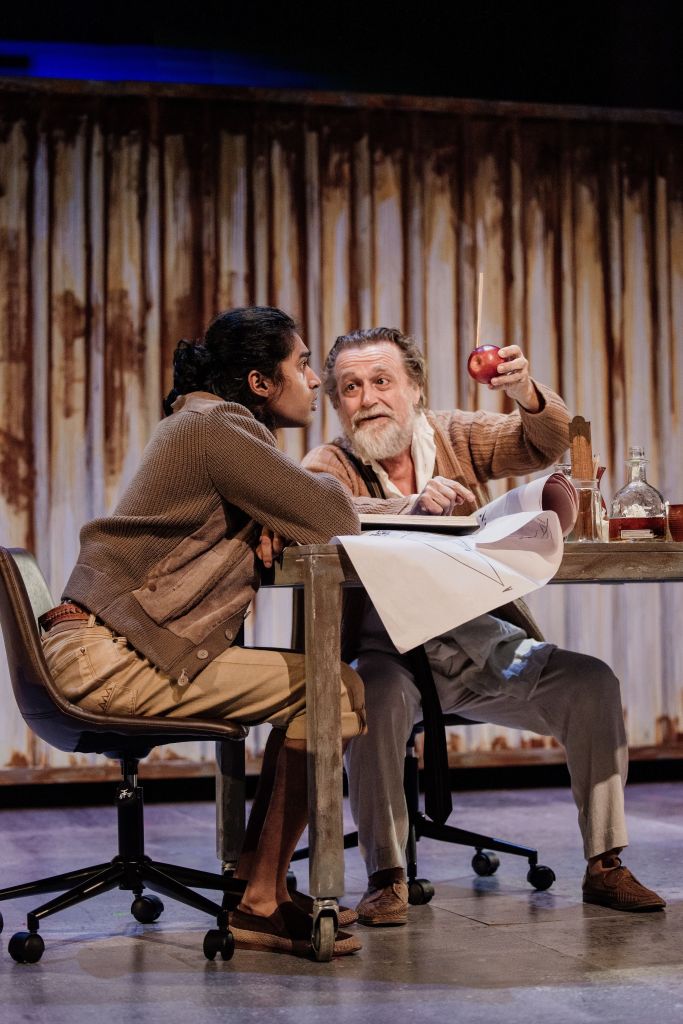
Michael Hurst as Galileo

THE LIFE OF GALILEO by Bertolt Brecht
Auckland Theatre Company
ASB Waterfront Theatre

22 June – 10 July

Bertolt Brecht’s “Life of Galileo” is one of the great pieces of political theatre of the twentieth century but has rarely been performed in New Zealand. Now Auckland Theatre Company will be presenting the work with Michael Hurst in the title role stars along with  Rima Te Wiata and an ensemble cast directed by ATC Creative Director Colin McColl

The play links  Galileo’s Italy of the 1600s with  Brecht’s post war Europe. In Galileo’s time, new scientific ideas were emerging that challenged centuries of religious understanding of the world while in Brecht’s time, new political systems were coming to power in the form of fascism and communism.

New scientific knowledge in Galileo’s time as well as the political changes in Brecht’s day were met with extreme resistance with Galileo facing the religious police in the form of The Inquisition,

Many of the issues around the play relate to the  Aristotelian view of the universe where the Sun and all other heavenly bodies revolved around the Earth a world view the Church accepted and promoted. Others, such as  Copernicus, had promoted the heliocentric model (of the Earth revolving around the Sun) that challenged Aristotle. In the eyes of the church this was heresy.

A 2019 New York production of the work noted that “Central to the German playwright’s philosophy of theatre-making was a Marxian horror — a real, urgent social distress over the failure of society — and an unshakeable accountability for its mending. The Brechtian aesthetic, present in all his work, is thus an identification of what needs to be changed — some alienated world — and an understanding of how theatre might represent the changing of that world. He gives us a theory of our reality and a theory of art, theatre as an autonomous understanding of that reality.”

An Australian production of the work also in 2019 said in relation to the contemporary themes in the play that “Brecht could not have foreseen the obvious parallels between the church and contemporary climate science deniers, but he shrewdly foresaw that science would always be shovelling aside the comforting sludge of ignorance. The resultant play’s fascination lies in its almost homely insights into Galileo’s genius and into his abjuring his revolutionary astronomical discoveries before the Inquisition.”

Categories
Reviews, News and Commentary

Culture and family clash in Single Asian Female

reviewed by John Daly-Peoples

Xana Tang (Zoe), Bridget Wong (Mei), Kat Tsz Hung (Pearl) [Image Andi Crown]

Single Asian Female  by Michelle Law

Auckland Theatre Company

Auckland Waterfront Theatre

Until May 15

Reviewed by John Daly-Peoples

Single Asian Female opens with a karaoke style version of Gloria Gaynor’s “I will survive”, the song about the discovery of personal strength following a devastating breakup. It is sung by Pearl (Kat Tsz Hung), the owner of The Golden Phoenix a Chinese restaurant, newly divorced and facing an uncertain future.

The song is not just an anthem for Pearl and her two daughters Zoe (Xana Tang) and Mei (Bridget Wong), it also applies for the survival of Chinese culture.

In following the lives of  the three Asian women the play explores the various dimension of assimilation, cultural clash and cross-cultural identity and while the play is originally Australian  it has been cleverly adapted with a few local political and social references.

This black comedy presents much of the tensions and conflicts through the lives of the two girls. The older daughter Zoe has just moved back to the family home above the restaurant after Pearl has sold her apartment. She is busy negotiating her musical career, dating,  her relationship with her sister and mother  as well as a possible pregnancy.

Mei is in her last year of high school, dealing with peer pressure, her white girl friends – the sympathetic Katie (Olivia Parker) and cynical, image-focused Lana (Holly Stokes) while trying to integrate her Chinese self into white society. Her major problem is around the forthcoming Formal, the end of year school ball. This is highlighted by what to wear – the lovely white dress she has bought or her mother’s beloved cheongsam. For the after-dance function  her mother is arranging she wants to have a “normal“ party and “normal food” and no chinglish.

Much of the comedy uses the familiar tropes about the outsider “Where do you come from” and there is a lot of self-deprecating humour with a mixture of stand-up comedian gags, pop psychology and fortune cookie style jokes.

The culture clash is also seen in Mei’s attempt to rid herself of all her Chinese possessions and clothes such as her pink jelly shoes much to the amazement of Katie who sees them as cool.

As the writer Michelle Law has noted the play is very much a love letter to people of colour, migrants and outliers but the other dominant aspects and more universal thing about the work is the relationship between mothers and daughters. Pearl may be  the caring, devoted mother but she is also a Dragon Mother who is full of advice on all topics. As Zoe notes, she could never tell her mother about an abortion as “She would never stop talking to me”.

The play touches on a arrange of social issues – privilege, power, and position,  racism the position of women in traditional Chinese society, feminism and the pressures on young women to conform.

Kat Tsz Hung as Pearl provides a vibrant presence in her deliveries, singing and acting while Xana Tang and Bridget Wong offer stereotypes with a  nicely controlled edginess.

The play is a bit long and could have a much tighter narrative. A shortened version would have made more dramatic impact, but the opening night audience was entranced and totally engaged so that at times it  felt as though  we were all sitting there in the Golden Phoenix.

Categories
Reviews, News and Commentary

NZSO performs a spectacular Firebird

Reviewed by John Daly-Peoples

Igor Stravinsky and Hamish McKeich

New Zealand Symphony Orchestra

Ryman Healthcare season of The Firebird

Auckland Town hall

Hamish McKeich Conductor
Diedre Irons Piano

Juliet Palmer, Buzzard
WA Mozart, Piano Concerto No. 23 in A Major
Stravinsky orch. Stravinsky/McPhee The Firebird

Reviewed by John Daly-Peoples

It was sixty years ago that Stravinsky took to the conductor’s podium in the Auckland Town Hall to conduct the finale of his “The Firebird” during his New Zealand tour.

Film of the concert shows the composer conducting in a measured manner but throughout there are times when his arms are raised making him look eagle-like in appearance.

Sixty year later NZSO conductor Hamish McKeich looking more like a nimble elegant bird led the orchestra in a journey into the exotic and mysterious realm of “The Firebird” which is the first of the composers three major ballet works along with “Petrushka” and “The Rite of Spring”. This was the beginning of a new age of music and ballet and was mainly due to  Sergei Diaghilev, the famous Russian ballet promoter who had established the Ballet russe in Paris. He gave Stravinsky the opportunity to write a score for a ballet based on Russian folklore.

The Firebird is based on the myth of The Firebird, a powerful female spirit bird with magical feathers that provide beauty and protection, bringing both  blessing and curse it for its owner.

Stravinsky uses different kinds of music to tell the story, providing each character – The Firebird, the heroic Ivan the sorcerer Kastchei and thirteen princess – with a musical theme that conveys his or her personality. The human characters are represented by folk tune-like melodies while the mythical characters like the Firebird and Kastchei are represented by the music which is more mysterious, exotic, and unexpected identifying them as otherworldly.

As the music was written for a ballet many of the sequences are intended to capture the sweep and movement of the dancers as well as brief occasions of intimacy.

From the opening where the low shimmering strings are  used to convey the mysterious ambiance of an enchanted garden  through to the thunderous finale, conductor Hamish McKeich kept a superb hold over the orchestra, a sorcerer in his own right. The work was studded with moments of drama and tenderness as well as the excitement of the ‘Infernal Dance’. The narrative is conveyed  by various solo instrumental voices, – horn flute flautist  piccolo, bassoon, and an enigmatic viola,

The first half of the programme featured “Buzzard”  a short work by Juliet Palmer which was inspired by Tchaikovsky’s “Swan  Lake”, Stravinsky’s The Firebird and the jazz music of musicians such as Dave Brubeck.

In this  exploration of Russian ballet music Palmer uses a jazzy syncopation along with a taut minimalism to rework the colours and textures of the original music. She overlaps and reworks many of the themes of the original ballets as though she were operating as a DJ mixer splicing and sliding together the various musical threads in a weird echo chamber.

This mixture of the classic and modernist creates sounds which ranges from the effervescent  and raucous to the moody and enigmatic. At times one detects the perfect flows of “Swan Lake” and  at other times the innovations of “The Firebird”.

Also on the programme was an outstanding performance by the accomplished New Zealand pianist Diedre Irons of the Mozart Piano Concerto  No 23.

She played the work with a casual elegance, not so much a challenge as revisiting a well-known friend. Each note was played with deliberation and accuracy particularly noticeable in the opening of the second movement where she carefully and delicately gave great emotional expression to the music. Later in the third movement she become more exuberant and dramatic in her playing .

Throughout she displayed an understanding and appreciation of her role and her symbiotic connection to the orchestra while Hamish McKeich handled the  shifts between moods—innocent, desolate, passionate with a supple deftness.

Future NZSO Concert

The Rite of Spring,

Conductor Emma New

Auckland July 3

Wellington July 10

Categories
Reviews, News and Commentary

Beethoven’s early genius revealed in APO concert

Ludwig van Beethoven, The Classicist. Symphonies 1 – 3

Auckland Philharmonia Orchestra

Auckland Town Hall

April 22

Reviewed by John Daly-Peoples

Last year was the 250th anniversary of Beethoven’s birth and the Auckland Philharmonia orchestra had programmed the composer’s complete symphonies but due to Covid 19 the series was cancelled and rescheduled for this year.

Last night the first of these four concerts, “The Classicist” presented the first three of the symphonies  with a further three concerts programmed over the rest of the year.

The major work of the evening was his Third Symphony ”The Eroica” which had originally been dedicated to Napoleon, but Beethoven dropped that dedication when Napoleon crowned himself emperor.

Even though the Napoleon dedication is gone  the work still reverberates with the ideas around the French revolution, the importance of  Napoleon and his transformation of Europe. At the time of these first three symphonies he had already begun to transform Europe militarily and politically and along with that he had begun its social and democratic transformation with his Code Napoleon.

The symphonies are tied to ideas of the Napoleonic era – revolutionary transformative and dramatic, works that expanded the whole idea of the symphony giving them an epic scope and emotional impact.

Rather than being music with great melodies full of poise and balance this was music which attempted to advance new ideas and placed the composer  at the forefront of the Romantic revolution where narrative, originality and emotion were all-important.

Beethoven’s music stands as symbolising these great changes and conductor Giordano Bellincampi became the embodiment of Beethoven and Napoleon directing the forces of the orchestra.

His conducting of the Third Symphony brought out all the aspects of the work – the tensions and contrasts between the various sections of the orchestra, the lights melodies set against waves of impressive sound and allowing the individual instruments to shine through in short bravura displays.

There were several instances when Bellincampi’s guidance excelled such as in the expressive slow movement, where dark emotions were conveyed by the full-bodied strings along with the delightful “string quartet”  and folksy melody in the final movement.

The first two symphonies provide a backdrop to the third symphony and here the influence of Haydn and Mozart was obvious although few instances of the revolutionary fire of the composer’s later works. There is a distinctive voice evident in the  First Symphony with its innovative opening which is followed by music filled with sudden modulations, abrupt changes in dynamic as well as an impressive use of wind instruments along with  rhythmic tricks.

Throughout these two works there was an exuberant conversation unfolding between sets of instruments. creating a sense of dialogue and narrative among this vast array of musical characters. We are continually surprised by the way in which the composer constructs and develops his themes as though playing musical games. Also obvious was a finely  nuanced collaboration which allowed for an appreciation of all parts of the orchestra equally, hearing clearly the strings, brass, and winds at work together. 

Bellincampi also made apparent the architectural construction of the symphonies, the structures, the building blocks,  the interconnections and the embellishments which gives the music its solidity, vastness and complexity.

Future Beethoven concerts

May 13 The Romantic

Beethoven Symphony No.4
Beethoven Symphony No.5

July 29 The Revolutionary

Beethoven Symphony No.6 ‘Pastoral’
Beethoven Symphony No.7

Nov 25 The Radical

Beethoven Symphony No.8
Beethoven Symphony No.9 ‘Choral’

Categories
Reviews, News and Commentary

NZ Trio’s “Stratus” concert a delight

Reviewed by John Daly-Peoples

Amalia Hall, Somi Kim and Ashley Brown

NZ Trio

Dramatic Skies; Stratus

Auckland Concert Chamber

April 18

Reviewed by John Daly-Peoples

The NZ Trios latest concert “Stratus” had works by composers spanning the last four centuries from Haydn through to two recent New Zealand compositions. As always with this finely tuned boutique group they are a thrill to watch and a delight to hear.

The first work on the programme was Sergei Rachmaninov’s “Trio élégiaque No. 1 In G Minor which was one of his first compositions and the one he first performed at a public  concert. It is a work which combines both his acknowledgement of musical history with nods to Tchaikovsky as well as showing his desire to experiment.

The work opens with the violin and cello slowly playing a repetitive theme which grows in intensity before the piano enters with the dominant theme which is then taken through a number of variations ending in a form of funeral march.

The musical motif  changes in mood as the variations pass from one instrument to the other and with each new sequence the players seem to display a sense of urgency, finding a new way in expressing emotion  with violinist Amalia Hall being particularly expressive.

The group played with a careful sensitivity as though each of the variations was a precious element.

They played the Haydn “Piano Trio in a restrained manner, dealing elegantly with  the  tonal changes which create a range of different moods and atmospheres. In the final movement they were particularly animated  where they played like a gypsy band bringing out the joy of the Hungarian dances as well as the technical wizardry of combining the gypsy melody with the composer’s refined musicality.

Josef Suk’s “Elegie in D Flat Major” is grounded in Czech nationalism and even has references to the music of Dvorak. The trio played the gentle sequences  as well as the dramatic passages with precision revealing the  well-crafted nature of the work.

The other classical work on the programme was Ernest Chausson’s Piano Trio in G minor

This emotionally charged work opened with a sombre motif that was repeated in other movements merging  contrasting themes full of colour and gentle  lyricism.  The trio manged to clearly articulate the contrasting moods of tenderness, introspection, melancholia and the unexpected.

Throughout the work the rich and virtuosic piano playing of  Somi Kim  was essential in providing the rich  texture and the driving  momentum which culminates in the dramatic descent into the final   dark elegiac conclusion.

The intensity of the music was mirrored in the way the players interacted, very much aware of their linked roles giving the work its dramatic, almost operatic dimension.

The two shorter New Zealand works on the programme Claire Cowan’s “Ultra Violet” and Reuben De Lautours’ “An Auscultation of Water”  had some similarities as both were attempts to investigate the properties of the physical world, Cowans into light and De Lautours into water.

”Ultra Violet” employs a serene minimalism with repetitions and slow transformations which captures the essence of light, the throb and pulse of the waves which are the source of both light and sound. Along with this is also an eerie otherworldly sound of another dimension in which there is a shimmering and floating conveys a sense of exploration as though seeing through the eyes of the birds and insects which are able to see in the ultraviolet spectrum.

With “An Auscultation of Water” the three players seemed to be regarding their instruments as pieces of scientific apparatus investigating the nature of water. Each of the players employed novel techniques in this investigation from Somi Kim’s vigorous trilling to  Ashley Brown extracting eerie sounds from his  cello with rapid bowing, and abrupt  transitions .

The trio conveyed the  sounds and appearances of water –  rain drops, shimmering surfaces, ripples, waves and the thunderous storm.

Categories
Reviews, News and Commentary

APO’s “Enduring Spirit”: a stunning perfomance by Natalia Lomeiko

Reviewed by John Daly-Peoples

Natalia Lomeiko.

Auckland Philharmonia Orchestra

Enduring Spirit

Auckland Town Hall

April 15

Reviewed by John Daly-Peoples

The major work on the Auckland Philharmonia’ s “Enduring Spirit” programme was Carl Nielsen’s Fourth Symphony, “The Inextinguishable”. Composed in the first two years of the Great War it is a multi-layered work which sees the composer addressing several concerns.

In part the work is a reaction to the  war which Nielsen as a neutral Dane was observing rather than participating in. But at the time the composer said  that  the symphony was to “express what we understand by the spirit of life or manifestations of life, that is: everything that moves, that wants to live”.

The work  is a broad, poetic canvas in which he endeavours to create an image of individuals and nations in turbulent times.

So, the symphony reflects on various aspects of war and conflict through music, the belligerence, the drama and the cacophony of battle, the destruction of the landscape  and people along with the heroism, lyricism and nationalism associated with war.

The layout of the orchestra emphasised the notion of conflict with sets of kettle drums on either side of the other players, as though drawn up along battle lines. The orchestra engaged  in a series of musical actions – battles, skirmishes, attacks and counter attacks.

The work’s explosive opening is followed by alternating  vigorous and lyrical passages, wild swings of mood and direction which  evoked an energy and momentum.

Conductor Giordano Bellincampi emphasised the  changing stresses of the symphony, the lyricism of the woodwinds, the drama of the strings and the violence displayed  by the double timpani displays, particularly in the finale of the work.

Whether the music manages to express “the  spirit of life or manifestations of life” is debatable but all the conflict imagery of the music could well be what the composer felt about life and his own personality.

Before interval we were treated to a stunning performance of Shostakovich’s Second Violin Concerto played by Natalia Lomeiko.

Where Nielsen’s work was a  response to the upheaval of the Great War many of the works of Shostakovich were a reaction to the conflicting demands of his desire for new approaches to composition and the demands of the Soviet State which judged his work according to political rather than musical criteria. Much of his music reflects this tension.

His Second Violin Concerto is restrained with the violinist expressing an underlying emotional angst. Lomeiko expressed this pain from the very the opening with anguished playing which was set against the sombre tones of the orchestra.

Throughout the piece she played with an insistent determination, battling the aggressive orchestra. At times violinist and orchestra seemed in concert as they thundered along on a vigorous journey while at other times she seemed marooned in a brooding landscape. Her frenetic playing was electrifying in the first movement while in the second movement with  her achingly  sorrowful playing  she seemed to inhabit a dreamscape, playing at the edge of despair and collapse, generating a palpable tension.

The competing forces of violin and orchestra underscored the struggle in Shostakovich’s  creations which see  the individual set against society, a figure in isolation, a figure full of determination and  a figure striving for individuality. Lomeiko and her violin became a personification and symbol of that struggle.

The first work on  programme was Zoltan Kodaly’s “Dances of Galanta”,  a set of dances with a mix of nostalgia, reminiscence and celebration drawing on Hungarian  folk dance melodies. These works  were full of liveliness and lyricism along with some splendid woodwind contributions all of it  kept in time by the supreme dance master Giordano Bellincampi.

.

Categories
Reviews, News and Commentary

Royal New Zealand Ballet’s critically acclaimed “Giselle” to tour in May and June

John Daly-Peoples

The Royal New Zealand Ballet

Giselle

New Zealand Tour

May 12 – June 9

Preview John  Daly-Peoples

The Royal New Zealand Ballet’s critically acclaimed “Giselle” which toured the world after its sold-out season in 2016, returns for a tour around the country in May and June.

My review at the time of the ballet premiere which was created by choreographers Ethan Stiefel and Johan Kobborg noted that, “all the principals were outstanding, dancing with elegance and virtuosity while the corps de ballet showed flair and skill”.

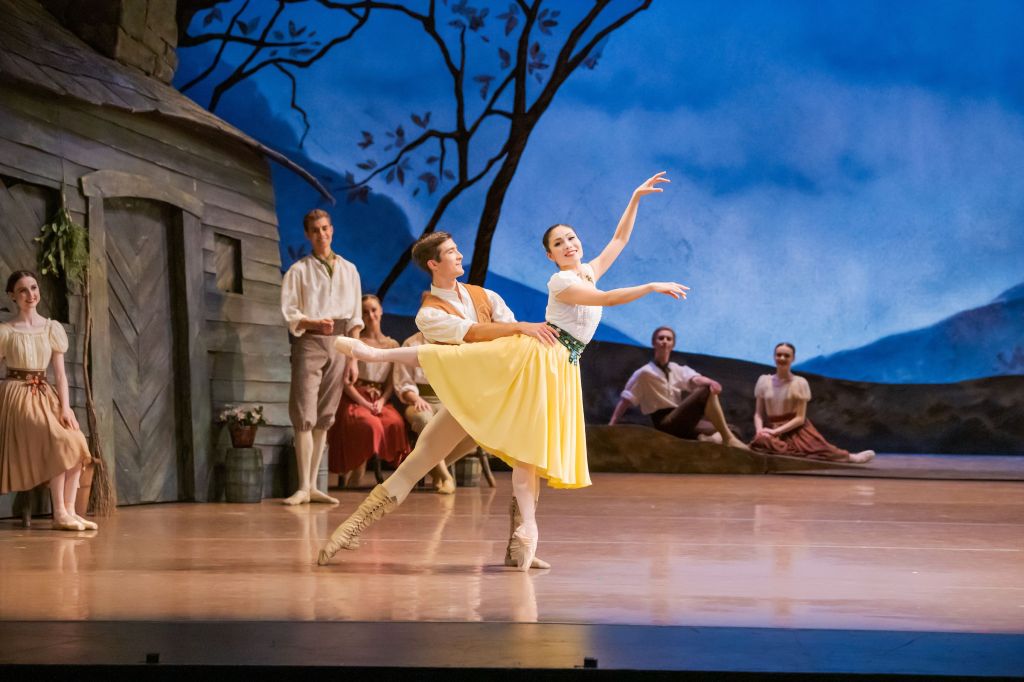
Like many of the romantic classical ballets, Giselle is a tale of love but not of an idyllic love. Along with the idea of a pure love, there is also the fickleness of love, doomed love and the jealousy, despair and cruelty that can come from blighted relationships. The first act of the ballet presents an intense, joyous love while the second act presents its dark, cruel side.

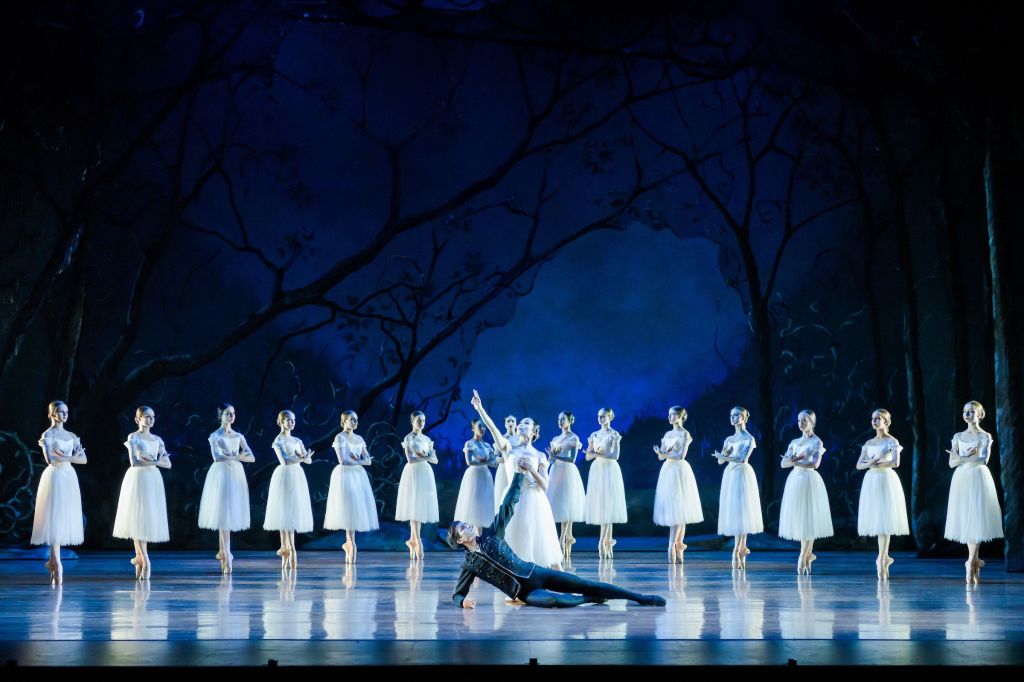
Giselle, a peasant girl, dies of a broken heart on discovering that her lover, Albrecht, who is a prince in disguise, has deceived her as he is already betrothed. In the second act she rises from her grave and is commanded by Myrtha, Queen of the Wilis, to dance Albrecht to his death. However, she dances with him, till dawn so his life is spared and she returns to the grave.

It is crucial for a great performance that these two contrasting and conflicting aspects need to be given emotional and physical authenticity through the dancing, the music, the sets and costumes. With this production the creative team has ensured that these have all been brought together to create a remarkably powerful narrative which is both close to human experience and at the core of the romantic myth.

The sets were cleverly juxtaposed, with the first act set bright and colourful, providing a cute little gingerbread house along with jolly peasants, with a romantic vista with a distant castle. The second act set was dark and mysterious, merging the bleak world of the graveyard and the mythical world of the jilted maiden.

The Wilis are female spiritual avengers – women who have died because they have been rejected and who now take their revenge on wayward males. This aspect of their supernatural power is a romantic concept of a parallel world reflecting the dual nature of the human condition.

The tightly disciplined corps de ballet in their role of the avenging Wilis adorned in their wedding veils were commanding, giving a chilling, visceral performance.

The Royal New Zealand Ballet Season of Giselle

Wellington, Opera House 

12 May to 15 May 

Palmerston North. Regent on Broadway 

19 May

Napier, Municipal Theatre 

22 May to 23 May 

Auckland, Kiri Te Kanawa Theatre, Aotea Centre

27 May to 29 May |

Christchurch, Isaac Theatre Royal  

4 June to 5 June 

Dunedin, Regent Theatre 

9 June 

Categories
Reviews, News and Commentary

“Van Gogh Alive” Walking through the artists work

Reviewed by John Daly-Peoples

Van Gogh Alive

Spark Arena, Auckland

Until May 6

Reviewed by John Daly-Peoples

Van Gogh Alive is promoted as being the most visited multi-sensory experience in the world. It must be. It has been seen in over 50 cities around the world including in the last few month, Wellington and Christchurch. The scale of the whole thing is impressive. There are dozens of large screens, up to seven meters high which fill the Spark Arena including projections onto the floor. Then there is accompanying soundtrack which creates a surround sound environment.

Van Gogh has been in the news for the last few decades with numerous exhibitions of the artist’s work even in Auckland and some of his paintings like the “Portrait of Dr Gachet”, “Irises”,  and “Vase with Fifteen Sunflowers” have been among the  most expensive paintings sold at auction. Then there have been the films about the artist from “Lust for Life” starring Kirk Douglas  as the artist and more recently “Loving Vincent”, the first fully animated movie which combined his images in a narrative about the artist’s life.

The Van Gogh Alive show follows the artist life from his time in Belgium, his life in Paris and then in the South of France, reaching its climax with an all-encompassing display of “Starry Night” in which the whole room comes alive with the pulsing colours and movement of that iconic work.

Some of the places he lived in are evoked with drawings and sketches he made, minor works which are rarely seen in exhibitions. These show his ability to render locations and  people with keen observation and brisk notations.

Some of his  important series of paintings and periods are emphasised with  bursts of colourful collages which envelop the viewer. One sequence is of his flower painting where  the dramatically colourful blooms are animated along with floating blossom accompanied by the music of Debussy. The sequence which shows the influence of Japanese art brings together his Eastern inspired work along with Japanese  prints from his own collection.

The show is not really an exhibition of his work, there are no new insights into the artist’s work, but it is a journey of discovery, one which comes out of the joy of close observation as well as sweeping panoramas. Seeing the paintings closeup  reveals the detail and texture of the artists technique where even what appears at first to be mere background colour is full of impasto swirling paint.

It is aimed at giving the viewer the dream  sensation of walking into and through Van Gogh’s paintings providing an engaging and enjoyable experience which will appeal to all audiences, particularly children.

In this walk-through of his life, we are given an  impressionistic take on the events, people and  places of the artist  expressed in the intensity of his colours and the drama of the drawn line. In the rural settings the works are further animated by digital processes so that the crows in the field actually fly, slashes of rain fly across the screens  and the windmill vanes turn.

While the big digital display is not really an exhibition of the artist’s work there is an accompanying show of his major works with information his life and art which is informative and worth studying before the show. Then there is also aa couple of  instagramers delights – a three-dimensional mock-up of his “Bedroom in Arles” and the immersive Sunflower room

Categories
Reviews, News and Commentary

Rita Angus “An Artist’s Life” reveals a New Zealand Modernist

Reviewed by John Daly-Peoples

Rita Angus, An Artist’s Life

By Jill Trevelyan

Te Papa Press

RRP  $59.99

Reviewed by John Daly-Peoples

This  year the Royal Academy in London was due to have an exhibition of works by  Rita Angus but was cancelled due to the covid 19 pandemic. The Royal Academy was heavily promoting the exhibition which was titled “Rita Angus: New Zealand Modernist”. She was described as an icon “inspiring generations of artists and admirers alike, her paintings broke away from the traditional art of the time, which was based on the European tradition and dominated by a nostalgic view of Britain. Instead, Angus developed a new visual style – with strong outlines and flat, unmodulated colour – that has come to symbolise the natural beauty and independent spirit of New Zealand.”

“Through over 70 vivid portraits, landscapes and still lifes, this long-overdue survey charts the remarkable career of a fiercely independent woman, who like many of her contemporaries across the world – Frida Kahlo, Alice Neel and Emily Carr among others – changed the artistic landscape of her country forever.”

The exhibition which may still go to London  will open at Te Papa in December is being co-curated by Jill Trevelyan and Te Papa’s Curator of Modern NZ Art Lizzie Bisley.

Trevelyan who is leading authority on the artist has  just published a revised edition of her book “Rita Angus, An Artist’s Life” which was originally published in 2008.

Rita Angus was part of the Modernist cultural wave which developed in New Zealand in the 1940’s and 50’s. It was out of this period that some of the formative and seminal works of modern New Zealand art emerged in Christchurch. As well as Angus there was Leo Bensemann, Colin McCahon, Allen Curnow, Denis Glover, Ngaio Marsh and Douglas Lilburn

These young artists assimilated the developments in style and technique that were occurring in Europe and America combining them with a local flavour, giving the country a new sense of nationalism.

“Rita Angus, An Artist’s Life” helps in providing an understanding of those times as well as how Angus herself developed as a freethinking individual, pacifist, feminist  and artist. The book explores her unique approach to art and the various threads of that work from the landscapes to the portraits.

Rita Angus, Cass

Many of her works have become icons of New Zealand art – “Cass”, “Portrait of Betty Curnow” and” Fog Hawkes Bay”. Then there is  her group of extraordinary portraits where she presents herself in various roles as goddess in works such as “Rutu”.

Making use of a cache of 400 letters written by the artists and composer Douglas Lilburn as well as the many published writings, books films and personal accounts  Trevelyan has made the artist accessible with insights into her professional and personal life  which gives us an appreciation of how and why she produced her art.

There is also a lot of detail around her career, so we learn that “Cass” which she painted in 1936 was not purchased by the Robert McDougall Art Gallery until 1955. Also, as happens with many artists it was her friends and family who purchased a substantial number of her works throughout her career.

Rits Angus, Rutu

Angus always knew she was an artist and had a mission to portray the world about her , expressing the magic and the mystery of the landscape, the people and events she encountered, imbuing these images with a spiritual essence.

Note: The Royal Academy show was being co-curated by Jill Trevelyan and the R.A.’s Senior Curator Dr Adrian Locke who had been involved with the “Oceania” exhibition.