Categories
Reviews, News and Commentary

Kowhaiwhai exhibition explores traditional and contemporary notions of Maori art

Reviewed by John DalyPeoples

Ra Gossage,Kikorangi iti (Little Blue)

Kowhaiwhai

Tim Melville Gallery

Until March 12

Reviewed by John Daly-Peoples
Following on from the impressive “Toi Tū Toi Ora: Contemporary Māori Art” exhibition at the Auckland Art Gallery last year the new exhibition Kowhaiwhai at the Tim Melville Gallery features  ten Māori artists providing their versions and responses to the notion of Kowhaiwhai.

Kowhaiwhai patterns are central imagery to much Maori art and are used in a variety of way which allows artists to address and expound on concepts of the land,  history, myth, genealogy and the natural world. The patterns can be used as decoration or as pure form in paintings and  design as well as integral to architecture.

The various designs of kowhaiwhai derive from the study of natural forms and often take their names from them. There are designs related to plant forms, wave shapes , the kaka beak, the shark and fish.

In this exhibition some of the artists use the design in a simple way while others have created more complex works.

Russ Flatt, “Aroha mai, aroha atu

The photographs of Russ Flatt seem to address the beginnings of  Kowhaiwhai designs seeing their patterns in the masses of flowers in “Kahikatoa” ($2750) and the shape and design of leaf patterns in the small photograph of “Aroha mai, aroha atu” ($4500). The larger work of “Aroha mai, aroha atu” which has what seems to be a partial  human / ethereal figure also refers to the idea that the kowhaiwhai designs embody spiritual connections.

Several works by Ra Gossage reference the traditional form of kowhaiwhai with “Kowhai ngutu kaka” – Kaka-beak Flower ($1950) and “Pohutukawa Flower” ($3250). Kura Te Waru-Rewiri also uses traditional forms but within a circular format such as “He kokonga o te ngakau” ($4750) which creates a more dramatic design.

Tracey Tawhiao, Light Beacon

Tracey Tawhiao also uses a version of traditional patterns but these are applied to glass bowls which she calls “Light Beacon” ($500 large and $350 medium). Where Tawhaio’s work appears to hold light the two ceramic works by  Maiai McDonald “Upu Pere” ($6750) and “Pouaka Iti” ($1500) could contain something darker more mysterious.

Lissy & Rudi Robinson-Cole, Poukaiawha (Hiwaiterangi)

The large, crocheted wool powhenua which greets the visitor at the entrance to the gallery by Lissie and Rudi Robinson-Cole is a brightly coloured feminist version of the pou, traditionally marking a place of transition This work which combines a female European traditional craft with the traditionally male carving practice is both playful and substantial.

They have also shown three photographs of  whakairo, abstract representations of faces in multi-coloured crocheted wool versions such as “Paki” ($1650). There are also the whimsical “Anahera Angel Wings” ($450 each) combining notion of European angels and taniwha.

Nigel Borell,

Nigel Borell’s work seems to be seeking a new way of expressing concepts using traces of kowhaiwhai design and areas of colour. This combination of the descriptive line of kowhaiwhai, landscape and abstract colour as in “E manu rere I” ($4250) creates ethereal images and enigmatic ideas.

Hiria Anderson, “Electric Kowhaiwhai – Teohaoturoa Whare on Turongo St” and “Abstract Koru & Lock  – Teohaoturoa Whare on Turongo St

Where Borell’s works may be  ethereal the paintings of  Hiria Anderson are embedded in the real world of the present. Her kowhaiwhai patterns are the wallpaper  framing a power socket in “Electric Kowhaiwhai – Teohaoturoa Whare on Turongo St” ($3000) and in “Abstract Koru & Lock  – Teohaoturoa Whare on Turongo St”  ($3000). In these she presents  the patterns as part of her lived environment.

Categories
Reviews, News and Commentary

Three colourful artists

Reviewed by John Daly-Peoples

Patrick Lundberg, Denys Watkins, Matthew Browne (details)

Patrick Lundberg, Three Big Works

Denys Watkins, Save the last Dance for Me

Ivan Anthony Gallery

Until February 22

Matthew Browne, Moment of Tangency 

Gow Langsford Gallery

Until February 19

Reviewed by John Daly-Peoples

Three recent exhibitions of work by Patrick Lundberg, Denys Watkins and Matthew Browne show artists using colour in both subtle and dramatic ways expressing ideas and emotions.

On first seeing Patrick Lundberg’s latest show of “Three Big Works” one is reminded of William Blake’s line about seeing “ a World in a Grain of Sand”

Patrick Lundberg, Untitled

His exhibition of small painted spheres and other geometric shapes which are fixed to the walls in a seemingly casual manner taking on the appearance of a map of the heavens creating something of the ambivalence we have in regarding the universe seeing it as something between ordered  and the random.

One work ($8200)  consists of twenty-four of these shapes while the other two ($6200 each) have 16 shapes.

The work can be appreciated at a distance seeing them as a map of the universe or up close where the individual spheres and shapes can be studied. The delicate lines and colours of these miniature works reinforce the Blake line along with  another of his  quotes about being able to,

Patrick Lundberg, (detail)

“Hold Infinity in the palm of your hand
And Eternity in an hour.”

Some of the small spheres themselves are intricately painted so that they look like tiny planets while some of the small red ones  could be mistaken for  Jaffas.

The Denys Watkins paintings in his “Save the last Dance for Me” show range from compact work such as “Heathen Dance” ($2500) to the larger “Boomsville” ($8000)

Watkins is wide-ranging in his references to popular culture, music, art,  architecture and other cultural forms. An obvious connection here is with “Ronettes” ($2500)  referring to the three members of the 60’s and 70’s girl group, The Ronettes.

Denys Watkins, Frank L W

Some of the  titles are obstruse while  others provide a sense of Watkins’ way of thinking  through his creations. Presumably “Frank L W” ($4800) refers to Frank Lloyd Wright, the mandala like shape of the painting referencing the geometric forms which Wright saw as having spiritual dimensions  related to  Celtic or Theosophical notions.

Similarly, “Louis K” ($4800) could be referring to the abstraction of the American architect Louis Kahn while Rudolph S ($4800) connects to the work of Rudolph Steiner and his spiritual approach to the arts, drama and architecture,

Then there is “Holland Park” ($2500) which could be a reference to the English artist Howard Hodgkins, the small painting looking like one of artist’s colourful, gestural works.

Denys Watkins, Holland Park

Where Watkins has a fluid approach to colour Matthew Browne’s exhibition  Moment of Tangency  takes a more rigorous approach. In speaking about the artists geometric colour works writer Emil McEvoy notes about the artist that  “In Browne’s process, a painting evolves in an unplanned and improvised manner, as each new component – a coloured shape, line or layer – intuitively responds to the former. They unfold one element at a time until a composition comes together where successive lines, forms and planes meet.”

Matthew Browne, Onism

The titles of his works generally refer to ideas or concepts it is difficult or impossible to define, attempting to find ways to describe the indescribable or transitory thoughts.

With many of the works the artist has resorted to titles which could gave come from the Dictionary of Obscure Thoughts and Emotions with definitions such “Trumspringa” – the temptation to step off your career track and become a shepherd in the mountains or “Daguerrologue” – an imaginary interview with an old photo of yourself, while the entire series of works titled “Morii” is defined as The desire to capture a fleeting experience.

Matthew Brownw, Mori 9

This approach results in paintings which often look like components of a three-dimensional jigsaw, as though there are missing components which if discovered will solve the problem, answer the question and there is a certain cinematic quality to some of the work with bands of colour sliding across the surface.

They can also seem like the components of a fashion designer patterns, seemingly abstract shapes which when combined and assembled in the correct manner result in a complex structure or shape.

His work explores Minimalism through experiments with space and geometry, through the use of colours, exactitude, and precision manipulating images and arrangements of objects in order to challenge the perception of the viewer. It is as though  there is a secret language in his work to be discovered.

While there is a conceptual approach with his work this is balanced by a playful and quirky aspect to the paintings with the artist enjoying the spontaneity of assembling collages,

The works range from the relatively simple “Socha” ($4500) with two interlocking shapes and “Morii 17” through to the larger and  more intricate works such as “Onism” ($18,000) and “Flashover” ($18,000).

While colour contrasts are a major aspect of  the show his “Pouri” ($18,000) features a  dominant black which  overwhelms the  smaller slices of colour emphasising the importance of shape.

The various shapes have connections with Abstract Geometric Art and artists such as Ellsworth Kelly and Josef Albers as well as the sculptures of  Henry Moore and Barbara Hepworth.

Categories
Reviews, News and Commentary

The remarkable people who ensured the recording of the history, skills and tikanga of Māori in the early twentieth century

Hei Taonga mā ngā Uri Whakatipu | Treasures for the Rising Generation: The Dominion Museum Ethnological Expeditions 1919–1923

Te Papa Pres

RRP $75.00

Reviewed by John Daly-Peoples

Māori were the subject of many books and monographs throughout the nineteenth century but these often lacked a systematic or scientific approach  It was not until the early twentieth century  that proper ethnological studies  were undertaken the most important being four expeditions  by teams from the Dominion Museum. Their studies coincided with the end of World War I and the Spanish Flu Epidemic and at the time of several major hui which celebrated the return of Māori soldiers from the battlefields of Europe. These hui which involved many tribes, featured performance, demonstrations of Maori arts and crafts as well as, food preparation.

In the early years of the twentieth century there was a burgeoning of ethnographic studies around the world particularly in the Pacific, the most notable being the studies done by Margaret Mead in the early 1920’s which resulted in her book “Coming of Age in Samoa”. It was a characteristic example of twentieth century ethnography which placed reliance on observation rather than statistics for data. That book  which had  an underlying notion of cultural determinism caused some later 20th-century ethnographers to question both the accuracy of her observations and the soundness of her conclusions

Expeditions and studies by Mead and others were  generally undertaken within a colonial framework where the input of the indigenous people was only as subject matter and had no say in the planning, observations and recordings of the events and interviews.

A New book “Hei Taonga mā ngā Uri Whakatipu, Treasures for the Rising Generation” tells the story of the four expeditions that The Dominion Museum undertook in  1919–1923 and the efforts of early twentieth century Māori leaders, including Sir Apirana Ngata, Sir Peter Buck (Te Rangihiroa), James Carroll, and those in the communities they visited, to pass on ancestral tikanga for new generations.

The expeditions made by the Dominion Museum were initiated  by Ngata’s and travelled to tribal areas across The North Island to record tikanga Māori that Ngata believed might be disappearing. 

Ngata wrote about the issues in the 1920’s saying “It seems to me that the language must be maintained. Indeed the English language fails in appeal to those subtle things that influence the mind & the heart of the Māori no matter how well educated he may be … So also must we hang on to Māori arts and crafts”.

The book provides insights into the ways in which efforts had been made to acknowledge the need to engage in preservation and to see Maori as part of the cultural fabric of the country.

These ethnographic expeditions, the first in the world to be inspired and guided by indigenous leaders used then cutting-edge technologies that included cinematic film and wax cylinders to record fishing techniques, art forms (weaving, kōwhaiwhai, kapa haka and mōteatea), ancestral rituals and everyday life in the communities they visited.

James McDonald, Henare Te Raumoa Baineavis,and Elsdon Bestr at a recoding session with an unnamed man at the Hui Aroha in Gisborne 1919

The  first of these was  the Hui Aroha, held at the Gisborne Racecourse and billed as “The  Largest Meeting of Māori ever attempted.” The hui also saw the official arrival of the Māori Battalion back to New Zealand. The team from the Dominion Museum  used the opportunity to record the various activities on film, on phonograph along with general observations, interviews and discussions

They  also attended  the 1920 welcome to the Prince of Wales in Rotorua, visited communities along the Whanganui River (1921) and in Tairāwhiti (1923). The doctor-soldier-ethnographer Te Rangihīroa the expedition’s photographer and film-maker James McDonald, the ethnologist Elsdon Best and Turnbull Librarian Johannes Andersen recorded a wealth of material.

The accounts of each of these expeditions features observations by the various members of the team, an overview of the daily proceedings along with photographs of the events and participants. The book itself is something of a study of the ethnographic process and provides an example of the way in which other such international expeditions should have been undertaken.

James McDonald and Johannes Anderson

James McDonald acknowledges that as a European ethnographer engaging with and filming the indigenous people was difficult and that it was the involvement of peoples like Ngata and  Te Raumoa Baineavis which ensured the success of their enterprises.

The book also provides biographical material on many of the important Māori leaders of the time and how they were able to incorporate their knowledge of tikanga with European concepts of law, social history and science.  The lives of the Europeans engaged in the work are also of interest with the work of Elsdon Best, the photographer James McDonald and  the Danish polymath  Johannes Carl Anderson who was responsibility for the sound recordings during the expeditions.

The appendices include two articles by Apirana Ngata, one on the terminology of whakapapa where he links the notions of weaving, the architecture of the meeting house and genealogical structure. The other article is a detailed account of the relationship terms used in the study of genealogy

It’s a significant book recounting remarkable times in the history of New Zealand revealing some remarkable people who attempted to understand and record the history, skills and tikanga f Māori

The book is superbly designed and the inclusion of original and contemporary photographs provides a real insight into the period of these expeditions.

The authors of the various chapters are Wayne Ngata, Arapata Hakiwai, Anne Salmond, Conal McCarthy, Amiria Salmond, Monty Soutar, James Schuster, Billie Lythberg, John Niko Maihi, Sandra Kahu Nepia, Te Wheturere Poope Gray, Te Aroha McDonnell and Natalie Robertson

Categories
Reviews, News and Commentary

Auckland exhibition of Michelangelo’s Sistine Chapel looks better than the original

Reviewed by John Daly-Peoples

Michelangelo, The Creation of Adam

MICHELANGELO – A Different View 

Hunua Room, Level 1, Aotea Centre

Until Jan 30

Reviewed by John Daly-Peoples

The Sistine Chapel at the Vatican is home to one of the greatest artistic accomplishments in history. It was there in the early 16th century that Michelangelo created the brilliant religious frescoes on the ceiling telling the stories from Genesis. He also painted The Last Judgement on the altar wall, depicting the Second Coming and the Final Judgement.

While millions of viewers have visited the chapel in Rome each year it is not always the most pleasurable experience with the room  crowded with hundreds of people anda constant babble of voices. Having to crane one’s neck to see the ceiling surrounded by milling people is not the ideal way to see the work.

Now a new photographic exhibition attempts to replicate the experience with large reproduction of the Michelangelo’s ceiling and   The Last Judgement 

The exhibition has used state-of-the-art technology to reproduce photographs taken of the artworks following recent restorations

The printing techniques used have been able to  reproduce the colours, the details and  brushstrokes, even compensating for the curved nature of some of the paintings

The reproduction 4.6 metres by 20 metres –  about half the size of the actual ceiling but up close the images provide a new experience.

The image of the ceiling is laid out on the floor and adjacent to it is a viewing platform which provides a view which in many ways is better than the original. Even if you have seen the original this is a different experience as you can see the detail of the work and appreciate the overall design as well the juxtaposition of figures and colours.

Many of the smaller elements of the work which are hardly visible when standing in the chapel such as the small bronze-coloured medallions but these are clear now and add another level of complexity and  understanding to the work.

For many the work will be a religious experience seeing the stories from the Bible brought to life on a grand scale. For others it will be an admiration of the originality and skill displayed by the artist along with an appreciation of the working conditions he faced in creating the works.

Michelangelo, The Last Judgement

On the Sistine Chapel ceiling he painted his complex telling the story of the Creation according to Genesis, the beginning of the world. Then in the Last Judgment he presents the end of the world when the godly are separated from the ungodly. Here the scene is presided over, not by the old, bearded god of the ceiling but by a youthful dynamic figure. Michelangelo also included a self-portrait – a flayed skin  which is something of a metaphor of the artist who considered himself to have been eviscerated by the whole painterly journey.

The ceiling painting is a stunning example of trompe l’oeil with the painter creating an illusory architecture with marble putti supporting a cornice on whose regularly placed outcrops are stone seats on which, nude figures are seated along with images of major Prophets and Sibyls seated on monumental thrones .

Michelangelo, Delphic Sibyl

Michelangelo had a difficult task in reconciling the ideas of Renaissance Humanism with the theology of 16th century Christianity. This was because the Church emphasized Man as essentially sinful and flawed, while Michelangelo was focused on Man’s beauty and nobility. The  two views were irreconcilable and led to later problems such as the nudes of the Last Judgment having drapery painted over their testicles after the artists death.

For Michelangelo it was the creation  of the  human body which was paramount. In his depiction of the creation of Adam it is not so much the creation of a man but the creation of a body and this awe in the beauty of the human body is repeated in many of the figures both naked and clothed

Prior to the Renaissance images of God were rare and generally symbolic. In the early Renaissance such image depicted a patriarchal God the Father as an old man, usually with a long beard. Michelangelo’s image of God saw him with almost human qualities. In the second scene, the Creator is fully defined and heroic and we even see a rear view of him with his buttocks visible through purple drapery.

Also included in the exhibition are images of   the lower frescoes in the chapel. Often given less prominence these wall paintings by several artists including Botticelli, Perugino, Ghirlandio and Matteo da Lecce depict the Life of Moses and the Life of Christ. They were all  completed in twenty-five years before Michelangelo began work on the ceiling.

They are impressive  paintings but do not have the same power as those of the Michelangelo works Rather than just tell stories he attempted to create emotional responses through the power of gesture.

Many of these artists were showing off their draughting and painterly skills using the relatively new ideas of perspective with Perugino’s Christ Giving the Keys to St. Peter being a fine example. Michelangelo does not use these techniques instead using his knowledge of anatomy to create tactile human figure in three dimensions.

When one compares the naked torsos in The Disputation over Moses’ Body by Matteo da Lecce. with those of Michelangelo’s one can see his consummate understanding of the human figure.

Important to an understanding of the paingtings is the role that the Pope Julius II played in commissioning the works. He was a warrior pope and he chose his papal name not in honour of Pope Julius I but in emulation of Julius Caesar. He was one of the great pre reformation humanists seeing links between the Ancient Greeks and this can be seen in other works he commissioned by Raphael  such as  The School of Athens (also in the Vatican) being painted at the same time as Michelangelo was working on the  Sistine ceiling

Like Julius the individuals faces portrayed are bold and dramatic and filled with energy. Compared to the figures in the lower frescoes these are strong personalities which speak of the need for militant Christians, not the softer versions of the lower frescoes.

Michelangelo’s inventiveness can be seen  in the figures he creates. He has used the faces of ordinary people. He probably used the faces of people he saw in the streets or in the church not the stereotypes normally used. These figures are men and women who walked the streets of the sixteenth century Rome.

Michelangelo’s masterpiece combines the worlds of art, religion, science, and faith in a provocative and awe-inspiring work of art,

Categories
Reviews, News and Commentary

Mary Quant: The designer who changed fashion

Mary Quant: Fashion Revolutionary (installation view), Auckland Art Gallery Toi o Tāmaki, 2021.

Mary Quant: Fashion Revolutionary

Auckland Art Gallery

Until March 13, 2022

Reviewed by John Daly-Peoples

British fashion designer Mary Quant was at the centre of the Swinging Sixties, one of the most important eras in fashion history. It was a time of culture change and revolution in fashion, the arts, lifestyles, politics and women’s rights.

The new exhibition  “Mary Quant: Fashion Revolutionary” which has opened at the Auckland Art Gallery takes the viewer back to those times making them aware of the changes. The show brings together over 120 garments as well as accessories, cosmetics, sketches and photographs.

Mary Quant is credited with democratising fashion. Her distinctive PVC raincoats, alligator printed capes, colourful woollen jerseys and mini-dresses in colours such as “ginger”, “putty” and “bright apple green” brought flair initially to London and then  to the  world. She helped change the way that people felt about clothing from being purely utilitarian to be being expressive. Working women at the time  turned to a much more relaxed and easily accessible way of dressing. As she said  “Fashion is not frivolous. It is part of being alive today”

Quant’s use of colour, innovative fabrics and daring designs became not only her trademark, but also that of the era as well. Her designs played with scale and proportion and she  drew inspiration from previous styles, designing garments that replicated Victorian undergarments, the striped cotton drill of butcher’s aprons and she used the pinstriped materials of men’s traditional fashion and ties to create chic dresses. There are also examples of witty clothing such as the PVC raincoat secured with an outsized safety pin.

Her interest in ideas and cultures can be sensed in photographs of her in her home/studio where she is surrounded by an eclectic mix of classical and contemporary items and in the sequence where we see her drawing, she could be designing a dress, a piece of sculpture or a building.

In this openness to new ideas, she was one of the threads of the changing culture in Britain at the time with the transformation of the music industry led by The Beatles, and The Rolling Stones.

The art of the time was also changing with the work of  Bridget Riley, David Hockney and the sculptor Anthony Caro looking at new techniques, exploring new shapes and playing with colour.

The “Topless”

One of the interesting pictures in the exhibition shows Alison Smithson who bought a Quant “Topless”  dress in  1964. Smithson and her husband Peter were innovative architects of the period who helped democratise  architecture with their social housing projects designed with a utilitarian aesthetic – low cost, and easily available materials featuring geometric shapes, dramatic contrasts and exposed construction elements. The “Topless”  is an ingeniously structured minimalist pinafore made of jute, an appropriate garb for a radical architect which refers to the sculpted designs of the architect Eero Saarinen.

Architects in the twentieth century often used the mantra of form follow function and that is also something that can be applied to Quant’s designs with her clothes expressesing the structural elements as part of their design

Then there was Terence Conran who established British furniture retail chain Habitat in the 1960s, which popularising modern continental European design in the UK, including the first  flatpack furniture.

There are many aspects of Quant’s designs which have links to the designs and architecture of the period. Even Quant’s bobbed hairstyle is structurally simple compared with many other hairstyles of the period.

While she may not have invented the mini skirt she developed and embraced  it making it one of the most important fashion items of the twentieth century. and has remained a constant in fashion in one way or another every decade since.

Quant was not always the great fashion entrepreneur and when she first started, she was working hand to mouth selling her clothes during the day and using the profits to buy materials to make new clothes at night. Her shop Bazaar was also a totally different experience featuring loud music, free drinks and late opening hours. something that attracted many of the ‘Chelsea Set’ during the sixties.

While cloth, texture, colour and contrast were a major part of her designs she also used the body itself so arms, shoulders, necks backs and legs become part of the Quant look.

The exhibition was made possible through having  access to Dame Mary Quant’s Archive, as well as drawing on the Victoria and Albert’s extensive fashion holdings, which include the largest public collection of Quant garments in the world.


Categories
Reviews, News and Commentary

Ray Ching’s sumptuous new book of New Zealand bird paintings

Reviewed by John Daly-Peoples

Ray Ching

New Zealand Bird Paintings

Potton & Burton

RRP $79.99

Reviewed by John Daly-Peoples

Ray Ching is one of the world’s outstanding wildlife artists who has been producing paintings, drawings and and publication for over sixty years. While having lived in the UK for many years his work has largely focussed on antipodean birds. These have included exhibitions and publications such as  “Aesop’s Outback Fables” and “Aesop’s Kiwi Fables”. His most successful book was “The Reader’s Digest Book of British Birds”. Published in 1969 it became the world’s most successful and biggest selling book of bird paintings, translated into over ten European languages and appearing in many editions.

Ray Ching in his studio

His latest publication is simply titled  “New Zealand Bird Paintings. This mundane title belies the sumptuous visual record he has produced and his paintings are as important  as the illustrations by J.G. Keulemans in the nineteenth century publication  “Buller’s Birds of New Zealand”.

The book features about seventy different birds all rendered in extraordinary  detail along with preparatory drawings and texts.

His  wide-ranging passages of writing provide both a personal and ornithological approach to each of the birds. The artist writes about his early encounters with the birds, their history, references to other writers and ornithologists which helps give a  greater understanding of the birds and their place in New Zealand history and landscape.

Ching notes that the impact of colonialism, pasteurism and deforestation has had a major impact on the habitats of many of our birds such as the flightless kakapo nearly hunted to extinction by rats, stoats and dogs.

On the other hand, the Kahu or swamp Harrier which is essentially an open marsh, scrub or pastureland bird was aided by the destruction of forests which gave way to grassland and thus extra habitat for the bird.

Writing about the Kiwi he notes that early  illustrators had great difficulty in describing the bird from the  skin of the first birds sent back to England as it did not conform to the structure of other birds and he notes that the bird is still a challenge to depict 

His paintings of each of the birds vary. Some are painted in the almost standard ornithologic manner with strict attention to detail and colouring while with other he provides environmental setting.

Kea

In many of his paintings over the years he has attempted to anthropomorphise his birds and in Dawn Chorus he depicts a group of kakapo surrounding the sheet music of Pokare kare ana signifying their melodious call and Ching provides interesting information about the special way the bird builds  sound reflectors to aid in its mating call.

In the section on the  Tui eight of the birds are illustrated each of them has a different pose and personality

Some of the birds perch as with the Korimako (bellbird) some are animated like the two fighting North Island Kiwi while other are depicted in flight such the Haast’s Eagle and the Pipiwharauroa (Shining Cuckoo).

Huia

His Huia sits with its back to the viewer on an almost abstract branch all the better to show of the bird’s white tail feathers while the two Kea are illustrated in an alpine environment behind them. The Toutouwai (North Island robin) is shown in the forest undergrowth and the Tauhou (Silvereye) almost obscured by the yellow kowhai they are feeding on and the Kaka is shown eying some puriri berries.

Kaka

The paintings in the book are interspersed with studies drawn by the artist showing his ability to capture not only the shape and textures of the birds. The various paintings and drawings done over a number of years also illustrate the artist changing approaches to the depiction of the birds.

The works combine the artist’s extraordinary attention to detail of the birds as well as well astute rendering of foliage and landscape which help give context to the birds and their environments.

Categories
Reviews, News and Commentary

Three big musicals coming to town next year

John Daly-Peoples

Come Away From

Next year will see the  return of live performances including several musicals. Already announced has been Opera  New Zealand’s “Carousel” which will be performed on the water at the Viaduct Harbour. Now there are another three great productions – “Chess” one of the great classic musicals, “Come Away From” an inspirational new musical and “Shrek” which will appeal to the whole family

“Come From Away” by David Hein and Irene Sankoff

The Civic, Auckland.
From 20 April,.

St James Theatre, Wellington.
From 20 May, 2022.

This year marks the 20th Anniversary of 9/11, when terrorist attacks on Washington and New York closed US airspace for the first time in history. It was then that 38 planes carrying nearly 7,000 people from over 100 countries were diverted to the small island of Gander, known to locals as ‘The Rock’.

The Tony and Olivier Award-winning musical, “Come From Away” tells the remarkable real-life journey of 7,000 air passengers who became grounded in Gander, Newfoundland in Canada in the wake of the September 11 tragedy. The small community that welcomed the ‘come from aways’ into their lives provided hope and compassion to those in need. Award-winning husband and wife duo David Hein and Irene Sankoff (book, music and lyrics), travelled to Newfoundland and interviewed thousands of locals, compiling their stories.

The kindness and spirit of humanity that ensued in the face of crisis; the indelible friendships forged and the anguish of not knowing what had happened to their loved ones, together with a Celtic-inspired soundtrack, make this musical one of the most celebrated to emerge from Broadway in recent history.

Come From Away” has won numerous awards including the Tony Award for Best Direction of a Musical (Christopher Ashley), and four Olivier Awards including Best New Musical, Best Theatre Choreography (Kelly Devine), Best Sound Design and Outstanding Achievement in Music.

The recent Australian season saw more accolades for the production, becoming the most successful musical ever staged at Melbourne’s Comedy Theatre, breaking box office records across the country, winning numerous  awards.

The show had a return season this year in Melbourne and the Sydney morning Herald’s  reviewer Cameron Woodhead wrote about the production,

“For expositional brilliance and strength of ensemble performance, there is no musical quite like it. I’ve seen it four times now and am yet to be bored: there isn’t a dead moment.”

“It is marvellous to see an entire town, not to mention the crowd of international visitors stranded there, brought to life, and it’s done with such pace and vigour, such stirring music and movement, such finely judged humour, such poignancy and pathos, such warmth and welcome, that you start to feel like a Newfoundlander yourself.”

Chess – The Musical

Chess – The Musical by  Benny Andersson and Björn Ulvaeus, and Sir Tim Rice Kiri

Te Kanawa Theatre, Aotea Centre, Auckland.
From 16 June.

One of the world’s best-loved musicals,  Chess – The Musical  will have a limited season in Auckland.  

This semi-staged production, will feature an array of New Zealand musical theatre talent, the Auckland Philharmonia Orchestra, and a choir of 30 was written in 1984 by ABBA’s Benny Andersson and Björn Ulvaeus, and Sir Tim Rice (Jesus Christ Superstar, Evita),  Chess – The Musical features hits including “I Know Him So Well”  – recognised in the Guinness Book of Records as the biggest selling UK chart single ever by a female duo – and the upbeat pop favourite “One Night in Bangkok”.

 Chess – The Musical tells the story of a complex love triangle combined with dramatic political intrigue, set against the background of the Cold War in the early 1980s, where Soviet and American forces attempt to manipulate an international chess championship for political gains.

Two of the world’s greatest chess masters, one American, one Russian, are in danger of becoming the pawns of their governments as their battle for the world title gets underway. Simultaneously, their lives are thrown into further confusion by a Hungarian refugee, a remarkable woman who becomes the centre of their emotional triangle. This mirrors the heightened passions of the political struggles that threaten to destroy lives and loves.

The musical originally premiered in London’s West End in 1986 (where it was revived in 2018) starring the Elaine Paige. The season ran for three years, resulting in a BBC listener poll ranking  Chess – The Musical seventh in a list of ‘Number One Essential Musicals’ of all time. 
 
Chess the boardgame, has become the world’s most popular sport, with 605 million fans and now enjoying even more popularity following the Netflix series “The Queen’s Gambit”, which drew a record audience of 62 million households. In the first three weeks after the TV series’ debut, sales of chess sets in the US went up by 87% and sales of chess books leaped 603%.
 
 Chess – The Musical is produced by the makers of this year’s Jersey Boys and is directed by Jeremy Hinman (Jersey Boys, Priscilla, Queen of the Desert). Musical direction is by Penny Dodd (Chicago, Evita, Cats, Anything Goes, 42nd Street and The Phantom of the Opera) and vocal direction is by Jane Horder.  


Shrek, The Musical
Kiri Te Kanawa Theatre,  Auckland   From 19 April
Hamilton – Clarence St Theatre, Hamilton  From26 April
Isaac Theatre Royal, Christchurch From4 October
St James Theatre, Wellington   From 11 October  

The Broadway’s monster smash-hit production Shrek The Musical based on The Academy Award-winning animated film “Shrek” is the story of everyone’s favourite ogre is a  lavish multi-million-dollar musical  part romance, part twisted fairy-tale and all irreverent fun that brings all the beloved characters from the film to life on stage.   The antisocial Shrek lives alone in a swamp, until pint-sized dictator Lord Farquaad banishes all fairytale creatures from his realm.   Soon Shrek’s home is overrun with refugees, from Pinocchio to The Three Little Pigs, and if he’s to regain his solitude the ogre must embark on a quest for Farquaad, rescuing Princess Fiona from a dragon-guarded tower. Along the way, he reluctantly befriends an annoying Donkey and falls in love with the princess. Just when he thinks he’s too ugly, fearsome and freakish for a happy ending, Shrek discovers Fiona hides her own green secret.

Producer Layton Lillas says ‘All of my productions are designed to be accessible for as many people as possible. I love to see kids being introduced to theatre at a really high level, but I also know being a dad to a 7-year-old that asking them to sit through two and a half hours is just too much.
 
“Our version of Shrek The Musical features a talented professional cast of 14 actors,” he says, “the set alone is worth over $1 million and was used on both the UK and Australian tours, and a dragon that has its own 40 foot shipping container. Believe me everyone who comes will be blown away!”
 
The Limelight review of the production in Sydney this year noted “Shrek is a show that relies fundamentally on two things: humour and heart. The version at Sydney’s Lyric Theatre (produced by John Frost and Glass Half Full Productions … has plenty of the former and loads of the latter.” “This script requires performers who can send it up but also express the emotional truth of the central relationships: Shrek’s outsider status and how he deals with loneliness, the nature of friendship and loyalty, and the truism that beauty is only skin deep. Also, it doesn’t hurt if Tesori’s snappy but often complex music is sung by confident, experienced voices, and played by a band that relishes the traditional Broadway references.”
Shrek
Categories
Reviews, News and Commentary

NZ Trio’s “Cirrus” concert a luminous mix of classical and contemporary works

Reviewede by John Daly-Peoples

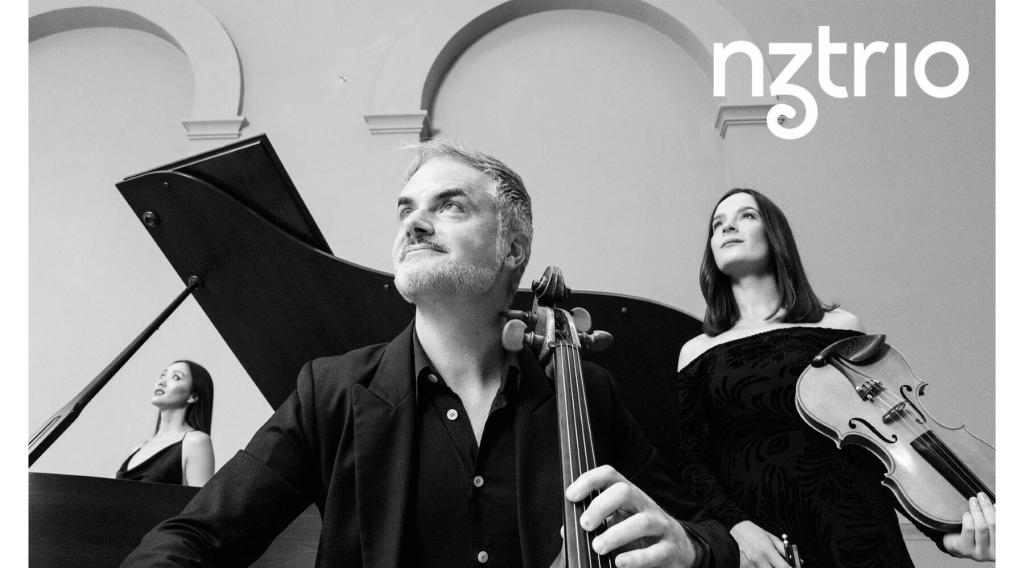
NZ Trio

Dramatic Skies 3: Cirrus

Auckland Concert Chamber

December 12

Reviewed by John Daly-Peoples

The final concert of the year for the New Zealand Trio and one of the final classical concerts for Auckland was the last in their Dramatic Skies series. It was presented under Red Level in the Concert Chamber with a socially distanced audience of just  one hundred.

While the concert was titled Cirrus, the overcast skies that evening were more Nimbus but the concert featuring work from the early nineteenth century till the present brought welcome sounds into the hall to an  audience starved of concerts.

It was a typical NZ Trio concert combining classical compositions with more adventurous contemporary works challenging and for the players as well as the audience

Franz Schubert  was only fifteen when he wrote his “Sonatensatz in B flat Major”  and there is a youthful enthusiasm to the work but one can hear the composer searching for more complex structures and layered themes which hint at the greater works that were to follow.

Pianist Somi Kim provided the initial themes which were expanded on with violinist Amelia hall providing a soaring voice and cellist Ashley Brown a more sober and at times sombre accompaniment.

Kim’s playing could be seen as painting a landscape into which Hall and Brown interposed images of fleeting  clouds, and looming  storm clouds

Gillian Whitehead’s newly commissioned work “Ka maranga ngā kapua” follows on the cloudscape theme translating as  ‘the clouds will lift’ and was something of a metaphor coming at a time of hope in the lifting of Covid restrictions.

There are allusions to changing landscape and moods with shimmering sounds conveying various vistas along with whispers of bird song, heralding abating storms, clearing weather and a new day.

The other New Zealand work on the programme was Rachael Clement’s “Shifting States” which consisted of five short pieces  inspired by the processes of glassmaking – freezing, melting, vaporization, condensation and sublimation.

The work was full of tentative crisp  sounds which created a sense of shimmering flecks of light and colour with each of the instruments  conveying concepts of fragility, mystery and fluidity.

Playing the Schubert, the three instrumentalists had been focussed on collaboration, watching each other and responding to the musical connection. With Clement’s work they played their individual components in a more technical manner focussed on precision, assembling the various elements with the audience observing these various elements being dissected and combined.

In the final movement “sommerso (submerged)” Somi Kim leant into the piano to play directly on the strings, complementing the two other players. This movement was an elegant sound portrayal of the wonders of glass, seeing the swirls and flecks  of colour shimmering through solid or blown glass.

Andrzej Panufnik’s “Piano Trio Op. 1” was written when he  was a nineteen-year-old student but he  revised it from memory  in 1944 after it had been destroyed in the Warsaw Uprising. The work is something of a reflection on the tumultuous ten years between the the original and the revised version.

The opening movement was romantic leading to a more haunting second movement tinged with sadness. The final movement featured a manic dance theme with some particularly  insistent playing by Amelia Hall.

Throughout the work the violin and cello were engaged in a musical conversation which ranged from the nostalgic and contemplative to the aggressive and tempestuous.

Much of the time Somi Kim measured out the music with a methodical almost mechanical approach with the accompanying  strings alternatively pleading, terrified, witty and hectic.

The major work on the programme was Rachmaninov’s “Trio elegiaque No 2” written when he was nineteen  in response to the death of  Tchaikovsky. While it honours the composer it also celebrates the great romantic piano tradition with music rich in drama and emotion.

Somi Kim opened the first movement with a mournful exploration, displaying  some virtuoso playing filled with intensity and anguish. Amelia Hall and Ashley Brown wrapped a sympathetic accompaniment of  melancholic voices around her playing providing funereal decoration. The three players generated a raw passion in attempting to convey the sense of despair, wonder the inexpressible.

In the second movement Kim’s playing was initially elegiac but this soon became more frenetic aided by the dazzling performances of violin and cello with some inspired duos of piano and violin and cello and piano.

The finale featured  some  ferocious playing by Kim and some equally intense displays by Brown and Hall as they referenced Tchaikovsky’s Pathétique and offering a glimpse of joy amidst the pathos.

Categories
Reviews, News and Commentary

Three great plays open Auckland Theatre Company’s 2022 season

John Daly-Peoples

Sydney Theatre Company’s production of “Grand Horizons”

ATC 2022 Season

John Daly-Peoples

The first three productions of the Auckland Theatre Company for next year offer a good range of work from overseas and local dramatists with three very accessible works.

“Grand Horizons”  by Bess Wohl
8 Feb – 5 Mar

In the absence of a new Roger Hall play ATC have turned to the American playwright Bess Wohl who mines similar territory to Sir Roger.

In her latest Tony-nominated comedy, “Grand Horizons” we encounter Nancy and Bill who are 50 years into the picture-perfect marriage. Now, as they settle into the beige walls of their new ‘lifestyle village,’ Nancy announces she wants out and Bill seems  to acquiesce.

For their two grown-up sons, it’s a devastating betrayal. Their long-held beliefs about love, family and security are shaken.

The play premiered earlier this year in Sydney where the Sydney Morning Herald said ‘On the surface it is a textbook sitcom from the versatile but undemonstrative kitchen sink set and understated costumes, to the instantly recognisable characters – the grumpy old man, the put-upon wife, the grown-up kids who aren’t sure who’s meant to be the grown-up.

“The revelations, such as they are, are not shocking – at least, not to the audience – and the reactions almost comfortingly predictable. But the power of minute observations builds as the play unfolds.”

“There is a beautiful clarity at the heart of “Grand Horizons”. A big part of this is Wohl’s story, which transforms an everyday family saga into a deftly constructed story arc paced with show-stopping side-tracks and dramatic punchlines.”

The play was so successful in Sydney that it is having another season at the same time as ATC’s

Wohl has become one of the leading playwrights in the US at the moment having written nine plays since 2010 all of which display a wry humour and unerring sense of the way people talk and relate to each.

“Grand Horizons” is directed by Jennifer Ward-Lealand and stars Roy Billing and Annie Whittle.

“Lysander’s Aunty or A Most Rageful Irreverent Comedy Concerning an Offstage Character from A Midsummer Night’s Dream” by Ralph McCubbin Howell
17 Mar – 3 Apr

Jumping from Athens to Aotearoa, with a cast of New Zealand’s finest comic talent, this is an uproarious wild ride of magic, mayhem and mutiny.

In William Shakespeare’s “A Midsummer Night’s Dream”, young lovers Lysander and Hermia defy the Duke by eloping to an aunt’s house in the woods. But just who is this anti establishment aunt who is not much more than cypher.

Explaining the plot of the play, McCubbin Howell says, “Reading A Midsummer Night’s Dream” a few years ago, I was struck by the fleeting mention of Lysander’s Aunt. She is introduced as someone who might help the young lovers defy Athens law and elope in the woods, but the plot then takes another turn and she never gets mentioned again. Shakespeare is littered with characters like this, but this one in such a well-known play seemed particularly intriguing. Who is this law-snubbing, free-loving aunty? Why is she in the woods? And what’s she doing helping runaway lovers elope?

The play takes a similar approach as Tom Stoppard did with his “Rosencrantz and Guildenstern Are Dead in imagining some of Shakespeare’s characters beyond the confines of the original play

With quick, witty dialogue and a pacey plot, Lysander’s Aunty or A Most Rageful Irreverent Comedy Concerning an Offstage Character from A Midsummer Night’s Dream is a brand-new, energetic, large-ensemble production led by award-winning Trick of the Light duo, director Hannah Smith and writer Ralph McCubbin Howell.

“Witi’s Wāhine by Nancy Brunning
10 – 28 May 

“Witi’s  Wāhine” tells of  four Māori women taking their journeys through history and mythology, sharing tears, jokes and waiata along the way. But these are no ordinary women – they’re matriarchs of New Zealand fiction, finally stepping out from the shadows.

In Witi Ihimaera’s books, characters spring from the page, fully formed and opinionated. Here, some of his most memorable characters, from works like The Parihaka Woman, The Matriarch and Pounamu, step onto the stage.

The result is “Witi’s Wāhine”, a love letter or, more accurately, a love song, to the women of Te Tairāwhiti, the East Coast, who inhabit Ihimaera’s writing: the wāhine of his own whānau. Nancy Brunning has crafted a story that fuses loving tribute with powerful commentary, levity with unflinching reality, sensitivity with warm affection.

Reviewer Simon Wilson said of the production that it serves up “the richness of culture and the wonder of people, with all their warts, with all the laughter and the singing and the pain.” Originally devised and directed by the late Nancy Brunning, we proudly present this Hapai Productions performance of words and song, re-directed by Waimihi Hotere and with a special appearance by Ihimaera’s irresistible ngā tuāhine.

“Witi’s Wāhine” is a co-production between Auckland Theatre Company and Hāpai Productions.

Categories
Reviews, News and Commentary

Three great plays open Auckland Theatre Company’s 2022 season

John Daly-Peoples

Sydney Theatre Company’s production of “Grand Horizons”

ATC 2022 Season

John Daly-Peoples

The first three productions of the Auckland Theatre Company for next year offer a good range of work from overseas and local dramatists with three very accessible works.

“Grand Horizons”  by Bess Wohl
8 Feb – 5 Mar

In the absence of a new Roger Hall play ATC have turned to the American playwright Bess Wohl who mines similar territory to Sir Roger.

In her latest Tony-nominated comedy, “Grand Horizons” we encounter Nancy and Bill who are 50 years into the picture-perfect marriage. Now, as they settle into the beige walls of their new ‘lifestyle village,’ Nancy announces she wants out and Bill seems  to acquiesce.

For their two grown-up sons, it’s a devastating betrayal. Their long-held beliefs about love, family and security are shaken.

The play premiered earlier this year in Sydney where the Sydney Morning Herald said ‘On the surface it is a textbook sitcom from the versatile but undemonstrative kitchen sink set and understated costumes, to the instantly recognisable characters – the grumpy old man, the put-upon wife, the grown-up kids who aren’t sure who’s meant to be the grown-up.

“The revelations, such as they are, are not shocking – at least, not to the audience – and the reactions almost comfortingly predictable. But the power of minute observations builds as the play unfolds.”

“There is a beautiful clarity at the heart of “Grand Horizons”. A big part of this is Wohl’s story, which transforms an everyday family saga into a deftly constructed story arc paced with show-stopping side-tracks and dramatic punchlines.”

The play was so successful in Sydney that it is having another season at the same time as ATC’s

Wohl has become one of the leading playwrights in the US at the moment having written nine plays since 2010 all of which display a wry humour and unerring sense of the way people talk and relate to each.

“Grand Horizons” is directed by Jennifer Ward-Lealand and stars Roy Billing and Annie Whittle.

“Lysander’s Aunty or A Most Rageful Irreverent Comedy Concerning an Offstage Character from A Midsummer Night’s Dream” by Ralph McCubbin Howell
17 Mar – 3 Apr

Jumping from Athens to Aotearoa, with a cast of New Zealand’s finest comic talent, this is an uproarious wild ride of magic, mayhem and mutiny.

In William Shakespeare’s “A Midsummer Night’s Dream”, young lovers Lysander and Hermia defy the Duke by eloping to an aunt’s house in the woods. But just who is this anti establishment aunt who is not much more than cypher.

Explaining the plot of the play, McCubbin Howell says, “Reading A Midsummer Night’s Dream” a few years ago, I was struck by the fleeting mention of Lysander’s Aunt. She is introduced as someone who might help the young lovers defy Athens law and elope in the woods, but the plot then takes another turn and she never gets mentioned again. Shakespeare is littered with characters like this, but this one in such a well-known play seemed particularly intriguing. Who is this law-snubbing, free-loving aunty? Why is she in the woods? And what’s she doing helping runaway lovers elope?

The play takes a similar approach as Tom Stoppard did with his “Rosencrantz and Guildenstern Are Dead in imagining some of Shakespeare’s characters beyond the confines of the original play

With quick, witty dialogue and a pacey plot, Lysander’s Aunty or A Most Rageful Irreverent Comedy Concerning an Offstage Character from A Midsummer Night’s Dream is a brand-new, energetic, large-ensemble production led by award-winning Trick of the Light duo, director Hannah Smith and writer Ralph McCubbin Howell.

“Witi’s Wāhine by Nancy Brunning
10 – 28 May 

“Witi’s  Wāhine” tells of  four Māori women taking their journeys through history and mythology, sharing tears, jokes and waiata along the way. But these are no ordinary women – they’re matriarchs of New Zealand fiction, finally stepping out from the shadows.

In Witi Ihimaera’s books, characters spring from the page, fully formed and opinionated. Here, some of his most memorable characters, from works like The Parihaka Woman, The Matriarch and Pounamu, step onto the stage.

The result is “Witi’s Wāhine”, a love letter or, more accurately, a love song, to the women of Te Tairāwhiti, the East Coast, who inhabit Ihimaera’s writing: the wāhine of his own whānau. Nancy Brunning has crafted a story that fuses loving tribute with powerful commentary, levity with unflinching reality, sensitivity with warm affection.

Reviewer Simon Wilson said of the production that it serves up “the richness of culture and the wonder of people, with all their warts, with all the laughter and the singing and the pain.” Originally devised and directed by the late Nancy Brunning, we proudly present this Hapai Productions performance of words and song, re-directed by Waimihi Hotere and with a special appearance by Ihimaera’s irresistible ngā tuāhine.

“Witi’s Wāhine” is a co-production between Auckland Theatre Company and Hāpai Productions.