Categories
Reviews, News and Commentary

Proof: A celebration of contemporary prints in New Zealand

Reviewed by John Daly-Peoples

Proof: Two Decades of Printmaking

Print Council Aotearoa New Zealand 

Massey University Press

RRP $70

Reviewed by John Daly-Peoples

For many New Zealanders their first artwork will have been an artist’s print. This relatively low-cost artwork will often have been the beginning of life-long buying of art and many major collectors will note that their first limited edition print will have been the start of their collections.

The Barry Lett Multiples, a set of 12 prints which were produced in 1968 by the art dealer Barry Lett became a central feature of many early collections and were on display in many institutions such as secondary schools. The set of prints included major artists such as Colin McCahon,  Pat Hanly and Don Binney.

The artist’s print was generally a silk screen print, an etching or wood cut but in the last few years there has been an increase in the enrage of techniques with the emergence  of digital media, hybrid prints with new production methods, materials and inks.

The printed image has long historical, political and social associations where it has been used to address political, social, aesthetic and personal issues. The invention of photography and screen-printing had an enormous impact on the art world, especially in the 1960s, and many significant artists have worked with commercial printing to both lift standards and to feature strongly in their studio production. New technologies continue to be explored by artists, and this is increasingly so for  printmakers.

Robin White, Kereru, (2011)

Printmaking in New Zealand has a long history and has been taught in the various art schools   and other institutions such as the Auckland Society of Arts. and the Whanganui Regional Community Polytechnic (WRCP). There was also ben the NZ Print Council established by Kees Hos and Dr Walter Auburn which operated between 1964 and 1977,

It was out of the WRCP that a new group of printmakers developed in the 1990’s. This organisation became Print Council Aotearoa New Zealand  in 2000, promoting printmaking and printmakers

To celebrate more than twenty years of its history a new book “Proof” has been published featuring  some of the best examples of contemporary fine art printmaking in the country today. With 180 works by 127 artists, “Proof” covers the breadth of printmaking processes and display the diversity of this artform, from the more traditional woodcuts and etchings to those pushing the boundaries of print.

With a foreword by Susanna Shadbolt, Director of Aratoi, Masterton, an essay on the history of printmaking in New Zealand by Carole Shepheard and one on the history of PCANZ the book provides a useful overview of the current state of printmaking in the country.

Stanley Palmer, From Maungawahau (2003)

Along with  a list of significant exhibitions, and a glossary of printmaking terms and techniques this book is something of a catalogue of New Zealand’s major print artists with full colour plates and biographies of the artist. It is a valuable resource for art lovers students and teachers.

Among the more than one hundred artists included in the book Prooa few are given greater status as  Honorary Member – Barry Cleavin, Dee Copland, Rodney Fumpston, Mark Graver Stanley Palmer, Carole Shepheard, Gary Tricker  and Robin White.

Categories
Reviews, News and Commentary

The First Prime Time Asian Sitcom: A Biting Comedy

Reviewed by Malcolm Calder

Jess Hong, Uhyoung Choi, Dawn Cheong, Ariadne Baltazar, Jehangir Homavazir. Photo:  Michael Smith

The First Prime Time Asian Sitcom

By Nahyeon Lee

In Good Company

Co-produced by Q Theatre and Silo Theatre

Q Theatre Loft

Until 27 November

By Malcolm Calder

5 November 2002


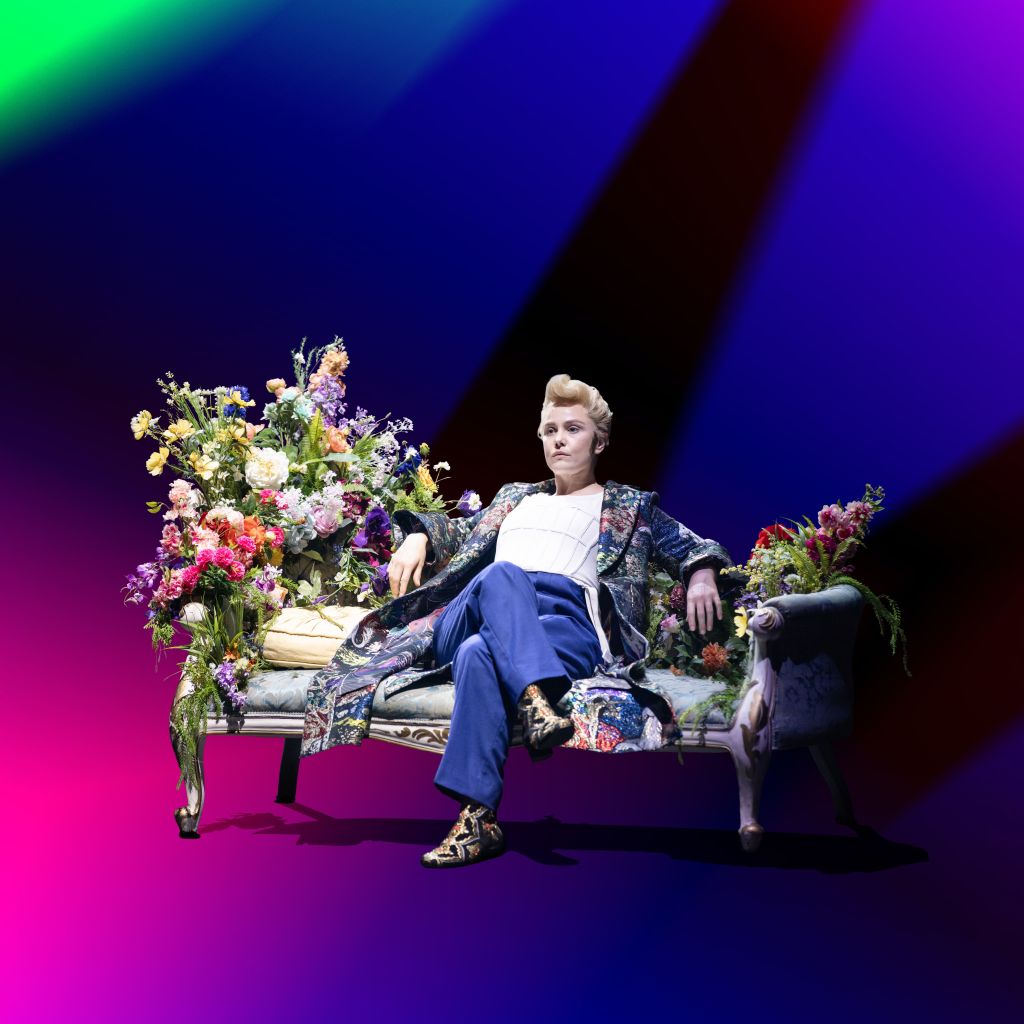
The second scene (or is it an Act?) of The First Prime Time Asian Sitcom sums it up.  An earnest academic welcomes four panellists to discuss a new show recently screened on mainstream television and introduces them to her audience.  The TV show is a frenetically paced sit-com that, according to a popular convention adhered to by many, might loosely be stereotyped as ‘Korean’ satire of Friends.  But is it?  And what is ‘Korean satire’ anyway?  Who says so?  How do stereotypes arise?  What relevance does this have to mainstream New Zealand? Or to mainstream television?

Her panel guests (each a satire themselves) comprise a social networking influencer, a blogger, a highly opinionated academic, a theatre worker and the Showrunner who created the show.  But the moderator quickly loses control as her panel leap immediately to a consideration of ‘Korean-ness’ and thence quickly to ‘Asian-ness’.  How do national stereotypes accommodate multiplicity?  Who exactly is an Asian?  Are those from eastern Asia the determinant?  What about Indians?  How important is comedy?  Are the children of Asian immigrants lost between cultures?   And what about food?  Her panel goes at it hammer and tongs, each expressing their viewpoints, no one listens to anyone else, egos are paramount and ‘winning’ discussion points becomes the goal of each.  The point of course is that outcomes become submerged in mere noise – a further layer of satire. 

Meanwhile, sitting right down the far end of the panel, is the actual writer of the TV show that gave this play finds its name.  She is quiet, could quite possibly be a seriously good thinker and is clearly unsettled by all the non-productive noise.  But we never find out because, although clearly having thoughts to contribute and using body language alone, she is out gunned by those around her and is literally left with her mouth flapping and nary a word is heard.  Yet another satirical statement. 

The First Prime Time Asian Sitcom lays satire upon satire upon satire.  Its context is about any minorities that are visually, aurally and culturally different.  How they fit in and how they discover their place in the habitable world.  And, more importantly, about how they become heard, accepted by and a part of that world. 

It is a truism of course that the habitable world eventually does so and that comedy has played a not insignificant role in the process.  Worldwide over many generations, for example, acceptance of the Irish diaspora as something more than drunken singers, or that rock and roll is a valid musical form or that granting teenagers a voice all do so too.

The First Prime Time Asian Sitcom is bitingly comedic in places, uncomfortably so in some, while wrapping itself in its own satirical constancy. 

Is it good theatre?  While cleverly introduced and a designers delight, the first scene that establishes the TV show could possibly cope with some trimming while the strength of the second is noted above.  However the third scene seems far too long, particularly the ending, and it might even benefit from a different treatment entirely.   

Ahi Karunaharn’s direction implicitly acknowledges the self-consciousness and implicit anger underlying this work while maintaining its frenetic pace at all times, and his well-credentialled cast of Ariadne Baltazar, Dawn Cheong, Uhyoung Choi, Jehangir Homavazir and Jess Hong provide glowing evidence of a rising generation of new actors.

On balance, The First Prime Time Asian Sitcom is both important and welcome. It is likely to appeal primarily to its own cohort – educated, articulate, second-generation New Zealanders who have something to say and who are doing something about it.  But it deserves a broader audience too.  Not only because it plays with an idea that has rarely if ever received much airtime in New Zealand, but because it shows the work of an important young playwright in Nahyeon Lee and, as such, is a welcome addition to our national play-book.

Q Theatre and Loft Theatre are to be congratulated on co-producing this work.

Categories
Reviews, News and Commentary

NZSO’s Heavenly concert

Reviewed by John Daly-Peoples

Gustav Mahler / Miguel Harth Bedoya

Heavenly

New Zealand Symphony Orchestra

Auckland Town Hall

November 3

Then

Michael Fowler Centre, Wellington

November 10

Napier Municipal Theatre

November 11

Reviewed by John Daly-Peoples

Before the main work on the programme of the NZSO “Heavenly” concert, Gustav Mahler’s Symphony No 4, the orchestra played the young American composer Gabriella Smith’s “Tumbleweed Contrails”.  Just as Mahler’s works often reference the natural world, Smiths work was also inspired by Nature and natural forces and it sounded as though the composer had been inspired by the sounds she would have detected with her ear to the ground, pressed up against a growing tree,  or immersed  in a flowing stream.

The work is  mixture of the sounds of Nature – animal, birds and insects along with  the sounds of wind in the trees and the burbling of water. She seems to have taken these sounds and then slowed them down or sped them up so they are only just recognisable. Throughout the work there is a constant whispering as through the spirits of all these elements was being fed into the composition and then in the final moments of the work we realise what we can hear is probably the breath of the composer herself.

The rhythms of Nature have been transposed into music and seem be following mathematical shapes and  sine waves. It is this mathematical rigour which conductor Miguel Harth-Bedoya then applied to his conducting with  precision and exactitude giving the work a sense of profound insight and sensitivity

One of the impressive things about Mahler’s music is that the man looms out of the music. He is present at these performances, with the conductor becoming his alter ego and we are presented with the man and his struggle to express himself through his music in a way few other composers manage to do.

Mahler had a relationship with Sigmund Freud both as a client as well as friend and in much of his Symphony No 4  the music appears to be attempts to understand his inner psychological states. As an autobiographical work it alludes to the composer’s personality as well as his own family’s encounters with death and despair.

Central to the symphony is the song  “The Heavenly Life” which is sung in the final movement. The song is a child’s version of heaven, but as with his other works this childlike, innocent vision is tempered with notions of death.

Mahler’s task was to complement the naive, childlike tone of the poem, and also the convey the ethereal lightness of heaven. The orchestration is light and the instrumentation distinctive, with bells, flutes and pianissimo strings. The soprano solo adds the final heavenly quality.

Mahler’s symphonies have so much drama, invention and contrasts that it would probably easy for them to be conducted without too much control but conductor Miguel Harth-Bedoya, was quite clearly in controlling the orchestra so that subtle nuances were made evident and individual instruments were allowed to shine.

The  contrasts and contradiction in the music need to be realised and Harth-Bedoya and the orchestra achieved  that, providing sounds that ranged from the from the childlike to the mature and from the bold strokes to the simple gesture.

The first movement with its sounds of sleigh bells evoking the child’s delight in Christmas  are soon followed by darker undertones. Then there was an exquisite passage of angelic voices delivered by the four flutes and later the sound of the bells themselves seem to cast an ominous sound.

“Self-Portrait with Death Playing the Fiddle” by Arnold Böcklin

The second movement picks up on themes we heard in Gabriella Smiths work with numerous references to Nature, birds, Spring and an awakening again there is a darker element which refers to the painting “Self-Portrait with Death Playing the Fiddle” by Arnold Böcklin which obsessed Mahler. This image was given form by Concert master Vesa-Matti Leppanen playing on a slightly discordant gypsy violin

Harth-Bedoya created some enchanting ethereal moods in the third movement  “Ruhevoll” (Restful) where the music conveys the transition from earthly state to heavenly life

Madelaine Peirard gave an impressive performance in  the final movement singing “Das himmlische  Leben” (The Heavenly Life). From the  outset, this movement had been the destination and source of the entire work with many of the  previous musical themes repeated in the song, its motifs  creating a sense of arrival and completion.

Madelaine Peirard

While the poem is a depiction of heaven as seen through the eyes of a child there is also a disconcerting element and one of the verses has the lines

‘We lead a patient

Innocent, patient

A dear little lamb to its death”

Rather than singing in the  childlike voice which Mahler seems to have preferred she took on the voice of an angel carrying the work with an astute understanding

She inhabited the stage with a real presence  giving the song and  expressive, vibrancy  which was  at time ecstatic and at others tender and joyful.

Categories
Reviews, News and Commentary

The Artist: A hectic show where Picasso meets Marcel Marceau and Mr Bean

Previewed by John Daly-Peoples

THE ARTIST
Created by Thom Monckton & Sanna SilvennoinenQ Theatre

A Mulled Whine Production

Q Theatre

November 8 – 12

Previewed by John Daly-Peoples

“The Artist” was on at the Auckland  Arts Festival a couple of years ago and at the time I wrote the following review.

“The Artist” should come with a warning – make that two warnings. Don’t sit in the front row. You could get to go on stage as The Artist’s stooge. Also, if you can remember where it is, bring along a table tennis paddle.

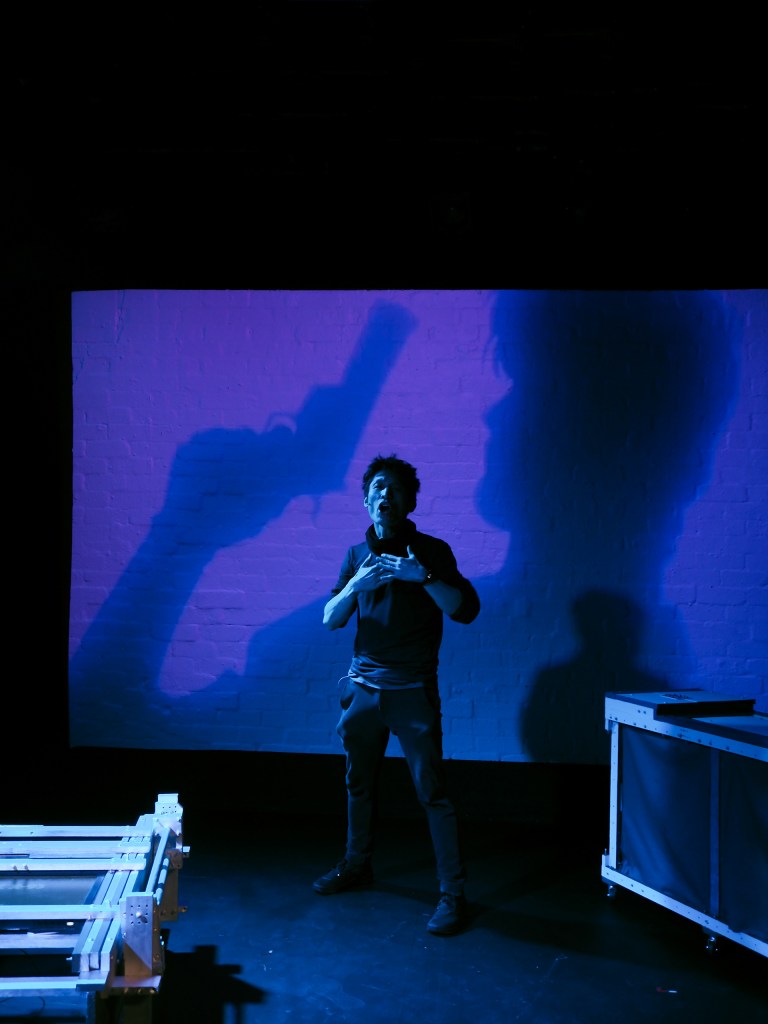
We are in an artist’s studio where we encounter The Artist (Thom Monckton) who over the course of an hour produces / assembles / finds several artworks which in the end are brought together for an art exhibition. Monckton explores a number of the tropes about art and artists which he plays with or gets lost in.

He must be a French artist because he wears a blue and white striped top but no beret – so he is bit like Picasso, but his activities have him more like Marcel Marceau the great mime artist. But then again he is also disconcertingly like the very un-French Mr Bean.

Monckton is a conjurer, acrobat, mime and contortionist  who creates endless visual jokes, making use of the artists  equipment and the everyday items of the studio. His attempts to get hold of a brush have him entangled in a table, a set of shelves and a rogue ladder while his attempts to secure some fabric to a stretcher  with a staple gun are complicated, hilarious  and dangerous.

There is an elaborate set-up around a still life where the fruit are given a life of their own and the traditional image of a bowl of fruit, bottle of wine and glass gets reworked in a clever visual  joke where the artist paints one of the real green apples red so it matches the apples in the painting .

There was a bit of audience involvement. One  young woman was cajoled onto the stage to sit for a portrait and then got given the job of painting artist’s portrait. There is also a rapid game of ping pong (remember the paddle) as he fires balls into the audience. The audience provided feedback with waves of laughter, but Monckton was particularly  concerned with the chuckles of a young child pointing at his watch, letting the parents know it was past the young ones bedtime.

Monckton displays brilliant timing and pace in a mixture of physical theatre, mime and visual humour which makes this act classy and entertaining.

While he is silent apart from a few guttural phrases the background sound and music are brilliantly integrated into the performance.

THE ARTIST performance schedule
Tauranga
12 October, 6:30pm
Addison Theatre – Baycourt
As part of ESCAPE Festival
 
Auckland
8 – 12 November
7:30pm Tuesday – Thursday l 6:30pm Friday – Saturday
Rangatira, Q Theatre
Book at qtheatre.co.nz
 
New Plymouth
15 November, 6pm
plus schools performances on 16 November
Theatre Royal – TSB Showplace
As part of the SpiegelFest

Categories
Reviews, News and Commentary

Making Space: New Zealand Women Architects

Reviewed by John Daly-Peoples

Making Space: A history of New Zealand Women in architecture

Edited by Elizabeth Cox

Massey University Press

RRP $65

Reviewed by John Daly-Peoples

The names of major female architects don’t feature greatly in the history of architecture. Recently there has been Zaha Hadid who was the first woman to win the Pritzker Architecture Prize but there have been few successful women architects with  important architectural and design careers such as  the American Julia Morgan who designed several hundred buildings  including the famous Hearst Castle. 

There was also Eileen Gray who may have inspired some of  Le Corbusier’s thinking and   the designer Charlotte Perriand who created some of the furniture credited to Le Corbusier.

However few could name a successful New Zealand female architect.

Now a new book, “Making Space” looks at the history of New Zealand female architects and designers

The book has been edited and substantially written by Elizabeth Cox along with 30 leading women architects, architectural historians and academics. They have contributed original research as well as personal accounts of involvement in the profession and include  information about many whose careers have until now been lost to the historical record. It also looks at those using architecture to benefit communities, the careers of women in associated industries, and the changes that  have resulted in improvements to working in  the profession.

We are introduced to some women who designed building at the beginning of settlement in New Zealand. There was Marianne Reay who designed St Johns Anglican Church in Wakefield just out of Nelson in 1846 and there were Ellen and Mary Taylor who designed and built the original James Smith’s store on Wellington Cuba St in the late 1840’s.

These women and others were not trained as architects but applied practical skills to their designs.

Later women gained more formal training with woman such as Kate Beath who was contracted to an architectural firm in Christchurch in 1908 where she began her studies.

Later there was Lucy Greenish who is considered to be the first woman to establish her own practice  as an architect in Lower Hutt in 1927. In 1913 she  was the first woman to have been elected as an associate of the New Zealand Institute of Architects having worked in architectural practices since 1908.

There is an account of the life of the entrepreneurial  Esther James who not only worked as an architect but was also a  developer and builder, where she made her own concrete blocks. Her main claim to fame was walking the length of the country in the 1930’s to promote New Zealand made goods and then repeating the activity in Australia walking from Melbourne to Brisbane.

The book is filled with histories of the many women who have been associated with the profession but often on the edges along with accounts of the pioneering women of the mid twentieth century such as Lillian Chrystall through to Julie Stout becoming the first woman to win the NZIA Gold Medal this year.

As the book moves into the latter part of the twentieth century and into the twenty-first century there has been a notable shift as women  graduates have increased. In the 1960’s and 70’s there were only ever one or two women in each year at the Auckland University School of architecture, now there is parity.

Generally, there has been a low participation rate of women in the field for a number of reasons including lower salaries, lack of equity and worker well-being in the workplace, lack of role models and mentors and the undervaluing of women’s qualifications and competence.

The book focusses on the way in which societal and workplace factors have led to a more collaborative approach which has seen women adding other skills and perspectives to the profession.

This aspect was realised early on, and Thomas Wilford, one hundred years ago during a parliamentary debate on the NZIA stated “I believe that women architects in this country would bring about the building of a better class of house than we have today”

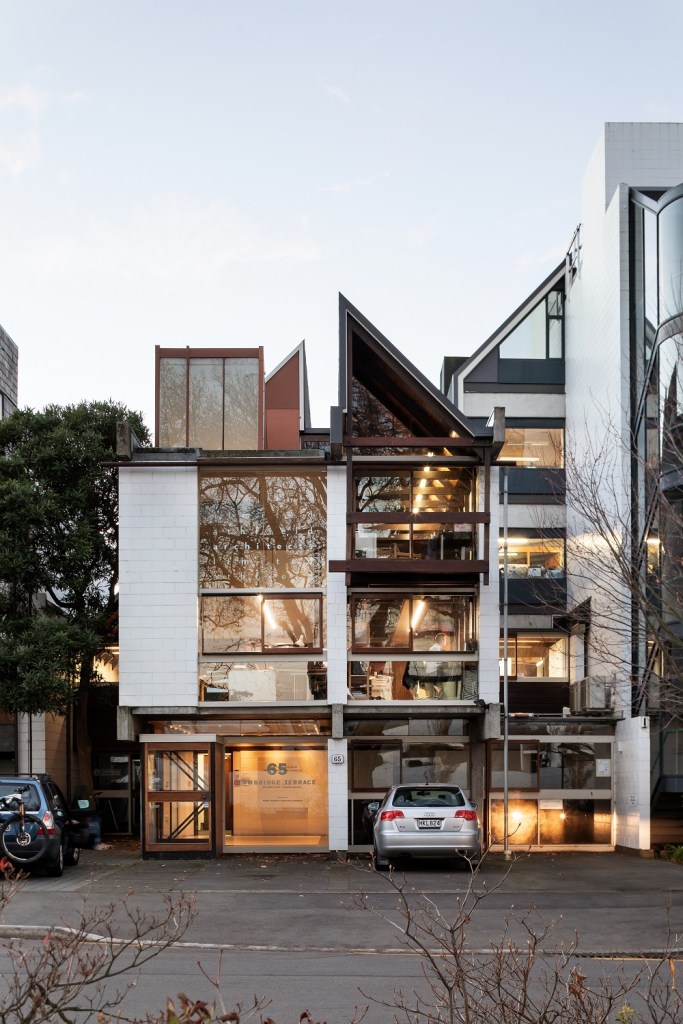
Women architects now feature at all levels within the profession  and they are a designing an impressive range of building. One notable architect is Bergendy Cooke whose Black Quail House was Home of the Year in 2021. She has also worked international including work on Zaha Hadid’s MAXX museum in Rome.

Bergendy Cooke, Black Quail House

While the book looks at the rise of women architecture it also touches on the changes which have occurred generally in the education, development of the profession and changes in ideas about architecture. It also highlights the growing number and impact of Māori woman in the profession.

The book is a significant resource with over 400 photographs and mention of over 500 women which will add greatly to our understanding of the development of architecture in New Zealand and the impact of individual architects.

Categories
Reviews, News and Commentary

North by Northwest takes a comic turn

Review by John Daly-Peoples

Antonia Prebble (Eve Kendall) and Ryan O’Kane (Roger O. Thornhill) Image Andi Crown

North by Northwest

Written by Carolyn Burns

Screenplay Ernest Lehman

Directed by Simon Phillips

Auckland Theatre Company

Auckland Waterfront Theatre

Until November 19

Reviewed by John Daly-Peoples

“Roger. This is silly”

So says Eve Kendall to Roger Thornhill after being rescued off the face of Mt Rushmore at the end of “North By Northwest”. the latest production at Auckland Theatre Company.

She is right. The whole play seems to be a bit silly, continually turning the dramatic events which occur throughout the play which have been lifted from the film into comic moments.

The play follows the movie scene by scene and also word for word. Just in case you haven’t seen the movie the plot concerns Roger Thornhill (Ryan O’Kane) a twice-divorced New York advertising executive who is mistaken for a man named George Kaplan and abducted by criminal masterminds. He escapes their clutches and a thrilling chase ensues taking him from New York to Chicago and all the way to South Dakota.

Over this time he is variously force-fed bourbon, arrested, beaten up, seduced, shot, pursued and nearly blown up by a plane and then chased across the stone heads of the presidents at Mount Rushmore.

What was a spine-tingling drama  has been turned by director Simon Phillips into a witty romp which takes all the tropes of the chase / espionage movie and gives them a comic twist.

In many ways the approach emulates Hitchcock’s own style of working with humour not far from the dramatic action and although Roger Thornhill  is an ordinary man caught up in  events out of his control, he also demonstrates a few James Bond qualities.

Phillips and designer Nick Schlieper’s set uses simple props on wheels, supported by a square metallic grid of walls that becomes doors, balconies and the edges of buildings. On either side of the set are production suites where miniatures are filmed and projected onto the rear of the stage to enhance the on-stage action. Car chases are filmed using a rotating model hillside, a model plane replaces the biplane from the film and four of the actors faces replace the presidents on Mount Rushmore.

Image: Andi Crown

Cary Grant who played the original Thornhill with a mixture of bafflement and nonchalance but in the play Ryan O’Kane goes for more of the utterly panicked as he races from disater to disater with a pace  and animation which is riveting.

Antonia Prebble  in the role of the femme fatale  Eve Kendall, the professional spy and part-time seductress is totally convincing and an ideal foil to O’Kane.,

The other ten members of the cast paly a myriad of roles from cops, train steward, FBI agent, clerks, auction-goers with Roy Snow as the arch villain   Philip Vandamm,

In the effort to mimic all the scenes from the film the play suffers occasionally from some unnecessary  and overly hectic scenes. At least the actors haven’t spoilt the fun by trying out bad American accents.

Categories
Reviews, News and Commentary

Rooms: Portraits of Remarkable New Zealand Homes

Reviewed by John Daly-Peoples

Rooms: Portraits of Remarkable New Zealand Homes

By Jane Ussher and John Walsh

Massey University Press

RRP $85

Reviewed by John Daly-People4s

New Zealanders have a fascination with homes and interiors evidenced by the sales of numerous magazines on architecture and house interiors. The former mainly deal with the forms, spaces and structures of building with the other focused on objects, decoration  and the use of the spaces.

Both these elements are brought together in  the new book “Rooms” by photographer Jane Ussher and architectural writer John Walsh looks at the range of interior spaces in New Zealand homes from the small villa through to grand mansions.

It is an eclectic collection which is a mixture of historical, social  and aesthetic enquiry. These are not all images of “home beautiful”, but rather ordinary, lived-in homes but lived in with a sense of the interiors reflecting something of the owners rather than reflecting current design trends.

Carterton House

Jane Ussher is a perceptive and knowledgeable photographer having photographed buildings as diverse as Shackleton’s Antarctic hut through to Government House while John Walsh is a perceptive writer about New Zealand’s architectural history.

In the book Ussher focuses her camera on a range of rooms that she considers to be beautiful, intriguing, distinctive and unique. Shot in a range of locations across New Zealand, from simple cottages through to some of the country’s most important buildings such as Olveston and Larnachs Castle in Dunedin and Mansion House on Kawau Island

The more than 300  images are introduced with an excellent essay by John Walsh who provides context for the interiors as well as the photographers approach. As he notes in his introduction “Ussher’s journey  through some of the nations most photogenic interiors has taken her into rooms with the visual calorie count of French haute cuisine; just looking at portraits of these rooms will make  a viewer feel full. But there are palette-cleansers too, rooms as sparse as those found in traditional Japanese houses or voguish dealer galleries. Actually, the gallery analogy has a more general applicability. The interiors that Ussher most commonly portrays are living or sitting rooms and hallways – spaces with surfaces free for the display of things and experiments in colour.”

Merivale House, Christchurch

In some of these houses it is art which dominates as with Parnell Cottage where there are six images of the place presenting artworks by Jude Rae, Peter Robinson, Michael Hight, Terry Stringer, Layla Walker, Gavin Hurley, Hannah Maurice, Yvonne Todd, Michael Parekowhai Francis Upritchard, Judy Millar, Richard Killeen and Imogen Taylor.

By contrast Otahuhu Studio is represented with just one image – a door painted by the owner /artist Sam Mathews

With The Chapman-Taylor House, Takapuna Ussher seem to have been taken with the juxtaposition of a  yellow glazed vase  and  painting of a yellow glazed bowl by Neil Driver. This house also has a large wall mural by the jeweller Reuban Watts who commissioned the house nearly a century ago.

Westmere House, Auckland

Other interiors are included for their lavish or exotic decorations such as the French wallpaper used in Remuera House featuring an oriental scene which stretches around virtually the whole dining room

With some of the interior Ussher focusses on the minimalist such as Freemans Bay Cottage with its three modernist lamps or the Toomath / Wilson Modernist House, Wellington where the architectural fittings are given prominence.

Some rooms are included because of their use of colour, dramatic contrasts and refined placement of furniture. Other demonstrate the careful architecture design elements while others show how sheer abundance of objects and detail can make an impression.

No individuals appear in these photographs but what we get from them is not just a “portrait” of the room. There is also a sense of the people who inhabit these spaces. Their selected objects, works of art, designer and traditional furniture, the colours and fabrics speak about aesthetic and design decisions which are often very different.

Ussher spent about two years actually taking the photographs but the idea behind the book had been developing for a lot longer as the photographing of spaces and rooms was something of an obsession for her.

“Planning for the trips was complicated by the resurgence of Covid but the time away from the camera allowed me to clarify what I wanted to include in the book so in some ways it was advantageous. The two major Auckland lockdowns meant we couldn’t get out of town to shoot and later on, when the borders were open, we didn’t want to create anxiety for homeowners by being visitors from Auckland into parts of the country with low Covid numbers.”

Brooklyn House, Wellington

“I think trust played a major role. Amazingly, almost no one said no. The fact that we were offering anonymity to people whose homes had never been published before certainly helped, but I also think that they were curious to see what the photographs would say about their space. In some cases, taking the photographs was a very collaborative process, with the owners contributing ideas or helping create a better composition by moving things while in other instances the owners were happy to give me free reign.”

Jane Ussher and John Walsh have created not just a valuable resource and a great coffee table book, this is a work of insight into our history made possible by the breadth of knowledge and experience of the two collaborators.

Categories
Reviews, News and Commentary

Foreign Canines: A Travellers Guide to Turkish Dogs

Reviewed by Malcolm Caldcer

A Travellers Guide to Turkish Dogs Photo:  Eleanor Strathern

A Travellers Guide to Turkish Dogs

Amulled Whine

By Barnaby Olson, Jonathan Price, Stevie Hancox-Monk, Andrew Paterson, and Tess Sullivan

Q Theatre Loft

Until 23 October

Reviewed by Malcolm Calder

What Can One Say

I got home after this performance, sat down at the keyboard and wondered what on earth I could write. 

Scratching my head, I figured I just might have to fall back on that old reviewer’s chestnut and outline the basic plot, but comprehensive advance publicity has already done so.  I could comment on the production values and skills this production demonstrates, but that would be an injustice to those who show them.  I could talk about or even ‘rate’ the performers, but they do so themselves far better than my words can. 

Suffice to say that director Jonathan Price has led this ensemble-devised work, built around a true story by Barnaby Olson, to create something that becomes an entity in itself.  We are interested, intrigued and ultimately enthralled.  And we go home feeling pretty damned good about the world in general.

Good successful theatre always requires two essential ingredients: it must tell a simple story well and it must enable a mutual trust between those on stage and their audience.

This story is a simple one.  Turkish Dogs is a can-do, make-it-up-as-we-go-along, truly gentle story of discovery and happenstance.  It’s a journey to which we can all relate whether boomer, parent or someone starting their OE.  Many of us have lived it – or dreamed of doing so, or at least a version of it.    It is peopled by characters we have all met, the majority of whom we like, the occasional one we detest and some we just chuckle quietly about. But we have all met ‘em. In this play they pop up throughout the journey – some more colourful than others, some more memorable.  And, after all, that’s what life is all about.  People.

The second essential is trust.  Any audience gives its trust to a cast that enables a story to be told.  And a cast trusts an audience to understand that story.  This giving of trust happens every time a play hits to the stage.  Sometimes it works.  Sometimes less so.  And very, very occasionally it goes beyond trust, becomes immersive and both cast and audience become one, sharing the experience.  This production has mutual trust in spades.

This is only a small production that delivers on both counts yet somehow still manages to surprise. It should be mandatory for those with even the slightest interest in NZ theatre – and they should bring their non-theatre neighbours along as well.

My prediction: Turkish Dogs has legs and will go further.  At one point I felt it could work pretty well anywhere in the English-speaking world, even in different mediums, although I initially wondered about localising it a bit – you know, a few Australianisms here or the odd Englishism there.  But then I thought no.  It doesn’t need it.  It is a uniquely Kiwi story told in a uniquely contemporary way with not a shred of self-consciousness.  Yes, people elsewhere will get the accents.  If they don’t that’s their problem. Kiwi accents could even become a USP.

Finally, here’s a tip.  Get in well before the show starts.  You just might meet someone worth talking to.

Categories
Reviews, News and Commentary

New Zealand Symphony Orchestra 2023 Season

John Daly-Peoples

Sir Donald Runnicle

New Zealand Symphony Orchestra

Season 2023

Paul Lewis who this year performed all the Beethoven Piano Concertos with the NZSO over a one week will be repeating the task again in three concerts Orpheus Reverence and Emperor conducted by conducted by Brazilian Eduardo Strausser. In reviewing his playing earlier this year I noted that Lewis “fully captured the textures, scope and power of the work and the heroic spirit as conceived by Beethoven is revealed to be both physically robust and spiritually refined”. The orchestra will also be playing other works by the composer the including his popular Symphony No 5.

Other symphonic works in the season include Shostakovich Symphony No 10, Schumann Symphony No 3, Copland  Symphony No 3, Bernstein Symphony No 2 and Brahms Symphony No 4.

There will also be Mahler’s monumental, six movement Third Symphony which is  the longest  symphony he wrote  will feature Voices New Zealand, multiple children’s choirs more than 100 musicians and  Grammy Award-winning alto Sasha Cooke.

One of the programmes which focusses on the American composers Copland  and Bernstein also includes a work about another US /NZ artist – Len Lye. This will be “Len Dances” a work by Eve de Castro-Robinson and Roger Horrocks from 2012 from the opera Len Lye which had  short season. Had “incisive  The work was an impressive work bringing together the life of the artist and his ideas in way that showed how “the personal, the social and the aesthetic intersect”

Anne- Sophie Mutter and John Williams Image David Acosta

The music of cinema legend John Williams will be celebrated in two special concert programmes by the New Zealand Symphony Orchestra in 2023. The tribute concerts feature Williams’ music from more than 15 films, including Jaws, Star Wars, E.T. The Extra-Terrestrial, Raiders of the Lost Ark, Jurassic Park and Harry Potter.

In Wellington and Auckland, the NZSO will be joined by one of the world’s greatest violinists Anne- Sophie Mutter, a long-time Williams collaborator, including three albums with the Oscar-winning composer since 2019.

Mutter’s performances, led by NZSO Artistic Advisor and Principal Conductor Gemma New, include Williams’ Violin Concerto No. 2, written especially for the Grammy Award-winning virtuoso. She will also perform several of Williams’ movie themes, arranged by Williams for Mutter and orchestra.

Andre de Ridder conductor Photo: Marco Borggreve

Also in 2023, the NZSO will be led for the first time by esteemed German conductor André de Ridder. De Ridder is known for his work across music genres,  ranging from classical and opera, to electronicand pop. He has featured on albums by Gorillaz, electronic duo Mouse on Mars, Radiohead’s Jonny Greenwood and Max Richter’s hit 2012 interpretation of Vivaldi’s The Four Seasons.

With the NZSO, de Ridder’s three concert programmes include a work by Bryce Dessner of American band The National, jazz great Wynton Marsalis’ Blues Symphony and the outstanding contemporary work Become Ocean by Pulitzer Prize and Grammy Award winner John Luther Adams.

Joyce Yang

Celebrated American pianist Joyce Yang returns for concerts in Wellington and Auckland with the NZSO conducted for the first time by six-time Grammy Award-winning conductor Giancarlo Guerrero. The conductor will also lead the NZSO National Youth Orchestra for two concerts. Another legendary conductor to make his NZSO debut is the renowned Sir Donald Runnicles in concerts with sought-after German-French cellist Nicolas Altstaedt in Wellington and Auckland

Large-scale productions and special collaborations also feature. In Auckland Mana Moana and the NZSO collaborate with a Pasifika choir in performances of traditional songs from across the Pacific.

Innovative composer Alexander Scriabin’s mystical-like “The Poem of Ecstasy” is included in concerts in Dunedin and Hamilton conducted by New and featuring soprano Madeleine Pierard and NZSO Section

 In 2023 the NZSO will perform in Kerikeri, Gisborne, Auckland, Hamilton, Tauranga, Taupō, Napier, Hastings, Havelock North, Palmerston North, Carterton, Paraparaumu, Wellington, Nelson, Blenheim, Greymouth, Westport, Christchurch, Dunedin, Oamaru and Invercargill.

Categories
Reviews, News and Commentary

What They Said: Drama meets Dance

Reviewed by Malcolm Calder

What They Said

By Jo Lloyd

NZ Dance Company

Q Theatre – Rangitira

Auckland

Until October 8, 2022

Reviewed by Malcolm Calder

Taking their cues from one another, seven shell-less terrestrial gastropod molluscs slither slowly onto the stage. One pauses, they all pause.  Another slithers, then a third follows.  They stop.  They continue.  Each is an individual.  Together they comprise a group. 

This opening is a wonderful metaphor for What They Said.  It is an evolving sociological interaction that’s all about collaboration.  Obliquely whispering to, and then encouraging, listening, and working closely with her sound and costume designers is how choreographer/director Jo Lloyd has brought this new contemporary dance work together.  It is created as much by the entire team as by their leader who draws it from them. 

The initial slugs quickly morph into humans who adopt many different personae, both singularly and collectively.  They hear and see one another, agree and disagree, misinterpret and explore, all the while undergoing a seemingly endless series of costume changes, designed by Andrew Treloar, that hint but never state. 

And just like the people I see every day at my local coffee shop, they interrelate, they socialise, they bitch, they moan, they adopt others’ habits and they also experience joy.

Jo Lloyd has said this work is more like a play performed by dancers that both explores and pushes her own comfort zones.  But it is much more than just the dancers and the interactions between them.  Yes, there are words and phrases – deliberately repetitive at times – but not ones that form sentences or monologues.  Instead the dancers’ movements are underlined by a Duane Morrison soundscape and a resulting score to which the dancers mouth, move and mime.  But we are also reminded that dance is at the heart of this work as counting and the word ‘repetition’ both have a lurking omnipresence.

For any creative leader, doing so poses a huge creative risk that requires bravery, supreme confidence, nuanced eyes and ears and a mind that pulls everything together and keeps it on track.  At times I found Jo Lloyd to be a choreographer, at others a director.  She certainly enthrals.

Bringing her highly-credentialled background from Melbourne, she has created something very special for this NZ Dance Company world premiere as a part of the 2022 Tempo Dance Festival and something that celebrates the company’s 10th year.

What They Said is hard work for audiences and, as Jo herself mentioned in her post-performance korero, this work provides no answers for audiences, merely the potential of food for thought – perhaps at some time in the future.