Many years ago a group of friends including Robin Morrison spent a long weekend Up North in a large old rambling house sitting around talking eating and drinking. The house and the views were amazing and we all had cameras but no one was taking pictures. We all waited for Robin, as though we didn’t really know what to photograph or how to do it. Somehow, we thought Robin had a special talent which we just didn’t have in taking photograph.
Its that talent and way of seeing which is evident in his newly republished “The South Island of New Zealand From the Road”. His images of places, people and objects has an enigmatic or unexpected individuality to them, as though he has seen something about the image which makes it meaningful, transcending the everyday.
The book, published by Alister Taylor in 1981 was the result of Robin Morrison and his family spending seven months travelling in the South Island in 1979 and was one of the best-selling photographic books at the time..
With this new edition Morrison’s original Kodachrome slides have been digitised using the latest technology, and his friend and fellow journalist Louise Callan has written a major essay on the book and its legacy, including assessments and recollections by a range of artists, writers and photographers – Robin White, Laurence Aberhart, Grahame Sydney, Owen Marshall and Dick Frizzell,.
Callan says of the book that “Without exception fellow photographers as well as artists, writers and publishers recalled a book that was exceptional and ground-breaking in the New Zealand book landscape: an amazingly beautiful production, a totally new format in terms of the book’s dimensions, printing of exceptional quality, a layout which put images before text, and then in the subjects, a particular way of looking at provincial South Island. It created a style that would influence a following generation of professional and amateur photographers.”
“It captured a very New Zealand way of living in and on the land that was once typical and so familiar to be unremarkable and so almost invisible. When Robin photographed it, that built landscape was already beginning to disappear. It’s a pictorial record of the provincial South at a defined time in our history.”
As with all his photographs Morrison took an almost idiosyncratic approach to his subjects. While the collection of photographs are of the South Island from the road, this is not the main road but rather a collection of side road, dead ends and tracks which he has followed.
The South has some remarkable examples of nineteenth and twentieth century architecture but apart from the two impressive classical bank buildings in Oamura the buildings he has immortalised are the quaint, the unusual and the temporary.
Pink Caravan, Harwood
There are no mansions in his world and he seemed to particularly like houses with exotic (for the South Island) paint jobs and quirky designs such as the Pink House with its colour coordinated house and caravan as well as the “Yellow House”. Similar notions are seen in the matching green car and Naseby Hotel.
There are in fact a lot of hotels and a lot of caravans in Morrison’s world, highlighting the impact of the pub and the caravan on the Sothern psyche
He also delights in the attempts at imposing civilization on the raw land. There are several images where the facade is important such as the marvellous classical one fronting the “Masonic Lodge at Rakaia” and there is the Tudor styled facade of the cinema in Geraldine. In contrast there are the many buildings which appears to have been randomly dumped on the land – strangers to the landscape.
While the buildings he has portrayed appear to be temporary in contrast the land has a permanence. There are slumbering hills of “The Road to Mahinerangi” and the drama of the lake and telegraph poles of “Lake Mahinerangi”.
Lake Mahinerangi
Some of his landscapes are like abstract paintings with the elements of the land reduced to simple forms and colours as with “Cloud at Pakawau, Golden Bay” and “Earthworks for hydro development, Lake Pukaki”.
There it a wry wit and curious aesthetic to many of his photographs such as the colour coordinated buildings. Then there is the “Blue Sheep Kaitangata” where some magical event has occurred with the paint from the blue car seemingly transferred to a dyed sheep. There is also the witty pairing of two Christchurch views. On one page the Edmonds building with its Sure To Rise sign and on the facing page a tower bearing the words “Jesus”
In some of the photographs there is a sense of narrative linking the land and the people such as “Birdlings Flat, Burning rubbish” where a distant man stands like a mythological figure working in the ruined and crumbling landscape.
His portraits also have a disconcerting edge and eccentricity to them, possibly because the subjects are eccentric, in the nicest possible way.
Fred Flutey in his paua shell living room
So, there is Fred Flutey in his Paua Shell House and there are several photographs of couples in front of their houses in his variation on Grant Wood’s painting, “American Gothic.
This is a brilliantly produced book offering a very different South Island to the one normally presented in books and tourist calendars. While there is some stunning scenery and picturesque landscapes it is mainly an alternative view but one which is an equally familiar South Island
The Auckland Museum will be mounting the exhibition “Road Trip” which will feature many of Morrison’s photographs from the book. The exhibition opens on March 3rd.
Michael Fowler Centre, Wellington, 31 March, 6.30pm
Town Hall, Auckland, 1 April, 7.30pm
More than 100 musicians, 80 choral singers, a Grammy Award-winning mezzo-soprano and an internationally renowned New Zealand conductor are to perform in Wellington and Auckland one the greatest symphonies ever written.
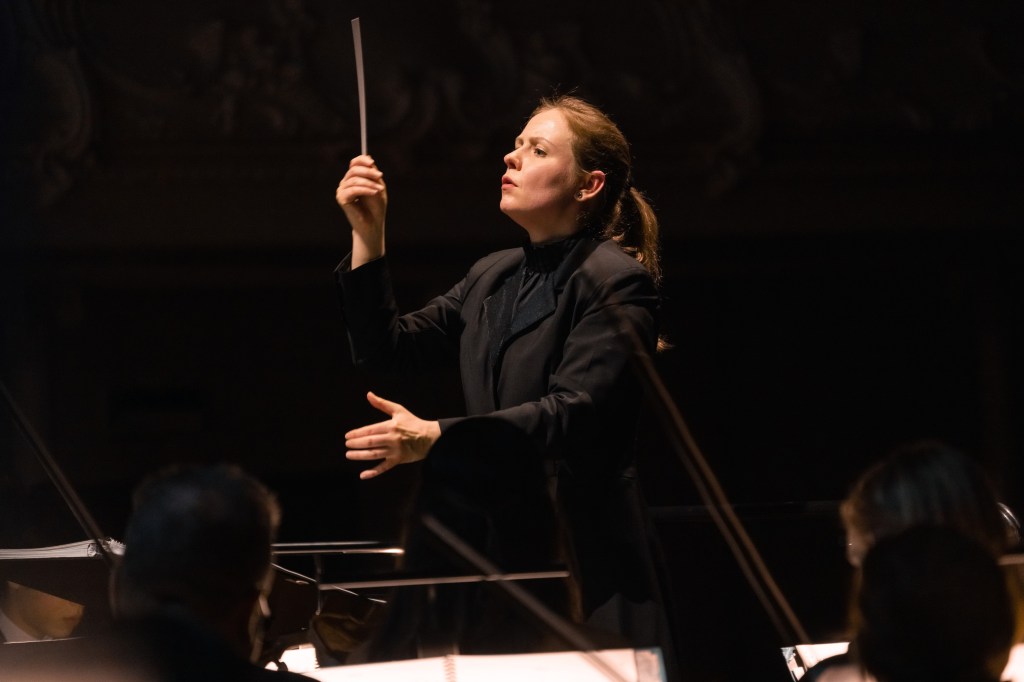
New Zealand Symphony Orchestra Artistic Advisor and Principal Conductor Gemma New leads the Orchestra for performances of Gustav Mahler’s colossal Third Symphony in Te Whanganui-a-Tara Wellington on 31 March and Tāmaki Makaurau Auckland on 1 April.
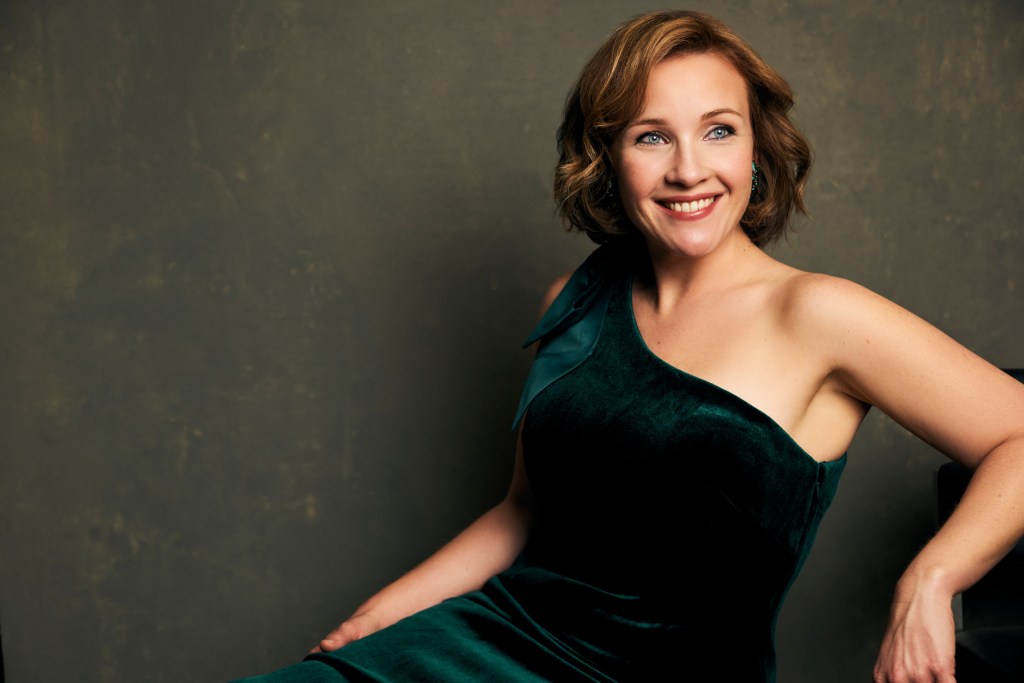
Sasha Cooke Image: Stephanie Gerard
The NZSO is joined by American mezzo-soprano and two-time Grammy Award winner Sasha Cooke and 80-strong women and children’s choirs to present Mahler’s masterpiece on a grand scale.
Cooke, a Grammy Award nominee this year for an album of songs inspired by the Covid-19 pandemic, frequently performs Mahler with the world’s leading orchestras. Praised by The New York Times and Opera News, she last sang with the NZSO in 2018 to critical acclaim. The New Zealand Herald hailed Cooke as “one of the standout performances of the year” and The Dominion Post described the mezzo-soprano as “unforgettable”.
“Mahler explores all sides of the human condition informed by his own personal struggles, and in the end, you are lifted off your feet,” Cooke has said of singing Mahler.
“He brings great meaning to life, and more importantly, accepts that without the bad there would not be the good.”
Mahler 3 is Gemma New’s first concerts with the NZSO in 2023. New is in demand by leading orchestras around the world. Since the start of 2023 her conducting engagements have included the Bern Symphony Orchestra, BBC Symphony Orchestra, Royal Scottish National Orchestra, Italy’s Orchestra Della Toscana and RTÉ National Symphony Orchestra in Dublin.
One of the many highlights of Mahler’s Third Symphony are the choirs. Voices New Zealand Chamber Choir performs in both concerts and is joined by Wellington Young Voices and
Choristers of Wellington Cathedral of St Paul in Wellington and Westlake Cygnets choir in Auckland.
A BBC poll last year of 150 leading conductors ranked Mahler’s Third Symphony as the 10th greatest symphony of all time. With the NZSO performing for over 90 minutes, Mahler’s Third Symphony is his longest and considered one of his greatest symphonic achievements.
Once described by Mahler as a “gigantic musical poem”, Symphony No. 3 offers one of the most complete musical statements of the Austrian composer’s world view. Each movement represents an element in the universe – plants, animals, people, angels – culminating in a stunning finale. It was Mahler who said: “A symphony must be like the world. It must contain everything.”
Harry Casey (Edward Richmond), Denise Snoad (Margaret Richmond), Geoff Snell (William Richmond), Elizabeth Tierney (Daphne Morris), Joseph Wycoff (Rex Morris), and Frank Taylor (Johnson Manukau)
Rangitoto
Written and directed by Geoffrey Clendon
Turning Tide Theatre Company
Pumphouse Theatre, Takapuna, Until 5 March 2023
Artworks Theatre, Waiheke, 9 – 12 March
A Social History Snapshot
Rangitoto Island is the youngest of Auckland’s volcanoes, settling into its present form only about 800 years ago. Although featuring in some Maori mythology, this Gulf and harbour lookout appears to have never enjoyed early settlement largely because of its rocky and inhospitable landscape and absence of natural resources. In the years following WW1, it became an increasingly popular Auckland ‘weekend getaway’, accessed mainly by day-trippers using a range of yachts and small boats.
Permanent residents were minimal, but nearly 150 baches had been built by the mid-1930s, each on tiny packets of land leased from the then Devonport Borough Council which had declared the island a Domain in 1890. Built by families, using the scarce resources of the Depression era, these structures demonstrated the ‘kiwi-can-do’, DIY attitudes of the times. Water was gathered from roofs, elaborate and unusual arrangements were devised for storing food and cooking was usually done outside over open fires. Fishing was virtually the only local food source and watersports and tramping were the prime leisure activities. There were of course no motor vehicles at all but communal facilities such as paths, a swimming pool, community hall and tennis courts had appeared.
In doing so, Rangitoto had grown its own sense of community. In fact ‘community’ as we understand the word today, was something of an understatement for the Rangitoto lifestyle of the period. Everyone knew everyone, social traditions and patterns had become established and an ‘over-at-the-bach’ lifestyle had become firmly established. It was a very small and tightly focussed community.
However, as the Great Depression reached its peak, Rangitoto’s baches were also starting to become popular amongst those who were doing well and even benefitting some from the economic malaise. The island had been ‘discovered’. But the baches and the very community they generated were also becoming more and more difficult to sustain for those suffering from the Depression and who were not doing so well. Even with an annual leasehold of only £5/year.
This is the background to Geoffrey Clendon’s new play Rangitoto, a snapshot of a part of Auckland’s social heritage and the first of a trilogy of plays he plans. All set in the Gulf. In 1932.
The drama arises out of the inevitable clash between the customs, traditions and outlooks of those who were largely developing this unique island community and those of moneyed newcomers who did not necessarily share them.
In this play the Morris family have built and maintained a bach of their own over many years and are spending Christmas and New Year there together with a family friend who now lives in Hamilton. They interact with a former British actor, still suffering WW1 anguish, who lives as an irascible hermit on the island. But their efforts to relax and celebrate in time-honoured fashion are interrupted by two unexpected intrusions.
Father Rex (played with some assuredness, especially when becoming emotional) by Joseph Wycoff reveals that he has lost his job and that it may no longer be possible to retain the family bach. His wife Daphne (Elizabeth Tierney, an excellent casting) shares his concerns although both also care about the future of their 18-year-old daughter Lucy, played with a delightful sense of maturing adolescence by Isla Sangl.
Their already tense holiday idyll however, is further interrupted by the arrival of the Richmonds who are keen to introduce some new ideas to the island. To modernise things. To develop them. And to change them.
Geoff Snell (an excellent William) dithers and flaps about and tries to accommodate everyone and everything without losing sight of his ultimate goals. One of those is his recently acquired ‘gold-digger’ wife Margaret (Denise Snoad – a comic figure until she goes off the deep end after too much champers) and the other is his eminently two-dimensional son Edward (Harry Casey) who fruitlessly pursues Lucy but looks gorgeous as a French Lieutenant.
Offsetting them all, and playing the role of catalyst, is the hermit Clive (Joseph Rye) riven with what we would today call PTSD. His is a great opportunity to display extreme acting talents. And Rye certainly has those.
I’m not at all sure what Dave (Johnson Manukau) is doing in the play in the first place but he provides some deliciously discordant harmonica and generates occasional tension with Edward as both compete for Lucy’s attentions.
On balance, Rangitoto is a fascinating social history snapshot. The language and lifestyle of the 1930s are extremely well captured and Mr Clendon’s words even managed to make me wince a couple of times early in the play. But I quickly realised these were coming out of the mouths of characters born back in the 1870s or 80s and, in that respect, Mr Clendon has done very well indeed.
Rangitoto captures the heartache and deprivations behind life on the island. And it points to the future of beachside real estate in New Zealand in the years ahead. Indeed, it provides a great opportunity for a dramatic play that pits one concept (tradition) against its antithesis (development), until reaching eventual resolution. Especially, in Rangitoto’s case, as that eventual resolution saw no more baches built after 1937 and even saw some demolished. The remaining 30 or so were eventually recognised as part of New Zealand’s built heritage by Unesco many years later.
Mr Clendon’s dialogue is both period-specific and impeccable and is unquestionably important. I haven’t heard the word ‘shickered’ used for a very, very long time – and delighted in it. However, as a director he has chosen to focus on the conflict only implicitly and to highlight the comic elements of his play instead. These comedic interactions overrun the potential opportunities for capitalising on the conflict that his context so generously provides. Hence painting with a broad brush and providing comparisons with that conflict over beachside real estate in bigger picture is missing. That is a pity.
Altered Impressions: an exhibition of works on paper by Jill Carter-Hansen
Glass Artists Gallery, Glebe,
Reviewed by Penelope Lee
Jill Carter-Hansen is a New Zealand-born illustrator, author and filmmaker based in Sydney, Australia. Some of her artwork is held in the permanent collection of Te Papa and the Auckland Art Gallery.
The story-teller poet in me demands metaphors and unexpected endings. Jill Carter-Hansen
Jill Carter-Hansen is the quintessential combined media artist whose talent is the artful balance of the symbiotic with the specific. While her poetry, photography, film-making, printmaking and artist’s books are all closely interrelated in their content, it is her strength of accomplishment in each individual medium that delivers such unique and beautifully resolved works of art. This confluence of verbal and visual expression lies at the heart of Carter-Hansen’s most recent exhibition, Altered Impressions.
Throughout my life poetry accompanied the visual works I made, whether in sound or image… but poetry none-the-less.1
Indeed, first impressions of these skilfully executed black and white images, soon dissolve into an awareness of deeper meaning, an altered point of view. Through poetic metaphor, symbolism and analogy these works also convey, the sometimes difficult, memories, dreams and reflections of the human condition; the struggles of a single mother; the burdens of the immigrant; the human consequences of war. Her powerful renderings of the human figure, provocative horses, symbolic objects, and surreal landscapes explore, not only notions of terror, despair and loss, but simultaneously, defiance, liberation and triumph. Carter-Hansen evokes these emotions through the elevated contrast of light and shade. Her profound understanding of the way in which chiaroscuro can bring deep meaning to an image, is clearly demonstrated throughout her work. Recognising the impact that intense contrasts of light and dark engender in a work of art, she relates how,
The work of Caravaggio impressed me. Shadow and light express so much, regardless of techniques. Darkness appears richer with light working through to define shape and space.2
It is this richness of light and shade that brings such a powerful sense of drama and mystery to her images. But as visually engaging as these images are, they also resonate with a primordial part of our human inheritance, the archetypal shadow. Carl Jung proposes that our perceived negative human emotions and impulses, like sexual lust, power strivings, selfishness, greed, envy, anger or rage, are denied expression due to their incompatibility with social attitudes. These ‘negative’ impulses are consequently relegated to the darkness of the unconscious.3 To avoid confronting this inner darkness, we often project rejected motives onto others, rather than admit to these dark aspects of ourselves. Group projection of the collective shadow commonly occurs in contentious conflicts, where the outsider or perceived adversary is dehumanised, demonised and made the scapegoat of rejected aspects of our social consciousness.3
Often it is artists who shine a light into this darkness, for when we approach our humanity creatively, we are more able to comprehend the shadow allegorically, and so integrate it into our understanding of ourselves. Carter-Hansen is an artist who ventures unflinchingly into the shadow that many of us find difficult to confront. Yet it is also the way she works with light that makes her images so compelling. Not just the visual light within the composition of the image but, additionally, the poetic light of insight. Captured within each image is a moment of time that contains other moments, other memories and messages, resonating with our collective consciousness beyond the confines of the frame. John Tarrant remarks on our need to balance light and shade when he notes,
We crave not only what the soul craves – depth, darkness, embodiment, the poetry of turmoil in this world… but also the cravings of the spirit – for light, purity, birth-and-death- lessness, the dazzle of true insight.4
Jill Carter-Hansen, And I Entered
True insight is often gained through intense, personal experience and in her animated award winning films, The Messenger, Song of the Immigrant Bride and Eclipse, Carter-Hansen’s insights into her own concerns, as well as those of others, are made poignantly evident. Acknowledged as one of Heather Kai Smith’s, Great Women Animators,5 she is driven by a desire to express the hidden qualities of her subjects. In The Messenger we encounter the inner goodness in the souls of two adversaries. Visual metaphors make visceral the fear of the unknown and the challenges of an alien environment in Song of the Immigrant Bride, and the concept of transformation, a reoccurring theme in her work, is eloquently portrayed in Eclipse. These animated films are, as Marie Geissler notes,
dramatic with rich use of images emerging from darkness… edgy and evocative, where the physical elements depicted – whether objects or figures – symbolise (through the juxtaposition of light and darkness), the Invisible.5
Carter-Hansen’s perceptive awareness of the dilemmas of humanity, also permeates her works on paper. Throughout her career she produced a number graphic works in support of environmental and peace organisations. One example on exhibition was the poster, Peace is in Your Hands. Made in the shadow of the Vietnam war, it’s arresting image is that of larger-than[1]life hands releasing the delicate form of a dove. The image was made through experimentation with photography or, in her words, by “painting with light,” for she finds “experimenting with techniques is exciting – whatever the medium.”2 This etherial image is breathtaking in its elegant simplicity. Commenting on its creation she explains,
I explored the possibilities of exposing photographic paper through various thicknesses of tissue paper, to form a dove-like image.2
Light shining through layers of tissue paper reminds us in our own time that peace is fragile and must be handled with care. Just as the art of image creation must be handled with care. The potency of Carter-Hansen’s work is by virtue of her ability to skilfully synthesise drawing, printmaking and collage into coherent and thought provoking images, as seen in her Equestrian Series. Here, seamless blending of media assures that the subject of the image is foremost in our minds. Out of the darkness, stoic, statue-like horses emerge as powerful, silent sentinels commanding the centre of attention while anchoring the objects around them. These are the great horses of the Middle Ages, a statement of strength and endurance. A woman balances on one horse’s back, a man’s head blows a breath of air across another’s eyes, a hand reaches out to touch the back of yet another. Skilful drawing assures their convincing form while a black and white colour scheme, interrupted with slashes of red (a curtain parting, a ‘witches hat’ cone, a stain on a horses rump) suggests a subliminal narrative. It is not surprising that this artist’s approach to image making is also often subliminal,
Printmaking can be a seductive process… Sometimes (with eyes closed) I draw into dark ink applied to the “plate” surface, prior to printing. The resulting unexpected discoveries can then be taken further to reveal and inspire – often suggesting a sudden undoing of any preconceived idea.1
However, a conscious and diligent approach is discernible in the hand coloured etching, Night Horse. A red moon and cone float in the darkness behind a dapple grey mare. Careful consideration of figure and ground, the placement of objects and use of light, bring an unusual quietness to this print. There is much attention to detail – the softness of the horses coat, the sharpness of fork prongs, the shadow of another horse barely visible in the background. A woman’s figure, a cone, a moon, a fork. These are images pregnant with meaning. Left to us to interpret as we may, it is the stories her images conjure up in our own imagination that makes Carter-Hansen’s images so compelling.
My narratives can be interpreted as both open-ended or defined. Multiple meanings intrigue me – the use of a word or symbol, misplaced or mismatched, suggest alternative interpretations.1
The solid, heavy horses in these images, are in stark contrast to the lighter, active horses in three smaller etchings, Intrusion/Invasion, Star Eaters and Knowledge in a Place of Ignorance. In the first print, Intrusion/Invasion, a wild black horse gallops across a blood red background. With nostrils flaring, mane flying and hooves having left the ground, this mythical creature is in full flight across a blazing sky. In the second print, Star Eaters, a chimerical horse and his fleeing dog companion, also take to the heavens, soaring “up and onwards into the unknown destiny of space.”6 This particular work testifies to the importance of symbiosis in Carter-Hansen’s work, for this image echoes the words of her short story, The Star Eaters. But as reiterative as this image might seem, perhaps this is also an image that alludes to a natural need for freedom shared between women and horses.7
Having grown up riding horses of her own, Carter-Hansen has a deep respect, intimate knowledge and genuine understanding of their innate qualities. While this may be a motivating force for her use of the horse as a means of visual expression, just as significantly, she is also able to draw on its metaphoric meaning. For the archetypal horse,
…carries many characteristics of the person as well, such as fertility, fidelity, sensitivity, strength, selfishness, anger, stubbornness, stupidity and vanity. In psychology it can be the unconscious, subhuman side… Types of horses: two – intellect, especially when harnessed together; winged – poetic relations; grazing – peace.8
Visual symbolism is a highly effective messenger, for often more can be deduced from a single image than a given paragraph of words.8 A prancing horse is surrounded by seemingly alchemical symbols in the work, Knowledge in a Place of Ignorance. There is a poetic relationship between the image we see and the title we read. Do these symbols represent ignorance or knowledge? Does the horse connote wisdom or apathy? A shadow falls beneath the horse where only one hoof makes contact with the earth. The horse’s head is raised to the sky as if he too might take flight “into the unknown destiny of space.”6 Pale grey and yellow wash over the etched surface, imbuing the image with a softness and lightness of spirit, perhaps expressing those “mysteries of life that cannot be quantified.”2 We ponder the image and seek to derive meaning, drawing on own past memories and personal imagination.
It is possible that a close relationship with horses has inadvertently instilled Carter-Hansen’s work with a vigour and mastery that could only be achieved through a disciplined dedication to her art. The effort, training, and patience required to work with horses is not unlike the stamina and endurance required of the serious artist. Pia Cuneo, writing about the historical importance of horsemanship, points out that to ride well is a difficult skill to master. Considering the equestrian pursuits of 17th century noblemen, she comments,
It was a noble art, one that called for the possession of a range of qualities: physical, emotional and moral. Apart from requiring good balance, steadiness and courage, riding instilled leadership skills. It also taught humility. Unlike courtiers or underlings, who might flatter the young nobleman, a horse was honest, punishing an error by depositing the rider on the ground.7
Good balance, steadiness, courage and humility are indeed needed if one is to make ones way as a female artist. But as Nikki Savvides has observed, the woman-horse connection in particular also acts symbolically as “a liberating and empowering force from a political, social, and personal perspective.”7 This force is inherently apparent in Carter-Hansen’s Essential Tools series. In her hands, household tools take on new meaning and become, Manipulative Implements for Relationships. In Loosening Up, a garden fork is poised ready to dig the earth amongst a forest of stiff bare trees. A pair of pliers appears to be squeezing blood out of the corner of the print, Gripping Firmly, perhaps inferring a lover that won’t let go. In one of the most forceful images, Striking Squarely, a hammer displays a fiery energy, signifying anger or even, ‘hitting the nail on the head.’ But in the last print in the series, Smoothing Over, a trowel is depicted calmly patching things up. The vigorous and dynamic drawing in these hand-coloured prints, transforms seemingly benign objects into the personification of human emotion. They are delightfully animate images, spontaneous and full of wit, deftly executed and highly emotive, baring the refined hallmarks of Carter-Hansen’s work: confident, dynamic drawing, thoughtfully executed printmaking, a sophisticated sense of composition, discerning sense of colour and a highly intelligent ability to make profound, metaphorical, visual statements.
One final work that epitomises Carter-Hansen’s ability to synthesise media, word and image into a unified work of art, is her artist’s book, Passages. Reading an artist’s book is an interactive experience, involving all our physical senses. The integration of text and image, choice of media and consideration of the physical structure of the book, communicates meaning in a way that is specific to the artist’s book alone. Unlike the viewing of a painting or print, artists’ books allow an intimate, corporeal experience of art through our sense of touch, smell, sound and time, as well as vision. Sequence, repetition, juxtaposition and the mystery of concealment and revelation, all contribute to the uniqueness of this art form. On display in the gallery, one was reluctant to take Passages down from its shelf and read its contents. Galleries are for viewing art, not handling it. But books are meant to be handled and an encounter with an artist’s book is not unlike the experience of opening a gift. At first the contents are concealed but once opened, a world unfolds and “transition and progression through the journey”10 begins. In the introduction to Passages, we hear how,
Through the limitless passages of life, I’ve discovered image and words that rearranged me. Using combined mediums of print, collage, drawing and text, Passages, slowly unfolded.10
A hinged wooden box opening like pages of a book, acts as the cover of Passages. When opened, each side of the cover holds a concertina folded book; one encased in the front cover of the box, one in the back cover; one black, the other white. On taking the first book out of its niche, fine red leather lacing must be untied before proceeding to read its contents. “Passages begins with a journey, traveling to places unfamiliar”10 it tells us. Rich, complex collaged prints consist of Carter-Hansen’s symbolic imagery of a bird making its way through a surreal abstract landscape. These images are augmented with silver, hand-written, self-authored text. As the book unfolds, the narrative flows across its linear format, the complexity of its imagery enmeshed with its prose, one inseparable from the other. She writes
When we look again, travelling with the light of stars, to a time when legendary creatures were admitted to the mazes of our minds, by chance we found a point where something stirred, startling us in its discovery as we searched … for a place of shelter…an encampment… and warmth in… an unknown place.10
It is a work that requires concentrated engagement, insisting that we dwell a little longer, ponder meaning, reread and start over, before coming to a close. Turkish writer, Orhan Pamuk, acknowledging the unique experience of reading a physical book, writes,
…if you have a book in your hand, no matter how complex or difficult… when you have finished it, you can, if you wish, go back to the beginning, read it again, and thus understand that which is difficult and, with it, understand life as well.11
In the art of Carter-Hansen, we encounter the richness of a life that encompasses the light with the dark, humour with seriousness and art with politics. Her creative endeavours affect us all on some level and even possibly alter our impression of the world we all share. A working artist who sees this world through uniquely gifted eyes, she asks that we too might consider her priorities and join her in her vision. For as Mary Oliver so astutely observes, “those who are the world’s working artists are not trying to help the world go around, but forward… Which is something altogether different from the ordinary.”12 Jill Carter-Hansen’s life work is certainly ‘altogether different from the ordinary.’ Her intelligent use of metaphor and allegory, outstanding drawing skills, consummate handling of technique and deep understanding of the human condition, offer us a gateway into the unpredictable, often unwanted, mysterious heights and depths of our humanity. In the exhibition, Altered Impressions, we are privileged with an opportunity to alter our own impression of what it means to be an artist, what it means to be human.
The older I get the more I realise the less I know, except that, ’mystery’ is all.
Jill Carter-Hansen Penelope Lee Graphic Artist and Educator 2018
Conductor Giordano Bellincampi Violin Geneva Lewis
KorngoldOverture to a Drama Barber Violin Concerto Dvořák Symphony No.9 ‘From the New World’
Auckland Town Hall
February 23
Reviewed by John Daly-Peoples
The Auckland Philharmonia Orchestra opened the year with its first major concert “New Worlds” playing three works including Dvořák’s Symphony No.9 ‘From the New World’ which the major work on the programme. The highlight of the evening though was the performance of the young violist, Geneva Lewis playing Barber’s Violin Concerto.
In her sea-foam gown she looked like a Greek caryatid and that classical bearing emphasised the classical heart of the work. Her brilliant cadences, silky tones and careful phrasing were apparent from the start, as she connected with the orchestra.
There was an elegance to her playing as she floated above the sounds of the orchestra and then she would briefly become part of the orchestra, all the time making the listener aware of the developing musical line and the evolving magic of the work.
Throughout she displayed a total commitment to the music. At times she appeared to be in a trance as though captured by the music and then she would become animated, ferociously attacking the violin while at other times it was as though she were interrogating the music. When not playing she was attentive to and became engrossed in the sounds of the orchestra, as though taking inspiration from their playing.
Erich Korngold s “Overture to a Drama” which opened the programme is not actually an overture to a specific drama but it can be seen as an introduction to his drama “Die Tote Stadt” (The Dead City) which the orchestra will be playing later in the year for the Trusts Community Opera in Concert.
The overture was written by the composer when he was only 14, ten years before the opera and contains much of the emotional drama to be found in that major work which was subsequently banned along with his other music by Nazi Germany.
Korngold was a serious composer but it was his music for many of the great Hollywood films where he made his mark and the overture shows that, demonstrating his ability to create a sense of action and excitement. Waves of sound open the work with a its slightly menacing theme and the composer adds a mix of the lively and lyrical throughout the piece. He manages to create all the components of what the nameless drama might contain, creating visually and emotionally rich passages.
In the final section of the work, the brooding main theme lurks beneath the light-hearted Viennese dance tunes, and conductor Bellincampi ensured the orchestra captured that tension brilliantly.
Giordano Bellincampi
In 1893 the New York Evening Post wrote of Dvorak Symphony No.9 at its premiere in New York that “Anyone who heard it could not deny that it is the greatest symphonic work ever composed in this country.”
The work can be seen as the first great orchestral work composed in and about America even if it was from a European perspective. The symphony is a diary of Dvorak’s time in America a journey of musical, emotional and spiritual discovery.
There is some dispute over how much Dvorak based his major theme on the negro spiritual “Goin Home” or a piece by written by the black composer Harry T. Burleigh who studied with Dvorak when he was in America.
Whatever the truth of the matter is, it sounds as though he was inspired by what he encountered in America. Whether or not he heard the indigenous music saw the Great Plains or the amazing flora and fauna, they are all there in the symphony.
From the very opening, the work sounds as though it is an encounter with a new physical and musical landscapes, and a new way of seeing and expressing. It is these notions about a new way of seeing and hearing which Bellincampi stressed as he spurred the orchestra on when creating the musical imagery of towering mountains, wide vistas and massive industry to then fade to tranquil, idyllic scenes.
A number of the galleries exhibiting at the Aotearoa Art Fair opening next week (March 2 – 5) will feature solo shows but most will exhibit a several of their exhibiting artists. These galleries will show the range of work and the variety of materials used by contemporary artists as well as showing the extent of ideas being investigated.
Among these galleries are Sanderson Gallery Trish Clark Gallery and Bartley & Company Art
Sanderson Galley is showing three different approaches to art making – a multi-disiplinary artist, a photo image artist and an artist focussed on drawing.
JOSEPHINE CACHEMAILLE
Josephine Cachemaille Four-to-the-floor, 2022, fired clay, 220mm x 80mm x 200mm, $1,100
‘Cachemaille’s work has this active and charged quality, as the artist sees herself in ‘collaboration’ with her objects, materials, and media, “It’s not ‘me’ ”, she says, “it is ‘US’”. Cachemaille draws on philosopher Jane Bennett’s concept of “material vibrancy”. This informs her artmaking strategies; by intentionally anthropomorphising objects she aims to in- crease our awareness of what they are contributing.’ Four-to-the- floor references the structure of disco and house beats, which traditionally use four beats to a bar in their construction. Cachemaille describes the experience of watching 90s DJ’s stomping in time with the beat while mixing their songs as inspiration for the work.
Kate van der Drift Waning Cresent to Waxing Gibbous, June, -37.429838, 175.510886, 2022, Chromogenic Photograph from 4×5” Negative, edition of 5 + 2AP, 1423mm x 1100mm, framed, $5,850
KATE VAN DER DRIFT
Kate van der Drift’s site-specific camera-less ‘river exposures’ are created by placing unexposed colour negatives in the Piako river for a period between two and four weeks. While the large format film rests in a light-proof container in the river, a durational augmentation occurs, created by water flowing past and interacting with the film’s chemical compounds. After weeks of comingling with cyanobacteria, agricultural waste, salt and freshwater currents, each field recording is transported back to the darkroom. Here the intangible and the toxic is translated by van der Drift’s hand from negative film to contact print; exposed to light, enlarged and transformed into a dazzling chromatic image.
LIAM GERRARD
Liam Gerrard Tutaritari Rd, Hahei, 2022, charcoal and pastel on paper, 710mm x 550mm, $5,750
Liam Gerrard is a painter whose practice explores the dichotomy between life and death, and the fragility of existence. The artist has most recently explored these themes through the depiction of plants and flowers, or other aspects of life that one can find in a rural or urban garden. Gerrard has become known for his depictions of the hydrangea (Hydrangea macrophylla) in various states of blossom and decay.
Bartley & Company Art is presenting an exhibition of four artists whose work looks to the past to look to the future, in referencing the famous Māori proverb.
The intentions of these four distinctly different artists are both political and poetic. They speak across diverse media to the importance of history and whakapapa in creating contemporary beliefs, thinking and meaning. All share an interest in whakapapa as a primary means of making sense of the world and their connection to self, others and the wider environment.
Entangled histories, the ancient and contemporary, and the place of place play out in all their work
Brett Graham one of the country’s most eminent sculptors examines indigenous histories; Lonnie Hutchinson addresses whakapapa and hybridity. Cora-Allan Lafaiki Twiss takes customary traditions into contemporary art. Roger Mortimer combines foundational beliefs of the Western world with a deep respect for tangata whenua.
BRETT GRAHAM
Brett Graham, Manawanui, 2022, hand carved American ash, lacquer, wax 1345 diameter x 370mm depth $75,000
Brett Graham creates conceptually rich, formally strong, beautifully crafted large sculptures that are grounded in Te Ao Māori while engaging with the best of 20th century Western sculptural traditions.
Across sculpture, drawing, prints and moving image works, he explore indigenous histories, politics and philosophies. His work, which has great presence, is imbued with poetry and metaphor. Materially and conceptually, he brings together traditional and contemporary to speak to the current moment. The local is combined with universal and topical issues on the shaping of historical narratives in colonised countries, the Anthropocene and role of monuments in the public domain. While works are often abstract, titles provide a way into the complex political, historical and cultural ideas embodied in his forms.
His large hand-carved spherical timber shields, here for example, reference the history of Parihaka and the leadership of the great pacifist leader Te Whiti. Manawanui, is the Māori word for forbearance which implies tolerance, patience, restraint. Manawanui was Te Whiti’s response to Government intervention at Parihaka. In these works Graham appears to suggests forbearance as a strategy for addressing differences and Aceldama, which references betrayal, as a reminder that differences in human values and beliefs have always existed.
Graham (Ngāti Koroki Kahukura) has a doctorate in Fine Arts from the University of Auckland and an MFA from the University of Hawaii. His work has been included in exhibitions and biennales all over the world and is in public and private collections around the world. He has also produced several major public artworks throughout New Zealand and undertaken artist residencies in Europe, the United States and across the Pacific.
His 2020-23 “career-defining” solo exhibition Tai Moana Tai Tangata is considered one of the most powerful and historically significant solo exhibitions ever to be staged in New Zealand. Large monumental sculptures explore the legacy of the New Zealand wars of the mid-19th century.
A few of the last remaining Tai Moana Tai Tangata prints are available.
Lonnie Hutchinson is a much acclaimed artist whose work is concerned primarily with whakapapa.
“Whakapapa,” she says, “accounts for the way in which the earth, sky, oceans, rivers, elements, minerals, plants, animals and all people have been created. All things are linked through whakapapa, as well as having their individual place in the world. Ultimately, it is whakapapa that connects people to each other, to their ancestors, to the land, to the oceans and the universe.”
Hutchinson’s ancestry is Samoan, Māori (Ngāi Tahu, Ngāti Kuri) Scottish and English and this rich mix is brought to play in her circular stainless-steel discs, which operate as heraldic devices or clan shields, to assert and celebrate all aspects of her identity and heritage and the reality of hybridity in the 21st century. The forms themselves allude to round Saxon shields and the cut-out patterns incorporate kōwhawhai and kawakawa leaves referencing rongoā, traditional Māori medicine. The result a distinctive multi-cultural emblem for Aotearoa.
Cut-out works have become Hutchinson’s signature and are made in a variety of media – most prominently heavy black builders paper but also vintage wallpaper, aluminium and steel. The cut-out forms play with shadow, which becomes part of the work. That shadows captures a non-materiality, inherent in whakapapapa and the Samoan notion of ‘va’, which refers to the space between places, things and people, and connections across time.
Hutchinson has been exhibiting nationally and internationally for more than 20 years with work included in significant international exhibitions A survey show, with accompanying catalogue, Black Bird: Lonnie Hutchinson 1997 – 2013, was shown in Auckland and Wellington in 2015. A major solo exhibition was held at Christchurch Art Gallery in 2021. Her work is many significant public and private collections in New Zealand and overseas and she has also produced several major site-specific installations – most prominently for Hamilton Gardens, the Justice Precinct in Christchurch, the Convention Centre in Christchurch and the Britomart in Auckland.
CORA-ALLAN LAFAIKI TWISS
Cora-Allan Lafaiki Twiss, Sighting a snow-capped mountain in the Kaikoura Range as they headed for the open ocean, 2022, Whenua paint, 18ct Lemon bright gold, Kāpia ink on Hiapo, 1300 x 1750mm, $13,000
Landscape and narrative, place and history, traditional and contemporary, tangata whenua and moana, combine in the the contemporary hiapo paintings of Cora-Allan Lafaiki Twiss.
Her practice is built on the foundations of Niuean hiapo barkcloth traditions which she is credited with reviving. In the past two years her contemporary practice has expanded signficantly with the introduction of colour and new iconography drawing on her both her Niuean and Māori (Ngāpuhi, Ngatitumutumu) whakapapa. Significantly, even ground-breakingly, she materially incorporates her Māori heritage into her hand-made Niuean hiapo practice with the use of what she calls, whenua paints made from local clays. Gold leaf is a recent addition to her palette following an artist residency in Wānaka where she responded to that region’s gold-digging history.
Stories of migration and arrival have been a theme of Lafaiki Twiss’s work and here the embedded narrative shifts from the personal to draw on historic accounts of Tupaia the Tahitian navigator on board the HMS Endeavour’s first encounters with Aotearoa in 1769. The works survey markers and artefacts of this historical journey through a Moana lens with her mixed whakapapa we are offered a distinctive wahine response to land seen from the sea – contained in the grid form of a traditional hiapo composition.
Cora-Allan has a Masters in Visual Art and Design from AUT and although early in her career is attracting attention. In 2021, she had artists residencies at Te Whare Hēra Massey University Wellington, and McCahon House”. She was the recipient of an Arts Foundation Springboard Award which came with mentoring by leading New Zealand artist Shane Cotton. In 2020 she won the Creative New Zealand Arts Pasifika Award and received a Arts Foundation Springboard award in 2021. She has exhibited in New Zealand, Australia, Niue, England, France and Canada. A solo exhibition of paintings from the McCahon residency was shown at Te Uru Waitakere Contemporary Gallery in the first half of 2022.
ROGER MORTIMER
Roger Mortimer, Miro, 2023, watercolour, gold dust and acrylic lacquer on canvas, 800 x 700mm, $10,000
Roger Mortimer creates fantastical paintings and jacquard weavings depicting epic and metaphorical stories of navigation and transformation. Charting terrains both recognisable and strange, his map works are visionary topographies in familiar geographies.
The maps are drawn from contemporary marine charts from Aotearoa New Zealand. This setting – complete with Māori place names, indigenous flora, finely rendered compasses or mandala, and contemporary guidance for mariners including depth markings and gold stars marking navigation light – points to the universality and timelessness of way-finding and the human search for meaning. The role of mapping in the colonisation process, with its naming and claiming of territory, is also directly suggested. The replacement of European settlor names on the maps is a political act acknowledging Aotearoa’s prior occupation.
The overlying graphic imagery, in which Mortimer has framed his interests over the past decade, comes from illustrated manuscripts of the 14th century Italian Dante Aligheri’s famous poem, the Divine Comedy, which traces the poet’s journey through hell to purgatory and heaven.
This distinctive juxtaposition of medieval European imagery and local setting provide a rich commentary on this country’s cultural history and led to him being describe as a “contemporary visual mythologist”.
Mortimer has Bachelor of Fine Arts from the University of Auckland, where, although Pākehā, he went through the Te Toi Hou (Māori Arts) programme at the Elam School of Fine Arts. In 2014 he was the Paramount Award Winner in the Wallace Art Awards.The judge described his work as “medieval in appearance and utterly contemporary contemporary in intent”. In 2017, a survey exhibition was shown in public galleries in Wellington and Auckland. His work is a range of collections in New Zealand, Europe and Asia. In 2020, a 160 page book was published on his map paintings-
Trish Clark Gallery
JULIA MORISON
Julia Morison, Segue 14 (2022) $38,000
Trish Clark Gallery will be showing Segue is a new series of large paintings by veteran artist Julia Morison, nationally and internationally renowned for her five-decades-long practice that has seen her innovate consistently across media and subject matter. While previous works utilised materials as diverse as blood, gold, hair and beeswax, these new large-scale paintings are notable for their gestural expressiveness standing in animated counterpoint to their gridded structure, and are exemplary of Morison’s persistent parallel investigations of form over decades. Referencing the internal gridded structure are a number of individual small works that are titled Pivot.
Julia Morison, Quadruple Pivot 1 (2021) $4,200
There are few artists working in New Zealand whose work so aptly suits the descriptor ‘embodied knowledge’, and a potent physical relationship exists between the viewer and the work. Morison’s use of a spectrum of materials has tested our assumptions and associations always eschewing easy categorization with multiple points of formal and symbolic return throughout her oeuvre. She has explored a range of subjects including Euclidian geometry, the legacies of constructivism and formal abstraction, through to interrogation and re-imagining of alchemy, number symbolism and in particular the Jewish mystical tradition called Kabbalah. How she draws upon or extrapolates from source materials is never slavish – the potency and veracity of a sign or symbol is something to be tested and toyed with.
Directed by Lara Macgregor with a fine sense of pacing and drama, the entire action of The Heartbreak Choir is set in a Country Fire Association hall in an Australian country town. It looks as though it’s the 1950’s complete with old Zip water heater, clunky old piano and a wonky wall heater But the Australian and the Australian Aboriginal flags on either side of the stage tell us the play is set today.
Here five women and one man of varying ages and backgrounds get together to share food, give updates about their lives and to rehearse for a future concert.
It’s a small breakaway group from the larger one which rehearses at the local Catholic Church. They are led by choirmaster Barbara (Alison Quigan) and feature a range of voices and personalities. There’s the loudmouthed Mack (Kate Louise Elliott) and her seemingly shy daughter Savannah (Esmay August), the pregnant Zimbabwean Anesu (Munashe Tapfuya), a doctor waiting for her certification to come through, the rich focussed and aggressive Totty (Jodie Dorday) and the local policeman Peter (David Fane).
Quigan as choirmaster Barbara hold the play together linking the various aspects of the choir and their lives together. She is an astute actor within the group as well as providing some brief cameos at the beginning of each act with her opening few minutes of the play a fine silent comic display.
It’s a delightful feel good play about people connecting within small communities and the choir becomes something of a metaphor for wider aspects of human interactions.
There are many brilliant songs / vignettes particularly a Zimbabwean song complete with elaborate African dance moves which initially challenge the flat footed Peter
Interval comes and that feel good feeling seemed to beguile the audience (and this reviewer), looking forward to the possible tiff with the old (Catholic) choir and a sing-off between the two groups.
But no. There has been a unspoken secret about one of the former choir members who has committed suicide and the issues around moral pacifity and religious hypocrisy loom large.
Because of this much of the second part of the play has a darker undertone but it does end with some glorious music.
The company interact brilliantly, moving from their speaking roles to those as choristers with a dance-like quality which is a pleasure to observe. While they make valiant attempts at Australian accents the play feels very much like a portrait of a rural New Zealand settlement filled with people we all know dealing with issues we all face. It’s a play which offers smart dialogue, engaging entertainment and classy acting.
There has been much discussion recently about the need for all political parties to develop comprehensive arts policies. This has been partly as a result of the inadequate performance of Creative New Zealand. While we wait for the government and political parties to come up with some new schemes we might want to look at and even copy the new cultural policy published by the Australian Government. The new National Cultural Policy, “Revive: a place for every story, a story for every place” is a five-year plan to renew and revive Australia’s arts, entertainment and cultural sector, following the most difficult period for the sector in generations. Revive will change the trajectory of the creative sector and deliver new momentum to Australia’s arts, entertainment and cultural sector.
The policy is based on several pillars and principles.
Pillars
Revive is structured around 5 interconnected pillars which set out the Government’s strategic objectives:
First Nations First: Recognising and respecting the crucial place of First Nations stories at the centre of Australia’s arts and culture.
A Place for Every Story: Reflecting the breadth of our stories and the contribution of all Australians as the creators of culture.
Centrality of the Artist: Supporting the artist as worker and celebrating artists as creators.
Strong Cultural Infrastructure: Providing support across the spectrum of institutions which sustain our arts, culture and heritage.
Engaging the Audience: Making sure our stories connect with people at home and abroad.
Principles
Sitting across these pillars are 10 principles that guide the Government’s actions and investments over the next 5 years:
First Nations arts and culture are First Nations led.
All Australians, regardless of language, literacy, geography, age or education, have the opportunity to access and participate in arts and culture.
Artists and arts workers have career structures that are long-term and sustainable, supported by vocational pathways.
Australian students have the opportunity to receive an education that includes culture, creativity, humanities and the arts.
Creative talent is nurtured through fair remuneration, industry standards and safe and inclusive work cultures.
Arts and cultural organisations have representation and leadership that is reflective of contemporary Australia.
Cultural infrastructure, including galleries, libraries, museums, archives and digital collections, is restored, built and maintained.
Australian stories are seen and heard, regardless of platform.
Creative industries and practice are future focused, technology enabled, networked and globally recognised, including through reciprocal exchange, export and cultural diplomacy.
Arts and culture are generative (creating new works and supporting emerging artists) and preservative (protecting heritage and conserving cultural memory).
Key measures
The centrepiece of Revive is the establishment of Creative Australia, which will restore and modernise the Australia Council for the Arts.
With an additional $199 million in funding over 4 years from 2023-24, Creative Australia will provide greater strategic oversight and engagement across the sector.
Within Creative Australia, a dedicated First Nations-led Board will be formed. This is critical to self-determination, supporting the telling of First Nations histories and stories, and to strengthening the capacity of First Nations creative workers.
Recognising creative sector workers as vital contributors to our national culture and economy, Revive will establish a Centre for Arts and Entertainment Workplaces within Creative Australia. It will provide advice on issues of pay, safety, codes of conduct and welfare across the sector.
Creative Australia will also establish Music Australia, to support the Australian music industry to grow, including through strategic initiatives and industry partnerships, research, skills development and export promotion.
Writers Australia will also be established within Creative Australia, to provide direct support to the literature sector from 2025, including for writers and publishers, to grow local and international audiences for Australian books and establish a National Poet Laureate for Australia.
Other key measures within Revive include:
Sharing the national collection by establishing a program of long-term loans of works from the National Gallery of Australia’s collection to regional and suburban cultural institutions across Australia.
Introducing stand-alone legislation to protect First Nations knowledge and cultural expressions, including to address the harm caused by fake art, merchandise and souvenirs.
Establishing a First Nations Languages Policy Partnership between first Nations representatives and Australian governments to improve outcomes for First Nations peoples.
Enhancing the Resale Royalty Scheme to provide royalty payments to visual artists, including First Nations artists, from the commercial sale of eligible works internationally.
Developing an Arts and Disability Associated Plan, under Australia’s Disability Strategy 2021-31, to enable people with disability to access and participate fully in the cultural and creative life of Australia.
Increasing support for regional arts and culture through an increase to the Regional Arts Fund.
Supporting specialist in-school arts education programs that directly draw from cultural and creative sector expertise, focusing on areas of identified disadvantage.
Modernising and extending the Public and Educational Lending Right Schemes to include digital content under the schemes.
Providing pilot funding to support access to art and music therapy programs and generate valuable data on the broader community impact of, and demand for, these services.
The Art Fair industry has seen a huge growth over the last few years and post Covid there has been a further resurgence. This has largely been part of a response by dealer galleries to the impact of the auction house / resale market. This has seen dealers and the auction houses in direct competition both for the art and for buyers.
Even in New Zealand the auction houses have bigger marketing budgets and networks along with quality art works on offer which means they are able to attract a select client group for a one or two night “exhibition” of major work accompanied by a well-produced catalogue with in depth articles worthy of a public gallery exhibition.
Dealer galleries in contrast mainly operate with a limited invitation list and also not much in the way of international connections. With an art fair the dealers are able to reach a wider audience by condsolidating their invitations lists along with wider media reach. They can also offer a novel experience, a limited “buy now” opportunity along with a full programme of events and a lively party scene
The Auckland Art Fair in on next month Thursday March 2–Sunday 5 March at The Cloud on Auckland’s Queens Wharf.
This year there will be forty exhibiting galleries representing more than 180 artists. While most of the galleries are from New Zealand there are several international galleries.
Benjamin Work, Tautahi,
Bergman Gallery which has locations in Rarotonga and Auckland will be showing Pasifika artists including Telly Tuita, Mahiriki Tasngaroa and Benjamin Work.
Redbase Foundation from Yogyakarta will be showing prominent Indonesian contemporary artists, including Lowpop, Agus Wijaya and He Wenjue.
Naarm Melbourne, is presenting Haydens Gallery, STATION and Savage while Michael Bugelli Gallery from Hobart will present a solo booth featuring New Zealand -born sculptor Mike Henson.
Auckland Art Gallery’s latest big exhibition, “Light from Tate: 1700s to Now” which opens later this month should be a crowd pleaser just because it is vibrant, colourful and playful – all the things that most people expect of art. But the exhibition also explores, expands and explains the nature of art itself without being elitist or obscure.
The show comes from London’s Tate Gallery and follows on from the successful exhibition “Light Show at the Auckland Art Gallery nearly ten years ago.
It is a multi-sensory blockbuster exhibition featuring nearly 100 works by celebrated artists working across different media including painting, photography, sculpture, installation, drawing and the moving image.
Concepts of space, vision and light are present in much contemporary art and light has fascinated artists for centuries. However, one of the crucial turning points in the artists’ use of light came with Edison’s invention of the incandescent bulb. But even before then artists were fascinated with ideas about light and the means of depiction.
The exhibition showcases the work of some of history’s most thoughtful and enquiring artists as they grapple with light as a subject and medium such as Josef Albers, John Constable, Tacita Dean, Olafur Eliasson, Dan Flavin, Vilhelm Hammershøi, Wassily Kandinsky, Yayoi Kusama, Liliane Lijn, Claude Monet, Lis Rhodes, Bridget Riley, JMW Turner, James Turrell and Pae White.
Traversing three centuries, this expansive exhibition starts in the 18th century and finishes in the present, exploring light in the outdoors, through the lens, in the city and in the home. The show charts artists throughout time as they search for answers to their moral, spiritual and scientific questions through the subject of light.
J M W Turner, Light and Colour (Goethe’s Theory) – the Morning after the Deluge – Moses Writing the Book of Genesis
The craft of painting is juxtaposed with contemporary installations; Liliane Lijn explores light through solid form alongside JMW Turner while Yayoi Kusama’s The Passing Winter, 2005, immerses viewers in a seemingly infinite expanse of floating, luminescent dots, alongside her forebears, the Impressionists.
Auckland Art Gallery Director Kirsten Lacy says, ‘Light from Tate: 1700s to Now is a sensational exhibition. Every space is a homage to the transformative power of light and to the artists who sought to harness and explore it. Throughout the exhibition, visitors will feel enlivened, inspired and immersed as they experience the sensory and emotional impacts of light.’
Robert Nelson writing in The Age when the show was on in Melbourne last year said it was a “surprising and colourful knockout” show saying that the exhibition took up the theme of light “with the industrial revolution, where artists experimented with atmospheric conditions that limit the visibility of solid forms. The marine pictures of Turner marvellously explore the light-catching calibre of air thick with moisture. Using a combination of transparent glaze layers and opaque scumbles, the artist presents the spray and mists as diaphanous curtains over everything behind them.
John Martin, The Destruction of Pompei and Herculaneum
… Erupting volcanoes also allow Joseph Wright of Derby and John Martin to make imaginary architecture in the sky, balancing explosive fires with tumbling ash and lava”.
“The sublime, the scientific and the sultry are all represented through this focus on light in 19th-century painting. There’s no doubt artists of the industrial age enjoyed painting light, sometimes at the expense of form. The upper half of John Constable’s landscapes are sometimes better painted than the lower half, because he was happier eyeballing the luminous skies than the dirt the light lands upon.”
“As the exhibition progresses, you become aware of a face-off between the art of painting and contemporary installations. The comparisons are often clever and heighten your curiosity to work out what you enjoy responding to.”
“In a room with early-20th-century interiors, a carpet by Philippe Parreno 6.00 PM 2000-6 registers the pattern on the floor that might be made by sunlight coming through a window. But you’ll notice that all the edges are equally sharp, whereas a similar motif that appears in Vilhelm Hammershoi’s painting Interior, Sunlight on the Floor of 1906 correctly shows the edges further from the window as a little fuzzier than those close to the window”.
Bridget Riley, Netaraja
“You cannot beat these painters at their own game. But against that, no one would ever worry that the graphic registration of shadows isn’t optically rigorous. Besides, it’s fun to see the rays from a window embedded in the carpet when the window doesn’t exist”.
“In contrast to the earnest character of the paintings, the installations seem playful. Yayoi Kusama’s silver cube The Passing Winter of 2005 has small circular windows that seem to open up an infinity of mirrored discs. Olafur Eliasson’s sculpture Stardust Particle from 2014 is a spherical frame with internal skins that dangles in a beam of light. The reflections are almost random, in the same way that we might come across tiny bits of burning suns (stardust) that inspired the shape”.