Thomas de Mallet Burgess with Joanna Foote and Bridget Costello at Wynyard Wharf
Opera on the Harbour “Carousel”
New Zealand Opera
Wynyard Wharf
February 11 – 14
John Daly-Peoples
Next year’s Valentine’s Weekend a concert version of Rodgers & Hammerstein’s classic musical “Carousel” will be performed on the water at Wynyard Wharf.
This will see New Zealand Opera joining companies around the world which have been experimenting with new ways to attract audiences, expanding their repertoires and staging works in novel environments.
One of the major developments which has occurred over the past few years has been the presentation of musicals such as “My Fair Lady”, “South Pacific” and “Phantom of the Opera” sharing the main stage with traditional opera.
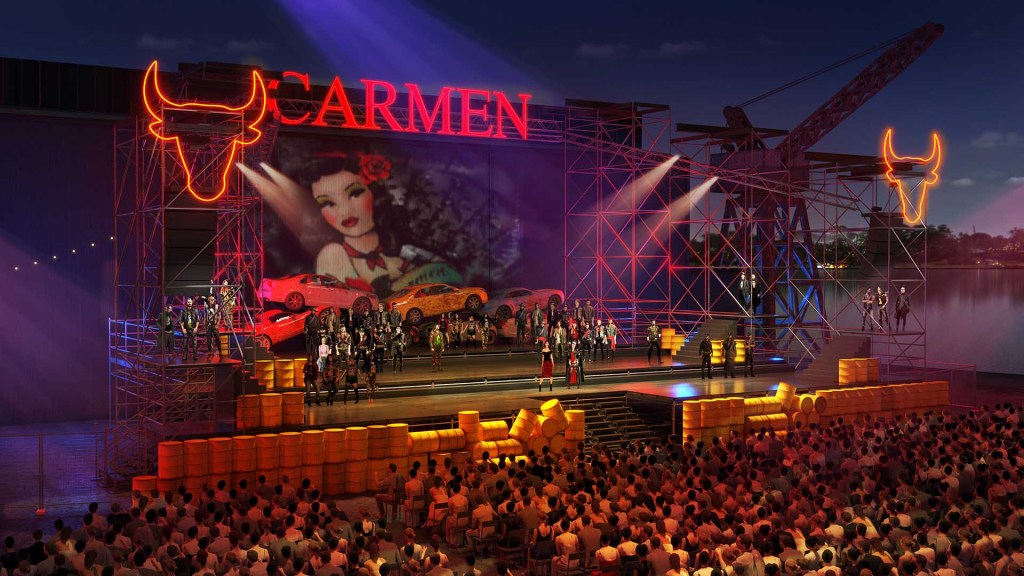
Carmen at the Bregenz Festival
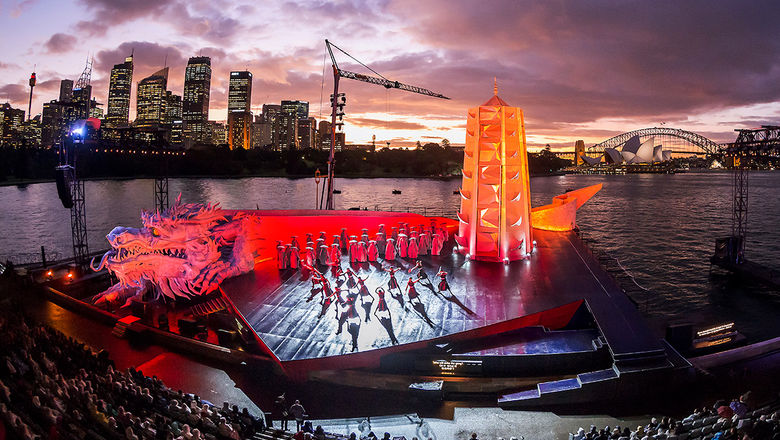
Another innovation has been the staging of productions on the water. The annual Bregenz Festival which has been going since 1946 features a floating stage on the shores of Lake Constance. It has a 7,000-seat open-air ampitheatre and features extravagantly original and innovative productions.
Opera Australia has also mounted successful programmes with the Handa Opera Seasons on Sydney Harbour which has been running for ten years. They have staged many of the classic opera such as Aida, Turandot and Carmen.
In 2019 they had their most successful season with “West Side Story” which attracted an audience of 65,000.
Handa Opera’s “West Side Story”
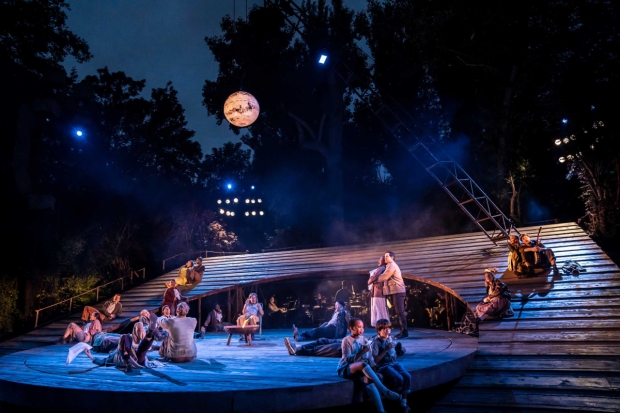
NZ Opera will be hoping their new venture will help kick start the company after a couple of bumpy years. The popular work has just finished a season at the Regent’s Park Open Air theatre in London where the production exposed thegender politics and misogyny of the work to emphasise the current stare of domestic violence in the UK.
“Carousel” at Regents Park
NZ Opera General Director Thomas de Mallet Burgess says, “This will be a spectacular experience for audiences – a first-of-its-kind opera event on Waitematā Harbour with a purpose-built stage and seating area. Broadway will meet opera in a world-class outdoor setting at the height of summer’s long, warm evenings, introducing what we expect will become a favourite annual show in the Auckland summer events calendar.”
“Carousel” was the second musical composed by Rodgers & Hammerstein and while the work seemingly has at its heart the traditional American fair it was actually an adaptation of Hungarian Ferenc Molnar’s 1909 play “Liliom” with its Budapest setting transferred to Maine.
The story tells of carnival barker Billy Bigelow and mill worker Julie Jordan who fall in love. After their marriage ends things go downhill driving Billy to commit crimes and he falls in with con-man Jigger Craigin. He gets caught in the midst of an armed robbery and takes his own life. Billy is allowed to return to earth for one day 15 years later where he encounters Louise, the lonely daughter he never knew.
The show which Richard Rodgers said was his favourite of all his musicals and which TIME magazine called “the best musical of the 20th century”, has some notable songs including “if i Loved You”, “June Is Bustin’ Out All Over”, This Was a Real Nice Clambake” and “You’ll Never Walk Alone”.
The cast will include Christian Thurston as Billy, Joanna Foote as Julia Jordan and Bridget Costello as Carrie Pipperidge.
The production will be directed by Jacqueline Coats and conducted by Paul Christ with costumes designed by Elizbeth Whiting.
Opera Australia has announced its 2022 season which will offer New Zealand audiences the opportunity to see some world class opera productions without having to get to Europe.
Hopefully fully vaccinated, Covid passport carrying New Zealanders will even be able to make it to one of the company’s first productions which will open on New Year’s Eve. Audiences will have a choice of two major production, one at the Sydney Opera House, the other on Cockatoo island in Sydney Harbour.
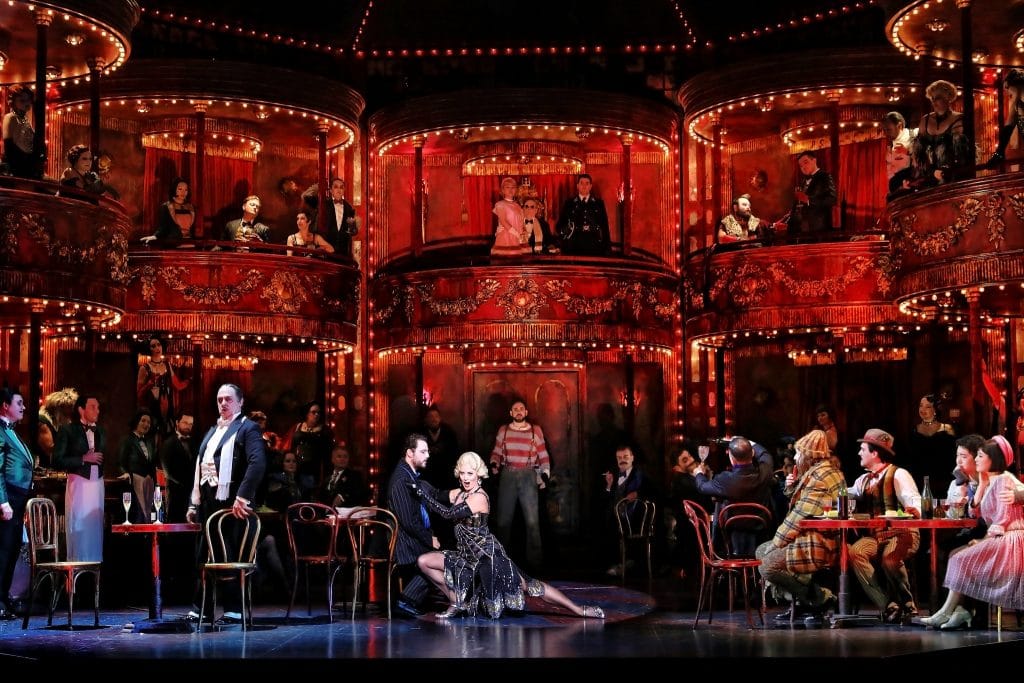
At Sydney Opera House’s Joan Sutherland Theatre will be a revival of Gale Edwards’s production of Puccini’s La Boheme set in 1930s Germany which first premiered in 2011. Tickets are from $250 as well as the pre-performance dinner at $399 or entry to the post performance Midnight Party ($349). There is also the Platinum Package at $1,422 which includes the performance, Pre-performance dinner and midnight party.
The really big show will be the Opera Gala on Cockatoo Island which will feature some of the country’s finest performers for a two-hour concert of opera classics with singers including Stacey Alleaume, Natalie Aroyan, Chanyang Choi, Diego Torre and Luke Gabbedy. Tickets include pre-booked ferry transfers and a ticket to the performance with the option of adding a 3-course pre-performance dinner ($499), interval drinks and the post-show midnight party ($419).
With both shows the interval will be timed to coincide with the 9pm fireworks display on Sydney Harbour Bridge.
The La Boheme production will feature Italian soprano Valeria Sepe playing Mimi with Australian-Chinese tenor Kang Wang as Rodolfo.
In January Graeme Murphy’s production of Puccini’s Turandot will feature American soprano Lise Lindstrom sharing the role with Australian rising star Anna-Louise Cole, alongside tenor Yonghoon Lee and soprano Karah Son, both from South Korea.
Sir David McVicar’s acclaimed production of Mozart’s The Marriage of Figaro opens at the end of January with Italian baritones Mario Cassi as the Count and Tommaso Barea as Figaro, alongside Russian soprano Ekaterina Morozova as the Countess and Australia’s Stacey Alleaume as Susanna.
February will see Harry Kupfer’s production of Verdi’s Otella which was originally going to be staged this year. It will feature Yonghoon Lee as Otello, Karah Son as Desdemona and Italian baritone Marco Vratogna as Iago,
In March, comes a co-produced with Opéra de Lyon of Fromental Halévy’s La Juive. The work premiered in 1835 and is the story of an impossible love between a Christian man (Diego Torre, )and a Jewish woman (Natalie Aroyan). This production which is set in the 1930’s has been seen as a plea for religious tolerance as well as having contemporary connections to The Holocaust.
Also in March there will be a concert version of Donizetti’s Maria Stuarda – its first ever, with Russian soprano Olga Peretyatko, Romanian soprano Carmen Topciu and Shanul Sharma.
Then In June there will with Graeme Murphy’s Madama Butterfly South Korean soprano Sae-Kyung Rim will play Cio-Cio San, with South Korean mezzo-soprano Chanyang Choi as Suzuki and Italian tenor Ivan Magrì as Pinkerton.
July sees a new digital production of Verdi’s Il Trovatore, directed by Davide Livermore, who has previously produced Aida and Anna Bolena using LED screens. Yonghoon Lee plays Manrico, with Leah Crocetto as Leonora, Elena Gabouri as Azucena and Belarussian baritone Maksim Aniskin making his debut as the Count di Luna.
Attila
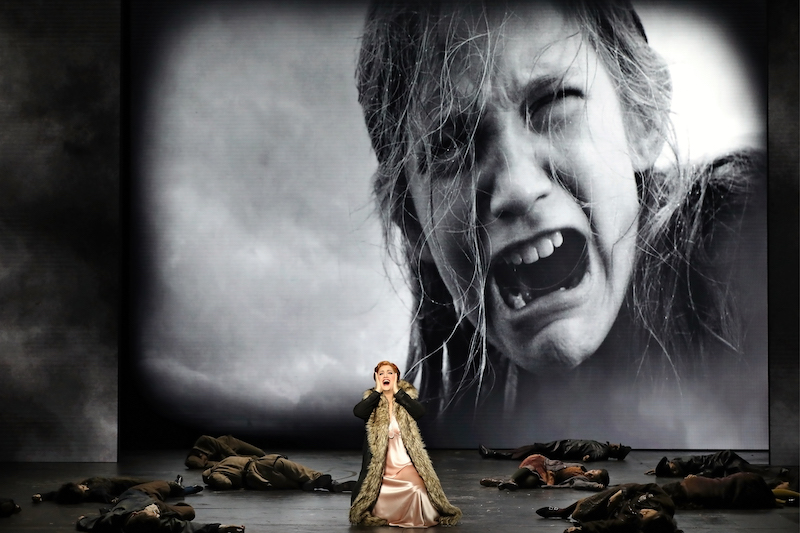
October brings Verdi’s Attila with Russian bass Ildar Abdrazakov. The company will be hoping for this being third time lucky. The production premiered in March 2020 but had to close after two performances. Rescheduled in 2021, another Covid lockdown saw it being postponed again.
For a month from March 25th the Handa Opera on Sydney Harbour will be a new production of Andrew Lloyd Webber’s blockbuster musical The Phantomof the Opera, directed by Simon Phillips.
There will also be Cameron Mackintosh’s new production of Phantom which will be on at the Sydney Opera House from August 19 and at the Arts Centre Melbourne from October 30.
The 2022 season also includes Rodgers & Hammerstein’s Cinderella which will be on at Sydney’s Lyric Theatre in October. There is also a new outdoor event called Opera on Cockatoo Island, for which Liesel Badorrek will create a new production of Carmen, custom-built for the site.
Carmen
The Melbourne Autumn Season opens in May with Elijah Moshinsky’s production of La Traviata and Olivier Py’s production of Wagner’s Lohengrin
The Melbourne Autumn Season also includes a concert version of Boito’s Mefistofele, conducted by Andrea Battistoni and directed by Matthew Barclay, with Italian bass Ferruccio Furlanetto as Mefistofele, Diego Torre as Faust and American soprano Leah Crocetto as Margherita.
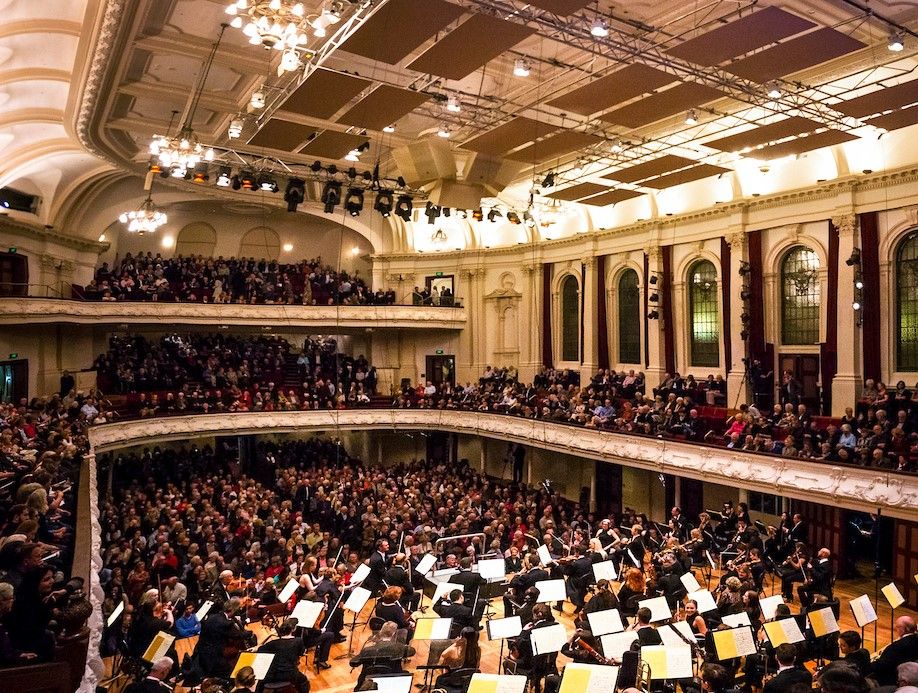
The Auckland Philharmonia Orchestra’s 2022 Subscription Season which has just been announced features forty-four performances across ten venues. It is an impressive schedule given that these performances are in addition to the extensive community, schools and outreach projects. The programmes offer a balance between exciting new works and major masterpieces with local and international talent.
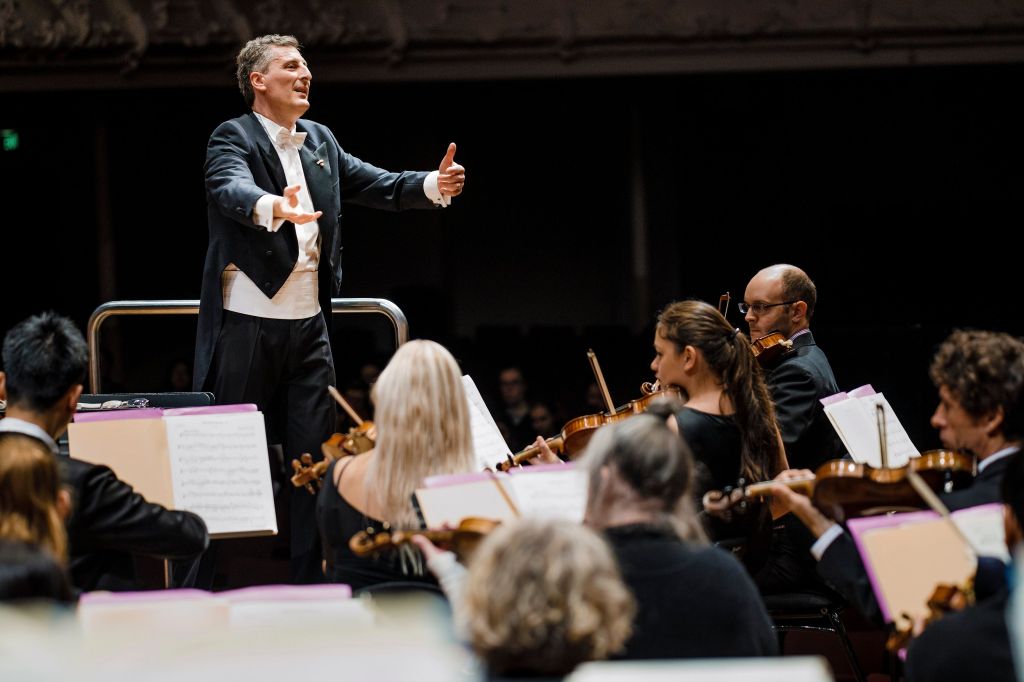
Barbara Glaser the Chief Executive of the APO says “For next year’s programme we have done some risk assessment in how we plan the season. So, in the early part of the year we have Giordano Bellincampi who has a critical worker exemption status who will be returning to conduct as well as New Zealander Geneva Lewis. Also, at the start of the year we have some of our local soloists like Jonathan Cohen, our Principal Clarinettist.”
Giordano Bellincampi
“Then for later in the year we decided we would take the risk and assume open borders and have an international artist season.”
In this year’s programme there is a full range of nineteenth and twentieth century symphonic works. The major work will be Bruckner’s “Symphony No 4”, the composers most accessible and coherent work. Also drawing on the nineteenth century will be Tchaikovsky’s “Symphony No 4”, Brahms “Symphony No 4” and Schuman’s “Symphony No 4”.
Twentieth century works will include Rachmaninov’s “Symphony No 2”, Walton’s “Symphony No 1”, Martinu’s “Symphony No 6” and Strauss’s “Alpine Symphony”. The Strauss work which has previously featured a few times in Auckland concerts is an extraordinarily evocative and detailed work celebrating a day’s climbing in the Alps and was inspired by Strauss’ own walks in the mountains and his love of nature.
There is also New Zealander Douglas Lilburn’s “Symphony No 3” which was among the composers last purely acoustic compositions.
Glaser notes that “We have probably got a few more New Zealander artists across the season than we would have had pre- Covid. Those dozen kiwis show that we have a richness of local talent.”
“Orchestras in general operate in an international environment and our audiences have been exposed to a lot of local artists but in the long term we will move back to having a balance of international and kiwi musicians.”
Also providing a New Zealand dimension to the programme will be a major new work from award-winning composer Victoria Kelly. Her “Requiem” uses the poetry of Bill Manhire, Sam Hunt, Chloe Honum, Ian Wedde and James K Baxter, and is inspired by the visual language of photographer, Anne Noble. Kelly has composed for film and television with soundtracks for: “Under the Mountain” and “Out of the Blue”.
Then in June for Matariki, the APO and Rob Ruha will provide night of music, kapa haka performing works such as “I Te Pō”, “Ka Mānu” and “Kalega”.
There are a number of major violin and piano concertos on offer including performance of Mendelssohn’s “Violin Concerto”, Dvorak’s “Cello Concerto” and Shostakovich’s “Cello Concerto.”
Glaser is looking forward to a number of the works on offer for next year. “Any time Giordano is on the podium is a highlight for the orchestra and the audiences. He has developed a really lovely rapport with both the musicians and our audiences. I am particularly looking forward to hearing the symphonies of Bruckner, Brahms and Tchaikovsky. The Tchaikovsky in particular because it was that concert we had to close down at the last minute when there was a Covid outbreak in the Auckland CBD. That concert is going to be a really emotional event.”
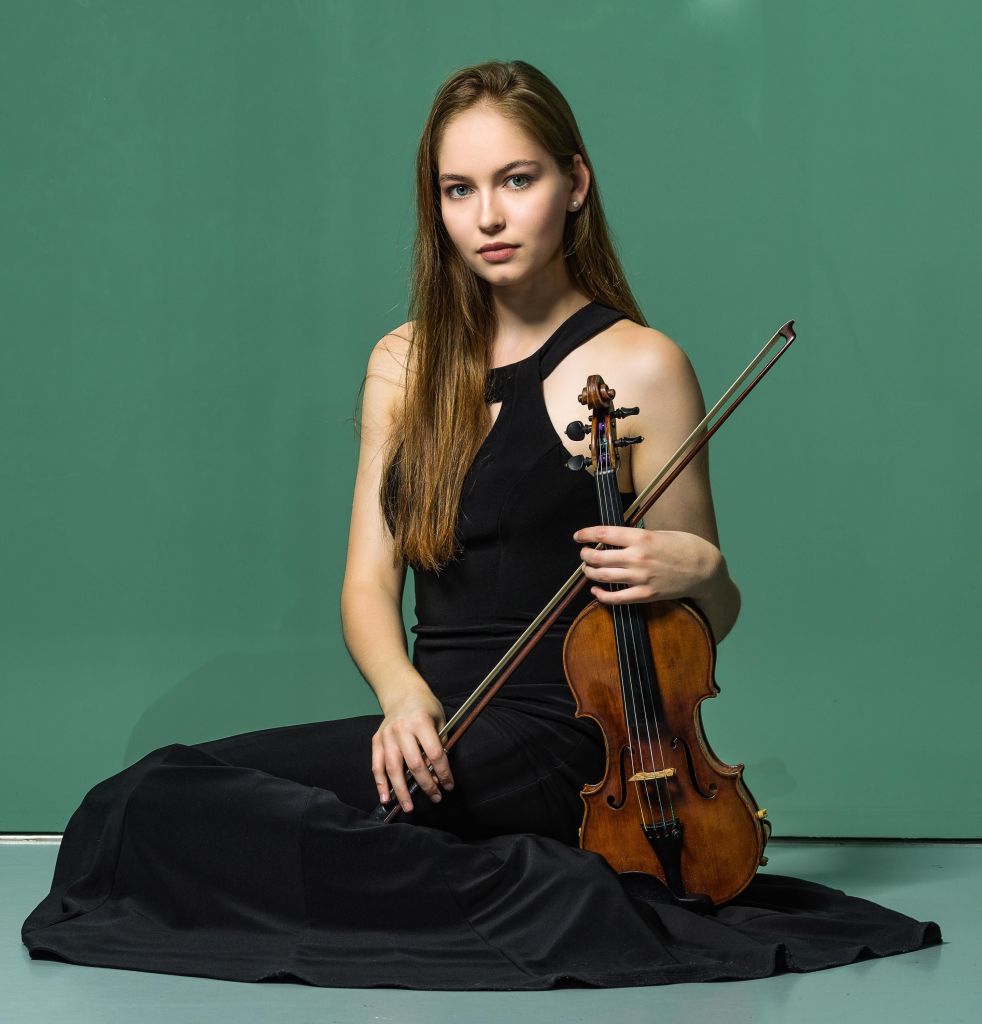
Music Director Giordano Bellincampi will take the podium for the opening performance on Thursday 17 February and will be joined by Auckland born violinist Geneva Lewis in her official NZ debut playing Mendelssohn’s “Violin Concerto”.
Geneva Lewis
As the daughter of legendary kiwi tennis champion Chris Lewis, US-based violinist is currently rated as one of the most exciting young players performing on the international circuit. She gained early chamber music fame as a member of the renowned Lewis Family Trio with her siblings and she made her solo debut with the Pasadena Symphony at the age of eleven. She has already played at the Concertgebouw in Amsterdam and next year will perform, at the Wigmore Hall in London.
In May the 13-year-old Australian violin prodigy Christian Li will be playing with the orchestra. He is the youngest ever winner of the Yehudi Menuhin Competition at the age of ten and in 2020 became Decca Classics youngest ever signing. His career successes to date have been guided by his teacher, the New Zealand violinist and renowned pedagogue Robin Wilson.
Li will be playing Saint-Saëns’ “Introduction and Rondo Capriccioso” along with Ravel’s “Tzigane”. The Saint-Saëns work was written as a showpiece for the virtuoso violinist of the time, Pablo de Sarasate. Li’s recent Melbourne performance of the works was described as ‘a mind-boggling MSO debut by the Aussie wunderkind violinist Christian Li.’
Other soloists include Principal Harpist Ingrid Bauer performing Debussy’s “Danses sacrée et profane” and Tailleferre’s” Concertino for Harp and Orchestra” and Principal Clarinettist Jonathan Cohen performing Nielsen’s “Clarinet Concerto”.
There are also performances of Mendelssohn “Violin Concerto”, Dvorak’s “Cello Concerto” and Shostakovich’s “Cello Concerto No 2”.
Later in the year there will be international pianists Ingrid Fliter (Chopin’s Piano Concerto No.2) and Jean-Efflam Bavouzet (Bartok’s Piano Conceto No 2) as well as 2021 Gramophone Artist of the Year violinist James Ehnes (Bernstein’s Serenade).
Other artists of note who will make their NZ debuts with the APO in 2020,include Norwegian trumpet sensation Tine Thing Helseth, conductor Shiyeon Sung and cellist Anastasia Kobekina.
A major contemporary work will be by the Polish composer Krzysztof Penderecki who died earlier this year His “Trumpet Concerto” was one of his last works and first performed in 2015. Audiences would have heard his work “Threnody to the Victims of Hiroshima” played in the Town Hall a few years ago. His radical work was adapted for films such as “The Exorcist”, “The Shining” and “Twin Peaks” and he influenced many composers including Led Zeppelin and Radiohead.
On the same programme as the Penderecki will be the Russian Aleksandra Pakhmutova’s “Concerto for Trumpet and Orchestra” It is a work she wrote in 1955 but was only introduced to the West in the late 1970s. Her music is an example of optimistic post-Stalin musical compositions which composers such as Rachmaninov and Shostakovich managed to avoid.
After sell-out performances of their Beethoven symphony cycle last year 2022 will see the orchestra turn their attention to Italian composer Giuseppe Verdi contributing to three of the composer’s great works: his Requiem, II Trovatore, (the APO Opera in Concert) and New Zealand Opera’s production of Macbeth. The APO and New Zealand Opera are offering a special three-event ticket package for audiences to experience these remarkable works.
The orchestra will also be offering some concerts designed for families and children with “APO for Kids” as well playing Mark Knopfler’s music to accompany a screening of “Princess Bride.”
The orchestra’s “Broom and Stick Man” concert features two films based on the books written by Julia Donaldson and illustrated by Axel Scheffler, which are brought to life with René Aubry’s magical score.
Glaser is also delighted that they are able to present the “Baroque and Beyond “ series which have been delayed on numerous occasions. “That concert came directly out of the Covid experience where the musicians performed without a conductor and they all wanted to repeat that experience”
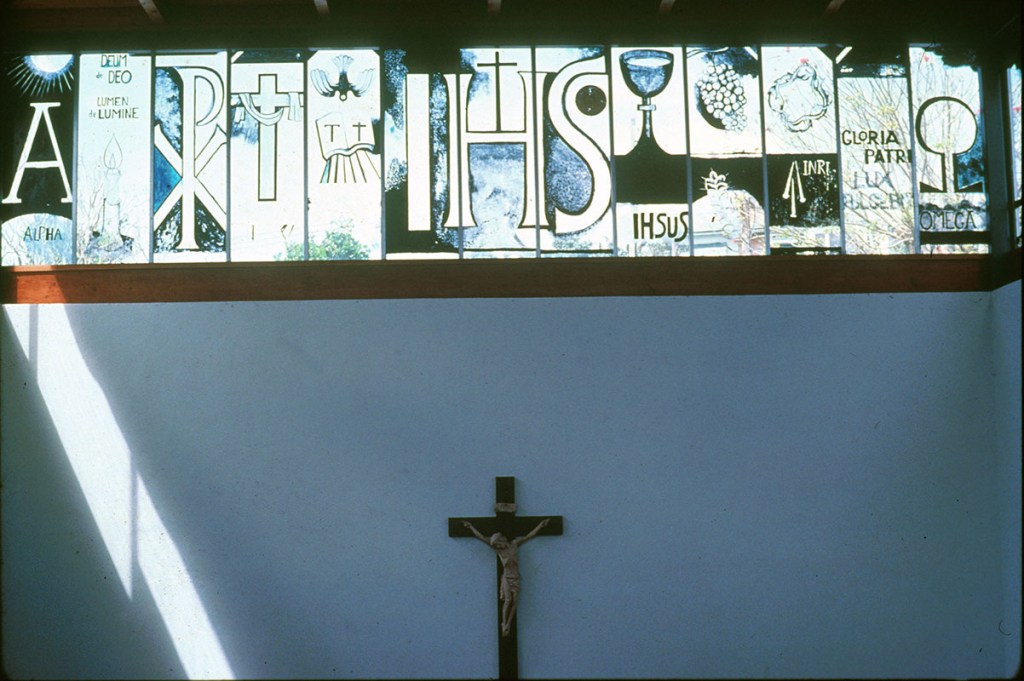
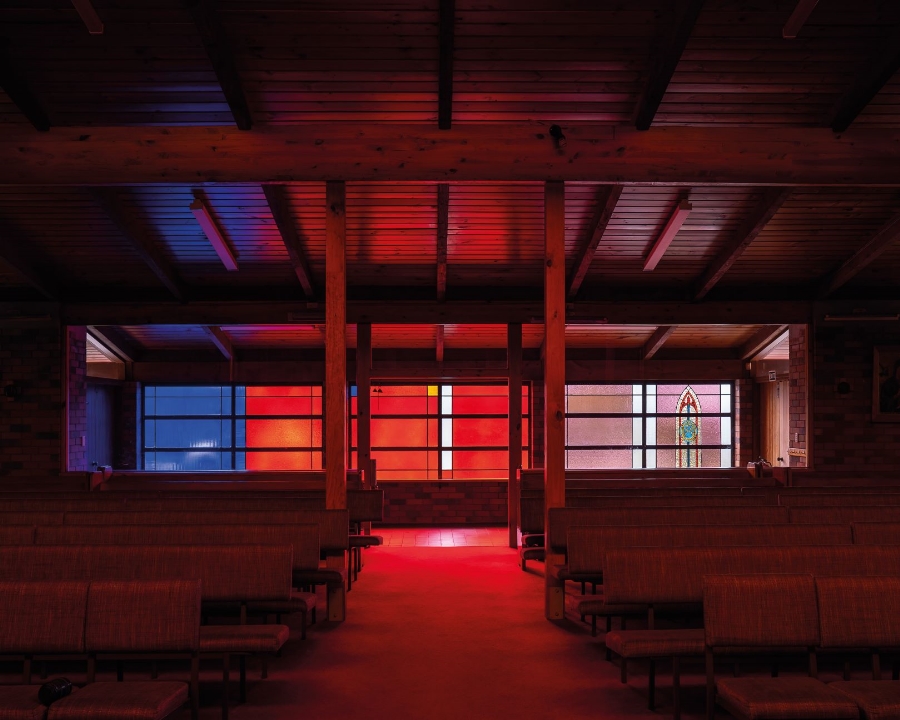
One of the highlights of the 2020 exhibition “A Place to Paint” at the Auckland Art Gallery was Colin McCahon’s restored windows which had originally been the commissioned for the Convent Chapel of Our Lady of the Missions in Remuera.
The chapel designed by James Hackshaw was a major work of church architecture which saw a collaboration between the modernist architect, painter Colin McCahon and sculptor Paul Dibble.
McCahon Window, Convent Chapel of Our Lady of the Missions . Image: Hackshaw Collection, Architecture Archive, Special Collections, University of Auckland Libraries and Learning Services.
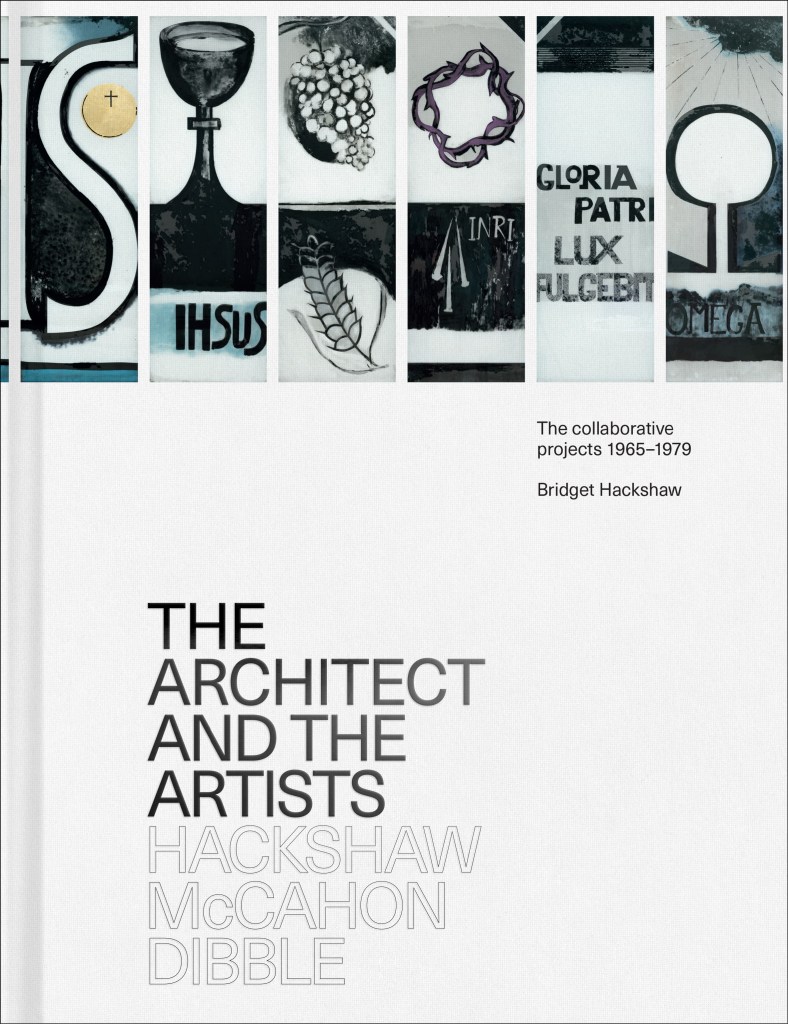
In the 1960’s and 70’s they worked together on a number of architectural projects, often small chapels which until recently had very little public exposure. Now a new publication “The Architect and the Artists” conceived by the architect’s daughter, Bridget Hackshaw brings into the light the extent of the collaboration.
Along with extensive writing by Bridget Hackshaw there are chapters by Peter Simpson, Peter Shaw, Julia Gatley, Alexa Johnston, Sister Maria J Park and Christopher Dudman the book reveals how the collaborative process worked and as well as looking at the wider influences and motivations behind architectural / art projects. We are made aware of the interplays between contemporary architecture, historic church design, the demands of clients, the understanding of materials as well as personal visions.
The importance of James Hackshaw is explored, particularly his early involvement with the Group Architects and their pioneering domestic architectural work. The book also links his domestic architecture with his church buildings in areas such as his concern with developing an indigenous architecture, his interest in the use of exposed beams and timber along with importance of light and space. The book also notes his interest in architects such as Frank Lloyd Wright and Le Corbusier who can be seen as having a direct influence on his work.
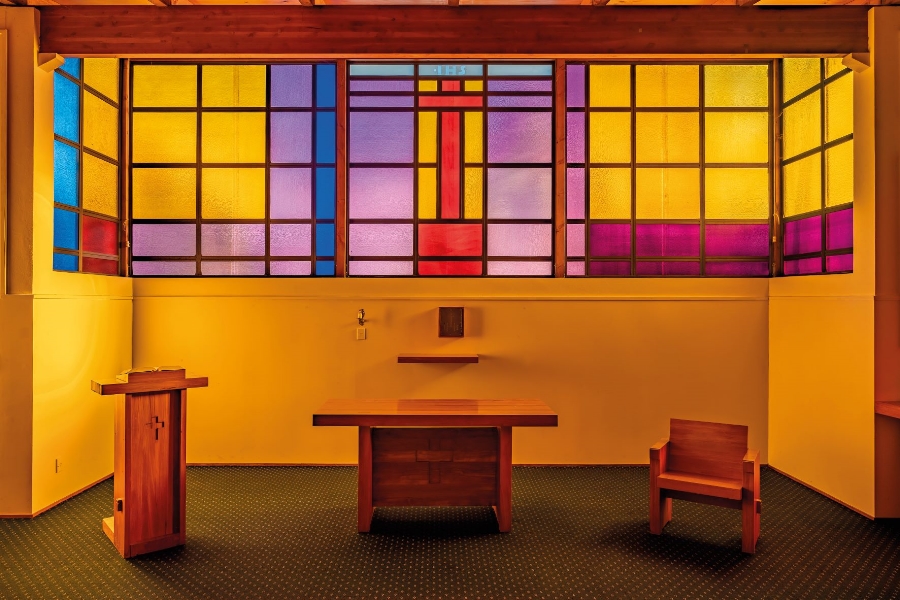
Liston College chapel. Image: Bridget Hackshaw
While McCahon had used Christian content early on in his career it was his work at the time of his involvement with Hackshaw which saw many of his works focussed on symbolism and numbers, seeing more meaning in the iconography then the stories of Christianity. His letters of the time also indicate his interest in the tactile qualities and the colours of glass
“Good glass holds your hands up high & a certain glory filters through your fingers. I love glass” and there are passages where he links his glass work with his other paintings writing about the enigmatic connections between the “5 wounds of Christ”, his “Rocks in the sky” series and the Stations of the Cross”
The period of the collaboration was important for Paul Dibble in that it provided the young artist, just out of art school with an early grounding for his future more monumental work. He became part of the team because McCahon had encountered him at Elam and offered him the position. It was as Dibble notes ”purely accidental and a bit of good fortune.”
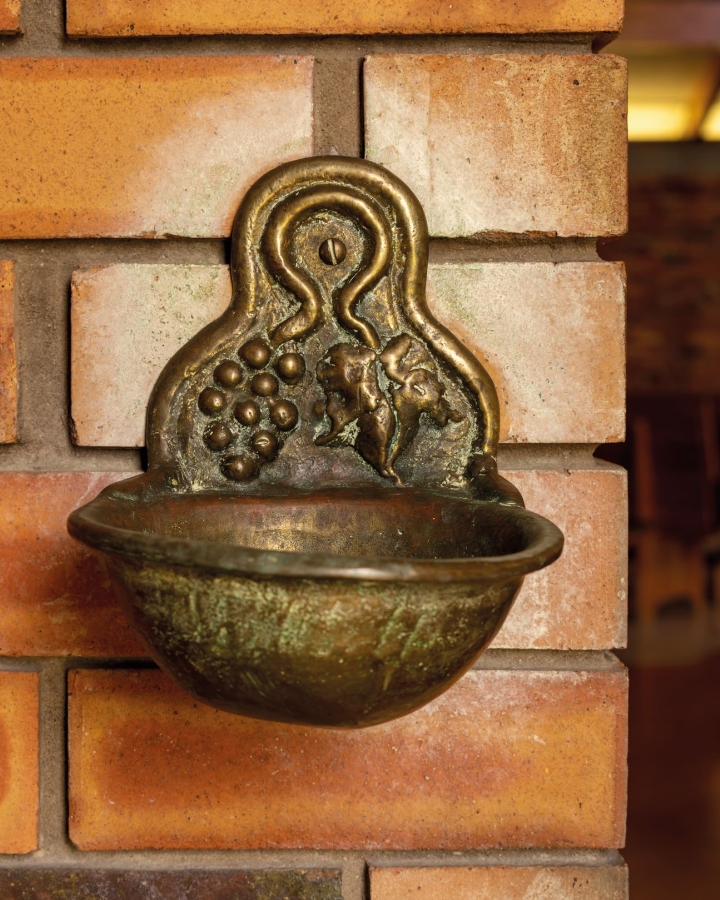
Paul Dibble, Holy water font. Image: Bridget Hackshaw
The works he produced – tabernacles, candlesticks and crucifixes are modernist but draw heavily on the traditions of church decoration and show that these sculptural works were in line with the changes which were occurring in churches as a result of the Second Vatican Council
The book is profusely illustrated with Hawkshaw’s plans and elevations , McCahon’s drawings, letters and notes, along with contemporary and historic images of the buildings, McCahon’s windows and Dibbles sculptures. Many of the photographs depict the impressive architectural spaces created by Hackshaw along with images which show how the rich colours cast by the windows transform the interior spaces.
St Ignatius Church St Heliers. Image: Bridget Hackshaw
“The Architects and the Artists” is a rewarding investigation into one of the great artistic collaborations of twentieth century New Zealand. It reveals the extraordinary connections between the various aspects of church architecture and design, religious tradition, new theological thinking, architectural innovation and personal concepts all underpinning the way in which creative individuals work within framework of architectural and artistic commissions.
The lobster has had something of a varied life in myth, history and literature.
In mid nineteenth century Paris the French Romantic poet Gerard Nerval had a pet lobster named Thibault rescued from the fishing nets at La Rochelle which he walked at the end of a blue silk ribbon in the gardens of the Palais-Royal.
Tupaia, Captain Cook’s translator on his 1769 expedition painted a watercolour of a cloaked Māori apparently bartering a lobster for a piece of cloth with the botanist Joseph Banks.
Cyril Connolly’s character Palinurus in his 1944 book “The Unquiet Grave” claims to have had previous incarnation as a lobster.
In 2012 Joseph Franzen (The Corrections) travelled to the island of Alejandro Selkirk where Alexander Selkirk was marooned for several years. His tale inspired Daniel Defoe’s “Robinson Crusoe”. The island is famous for its abundance of lobster and Selkirk presumably lived on the delicacy for his time there.
These various references to lobsters and other forays into literature, myth and science form the basis of Chris Price’s new book “The Lobster’s Tale”, a poetic exploration of the lobster’s place in history.
In addition to her essay there are two other poetic components to the book. There is a rolling one line poem which runs along the bottom of each page referencing the main text as well providing fragments of heroic journeys and surreal experiences along with images of water, fish and the looming climate crisis.
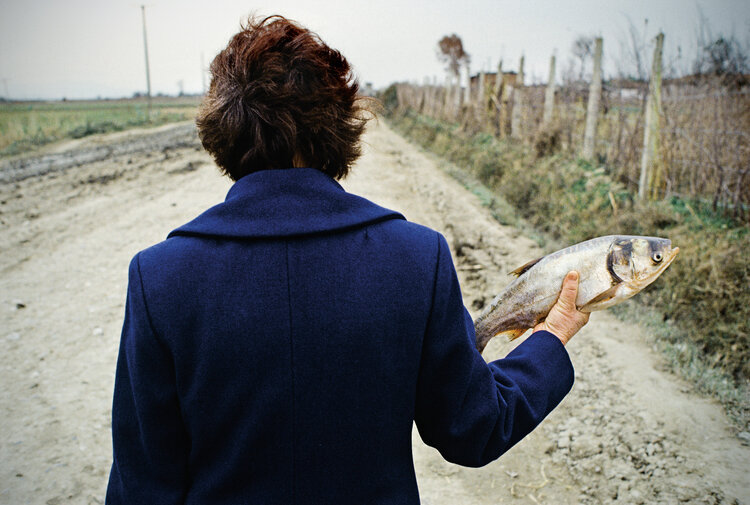
The other poetic element is provided by the photographs of Bruce Foster. These images at times illustrate the texts or serve as images which alert us to parallel ideas being touched on by Price. At other times they could be read as lobster-eye views of the environment.
Price describes the work as “either a braided essay or a collage essay – braided fits because of the essays multiple strands and the metaphor of the river; but “collage” suggests writing that develops by juxtaposition and speaks to the visual art element”.
This essayist’s journey also includes references to Albert Camus and his “The Myth of Sisyphus”. Here she empathises with the Frenchman’s writing about man’s desire for significance and meaning on the one hand and the silence and absurdity of the universe on the other.
The work is an extended metaphor for the search for immortality, meaning and creativity. Quoting from Camus, Price notes that “perhaps the great work of art has less importance in itself than in the ordeal it demands of a man and the opportunity it provides him of, overcoming his phantoms and approaching a little closer to his naked reality”.
In reading and viewing the book one can let the text and the images float over and around one, immersing oneself in the lyricism of the work or one can occasionally stop, rewind, explore and contemplate in order to fully appreciate the book’s nuanced ideas and dreams.
This is the third in the kōrero series of ‘picture books’ produced by Massey University Press which have been edited by Lloyd Jones. They are intended for grown-ups and designed to showcase leading New Zealand writers and artists working together in a collaborative and dynamic way
Te Papa has always prided itself on its ability to tell stories, bringing together various objects to create the various histories of New Zealand.
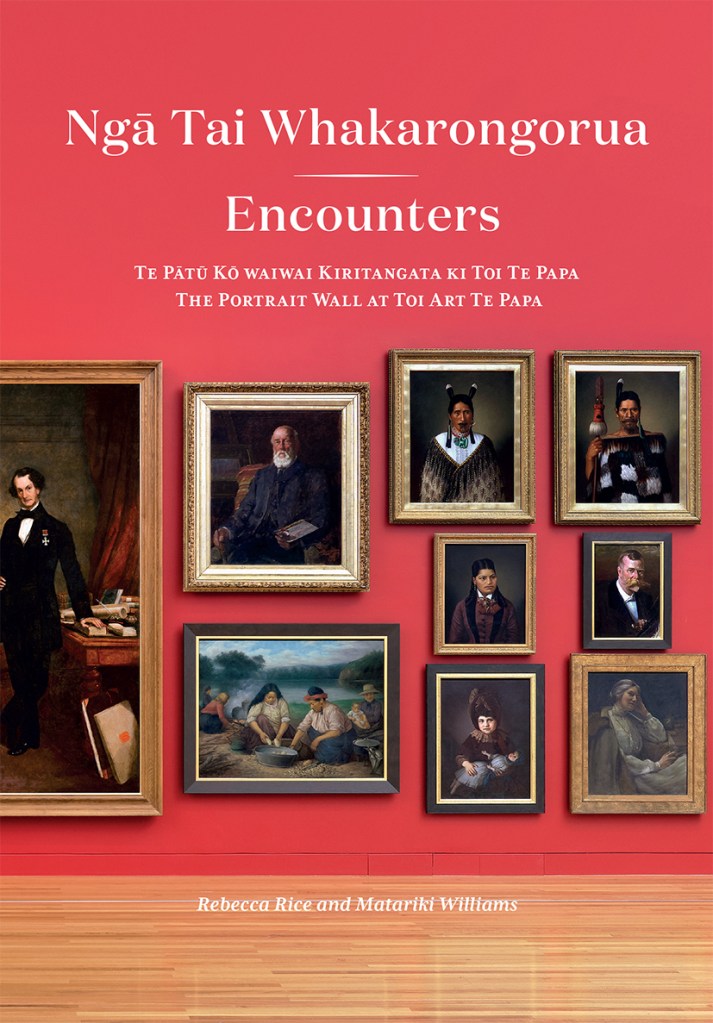
With its portrait wall which was central to the gallery’s new look when it opened a dedicated art space in 2018 it seemed Te Papa had found a way to achieve this with Ngā Tai Whakarongorua Encounters, an exhibition of thirty-six portraits representing mana, power and prestige, of royalty, Māori leaders and colonial settlers. The bi-lingual text provided information on the individuals portrayed as well as the artist while also providing some context for their inclusion in the show.
The intention of the exhibition as one of the authors, Matariki Williams, notes in the introduction was something of a journey “As we make our way along the wall, it becomes evident that the tipuna exhibited have threads that extend throughout Te Moananui-a-Kiwa to Europe and back again, but some of those threads have been fractured by the impact of colonisation”.
In some ways the works can be seen as bridging the history between the first portrait in the show “Poetua daughter of Oreo” through to the last work, a portrait of an unknown Māori woman, one hundred and twenty years later,
More than acknowledge the physical qualities of the portraits figures we also conceive and construct an ethos and history for each character. They speak to us as fellow humans but from two hundred or more years ago, We recognise them as definite characters bur we also endow them with characteristics apart from their status. We look for their human qualities, something only portraits allow us to discern.
The exhibition as a whole however lacks an engaging narrative and an opportunity for an overview of the various encounters which took place in the nineteenth century between Māori and Pakeha – social, political, religious, cultural is never adequately realised.
The exhibition is preceded by “Te Umukohukohu putatara” (conch shell trumpet) by an unknown Tuhoe artist. It heralds both the beginning of the exhibition as well as recognising a history going back several hundred years.
From there the history appears to integrate the two worlds with three works by John Webber. His “Poedua [Poetua], daughter of Oreo’, (she was briefly held hostage by Captain James Cook on his third voyage until a member of his crew was returned) as well as his portrait of James Cook. There is also a landscape by the same artist of “Ship Cove, Queen Charlotte Sound” which is one of the first recordings of European presence in the country. It seems a good way to tell the story of Pacific navigation and encounters.
But then comes a portrait of Admiral Sir Edward Hughes who Captain Cook once encountered on his voyages but who has no other connection with New Zealand and then there is a portrait by the American artist John Copley. The only connection to New Zealand for these works is that they arrived here from overseas and were eventually acquired by the gallery.
At that point any sense of narrative runs out. It’s not a history of New Zealand through portraits, just a lot of portraits, which tell unconnected stories and there is little depth to these tales interesting as they may be.
It’s only when we get to a group of portraits of Māori that there is a real sense of connections. There is Lindauer’s portrait of Wi Tako Ngatata who was one of the first Māori to become a member New Zealand Legislative Council. He also features in the portrait of Dr Isaac Featherston who was a major political figure in the Wellington area. The linking of the two portraits shows the way in which Māori and European were able to wield political power in some ways during the nineteenth century.
Then there is the one work William Allsworth’s “The Emigrants”, which depicts the settler/colonisers who left behind a culture as well as transplanting a new one in New Zealand. This is a painting which had many counterparts at the time with works such as Ford Maddox Brown’s “The Last of the England”
Also of interest is the portrait of Princess Charlotte of Wales, The work which was painted in 1817 was acquired from the first New Zealand Exhibition held in Dunedin in 1865. This exhibition was of major importance as several artefacts and paintings from Europe were purchased at the time, finding their way into private and public collections.
There are a number of other portraits by Charles Goldie, Louis John Steele and Wilhelm Dittmer which show aspects of Māori life and culture and Goldies portrait of the carver Ana Te Rahui is paired with Steele’s portrait of Goldie, giving prominence to the two artistic traditions.
The Goldie portrait of Harata Rewiri Tarapata references many aspects of nineteenth century history, the land wars, the role and status of Māori woman as well as Goldie’s selection of his subjects in depicting the notion of a dying race. On the other hand the portrait of Elizabeth Lessette provides little interest apart from the fact that the woman was a distant relative of Katherine Mansfield.
Also of interest is the research provided with some of the works which follows on from “The Back of the Painting” (published by Te Papa Press) where information about the painting’s provenance, materials, repair and conservation is included
The exhibition could have been an opportunity to tell the interwoven, complex stories of nineteenth century New Zealand, the impacts of colonialism, the growth of new social frameworks and the role of individuals in those changes. These aspects are really only hinted at rather than being investigated and explored.
What the book and the exhibition does highlight is the fact that Te Papa has a dearth of portraits of both private and public individuals certainly, compared with the collections of the other major galleries in Dunedin, Christchurch and Auckland.
It looks as though we will shortly be adding another name to the pantheon of the great cosmologists. The list comprising Ptolemy, Copernicus, Galileo, Hubble needs to now include the name of Dick Frizzell.
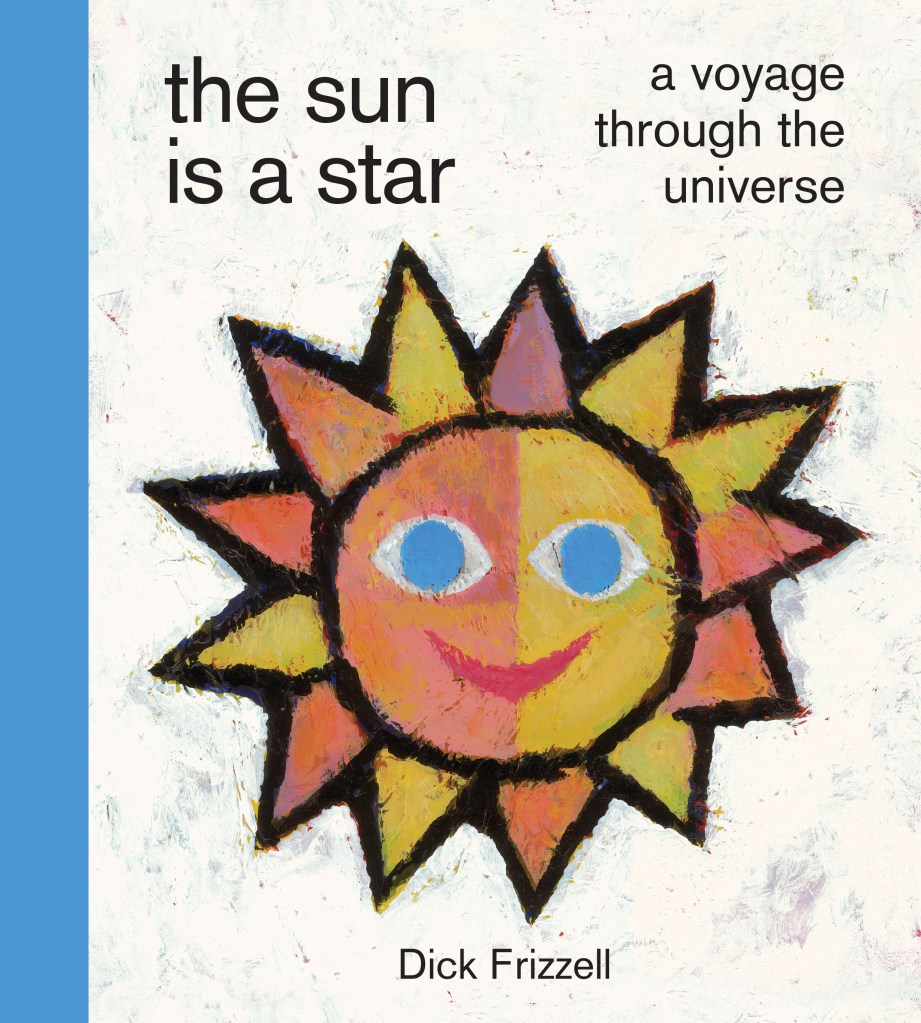
Having become a world authority on the history of art with his previous book “Me, According to the History of Art” the artist has now ventured into the world of cosmology with his “The Sun Is a Star, A Voyage through the Universe”.
The book as Frizzell says in the introduction “started out as a as a book for a seven-year-old, but I think I ended up writing it for a 77-yar old”.
In forty “chapters” of about 200 words each he gives a comprehensive survey of our knowledge about stars in general and ours in particular along with related topics such as the Big Bang Theory. He even manages to summarise the findings of Copernicus and Galileo in a few clever sentences. He also gets in a few facts about the immensity of the sun and the universe which make an impression, noting that while one could fly a plane around the Earth in two and half days it would take eight months to fly around the Sun.
It’s ingenious statements like that which make the book appealing, a thoroughly readable book and great introduction to cosmology for children. He has an easy-going style of engagement and is unfazed by complex notions. His explanations are simple and coherent, drawing various threads of science together, along with ventures into philosophical issues and the contemporary concern of climate change,
While he doesn’t go in for any myths of creations or gods, his elegant reasoning in response to his wonderment at the nature of the universe is occasionally undermined by his reference to magic and fairy dust.
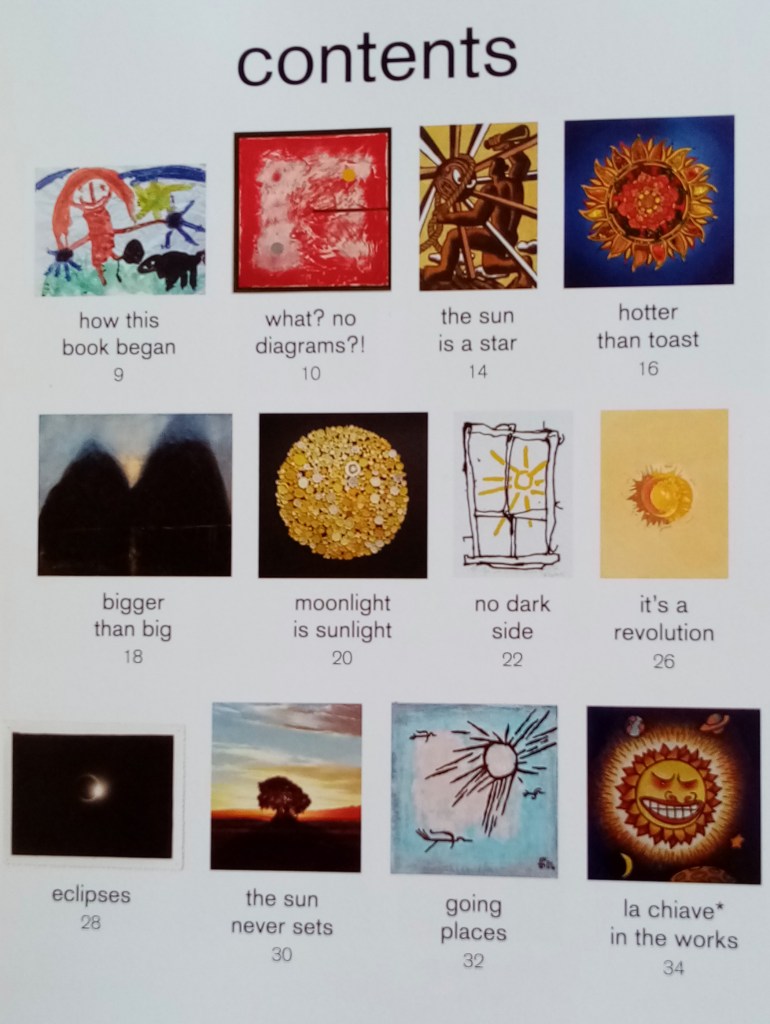
To illustrate the book, he has called on many of his artist friends to provide images which relate to the sun so the book is full of some colourful paintings by several major artists including John Pule, John Reynolds, Judy Darragh and Grahame Sydney. He has also used some of his own paintings along with works by his son Otis and granddaughter Coco
However, there are a couple of problems.
Frizzell notes in one of his first chapters that “I’ve used no diagrams in this book…They tend to create more confusion than clarity.” That was an ill-advised decision which his collaborator or editors should have advised against.
While he dismisses the idea of diagrams, he uses the odd explanatory which are essentially descriptions of diagrams and these would really have been a more useful means of explanation.
Well-considered diagrams can be the best method of conveying information such as the often-used Space – Time Curvature diagram or the diagrammatic representation of the Big Bang to illustrate the evolution of the universe. Then there is the beauty of Marilyn Monroe’s explanation of the Theory of Relativity to Albert Einstein in Nicolas Roeg’s film “Insignificance”.
I would have thought that a series of diagrams by the artist himself would have been an ideal way of conveying scientific ideas on the shaper of the universe, the nature of relativity, gravity and black holes.
And then there are the illustrations themselves. Most of them are images of the sun, and other round objects which add little to our understanding. The two realist depiction of the sun in Graeme Sydney’s “Sunset: and Freeman White’s “Sunrise” do provide ideal illustration about the visible spectrum of light and the Earths effect on the sun’s rays. However the toothed black shape of Weston Frizzell “Black Hole Sun “which is used to illustrate Black Holes offers little in explanation although Patrick Pound photograph “Circle Games” seems an appropriate image to the chapter on eclipses.
While Frizzell comes across as an erudite, amateur cosmologist he admits he took advice from several other distinguished people including Samantha Lord of the Mt St John Observatory.
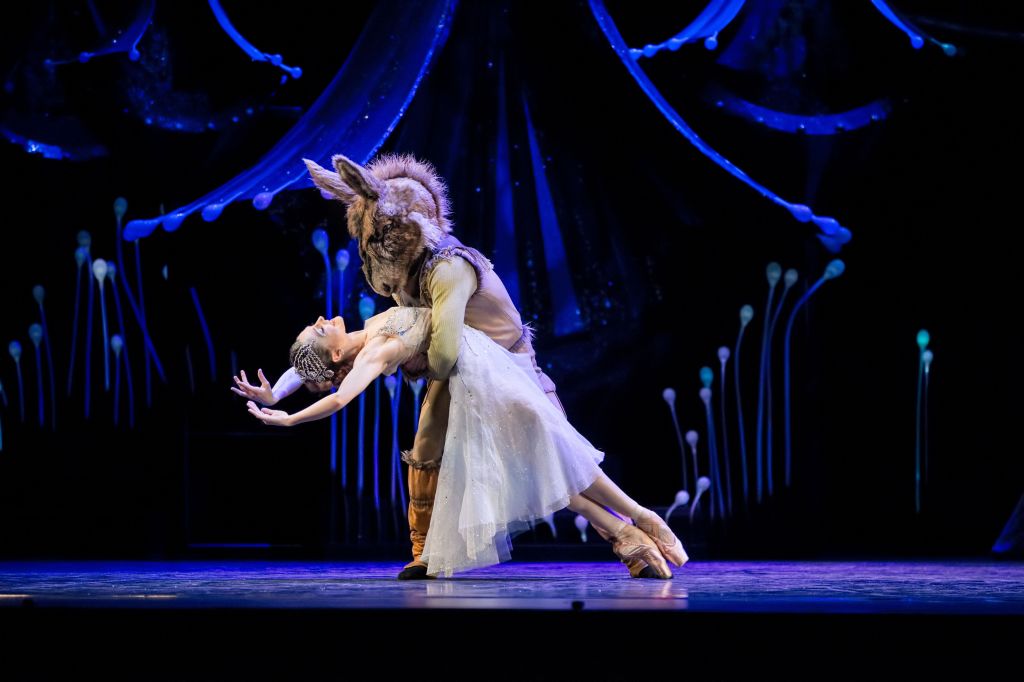
Tonia Looker (Queen Titania) and Harry Skinner (Bottom)
Ryman Healthcare Season of A Midsummer Night’s Dream
Royal New Zealand Ballet
National Tour October 28 – December 11
Next month the Royal New Zealand Ballet (RNZB) will launch their Christmas season of A Midsummer Night’s Dream. This production created by British choreographer Liam Scarlett was originally staged in 2015 and presented again in 2016 receiving received universal praise. The co-production between the Royal New Zealand Ballet and Queensland Ballet. has also been performed in Queensland and Hong Kong.
RNZB Artistic Director Patricia Barker says, “At the end of another COVID year, we will again celebrate the power and beauty of the arts. Performing this magical production, to Mendelssohn’s sumptuous score, is a Christmas treat for audiences everywhere.”
“This special work was made for our company by a choreographer whose talent, energy and sheer delight were contagious. Creating this work with Liam was among the happiest of times for our company. His A Midsummer Night’s Dream has stood the test of time – it is in our DNA. We cherish this production and will honour Liam’s memory and his beautiful artistic legacy with every sparkling step,” Barker says.
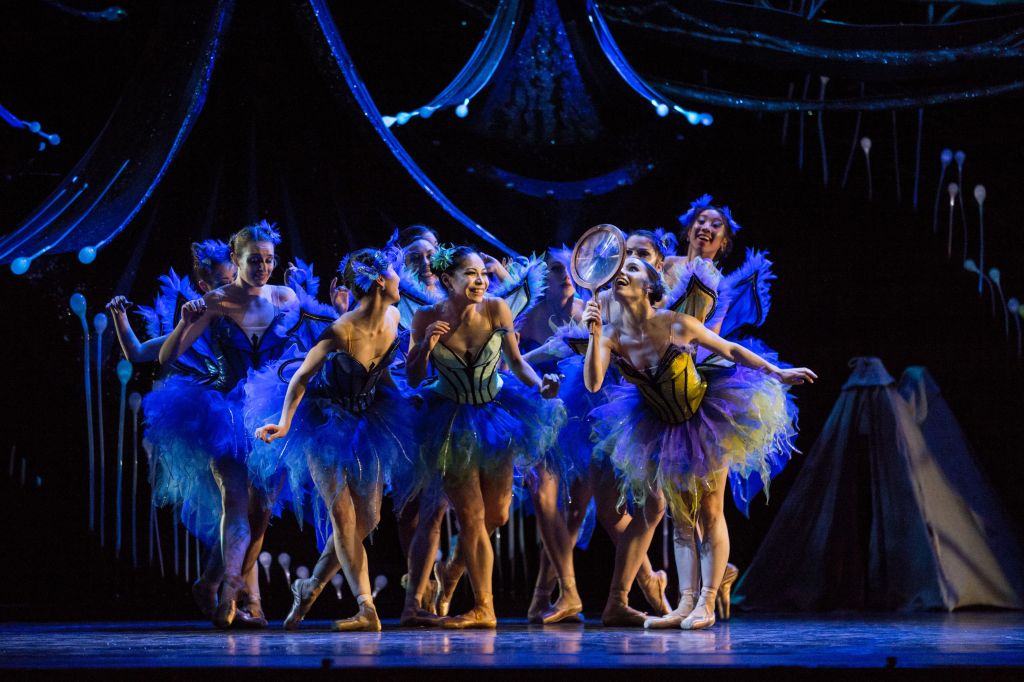
New Zealand designer Tracy Grant Lord’s vision of Shakespeare’s iconic characters and enchanted wood, illuminated with lighting by Kendall Smith complements former RNZB Music Director Nigel Gaynor’s beautifully crafted full-length ballet score, drawn from Mendelssohn’s much-loved incidental music to A Midsummer Night’s Dream, and interspersed with orchestral arrangements of the composer’s works for solo piano and chamber music, and featuring other orchestral works including the atmospheric overture ‘The Hebrides’.
In 2016 I reviewed the RNZB’s production writing that
“The audience was transported to the enchanted kingdom of Oberon and Titania with its myriad of fairies created by Shakespeare and reinvented by the Royal New Zealand Ballet.”
“Choreographer Liam Scarlett has created a ballet which is a total artwork, drawing on the talents of lighting designer Kendall Smith and the costumes and set designs of Tracy Grant Lord providing the colours and textures of Midsummer where shadow and bluish half-light hide and disguise.”
“This was a totally engaging and compelling work with a production bringing out all the themes of love, passion, infatuation, jealousy and reconciliation set in a land of deception and illusion.”
“The ballet’s comedy of errors is set in train when the King of Fairyland, Oberon, with his helpful sprite, Puck, attempt to change the course of true love, resulting in several of the characters falling in love for another, having had a magical juice dropped into their eyes. One of these new romances develops between Oberon’s Queen Titania and a local rustic, Bottom, whom Puck has given a donkey’s head.”
“Liam Scarlett’s creative and imaginative direction can be seen in the way he was able to integrate costumes, lighting and set in a miasma of silvery blue, which provided a real sense of a mythical fairy kingdom.”
A Midsummer Night’s Dream season
Wellington | 28 October to 31 October | Opera House Napier | 5 November to 6 November | Municipal Theatre Palmerston North | 11 November | Regent on Broadway Christchurch | 18 November to 20 November | Isaac Theatre Royal Invercargill | 24 November | Civic Theatre Dunedin | 27 November | Regent Theatre Auckland City | 2 December to 5 December | Kiri Te Kanawa Theatre, Aotea Centre Takapuna | 10 December to 11 December | Bruce Mason Centre
In recent years we have begun to realise that bees are essential for the health of people and the planet. We also realise that honey has medicinal properties and the role of bees as pollinators makes them vital for food supplies and crucial in promoting food security and variety in plants and animals
However, a rise in factors, such as pesticides and urbanization means that bees are currently in decline, negatively affecting many of the Earth’s ecosystems.
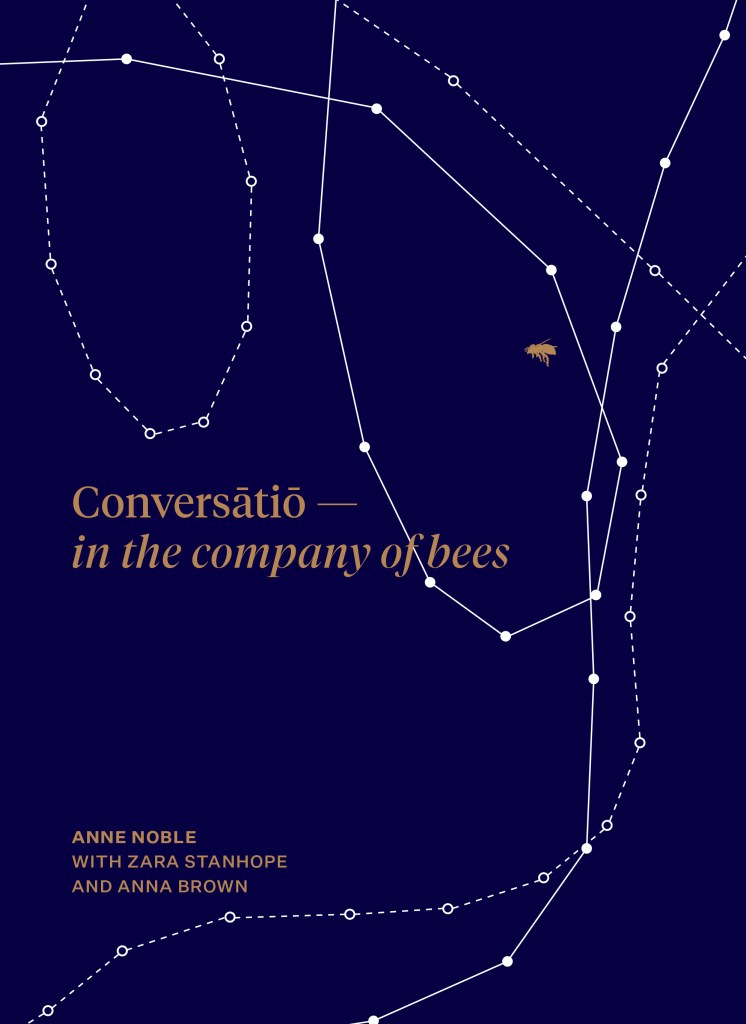
It is in this context that photographer Anne Noble’s new book Conversātiō is timely and important, looking at what the individual can achieve in exploring the world of the bee.
The book is a combination of artist’s book and personal journal along with essays which look at the science , history and literature associated with bees.
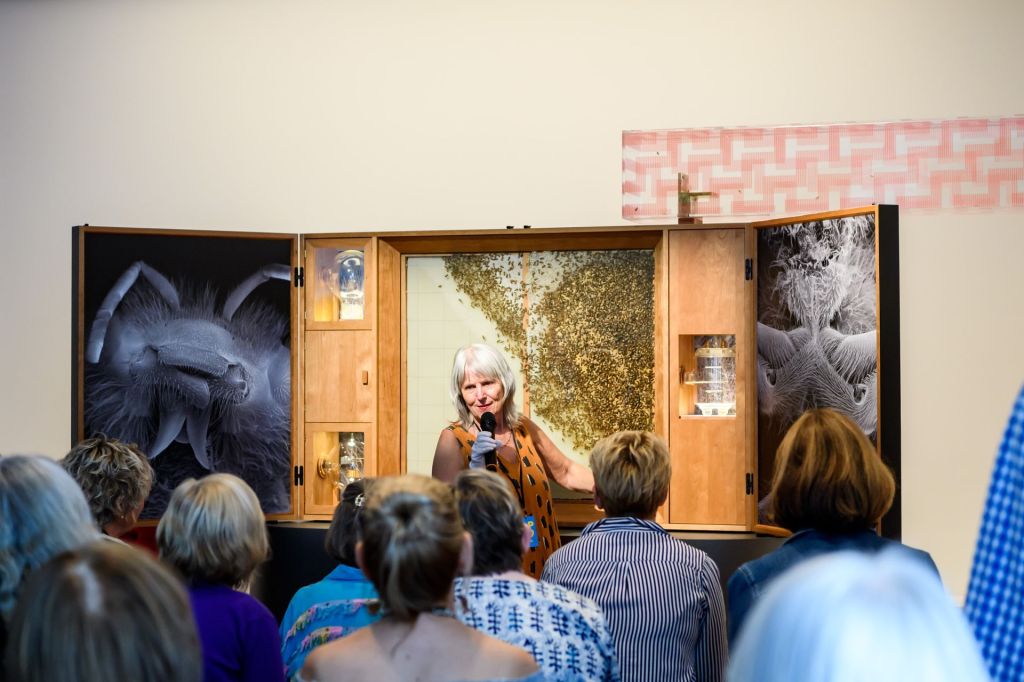
The title of the book, Conversātiō, is also the title of the key work which the artist showed at the Asia Pacific Triennial. This was a cabinet of wonder, devised to place a colony of bees at the centre of an artwork where the bees “performed” as living participants
Bees are an indicator species, they are subject to a range of environmental impacts from pesticides, fungicides, herbicides, diseases and parasites such as varroa. In the wider world there is also the risk of starvation caused by vast agricultural monocultures and the attendant loss of mixed wild foraging sources. How we manage and control the environment impacts on those species such as bees that we depend on and it is highly likely that what we are doing to them is most likely the same as what we are doing to ourselves.
The book charts the artists interest in bees from the first hive installed in her garden through to sets of photographic art works which look at bees through to her more recent installations which are part art works, part educational displays.
Throughout the book there is an underlying sense of an almost spiritual journey as the artist discovers more about the bee, its impact on our world and the impact on the artists life.
Anne Noble, Dead Bee Portrait #1
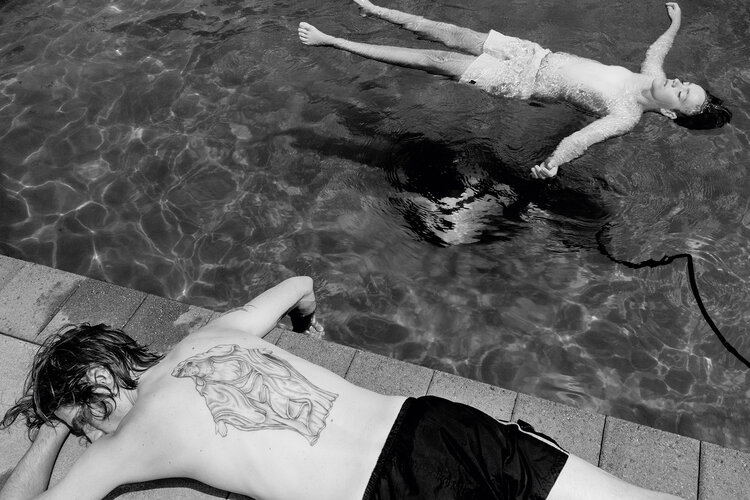
Her photographs present the hive life of bees in rich detail and include tintype (unique) photographs which show the beauty of translucent bee wings, photograms of dead bees and a black and white series of electron microscope images,
The text by Noble herself, Zara Stanhope, Gwyneth Porter, Mandyam V. Srinivasan and others provide insights into the world of the bee. There are also quotes and biographies related to historical figures and their writings about bees which include Virgil, Sylvia Plath and Carl Jung
There are also photographs of her installations at the Asia Pacific Triennial in 2018/2019 as well as at Intermediate Schools in the Wellington area where bees enter into the gallery or classroom space to build hives. There are also images of one of her first forays into the area with an exhibition at the Abbaye de Noirlac in central France with her collaborator apiarist Jean-Pierre Martin.
Then there is a separate booklet comprising a dozen letters sent between Noble and Martin which reveal their individual and collective passion for the bees
Noble says of the book “I hope the book might be a delight to hold, to read and to look at. Also, that it might amplify the reader’s sense of the beauty of bees and their importance to the health and wellbeing of our ecosystems.”
The book itself is a cabinet of wonders and a love letter to bees., It is beautifully designed by Anna Brown who has created a number of books on artists and art. The various sections are printed on different paper and the photographs from her exhibitions are rendered in excellent quality in both black and white and colour.
Nicky Foreman, Shadow Passes – Light Remains Artis Gallery, Auckland Until August 22
Reviewed by John daly-Peoples
In her latest exhibition “Shadow Passes – Light Remains” Nicky Foreman continues to explore the subjects of her previous paintings, combining, mundane objects, landscapes, fabrics and foliage along with images and symbols drawn from art and culture.
The combination provides a dialogue between the contemporary and the past, between notions about New Zealand and about its European heritage.
The links to European art that she depicts in her paintings come from her frequent visits to Europe, notably France and Italy The multi layered works have a sense of elaborate investigations into the nature of life, drawing together elements of scientific and botanical observation along with medieval and Renaissance imagery. This is all tied together with a mixture of Christian iconography, alchemical enquiry and cabalistic philosophies.
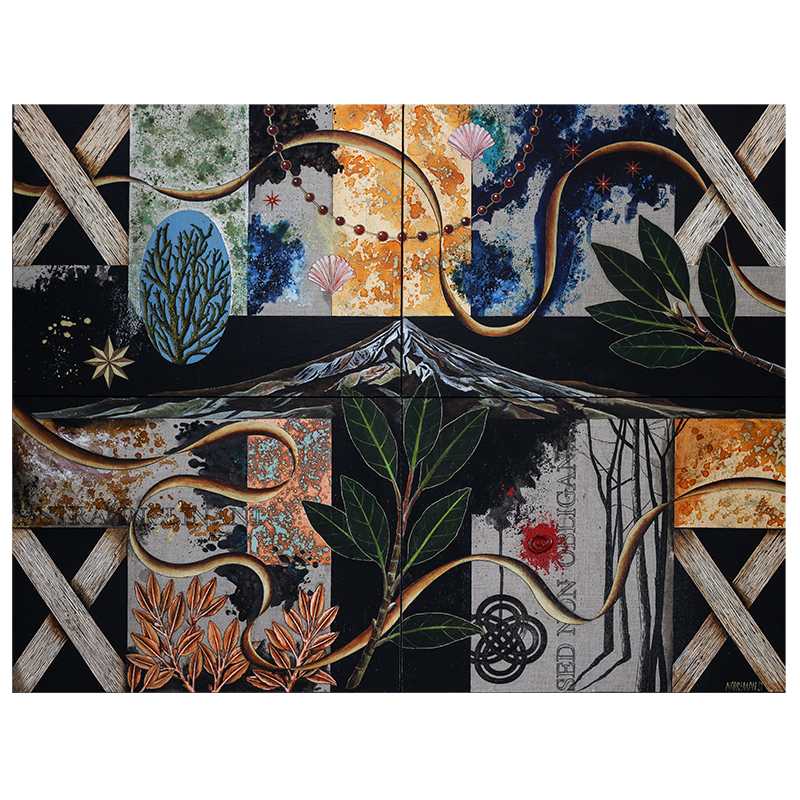
With many of the works Foreman revisits her practice of combining a number of smaller units into a larger construction, as in her “Cadence” ($15,000),where numerous images are linked by a ribbon of material – a reference to the DNA strands and the basis of life. There are a range of images both realist and abstract, delicate paintings of foliage, along with swirls of colour and shimmering metals.
The work which is like an elaborate game of Snakes and Ladders provides a sense of narrative and journey. This notion is reinformed by the inclusion of several scallop shells representing the navigation of the Camino Way whose route can be traced through Southern France and Spain. There are also other landscape features with groves of trees and the image of Mt Taranaki.
Several of the works in the show recall her early depictions of rural Taranaki such as “Mountain Meditation” ($6300) where the Mt Taranaki is flanked by stands of trees and crossed palings and “Reorientate” ($7300) where landforms are flanked by floral designs and the Greek symbols of alpha and Omega. The small mountain shapes she uses to depict the landscape recall the conical shapes used by Sienese painters of the fourteenth century.
Mt Taranaki is also present in several other works including the larger work “Entwine” ($11,750). This works bears part of the Latin tag ”Astra inclinant, sed non obligant” – which translate as “the stars incline us, they do not bind us”. Here also is the ribbon symbol along with the necklace alluding to the great chain of being with the notion of the hierarchical structure of all matter and life.
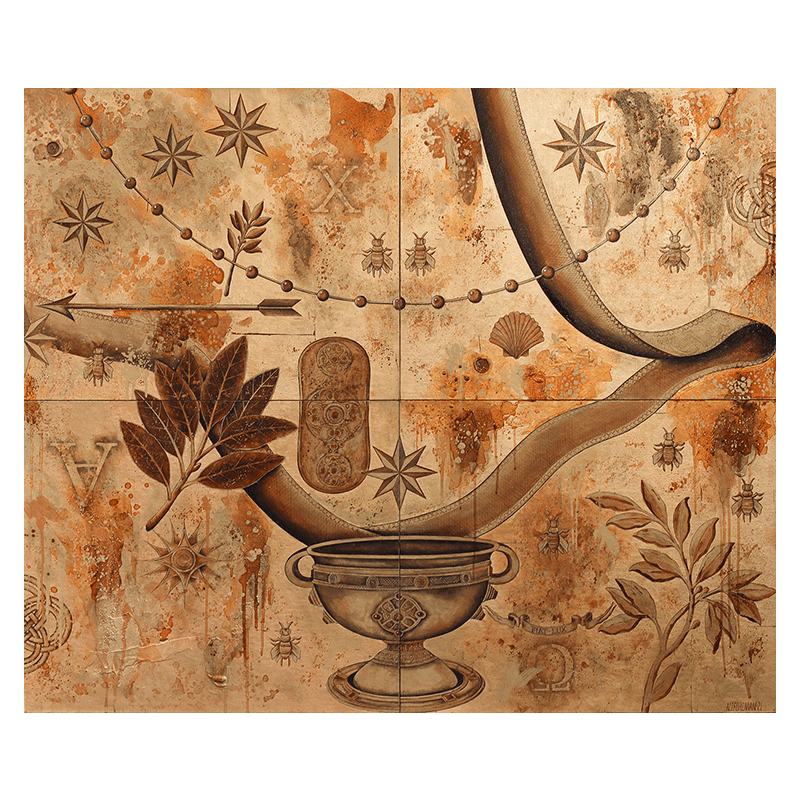
Nicky Foreman “Radiance”
In the golden hued “Radiance” ($13,500) the images include The Holy Grail – a reference to the cup which held the blood of Christ and regarded as the key to life which has been sought by many through the ages including Dan Brown’s Robert Langdon and Indiana Jones . She includes other symbols – the arrow, the bees, the scallop and something which could be a Covid 19 shape. Here she includes the Greek letters of alpha, Omega and Chi symbolising the beginning and end as well as the intersection of life forces.
Nicky Foreman “Ardent”
There is also a small five-panelled screen “Ardent” ($9800) which like the early church screen brings together various images to create a concept . The images include the Latin phrase “Fortis in Arduis” (strength in adversity) along with an image of Mt Taranaki and three white feathers symbolising the peaceful teachings of the prophets Te Whiti of Parihaka.
One work which stands out in being very different from the other is “Foundation Maeght” ($9300), an almost traditional depiction of a group pines at the famous gallery outside Saint-Paul de Vence. The trees and their almost cartoon-like shadows are set against the artist metallic background which gives the work a sense being a pared back symbol, a distilled and refined version of her other works.