Reviewed by John Daly-Peoples
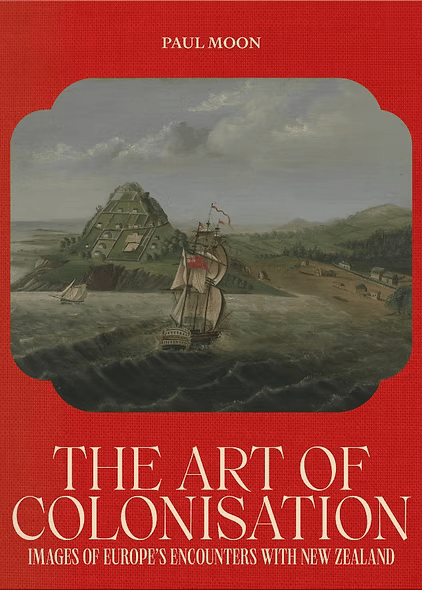
Paul Moon, The Art of Colonisation: Images of Europe’s encounters with New Zealand, by
Ugly Hill Press
RRP $55.00
Reviewed by John Daly-Peoples
Paul Moon’s “The Art of Colonisation” is the latest in a number of books which have looked at New Zealand art from a political and social perspective. This reinterpretation of the history of art involves re-examining, challenging, and recontextualizing traditional art narratives through a modern, often critical lens.
He has chosen twenty works, mainly well-known, which record the development of New Zealand and the intersection of explorers and colonists with the indigenous people.
The works range from Isaac Gilseman’s “A View of Murderers Bay (1643) though to Marcus King’s “The Signing of the Treaty of Waitangi” (1938). The years between the dates of these works has produced a substantial amount of written and visual material which records the colonization and development of New Zealand.
Part of that material is the art which was produced at the time. Some of it is personal records, simple sketches and paintings, other works are commissioned works for specific purposes. Moon and other writers have noted that the art of this period is inherently political, serving as a reflection of power, identity, and social values of the time regardless of the artist’s intent.
Moon notes of this period of art production “This was the realm of art, where images of imperial activity and its consequences ranged from disturbing to calming, scientific to whimsical, superficial to intimate and paternalistic to outright injurious”.
By choosing what to create, who sees it, and how it is displayed, much of the art of this early period in New Zealand’s history gives a colonisers viewpoint rather than that of the indigenous.
The first artwork Moon refers to is Isaac Gilseman’s “A view of Murderers Bay” which is a record of the first fateful encounter of European explorer with Māori. Gilseman’s view as Moon recounts was “an image of European cultural and racial narcissism in this period.
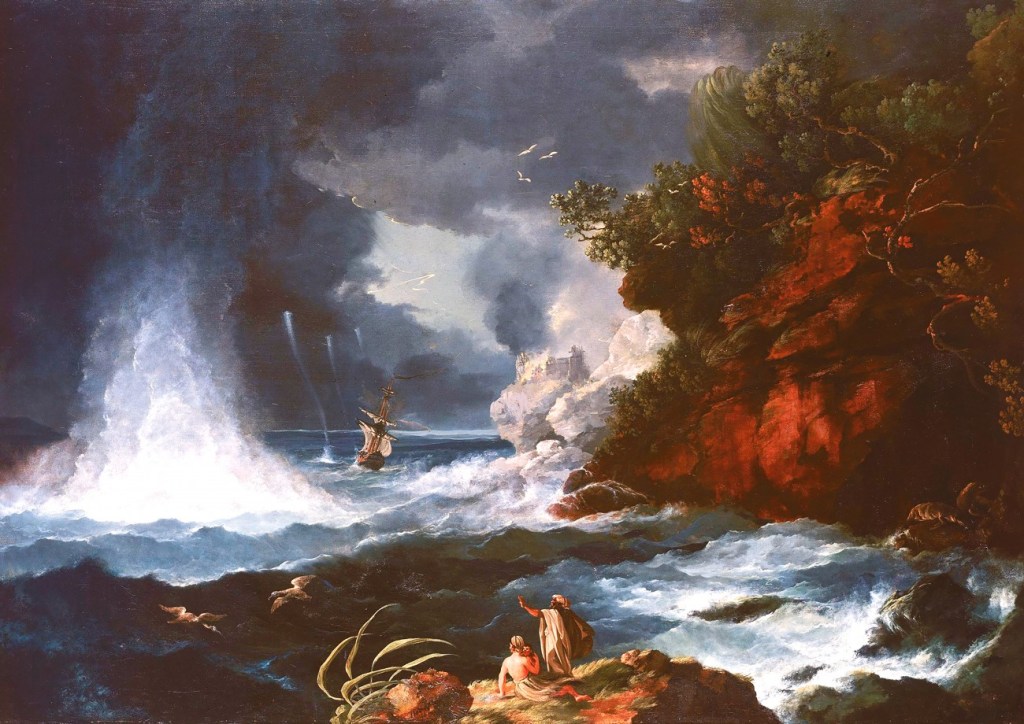
Subsequent images Moon refers to include a mixture of landscape, images of indigenous and European constructions and portraits. These include Herman Diedrich Sporing “A fortified village” (1773) and William Hodges ‘A view of Cape Stephens in Cook Strait with Waterspout” (1776)
Even art that seems apolitical, like portraits or landscapes can be seen as political acts because it is produced in a specific social context, reflecting the established, mainstream standards.
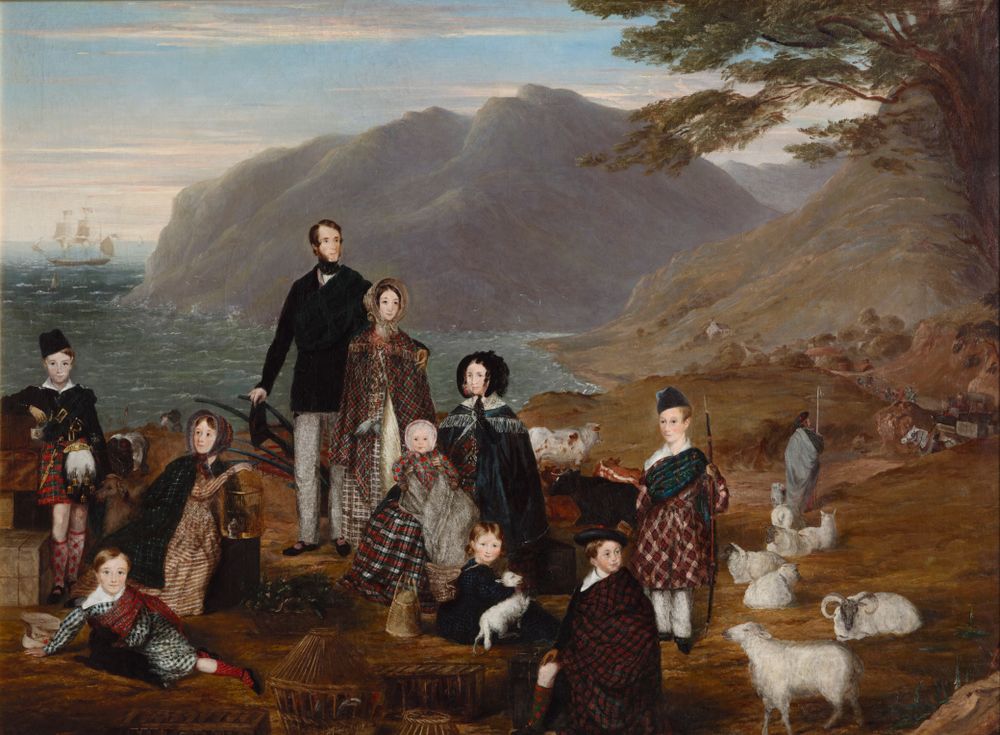
So even the relatively innocuous portrait of the Mackay family which was commissioned from the artist William Allsworth is shown after Moon’s research, to display the artists or at least the patriarchs attempt to provide a better pedigree for the family . The tartan which many of the family are wearing is red, white and black whereas the tartan of Clan Mackay is actually blue, black and orange. Moon points out other inaccuracies in the painting as well.
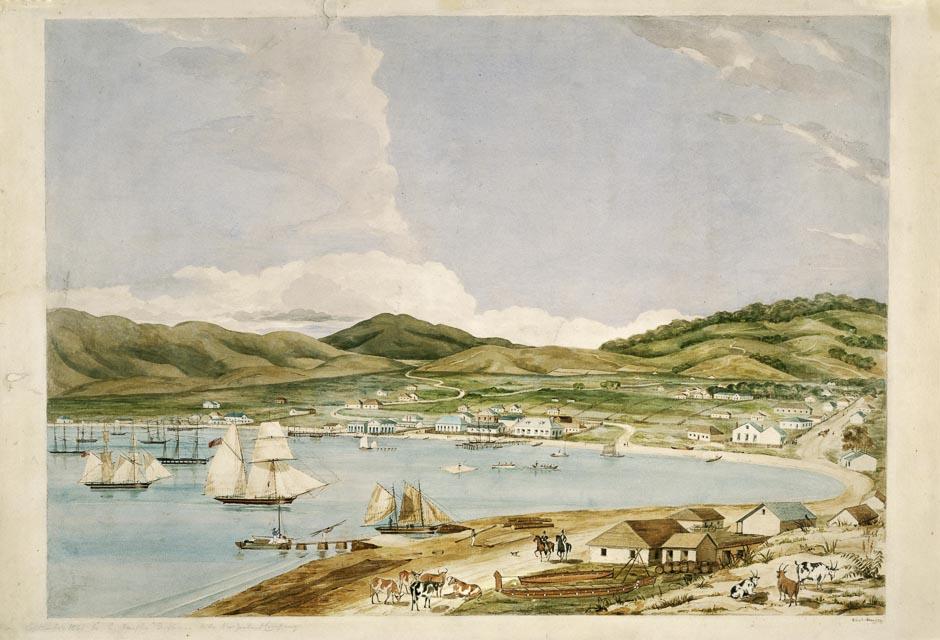
Such minor matters seem to take on greater importance when rather than details related to family they relate to a town. In referring to Heaphy’s “View of a part of the town of Wellington (1841) Moon quotes the Presbyterian Minister John Lang writing about the town at the same time – “it consist of the verist of refuse of civilized society… their usual articles of barter are either muskets and gunpowder or tobacco and rum.. most of them live in open concubinage or adultery with native women”.
Heaphy’s view of Wellington, one of many he produced for the New Zealand Land Company however shows a relatively ordered settlement with stock grazing and well tended pastures.
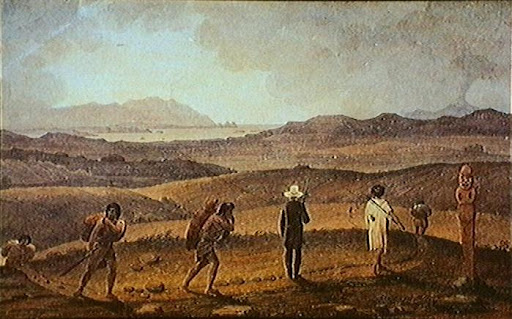
Augustus Earle’s “Distant View of the Bay of Islands” (1827) provides Moon with an image which “represents a common view at the time that Europe was at the centre of the world’s values and development” with the artist placing himself at the centre of the image, surveying his domain.
There are several paintings Moon refers to which were painted around the turn of the century which were part of the nation building images which of the time. Among them is Kennett Watkins “The Death of von Tempsky at Te Ngutu o te Manu” which depicts soldier in dramatic pose yet hides the Māori figures in shadow.
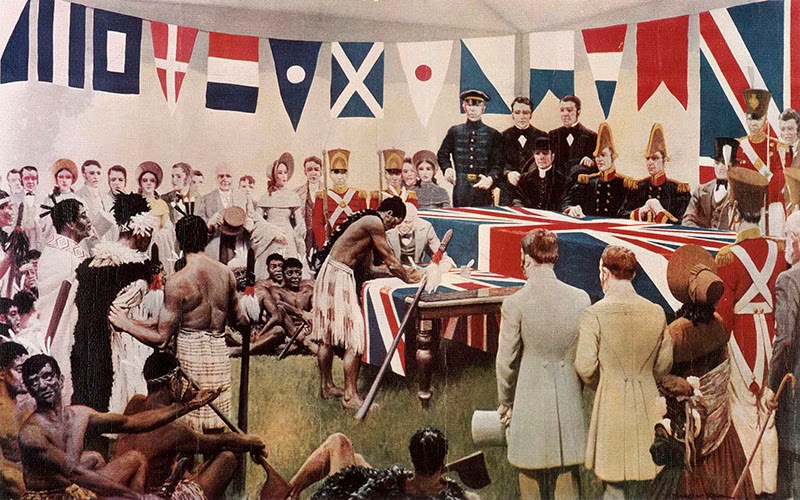
The final image in the book is Marcus Kings “The signing of the Treaty of Waitangi”, painted to celebrate the centenary of New Zealand. Here the image is filled with symbols and flags of the British Empire with little representing Māori.
In the lower left hand, the artist has included a figure turned to the viewer who seems perplexed or appalled at the scene.
In his introduction Moon writes about the “bumpy marriage between art and colonisation…the offspring of this relationship was visual portfolio of imperialism – part record, part propaganda and part prescription …tracing the progression of art’s intricate allegiance with Europe’s colonisation of New Zealand. It is a visual portfolio which still needs to be clarified, reflected on and understood.

 New Zealand Arts Review