Auckland Philharmonia Orchestra
Tchaikovsky Piano Concerto No.1
Respighi Trittico Botticelliano
Haydn Symphony No.103 ‘Drumroll’
Auckland Town Hall
November 17
Reviewed by John Daly-Peoples
Tchaikovsky’s Piano Concerto No.1 is one of the top ten pianio concertos and the sold-out audience for the recent APO concert attested to the fact that the work is crowd pleaser.
It is the last great Romantic piano concerto of the nineteenth century, full of lyricism as well as many dramatic moments. The pianist has to be capable of producing the most poignant of sounds as well as the most intense.
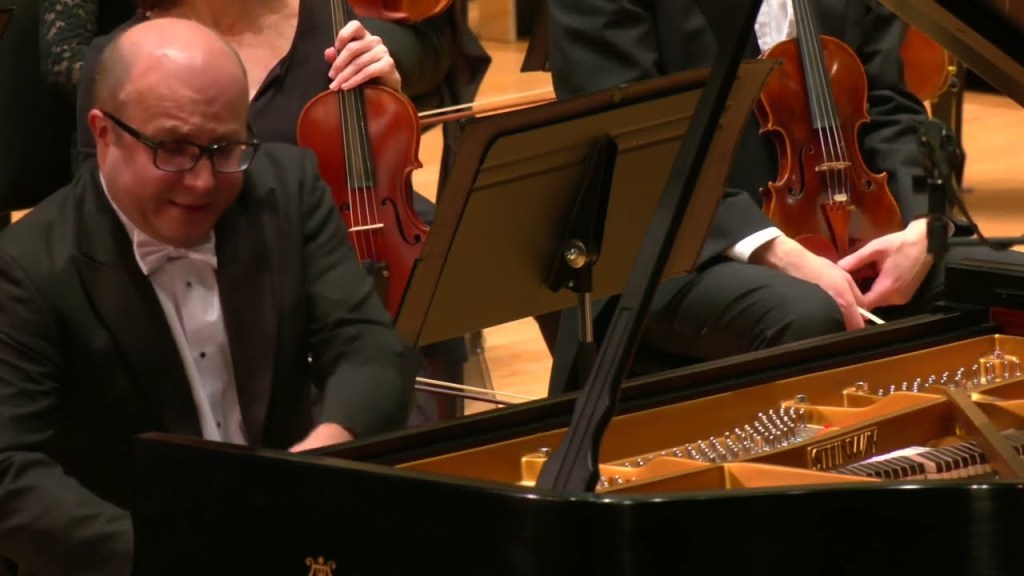
The Ukrainian-born Australian pianist Alexander Gavrylyuk was able to deliver both these qualities of the work as he ranged from the pensive to the flamboyant.
From the opening where he responded to the brash horns and sharp flourish from the orchestra Gavrylyuk dominated the stage with some dazzling displays. There were times as he finished a particularly energetic passage when he raised his hands seemingly having plucked the notes he had just finished playing out of the air to then be picked up by the orchestra.
Several times during his playing his hands again were like those of a magician catching hold of musical phrases with a sleight of hand and delivering them to the audience.
His expression when playing changed continuously and he took on various poses from rapture to steely focus. At times there was a tenderness to his playing while at others he displayed a rawness as he focussed on the lower range of the piano
His rapport with the orchestra was constantly changing as well. Battling with the orchestra, chasing the dramatic themes conjured up by the orchestra and then the dynamics would change and the orchestra would attempt to match his feverish playing.
There were several monuments of musical poetry with Gavrylyuk having interchanges with the flutes, the violins playing a pizzicato as well as a pairing with the clarinets.
After the frenetic finale the audience responded with a huge ovation and a up in the circle a group unfurled a large Ukrainian flag which elicited further applause.
After interval the orchestra played Respighi’s Trittico Botticelliano, a three-movement work inspired by three of Botticelli paintings – Le Primavera, The Adoration of the Magi and The Birth of Venus.
Respighi is a great composer of evocative symphonic poems and the three works in his Trittico Botticelliano all deal with the concept of birth or awakening.
Two of the movements are based around subjects from classical mythology and one from Christian mythology. This combination of the classical and religious was typical of the Platonic ideas of the Renaissance which saw parallels between the ideas of the ancients and those of Christian thought.
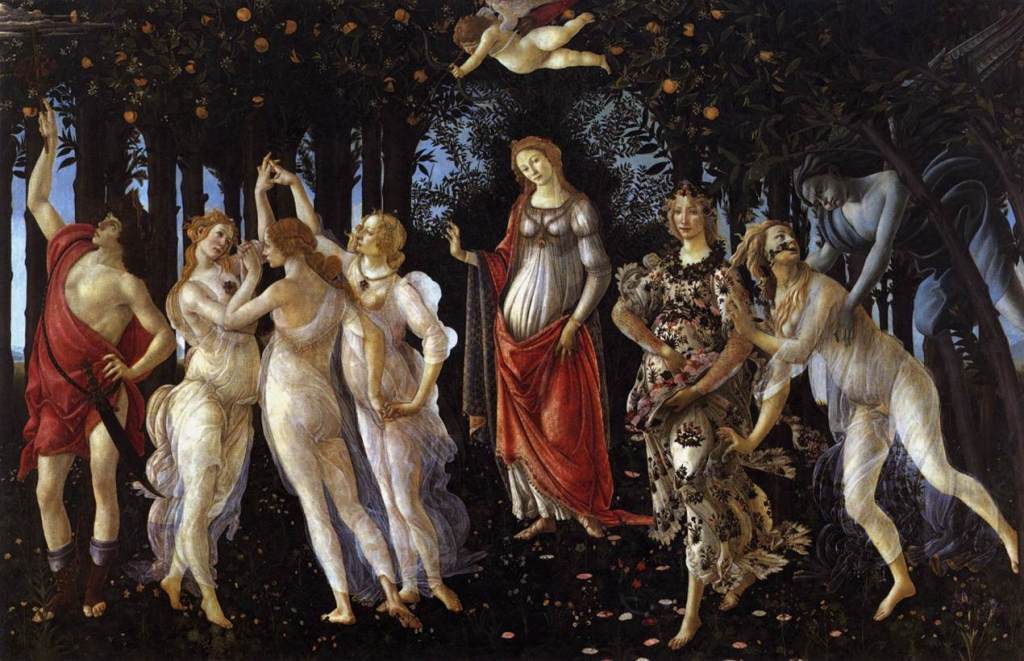
The first of these depicted Le Primavera in which the sprightly strings captured the notion of Spring with the figure of Flora scattering the myriad flowers, heralding the start of the new season. The horns also herald this new awakening while the clarinets and flutes give a sense of the interchanges which might pass between the various figures – Mercury, Venus Flora. Zephyrus. Chloris, the Three Graces and Cupid.
With the depiction of the Adoration of the Magi features the music has an exotic Eastern quality to refer to the travellers from the east along with some fragments from the Latin Mass to capture the ideas around the birth of Jesus. In the final section a wistful bassoon probably refers to the figure of Botticelli himself contemplating the viewer.
The third part depicting the Birth of Venus has shimmering strings conveying the sense of the welling up of natural forces and the rising up of Venus from the waters.
The final work on the programme was Haydn’s Symphony No 103 (The Drumroll). This was his second to last symphony and shows the composer aware of his skills, showing off his abilities to create new dynamics and display his ingenuities.
Deploying the drums to open the work was a novelty and a show of playfulness to entertain his audience. This playfulness extended to conductor Bellincampi who swayed to the music as through doing a gavotte on the podium and there were times when timpanist Steven Logan performed as though he were the drummer in a rock band.
Gavrylyuk Plays Tchaikovsky
Auckland Philharmonia Orchestra
Tchaikovsky Piano Concerto No.1
Respighi Trittico Botticelliano
Haydn Symphony No.103 ‘Drumroll’
Auckland Town Hall
November 17
Reviewed by John Daly-Peoples
Tchaikovsky’s Piano Concerto No.1 is one of the top ten pianio concertos and the sold-out audience for the recent APO concert attested to the fact that the work is crowd pleaser.
It is the last great Romantic piano concerto of the nineteenth century, full of lyricism as well as many dramatic moments. The pianist has to be capable of producing the most poignant of sounds as well as the most intense.
The Ukrainian-born Australian pianist Alexander Gavrylyuk was able to deliver both these qualities of the work as he ranged from the pensive to the flamboyant.
From the opening where he responded to the brash horns and sharp flourish from the orchestra Gavrylyuk dominated the stage with some dazzling displays. There were times as he finished a particularly energetic passage when he raised his hands seemingly having plucked the notes he had just finished playing out of the air to then be picked up by the orchestra.
Several times during his playing his hands again were like those of a magician catching hold of musical phrases with a sleight of hand and delivering them to the audience.
His expression when playing changed continuously and he took on various poses from rapture to steely focus. At times there was a tenderness to his playing while at others he displayed a rawness as he focussed on the lower range of the piano
His rapport with the orchestra was constantly changing as well. Battling with the orchestra, chasing the dramatic themes conjured up by the orchestra and then the dynamics would change and the orchestra would attempt to match his feverish playing.
There were several monuments of musical poetry with Gavrylyuk having interchanges with the flutes, the violins playing a pizzicato as well as a pairing with the clarinets.
After the frenetic finale the audience responded with a huge ovation and a up in the circle a group unfurled a large Ukrainian flag which elicited further applause.
After interval the orchestra played Respighi’s Trittico Botticelliano, a three-movement work inspired by three of Botticelli paintings – Le Primavera, The Adoration of the Magi and The Birth of Venus.
Respighi is a great composer of evocative symphonic poems and the three works in his Trittico Botticelliano all deal with the concept of birth or awakening.
Two of the movements are based around subjects from classical mythology and one from Christian mythology. This combination of the classical and religious was typical of the Platonic ideas of the Renaissance which saw parallels between the ideas of the ancients and those of Christian thought.
The first of these depicted Le Primavera in which the sprightly strings captured the notion of Spring with the figure of Flora scattering the myriad flowers, heralding the start of the new season. The horns also herald this new awakening while the clarinets and flutes give a sense of the interchanges which might pass between the various figures – Mercury, Venus Flora. Zephyrus. Chloris, the Three Graces and Cupid.
With the depiction of the Adoration of the Magi features the music has an exotic Eastern quality to refer to the travellers from the east along with some fragments from the Latin Mass to capture the ideas around the birth of Jesus. In the final section a wistful bassoon probably refers to the figure of Botticelli himself contemplating the viewer.
The third part depicting the Birth of Venus has shimmering strings conveying the sense of the welling up of natural forces and the rising up of Venus from the waters.
The final work on the programme was Haydn’s Symphony No 103 (The Drumroll). This was his second to last symphony and shows the composer aware of his skills, showing off his abilities to create new dynamics and display his ingenuities.
Deploying the drums to open the work was a novelty and a show of playfulness to entertain his audience. This playfulness extended to conductor Bellincampi who swayed to the music as through doing a gavotte on the podium and there were times when timpanist Steven Logan performed as though he were the drummer in a rock band.

 New Zealand Arts Review