Reviewed by John Daly-Peoples
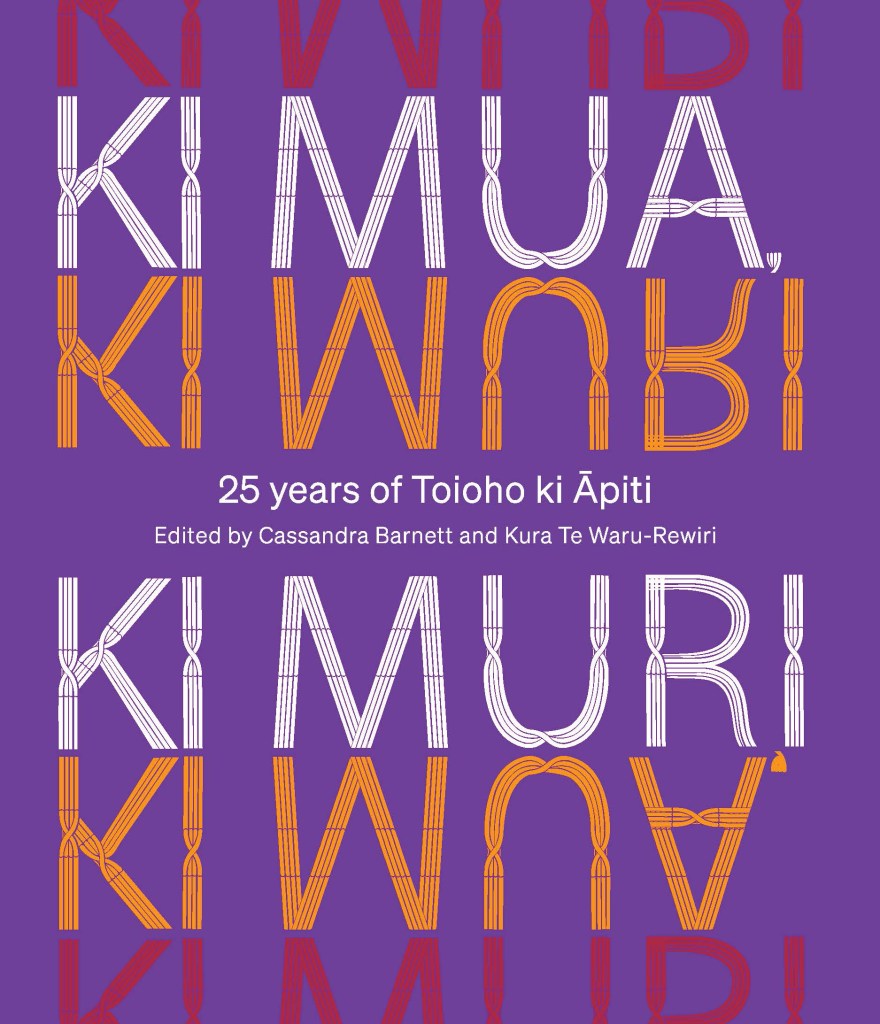
Ki Mua, Ki Muri
25 years of Toiohi ki Āpiti
Massey University Press
Edited by Cassandra Barnett and Kura Te Waru-Rewiri
With forwards by Ngāhuia Te Awekōtuku and Nigel Borell
RRP $70
Reviewed by John Daly-Peoples
When the exhibition Toi Tū Toi Ora: Contemporary Māori Art opened at the Auckland Art Gallery three years ago many people were surprised at the range and depth of the contemporary Māori art on view providing new insights into Māori culture as well as an understanding of New Zealand culture.
One of the catalysts behind the exhibition and much of the new contemporary Māori art was “Toioho ki Āpiti” the Māori Arts programme which has been offered at Massey University,
The importance of these courses can be appreciated in the new book “Ki Mua, Ki Muri”, which details the establishment and development of the Māori arts programme at the University which now has a global reach, with impacts on national and international contemporary art and culture.
Nigel Borell, the curator of the Toi Tū Toi Ora: exhibition was a graduate of “Toioho ki Āpiti” and also a contributor to Ki Mua, Ki Muri says in a forward, “the exhibition’s thesis and political will to centre a Māori framework and cultural paradigm as a way to discuss contemporary Māori art was directly shaped by the theoretical and conceptual teachings of the Toioho ki Āpiti programme”.
Toioho ki Āpiti’s Māori-led programme and its educational model is structured around Māori notions of Mana Whakapapa (inheritance rights), Mana Tiriti (treaty rights), Mana Whenua (land rights) and Mana Tangata (human rights) and is unique in Aotearoa.
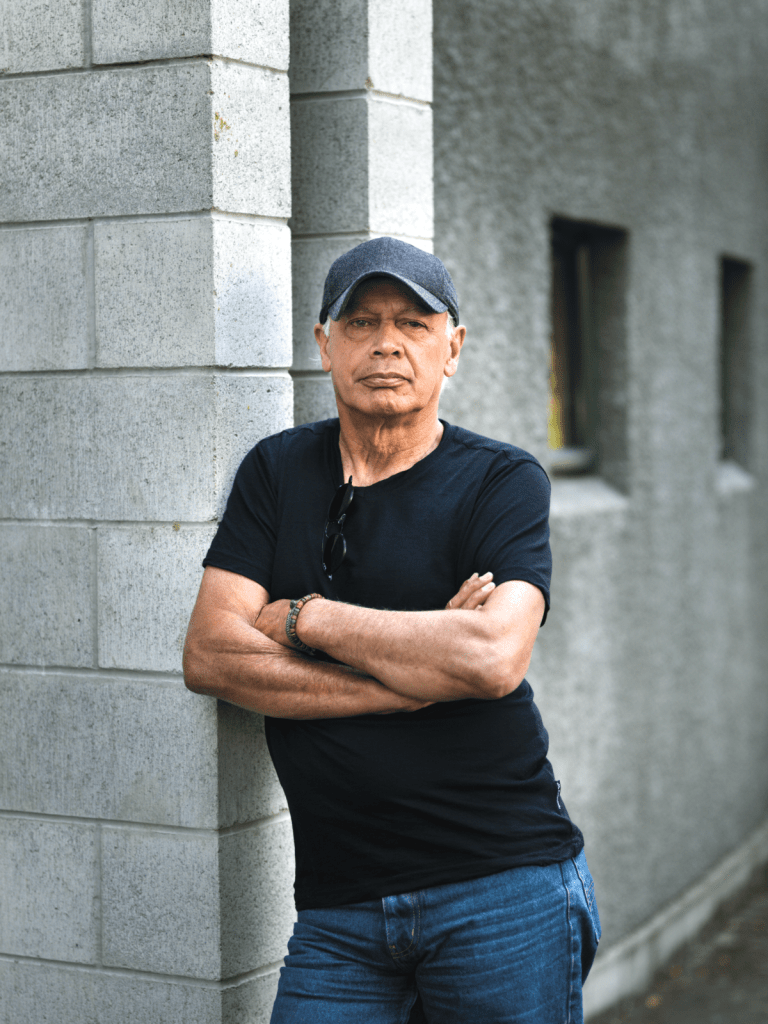
Central to the courses is Robert Jahnke, Professor of Māori Art at Massey University. He has been there since 1991 when he started Toioho ki Āpiti, under the direction of Professor Mason Durie’s. It was an arts programme which offered the first bachelor of Māori visual art.
Over three decades he has guided the course which has seen many of the most important New Zealand artists study, thrive and succeed. He has been the lynch pin or anchor for the students who have attended the courses.
Some of the graduates have had international shows such as Anton Forde who is currently showing his work at Sculpture by the Sea in Sydney as well as Brett Graham and Rachael Rakena who exhibited their collaborative work “Āniwaniwa at the 2007 Venice Biennale.
The book is a record of 25 years of the Toioho ki Āpiti programme, its influence on indigenous education, and the impact of its many graduates on the contemporary art of New Zealand as well as internationally.
The book includes an introduction by Jahnke which is a record of his development as an artist as well as providing an overview of the course, its geneses and development.
The staff and graduates, who include Shane Cotton, Brett Graham, Rachael Rakena, Kura Te Waru-Rewiri, Israel Birch and Ngatai Taepa, are some of the most exciting, thought-provoking and influential figures in contemporary New Zealand art. Through a series of intimate conversations and essays, Ki Mua, Ki Muri describes the unique environment that has helped form them as artists.
The book is also something of a history of recent contemporary Māori art with a chapter on each of the nineteen artists or in a couple of cases, pairs of artists and they are each given 2500 – 6000 words plus images of half a dozen of their works. In these interview / essays the artists give accounts of their development as artists and teachers.
Some of these take a very personal approach with a wide-ranging acknowledgement of their individual growth before attending the course, the impact of the course on their approach to artmaking and their development since then.
In the chapter featuring Huhana Smith and Kura Te Waru-Rewiri the two artists engage in a spirited conversation reflecting on their individual careers and work, the development of their art practice, comments about the art market and acknowledgment of the impact of their students and teachers.

The work of Shane Cotton which spans nearly 30 years from his early sepia to recent work featuring decorative pots / urns talks about the transformative nature of the course and the way the course has helped artists in reclaiming the often-contested history of Māori and Māori art.
The ceramicist Wi Te Tua Pirika Taepa speaks about his experience of growing as an artist through other institutions and his connections through artists / teachers such as Sandy Adsett and Robyn Stewart and the links back Gordon Tovey. He makes all sorts of connection back to his childhood, marae and even to his time in the Vietnam War. All these experiences and ideas seem to be cast into his ceramic work.
The book provides an insight into the flowering of contemporary Māori art, the development of a contemporary imagery. It also shows the links and connections between the various Māori artists, both those who have been involved in the course and others so there is a web of interlinked knowledge, practice and ideas.
Editors Cassandra Barnett and Kura Te Waru-Rewiri have compiled and engaging and set of interviews and essays along with their own perceptions which are informative and rewarding.
Cassandra Barnett is writer and artist of Raukawa, Ngāti Huri and Pākehā descent. She writes poetry, essays and short fiction about cultural and ecological futures. She worked as an art theorist and lecturer (fine arts/critical and contextual studies) for 15 years at institutions including Wintec Unitec and Massey University (Wellington). She is currently Pouako/Educator at Te Whare Taonga o Waikato Waikato Museum. She was a founding member of the publishing collective Taraheke.
Kura Te Waru-Rewiri (Ngāpuhi, Ngāti Kahu, Ngāti Rangi, Ngāti Kauwhata) studied at the Ilam School of Fine Arts and at teachers’ training college, and then taught art in schools, tertiary institutions, universities and whare wananga, and was one of the first Māori appointments to Elam School of Fine Arts in 1993. Her work is held in collections in both Aotearoa New Zealand and overseas and she has been a key contributor to contemporary Māori exhibitions both in New Zealand and abroad. She is the chair of the Mangaiti Marae Trust, a board member of Te Rūnanga o Whaingaroa and an arts director on the Toi Ngāpuhi Board.
To subscribe or follow New Zealand Arts Review site – www.nzartsreview.org.
The “Follow button” at the bottom right will appear and clicking on that button will allow you to follow that blog and all future posts will arrive on your email.
Or go to https://nzartsreview.org/blog/, Scroll down and click “Subscribe”

 New Zealand Arts Review